
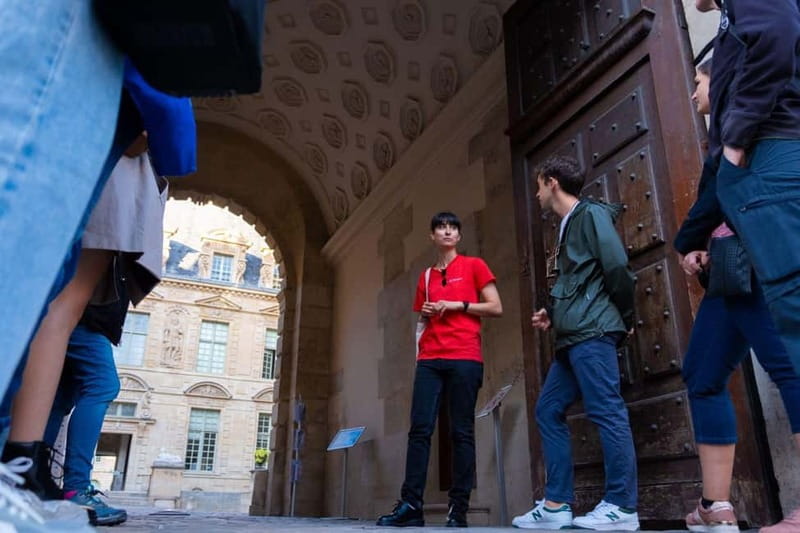
Reviewed · PARIS TOURS
Explore the Marais: Culture, History & Hidden Gems of Paris
The Marais is one of Paris’s best neighborhoods for seeing several sides of the city in a short walk. This tour moves from medieval streets and old churches to Jewish bakeries, LGBTQIA+ landmarks, street art, and the grand squares tied to Victor Hugo and the French Revolution.
I like the small group limit of 12, which gives your guide room to answer questions and adjust the pace. I also like the way the tour connects past and present, especially through Rue des Rosiers and the neighborhood’s LGBTQIA+ identity. The main drawback is that two hours goes quickly, and the food element is modest: you get a pastry, not a full meal.
Key points about this Marais walking tour
- A 2 km route through several distinct parts of Paris, from the Centre Pompidou area to medieval streets, Rue des Rosiers, Place des Vosges, and possibly Place de la Bastille.
- A small group of no more than 12 people, with a private option if you want a more tailored walk.
- A focus on Jewish and LGBTQIA+ Paris, rather than only royal buildings and famous monuments.
- A stop for a merveilleux, a meringue based pastry that adds a sweet local taste to the walk.
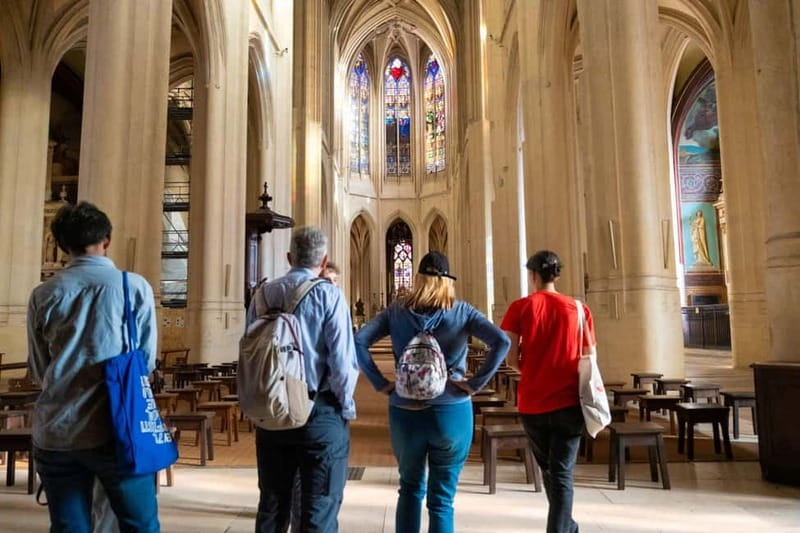
- A visit inside Saint Gervais church, plus lesser noticed medieval buildings and street art.
- A useful first day activity, especially if you want food, shopping, and neighborhood ideas for later in your trip.
Why the Marais makes a good two hour introduction
The Marais is compact, but it is not one note. You can cross a street and move from polished 17th century facades to a medieval lane, from a falafel counter to a grand aristocratic square. That mix makes the area rewarding on foot and well suited to a short guided tour.
The route also gives you more than a parade of pretty buildings. You learn how Jewish life shaped the neighborhood, how LGBTQIA+ residents helped form its modern character, and how older religious and political stories still show up in the streets.
This is useful if you are new to Paris. A guide can point out details you might pass without noticing, then leave you with a better sense of where to return for lunch, shopping, pastries, or an evening drink.
The tour is conducted in English and usually has a maximum of 12 people. A private group is available if you want more control over the pace or subjects. The walk covers about 2 km, but the pavement is urban and the route includes standing stops, so comfortable shoes matter more than speed.
More Historical Tours in Paris
- Paris: Louvre Museum Entry with History of Mona Lisa
★ 3.9 · 2,823 reviews - Paris: Dark History and Ghostly Guided Walking Tour
★ 4.7 · 1,000 reviews - Le Marais/Paris – The Historic, Trendy, Jewish, LGBT district
★ 5.0 · 341 reviews
Starting opposite the Centre Pompidou
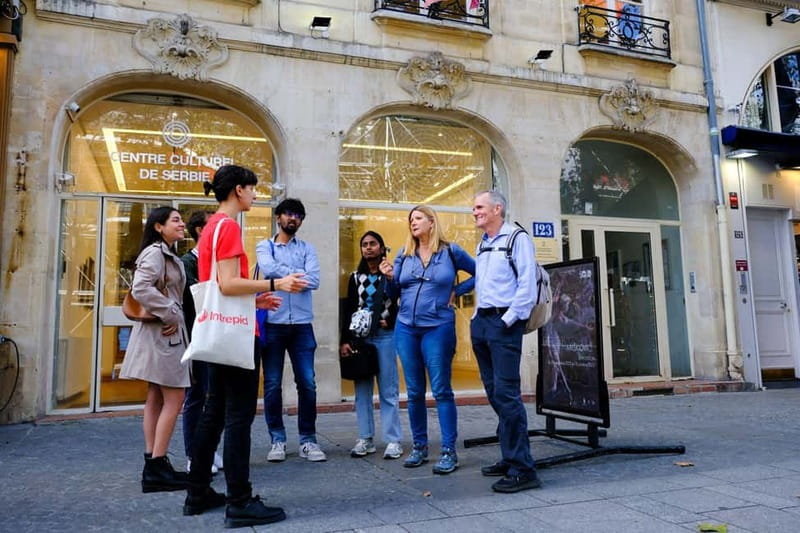
The meeting point is opposite the Centre Pompidou, by the Centre Culturel de Serbie, at 123 Rue Saint Martin. Your guide holds a sign with the local partner’s name.
This is a practical starting point because the Centre Pompidou gives you an easy landmark, though the area can be crowded and confusing at busy times. Arrive with a little extra time so you are not searching for the guide among pedestrians and street activity.
The first listed stop is the Centre Pompidou, with about 10 minutes of guided attention. The tour does not function as a full museum visit, so do not book it expecting an art collection tour. Instead, the building and its surroundings help set the tone for the neighborhood: modern Paris beside old Paris, with public art and changing street life close at hand.
You may also pass the Stravinsky Fountain and see street art near the opening section. These details keep the first part from feeling like a lecture. The guide can use them to explain how the Marais has changed while still retaining older layers.
Hôtel de Ville and the first look at old Paris
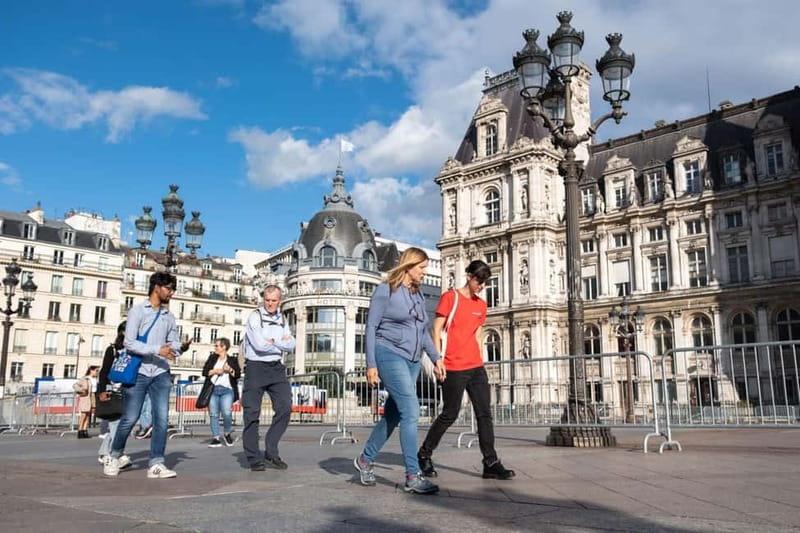
The route continues toward Hôtel de Ville, one of the city’s major civic buildings. The planned sightseeing stop lasts about 15 minutes.
This part is less about entering a monument and more about understanding the Marais’s position beside the Seine and central Paris. Your guide helps link the grand public setting around Hôtel de Ville with the smaller streets ahead.
I appreciate this kind of transition on a walking tour. It gives you a broad point of reference before the route turns into the neighborhood itself. You are not simply being led from one photo stop to another. You are watching the scale of Paris change as the streets narrow and the buildings become more intimate.
The nearby street art and public spaces also provide a useful counterpoint to the formal architecture. If you enjoy seeing how a city is used today, this section should appeal to you more than a strictly historic route.
Saint Gervais church and medieval details
Saint Gervais church receives about 15 minutes of sightseeing time and is one of the more important stops on the walk. The tour explains the church’s story and legacy, while allowing you to see its interior.
The visit adds a quiet pause after the more active streets around Hôtel de Ville. Look closely at the architecture and listen for the guide’s explanation of why the church matters to this part of Paris. The value here is not only visual. It is the sense of continuity between religious life, neighborhood life, and the city’s long past.
Afterward, the route moves through older medieval streets, including buildings with unusual corbelled upper floors. These houses are easy to miss when you walk alone because the details are above eye level. Your guide can direct your attention to the way the upper stories project over the street.
This is a good example of what you are paying for. You are not buying access to a major paid monument. You are paying for someone to notice the small things, explain them clearly, and help you see why an ordinary looking lane is worth your time.
More historic sites in Paris:
- Paris City of Fashion History Private Guided Walking Tour
★ 5.0 · 221 reviews - History of Paris City Center w/ Notre Dame Semi-Private 12ppl Max
★ 5.0 · 194 reviews - Paris: Le Marais & Montmartre Jewish History Walking Tour
★ 4.8 · 170 reviews - Paris Walking Tour , Historical Sites .
★ 5.0 · 150 reviews
The merveilleux pastry stop
At some point in the walk, you stop for a merveilleux. This is a meringue based pastry, usually known for a light, crisp texture and a rich topping.
The pastry is included, while drinks and extra food cost more. The stop is a tasting rather than a food tour with many courses, so set your expectations accordingly. One portion gives you a pleasant break and a taste of local pastry culture without taking over the historical side of the experience.
Food restrictions are important here. The tour suits vegetarians, but it is not suitable for lactose free, gluten free, or vegan customers. If you need one of those diets, this is not an easy tour to adapt based on the information provided.
The timing of the pastry stop also helps the walk feel relaxed. You get a chance to pause, ask questions, and compare what you have seen with the modern businesses around you. For many people, this small food moment will be more memorable than another formal explanation of a facade.
Rue des Rosiers and Jewish Paris
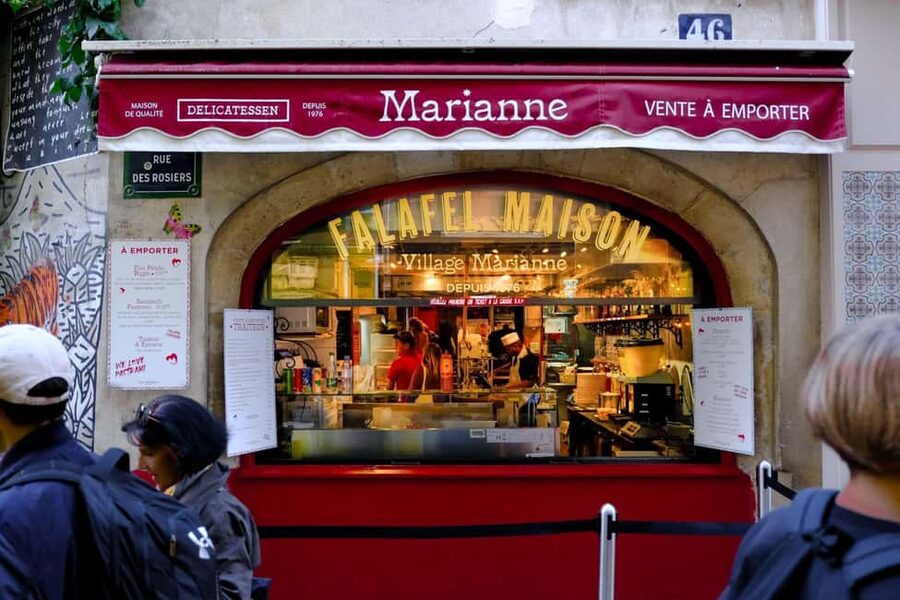
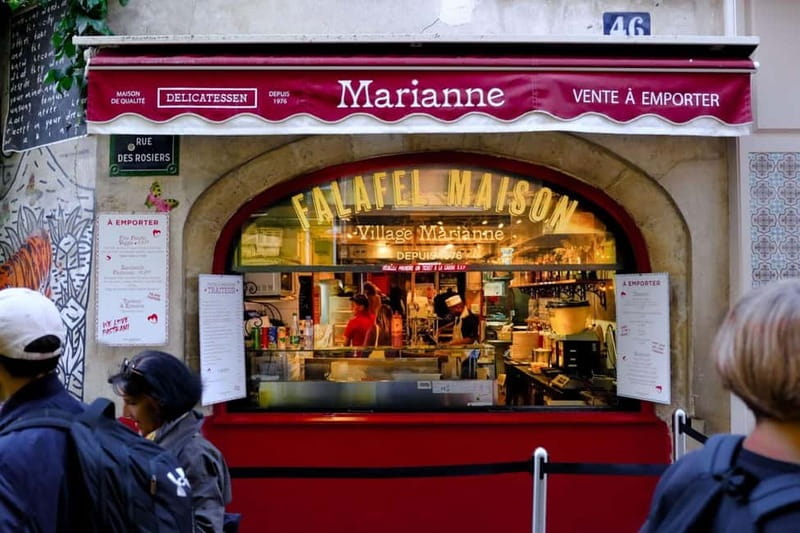
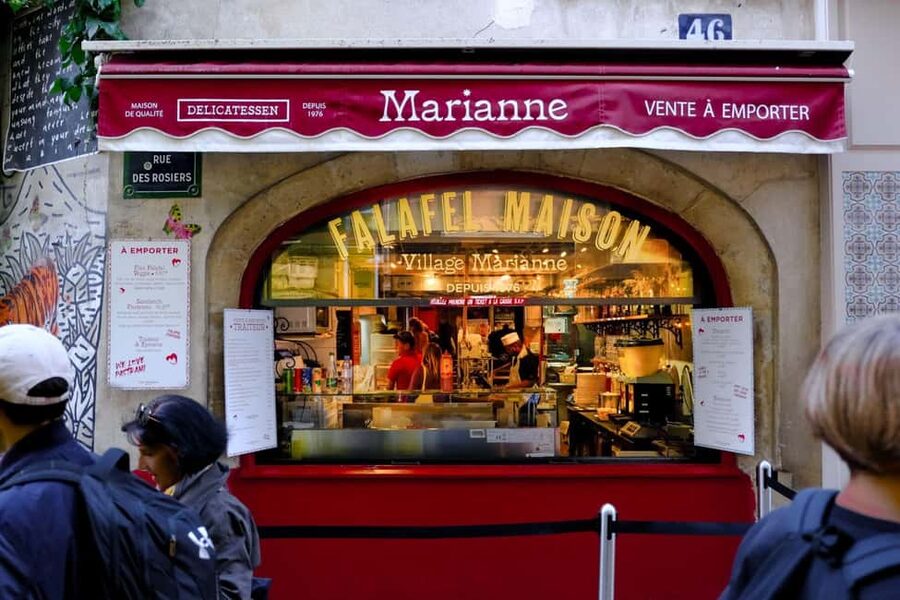
Rue des Rosiers is the center of the tour’s Jewish Quarter section. The guide explains the influence of the Jewish community while you walk along one of the Marais’s best known food streets.
This is one of the strongest parts of the route because the street presents culture in everyday form. You see food, shops, pedestrians, and religious and community connections rather than only a plaque or museum label. Falafel is part of the local scene, but it is not included in the tour price, so bring money if you want an additional bite.
The guide’s role matters here. A quick walk through Rue des Rosiers can become little more than a search for lunch. With context, you get a better understanding of how the area developed and why it remains important.
The street can be busy, and the small group helps. Twelve people are easier to keep together than a large coach group, especially on narrow sidewalks. Still, stay close to the guide and expect some ordinary city noise and foot traffic.
LGBTQIA+ history in a changing neighborhood
The Marais is also closely linked with Paris’s LGBTQIA+ community. This tour makes that part of the neighborhood central rather than treating it as an afterthought.
You learn how LGBTQIA+ residents and businesses helped shape the Marais’s modern identity. That subject gives the walk a present day edge and helps explain why the area feels different from more formal parts of central Paris.
The best guides make this history part of the street itself. Past guide names associated with this experience include Maxi, Camila, Paloma, Laure, Adele, Mitch, Linda, and Cecilia. The assigned guide can vary, but the repeated strength of the experience is meant to be the personal connection: guides such as Paloma have adjusted the walk to match individual interests, while Camila has been especially good at linking older events with newer neighborhood life and pointing out easy to miss street art.
You should not expect a specialist academic seminar. You can expect a conversational introduction to the forces that shaped the Marais, with time for questions and local suggestions.
Place des Vosges and Victor Hugo
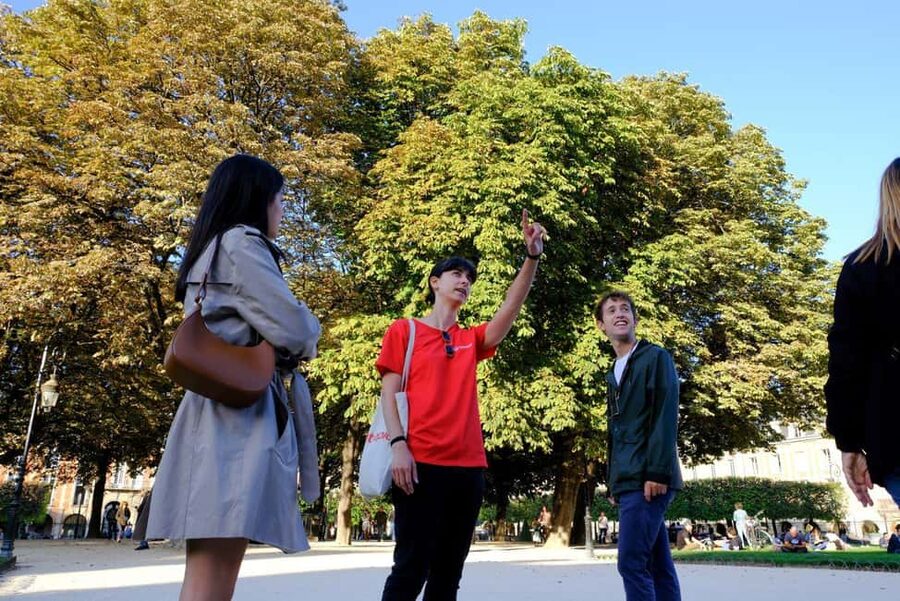
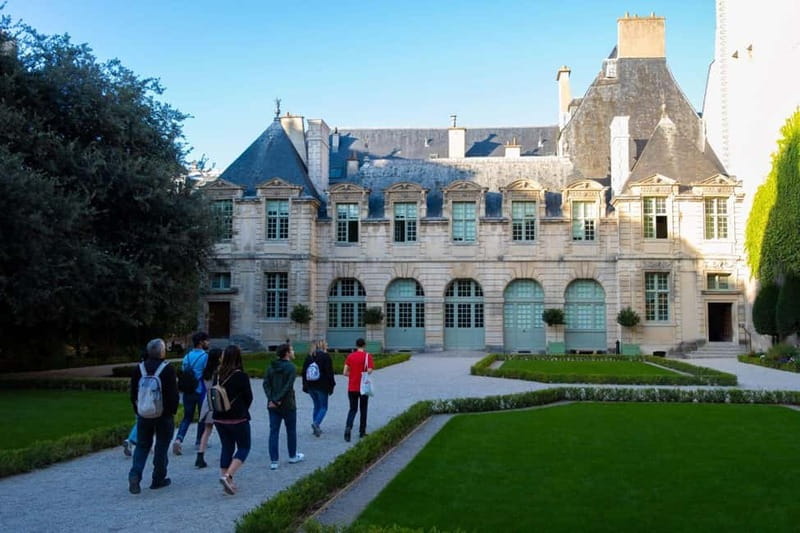
The walk continues to Place des Vosges, one of Paris’s most graceful squares. Its regular arcades and elegant buildings provide a sharp change from the narrower medieval lanes and lively food streets.
The square is associated with Victor Hugo, whose former home is part of the area’s cultural appeal. Even if you do not visit the museum, the setting gives the tour a strong architectural finish.
This is a fine place to pause and take in the proportions of the square. It is also useful for travelers who want a calm place to return to later. You can sit beneath the arcades, browse nearby streets, or use the square as a starting point for more Marais wandering.
The planned sightseeing time is about 15 minutes. That is enough for orientation and photographs, but not enough for a long museum visit. If Victor Hugo’s life is a major interest, plan separate time.
Place de la Bastille and a route detail to confirm
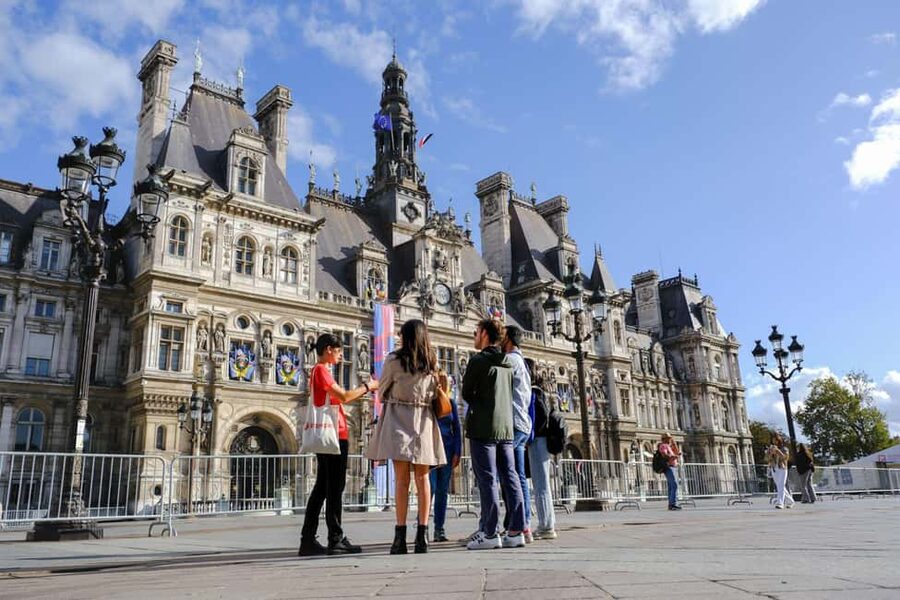
The written route description continues to Place de la Bastille, with about 30 minutes listed there. Bastille is the historic site associated with the beginning of the French Revolution and is a natural place to finish a story about Paris, politics, and change.
The description also suggests ending near a local bar, which could make Bastille a convenient place for a drink after the walk. Drinks are not included, so treat that as an optional continuation rather than part of the paid experience.
There is a small logistical inconsistency in the supplied details. One section says the route finishes at Place des Vosges, while another lists Place de la Bastille, and the meeting information says the activity ends back at the meeting point. Confirm the exact finishing point and return arrangement when you book. This matters if you have dinner reservations, a museum entry, or a train to catch.
Guides, pace, and the small group advantage
The guide can make or break a neighborhood walk. Here, the format gives the guide a fair chance to speak with you rather than simply project facts to a crowd.
Past guide names connected with the experience include Maxi, Cecilia, Camila, Paloma, Laure, Linda, Mitch, and Adele. Individual styles differ. Some have been praised for a gentle pace, some for humor and local recommendations, and some for adapting the discussion to a participant’s interests.
That flexibility is particularly useful in the Marais. You may care most about architecture, Jewish culture, LGBTQIA+ history, food, street art, or shopping. Tell your guide early. A short tour cannot cover everything in equal depth, but a responsive guide can give extra attention to what matters most to you.
The walk is child friendly, though the subject matter and amount of walking may suit older children better than very young ones. The 2 km distance is manageable for most visitors who are comfortable walking, but there are no promises of frequent seating.
Bring comfortable shoes and an umbrella. Paris weather can shift quickly, and much of the experience takes place outdoors.
Is $56 a fair price?
At $56 per person, this is not the cheapest way to see the Marais. You can walk through the neighborhood on your own for free, and you can buy a pastry without booking a tour.
The value comes from the guide’s interpretation and the compact route. In two hours, you cover several subjects that would otherwise require separate research: medieval architecture, Saint Gervais, Jewish Paris, LGBTQIA+ Paris, Place des Vosges, and the revolutionary story of Bastille.
The small group also matters. A maximum of 12 gives you a better chance to hear clearly and ask questions. A private group costs more in many cases, but it may be worthwhile if you want a custom pace or have a strong interest in one part of the Marais.
I would not choose this for a serious food-focused outing. The pastry is included, but drinks and further food are not, and the experience is primarily a history and neighborhood walk. One listed experience included several food samples and wine, but the details provided for this specific activity promise only the merveilleux pastry, so plan around that more limited offering.
The tour is carbon neutral and operated by a B Corp certified company. That may matter to you if you want your booking to align with a stated effort to use travel as a positive force, though the practical experience remains a walking tour with one included tasting.
Who should book this walk?
I would recommend it to first time Paris visitors who want an easy introduction to the Marais before exploring alone. It is also a good choice if you have already seen the Eiffel Tower, Louvre, and major boulevards and now want a neighborhood with more local texture.
Food lovers should book only if they are happy with a light pastry stop and the option to buy more food independently. Vegetarians can take part, but people avoiding dairy, gluten, or animal products should skip it.
Choose the tour if you like history told through streets, buildings, and community life. Skip it if you want a long museum visit, a full meal, or a fast checklist of major monuments.
FAQ
How long is the Marais walking tour?
The tour lasts two hours.
How far do you walk?
The route covers about 2 km, or 1.2 miles.
Where does the tour start?
It starts opposite the Centre Pompidou by the Centre Culturel de Serbie at 123 Rue Saint Martin. The guide holds a sign with the local partner’s name.
Where does the tour finish?
The supplied details list Place des Vosges, Place de la Bastille, and a return to the meeting point in different sections. Confirm the exact finishing point when booking.
Is the tour offered in English?
Yes. The live tour guide speaks English.
How large is the group?
The small group has a maximum of 12 passengers. A private group option is also available.
Is food included?
One pastry, a merveilleux, is included. Drinks and additional food are not included.
Can people with dietary restrictions join?
The tour is suitable for vegetarians. It is not suitable for lactose free, gluten free, or vegan customers.
Should you book Explore the Marais?
Book it if you want a well paced introduction to the Marais that connects architecture with the Jewish and LGBTQIA+ communities, includes a pastry, and keeps the group small. The strongest reason to choose it is the guide’s local explanation of details you would probably miss alone.
At $56, the tour is worth it for first time visitors and curious repeat visitors who value context more than a long list of included food. Wear good shoes, bring an umbrella, and confirm the final stop before paying. If those points suit your plans, this is a smart way to get your bearings in one of Paris’s most interesting neighborhoods.
Just listed in Paris
- Chartres Cathedral 5 Hours Tour from Paris with Private Transport★ 4.5 · 49 reviews
- Paris: Giverny & Versailles Small Group or Private Tour★ 4.5 · 49 reviews
- Paris: Louvre photoshoot or Seine bridges Eiffel Tower walk★ 5.0 · 49 reviews
- Paris: Choux Pastry and Chocolate Éclair Making Class★ 4.9 · 50 reviews
- Private tour of the Champagne area, meet local producers and taste their Champagne, start from your hotel in Paris.★ 5.0 · 50 reviews
- Paris Eternelle Notre-Dame Virtual Reality Tour★ 4.5 · 50 reviews
- Normandy D-Day Landing Beaches Private Day Trip from Paris★ 5.0 · 50 reviews
- Disneyland® Paris 1 Day with Round-Trip Train Tickets from Paris★ 4.0 · 50 reviews
Paris Tours, compared.



Versailles Palace and Gardens Full Access Ticket
Read our review →

Eiffel Tower Entry Ticket with Optional Summit Access
Read our review →

Louvre Guided Tour with Reserved Access & Boat Cruise
Read our review →
Moulin Rouge Cabaret Show Ticket with Champagne
Read our review →Browse the lists this tour appears in