
Reviewed · MONTMARTRE & SACRE-COEUR TOURS
Paris : Montmartre highlights walking tour
Montmartre is Paris at its most theatrical: red windmills, crooked lanes, portrait artists, old cabarets, and a white basilica perched above the city. This 105-minute walk takes you from Place Blanche up the hill, ending at Sacré-Cœur, where the view stretches toward the Eiffel Tower, Notre Dame, and Montparnasse Tower. I like the route because it links famous sights with quieter corners, and I like the small groups of up to 10, which leave room for questions and pictures.
The main drawback is the hill itself. You will walk uphill on city streets and steps, and the tour is not suitable for wheelchair users or people with mobility impairments. The tour also ends at Sacré-Cœur rather than returning you to the starting point, so plan your next move from the basilica.
Key points at a glance
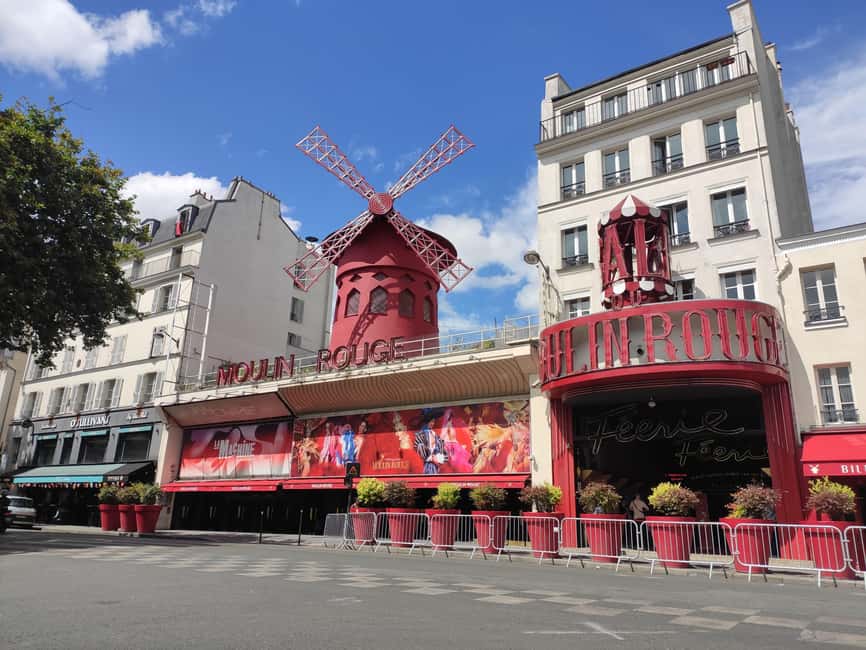
- Starts beside the Moulin Rouge: Meet near the Blanche Metro station exit, close to the famous cabaret.
- A compact artist’s Montmartre route: See Moulin de la Galette, Dalida’s statue, La Maison Rose, Lapin Agile, and Place du Tertre.
- Small English-speaking groups: The maximum group size is 10, with guides such as Samy, Sammy, and Diana leading the walk.
- Stories matter here: The guide connects Montmartre with Lautrec, Picasso, and Van Gogh, rather than simply pointing out buildings.
- Ends at Sacré-Cœur: Finish at the basilica with a broad view across Paris.
- Good value at $29: You get a guided introduction to one of Paris’s most characterful districts without paying for food, drinks, or attraction entry.
Why this short Montmartre walk works
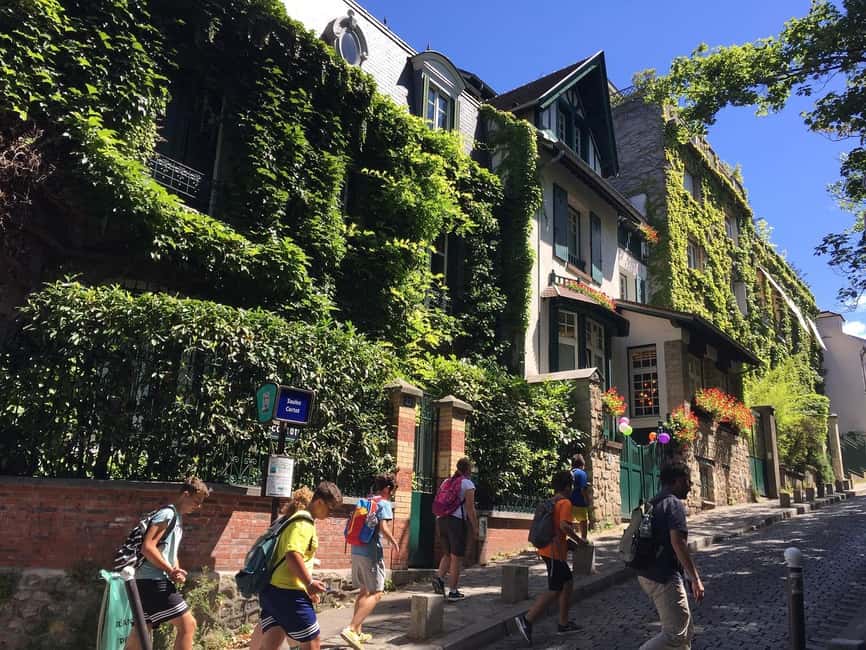
Montmartre can feel confusing when you first arrive. The Moulin Rouge is at the foot of the hill, while Sacré-Cœur sits at the top. In between, streets twist past old studios, cafés, statues, cabaret landmarks, and picture-book façades. A guide helps you understand how these pieces fit together.
I see the greatest value in the route’s shape. It is not just a stroll around Sacré-Cœur, and it is not just a photo hunt at the Moulin Rouge. You move through the district from south to north and gradually climb toward the basilica. That gives the neighborhood a clear story and saves you from piecing together the sights yourself.
The tour costs $29 per person. For that price, you receive an English-speaking guide and a small-group walking experience lasting about an hour and 45 minutes. Food, drinks, and anything beyond the guided walk are extra, but the price is fair if you want orientation, local context, and a well-planned route.
The group limit matters. A group of 10 is still large enough to have company, but small enough for the guide to stop for questions. Samy and Sammy receive repeated praise for friendly storytelling and patience, while Diana is described as a warm guide who shares interesting facts about Montmartre. One booking became a private walk because of the small number of people that day. You cannot count on that, but the limited group size gives the experience a personal feel.
More Walking Tours in Paris
- Paris Top Sights Half Day Walking Tour with a Fun Guide
★ 5.0 · 2,893 reviews - Montmartre Hidden Gems and Scenic Highlights Walking Tour
★ 5.0 · 2,684 reviews - Montmartre Hill French Gourmet Food and Wine Tasting Walking Tour
★ 5.0 · 2,588 reviews
Starting at Place Blanche and the Moulin Rouge
You meet your guide near the exit of Blanche Metro station, on Metro Line 2, close to the Moulin Rouge. Look for the green booklet and green badge. This is a useful meeting point because Place Blanche is easy to identify, but give yourself enough time to find the correct station exit and guide.
The Moulin Rouge is the natural opening act. Its red windmill is one of Paris’s most recognizable signs, even though the surrounding streets are now much busier and more modern than the Montmartre of Toulouse-Lautrec. The guide spends about 10 minutes here, covering the cabaret’s story and giving you time for photographs.
Do not expect a full cabaret performance or an interior visit. This is a photo stop and guided explanation from outside. That is still useful, since the Moulin Rouge gives you a starting point for understanding Montmartre’s reputation as a place of nightlife, artists, dancers, and unconventional characters.
The Wall of Love and Montmartre’s softer side
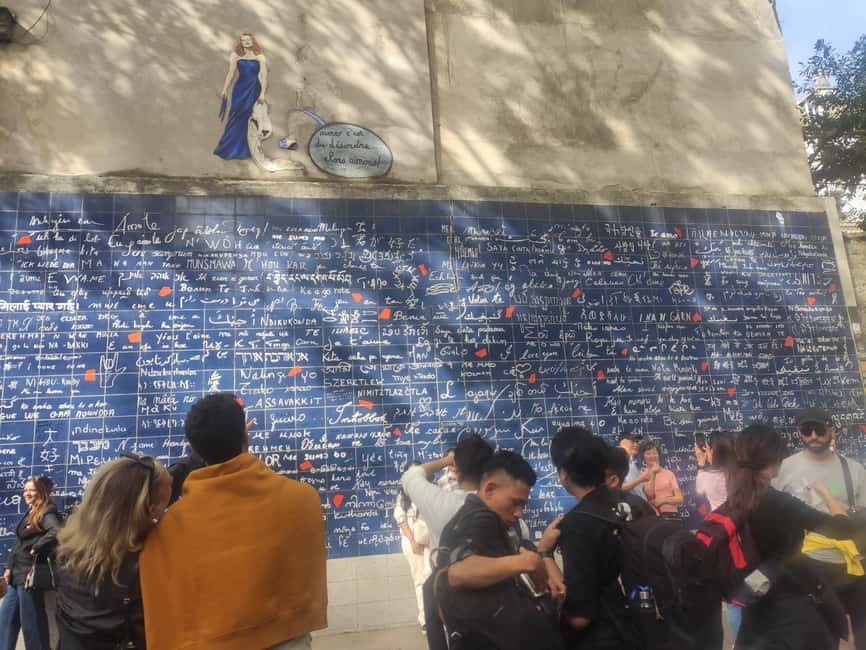
From the Moulin Rouge, the route continues to Le Mur des Je T’aime, or the Wall of Love. This stop lasts about 10 minutes and adds a gentler note to the tour.
The wall displays the phrase I love you in many languages. It is a popular place for photographs, but the guide’s explanation helps keep it from becoming just another quick picture stop. You can ask questions, listen to the story, and take in the contrast between the romantic message and the lively streets around it.
This is also a good early point to settle into the walking pace. The route includes several stops, so you are not expected to march from one attraction to the next without pause. The supplied timing gives roughly 10 minutes at each main location, although the exact pace can depend on the group.
Moulin de la Galette and the old artists’ quarter
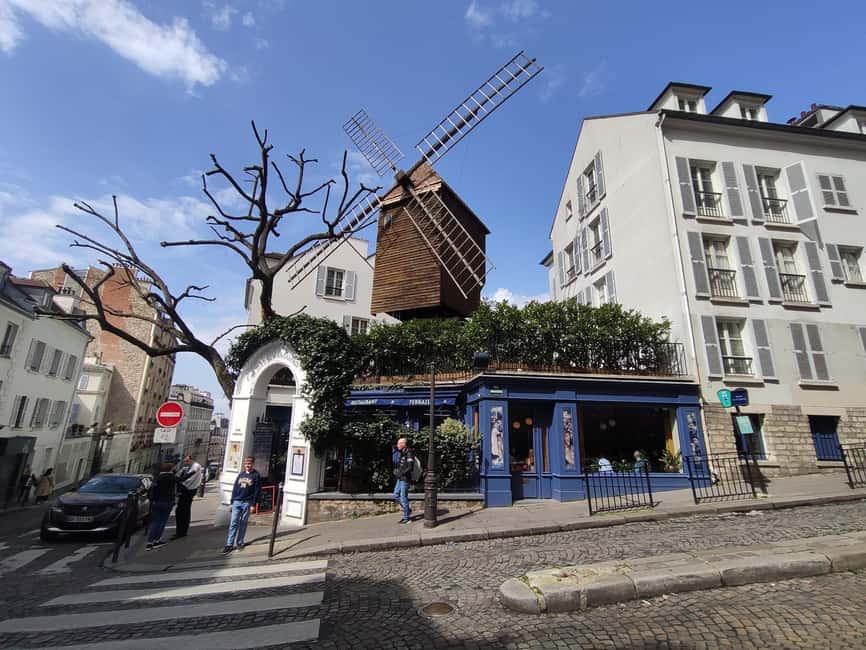
The next stop is Moulin de la Galette, another windmill linked with Montmartre’s past. The name is often associated with the district’s old dance halls and outdoor entertainment, as well as with paintings that captured local social life.
Here, the guide connects the streets to the artists who once lived and worked in Montmartre. Lautrec, Picasso, and Van Gogh are part of the area’s story, and this is where the district begins to feel like more than a collection of pretty façades. You are walking through a neighborhood shaped by painters, performers, and people looking for a cheaper, freer place to live.
The stop is mainly for photographs and explanation. If you want to study the art in detail or visit a museum, this walk will not replace that. Its strength is giving you the setting and the basic connections, so later visits make more sense.
A few other Paris half-days to compare
- Paris: Moulin Rouge Cabaret Show Ticket with Champagne
★ 4.7 · 16,088 reviews - Paris: Dinner Show at the Moulin Rouge
★ 4.8 · 3,333 reviews - Seine Dinner Cruise, Eiffel Tower Access and Moulin Rouge Show
★ 4.0 · 2,310 reviews - Paris: Montmartre Cheese, Wine & Pastry Guided Walking Tour
★ 4.8 · 2,255 reviews
Dalida’s statue and La Maison Rose
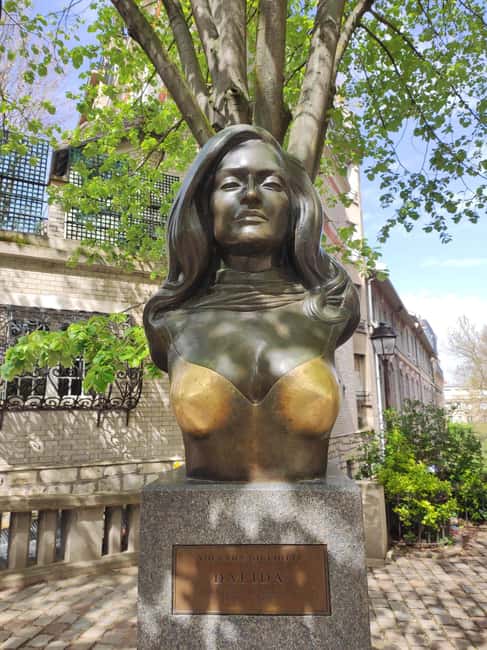
The route then reaches the statue of Dalida, the famous singer closely associated with Montmartre. The statue is a small but memorable stop, and the guide’s story gives you another side of the neighborhood. Montmartre is not only about painters from the late 19th and early 20th centuries. It also carries a strong connection with singers, entertainers, and modern popular culture.
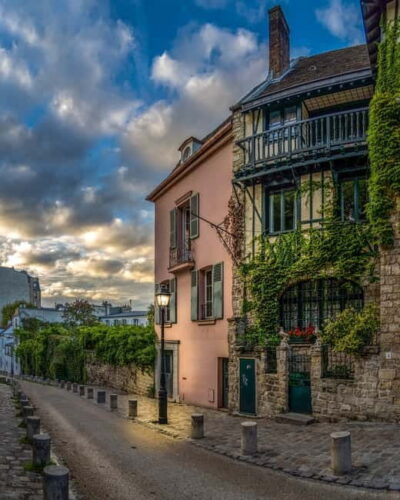
You continue to La Maison Rose, one of the district’s most photographed houses. Its pink exterior and green shutters make it easy to recognize, and the building fits the image many people carry of Montmartre before they arrive.
This part of the walk is especially good for first-time visitors because the sights come close together. You can take a photograph, hear why the place matters, and move on without spending half a day trying to locate each one. The tradeoff is that the stops are brief. If you want a long café break or extensive time at every façade, you may find the schedule a little brisk.
Lapin Agile and the bohemian story
Lapin Agile brings you to one of Montmartre’s best-known old cabaret venues. The building and its name are tied to the district’s artistic and bohemian image, and the guide uses the stop to add more character to the walk.
I like this section because it helps explain why Montmartre became such a magnet for creative people. The area’s appeal was not just its views. It was also the mix of cabarets, studios, cafés, inexpensive rooms, and people who did not fit neatly into Parisian society.
You should think of the tour as an introduction rather than a specialist lecture. The guide shares facts and stories, and the strongest guides, including Samy and Sammy, appear to make room for questions. One person specifically praised a guide who used pictures alongside his stories, which can be helpful when the modern street gives few clues about the past.
Place du Tertre and the working art scene
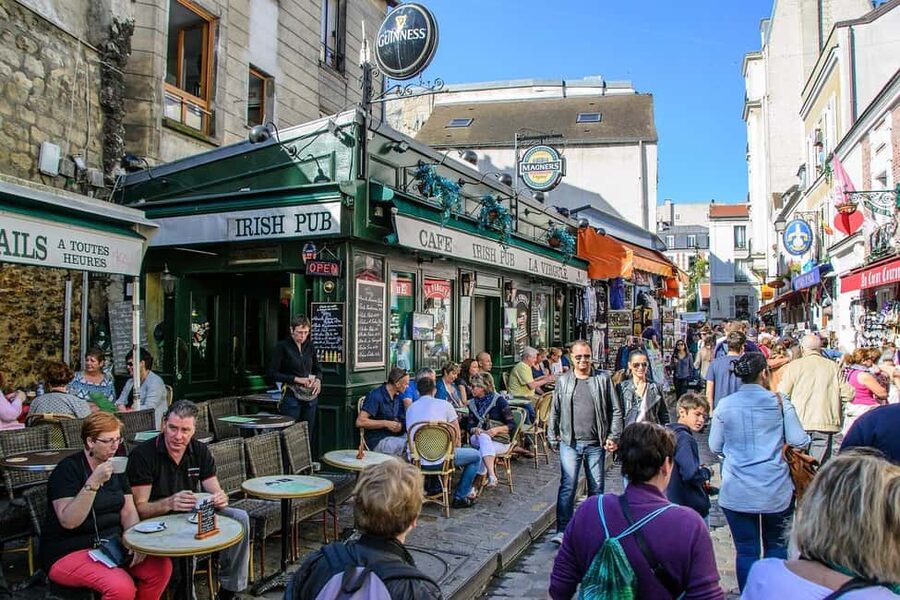
Place du Tertre is one of Montmartre’s busiest and most recognizable squares. Painters display their work here, and you can watch artists offering portraits and other pictures to people passing through.
This is a lively stop, but it can also be the most crowded part of the route. The square’s charm comes from its connection to Montmartre’s art scene, yet it is also highly visited and commercial. I would enjoy it for the atmosphere and the tradition, while keeping my expectations realistic. You are seeing a working tourist district, not a forgotten artists’ village.
The guide spends about 10 minutes here. That is enough to understand the square, hear how it fits into Montmartre’s story, and take photographs. It is not enough for a leisurely meal or a long browse through every artist’s work. If a portrait interests you, return later after the tour and take your time.
Place du Tertre is also a useful point for deciding what you want to do next. Since the tour continues to Sacré-Cœur, you can save shopping, eating, or a longer visit to the square for afterward.
Climbing to Sacré-Cœur
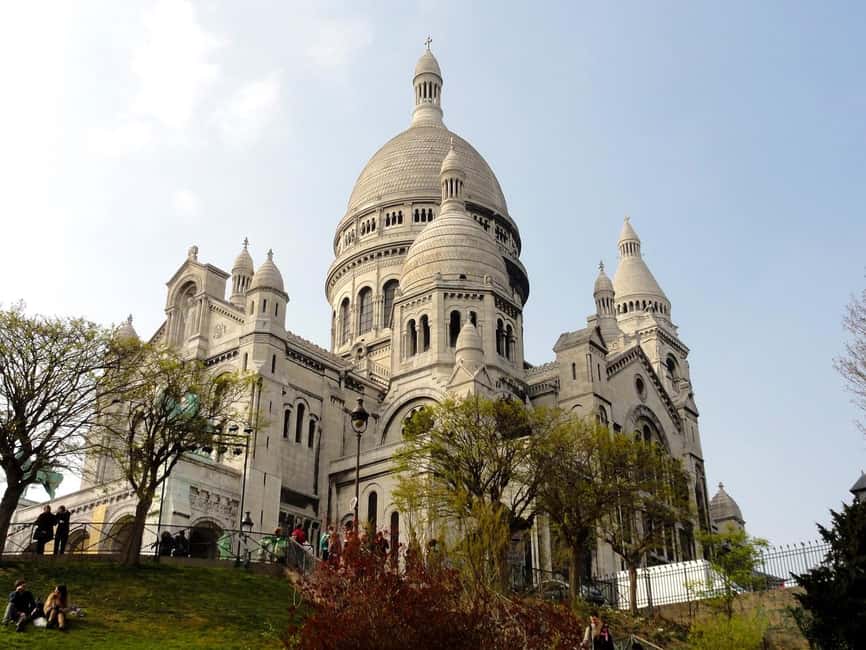
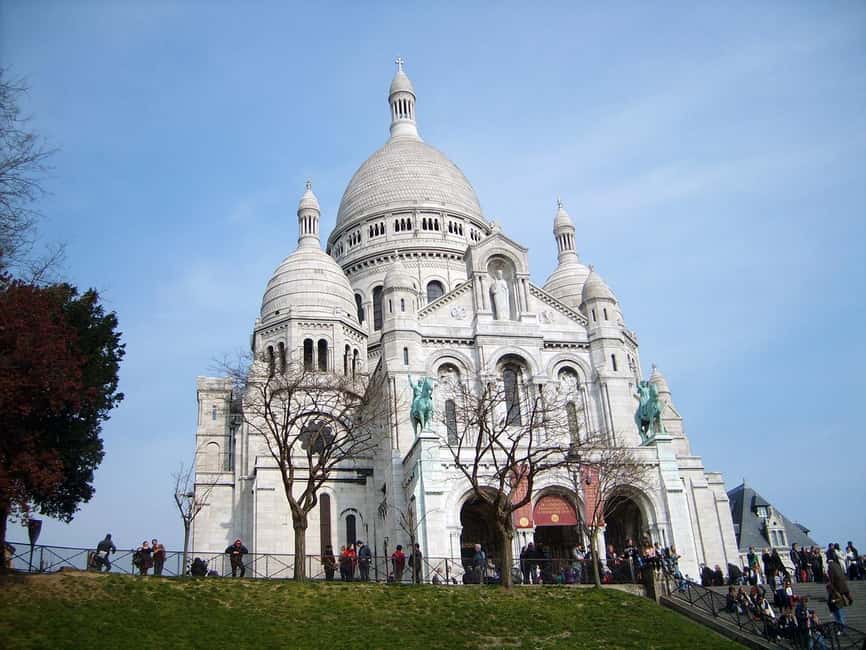
The final major stop is the Basilica of Sacré-Cœur de Montmartre. The route ends here, after the streets have carried you steadily uphill from Place Blanche.
The basilica’s white domes dominate the hill, and the approach gives you scenic views along the way. The guide includes sightseeing and a photo stop, but this is not described as a full interior tour. You should expect an introduction to the basilica and time to see the outside, then explore further on your own if you wish.
The climb is the practical issue to consider. Comfortable shoes are essential, and the route is not suitable for wheelchair users or people with mobility impairments. Even visitors who walk easily should remember that Montmartre’s slopes and steps can be tiring, particularly if this tour follows a full day of sightseeing.
Still, finishing at Sacré-Cœur is a smart choice. The destination feels like a reward for the climb, and you end at one of the best-known viewpoints in Paris rather than back at the lower, noisier streets around the Moulin Rouge.
The view from Paris’s highest point
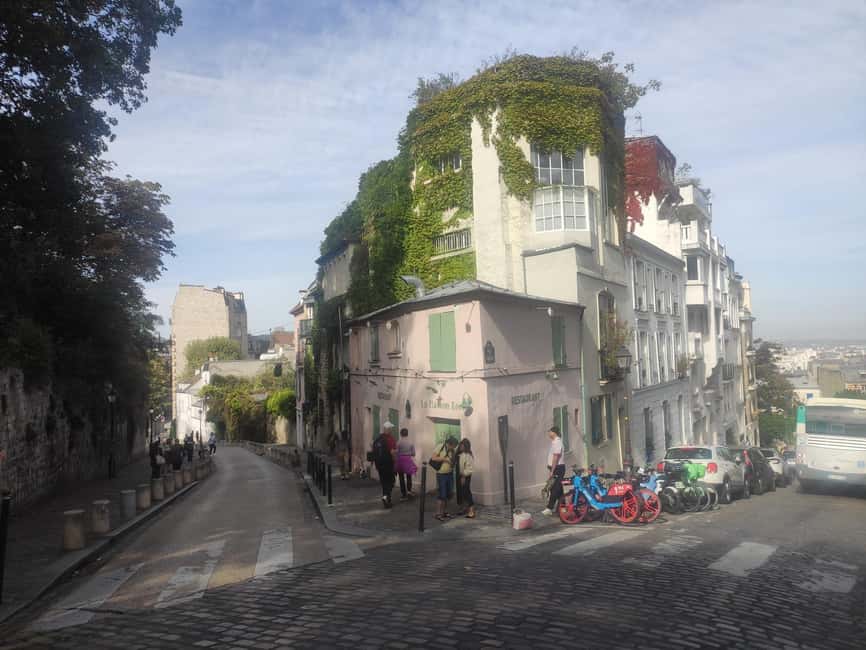
From the hilltop, you can look across the city and spot major landmarks including the Eiffel Tower, Notre Dame, and Montparnasse Tower. The view is broad rather than intimate. Paris spreads out below you in a long sweep of rooftops, with its best-known monuments appearing in the distance.
Weather will affect how much you see, so do not judge the tour only by the view. On a clear day, the panorama is a strong finish. On a hazy day, the basilica and the walk through Montmartre still provide the main value.
You also finish with your bearings improved. After walking from Place Blanche to Sacré-Cœur, you will understand the hill’s layout far better than if you simply arrived by Metro or funicular and took photographs at the top.
Guide style and group atmosphere
The guide can make or break a walking tour, and the available feedback is unusually consistent about the personal side of this experience. Samy and Sammy are praised for being friendly, chatty, patient, and generous with information. Diana is singled out for her pleasant manner and interesting stories.
That does not mean every departure will feel identical. Guides have different styles, and the exact group size can vary. What you can count on is an English-language tour with no more than 10 participants, which is a better setup for conversation than a large group gathered around a flag.
The tour also seems comfortable for people who like questions. Several comments point to time for photographs, explanations, and moving at a relaxed pace. This matters in Montmartre, where you often want to pause, look up at a building, or frame a picture instead of being hurried along.
Who should book, and who should skip it
I would recommend this walk to first-time Paris visitors who want a clear introduction to Montmartre in less than two hours. It also suits anyone who likes art, cabarets, old neighborhood stories, and city views but does not want to spend hours planning a route.
It is a good choice for couples, solo visitors, and small groups who prefer a guide’s stories to a downloaded audio tour. The English-language format is useful if you want to ask questions rather than simply listen through headphones.
You should think twice if you have limited mobility, use a wheelchair, or dislike hills. The tour does not include food or drinks, so eat beforehand or plan a stop after reaching Sacré-Cœur. You should also avoid booking it if you want extended interior visits, a full meal, or a detailed art-history lecture.
Bring comfortable shoes and arrive at the Blanche Metro meeting point with the green booklet and green badge in mind. The tour has free cancellation up to 24 hours before departure, and you can reserve now and pay later, which helps if your Paris schedule is still shifting.
My verdict on this $29 Montmartre experience
I think this is a strong-value orientation walk. For $29, you get a carefully shaped route through some of Montmartre’s most important sights, a small English-speaking group, and a guide who can explain why the neighborhood matters instead of simply naming buildings.
Book it if you want to see the Moulin Rouge, Place du Tertre, La Maison Rose, Lapin Agile, and Sacré-Cœur in one well-organized outing. Skip it if the uphill route will be difficult or if you want long, independent stops. For most able walkers, especially first-time visitors, the mix of artist stories, famous corners, and the hilltop view makes this a sensible way to get oriented.
FAQ
Where does the Montmartre walking tour start?
It starts near the exit of Blanche Metro station on Metro Line 2, close to the Moulin Rouge. Your guide can be identified by a green booklet and green badge.
Where does the tour finish?
The tour finishes at the Basilica of Sacré-Cœur de Montmartre.
How long does the tour last?
The walking tour lasts 105 minutes, or one hour and 45 minutes.
What language is the tour conducted in?
The tour is conducted in English with a live English-speaking guide.
What is included in the price?
The $29 price includes the guided walking tour and the guide. Food and drinks are not included.
Is the tour suitable for wheelchair users?
No. The tour is not suitable for wheelchair users or people with mobility impairments. Comfortable shoes are recommended.
Just listed in Paris
- Chartres Cathedral 5 Hours Tour from Paris with Private Transport★ 4.5 · 49 reviews
- Paris: Giverny & Versailles Small Group or Private Tour★ 4.5 · 49 reviews
- Paris: Louvre photoshoot or Seine bridges Eiffel Tower walk★ 5.0 · 49 reviews
- Private tour of the Champagne area, meet local producers and taste their Champagne, start from your hotel in Paris.★ 5.0 · 50 reviews
- Paris: Choux Pastry and Chocolate Éclair Making Class★ 4.9 · 50 reviews
- Paris Eternelle Notre-Dame Virtual Reality Tour★ 4.5 · 50 reviews
- Normandy D-Day Landing Beaches Private Day Trip from Paris★ 5.0 · 50 reviews
- Disneyland® Paris 1 Day with Round-Trip Train Tickets from Paris★ 4.0 · 50 reviews
Montmartre & Sacre-Coeur Tours, compared.

Moulin Rouge Cabaret Show Ticket with Champagne
Read our review →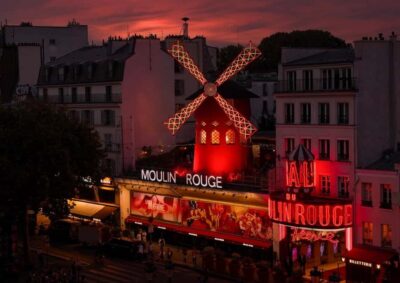
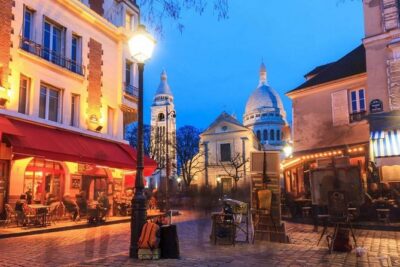
Montmartre Hidden Gems and Scenic Highlights Walking Tour
Read our review →
Montmartre Hill French Gourmet Food and Wine Tasting Walking Tour
Read our review →
Seine Dinner Cruise, Eiffel Tower Access and Moulin Rouge Show
Read our review →
Montmartre Cheese, Wine & Pastry Guided Walking Tour
Read our review →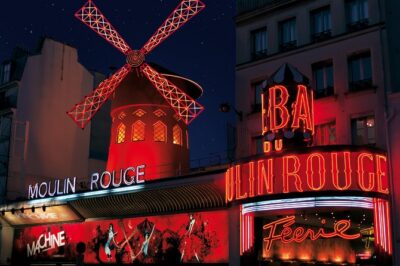
Montmartre Highlights Walking Tour with a Local Guide
Read our review →Browse the lists this tour appears in