
Reviewed · PARIS TOURS
Paris: Old Town & Latin Quarter Guided Walking Tour
Paris reveals itself especially well on foot, and this 2.5-hour Left Bank walk brings together famous names, old streets, Roman remains, royal connections, and a few food stops. You begin in Saint-Germain-des-Prés and finish near Rue de la Huchette, with the Pantheon, Sorbonne, Luxembourg Gardens, and medieval Latin Quarter along the way.
I like the mix of big sights and easy-to-miss details, and I like that guides Johann and Claire add food advice and pop-culture stories rather than giving you a dry list of dates. The main drawback is simple: this is a steady city walk of roughly 10,000 steps, with no vehicle support, and it is not suitable for wheelchair users or people with mobility impairments.
Key points to know before you book
- Saint-Germain start: Meet outside Saint-Germain-des-Prés metro station, on the church side of the boulevard.
- A broad Left Bank route: See cafés, churches, gardens, the Pantheon, Sorbonne, Roman baths, and the Latin Quarter in one outing.
- Food is part of the story: Pause near A la Mère de Famille and finish at a favorite crepe place on Rue de la Huchette.
- Strong guide-led experience: Johann and Claire are praised for clear storytelling, humor, visual aids, and personal attention.
- Good first-day choice: The route helps you understand Paris before you tackle more specialized sightseeing.
- Plan for walking: Wear comfortable shoes, carry water, and dress for changing weather.
Why this Left Bank route works so well
The clever part of this tour is its shape. Instead of focusing on one famous monument, it connects several districts that explain how Paris grew from Roman settlement to medieval university town, royal city, wartime capital, and modern cultural center.
You start in the 6th arrondissement, then move toward the 5th arrondissement and the Latin Quarter. That gives you a useful contrast. Saint-Germain feels tied to cafés, writers, artists, churches, and modern Parisian life. The Latin Quarter carries older layers, including the Sorbonne, Roman baths, medieval streets, and institutions that shaped French education and public life.
I would choose this walk early in a Paris visit. It gives you a mental map of the Left Bank and points you toward cafés, restaurants, cultural sites, and play areas you can return to later. One guide also sends food recommendations after the tour, which is a practical bonus if you want to turn a short orientation walk into a full day in the neighborhood.
The tone appears to be informal and social. Guides ask questions, include everyone, and add connections to writers, musicians, politics, and popular culture. That matters because a long list of buildings can blur together. A story about Hemingway, Miles Davis, a royal residence, or wartime soldiers gives each street a handle you can remember.
More Walking Tours in Paris
- Paris Top Sights Half Day Walking Tour with a Fun Guide
★ 5.0 · 2,893 reviews - Montmartre Hidden Gems and Scenic Highlights Walking Tour
★ 5.0 · 2,684 reviews - Montmartre Hill French Gourmet Food and Wine Tasting Walking Tour
★ 5.0 · 2,588 reviews
Saint-Germain-des-Prés and its famous café culture
The meeting point is outside the Saint-Germain-des-Prés metro station, on the church side. The address given is 147 Boulevard Saint-Germain, but the station exit is the useful landmark. Look for your guide outside rather than inside the station.
The tour begins at the Church of Saint-Germain-des-Prés, one of the area’s defining landmarks. You see the church and the remains associated with the oldest church in Paris, then hear how this neighborhood became a meeting place for intellectuals, artists, and writers.
From there, the route passes Les Deux Magots and Café de Flore. These are not just photo stops. They represent the café culture that made Saint-Germain famous, particularly among writers, philosophers, musicians, and artists. The tour connects the places with figures such as Ernest Hemingway and Miles Davis, giving the streets a modern cultural layer alongside the older religious history.
You should keep your expectations sensible. The tour does not include a meal at either café, and the café exteriors can be more useful to the walk than the interiors. Still, the stops help explain why this district became a symbol of Parisian intellectual life.
A guide may also point out details you would walk past alone. Claire has used extra visual material to show how places looked in the past and who was connected to them. That kind of comparison is useful in a neighborhood that has changed while keeping much of its cultural identity.
Sweets, Saint-Sulpice, and royal connections
The stop at A la Mère de Famille adds a small food thread to the walk. You have the chance to look at artisanal treats, and you can decide if you want to buy something. Snacks, lunch, and water are not included, so bring your own water and budget separately for anything you taste.
The route then reaches the Church of Saint-Sulpice, with about 15 minutes set aside for guided sightseeing. The church is a major landmark in Saint-Germain and gained extra fame through its appearance in The Da Vinci Code. The useful part of the stop is that the guide can separate the real building and its history from the fictional story that made it famous to a wider audience.
You also see Hôtel de Luzy, a more intimate stop tied to the district’s historic character. The short visit means this is likely a look and explanation rather than an interior tour. That is typical of the experience: you cover many places from the street, using the guide’s stories to make sense of what you see.
This section works best if you enjoy context more than formal entry. You are not spending long periods inside museums or churches. Instead, you keep moving, see how the buildings relate to one another, and save time for a wider sweep of the Left Bank.
Thirty minutes in Luxembourg Gardens
Luxembourg Gardens is the longest single stop, with around 30 minutes for a visit and guided sightseeing. That gives you time to slow down after the busy café and church streets.
The gardens are valuable here because they offer a change of pace and a clearer sense of Paris as a city of formal public spaces. You can take photos, listen to the guide, and enjoy a short pause before the climb toward the Pantheon and the 5th arrondissement.
The route is described as light walking by one participant, but another estimate puts the total at about 10,000 steps. Those comments are not contradictory. The pace may be easy, but the total distance still adds up. I would not book this immediately after a long arrival flight if your feet are already tired.
The gardens can also be weather-sensitive. In sun, they may be one of the most pleasant parts of the route. In rain or cold, the open setting makes appropriate clothing important. Bring water, check the forecast, and wear shoes with good support.
Same city, a completely different afternoon:
- Paris: Louvre Museum Timed-Entrance Ticket
★ 4.6 · 71,977 reviews - Disneyland® Paris 1-Day Ticket
★ 4.6 · 49,412 reviews - Paris: Versailles Palace and Gardens Full Access Ticket
★ 4.6 · 41,579 reviews - Paris: Evening River Cruise with Music
★ 4.4 · 22,721 reviews
The Pantheon and the Sorbonne
After Luxembourg Gardens, the walk heads toward the Pantheon. This is one of the strongest visual moments on the route. The building gives you a grand landmark and a chance to discuss the people and events connected to French national memory.
The tour does not include a listed interior visit, so think of the Pantheon stop as guided sightseeing from the route rather than an extended monument tour. That distinction matters if you specifically want to go inside. You can always return later with a separate admission plan if the building catches your interest.
The walk continues through the 5th arrondissement to La Sorbonne, with about 15 minutes for a visit and explanation. The university helps make sense of the Latin Quarter’s name and character. This is an area shaped by students, scholars, debate, and institutions, not just old façades and souvenir shops.
One of the best aspects of the guiding style is the willingness to connect past and present. Johann has been praised for explaining how Paris and France developed through the ages, while also adding pop-culture references and answering questions clearly. That wider frame helps you understand later stops, even if you are not a serious history fan.
Families can also find this section manageable. A family with children aged nine and eleven enjoyed the pace and variety, and the route keeps changing its subject before any one stop becomes too long.
Roman Paris at the Cluny baths
The Musée National du Moyen Âge, also called the Cluny Museum, is reached near the end of the walk. The listed feature is the Roman baths, known as Thermes de Cluny. This is where the route shifts from café culture and university life to the very old foundations of Paris.
You see Roman remains as part of a street-level exploration rather than a full museum visit. That is an important limitation, but also part of the tour’s appeal. You get a first look at ancient Paris without spending the whole afternoon indoors.
The Roman baths help explain why this district matters. The Latin Quarter is not simply an attractive old neighborhood. It contains physical traces of an earlier city, medieval religious and academic institutions, and later layers of political and cultural life.
I would pay close attention here if you plan to visit the Cluny Museum later. A guide can give you a useful preview and help you decide if the full collection deserves a separate visit. The tour itself is better understood as an introduction than as a substitute for museum admission.
Medieval lanes and the final crepe stop
The final stretch moves through the Latin Quarter and ends at Rue de la Huchette. The narrow streets and long academic connection give this section a different feel from the broad spaces of Saint-Germain and Luxembourg Gardens.
This is also where the food element reaches its payoff. The walk finishes at the guide’s favorite crepe place, with time afterward for you to continue exploring. The crepe is not included, and the description leaves the exact cost and menu open, so carry a little spending money if you want to make it part of the experience.
I like this ending because it is practical. You finish in an area with plenty of options rather than being dropped at an isolated monument. You can stay for food, continue through the Latin Quarter, or use the metro to reach another part of Paris.
There may also be an option to continue with the guide after the crepes and see more classic sites. Treat that as an optional extension, not a guaranteed part of the 150-minute experience. If you have another appointment, keep your schedule flexible.
The guides make the difference
The clearest strength is the guiding. Johann and Claire are repeatedly described as friendly, energetic, humorous, and easy to understand. That is especially useful on a walking tour where sound, street noise, and group movement can affect how much you absorb.
Johann’s style appears to combine historical explanation with pop-culture references and personal attention. He introduces people at the start, helps solo participants and couples feel part of the group, and asks about individual interests. He has also provided restaurant and café suggestions, sometimes following up with addresses so you can return independently.
Claire brings a similar mix of energy and care. She has been praised for using visual aids, arriving early at the meeting point, inviting questions, and checking that everyone is getting what they want from the walk. Her approach sounds particularly useful for families and for anyone who prefers an interactive tour rather than a lecture.
The group can be small, with one group reported at eight people. Group size may vary by departure, so do not assume every date will have exactly eight. Still, the format is clearly intended to feel more personal than a large flag-following procession.
The guides speak English. If you want a tour in another language, this is not the right choice.
Is $41 a fair price?
At $41 per person, the value depends on how you use the two and a half hours. You are paying for a local English-speaking guide, a planned route across several important districts, historical explanation, neighborhood recommendations, and a food-focused finish.
You are not paying for lunch, snacks, water, or listed monument admissions. If you want a sit-down meal or a full museum visit, those costs come later. That is normal for a walking orientation, but it is worth knowing before you compare it with a ticketed sightseeing tour.
I think the price is fair for a first or second day, especially if you would otherwise spend time wandering between Saint-Germain, Luxembourg Gardens, the Pantheon, and the Latin Quarter without understanding their links. The guide saves you planning time and gives you a list of places to revisit.
The value is weaker if you already know these neighborhoods well, dislike group walks, or want long interior visits. This is a broad introduction, not a specialist art tour, food tour, or private historical seminar.
Who should book this walk?
I would recommend it to first-time visitors who want to get their bearings quickly. It suits couples, families with older children, solo visitors, and anyone who likes history delivered through stories rather than long formal talks.
It is also a good match if you want recommendations for later meals and cafés. The route gives you several useful areas to explore after the tour, and the finish near Rue de la Huchette leaves you in a central part of the Latin Quarter.
You should think twice if you have mobility limits. The tour covers a substantial distance on foot and is specifically not suitable for wheelchair users or people with mobility impairments. Comfortable shoes are not optional here.
The route also requires some weather tolerance. Paris can change from sun to rain quickly, and much of the experience takes place outdoors. Bring water, dress for the forecast, and carry a camera if you want to record the details.
Practical timing and meeting advice
Allow more than the stated 150 minutes if you hope to stay for crepes or continue sightseeing afterward. Some outings may run closer to two hours and 45 minutes, so do not schedule a tight museum reservation immediately after the official end.
Arrive at Saint-Germain-des-Prés metro station with time to find the correct exit. The guide waits outside on the church side, and the boulevard has exits on either side. The supplied address is only the closest practical address, so the church is the better visual marker.
This is a walking tour, not a smoking activity, and smoking is not allowed. Bring water and weather-appropriate clothing. Food stops are optional purchases, so you can join the tasting element without treating it as an included meal.
Should you book the Paris Old Town and Latin Quarter tour?
Book it if you want a lively Left Bank introduction that covers far more than the standard postcard sights. The mix of Saint-Germain cafés, Saint-Sulpice, Luxembourg Gardens, the Pantheon, Sorbonne, Roman baths, medieval streets, and a crepe finish gives you a useful first look at several sides of Paris.
The strongest reason to choose it is the guide-led storytelling. Johann and Claire bring history, culture, humor, and food advice together, and the small-group feel can make the walk more personal.
Skip it if you need wheelchair access, dislike walking, or want extensive time inside monuments. For everyone else, $41 buys a well-planned orientation and a practical introduction to neighborhoods you can continue exploring on your own.
FAQ
How long does the Paris Old Town and Latin Quarter tour last?
The scheduled duration is 150 minutes, or two and a half hours. Some outings may run slightly longer, especially if the group continues after the crepe stop.
Where does the tour meet?
Meet outside the Saint-Germain-des-Prés metro station, on the church side of Boulevard Saint-Germain. The listed address is 147 Boulevard Saint-Germain because it is the closest available address.
Where does the tour finish?
The scheduled finish is on Rue de la Huchette in the Latin Quarter.
What language is the tour offered in?
The live guided tour is offered in English. Guides named in the experience information include Johann and Claire.
Is food included in the price?
No. Snacks, lunch, and water are not included. You can view or try artisanal treats along the route, and the walk finishes at a favorite crepe place, but those purchases are optional and paid separately.
Is the tour suitable for wheelchair users?
No. The tour is not suitable for wheelchair users or people with mobility impairments. It involves a substantial amount of walking, so comfortable shoes are essential.
Just listed in Paris
- Chartres Cathedral 5 Hours Tour from Paris with Private Transport★ 4.5 · 49 reviews
- Paris: Giverny & Versailles Small Group or Private Tour★ 4.5 · 49 reviews
- Paris: Louvre photoshoot or Seine bridges Eiffel Tower walk★ 5.0 · 49 reviews
- Paris: Choux Pastry and Chocolate Éclair Making Class★ 4.9 · 50 reviews
- Private tour of the Champagne area, meet local producers and taste their Champagne, start from your hotel in Paris.★ 5.0 · 50 reviews
- Paris Eternelle Notre-Dame Virtual Reality Tour★ 4.5 · 50 reviews
- Normandy D-Day Landing Beaches Private Day Trip from Paris★ 5.0 · 50 reviews
- Disneyland® Paris 1 Day with Round-Trip Train Tickets from Paris★ 4.0 · 50 reviews
Paris Tours, compared.

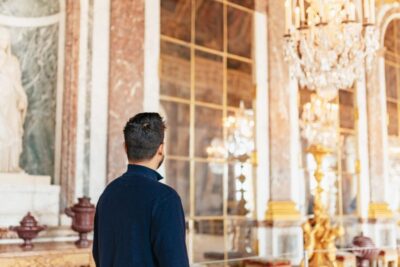
Versailles Palace and Gardens Full Access Ticket
Read our review →

Eiffel Tower Entry Ticket with Optional Summit Access
Read our review →

Louvre Guided Tour with Reserved Access & Boat Cruise
Read our review →
Moulin Rouge Cabaret Show Ticket with Champagne
Read our review →Browse the lists this tour appears in