
Reviewed · PARIS TOURS
Paris: Walking Food Tour with Cheese, Wine and Delicacies
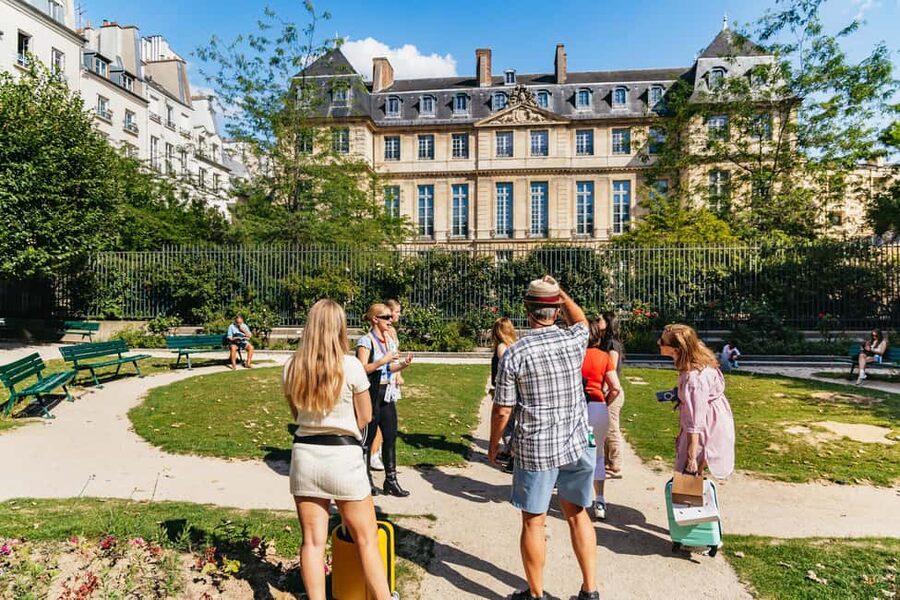
Le Marais is one of Paris’ best neighborhoods for a food walk because the good stuff is tucked among old streets, cafés, galleries, shops, and handsome buildings. This tour takes you beyond the obvious sights for 8 to 10 tastings, including cheese with baguette, wine, cured meats, pastries, chocolates, and a restaurant stop.
I like the small group of no more than 10, which gives the guide room to answer questions and adjust the pace. I also like the mix of food and local stories. Guides such as Dorine, Sasha, Louis, Margot, Arthur, Hugo, and Bart have earned especially warm praise for making the walk feel personal and useful.
The main consideration is the price, $148 per person. That is a serious outlay for a three-hour food walk, and the wine may be simple rather than a formal cellar tasting. You should also expect plenty of walking and enough food to replace a meal.
Key points to know before booking
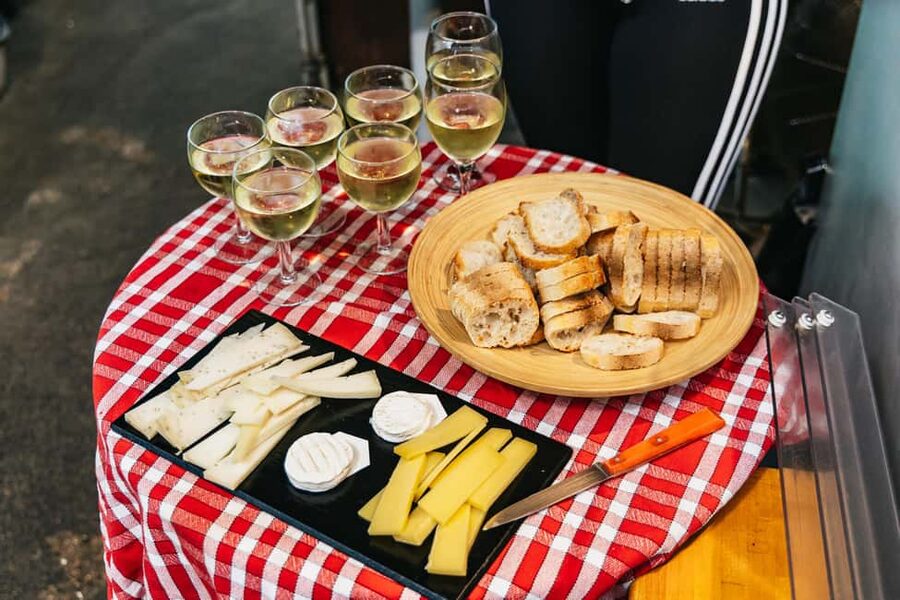
- Eight to 10 tasting stops: Expect a broad sampling of cheese, charcuterie, pastries, chocolate, wine, and seasonal French foods.
- A real neighborhood walk: The route explores Le Marais, including narrow streets, local shops, cafés, galleries, and a traditional market atmosphere.
- Small-group format: With up to 10 people, the guide can talk with you rather than deliver a speech to a crowd.
- One restaurant visit: The restaurant stop adds savory food and may include specialties such as snails, charcuterie, or local street food.
- Meal-sized tasting: Several people found they did not need dinner afterward, so plan your appetite accordingly.
- Weather matters: Comfortable shoes, warm layers, an umbrella, and rain gear are sensible for this mostly outdoor walking experience.
Why Le Marais works so well for a food tour
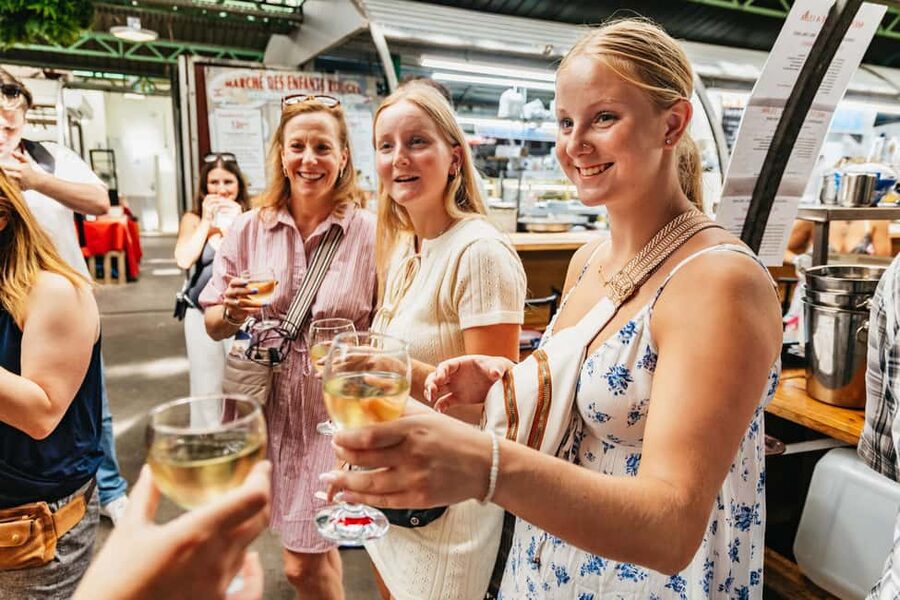
Le Marais gives you more than a string of snacks. It is an attractive, walkable Paris district where food, architecture, shopping, art, and daily life sit close together.
As you move through the neighborhood, you can expect the guide to point out cafés, galleries, high-end shops, and older buildings between tastings. That matters because the walk gives context to what you are eating. A cheese is not just a bite of dairy, and a pastry is not just a sweet stop. The guide explains how French food fits into local habits and customs.
The route also heads away from the best-known streets toward a traditional market setting. Fresh produce and specialty foods help you see how Parisians shop, not just how visitors eat in a restaurant.
You should not expect a grand historical tour with long lectures. The strength here is the informal blend of neighborhood background, food knowledge, and conversation. Several guides have been praised for explaining French customs, architecture, art, and local life while keeping the tone light.
That balance is important. A food tour can become tiring if every stop turns into a classroom. Here, the tasting breaks keep the walk moving, while the guide’s stories give each area more meaning.
More Food Tours in Paris
- Authentic Parisian Gourmet Food Tour with 10 Local Dishes & Wines
★ 5.0 · 4,754 reviews - Devour Paris Ultimate Food Tour
★ 5.0 · 2,087 reviews - Private Montmartre Food Tour with Wine, Cheese & Pastries
★ 5.0 · 1,027 reviews
The opening tastings: a quick introduction to French flavor
The exact order of the stops can vary by day and season, but the food list gives you a clear idea of the experience. Early tastings may include cheese served with a crisp baguette, along with wine chosen to match.
This is a useful way to start because French cheese can be confusing if you are unfamiliar with it. You get to taste several styles and learn how locals might serve them. The baguette matters, too. It provides the simple, crunchy base that makes a small tasting feel like part of an everyday French meal.
The tour also includes hams and charcuterie. These savory foods add weight to the experience and keep it from turning into a parade of sweets. Some groups have sampled sandwiches, jams, or other French specialties as well, depending on the day and the season.
I like this variety. You are not paying for eight versions of the same pastry. The experience moves between salty, creamy, sweet, crisp, and rich flavors.
One useful tip: avoid arriving after a large breakfast. The tastings are generous enough that a full meal beforehand could leave you uncomfortable. At the same time, food preferences are not detailed in the information provided, so you should ask about ingredients and dietary needs before booking if that is important to you.
Cheese, baguette, and wine in a practical Paris setting
Cheese and wine are central to the experience, but this is not advertised as an advanced wine seminar. The emphasis is on tasting French products and understanding how they are enjoyed.
You may learn why a particular cheese pairs well with bread or wine, how locals buy these foods, and which flavors are common in French meals. The guide can also help you identify ingredients and styles that you might want to seek out later.
This is especially useful near the beginning of a Paris trip. Once you know what you like, you can visit a fromagerie, market, or wine shop with more confidence. You may also leave with ideas for a picnic or a simple hotel-room meal.
One point deserves a clear warning. At least one highly positive account felt that the wines were ordinary brasserie pours rather than special French bottles from a cellar. If you want a serious wine-focused experience, this may not satisfy you. If you mainly want wine alongside cheese and conversation, it fits the bill better.
The tour is about the whole food culture, not the technical quality of every drink.
The market stop and Le Marais away from the main streets
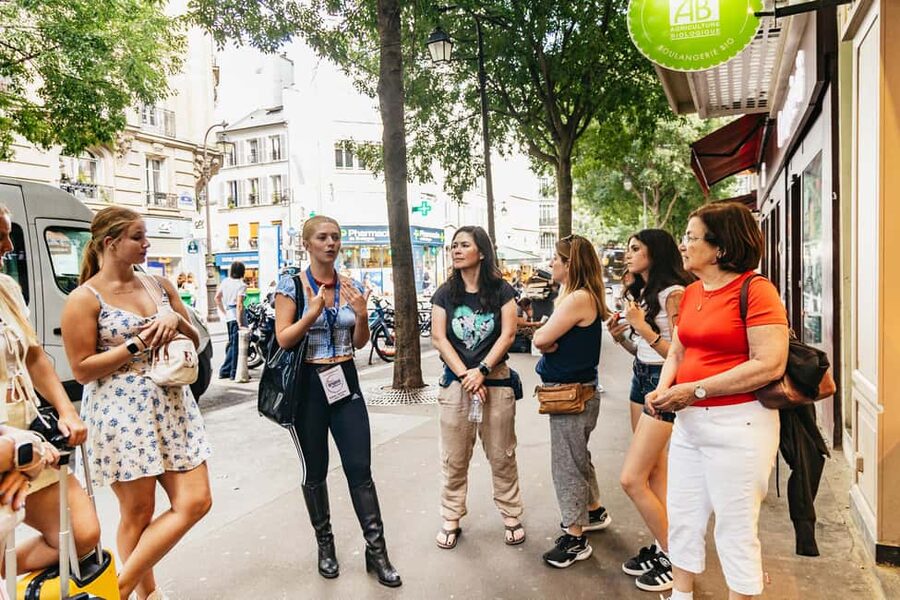
The market portion adds a welcome change of pace. Rather than staying only in polished shops and famous streets, the route visits a traditional market atmosphere with fresh products and other food items.
The Marché des Enfants Rouges received special praise as a favorite part of the walk. The information supplied does not guarantee that every departure visits every market stall or follows the same order, but the market setting is part of the intended character of the experience.
This kind of stop is valuable because it shows food in its normal setting. You see ingredients before they become a restaurant dish, and you get a better sense of how a neighborhood feeds itself.
The narrow streets also make the walk feel more local. You are not simply being driven between food counters. You walk from place to place, passing shops and cafés as the guide explains the area.
Le Marais is a popular district, so do not imagine total solitude. Its charm comes from the mixture of residential streets, businesses, old architecture, and people going about their day. The tour takes you beyond the most obvious path, but it remains a well-known part of Paris.
More Walking Tours in Paris
- Paris Top Sights Half Day Walking Tour with a Fun Guide
★ 5.0 · 2,893 reviews - Montmartre Hidden Gems and Scenic Highlights Walking Tour
★ 5.0 · 2,684 reviews - Montmartre Hill French Gourmet Food and Wine Tasting Walking Tour
★ 5.0 · 2,588 reviews - Paris Île de la Cité and Notre-Dame Walking Tour With Crypt
★ 5.0 · 2,272 reviews
The restaurant stop adds a proper savory break
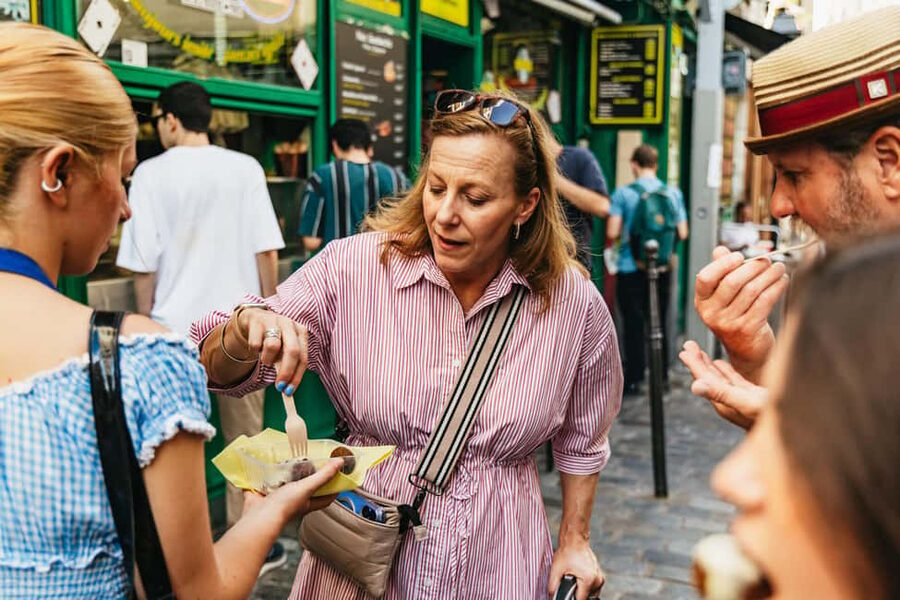
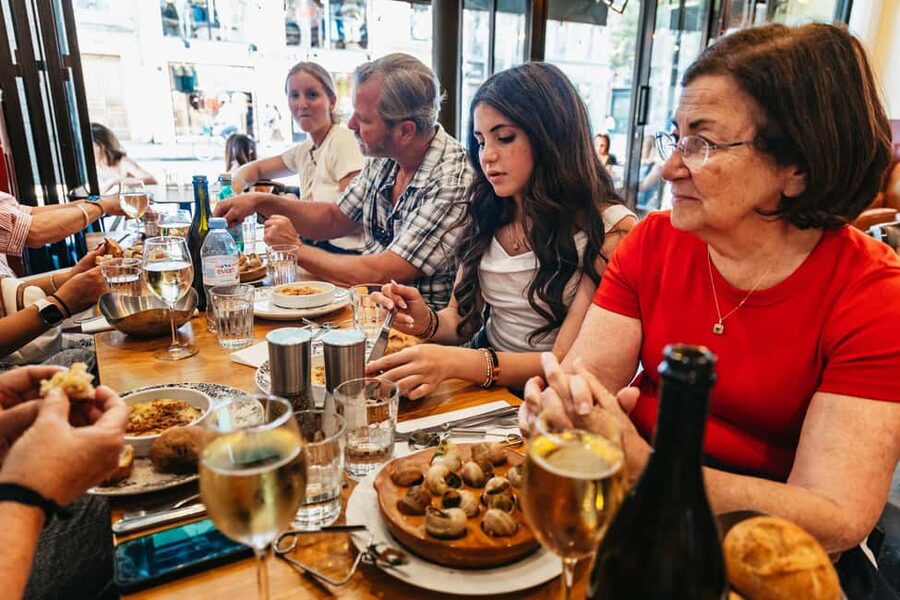
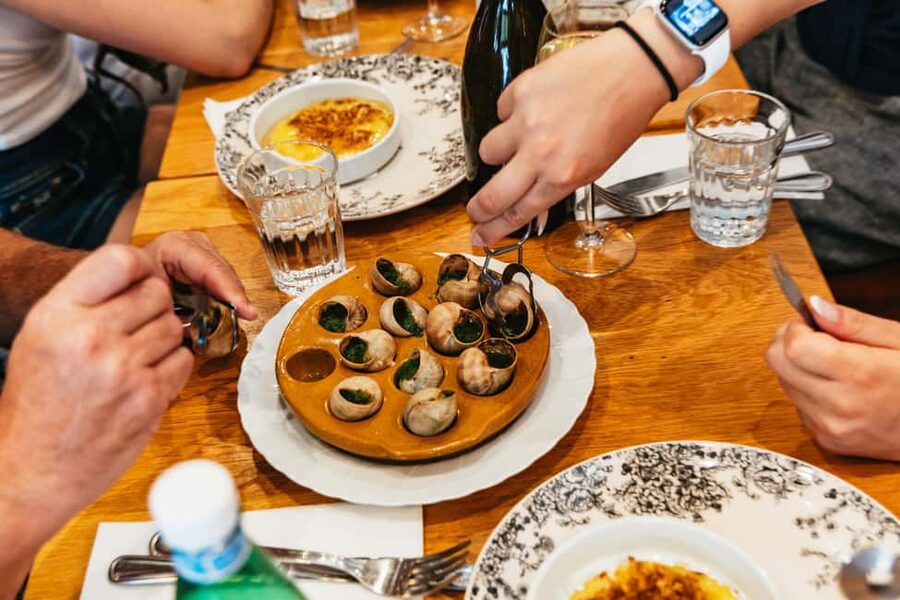
One restaurant stop is included, which helps turn the tastings into something closer to a full meal. This is where you may encounter heartier French specialties, including snails, charcuterie, or other seasonal items.
For many people, this will be the most useful stop. Small tastes of chocolate and pastry are fun, but a restaurant setting gives you time to sit, ask questions, and try food that may feel less familiar.
Snails can be a pleasant surprise if you have never tried them. The experience gives you a chance to sample a classic French dish without committing to a full plate at a restaurant later.
The stop also makes the tour more social. You are not rushing in and out of every shop. You share food with the small group and have room to talk with the guide.
There is one practical limitation. The tour is not described as a restaurant meal with a fixed menu, so the exact dishes can change. Seasonal availability and the food businesses open on the day will shape what you receive.
Pastries, chocolates, and the sweet finish
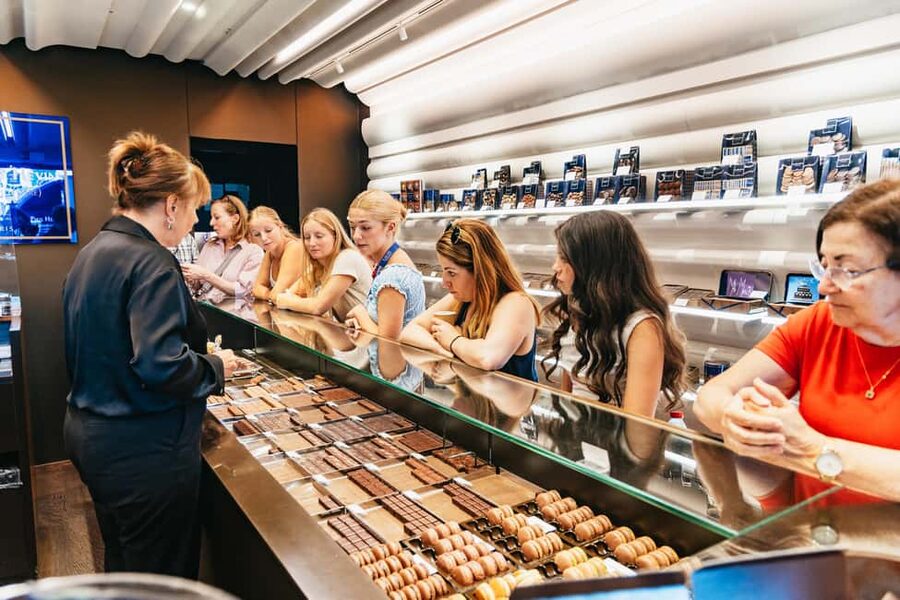
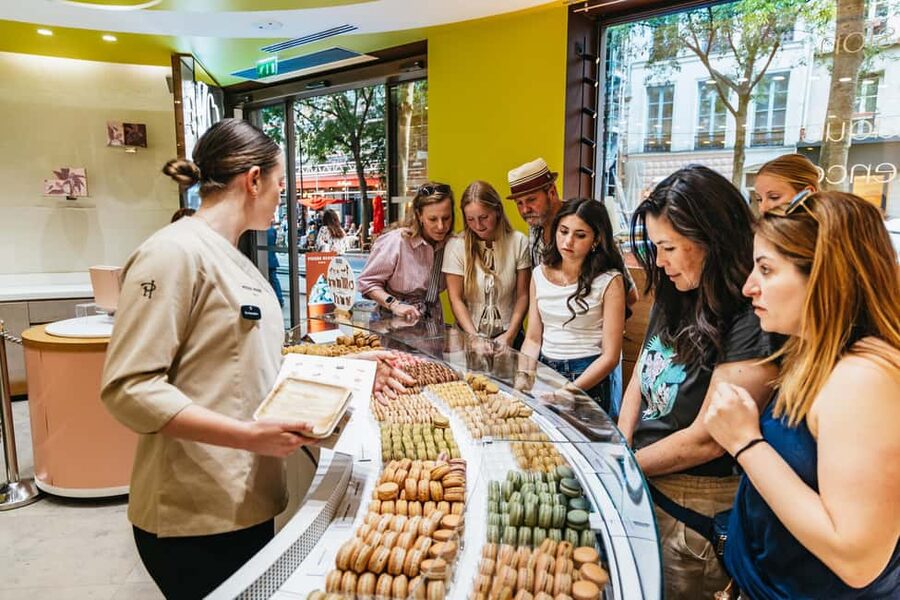
The sweet stops include fresh pastries and French chocolates, with other desserts appearing according to the route and season. These are not minor extras. The combination of pastries, chocolate, jams, and other sweets can leave you pleasantly full.
The best part is the contrast with the savory tastings. After cheese and charcuterie, a pastry or chocolate gives your palate a clean change of direction. A good guide will also explain local habits and help you pay attention to texture, ingredients, and balance rather than simply telling you that something tastes good.
Some guides have added tasting games, such as guessing the kind of cheese or identifying ingredients in a dish. Those small activities can make the experience more memorable, especially if you are traveling with older children or teenagers. Children under four are not allowed, and the tour is still best for people who enjoy walking and trying unfamiliar foods.
If you have a sweet tooth, this part may be the highlight. If you prefer savory food, the route includes enough cheese, ham, charcuterie, and restaurant fare to keep the balance reasonable.
The guides make the biggest difference
The food matters, but the guide is likely to shape your memory of the tour more than any single tasting.
Several named guides have received strong praise for different reasons. Dorine has been described as warm, caring, and generous with recommendations. Sasha has been noted for historical background, conversation, and a friendly manner. Louis has been praised for mixing humor, culture, food, and practical advice.
Margot has used tasting games and explained French customs. Arthur has connected the food with contemporary culture, architecture, art, and the Marché des Enfants Rouges. Hugo has helped people plan later meals, shops, bistros, and bars in the neighborhood.
These details point to a useful strength: the best version of the tour feels like a local introduction, not a rehearsed list of stops. The guide can answer questions about what to order, how people eat certain foods, and where to return later.
Your exact guide will not be guaranteed in advance, so you should book for the format and food rather than for one named person. Still, the repeated praise for guides across different departures is a good sign.
Some groups have been very small, with only three or four people. In those cases, the walk can feel almost private, and you have more freedom to ask questions. The maximum group size is 10, which remains far more personal than a large bus or crowd-based food tour.
How much food do you really get?
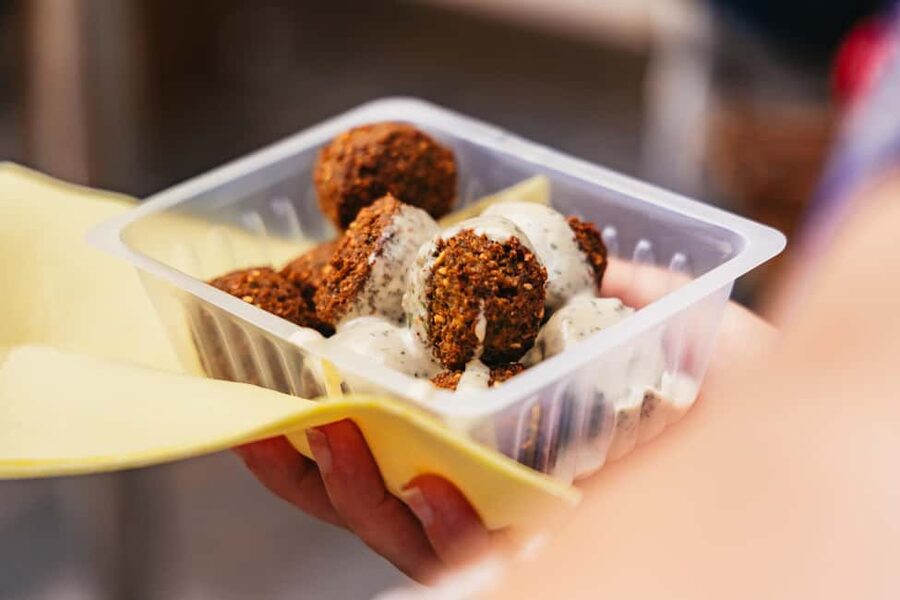
You should treat this as a substantial eating experience. The listed stops include cheese, bread, wine, cured ham, charcuterie, pastries, chocolate, seasonal specialties, and one restaurant visit.
Several people have found they were full enough to skip dinner afterward. That makes the tour useful as a late lunch or early afternoon activity, depending on the available starting time. It also means you should avoid scheduling a major dinner immediately afterward unless you are comfortable eating lightly.
The three hours and 18 minutes allow time for walking, tasting, and conversation. This is not a quick market sweep. You will spend a meaningful part of the day on foot.
Because the exact start times depend on availability, check the schedule before planning dinner, museum visits, or timed attractions. Give yourself a little breathing room afterward. A food tour can run on a relaxed social pace, and nobody enjoys racing away from the final tasting.
Is $148 a fair price?
At $148 per person, this is not a cheap way to grab lunch. You can buy a baguette, cheese, pastry, and drink for much less if you are comfortable choosing everything yourself.
The value comes from the range of stops, the guide, the neighborhood orientation, and the chance to try foods you might overlook. You are also paying for local recommendations and for the convenience of having someone explain what you are tasting.
The small group improves the value. With no more than 10 people, you have a better chance of speaking with the guide and getting answers suited to your interests. If the group is smaller, the experience may feel especially personal.
I would consider the price reasonable for someone who wants a guided introduction to French food and Le Marais, especially early in a Paris stay. I would hesitate if you are mainly looking for premium wine, a formal cooking lesson, or a luxury restaurant meal.
The included food may replace lunch or dinner, which softens the cost. Think of the fee as paying for a guided neighborhood outing with a meal’s worth of tastings, not just for a few samples.
Who should book this walk?
I would recommend it to first-time Paris visitors who want help getting oriented in Le Marais. It also suits returning visitors who have seen the major sights and want more time in a neighborhood setting.
Food lovers will appreciate the range. Curious eaters will get the chance to try snails, unfamiliar cheeses, local charcuterie, and seasonal specialties without having to plan every stop.
The tour also works well for couples, families with children over four, and small groups of friends. Teenagers may enjoy the tasting games and the mix of sweets and savory foods.
You should think twice if you dislike walking, have major food restrictions that have not been confirmed, or want a quiet sit-down meal. The experience is social and active, with much of the time spent moving through the streets.
Bring comfortable shoes and dress for the weather. Warm clothing, an umbrella, rain gear, and weather-appropriate layers are specifically advised. Paris weather can turn a pleasant food walk into a damp one quickly.
Booking details that matter
The meeting point is in front of a green shop called Le Repaire de Bacchus. The tour ends back at that same meeting point, which makes the return simple and helps you plan the rest of your day.
An English-speaking live guide leads the walk. The tour lasts 198 minutes, and starting times vary, so check availability before booking.
Free cancellation is available up to 24 hours before the activity for a full refund. You can also reserve now and pay later, which is useful if your Paris plans are still shifting.
The overall rating is 4.7 from 323 ratings, and the strongest pattern is clear: people value the guides, the personal tone, the food variety, and the way the walk reveals more of Le Marais.
Should you book the Paris food walk?
Book it if you want a friendly, food-heavy introduction to Le Marais and like the idea of tasting your way through a neighborhood rather than sitting in one restaurant. The strongest reasons are the small group, the broad range of samples, and guides who bring in local customs, architecture, and practical recommendations.
Do not book it expecting a high-end wine tasting or a tightly scripted culinary masterclass. The wine may be straightforward, and the exact foods can change with the season.
For most people, I would schedule this early in a Paris visit. You will learn what foods you enjoy, find parts of Le Marais worth revisiting, and finish with a useful list of places to explore on your own. At $148, it is a splurge, but the combination of a neighborhood walk, a meal-sized spread, and personal guidance makes it a solid choice for curious eaters.
FAQ
How long does the Paris walking food tour last?
The tour lasts 198 minutes, or three hours and 18 minutes. Check availability for the starting times.
What food is included?
The tour includes cheese and wine, chocolates, fresh pastries, French specialties according to the season, and food at one restaurant stop. Tastings may include baguette, cured ham, charcuterie, sweets, and other local delicacies.
How many tasting stops are included?
You can expect 8 to 10 food tasting stops during the walk.
What language is the tour offered in?
The tour is offered in English with a live English-speaking guide.
How large is the group?
The group is limited to 10 participants. Some departures may be smaller, depending on bookings.
Where does the tour start and finish?
You meet in front of the green shop called Le Repaire de Bacchus. The tour ends back at the same meeting point.
What should I bring, and who cannot join?
Wear comfortable shoes and weather-appropriate clothing. Warm layers, an umbrella, and rain gear are recommended. Children under four are not permitted on the activity.
More Cheese in Paris
- Paris: Montmartre Cheese, Wine & Pastry Guided Walking Tour
★ 4.8 · 2,255 reviews - Paris Le Marais Food Tour With 10+ Tastings, Cheese, Wine & More
★ 5.0 · 985 reviews - Paris: Wine and Cheese Lunch
★ 4.9 · 596 reviews - Cheese & Wine Tasting in Montmartre with Local Cheesemonger
★ 5.0 · 470 reviews
Just listed in Paris
- Paris: Giverny & Versailles Small Group or Private Tour★ 4.5 · 49 reviews
- Chartres Cathedral 5 Hours Tour from Paris with Private Transport★ 4.5 · 49 reviews
- Paris: Louvre photoshoot or Seine bridges Eiffel Tower walk★ 5.0 · 49 reviews
- Paris: Choux Pastry and Chocolate Éclair Making Class★ 4.9 · 50 reviews
- Private tour of the Champagne area, meet local producers and taste their Champagne, start from your hotel in Paris.★ 5.0 · 50 reviews
- Paris Eternelle Notre-Dame Virtual Reality Tour★ 4.5 · 50 reviews
- Normandy D-Day Landing Beaches Private Day Trip from Paris★ 5.0 · 50 reviews
- Disneyland® Paris 1 Day with Round-Trip Train Tickets from Paris★ 4.0 · 50 reviews
Paris Tours, compared.



Versailles Palace and Gardens Full Access Ticket
Read our review →

Eiffel Tower Entry Ticket with Optional Summit Access
Read our review →

Louvre Guided Tour with Reserved Access & Boat Cruise
Read our review →
Moulin Rouge Cabaret Show Ticket with Champagne
Read our review →Browse the lists this tour appears in