Reviewed · PRIVATE
Australian private Somme tour including Sir John Monash Centre
The most powerful part of this Somme tour is the way it links Australian sites to the wider Battle of the Somme. You move from the Australian National Memorial and Sir John Monash Centre to Pozières, Lochnagar Crater, and the preserved trenches at Beaumont-Hamel. Olivier, the local guide, uses maps, photographs, and battlefield detail to make the ground easier to understand.
I like the private format, which gives your group room to ask questions and spend more time at places that matter most to you. I also like the comfortable, air-conditioned car and flexible pickup from Amiens, Arras, or Saint-Quentin. The main drawback is the long, tightly timed day, especially if you try to come from Paris. This tour cannot start in Paris, and lunch is not included.
Key points at a glance
- Australian focus: Villers-Bretonneux, the First Australian Division Memorial, Pozières, and the Sir John Monash Centre anchor the day.
- A guide who adds context: Olivier explains battles, people, maps, and troop movements as you drive between sites.
- Seven hours on the ground: The route covers memorials, a huge mine crater, a German position, and preserved trench lines.
- Private transportation: You travel in a spacious, air-conditioned car with bottled water and pickup arranged around Amiens, Arras, or Saint-Quentin.
- A serious but personal experience: The subject is sombre, yet the private setting lets you talk through difficult questions at your own pace.
- Plan around closures: The Sir John Monash Centre is closed during set winter dates, so check the operating dates before booking.
Why this Somme tour works so well for Australian history
The Somme battlefield can be hard to read at first. Modern roads, farms, villages, cemeteries, and memorials cover ground that was once cut by trenches and blasted by artillery. A private guide helps you connect those ordinary-looking places with the events that took place there.
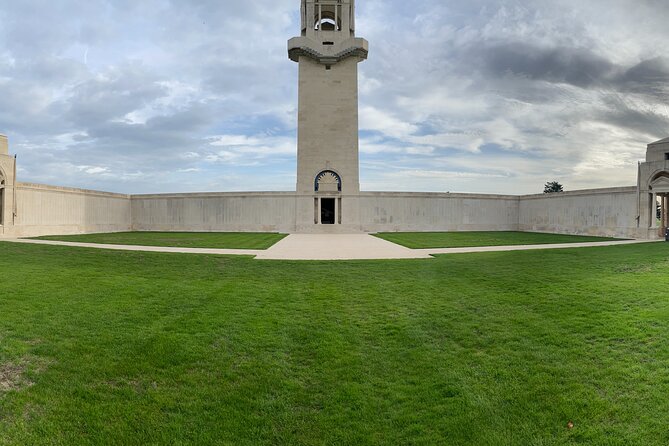
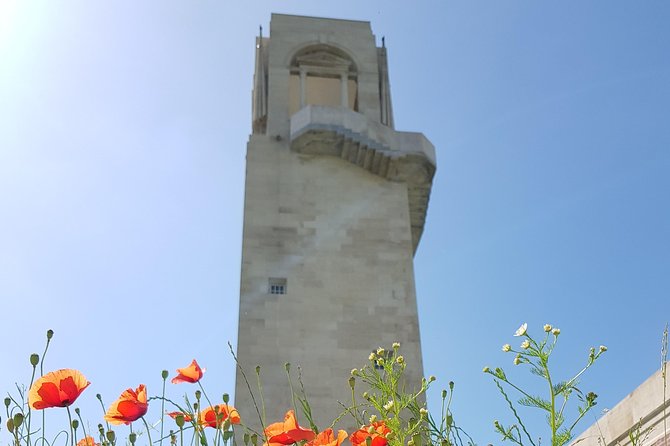
This tour puts the Australian story near the centre of the day. At the Australian National Memorial near Villers-Bretonneux, you see the memorial to about 11,000 Australians who fell in the Somme area and have no known grave. The nearby Villers-Bretonneux Military Cemetery adds a more intimate sense of individual loss.
The Sir John Monash Centre then gives you a dedicated account of Australia on the Western Front. Its displays are designed to explain the Australian contribution rather than treating it as a small footnote in a much larger war. Allow about an hour and a half here, since rushing through it would weaken the whole point of including it.
I would not limit this tour to Australians. If you want to understand how the war was fought, the route also covers mine warfare, trench systems, German defensive positions, tanks, and the experience of troops fighting for small but important patches of ground.
A few other France half-days to compare
- Paris: Private Photoshoot at the Eiffel Tower
★ 4.7 · 2,636 reviews - Top Private Cruises in Paris with French Champagne and surprises
★ 5.0 · 1,553 reviews - Private Paris Airport Arrival Transfer – CDG & ORLY Airports
★ 4.5 · 1,119 reviews
Villers-Bretonneux and the Australian National Memorial
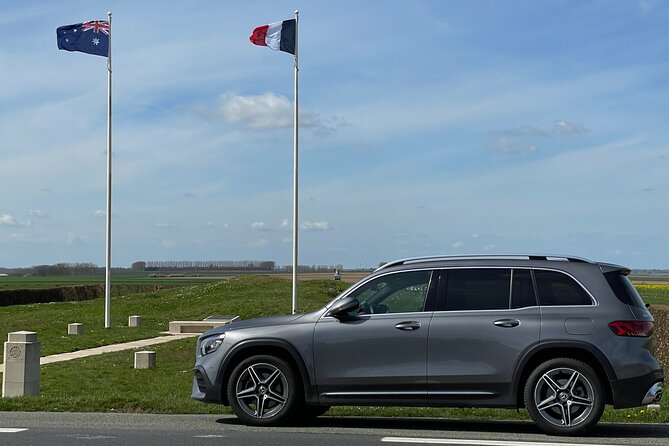
The first major stop is the Australian National Memorial at Villers-Bretonneux. You have about 30 minutes here, with no separate admission charge.
The memorial is a quiet place to begin. Its scale reflects the number of missing Australians remembered there, while the cemetery nearby brings the subject down to rows of individual graves. That contrast matters. One site gives you the wider cost of the campaign, while the other makes the human loss easier to grasp.
This is also a useful opening stop because it places Australian service at the centre of the tour from the start. You do not spend the morning waiting for the Australian connection to appear. It is right there in the memorial and cemetery.
Thirty minutes is enough for an introduction, but it is not a long visit. If your main interest is military memorial architecture or cemetery research, you may want to ask Olivier how the private schedule can be adjusted. The tour is designed to cover several key sites in one day, so every stop has a planned limit.
The Sir John Monash Centre gives the day its backbone
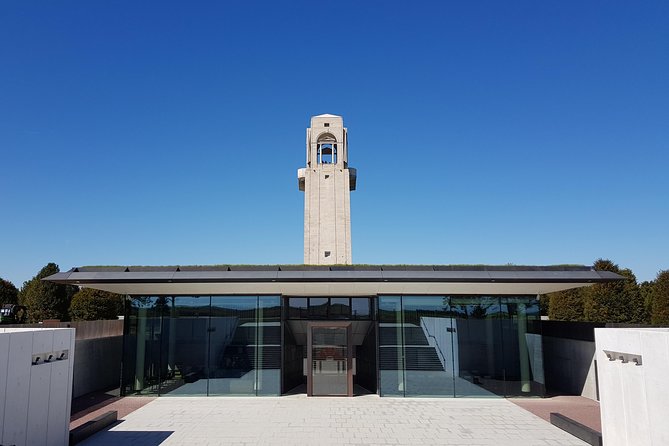
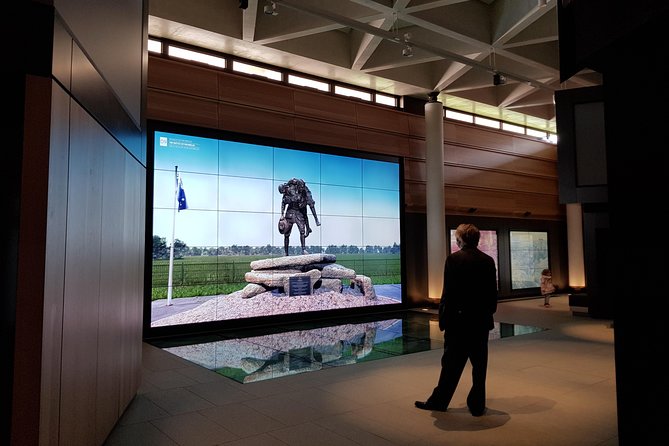
The Sir John Monash Centre is the major indoor stop and one of the strongest reasons to choose this particular route. You have about 90 minutes to follow Australia’s story on the Western Front through the centre’s exhibits.
I like the way this visit can give structure to everything you see outdoors. A crater, memorial, or bunker fragment can be difficult to interpret on its own. After the centre, you have a clearer idea of the Australian units, leaders, and battles connected with the ground around Villers-Bretonneux and Pozières.
The tour guide adds another layer. Olivier has been praised for using maps and photographs to help you picture the wartime setting. That is especially useful during drives, when you are moving through places that may look peaceful and ordinary today.
The centre is free to enter, but do not treat that as a reason to squeeze it into a few minutes. It is the longest scheduled stop, and rightly so. The rest of the day is mostly outdoors, with short visits at several sites.
Pay close attention to the closure dates when you book. The provided information lists closures from December 24 or 25 through January 1 or 2, depending on the stated schedule, and another closure from early or mid-February through March 1. Because the dates differ between the supplied booking notes, confirm the exact dates for your tour before paying.
Lochnagar Crater shows the power of mine warfare
At Lochnagar Crater, you spend about 15 minutes beside the remains of the largest mine used by the British Army on the first day of the Battle of the Somme.
The crater makes an immediate point that a museum model cannot. It shows the scale of the explosives used to break through or disrupt German positions. You are looking at a physical scar left by the opening of the battle, not just reading a date on a plaque.
Fifteen minutes is brief, but it fits the rhythm of the day. This is a viewpoint and explanation stop rather than a long museum visit. Wear suitable shoes and clothing, since the tour operates in all weather and several parts of the route are outdoors.
The value here comes from Olivier’s explanation. Without a guide, you might see a large depression in the ground and move on. With maps and battlefield context, you can better understand why this particular crater mattered and how mine warfare fitted into the opening attack.
Same city, a completely different afternoon:
- Paris: Louvre Museum Timed-Entrance Ticket
★ 4.6 · 71,977 reviews - Disneyland® Paris 1-Day Ticket
★ 4.6 · 49,412 reviews - Paris: Versailles Palace and Gardens Full Access Ticket
★ 4.6 · 41,579 reviews - Paris: Evening River Cruise with Music
★ 4.4 · 22,721 reviews
Lunch in La Boisselle or Pozières
The schedule includes a 45-minute lunch break in a local restaurant or café in La Boisselle or Pozières. Lunch is not included in the price, so you should budget separately and allow enough time to order and eat.
This pause is practical, but it also helps the day. A full morning of memorials and battle explanations can be heavy. Sitting down for a meal gives you time to ask Olivier questions, sort out place names, and think about what you have seen before heading back outside.
The exact restaurant or café is not fixed in the supplied details. That means you should not plan around a particular menu or dietary option unless you confirm it ahead of time. If lunch matters to you, ask about the planned stop when your pickup details are arranged.
The 45-minute break is fairly tight. You will want to keep an eye on the clock, especially if your group needs extra time to order. The upside is that the tour keeps moving and still fits the main Somme sites into one day.
Pozières tells the Australian story through ground and fragments
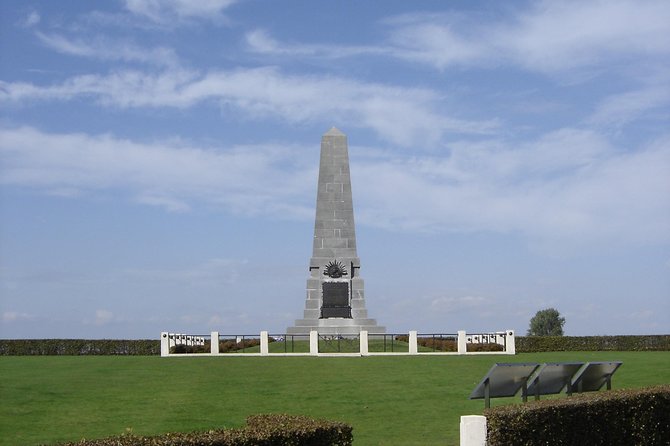
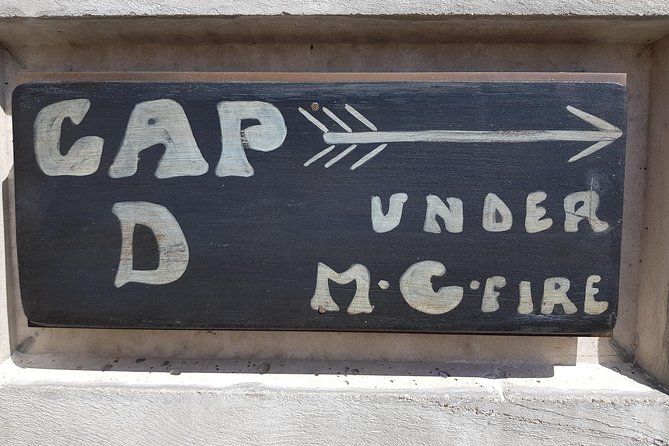
After lunch, the route continues through Pozières, described as the scene of the bloodiest Australian struggle on the Western Front. You visit remnants of the Gibraltar bunker and several memorials connected with the fighting.
The First Australian Division Memorial is scheduled for about 15 minutes. It is a short stop, but an important one for understanding the Australian military presence in this part of the front. The memorials at Pozières are not isolated from the village. They sit within a place that was fought over repeatedly and that helps explain why this section carries such weight in Australian memory.
The remaining traces of the Gibraltar bunker are especially useful because they point to the defensive side of the battle. You are not only looking at monuments to the dead. You are also seeing what survives of the positions that shaped movement, shelter, and attack.
Olivier’s personal approach should be helpful here. The private setting allows you to ask about particular units, commanders, or parts of the battle rather than relying only on a fixed group explanation. Previous descriptions of his guiding highlight his ability to discuss individual personnel as well as the wider campaign.
Windmill Memorial and the first use of tanks
The Windmill Memorial receives about 20 minutes. It marks a German position captured by Australian troops during the Battle of Pozières.
Across the road, the Tanks Memorial marks the location associated with the first use of tanks in history. This pairing gives you two useful subjects in a small area: the capture of a German position and the arrival of a new form of warfare.
I like this stop because it widens the tour beyond cemetery visits. The Somme was not only a story of infantry attacks and trench lines. It was also a place where military technology was tested under terrible conditions.
The short visit means you will depend on the guide to connect the memorials with the battle. Take the opportunity to ask questions while the details are fresh. If your group has a strong interest in armoured warfare, tell Olivier early in the day so he can give that subject the attention it deserves within the schedule.
Beaumont-Hamel preserves the shape of trench warfare
The final listed stop is the Newfoundland Park at Beaumont-Hamel, including its well-preserved trench system. You have about 30 minutes to see the trenches and consider how troops lived and fought in this type of position.
This is one of the most effective places on the route for understanding physical conditions. Memorials tell you who was lost. Preserved trench lines help you picture the cramped, exposed, and defensive nature of the fighting.
The Newfoundland connection also broadens the day beyond the Australian experience. That is useful because the Somme was an international campaign. The tour remains focused on Australia, but Beaumont-Hamel helps you see the wider Allied effort and the different national stories tied to the same battlefield.
Again, half an hour is enough for an introduction, not a detailed archaeological visit. If you want a slow, reflective walk through trench remains, this schedule may feel brisk. If you want several major sites in one day, the timing is a fair compromise.
Olivier’s guiding style makes the private format worthwhile
The guide can make or break a battlefield tour. Here, Olivier is the named guide associated with the experience, and his role goes beyond driving between stops.
He explains the day at pickup, then uses maps, photographs, and geographical detail to help you understand what happened where. That is a practical skill. The Somme is spread across villages and open fields, so the story can become confusing without a clear sense of direction.
The private arrangement also gives you more control than a large group tour. You can ask for clarification, discuss your family connection to the war, or spend a little more time on a memorial that matters to you. The day still has a route and approximate timings, but it is not built around keeping a busload of strangers together.
The guide has also been described as attentive to comfort and careful about making the day easy from hotel pickup onward. That matters on a seven-hour outing, particularly when the subject is emotionally demanding.
Price, transport, and the real value of the day
At $372.45 per person, this is not a low-cost sightseeing outing. The price is easier to justify for a small private group, since it covers private transportation, a driver-guide, a professional guide, bottled water, and the ability to shape the conversation around your interests.
You are also paying for local route planning. The sites are spread across the Somme area, and moving between them without a car can be awkward. The air-conditioned vehicle is a practical benefit, especially since the tour operates in all weather.
Admission to the listed stops is free, but that does not make the day free to reproduce. You would need to arrange transport, work out the order of sites, learn enough background to interpret them, and manage the driving yourself. If you are already in Amiens, Arras, or Saint-Quentin, the private tour offers a straightforward way to cover a lot in one day.
The value is strongest for two to four people who want focused guiding. Solo visitors may find the per-person cost harder to accept, while a family or small group can spread the private vehicle cost across several people. Group discounts are offered, but the exact saving is not provided, so ask before booking.
Timing, pickup, and what to bring
The start time is 9:30 a.m. Pickup can be arranged from a hotel, B&B, or train station in the Amiens, Arras, and Saint-Quentin areas. The tour may also start from Arras or Saint-Quentin.
It cannot originate in Paris because of the distance and the time available. If you are staying in Paris, you will need to reach one of the supported pickup areas independently, and a same-day Paris plan would be impractical for this seven-hour route.
Dress for the weather. The tour operates in all conditions, and several stops involve being outdoors near memorials, fields, craters, or trench remains. Comfortable shoes, a weatherproof layer, and water are sensible choices, even though bottled water is supplied.
Children must be accompanied by an adult. Most people can take part, and the tour is near public transportation, but the supplied information does not give a detailed accessibility assessment for every stop. Ask the operator if someone in your group has specific mobility needs.
Free cancellation is available up to 24 hours before the local start time for a full refund. Changes or cancellations inside that window are not accepted for a refund.
Who should book this Australian Somme tour
I would choose this tour if you have a family connection to the Australian forces, a serious interest in the First World War, or limited time in northern France and want a guide rather than a self-drive day.
It is also a good choice if you value explanation more than a long list of attractions. The route gives you memorials, a crater, a bunker remnant, a tank memorial, a museum, and trench remains, but the real thread is how Olivier connects them.
I would think twice if you want a slow visit at every cemetery or an extensive museum day. The schedule covers seven main stops plus lunch, so some visits are necessarily short. You should also avoid booking during the Sir John Monash Centre closure period if that centre is the main reason for your trip.
Should you book it?
Book this private Somme tour if you want the Australian story explained on the ground, with a local guide, private transport, and a route that goes well beyond Villers-Bretonneux. The combination of the Sir John Monash Centre, Pozières, Lochnagar Crater, and Beaumont-Hamel gives the day useful range.
The price makes the most sense for a small group, and the schedule suits people who prefer a full, focused day to a loose afternoon visit. Confirm the winter closure dates and your pickup point before booking. If those details work for you, this is a thoughtful and well-planned way to approach one of Europe’s most sobering battlefields.
FAQ
How long does the Australian Somme tour last?
The tour lasts about seven hours and starts at 9:30 a.m.
Where can pickup be arranged?
Pickup can be arranged from a hotel, B&B, or train station in the Amiens, Arras, and Saint-Quentin areas. The tour can also start from Arras or Saint-Quentin.
Can the tour start in Paris?
No. The tour cannot originate in Paris because the travel distance would not fit the available time.
Is the tour private?
Yes. Only your group takes part in the activity.
Is lunch included?
No. Lunch is not included. A 45-minute break is planned at a local restaurant or café in La Boisselle or Pozières.
Is the Sir John Monash Centre always open?
No. The centre closes during set winter periods. The supplied booking details give slightly different start dates for those closures, so confirm the exact dates before booking.
Is transportation included?
Yes. Private transportation in an air-conditioned vehicle is included, along with a driver-guide, professional guide, and bottled water.
Does the tour operate in bad weather?
Yes. The tour operates in all weather conditions, so you should dress appropriately.
What is the cancellation policy?
You can cancel up to 24 hours before the experience start time for a full refund. Cancellations or changes made less than 24 hours before the start time are not refunded.
Just listed in France
- Paris: Giverny & Versailles Small Group or Private Tour★ 4.5 · 49 reviews
- Half-Day Walking Food Tour in Nice with Lunch★ 5.0 · 49 reviews
- Chartres Cathedral 5 Hours Tour from Paris with Private Transport★ 4.5 · 49 reviews
- Marseille: Frioul Archipelago Catamaran Cruise with Lunch★ 4.4 · 49 reviews
- Paris: Louvre photoshoot or Seine bridges Eiffel Tower walk★ 5.0 · 49 reviews
- Bonifacio: sunset catamaran trip and aperitif★ 4.6 · 50 reviews
- Paris: Choux Pastry and Chocolate Éclair Making Class★ 4.9 · 50 reviews
- Private tour of the Champagne area, meet local producers and taste their Champagne, start from your hotel in Paris.★ 5.0 · 50 reviews
Private, compared.


Top Private Cruises in Paris with French Champagne and surprises
Read our review →
Private Paris Airport Arrival Transfer – CDG & ORLY Airports
Read our review →
Paris Private Arrival Transfer from Charles de Gaulle (CDG) or Orly (ORY)
Read our review →
Private Montmartre Food Tour with Wine, Cheese & Pastries
Read our review →
Louvre Museum Timed Entry Ticket – Optional Private Guide
Read our review →