Reviewed · FULL-DAY
Full day Australian Battlefields Tour
The most powerful part of this full-day tour is the way it links huge military events to individual soldiers. At Villers-Bretonneux, Pozières, and Beaumont-Hamel, you are not simply looking at monuments. You are hearing how Australian troops fought, why so many died, and what their sacrifice meant to families back home. Brigitte De Cuyper, a local guide with a strong personal connection to the Somme, leads the day in English.
I like two things right away: the tour is private, so your group can ask questions and adjust the pace, and it includes both major memorials and smaller sites that are easy to miss alone. I also like the personal research Brigitte has done for visitors with relatives in the war. The main consideration is the pace. Eight hours covers a lot of ground, and the day can feel emotionally heavy as well as physically tiring.
Key points before you book
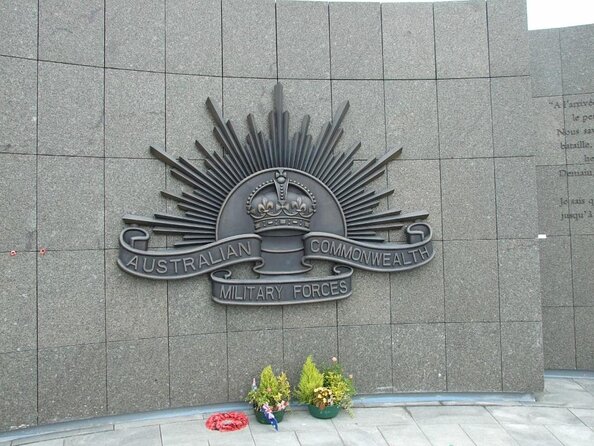
- Australian focus: Villers-Bretonneux, the Australian Corps Memorial, Pozières, and the 1st Australian Division Memorial receive special attention.
- A full Somme circuit: You visit Lochnagar Crater, Thiepval, Ulster Tower, Beaumont-Hamel, Chipilly, and other important sites.
- Sir John Monash Centre included: Allow one hour for this modern multimedia museum at Villers-Bretonneux.
- Private guiding: Only your own group takes part, giving you room for questions and personal family research.
- Lunch is extra: One hour is set aside at Le Hygge Restaurant Brasserie, but the meal is not included in the price.
- Pickup is offered: The advertised start is 9:00 am from Amiens, with pickup arrangements confirmed before the tour.
Why this battlefield day feels different
The Somme is easy to misunderstand if you visit only a few cemeteries. The distances look modest on a modern map, but the fighting in 1916 and 1918 involved shifting front lines, artillery, mines, tanks, trenches, and troops from several countries.
This tour gives you that wider picture while keeping the Australian story at its center. You begin in Amiens and move through the countryside toward Villers-Bretonneux, then south and north across the Somme battlefields. Along the way, Brigitte explains how the French villages, farms, roads, and churches were affected by the war.
Her local connection matters. She grew up in the area and can explain how the battlefield sites fit into present-day French life, not just military maps. Her guiding style also appears particularly useful if you have a family connection. She has researched Australian relatives before the day and, when possible, added cemetery visits or information connected with them.
The tour has a 4.9 rating from 92 reviews, with 98 percent of customers recommending it. The most consistent praise focuses on Brigitte’s storytelling, preparation, flexibility, and ability to make the subject personal. That does not make the day right for everyone, but it tells you where the real value lies: in the guide, rather than in transport alone.
A few other France half-days to compare
- Normandy American D-Day Beaches Full Day Tour from Bayeux
★ 5.0 · 2,103 reviews - Paris: Parc Astérix Full-Day Entrance Ticket
★ 4.4 · 1,697 reviews - From Paris: Full-Day Loire Valley Chateaux Tour
★ 4.4 · 1,269 reviews
Starting in Amiens and heading to Villers-Bretonneux
The advertised start time is 9:00 am, with pickup offered in Amiens. Previous arrangements have included accommodation and the train station, so give clear pickup details when booking. One visitor had a 45-minute wait because a hotel change was passed to the booking company but not to the guide. Confirming the exact pickup place directly is a sensible precaution.
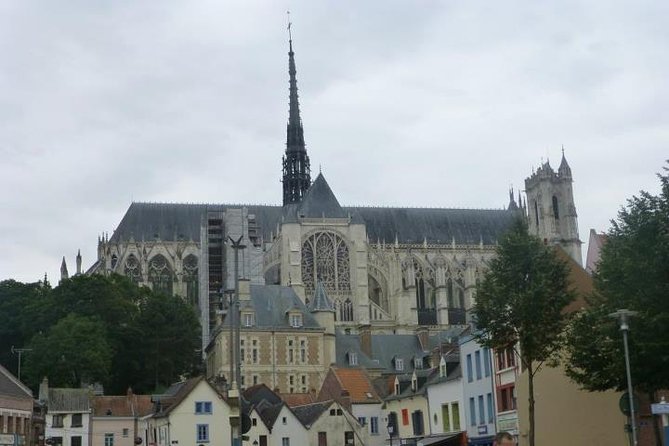
The first part of the drive introduces Amiens Cathedral and the city’s story from the Middle Ages to today. The cathedral is celebrating its 800th birthday this year and is described as the largest Gothic cathedral in the world. Even if you have come mainly for the war sites, this opening provides useful context about the region before the trenches and cemeteries changed it.
As you leave the city, Brigitte talks about the Somme area, local French culture, and the rural economy. This is a good use of driving time. You begin to see the Somme not as a remote outdoor museum, but as a lived-in part of France where agriculture and village life continue beside war memorials.
Villers-Bretonneux and the Australian story
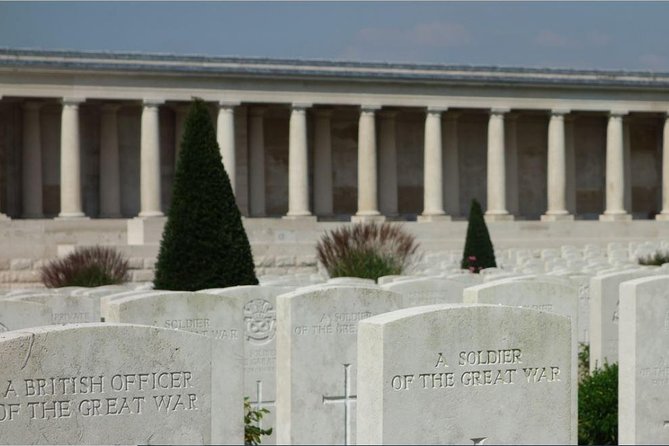
Villers-Bretonneux is the emotional opening of the battlefield portion. At the cemetery and Australian memorial, Brigitte explains Australia’s role on the Western Front, with particular attention to the Allied counter-attack in April 1918.
The Australian troops showed great bravery in this action, but the cost was severe. You have time to walk among the graves of the Diggers and pay your respects before going to the Sir John Monash Centre. The cemetery visit is brief at about 20 minutes, so you should not expect a long, unhurried period here. Its purpose is to orient you and prepare you for the museum.
The Australian Corps Memorial is at the heart of the Villers-Bretonneux cemetery. It was inaugurated by King George VI on July 22, 1922, and the memorial walls carry the names of 10,729 Australian servicemen. Each April 25, thousands gather here at dawn for ANZAC Day.
That detail gives the site a continuing role. This is not only a place connected with a battle from more than a century ago. It remains a major point of remembrance for Australia and the descendants of those who served.
One hour at the Sir John Monash Centre
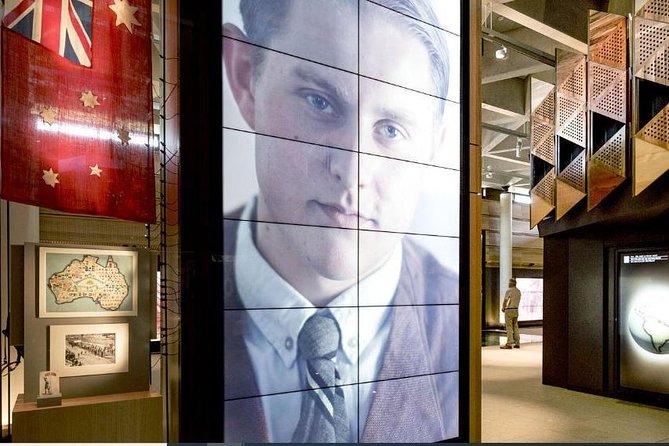
The Sir John Monash Centre is the most modern stop of the day. Its displays tell the Australian Western Front story through letters, diaries, life-size images, and interactive media. The aim is to let you encounter the war through the words and experiences of ordinary Australians.
You receive about one hour inside, with admission included. That is enough for a useful visit, though anyone with a strong interest in military museums may want longer. One visitor described the centre as the highlight and said they could have spent all day there.
This stop works well because it adds personal voices to the outdoor sites. At a memorial, you see names engraved in stone. Inside the centre, you connect those names with letters, decisions, fear, exhaustion, and family separation. I would pay close attention to the time here, since the rest of the itinerary moves quickly.
The centre has occasionally been closed, according to one tour account. When that happens, Brigitte has used other relevant stops and still filled the day with battlefield visits. It is worth checking the centre’s operating status before you go, especially if the museum is your main reason for booking.
Same city, a completely different afternoon:
- Paris: Louvre Museum Timed-Entrance Ticket
★ 4.6 · 71,977 reviews - Disneyland® Paris 1-Day Ticket
★ 4.6 · 49,412 reviews - Paris: Versailles Palace and Gardens Full Access Ticket
★ 4.6 · 41,579 reviews - Paris: Evening River Cruise with Music
★ 4.4 · 22,721 reviews
Chipilly and the Somme Valley viewpoint
The route then follows the Somme Valley to Chipilly. Here you pause at the 58th British Division Memorial, a stone sculpture of a soldier comforting a wounded horse. French sculptor Henri Gauquié created it, and it was inaugurated in 1922.
The monument honors the men of the 58th Division, but also the many horses that died during the war. That broader focus is useful. The First World War was fought with machines and artillery, yet horses remained vital for transport and supply, and they suffered terribly.
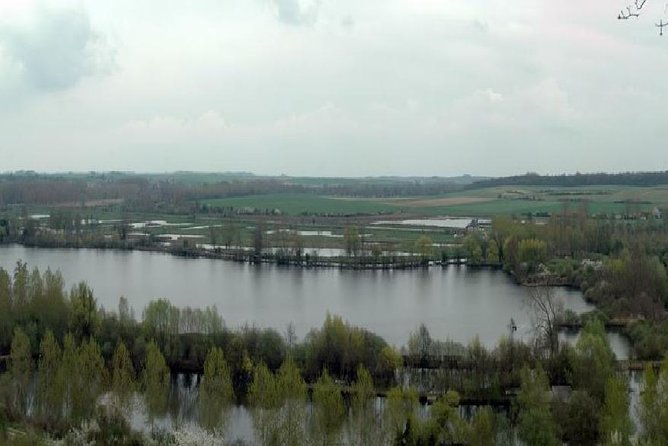
At the Camp Cesar viewpoint, you have about 10 minutes for a panorama over the Somme Valley. Brigitte uses the view to explain the opening of the 1916 Battle of the Somme, why it was planned, and which nations took part.
Ten minutes is short, but the viewpoint is valuable because it lets you see the ground troops had to cross. Battlefield history makes more sense when you can look across the fields and understand the distances, slopes, and villages involved.
Albert, lunch, and the golden Virgin
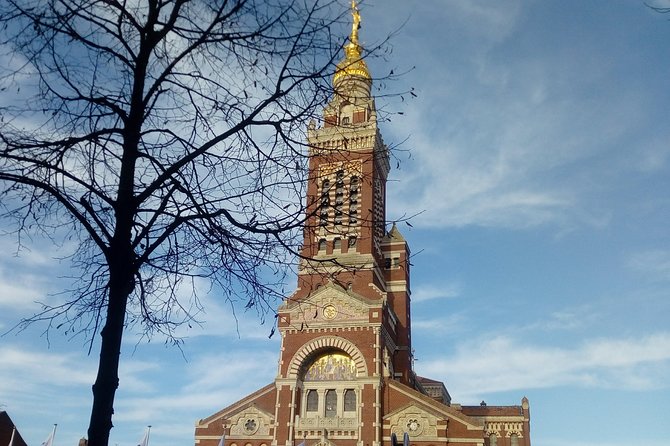
In Albert, you see the Basilica Notre Dame de Brebières, a Neo-Byzantine church built in the late 19th century. Its gold-covered dome carries a statue of the Virgin Mary holding the infant Jesus.
The basilica was destroyed during the First World War and rebuilt in the same form by Edmond Duthoit, son of the original architect. Brigitte also tells the wartime story associated with the statue, a local tale that adds human detail to the building.
Lunch follows at Le Hygge Restaurant Brasserie, with about an hour set aside. The meal is not included in the tour price, so plan for that extra cost. A local restaurant break is practical after several cemetery and memorial visits, and it gives you time to reset before the afternoon sites.
Lochnagar Crater and the scale of 1916
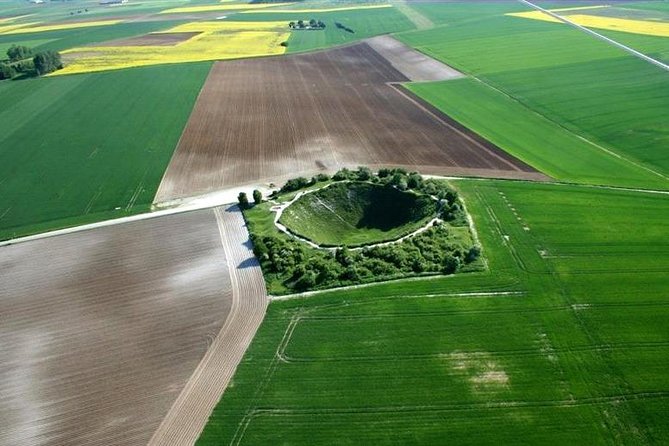
Lochnagar Crater is one of the clearest physical reminders of the battle. A large mine was placed beneath the German front line and detonated on the first day of the Battle of the Somme. It was one of 19 mines laid beneath the German positions to support the British infantry advance.
The crater is about 70 feet deep and 330 feet wide. You have around 20 minutes here, enough to grasp its size and hear how mines were used as part of the opening attack.
The site also shows why the Somme cannot be reduced to a simple story of advancing soldiers. Engineers, artillery crews, planners, infantrymen, and support units all formed part of the attack. The crater gives that complicated operation a physical shape.
Pozières and the Australian cost
At the 1st Australian Division Memorial, the focus turns sharply back to Australia. The fighting around Pozières lasted from July 23 to September 3, 1916, and nearly 7,000 men lost their lives there.
Australian official historian Charles Bean described Pozières as the place most densely marked by Australian sacrifice anywhere on earth. That is a sobering idea, and Brigitte explains the battle in a way that connects military movements with the human cost.
You also visit the Windmill site, an Australian memorial created in the 1930s at Bean’s suggestion. It commemorates 23,000 casualties, including those who died in the surrounding area. Across from it is the Tank Memorial, where the discussion shifts to tanks and the changing nature of modern warfare.
The stops at Pozières last about 20 minutes each. That timing allows you to see the key memorials, but it is not designed for a long private ceremony or extensive photography. If you are visiting an ancestor’s grave, tell Brigitte in advance so she can judge where the schedule may need to change.
The tour also includes Mouquet Farm, another name closely linked with the Australian fighting around Pozières. The supplied schedule gives no separate duration for this stop, so expect it to form part of the route and battlefield explanation rather than a long independent visit.
Thiepval and the meaning of missing
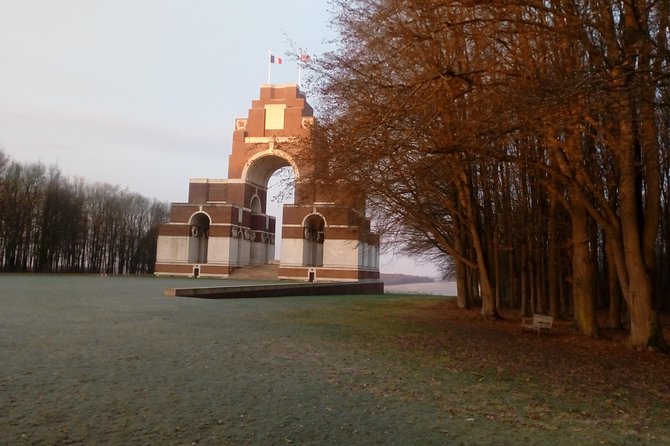
The Thiepval Memorial to the Missing is one of the largest and most imposing memorials on the Western Front. Its walls record the names of more than 72,000 soldiers who are missing or whose remains were recovered but could not be identified.
You have about 45 minutes here, longer than at most of the smaller memorial stops. The time allows Brigitte to explain military tactics and the painful meaning of missing in wartime. For families, a missing soldier offered none of the certainty that a marked grave could provide.
The memorial rises above the surrounding countryside, making it visible from a distance and helping you understand why the site was chosen. It is grand in scale, but the names keep the focus on individuals. I find this one of the most important stops for understanding the long grief that followed the battles.
Nearby, the Ulster Tower honors the men of Northern Ireland’s 36th Division and all those from Ulster who served in the First World War. It was officially opened in 1921 and was one of the first Western Front memorials to be built.
From the hill, you can see traces of the former Somme front lines and the remains of a German machine-gun post in the opposite field. This is exactly the kind of detail that can disappear if you visit by yourself without knowing where to look.
Beaumont-Hamel and Newfoundland sacrifice
The final major stop is Newfoundland Memorial Park at Beaumont-Hamel. It is the largest battlefield site in the Somme and honors the Newfoundlanders who served during the First World War.
The Newfoundland Regiment’s first major engagement was the Battle of the Somme on July 1, 1916. The regiment suffered staggering losses that day. The ground was purchased in 1921 by the women of Newfoundland and its government, turning the site into a lasting symbol of sacrifice and a source of identity for the island.
You have about 30 minutes here. That is enough to take in the memorial grounds and hear the story, though the day’s accumulated walking and emotional weight may make this final visit feel especially serious.
The Newfoundland site also broadens the Australian focus in a useful way. You see that the Somme was not one nation’s story. British, Irish, Australian, Newfoundland, French, and other forces were drawn into the same battles, with each community carrying its own memory of loss.
What the price includes, and who gets good value
The price is $253.97 per person for about eight hours. Admission to the Sir John Monash Centre and all listed fees and taxes are included, but lunch is extra.
For one or two people, that price buys far more than a ride between memorials. You are paying for a private day, an English-speaking local guide, battlefield interpretation, pickup in Amiens, and the ability to ask for attention to a family member or particular site. Several visitors had relatives who served, and Brigitte prepared extra information or adjusted the route when possible.
The value is weaker if you want only a quick look at a single memorial, or if you prefer to explore museums at your own speed. The private format is best for people who want explanation and conversation. It is also useful for families, older relatives, and anyone unsure how the different battle sites fit together.
You need a moderate level of physical fitness. The schedule includes walking through cemeteries and memorial grounds, standing outdoors, and moving between several sites. Rain can affect the day, so bring suitable clothing and shoes. There is no promise of perfect weather or long indoor breaks.
Practical details that matter on the day
The tour is offered in English, and confirmation arrives when you book. Service animals are allowed. Since only your group participates, tell Brigitte about family names, accessibility concerns, or special interests as early as possible.
The guide wears a guide badge for pickup. Still, confirm the exact meeting point, especially if your hotel changes. The tour has free cancellation up to 24 hours before the local start time. Changes or cancellations inside that window are not refunded.
The day is often booked well ahead, with the average reservation made 108 days in advance. That suggests you should not leave it until the last minute if your dates are fixed, particularly if you need family research or a custom stop.
Should you book the Australian Battlefields Tour?
Book it if you want a serious, personal introduction to the Australian experience on the Western Front, especially if you have a relative connected with the Somme. Brigitte’s local knowledge, preparation, and willingness to tailor the day are the strongest reasons to choose it.
It is also a good choice if you are staying in Amiens and want a full circuit without trying to navigate scattered cemeteries and memorials yourself. You will see the major Australian sites, but also the wider Somme story at Thiepval, Beaumont-Hamel, Chipilly, and Lochnagar Crater.
Skip it if you want a slow museum day, dislike long outdoor visits, or have only a passing interest in the First World War. For everyone else, this is a thoughtful and moving day that gives the Somme a human scale. Allow the full eight hours, confirm your pickup carefully, and tell Brigitte about any family connection before you arrive.
FAQ
Where does the Australian Battlefields Tour begin?
The advertised start time is 9:00 am in Amiens. Pickup is offered, and pickup details should be confirmed when booking.
How long does the tour last?
The tour lasts approximately eight hours and is designed as a full-day experience.
Is the tour private?
Yes. Only your own group participates in this private activity.
Is the tour offered in English?
Yes. The tour is offered in English and is led by Brigitte De Cuyper from WW1 Battlefields guided tours.
Is lunch included?
No. One hour is set aside for lunch at Le Hygge Restaurant Brasserie, but the meal is not included in the price.
Is admission to the Sir John Monash Centre included?
Yes. Admission to the Sir John Monash Centre is included. The visit is scheduled for about one hour.
What cancellation terms apply?
You can cancel at least 24 hours before the experience start time for a full refund. Cancellations or changes made less than 24 hours in advance are not accepted for a refund.
Just listed in France
- Paris: Giverny & Versailles Small Group or Private Tour★ 4.5 · 49 reviews
- Half-Day Walking Food Tour in Nice with Lunch★ 5.0 · 49 reviews
- Chartres Cathedral 5 Hours Tour from Paris with Private Transport★ 4.5 · 49 reviews
- Marseille: Frioul Archipelago Catamaran Cruise with Lunch★ 4.4 · 49 reviews
- Paris: Louvre photoshoot or Seine bridges Eiffel Tower walk★ 5.0 · 49 reviews
- Paris: Choux Pastry and Chocolate Éclair Making Class★ 4.9 · 50 reviews
- Private tour of the Champagne area, meet local producers and taste their Champagne, start from your hotel in Paris.★ 5.0 · 50 reviews
- Bonifacio: sunset catamaran trip and aperitif★ 4.6 · 50 reviews
Full-Day, compared.
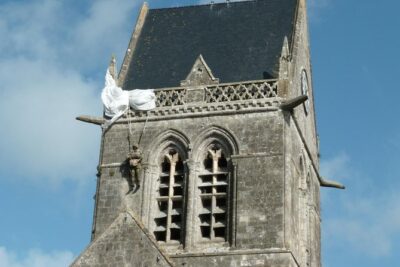
Normandy American D-Day Beaches Full Day Tour from Bayeux
Read our review →
The Best of the French Riviera Full Day Tour
Read our review →