
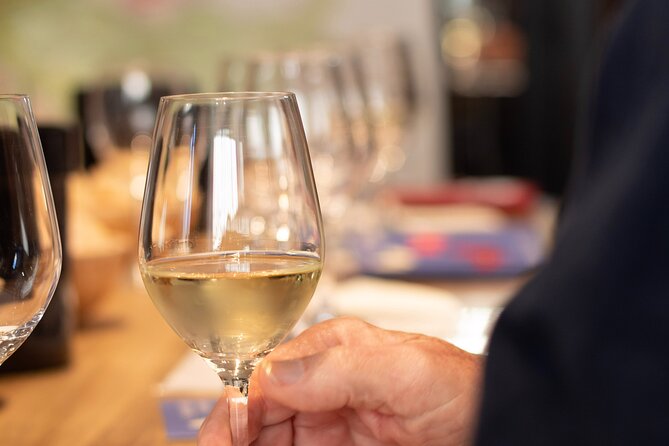
Reviewed · BORDEAUX TOURS
Introduction to Bordeaux wines paired with cheeses & charcuterie
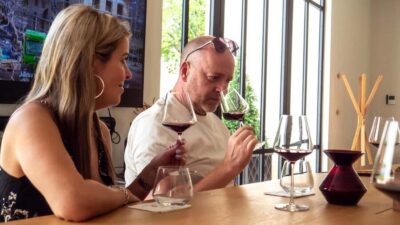
Bordeaux wine can feel like a code made of riverbanks, grape names, estates, and labels. This one-hour tasting workshop gives you a useful key. Near the Grand Théâtre, a local wine expert explains the basics, then leads you through a white wine and two reds, including one Bordeaux Grand Cru.
I like the small maximum group of 12, which leaves room for questions, and I like the clear progression from tasting technique to Bordeaux’s Left Bank and Right Bank. The cheese, charcuterie, baguette, and water are included, too. The main caution is timing: one hour can feel brisk, especially if the host is covering regional history and answering lots of questions.
Key points at a glance
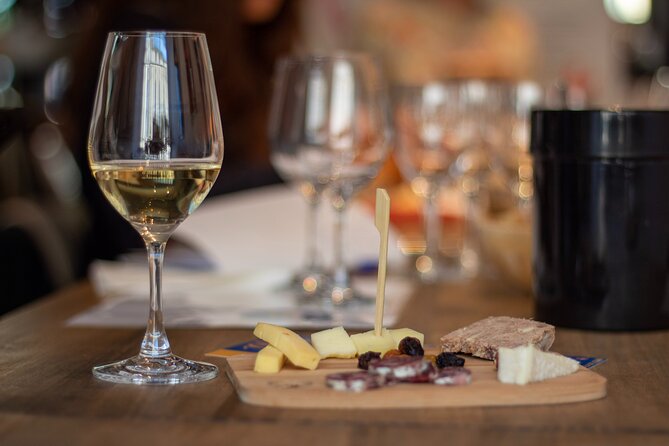
- Three wines, three purposes: Start with a white wine to learn the tasting method, then compare two red wines from opposite sides of the Bordeaux region.
- One Grand Cru included: One of the red wines is a Bordeaux Grand Cru, giving you a taste of the classification system without the cost of a full bottle.
- Near the Grand Théâtre: The workshop begins at 2ter Rue Mably, making it easy to fit into a central Bordeaux sightseeing day.
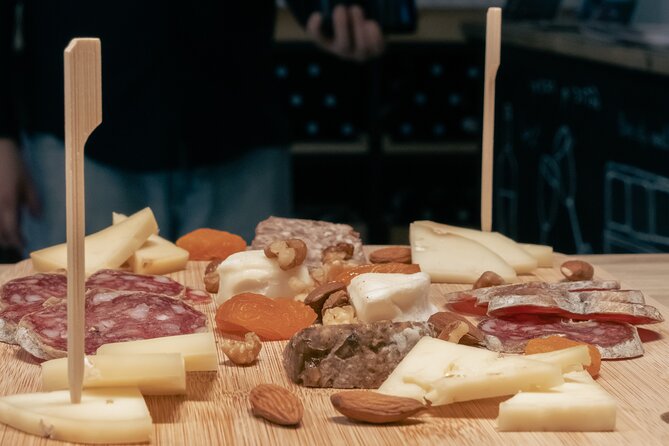
- Food is part of the lesson: Local cheeses, cold cuts, and fresh baguette accompany the wines and introduce basic food pairing.
- Built for mixed experience levels: The host adapts the session for beginners and more practiced wine drinkers.
- A useful English check: The experience is offered in English, but confirm your session language when booking, since one scheduled tasting was conducted mainly in French.
A smart first lesson in Bordeaux wine
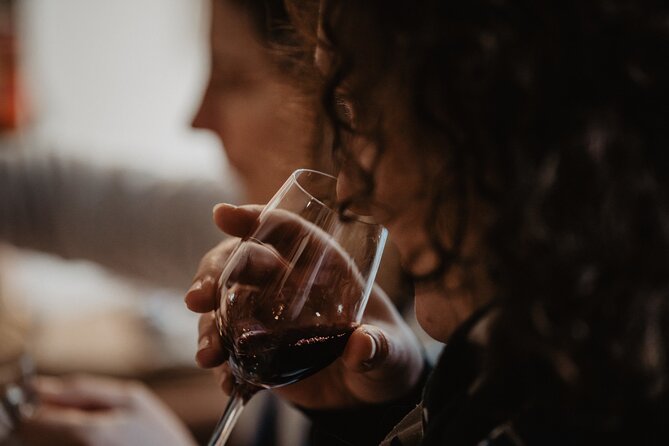
I see this experience as an orientation rather than a grand wine tour. You will not visit vineyards or tour a château. Instead, you get a compact classroom in the city, with glasses in front of you and a sommelier ready to explain the terms that often make Bordeaux labels hard to read.
That is valuable because Bordeaux wine is organized less around grape names than many visitors expect. The workshop introduces terroir, grape varieties, and appellation, three ideas that help explain why two bottles from the same broad region can taste and cost very differently.
No previous wine training is required. If you are just learning how to hold, smell, and taste wine, the host starts at that level. If you already know the basics, you can use the question period to ask about regions, styles, or bottle choices.
The tone is intended to be informal and friendly, not stiff or ceremonial. Past hosts have included Antoine, Vincent, Anna, Toku, and Toco. The most useful pattern is consistent: the presenters explain technical points in plain language, add humor, and invite questions rather than turning the hour into a lecture.
A few other Bordeaux half-days to compare
- Bordeaux: Cité du Vin Entry Ticket and Wine Tasting
★ 4.6 · 3,885 reviews - Bordeaux: River Garonne Cruise with Glass of Wine and Canelé
★ 4.5 · 3,630 reviews - From Bordeaux: Afternoon Saint-Emilion Wine Tasting & snack
★ 4.8 · 1,581 reviews
Starting with the white wine and the tasting method
The first glass is a white wine. This is a practical opening because it lets you learn the basic tasting sequence before moving into Bordeaux’s more famous reds.
You can expect the host to guide you through the universal method used in the wine trade. That means paying attention to appearance, aroma, and taste instead of simply deciding if you like the wine. The point is not to produce fancy descriptions. It is to give you a repeatable way to assess a bottle at a restaurant or wine shop.
This opening also helps beginners relax. You do not need to identify every scent or guess the price. You are learning how to notice what is in the glass and how to describe it with more confidence.
The white wine is part of the three-tasting structure, not an extra pour. Keep that in mind if you are expecting a long succession of wines. This is a focused lesson, with each sample selected to support the regional explanation.
Comparing Bordeaux’s Left Bank and Right Bank
The two red wines are the heart of the class. One comes from the Left Bank, and the other from the Right Bank. The host uses this contrast to explain Bordeaux’s major red wine areas, including the Médoc and Libournais.
This comparison gives you a simple mental map. The Left Bank and Right Bank are not just directions on a map. They are shorthand for different wine-growing zones, traditions, and typical blends. You will begin to see why Bordeaux is often discussed by appellation and estate rather than by a single grape variety.
One of the reds is a Bordeaux Grand Cru. That makes the tasting more than a basic regional sampler. You get to place a highly regarded wine beside another regional example and consider how style, origin, and classification affect the experience.
The class will not turn you into a Bordeaux buyer in an hour, but it can help you avoid ordering blindly. You leave with a clearer sense of the Médoc and Libournais, plus a better idea of what Left Bank and Right Bank mean when you see those terms on a menu or wine label.
Cheese, charcuterie, and the food pairing lesson
A board of local cheeses and charcuterie is served at no extra charge. Fresh baguette is available, and water is included. The food is not a full meal, but it makes the hour more satisfying and gives the tasting a distinctly French setting.
The pairing lesson is basic by design. You will taste the wines with the cheeses and cold cuts and learn how food changes your perception of acidity, fruit, tannin, and weight. This is more useful than simply eating snacks between glasses.
I would not expect every item on the board to be formally matched with every wine. The format is relaxed, and the food functions as both accompaniment and teaching material. If you want a highly structured pairing menu, this may feel light. If you want to understand why a simple board works with wine, it does the job.
Food allergies should be mentioned when booking or before the tasting begins. One food allergy was accommodated, but the supplied details do not promise that every dietary request can be met.
Same city, a completely different afternoon:
- Medoc or Saint Emilion Wine Tasting and Chateau from Bordeaux
★ 5.0 · 1,415 reviews - Saint Emilion Day Trip with Sightseeing Tour & Wine Tastings from Bordeaux
★ 5.0 · 1,120 reviews - Saint Emilion Half-Day Trip with Wine Tasting & Winery Visit from Bordeaux
★ 4.5 · 1,034 reviews - From Bordeaux: St. Emilion Village Half-Day Wine Tour
★ 4.7 · 728 reviews
A close-up look at the small-group format
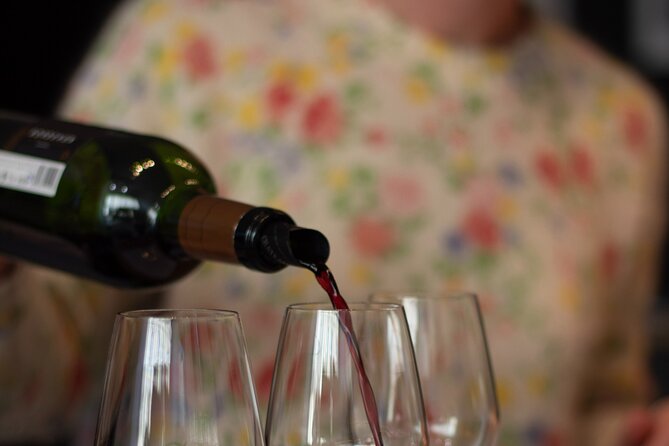
The group size is capped at 12 people, and the setting is described as somewhere between a wine bar and an oenology class. That combination is one of the strongest reasons to choose this workshop.
In a large tasting room, you may spend the session trying to hear the presenter. Here, the small format should make it easier to ask why a wine tastes different after a bite of cheese, or what a term on a Bordeaux label actually means.
The private tasting format is also meant to provide individual attention from the host. That does not mean you will have a one-to-one appointment every time. It means the class is designed to allow interaction, rather than moving a large crowd from station to station.
Several hosts have been praised for keeping the room friendly and open. Antoine, in particular, has been described as amusing and interactive, while Vincent has led a relaxed tasting for a small group. Anna has also been singled out for making the session informal and enjoyable. The exact host depends on the date, so treat those names as examples rather than a guaranteed assignment.
How much can fit into one hour?
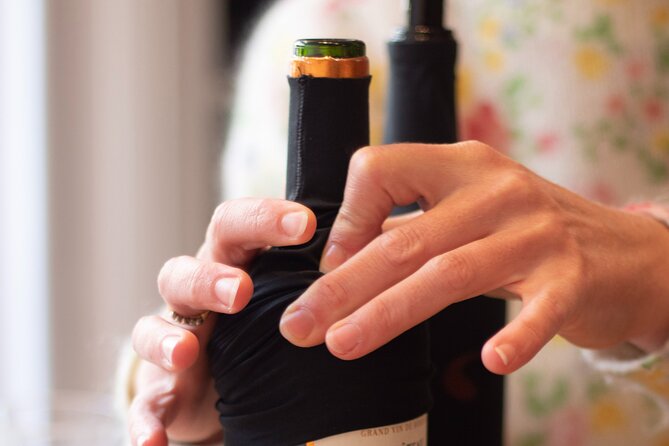
The official duration is about one hour. Some sessions may run closer to 90 minutes, but you should plan around the stated one-hour schedule, especially if you have a dinner reservation or a train to catch.
The short format is a real advantage in Bordeaux. You can fit it between sightseeing stops, use it as an introduction before visiting vineyards, or book it on your first afternoon to get your bearings with local wine terminology.
The tradeoff is pace. One hour must cover tasting technique, regional geography, wine styles, history, three glasses, food, and questions. If the group is curious, the host may need to move quickly. One session felt rushed because another group was expected soon, and another participant found that a fast-speaking presenter with a French accent was sometimes hard to follow.
I would leave a little breathing room after the tasting. You may want to discuss a bottle, ask a final question, or simply sit with what you have learned. Do not schedule this as a tight connection.
Language, presentation style, and what to expect
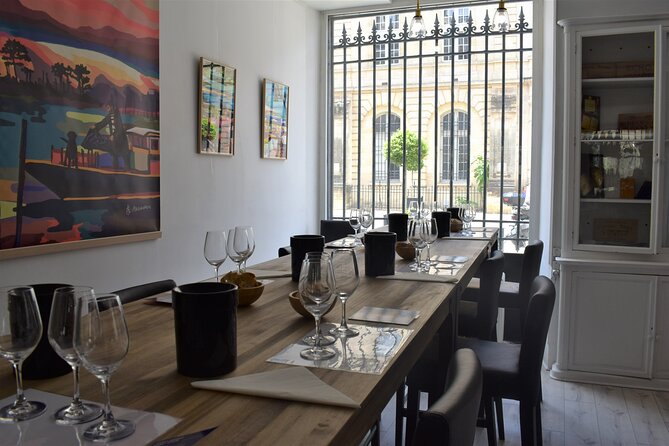
The experience is offered in English, but language deserves special attention. At least one session was conducted mainly in French despite the participant expecting English. The facilitator made an effort to include English, and a translation app helped bridge the gap.
If receiving the workshop entirely in English matters to you, check the language for your chosen departure before you commit. This is especially important if wine vocabulary is new to you, since fast explanations of appellations and regions can be difficult to follow in a second language.
The presentation may include slides or informative leaflets. One session used slides with a large amount of useful information, while other hosts relied more on conversation and discussion. The style can vary by presenter, but the goal remains the same: make Bordeaux wine less intimidating.
The best hosts appear to welcome questions from all levels. You can ask about a tasting sensation, a Bordeaux region, or how to choose a bottle after class. This openness is a major part of the value.
The location near the Grand Théâtre
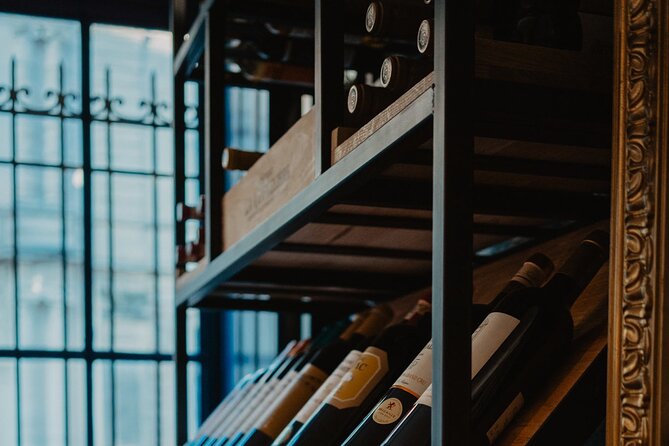
The meeting point is 2ter Rue Mably, 33000 Bordeaux, close to the Grand Théâtre. The activity ends back at the same place, so there is no transport between tasting stops and no complicated route to follow.
That central position makes this easy to combine with a day in Bordeaux. You can place it near your sightseeing around the historic center, then walk on to dinner afterward. The experience is also near public transportation, which helps if you are staying outside the center.
Because the workshop takes place indoors, comfort may depend on the room and the weather. A hot-day session was uncomfortable even with fans running. If Bordeaux is warm, dress lightly and avoid arriving overheated. The activity also requires good weather under its operating policy, so poor conditions can lead to a new date or a full refund.
The start time provided is 2:30 pm. Confirm the exact time on your booking confirmation, and arrive with enough time to locate Rue Mably without rushing.
Is $35.09 a fair price?
At $35.09 per person, this is a modest introduction to Bordeaux wine. The price includes three tastings, the cheese and charcuterie board, baguette, water, the wine expert’s presentation, and informative material.
The strongest value is not the quantity of wine. You are paying for context. A bottle tasting on its own may be pleasant, but the comparison between white and red wines, Left Bank and Right Bank, and standard Bordeaux and Grand Cru gives you a framework you can use later.
It is also less expensive and less time-consuming than a full-day vineyard outing. If you have only one afternoon in Bordeaux, this lets you learn the regional basics without giving up most of your day.
I would not choose it if your main goal is to visit a château, walk through vines, or taste a large number of wines. For those aims, you need a longer excursion. At this price, though, the workshop offers a sensible starting point and includes enough food to make the experience feel complete rather than like three isolated sips.
Who will get the most from this tasting?
I would recommend it to first-time Bordeaux visitors who want to understand local wine before ordering bottles or booking a vineyard trip. It also suits couples, friends, and solo visitors who enjoy a conversational class rather than a formal museum-style presentation.
It is particularly useful if you are short on time. The session covers regional basics in the city, without requiring a day of transport. People with some wine experience can still enjoy the comparison and use the host for specific questions.
Families with young children are less clearly served, since this is an adult-focused tasting with three alcoholic samples. Service animals are allowed, and the experience is near public transportation, but the supplied information does not provide detailed mobility guidance for the venue.
If you are sensitive to accents or need English throughout, verify the session language. If you dislike a brisk schedule, look for a date with enough time around the appointment and treat the hour as an introduction, not a leisurely evening tasting.
Booking, cancellation, and practical notes
Confirmation is provided at booking. The experience is commonly reserved about 15 days ahead, so I would not leave it until the last day of a short Bordeaux stay if the timing matters.
You can cancel up to 24 hours before the start time for a full refund. Changes or cancellations made less than 24 hours ahead are not accepted for a refund. Cutoff times follow local Bordeaux time.
Bring questions. Ask the host to explain a label term, compare the two banks again, or suggest what to look for when buying a bottle. The class works best when you treat it as a conversation, not just a sequence of pours.
Should you book it?
Book this workshop if you want a friendly, central, affordable introduction to Bordeaux wine, especially before visiting the wider wine region. The three-wine structure is well chosen, the Grand Cru adds interest, and the cheese and charcuterie make the lesson feel grounded in local food culture.
Skip it if you want vineyard scenery, château visits, or a long tasting with many producers. Also check the language and allow some flexibility around the one-hour schedule. For most visitors who want to make sense of Bordeaux wine without spending a full day or a large sum, this is a practical first step.
FAQ
Where does the Bordeaux wine tasting begin?
The meeting point is 2ter Rue Mably, 33000 Bordeaux, France, near the Grand Théâtre.
What time does the experience start?
The listed start time is 2:30 pm.
How long does the tasting last?
The activity lasts approximately one hour. Some sessions may run longer, so allow extra time if you have plans immediately afterward.
How many wines are included?
You receive three wine tastings: one white wine and two red wines.
Are any of the wines from Bordeaux’s Left and Right Banks?
Yes. The two red wines include one from the Left Bank and one from the Right Bank. One of the wines is a Bordeaux Grand Cru.
Is food included?
Yes. The tasting includes a board of local cheeses and cold cuts, fresh baguette, and water.
Is prior wine knowledge required?
No. The wine experts introduce basic ideas such as terroir, grape varieties, and appellations and adapt the session for beginners or more experienced participants.
Is the tasting offered in English?
English is one of the offered languages. Confirm the language for your selected session, since one session was conducted mainly in French with some English support.
What is the cancellation policy?
You can cancel at least 24 hours before the experience for a full refund. Cancellations or changes made less than 24 hours before the start time are not accepted for a refund. If poor weather causes cancellation, you will be offered another date or a full refund.
Just listed in Bordeaux
- Bordeaux: Exclusive Private Guided Walking Tour★ 4.6 · 50 reviews
- Bordeaux:Wine Masterclass & Blending workshop with appetizer★ 4.8 · 54 reviews
- From Bordeaux: Essential Morning Tour with Wine Tasting★ 4.8 · 55 reviews
- Full-day Saint-Emilion: Village, Undergrounds and Châteaux★ 4.5 · 55 reviews
- Bordeaux Old Town & Market Local Food with Wine Tastings Tour★ 4.0 · 56 reviews
- Bordeaux: Saint-Emilion Village Day Trip, 2 Chateaux & Lunch★ 4.8 · 57 reviews
- Bordeaux Free Walking Tour (Tips-Based)★ 4.5 · 57 reviews
- The Ultimate Bordeaux Food Tour: Full Meal & Fine Wines★ 4.8 · 61 reviews
Bordeaux Tours, compared.
River Garonne Cruise with Glass of Wine and Canelé
Read our review →
Afternoon Saint-Emilion Wine Tasting & snack
Read our review →
Medoc or Saint Emilion Wine Tasting and Chateau from Bordeaux
Read our review →
Saint Emilion Day Trip with Sightseeing Tour & Wine Tastings from Bordeaux
Read our review →
Saint Emilion Half-Day Trip with Wine Tasting & Winery Visit from Bordeaux
Read our review →
Browse the lists this tour appears in