
Reviewed · PARIS TOURS
Champagne Day Trip from Paris with 8 Tastings & Lunch
The best part of this day is the contrast. You may walk through the grand underground cellars of a famous house such as Mumm, Pommery, Veuve Clicquot, Moët & Chandon, or Lanson, then eat lunch at a small family estate where the welcome feels far more personal. In between, your guide explains why Blanc de Blancs, Blanc de Noirs, rosé, Premier Cru, Grand Cru, and Champagne terroir all matter.
I like the eight or more tastings, which are generous pours rather than token sips, and I like the pickup from your Paris hotel or apartment. The van holds no more than eight people, so guides such as Huw, Joël, Cédric, Chloé, and Aurélien can keep the day conversational. The paired lunch at a family-run estate is another strong point.
The trade-off is the long road day. You leave Paris in the morning and spend roughly 90 minutes getting to Champagne, then return in the evening. Also, the famous house is chosen according to availability, so you cannot assume you will visit Moët or Veuve Clicquot. If you need breakfast before lunch, eat before pickup.
Key points at a glance
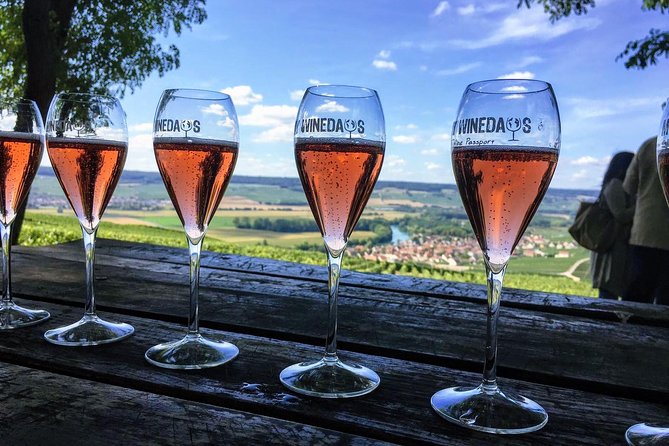
- At least eight Champagne tastings: Expect pours across major and smaller producers, with the exact number and order subject to the day’s schedule.
- A useful big-house and small-estate contrast: See large-scale cellar operations, then learn how a family producer works.
- Lunch with Champagne pairings: The traditional meal at a family-run estate is one of the day’s most memorable parts.
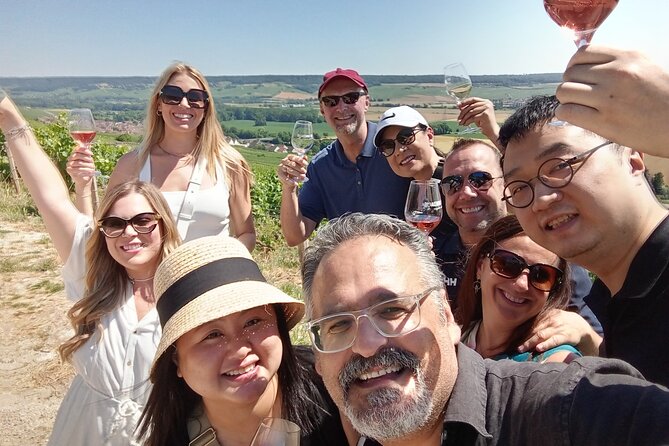
- Small group of up to eight: The limited van size makes it easier to ask questions and chat with the guide.
- Paris accommodation pickup: Pickup is offered throughout Paris, while evening drop-off is in central Paris rather than necessarily back at your hotel.
- Cold cellars and a full day: Underground caves are usually about 45°F, or 10°C, and the total outing lasts around 11 hours.
Why this Champagne day trip works from Paris
Champagne is close enough to visit from Paris, but not close enough for a casual afternoon outing. This tour solves the transport problem in a practical way. You are collected at your hotel or apartment anywhere inside Paris, ride in an air-conditioned minivan, and let a wine expert handle the roads, appointments, and tastings.
The price is $353.72 per person. That is not a cheap excursion, but it includes transport, a certified wine expert driver-guide, at least eight tastings, a major-house visit, a smaller producer visit, and lunch with Champagne pairings. You could potentially arrange a cheaper day using trains and local taxis, but you would spend more time managing connections and might not reach the family-run estates or scenic vineyard stops.
I see the value here in the access and the teaching. This is not just a bus ride to drink sparkling wine. By the end, you should understand the three main grapes, how the méthode champenoise works, and how the region’s villages and classifications affect the bottle in your glass.
The group limit matters, too. With eight people or fewer, the guide can answer questions without turning the day into a classroom with a microphone. Past guides have included Huw, known for mixing history with humor, Joël, praised for his care and driving, Cédric, a lively wine guide, and Aurélien, whose clear explanations suit people new to Champagne.
A few other Paris half-days to compare
- Disneyland® Paris 1-Day Ticket
★ 4.6 · 49,412 reviews - Normandy D-Day Sites & Cemetery Day Trip from Paris with Lunch
★ 5.0 · 6,877 reviews - Day Trip to Mont-Saint-Michel from Paris
★ 4.5 · 4,876 reviews
The morning ride from Paris
Pickup time is sent 24 hours before departure. The exact hour can vary, but the day begins early, with reported departures around 8:30 a.m. Pickup is available at hotels and apartments within Paris, a useful perk if you do not want to cross town before breakfast.
The drive east gives your guide time to set the scene. You may pass historic Paris monuments during pickup, then head toward Reims and the Champagne-Ardenne countryside. Croissants are provided for the drive, and water is available in the van.
Still, do not treat the croissant as a full breakfast. The drive to the first stop can take about 90 minutes, and there is no planned food stop before lunch. Eat beforehand if you prefer a proper morning meal, especially since the first tasting is part of the day rather than a substitute for breakfast.
The van is comfortable and air-conditioned, but you should be realistic about the amount of sitting. This is an 11-hour outing, with a long ride in both directions. On the way home, you may be ready for a nap rather than another glass.
A major Champagne house in Reims or Epernay
The first main stop is usually a renowned Champagne house in Reims or Epernay. Depending on availability, the producer could be Mumm, Veuve Clicquot, Moët & Chandon, Lanson, Pommery, or Nicolas Feuillatte.
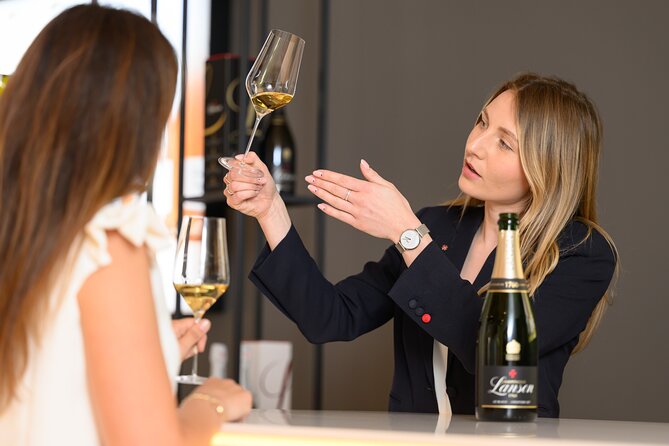
The large-house visit gives you the industrial and historic side of Champagne. Expect a guided look at the cellars, often through long galleries where bottles rest during the slow second fermentation and aging process. The tasting follows the cellar visit, helping connect the production method with what you taste.
This is where the technical questions begin to make sense. Champagne is made from chardonnay, pinot noir, and pinot meunier, and the blend or single-grape emphasis changes the character of the wine. Blanc de Blancs means Champagne made from white grapes, generally chardonnay. Blanc de Noirs is made from dark-skinned grapes, usually pinot noir and pinot meunier, even though the finished wine is pale.
You will also hear about rosé production, Premier Cru and Grand Cru classifications, and the idea of terroir in Champagne. These are not just wine-shop terms. They help you understand why two bottles made in the same region can taste quite different.
The exact famous house is the largest variable in the experience. The description names several possibilities, but availability controls the final choice. If you have your heart set on one particular producer, ask about it before booking. A visit to Nicolas Feuillatte, the region’s major cooperative, can still be useful, but it is different from visiting a globally famous house such as Moët & Chandon.
Reims Cathedral and the region’s story
A short stop at Notre-Dame de Reims may be possible, depending on weather and the day’s schedule. The listed time is about 15 minutes, so think of it as a quick look rather than a full cathedral visit.
That brief pause can add welcome variety after the cellar tour. Reims is not only a Champagne base. Its cathedral is one of the city’s major historic sights, and the route through the city gives you a sense of how closely the wine region and French history are linked.
Do not count on this stop as guaranteed. It depends on the operating plan and weather, and the tour’s central purpose remains the Champagne producers and tastings. If seeing the cathedral interiors is important to you, reserve separate time in Reims on another day.
Same city, a completely different afternoon:
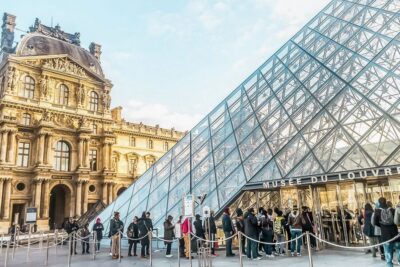
- Paris: Louvre Museum Timed-Entrance Ticket
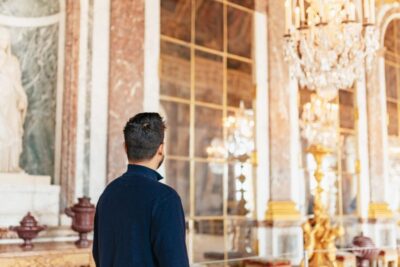
★ 4.6 · 71,977 reviews - Paris: Versailles Palace and Gardens Full Access Ticket
★ 4.6 · 41,579 reviews - Paris: Evening River Cruise with Music
★ 4.4 · 22,721 reviews - Paris: Eiffel Tower Entry Ticket with Optional Summit Access
★ 4.4 · 20,035 reviews
The road through Montagne de Reims, Côte des Blancs, and Vallée de la Marne
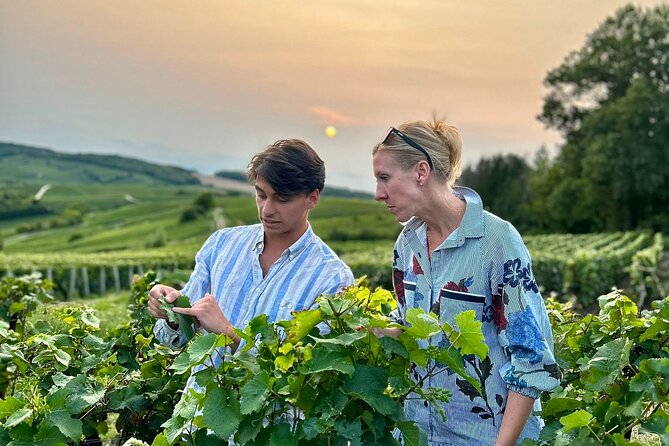
Between visits, the van crosses the main Champagne areas: Montagne de Reims, Côte des Blancs, and Vallée de la Marne. Your guide points out vineyards and explains the role of chardonnay, pinot noir, and pinot meunier.
This moving lesson is valuable because Champagne can seem like one broad wine area on a map. In practice, villages, slopes, grape varieties, and soil all help shape the style of a bottle. You may pass through or near Reims, Aÿ, and Epernay, with stops determined by the day’s producers and route.
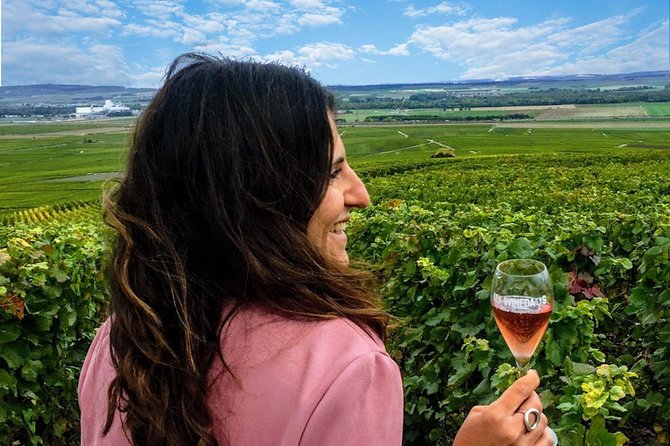
A scenic viewpoint or vineyard stop may also be included. When the weather cooperates, the guide may open another bottle among the vines and explain the region while you take photographs. One past outing included an extra bottle at a viewpoint, but you should treat this as a possible bonus, not a guaranteed part of the package.
Harvest season can add another layer. You might see grapes being picked by hand, though the timing depends on the calendar. The countryside is especially rewarding when you can connect the glass in front of you with the rows of vines around you.
Lunch at a family-run Champagne estate
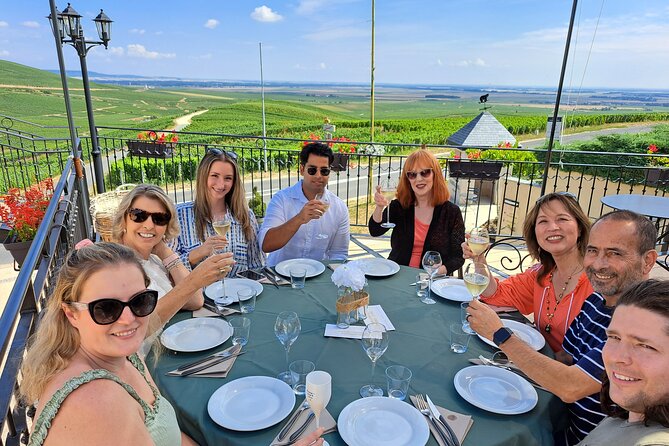
Lunch is scheduled for about two hours at a family-run estate or similar small producer. This is the part of the day I would most want to protect. The meal is traditional French food paired with several Champagnes, and the setting is more intimate than the large-house visit.
The food is included, but the real value lies in the pairing. Champagne is often treated as an aperitif, yet it can work across a meal. A dry style may suit one course, while a fuller or more fruit-driven bottle may work better with another. Tasting several wines beside food gives you a clearer sense of those differences than sipping alone in a cellar.
Lunch is generally indoors, not necessarily outside, so do not book this expecting a terrace meal. The family estate setting can still feel welcoming and local, especially after the more formal presentation at the large house.
Dietary requirements should be given when you book. The supplied information does not specify a fixed menu, so ask ahead if you have allergies or strict food needs. This is also a good time to pace yourself. With eight or more tastings across the day, water and a sensible approach will serve you better than trying to finish every pour quickly.
The smaller producer and cooperative visit
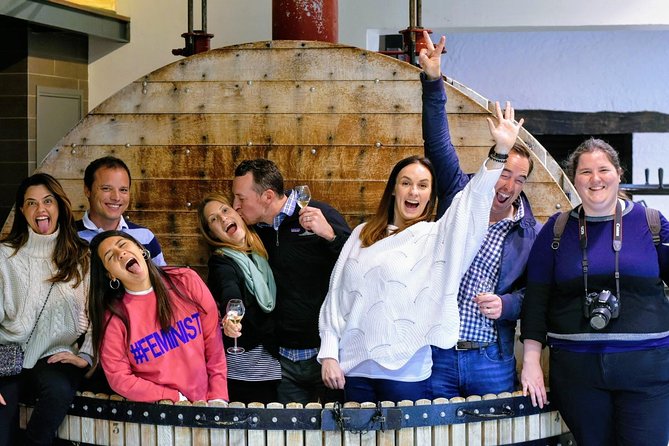
The final winery visit usually brings you closer to the people who make Champagne on a smaller scale. This may be a family-run vineyard or a cooperative, and the visit lasts about an hour and 15 minutes.
Here, you are more likely to focus on the decisions behind the bottle: grape growing, blending, aging, and the challenges of producing Champagne without the vast cellar network of a major brand. The experience varies with the producer available that day, but the contrast is the point.
Some days include a boutique estate such as Le Clos Corbier or a small family producer like Michele Tixier. These names are examples from individual schedules, not a promise of the exact stop. The operator can make minor changes by season and availability.
This visit also completes the educational arc. The grand house shows scale and polished presentation. The family producer shows the regional character and personal side of Champagne. Together, they give you a better basis for deciding what kind of bottle you actually like.
Eight tastings, and what you will learn
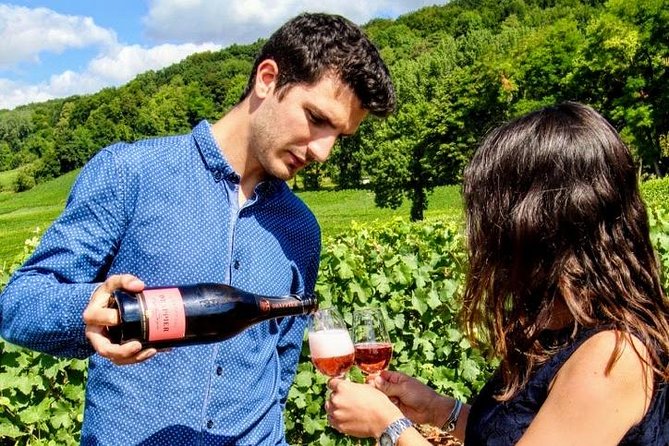
The package includes at least eight different Champagnes. Depending on the day, tastings may take place at the major house, during a vineyard or viewpoint stop, at lunch, and at the smaller producer. Some outings include nine pours.
The tasting count is a real part of the value, especially when the pours are full rather than tiny samples. Still, quantity is not the whole story. Your guide’s explanations help you compare grape varieties, sweetness, blending, age, and producer style.
The tour aims to answer several useful questions:
- What is a Blanc de Blancs?
- What is a Blanc de Noirs?
- How is Champagne rosé made?
- What do Premier Cru and Grand Cru mean in Champagne?
- Does Champagne have distinct terroir?
- How do the three main grapes affect the final wine?
A good guide can make these points accessible without turning every glass into a lecture. Huw, Aurélien, Nicolas, Lionel, Artem, Cédric, Joël, and Chloé have all been associated with especially strong teaching or hosting on different departures. You cannot choose a particular guide unless the operator confirms it, but the small group gives you a better chance to engage with whoever leads your day.
What the long return to Paris feels like
The tour ends in central Paris in the evening. Pickup is at your accommodation, but drop-off may be near Hôtel de Ville or another central location rather than at the original hotel. Plan your evening with that in mind.
The return journey is the least glamorous part. After a full day of cellar walks, food, and wine, you will likely be tired. One useful advantage is that the tour can get you back early enough for dinner and drinks, but do not schedule anything that requires a precise arrival time.
Rain can affect both the countryside views and the driving conditions. One reported departure had transportation problems during heavy rain and a delayed final visit. The operator said vehicles now have phone holders, but this is still a reminder to judge the day partly by road conditions and appointment changes.
Who should book this day trip
I would choose this tour if you want Champagne explained rather than simply sampled. It suits first-time visitors who want to see both Reims and the surrounding wine country without renting a car, and it works well for couples or small groups who value personal guidance.
It is also a good match if food matters to you. The family-estate lunch is more than a break between tastings, and the pairings help make the wines easier to understand.
I would hesitate if you dislike long van rides, need a guaranteed visit to Moët & Chandon or Veuve Clicquot, or want several hours to explore Reims independently. The famous-house stop is subject to availability, and the cathedral stop can be brief or omitted.
The tour has a 4.7 rating from 607 ratings, with 93 percent recommending it. The strongest pattern is clear: people value the guides, the lunch, the small group, and the mix of large and small producers. The main caution is not the Champagne itself. It is the length of the day and the fact that the precise route can change.
Should you book it?
Book this Champagne day trip if you want a carefully organized introduction with at least eight tastings, a substantial paired lunch, and door-to-door pickup from Paris. At $353.72, it costs more than arranging a basic train trip, but it buys you access to several producers and a guide who can turn a pleasant tasting into a useful lesson.
Before booking, confirm your expectations about the famous house, tell the operator about dietary needs, wear warm layers for cellars around 45°F, and eat breakfast before pickup. If those details suit you, this is a strong choice for making the Champagne region understandable in one very full day.
FAQ
How long does the Champagne day trip last?
The experience lasts approximately 11 hours, including the journey from Paris to the Champagne region and the evening return to central Paris.
Where does pickup take place?
Pickup is offered at your hotel or apartment anywhere inside Paris. The exact pickup time is sent 24 hours before departure.
Where will the tour drop me off?
Drop-off is in central Paris. It may be near Hôtel de Ville or another central location rather than at your original hotel.
How many people are in the group?
The tour has a maximum of eight participants. It requires at least four people to operate, and the operator may cancel if that minimum is not reached.
How many Champagnes will I taste?
You will taste at least eight different Champagnes. The exact number and locations can vary, and some departures include additional pours.
Which Champagne house will I visit?
The major-house visit depends on availability. Possible producers include Mumm, Veuve Clicquot, Moët & Chandon, Lanson, Pommery, and Nicolas Feuillatte.
Is lunch included?
Yes. A traditional lunch paired with Champagne is included at a family-run estate, subject to availability. You should provide dietary requirements when booking.
What should I wear for the cellar visits?
Wine cellars are usually cold and damp, around 45°F, or 10°C. Bring warm clothing, even if the weather in Paris is mild.
More Lunch Experiences in Paris
- Bateaux Parisiens Seine River Gourmet Lunch & Sightseeing Cruise
★ 4.5 · 2,680 reviews - Paris: 3-Course Lunch at Eiffel Tower’s Madame Brasserie
★ 4.3 · 2,097 reviews - Paris: Eiffel Tower’s Madame Brasserie 3-course lunch 12:00
★ 4.4 · 1,957 reviews - Versailles Palace and Giverny Monet House Visit with Lunch
★ 4.0 · 1,948 reviews
Just listed in Paris
- Paris: Giverny & Versailles Small Group or Private Tour★ 4.5 · 49 reviews
- Chartres Cathedral 5 Hours Tour from Paris with Private Transport★ 4.5 · 49 reviews
- Paris: Louvre photoshoot or Seine bridges Eiffel Tower walk★ 5.0 · 49 reviews
- Paris: Choux Pastry and Chocolate Éclair Making Class★ 4.9 · 50 reviews
- Private tour of the Champagne area, meet local producers and taste their Champagne, start from your hotel in Paris.★ 5.0 · 50 reviews
- Paris Eternelle Notre-Dame Virtual Reality Tour★ 4.5 · 50 reviews
- Normandy D-Day Landing Beaches Private Day Trip from Paris★ 5.0 · 50 reviews
- Disneyland® Paris 1 Day with Round-Trip Train Tickets from Paris★ 4.0 · 50 reviews
Paris Tours, compared.
Versailles Palace and Gardens Full Access Ticket
Read our review →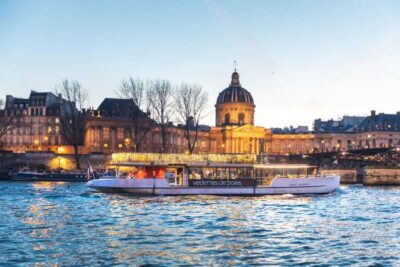

Eiffel Tower Entry Ticket with Optional Summit Access
Read our review →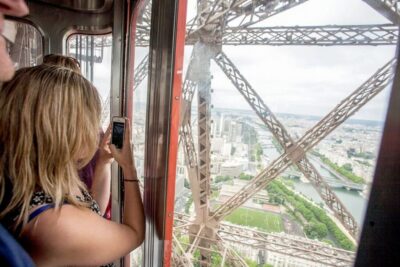
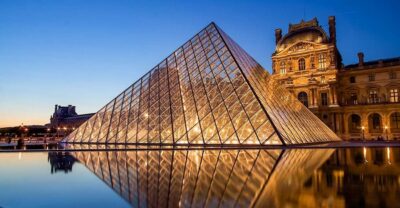
Louvre Guided Tour with Reserved Access & Boat Cruise
Read our review →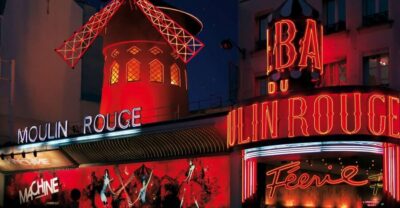
Moulin Rouge Cabaret Show Ticket with Champagne
Read our review →Browse the lists this tour appears in