
Reviewed · PARIS TOURS
Giverny Monet’s Garden & Auvers-sur-Oise with Van Gogh House Full Day From Paris
Monet’s water lilies and Van Gogh’s final months come together on one unusually moving day outside Paris. In Giverny, you walk across the Japanese bridge and through the Clos Normand flower garden. In Auvers-sur-Oise, you enter the small boarding house where Van Gogh spent his last days. Two artists, two very different worlds.
I like the eight-person maximum, which keeps the ride friendly and lets the guide answer questions. I also like the practical pace: gardens in the morning, a relaxed lunch break, then Van Gogh’s house and village. The main drawback is the packed schedule and the crowds that can gather at Monet’s home, especially in the busy season.
Key points to know before booking
- Two major art sites in one day: Visit Monet’s gardens and home in Giverny, then Van Gogh’s final residence in Auvers-sur-Oise.
- Small-group transport: Travel in an air-conditioned minivan with no more than eight participants.
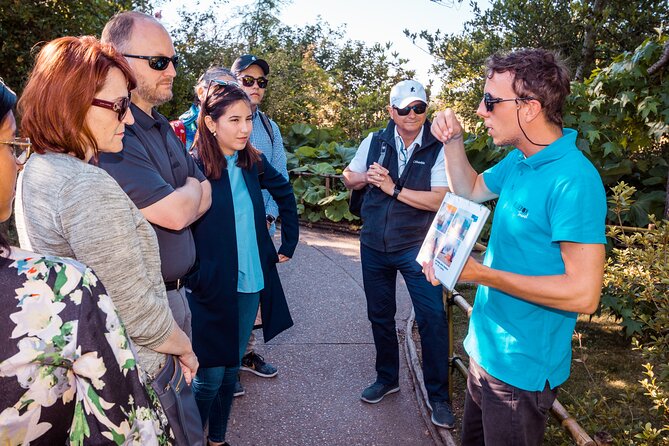
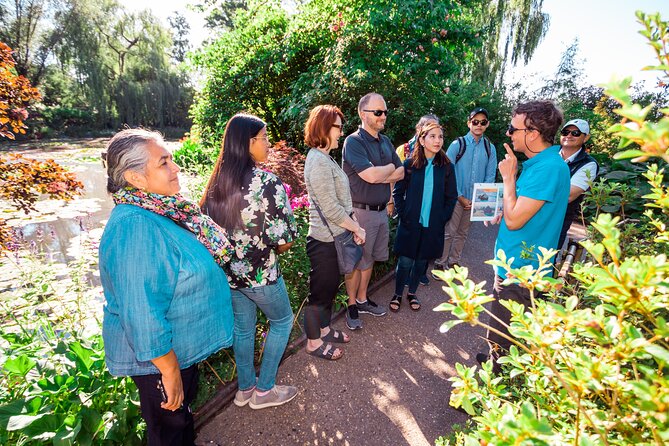
- Strong guiding is central: Guides including Alice, Izzy, Clement, Brune, Lucy, and Alphonse have been praised for art knowledge, driving, humor, and practical help.
- Lunch is your choice: You get about an hour in Auvers-sur-Oise, with bakeries and small restaurants, but food is not included.
- The mood changes sharply: Giverny is colorful and airy; Van Gogh’s room and final resting place are quiet and solemn.
- A full day outside Paris: Plan on about 10 hours, starting at 8:00 a.m. at Café des Dames and ending back there.
Why this day trip works for art lovers
You are not simply looking at paintings in a museum. You are seeing the places that gave Monet and Van Gogh their subjects: a garden pond, a village church, a restaurant, a boarding house, and country roads. That physical connection can change the way you see familiar works.
The contrast between the two artists gives the day its shape. Monet’s Giverny is tied to comfort, family, gardening, and long years of work. Van Gogh’s Auvers is tied to a short, intense final period. The tour does not treat them as identical figures. Instead, it lets you compare their surroundings and artistic responses.
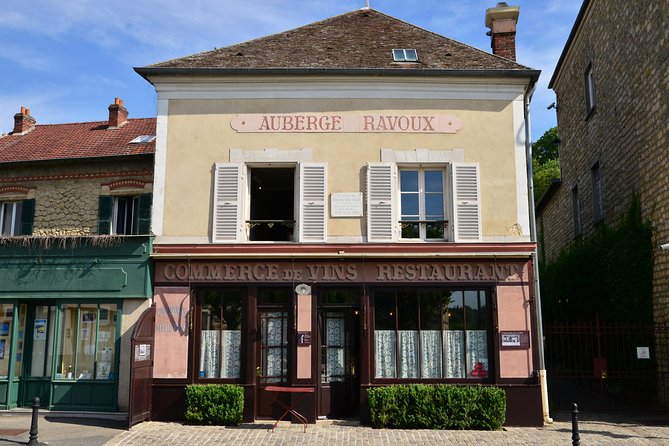
I especially like that the day includes both famous sights and quieter personal details. You see Monet’s house, where he lived for more than 40 years and raised eight children. You also visit the small room at Auberge Ravoux where Van Gogh spent his final days, followed by a film at the residence.
The guide makes a real difference here. Alice, Izzy, Clement, Brune, Lucy, Alphonse, Alf, Martijn, and Thomas are among the guides associated with particularly strong experiences. The best guides do more than recite dates. They connect the gardens and buildings to the artists’ working lives, point out what to see, and help with simple matters such as lunch choices or an unexpected delay on the road.
A few other Paris half-days to compare
- Paris: Parc Astérix Full-Day Entrance Ticket
★ 4.4 · 1,697 reviews - From Paris: Full-Day Loire Valley Chateaux Tour
★ 4.4 · 1,269 reviews - From Paris: Normandy D-Day Landing Beaches Full-Day Tour
★ 4.8 · 698 reviews
Starting from Paris at 8:00 a.m.
The meeting point is Café des Dames, at 8 Avenue de Villiers in Paris’s 17th arrondissement. The tour begins at 8:00 a.m., and you return to the same meeting point at the end of the day.
The early start is useful. Giverny can become crowded, and getting there earlier gives you a better chance to enjoy the paths before they feel too busy. It does not guarantee solitude, though. Monet’s garden and house are popular, and even well-timed visits can have plenty of people.
One practical tip: do not count on Café des Dames being open for breakfast. A nearby café may also be closed at that hour. If you need food before departure, allow time to find another open café close by. One useful option identified by past visitors is Maison Marques, just around the corner.
The ride to Giverny takes about an hour according to the tour information and gives the guide time to set the scene. You travel in an air-conditioned minivan rather than a large coach, which makes the countryside transfer more personal and easier to manage.
Monet’s Clos Normand garden and water lily pond
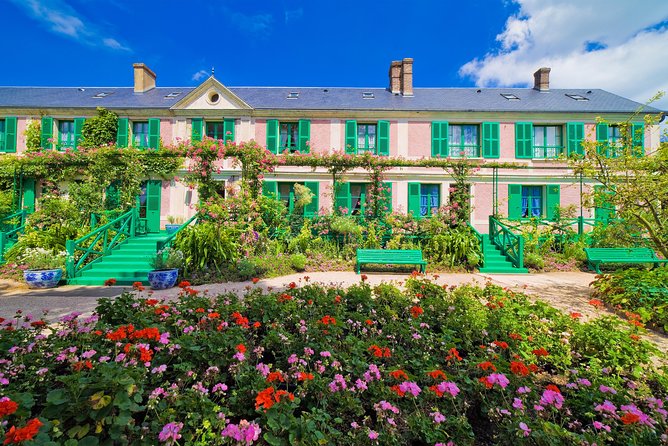
The first major stop is Fondation Claude Monet, where you walk through the Clos Normand flower garden. The garden is famous for its dense planting and changing color, with roughly a hundred types of flowers in bloom.
This is the part of the day built for slow looking. You can study the paths, flower beds, and carefully arranged views that fed Monet’s work. The garden is not a museum display of paintings. It is a living place, and weather and season affect what you see.
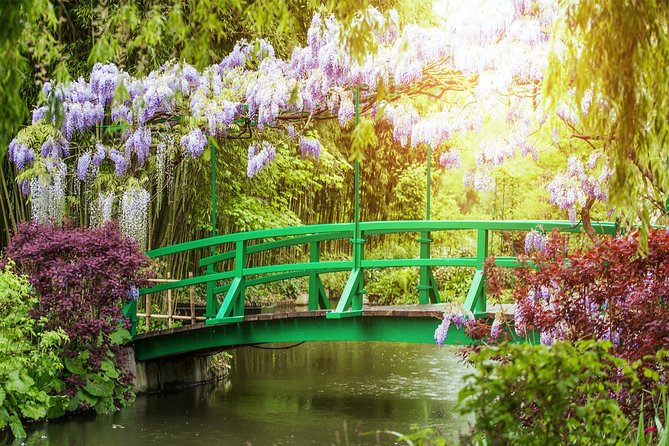
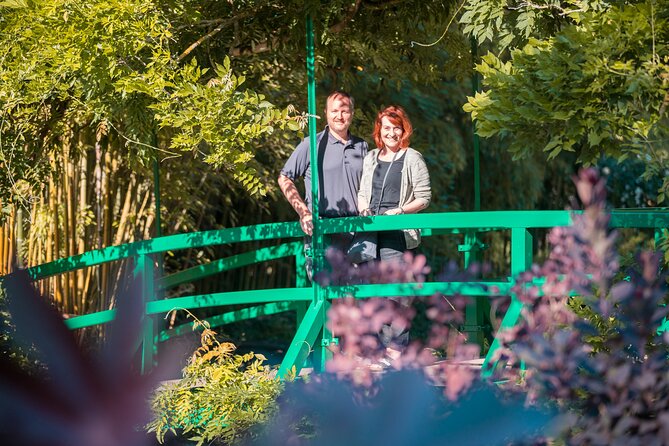
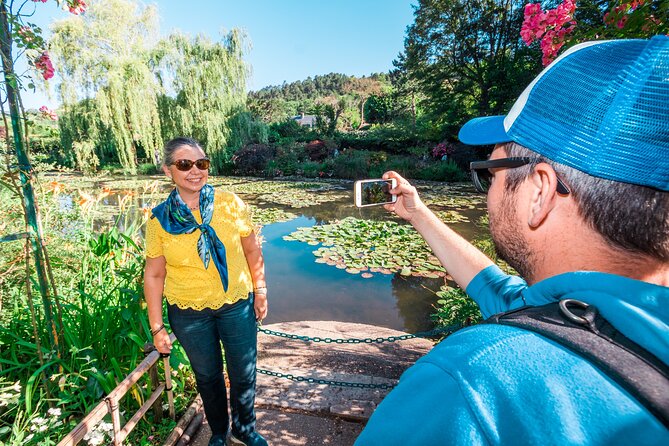
The Japanese Water Garden provides the most recognizable scene. You cross the Japanese bridge over the pond associated with Monet’s water lily paintings. It is an appealing place for photographs, although you should expect other people to want the same view.
You get about an hour in the garden. That is enough to enjoy the main paths and pond, but not enough for a leisurely study of every corner if you are also stopping often for pictures. I would keep your first walk moving, then return to the spot that interests you most.
Rain does not cancel the experience. One group found the gardens magical even during a rainy morning, and the tour operates in all weather. Bring suitable clothing and shoes, since the appeal depends on walking outdoors.
Inside Monet’s home in Giverny
After the garden, you have about 30 minutes to visit Monet’s home. This is a shorter stop, so you need to keep your expectations realistic. You are getting a focused look rather than an extended house tour.
The home adds useful personal context. Monet did not merely visit Giverny as a painter looking for a pretty subject. He lived there for decades, raised his family there, and continued shaping the property around his interests. The house helps you picture the daily life behind the paintings.
The combination of home and garden is one of the tour’s strongest features. The garden shows the visual world Monet developed. The house shows that this world was also part of his home life. Seeing both in the same morning makes the paintings feel less detached from ordinary life.
Crowds are the chief concern. The garden may feel spacious in places, but the house can be more confined and busy. If you dislike popular sites, this portion may test your patience. The early start and small-group format help, but they cannot remove the site’s popularity.
Same city, a completely different afternoon:
- Paris: Louvre Museum Timed-Entrance Ticket
★ 4.6 · 71,977 reviews - Disneyland® Paris 1-Day Ticket
★ 4.6 · 49,412 reviews - Paris: Versailles Palace and Gardens Full Access Ticket
★ 4.6 · 41,579 reviews - Paris: Evening River Cruise with Music
★ 4.4 · 22,721 reviews
Monet’s grave at Sainte-Radegonde
The tour then pauses at Église Sainte-Radegonde de Giverny, where Monet is buried in the churchyard. The stop lasts about 30 minutes and admission is free.
This is a quiet change of pace after the garden. You are no longer looking at the setting that inspired Monet. You are visiting the place where his life ended, in a small church graveyard away from the main garden crowds.
The stop is not elaborate, and that is part of its appeal. It gives you a brief moment to connect the celebrated painter with a real village and a local burial place. Your guide can add context about Monet’s life and final resting place, but you also have time to look around quietly.
Lunch and free time in Auvers-sur-Oise
The drive from Giverny to Auvers-sur-Oise takes about 45 minutes, according to the experience details. When you arrive, you get at least an hour for lunch and a break.
Food is not included, so you choose how to spend this hour. Auvers has a boulangerie with fresh baked goods and several small restaurants serving local food at different prices. That flexibility is useful, especially for a group with different tastes or budgets.
I like having a proper pause in the middle of a long day. Ten hours is a lot of time for gardens, houses, walking, and driving. An hour to sit down and eat keeps the afternoon from becoming a blur of historic rooms.
Your guide can point you toward a suitable place. Alf helped one group eat at the restaurant where Van Gogh ate every day, a detail that added a strong personal link to the afternoon. You should not assume that exact restaurant arrangement is guaranteed, but the town gives you the chance to make lunch part of the story.
Auvers-sur-Oise also feels calmer than Giverny. That difference matters. After the crowds and color of Monet’s property, the quieter village gives you room to think about Van Gogh’s brief, troubled time there.
Van Gogh’s final home at Auberge Ravoux
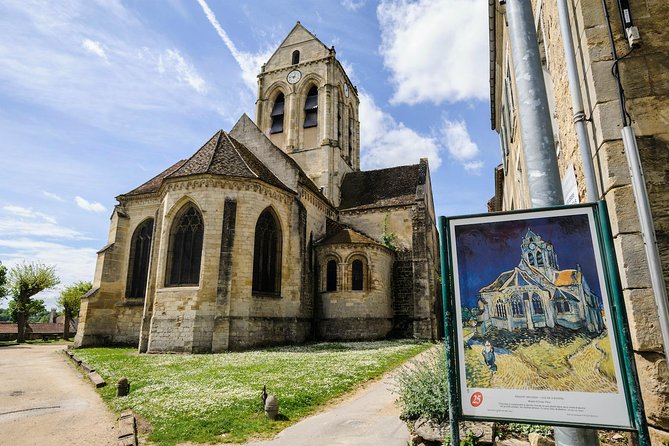
Maison de Van Gogh is the emotional center of the second half. The site is Auberge Ravoux, the boarding house where Vincent Van Gogh lived during his final days.
The room is small, plain, and sobering. It does not resemble a grand artist’s studio or a polished home museum. Its power comes from the lack of glamour. You are seeing the cramped place connected to the end of Van Gogh’s life.
The stairs leading to the room are steep, and the room itself can feel tight when several people are inside. You may have the option to remain downstairs, but doing so means missing part of the visit. This is worth considering if close quarters or steep stairs are difficult for you.
A short film is shown at the residence after the room visit. It adds another layer to the stop and helps explain Van Gogh’s time in Auvers. The house visit is not long, about an hour in total, but it is carefully focused.
The experience can feel dark, and it should. The tour does not smooth away the sadness of Van Gogh’s final months. Instead, it places that sadness beside the ordinary setting of a village inn, where he ate, slept, and worked.
The village scenes Van Gogh painted
Auvers-sur-Oise is more than a stop at one house. You also walk through the town and see places connected with Van Gogh’s paintings. Signs may show a painting beside the setting that inspired it, letting you compare the image with the real building or view.
This is a simple but effective way to understand his work. You see what he chose to frame, how he changed ordinary surroundings, and how much feeling he brought to familiar streets and buildings.
Van Gogh spent his final two months in Auvers and produced a remarkable number of paintings during that time. The exact figure often highlighted on the tour is 74 works. Knowing how short his stay was makes the walk feel more urgent.
The town is picturesque, but the point is not just charm. You are following the visual record of a difficult final period. The village walk works best when you slow down and look at the signs, buildings, and church rather than treating it as a quick photo stop.
Van Gogh’s ivy-covered grave
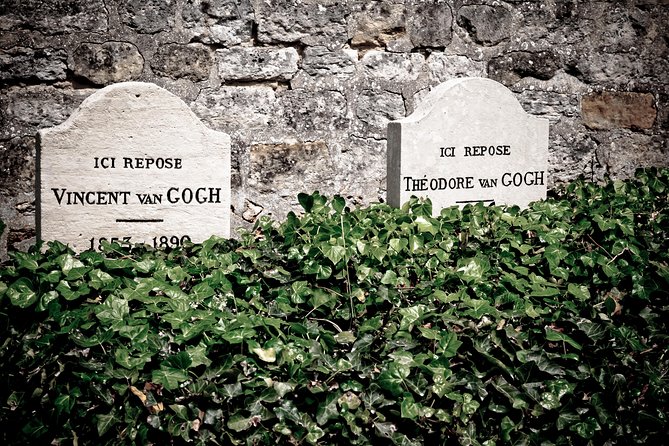
The final scheduled stop is Van Gogh’s grave, covered with ivy, beside the grave of his brother Theo. Admission is free, and the visit lasts about 30 minutes.
After the boarding house and village walk, the grave feels like a natural ending. It is modest, quiet, and far removed from the fame attached to Van Gogh’s name. You have time to pay your respects and consider the contrast between his limited success during life and his huge reputation today.
This is not a cheerful finish, but it is an honest one. The day begins with Monet’s bright garden and ends with Van Gogh’s grave. That emotional range is a major reason this excursion feels more substantial than a routine sightseeing trip.
The small-group minivan makes a difference
The tour accepts no more than eight people. That is a practical advantage on a day involving two towns and several timed stops.
A minivan can use roads and parking areas more easily than a large coach, and you spend less time gathering a crowd. The driver-guide can give directions, adjust to small issues, and keep the group moving. Guides such as Izzy and Brune have been praised for safe driving and for handling delays without letting them spoil the day.
The tradeoff is that minivan travel gives you less room than a coach. If you prefer to stretch out or dislike close seating, keep that in mind. Still, the air conditioning and small group make the long driving portions more comfortable than arranging both destinations independently.
The guide’s role is especially important because the day includes several transitions. You are not only being transported. You are being given a thread connecting Monet’s home, Van Gogh’s room, the gardens, the churchyards, and the village streets.
Is the $266.16 price fair?
At $266.16 per person, this is not a budget outing. The price includes return transport from Paris, an air-conditioned minivan, a driver-guide, and all entrance fees. Food is extra.
I think the value is strongest if you want both destinations in one day without arranging trains, local connections, admission tickets, and timing yourself. Giverny and Auvers-sur-Oise are separate places, and fitting both into a single day requires planning. The included transport removes much of that work.
You are also paying for the guide’s interpretation. A self-guided visit can show you the garden and house, but it will not necessarily explain how the places connect to the artists’ lives or point out the painting sites in Auvers.
The price is harder to justify if you want a slow, independent day at one location. Giverny alone could fill a relaxed morning, and Auvers deserves time if you want to explore every related site. This tour is best viewed as an efficient, guided comparison of two artists rather than a deep study of either town.
Who should book this tour?
I would choose this tour if you love Monet, Van Gogh, or Impressionism and want to get outside Paris without handling the logistics yourself. It also suits solo visitors, couples, and families with children aged seven and older who can manage a full day and outdoor walking.
The tour is a good match for you if personal stories matter as much as famous paintings. Guides have used photo books, art material, local advice, and plenty of background to make the places easier to understand.
It may not suit you if you dislike early starts, small vehicles, crowds, or a full schedule. The Van Gogh portion is serious in tone, and the upstairs room at Auberge Ravoux is small with steep stairs. The tour operates in all weather, so you need to dress for the forecast.
Free cancellation is available up to 24 hours before the start time. Changes or cancellations made less than 24 hours before departure are not accepted for a refund.
FAQ
Where does the tour start and end?
The tour starts at Café des Dames, 8 Avenue de Villiers, 75017 Paris, at 8:00 a.m. It ends back at the same meeting point.
How long does the experience last?
The tour lasts approximately 10 hours, including transport between Paris, Giverny, Auvers-sur-Oise, and Paris.
What is included in the price?
The price includes small-group transport in an air-conditioned minivan, a driver-guide, and all entrance fees for the included sites.
Is lunch included?
No. You have about an hour to eat in Auvers-sur-Oise, where you can choose from a bakery or several small restaurants. You pay for your own food.
How many people can join the tour?
The group has a maximum of eight participants.
What is the minimum age?
The minimum age is seven years old. The tour operates in all weather, so you should dress appropriately.
Should you book it?
Book this day trip if you want a well-organized art-focused escape from Paris and value a small group, door-to-door transport, and a guide who can connect paintings with real places. The pairing is unusually effective: Monet’s garden offers beauty and color, while Auvers brings you close to the difficult final chapter of Van Gogh’s life.
Skip it if you want a quiet, unhurried visit or prefer to spend a full day with only one artist. For most art lovers with limited time in Paris, though, the chance to walk across Monet’s bridge, enter Van Gogh’s last room, and compare two very different creative lives makes the $266.16 fare a sensible splurge.
Just listed in Paris
- Chartres Cathedral 5 Hours Tour from Paris with Private Transport★ 4.5 · 49 reviews
- Paris: Giverny & Versailles Small Group or Private Tour★ 4.5 · 49 reviews
- Paris: Louvre photoshoot or Seine bridges Eiffel Tower walk★ 5.0 · 49 reviews
- Private tour of the Champagne area, meet local producers and taste their Champagne, start from your hotel in Paris.★ 5.0 · 50 reviews
- Paris: Choux Pastry and Chocolate Éclair Making Class★ 4.9 · 50 reviews
- Paris Eternelle Notre-Dame Virtual Reality Tour★ 4.5 · 50 reviews
- Normandy D-Day Landing Beaches Private Day Trip from Paris★ 5.0 · 50 reviews
- Disneyland® Paris 1 Day with Round-Trip Train Tickets from Paris★ 4.0 · 50 reviews
Paris Tours, compared.



Versailles Palace and Gardens Full Access Ticket
Read our review →

Eiffel Tower Entry Ticket with Optional Summit Access
Read our review →

Louvre Guided Tour with Reserved Access & Boat Cruise
Read our review →