
Reviewed · MONTMARTRE & SACRE-COEUR TOURS
Montmartre/Sacre-Coeur/Paris- Artistic & Bohemian Epicenter
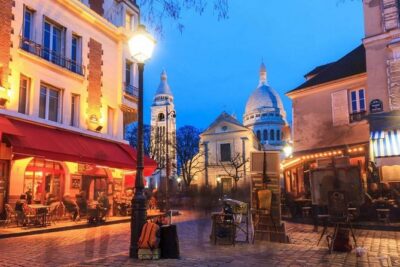
Montmartre is Paris at its most theatrical: artists sketch in public squares, old windmills peek above city streets, and Sacré-Coeur crowns the hill with a grand view. This two-hour walk takes you from Place des Abbesses through the village’s art-filled lanes, past sites linked to Picasso, Van Gogh, Dalida, and Amelie, then up to the basilica.
I like the local scale of this experience. The group can have as many as 15 people, but it is still far more personal than a large coach tour. I also like the guide’s focus on everyday Montmartre: bakeries, food shops, street art, composers, painters, and the small details that help the neighborhood feel lived-in rather than staged.
The main drawback is the hill. You will walk uphill on old cobbled streets, and the two-hour schedule moves quickly. The tour ends at Sacré-Coeur, but the line to enter the basilica can be long and is separate from the guided walk.
Key points to know before you book
- Follow artists’ footsteps: See places connected with Picasso, Van Gogh, impressionist painters, and the artists who gathered at Le Bateau-Lavoir.
- Meet local guide Jill: Jill is a Montmartre resident who often shapes the walk around the group, including stories about composers such as Erik Satie.
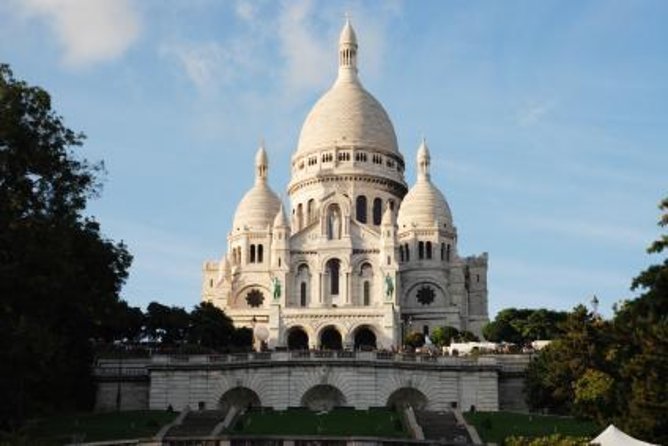
- End at Sacré-Coeur: Finish beside the basilica after climbing through Montmartre’s older streets for a broad view over Paris.
- See Place du Tertre at work: Local artists create quick sketches on request, giving the famous square a working-art-studio feel.
- Expect a small group: The maximum is 15 people, which allows more questions and personal recommendations.
- Budget for a short, focused walk: At $48.37 per person, the value rests mainly in the guide’s stories, local knowledge, and food recommendations, not in paid admissions.
Why this Montmartre walk feels different
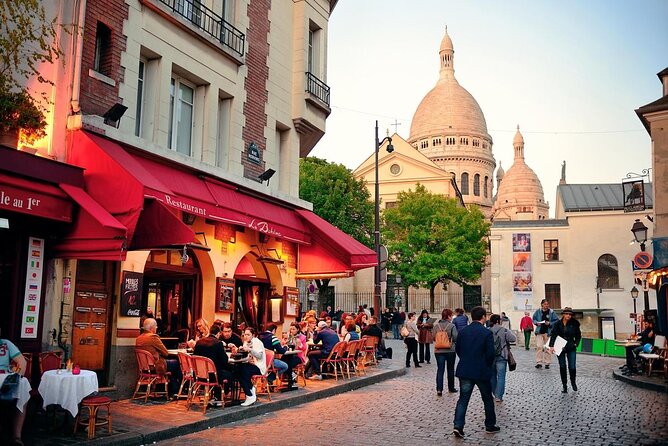
Many visits to Montmartre become a simple climb to Sacré-Coeur, a few photographs, and a quick retreat downhill. This experience gives the hill a storyline. You begin at Place des Abbesses, pass through streets tied to artists and performers, and reach the basilica only after seeing the neighborhood that made the hill famous.
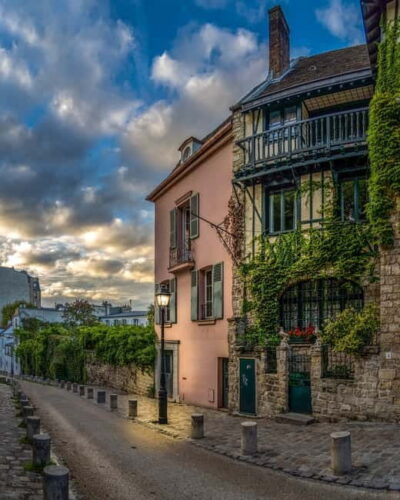
That order matters. Montmartre was once a working-class village north of Paris, and its old village character still shapes the walk. You are not only looking at grand monuments. You are also watching the transition from Art Nouveau details at Abbesses to artist stalls, food shops, painted walls, old residences, and narrow lanes.
The guide is central to the experience. Jill receives the strongest praise in the supplied material, with repeated comments about her warmth, storytelling, and ability to adjust the walk to the people in front of her. Matt is also singled out for giving clear historical explanations without burying the group in minor details.
That makes this a good choice if you want context but not a formal lecture. Jill has added stories about composers when a guest had an interest in opera, and she has given practical recommendations for bakeries, patisseries, restaurants, creperies, and even a local shop. You get more value from those small exchanges if you ask questions.
A few other Paris half-days to compare
- Paris: Moulin Rouge Cabaret Show Ticket with Champagne
★ 4.7 · 16,088 reviews - Paris: Dinner Show at the Moulin Rouge
★ 4.8 · 3,333 reviews - Montmartre Hidden Gems and Scenic Highlights Walking Tour
★ 5.0 · 2,684 reviews
Starting at Place des Abbesses
The meeting point is 22 Rue des Abbesses, at Place des Abbesses. This is a useful starting place because it drops you directly into Montmartre’s village life rather than beginning at the basilica with its crowds and souvenir stalls.
The square is known for its Art Nouveau attractions, which give the first few minutes an architectural focus. From here, the walk heads into the neighborhood’s streets and begins the gradual climb. The route is not a flat stroll, so wear shoes that feel secure on uneven cobblestones.
Place des Abbesses also helps explain the contrast that defines Montmartre. It feels local and residential in places, yet it is tied to some of Paris’s most famous artists and films. You may recognize locations from Amelie of Montmartre, a film that used the neighborhood’s unusual mix of romance, odd corners, cafes, and village streets.
The tour is offered in English and uses a mobile ticket. Confirmation is provided when you book. Since the meeting point can be lively, arrive with the address ready on your phone and watch for the guide or group at the square.
Rue Lepic and the world of Amelie
Rue Lepic is where the walk connects Montmartre’s physical streets with its artistic past and film life. The guide points out locations associated with impressionist painters and scenes used in Amelie. The appeal is not simply recognizing a movie setting. It is seeing how the film used Montmartre’s real slopes, shopfronts, and village mood.
The route also brings in the local food culture. You might hear about places to buy bread, pastries, coffee, wine, or a casual meal. Coffee and tea are not included in the tour price, so treat any food or drink stop as an optional purchase rather than part of the package.
The neighborhood has an eclectic feel here. You may move from a famous film location to a street-art detail, then to a story about a painter who once lived nearby. A strong guide makes these links feel natural, and Jill’s walk appears to put particular weight on the people behind the buildings.
Place du Tertre and artists at work
Place du Tertre is the most obvious artistic stop, but it is also one of the busiest and most commercial parts of Montmartre. Local artists work in the square and can make an instant sketch at your request. That creates a chance to watch a traditional street-art trade rather than merely view a historic plaque.
You should decide in advance if you want a drawing. The tour does not say that a sketch is included, so ask the artist about the price before agreeing. Even if you do not buy one, watching the quick process is part of the square’s character.
The guide adds the setting’s backstory, explaining why painters gathered here and how Montmartre became linked with modern art. The square can feel crowded, so do not expect a quiet art gallery. Its value is the activity: artists working in front of you, people browsing portraits, and a public space still connected to its creative reputation.
Same city, a completely different afternoon:
- Paris: Louvre Museum Timed-Entrance Ticket
★ 4.6 · 71,977 reviews - Disneyland® Paris 1-Day Ticket
★ 4.6 · 49,412 reviews - Paris: Versailles Palace and Gardens Full Access Ticket
★ 4.6 · 41,579 reviews - Paris: Evening River Cruise with Music
★ 4.4 · 22,721 reviews
Dalida’s home and Montmartre’s performers
The walk continues to La Maison de Dalida, the former residence of Dalida, a French and Italian star born in Egypt who was also Miss Egypt in the mid-1950s. The stop is brief, but it widens the story beyond painters.
Montmartre’s cultural identity includes singers, composers, actors, and residents whose fame came through performance. This is one reason the tour can work well for people interested in music as much as visual art. Jill has also included stories about composers such as Erik Satie when the group’s interests called for it.
You will admire the exterior of Dalida’s residence rather than enter it. The stop is about connecting a quiet residential address with a major figure in French popular culture.
Le Bateau-Lavoir and Picasso’s Paris
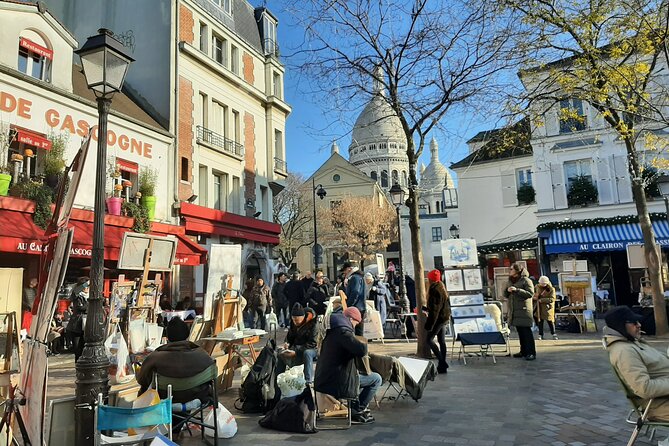
Le Bateau-Lavoir was an important meeting place for artists in the early twentieth century. Picasso came to Paris in 1900 and was drawn to the city’s energy, and the walk passes by the site of his Montmartre studio.
This is one of the tour’s best historical moments because it links a plain street location to the period when Paris became a gathering place for artists from many backgrounds. You are not simply told that Picasso lived in Montmartre. You are shown the place connected with his working life and the artistic circles around him.
The stop is short, so you will not receive a full art-history course. That is probably a benefit for a two-hour outing. The guide gives enough context to make the location meaningful, then keeps you moving through the village.
Van Gogh, impressionists, and street art
The route includes the house where Vincent van Gogh lived, a detail that many people find especially memorable. His connection to Montmartre gives the neighborhood another layer: the hill was not only a backdrop for polished Paris but also a place where artists lived, worked, struggled, and influenced one another.
The guide also points out places connected with impressionist painters. You may hear more about Van Gogh than the itinerary alone suggests, since Jill is especially strong on his life in Montmartre. If you have a favorite artist, ask about that person early in the walk. The group’s interests can shape the stories.
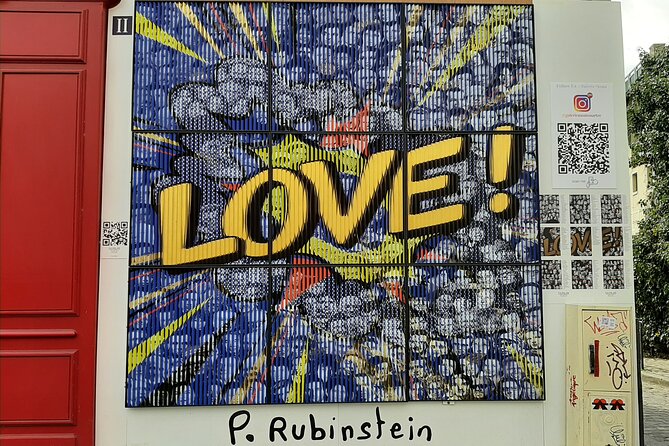
Street art adds a modern note. The guide explains the background of selected pieces, giving you a way to notice small works during the rest of your Paris visit. This is useful because Montmartre rewards slow looking. A doorway, wall, shop sign, or painted corner can carry more local character than a famous photo stop.
The windmills and Montmartre’s village past
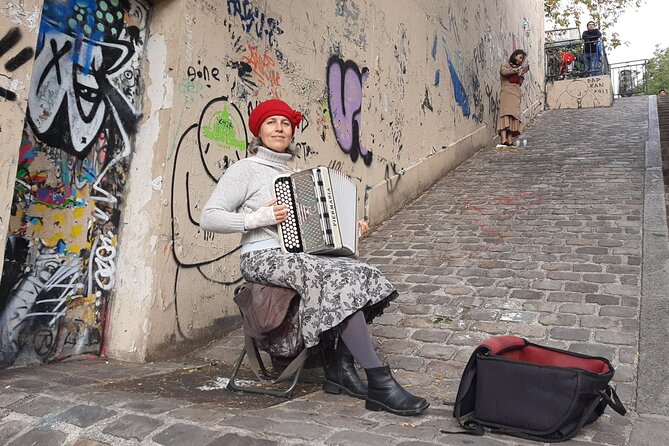
Montmartre’s windmills are a reminder that this was once a village with working land, not just an artists’ quarter. The first windmill dates from the seventeenth century, when the area sat outside the main city and served a more practical purpose.
Seeing the windmills helps correct the usual postcard version of Montmartre. The hill has romance, but it also has a working past. The guide’s job here is to connect the surviving structures and streets with the old village that came before the studios, film crews, and tourist crowds.
This part of the walk is also a chance to slow down. After the busy square at Place du Tertre, the older streets and village details can feel calmer. Still, the route is uphill in places, so pace yourself and carry water if you need it.
Reaching Sacré-Coeur and the Paris view
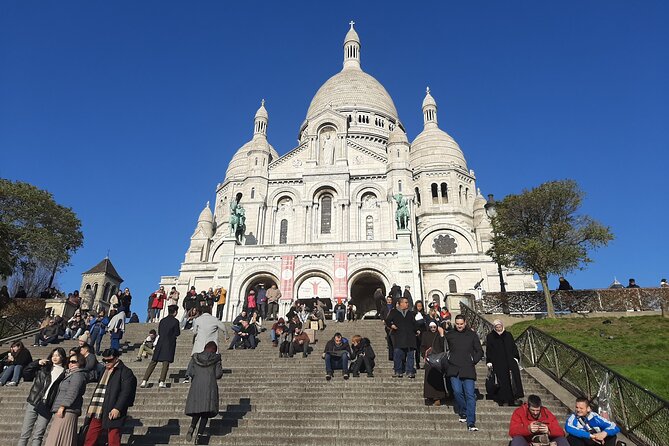
The final stop is the Basilique du Sacré-Coeur de Montmartre, at 35 Rue du Chevalier de la Barre. The walk reaches the imposing white basilica after taking you through the older streets, which makes the arrival more satisfying than approaching it cold from the nearest transport stop.
Admission to the basilica is free. The tour price does not buy skip-the-line access, and the queue to enter can be large, especially in poor weather or at busy times. The guide has clarified that people waiting in the basilica line are not part of the tour group, so allow extra time if you want to go inside after the walk.
The broad view over Paris is the payoff. From the hilltop, you can look across the city after learning how Montmartre grew from a village into an artists’ quarter within Paris. The view is free, but the guide’s explanation gives it more meaning.
Because the tour ends here, you can remain at Sacré-Coeur afterward without needing to retrace the route. This is also a practical place to continue exploring on your own, though the experience does not include a return transfer.
Timing, group size, and walking effort
The tour lasts about two hours. The listed stops range from 10 to 20 minutes, with the rest of the time spent walking between them. That means the route covers a fair amount of ground, and you should not expect long visits inside each location.
The group maximum is 15 people. That is small enough for questions and conversation, though the exact feel depends on the day’s attendance. A smaller group can be especially helpful on narrow streets or at Place du Tertre, where a large crowd would make it harder to stay together.
Most people can participate, and service animals are allowed. The route is near public transportation. No specific accessibility details are provided, but the uphill cobbled streets are an important consideration for anyone who finds uneven ground or climbing difficult.
Is $48.37 a fair price?
At $48.37 per person, this is not the cheapest way to walk around Montmartre. You can reach the basilica and wander the streets without paying for admission. The value comes from the guide’s local interpretation, the linked stories about artists and performers, and the time saved figuring out what you are looking at.
I think the price is reasonable if you want an organized introduction and practical neighborhood advice. It is particularly useful early in a Paris stay, when you can use recommendations for bread, pastries, restaurants, crepes, and coffee later in the trip.
It is less compelling if you already know Montmartre well or prefer to explore at your own pace. You will not receive included drinks, paid entry, or a long museum visit. This is a short guided walk, not an all-day cultural program.
Free cancellation is available up to 24 hours before the start time for a full refund. Changes or cancellations inside that window are not accepted for a refund.
Who should book this walk?
I would recommend it to first-time Paris visitors, fans of Amelie, people interested in painting and music, and anyone who wants Montmartre explained by someone who lives there. It also suits families and couples who prefer stories and conversation to a formal classroom-style tour.
The experience is a good fit for you if you like asking questions. Jill has shown the ability to adapt stories to personal interests, and the smaller group makes that possible. You will get more from the walk if you mention your favorite artists, films, or food early.
You may want to skip it if you dislike hills, cobblestones, crowds around famous monuments, or a brisk two-hour pace. Also consider booking extra time afterward for the basilica, its queue, and the surrounding hilltop.
FAQ
Where does the Montmartre tour begin?
The tour begins at 22 Rue des Abbesses, 75018 Paris, France, at Place des Abbesses.
Where does the tour end?
It ends at the Basilique du Sacré-Coeur de Montmartre, 35 Rue du Chevalier de la Barre, 75018 Paris, France.
How long does the experience last?
The walking tour lasts approximately two hours.
What language is the tour offered in?
The tour is offered in English.
How much does the tour cost?
The listed price is $48.37 per person.
Is Sacré-Coeur admission included?
Admission to the basilica is free. The tour does not provide skip-the-line access, and any queue to enter is separate from the guided walk.
What places are visited?
The route includes Place des Abbesses, Rue Lepic, Place du Tertre, La Maison de Dalida, Le Bateau-Lavoir, Montmartre’s windmills, and Sacré-Coeur Basilica.
How large can the group be?
The maximum group size is 15 people.
Can I cancel for a full refund?
Yes. You can cancel at least 24 hours before the experience start time for a full refund. Cancellations or changes made less than 24 hours beforehand are not accepted for a refund.
Should you book it?
Book this walk if you want Montmartre to make sense, not simply look pretty. Jill’s local stories, the artist connections, Van Gogh’s former home, Dalida’s residence, Amelie locations, and the final Sacré-Coeur view create a strong two-hour introduction.
Just plan for uphill walking, a busy Place du Tertre, and possible waiting at the basilica. At $48.37, the tour earns its price through the guide and the neighborhood context. If that is what you want, it is a smart way to meet Montmartre before exploring it on your own.
Just listed in Paris
- Chartres Cathedral 5 Hours Tour from Paris with Private Transport★ 4.5 · 49 reviews
- Paris: Giverny & Versailles Small Group or Private Tour★ 4.5 · 49 reviews
- Paris: Louvre photoshoot or Seine bridges Eiffel Tower walk★ 5.0 · 49 reviews
- Paris: Choux Pastry and Chocolate Éclair Making Class★ 4.9 · 50 reviews
- Private tour of the Champagne area, meet local producers and taste their Champagne, start from your hotel in Paris.★ 5.0 · 50 reviews
- Paris Eternelle Notre-Dame Virtual Reality Tour★ 4.5 · 50 reviews
- Normandy D-Day Landing Beaches Private Day Trip from Paris★ 5.0 · 50 reviews
- Disneyland® Paris 1 Day with Round-Trip Train Tickets from Paris★ 4.0 · 50 reviews
Montmartre & Sacre-Coeur Tours, compared.

Moulin Rouge Cabaret Show Ticket with Champagne
Read our review →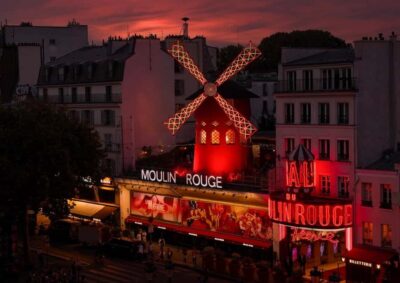
Montmartre Hidden Gems and Scenic Highlights Walking Tour
Read our review →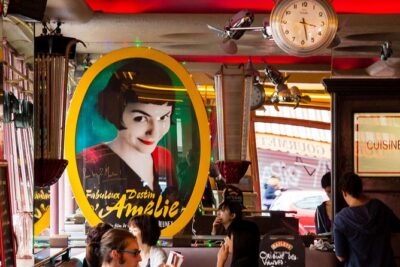
Montmartre Hill French Gourmet Food and Wine Tasting Walking Tour
Read our review →
Seine Dinner Cruise, Eiffel Tower Access and Moulin Rouge Show
Read our review →
Montmartre Cheese, Wine & Pastry Guided Walking Tour
Read our review →
Montmartre Highlights Walking Tour with a Local Guide
Read our review →Browse the lists this tour appears in