
Reviewed · MONTMARTRE & SACRE-COEUR TOURS
Paris Montmartre & Sacre Coeur Semi-Private Guided Tour 12ppl Max
Montmartre’s best moments come between the famous sights: a quiet lane, an old vineyard, a painter’s former home, or a sudden view across Paris. This 2.5-hour walk takes you from the Moulin Rouge up the butte to Sacré-Coeur, then through the neighborhood’s artistic corners and film locations.
I like the small group limit of 12, which makes it easier to hear the guide and ask questions. I also like the route’s mix of big sights and lesser-known streets, especially the Clos Montmartre vineyard and the Jardin Sauvage de Saint-Vincent. The catch is simple: Montmartre is steep, cobbled, and uneven, so this is not a gentle stroll.
Key points to know before booking
- The climb begins at Blanche, near the Moulin Rouge, and continues uphill through Montmartre’s cobbled streets.
- The group never exceeds 12 people, with a private-tour upgrade available.
- The route covers major sights and small details, including Van Gogh’s former home, Place Dalida, Le Lapin Agile, and artists’ residences.
- Sacré-Coeur provides the grand finale, with broad views over Paris and time to see the basilica’s interior when access allows.
- Evening departures can work especially well, offering cooler walking conditions and a chance of sunset views.
- Comfortable shoes are essential, and the tour is not suited to wheelchair users or people with walking disabilities.
Starting at Blanche beneath the Moulin Rouge
The tour begins at Blanche Métro station, in the 18th arrondissement and close to the Moulin Rouge. This is a useful starting point because you are immediately at the foot of Montmartre, rather than wasting time being driven around the district.
The first stop is the exterior of the Moulin Rouge, the famous cabaret with its red windmill. Your guide sets the scene here, explaining how the venue became linked with nightlife, artists, and the paintings of figures such as Auguste Renoir and Toulouse-Lautrec.
You do not go inside the Moulin Rouge, and the tour price does not include a cabaret show. Think of this as a neighborhood walk, not a dinner-and-performance package. If you want the full Moulin Rouge experience, you would need to arrange a separate evening booking.
The opening section can feel slower than the rest of the route. The cabaret’s story and Toulouse-Lautrec’s connection to it may appeal to art lovers, but some people will be eager to start climbing. Once the walk moves away from the broad boulevard and into the side streets, the experience becomes more intimate.
A few other Paris half-days to compare
- Paris: Moulin Rouge Cabaret Show Ticket with Champagne
★ 4.7 · 16,088 reviews - Paris: Dinner Show at the Moulin Rouge
★ 4.8 · 3,333 reviews - Montmartre Hidden Gems and Scenic Highlights Walking Tour
★ 5.0 · 2,684 reviews
Climbing the butte through artists’ Montmartre
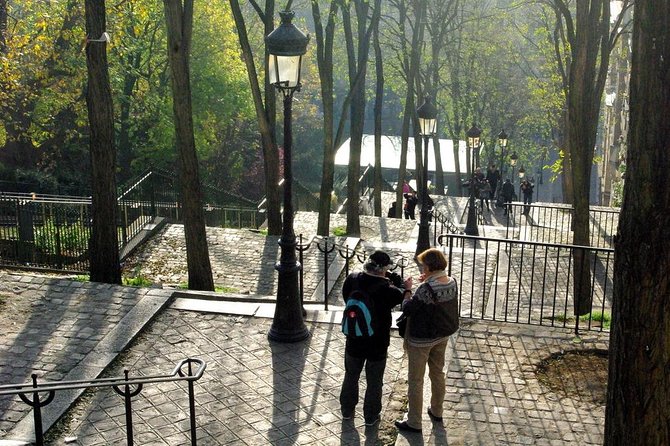
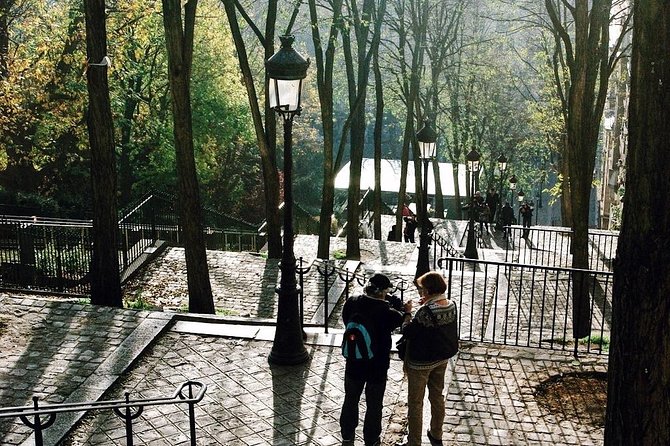
Montmartre is built on a hill, and the physical shape of the district is part of its character. The route winds upward along cobbled streets, with stairs and inclines mixed into the walk. You will want shoes with a firm grip, and a walking stick could be useful if uneven ground worries you.
The reward is a neighborhood that feels different from central Paris. The route passes houses and streets linked with artists including Vincent van Gogh and Pablo Picasso. Your guide adds the personal stories that help these addresses mean more than a quick photo stop.
One useful feature of a small group is the chance to interrupt politely with questions. Guides such as Alistair, Alasdair, Georgia, Paloma, Eden, Jean, Emma, Belle, and Romain have been praised for their storytelling, warmth, and ability to connect Montmartre’s past with the rest of Paris.
The exact guide will depend on the departure, so you should not book expecting a particular person. Still, the repeated strength of the guiding is important here. Montmartre has many plaques, studios, cafés, and old buildings, but the value of a walking tour comes from knowing why they matter.
Van Gogh’s former home on Rue Lepic
One of the stops is the house on Rue Lepic where Vincent van Gogh lived with his brother Theo from 1886. This is an exterior sight, not a museum visit, and there is no admission included.
That distinction matters. You are not entering Van Gogh’s living quarters or viewing original paintings here. You are seeing a place connected to an important period in his life and hearing the story in the setting where it happened.
Rue Lepic also helps show how Montmartre changes as you climb. The lower streets feel more commercial, while the upper lanes offer a slower village-like atmosphere. Fans of the film Amélie will recognize several parts of the district, since Montmartre provided locations for much of the movie.
Place Dalida and the neighborhood’s local character
The walk continues to Place Dalida, a small square dedicated to the French singer Dalida. Her statue has become a popular tribute point, and her former home on Rue Orchampt is also included later in the route.
These stops add a different layer to the neighborhood. Montmartre is often presented as the home of painters, but its identity also comes from singers, cabaret performers, actors, and residents who became part of French popular culture.
The house at 11 Bis Rue Orchampt is connected with Dalida’s life from 1962 to 1987. It is also associated with her death in 1987. That subject is handled as part of the area’s story, but families with young children should know that the tour can include adult subject matter.
Same city, a completely different afternoon:
- Paris: Louvre Museum Timed-Entrance Ticket
★ 4.6 · 71,977 reviews - Disneyland® Paris 1-Day Ticket
★ 4.6 · 49,412 reviews - Paris: Versailles Palace and Gardens Full Access Ticket
★ 4.6 · 41,579 reviews - Paris: Evening River Cruise with Music
★ 4.4 · 22,721 reviews
The wild garden and Montmartre’s last vineyard
The Jardin Sauvage de Saint-Vincent is easy to miss if you are focused only on the main attractions. It is a sloping patch of land left in a more natural state, with elderberry trees, ivy, insects, and wild plants.
I like this stop because it breaks up the art-and-cabaret theme. It shows that Montmartre is not only about souvenir shops and portrait artists. The garden also gives you a short pause from the crowds and a chance to see a less polished side of the hill.
Near the upper streets is the Vigne du Clos Montmartre, one of the last remaining vineyards in central Paris. The vineyard is tucked behind Sacré-Coeur and is seen from outside. It is not a wine tasting or a vineyard tour, but it is an unusual sight in a major capital city.
If you visit during a busy period, the vineyard may not feel secluded. The value is in the contrast: a working-looking patch of vines within one of the most visited districts in Paris. Your guide can also explain why this small plot matters to Montmartre’s identity.
Le Lapin Agile and Montmartre’s bohemian past
Le Lapin Agile is another exterior stop. This old cabaret became a meeting place for Montmartre’s bohemian crowd until 1914, and its painted sign remains one of the district’s recognizable symbols.
Again, admission is not included. The tour gives you the setting and the story, but not a performance. That is a fair arrangement for a walking tour, though anyone hoping to visit every cabaret interior should adjust expectations.
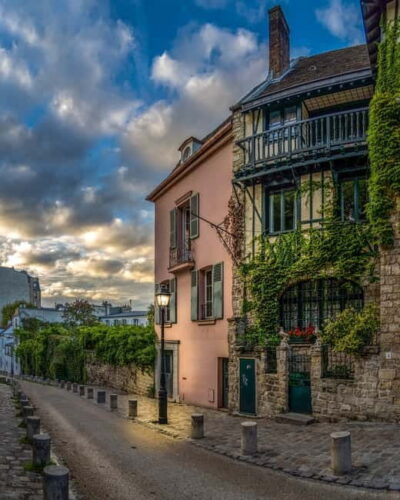
The nearby lanes are among the most enjoyable parts of the route. They are narrow, irregular, and full of small changes in level. Your guide may point out details that would otherwise pass unnoticed, from former artist residences to places tied to writers, painters, and performers.
Reaching Sacré-Coeur and the Paris view
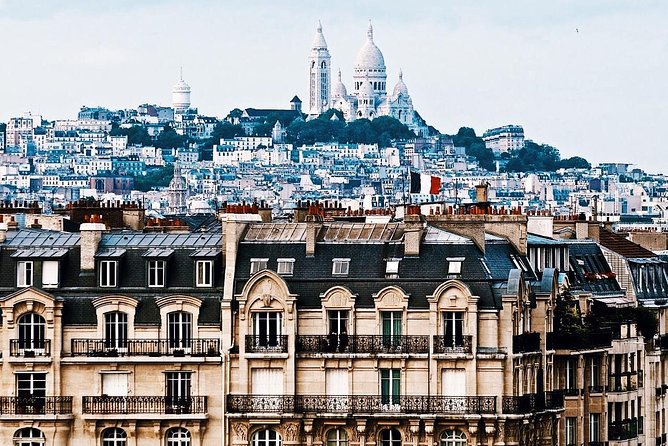
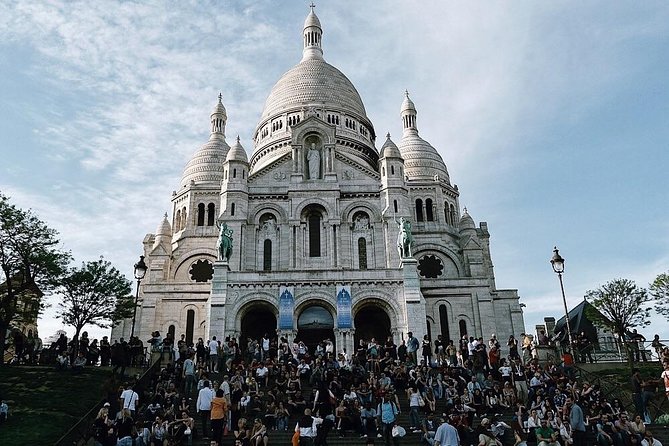
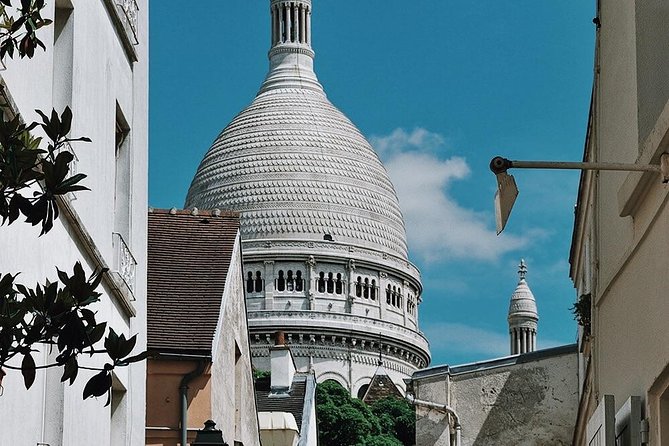
The Basilica of the Sacred Heart is the central sight of the tour. Built in the Romano-Byzantine style and completed in 1914, it rises above the city in bright white stone. From the area around the basilica, you get one of the broadest public views across Paris.
The view is the payoff for the climb. On a clear day, the city spreads below in layers, with landmarks visible in the distance. An evening departure can be especially appealing because the heat is often lower and the walk may finish near sunset, depending on the season and weather.
The tour includes time to enter Sacré-Coeur when access permits. The basilica contains one of the world’s largest mosaics, showing Christ, and the interior is worth seeing even if you have already admired the building from outside.
Security rules can sometimes limit interior access. National celebrations and other major events can also change the route. In those cases, an alternative path is used, with the main sights still covered as far as possible.
Keep in mind that the steps and open viewing areas around Sacré-Coeur can be crowded. Your guide helps you get oriented, but this is not a private photo session. Allow yourself a little time after the official walk if you want to linger.
Place du Tertre and the working art scene
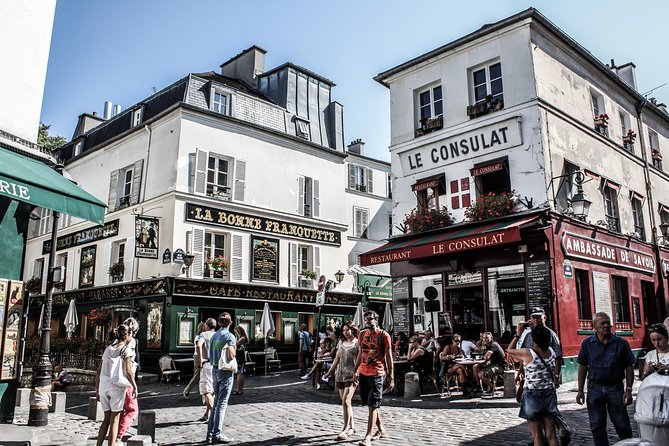
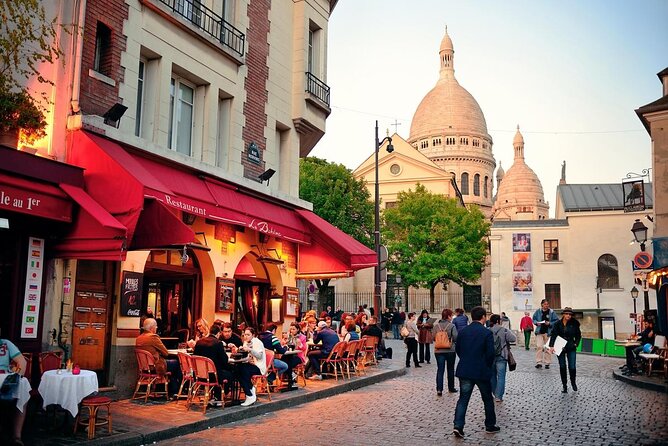
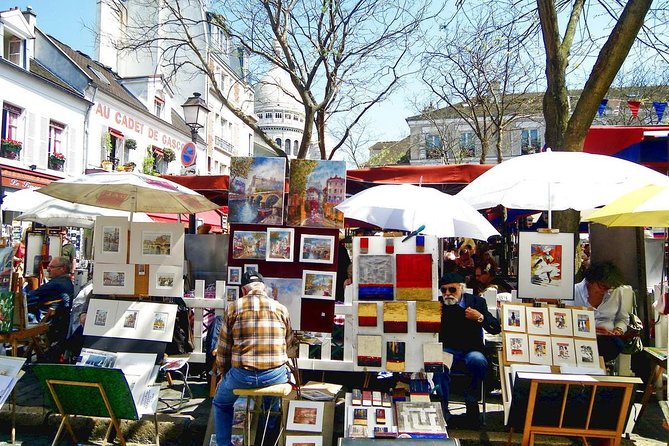
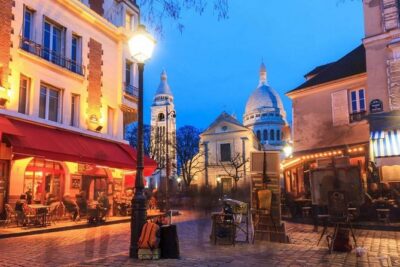
Place du Tertre sits only a short walk from Sacré-Coeur. Artists set up easels here, continuing a tradition that recalls the period when Montmartre became a center for modern art.
This square is picturesque, but it is also one of the busiest parts of the neighborhood. You will find portrait artists, quick caricatures, cafés, and plenty of people taking photos. I would treat it as a place to understand Montmartre’s artistic image, not as a quiet discovery.
The guide’s role is useful here. Without context, the square can seem like a tourist stop built around a charming name. With a good explanation, it becomes easier to connect the present-day artists with the painters, writers, and performers who made Montmartre famous.
Dalí, Bateau-Lavoir, and the final streets
The route passes the Espace Dalí, a museum devoted to Salvador Dalí’s sculptures and engravings. It contains around 300 original works, but the museum is not part of the walking tour and entrance is not included.
If surrealist art interests you, you can return later for a separate visit. During the tour, the exterior stop is enough to place Dalí within Montmartre’s wider artistic story.
You also see the Bateau-Lavoir, an artist residence that became a place for painters, writers, actors, and art dealers to live and exchange ideas. It is one of the district’s most important artistic addresses, even though the stop itself is brief.
The tour then reaches Dalida’s former home and continues toward Place des Abbesses. The Abbesses Métro entrance is one of only two surviving Paris entrances designed in Hector Guimard’s Art Nouveau style. It is a fitting final detail because the route ends not with another major monument, but with a piece of everyday Parisian design.
The official end point is in Montmartre, near the Abbesses area. You are not returned to your hotel, so plan your next move in advance. The neighborhood has Métro access, though the station layout and stairs can be tiring after the climb.
What $59.69 buys you
At $59.69 per person, this tour sits in the middle range for a guided Paris walk. You are paying for a professional guide, a 2.5-hour route, and a group capped at 12 people. You are not paying for cabaret admission, museum entry, hotel transfers, food, or drinks.
I see the price as fair if you want the neighborhood explained rather than simply photographed. Montmartre is easy to visit independently, but it is also easy to spend your time around the same crowded streets without understanding the artist addresses, vineyard, cabarets, and local figures.
The value improves if your group is small on the day. Some departures may have only two people, which creates a much more personal walk and lets the guide adjust the pace and emphasis. The private upgrade costs more, but it may suit families or couples who want a fully flexible route.
Group discounts may be available, though the exact saving depends on the booking option. Gratuities are not included and remain optional. Hotel pickup and drop-off are also excluded, so plan to reach Blanche independently by Métro, taxi, or Uber.
Who will enjoy this walk most
I would recommend this tour to first-time Montmartre visitors, art fans, film fans, and anyone who prefers stories to a checklist of monuments. It works well early in a Paris stay because it gives you a map of the district and ideas for places to revisit on your own.
The tour also suits repeat visitors who have seen the Eiffel Tower, Louvre, and Notre-Dame but have not really explored Montmartre. The route reveals a different side of Paris, one shaped by hill streets, small squares, cabarets, and artists’ homes.
You should think twice if steep walking is difficult for you. The tour runs in rain or shine, and you should bring water, an umbrella in wet weather, and a hat during hot summer days. Large bags and suitcases are not allowed.
Children must be accompanied by an adult, and the subject matter may not suit every child. The minimum booking is two people, so a departure may be canceled if that number is not reached. In that case, you are offered another date or a full refund.
Free cancellation is available up to 24 hours before the start time. Cancellations or changes made inside that window are not refunded.
My verdict on the Montmartre route
Book this tour if you want to understand Montmartre as a neighborhood, not just stand in front of Sacré-Coeur. The strongest parts are the small group, the guide-led storytelling, the side streets, and the blend of famous sights with places such as the Clos Montmartre vineyard and Jardin Sauvage de Saint-Vincent.
Choose an evening departure if cooler temperatures and a possible sunset appeal to you. Choose another activity if you need step-free access, dislike uphill walks, or want to enter the Moulin Rouge or Espace Dalí.
For most visitors, the tour offers a useful balance of major sights and local detail. Come prepared for hills, listen closely, and leave time afterward to explore the cafés and streets around Abbesses at your own pace.
FAQ
Where does the tour begin?
The tour begins at Blanche Métro station, near the Moulin Rouge in Paris.
Where does the tour end?
The tour ends in the Montmartre neighborhood, near the Abbesses area.
How long does the walking tour last?
The tour lasts approximately 2 hours and 30 minutes.
How large is the group?
The semi-private group has a maximum of 12 people. A fully private option may also be available.
Is admission to the Moulin Rouge included?
No. The route visits the Moulin Rouge from the outside. A cabaret show or interior admission is not included.
Is the tour suitable for wheelchair users?
No. The tour is not recommended for people with walking disabilities or those using a wheelchair because of the steep, cobbled, and uneven streets.
Just listed in Paris
- Chartres Cathedral 5 Hours Tour from Paris with Private Transport★ 4.5 · 49 reviews
- Paris: Giverny & Versailles Small Group or Private Tour★ 4.5 · 49 reviews
- Paris: Louvre photoshoot or Seine bridges Eiffel Tower walk★ 5.0 · 49 reviews
- Paris: Choux Pastry and Chocolate Éclair Making Class★ 4.9 · 50 reviews
- Private tour of the Champagne area, meet local producers and taste their Champagne, start from your hotel in Paris.★ 5.0 · 50 reviews
- Paris Eternelle Notre-Dame Virtual Reality Tour★ 4.5 · 50 reviews
- Normandy D-Day Landing Beaches Private Day Trip from Paris★ 5.0 · 50 reviews
- Disneyland® Paris 1 Day with Round-Trip Train Tickets from Paris★ 4.0 · 50 reviews
Montmartre & Sacre-Coeur Tours, compared.

Moulin Rouge Cabaret Show Ticket with Champagne
Read our review →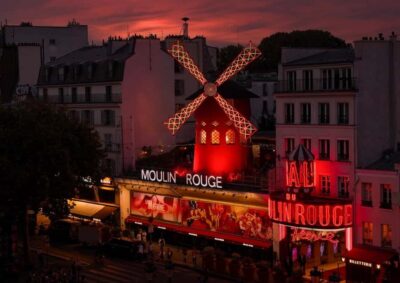
Montmartre Hidden Gems and Scenic Highlights Walking Tour
Read our review →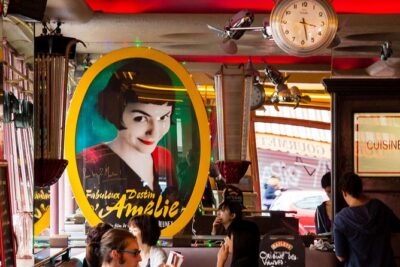
Montmartre Hill French Gourmet Food and Wine Tasting Walking Tour
Read our review →
Seine Dinner Cruise, Eiffel Tower Access and Moulin Rouge Show
Read our review →
Montmartre Cheese, Wine & Pastry Guided Walking Tour
Read our review →
Montmartre Highlights Walking Tour with a Local Guide
Read our review →Browse the lists this tour appears in