
Reviewed · PARIS TOURS
Croissants and pains au chocolat with a pastry chef in Paris
The best part of this Paris experience is that you do not just eat a croissant, you learn why it works. In chef Joannie’s home kitchen, you handle the dough, fold in the butter, shape the pastries, and watch them bake. I like the small group of no more than six, and I like that the class includes the full process rather than a quick demonstration.
Joannie also adds local advice about patisseries, restaurants, and things to do in Paris. The setting is warm and personal, with her cat sharing the home. The main drawback is the price, $126.98 per person, which may feel high if you mainly want to sample pastries rather than learn a skill.
Key points at a glance
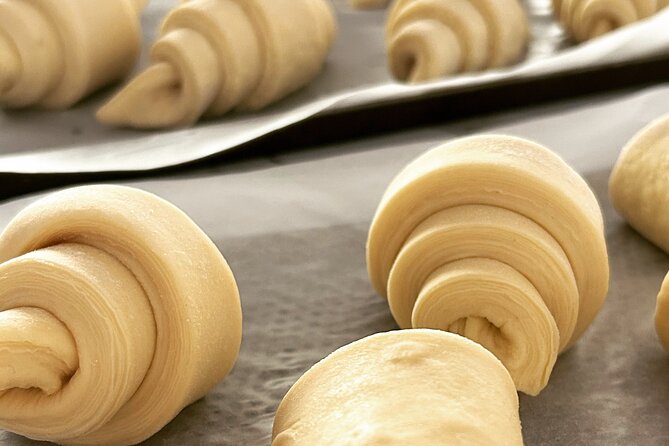
- Make two classic French pastries: Learn croissants and pains au chocolat from dough preparation through baking.
- Work in a group of six or fewer: The small class gives you a real chance to handle the dough and ask questions.
- Learn from chef Joannie: She explains lamination, fermentation, shaping, baking, and how to avoid common mistakes.
- Leave with more than a recipe: You can enjoy freshly baked pastries during the class and take some of your work with you.
- Meet in a Parisian home: The relaxed setting offers a change from museums, monuments, and crowded sightseeing routes.
- Plan around the restrictions: The class is not suitable for gluten-free or lactose-free diets, children under 10, or people allergic to cats.
Why this class feels different from a pastry tasting
Paris gives you endless chances to buy a croissant. A bakery visit takes five minutes and costs little. This class gives you something else: a working understanding of one of France’s most famous pastries.
Croissant dough looks simple on paper. Flour, butter, yeast, milk, sugar, and salt are not unusual ingredients. The difficult part is timing and handling. You need to keep the butter and dough in the right condition, fold them without breaking the layers, allow the dough to ferment, and shape it so it bakes into a light, crisp pastry.
That is why the class spends time on lamination and fermentation, the two steps most likely to confuse a home baker. You will not only copy hand movements. Joannie explains what each stage is doing and why the dough must be treated carefully.
The class is held at 115 Boulevard Voltaire in Paris’s 11th arrondissement. It ends at the same place. The location is near public transportation, so you can fit it into a day of exploring eastern Paris, or use it as a quieter break from major sights.
I especially like the home setting. You are not standing in a large commercial kitchen with a crowd. You are welcomed into Joannie’s home, in an old Parisian building, where the pace is described as comfortable and relaxed. That makes this feel more like a personal lesson than a standard sightseeing stop.
A few other Paris half-days to compare
- Paris: Louvre Museum Timed-Entrance Ticket
★ 4.6 · 71,977 reviews - Disneyland® Paris 1-Day Ticket
★ 4.6 · 49,412 reviews - Paris: Versailles Palace and Gardens Full Access Ticket
★ 4.6 · 41,579 reviews
Meeting chef Joannie in her Paris kitchen
Chef Joannie leads the class and teaches in English, French, or Italian. For English-speaking visitors, that matters. Croissant making depends on small physical details, and clear explanations are more useful than a recipe translated word for word.
The group size is capped at six people. That is an important feature, not just a number on a booking page. With six or fewer, you have room to ask about dough texture, butter, shaping, and baking. You are also more likely to take part in each stage instead of watching someone else do the work.
Joannie’s teaching style appears to be one of the strongest parts of the experience. She is described as patient, organized, friendly, and thorough. One useful detail is that she prepares dough at different stages in advance. Croissant dough normally takes much longer than a single morning because of resting and fermentation. By having several stages ready, she can show you the full method during a class lasting about two and a half hours.
That shortcut does not remove the important work. It lets you see how the dough changes over time without asking you to wait several days in Paris. For a visitor, this is a sensible trade.
The home also has a cat. Some people will enjoy the extra bit of Parisian domestic life, while anyone allergic to cats or uneasy around them should choose another activity. This is not a minor detail because the class takes place in the chef’s home, not a neutral public kitchen.
From dough to laminated layers
The lesson begins with the basic dough. You learn the foundation for both croissants and pains au chocolat, then move into the work that creates the pastry’s flaky layers.
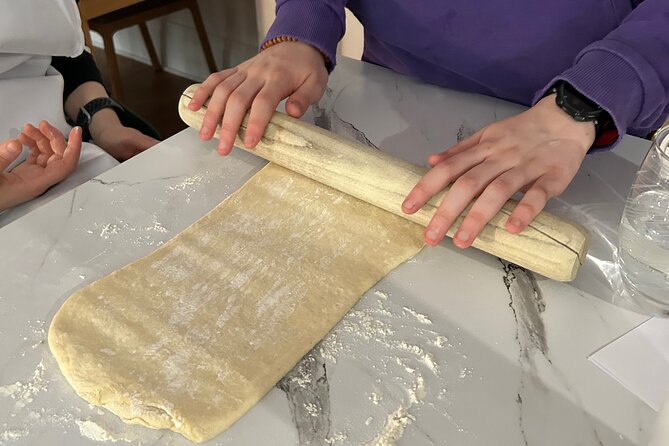
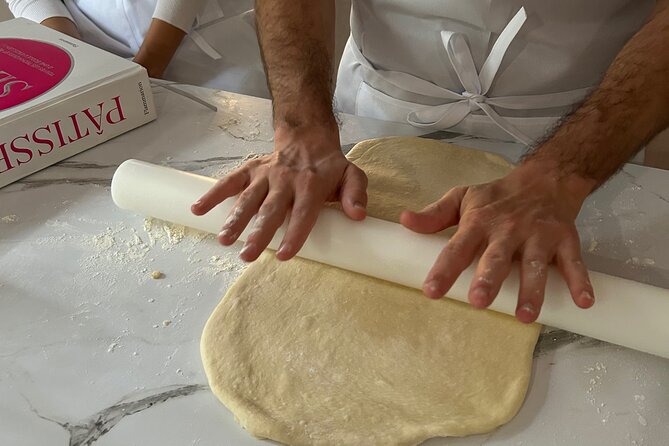
The key is lamination. Butter is worked into the dough through repeated folding and rolling. Done correctly, this creates thin alternating layers that puff in the oven. Done poorly, the butter can break through, melt into the dough, or leave you with a heavy pastry.
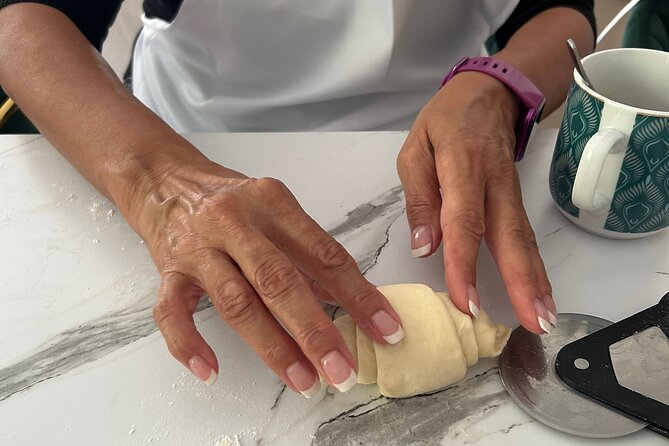
You should expect to handle the dough yourself. The experience is designed as a hands-on class, not a cooking show. That means you may get flour on your hands, need to repeat a fold, or discover that shaping pastry is less tidy than eating it.
Joannie explains how to roll, fold, handle, and shape the dough. She also covers fermentation, which gives the yeast time to develop the dough’s texture and flavor. Since she has prepared dough at different stages, you can compare what it looks and feels like before and after resting.
This is where the class offers real value for anyone who wants to repeat the recipe at home. A written list of ingredients cannot tell you enough about dough that feels too soft, butter that is too firm, or layers that are not forming properly. Watching the process and touching the dough gives you better clues.
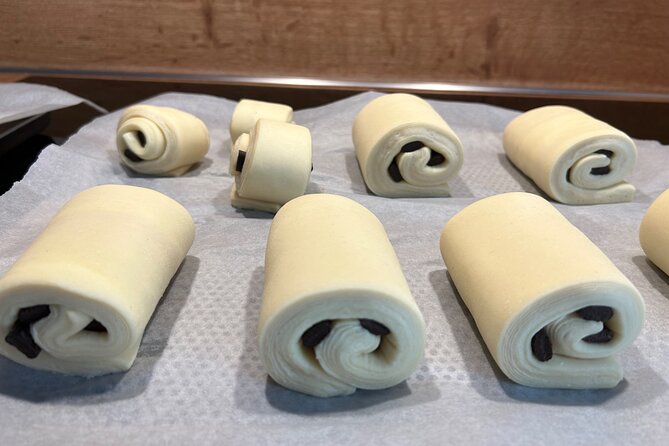
You also make both croissants and pains au chocolat. The two pastries share much of the same dough, but shaping them is different. Croissants are rolled and curved, while pains au chocolat are formed around chocolate. Making both gives you a broader lesson without adding a second class.
Baking, tasting, and taking pastries away
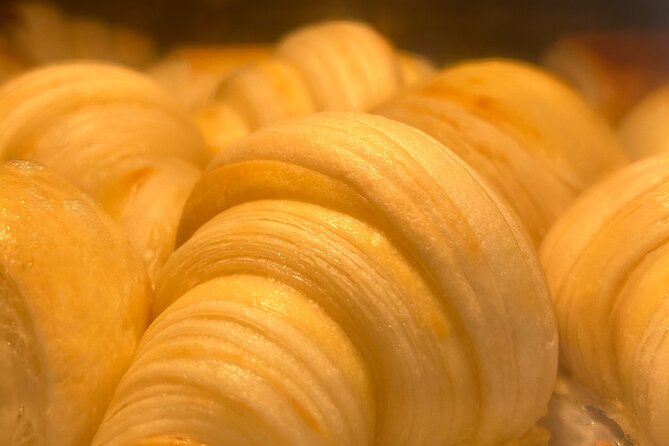
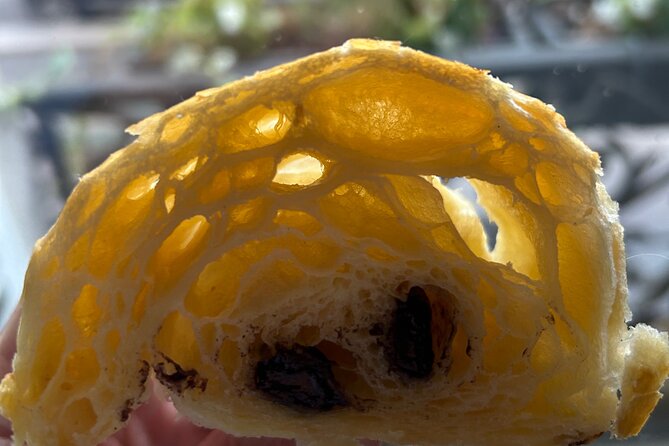
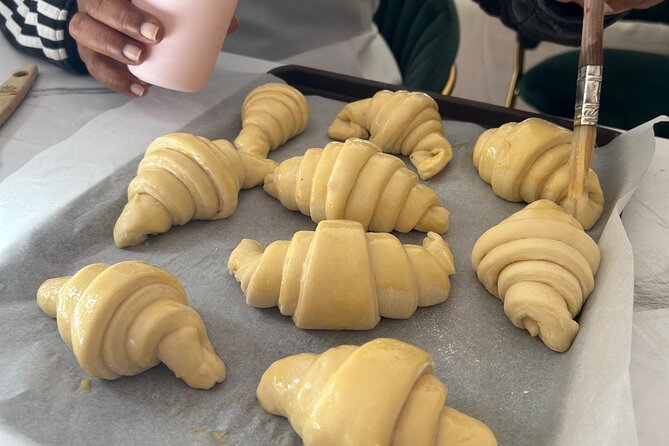
Once the pastries are shaped and ready, they go into the oven. The class includes the pleasure of tasting the results, along with a hot beverage and a surprise French pastry made by Joannie.
The baked pastries are not simply a final display. You get to eat what you helped make, which makes the class feel complete. Several people also took pastries away with them. The exact amount to take home may depend on the group and the day, so I would not book this expecting a fixed bag per person.
One piece of practical advice: schedule the class early in your Paris stay if you can. You may leave with enough baked goods to snack on later, and the recipe can give you a project for home after the trip. If you book it near the end, you will still have the experience, but you have less time to use Joannie’s local suggestions and less chance to enjoy the pastries during the rest of your visit.
The class is also a good choice when you need a break from major tourist attractions. Two and a half hours of rolling dough and talking with a local gives your day a different rhythm. It is still an activity, but it does not require you to rush from one landmark to another.
Same city, a completely different afternoon:
- Paris: Evening River Cruise with Music
★ 4.4 · 22,721 reviews - Paris: Eiffel Tower Entry Ticket with Optional Summit Access
★ 4.4 · 20,035 reviews - Paris: Eiffel Tower Summit or Second Floor Access
★ 4.3 · 17,248 reviews - Paris: Louvre Guided Tour with Reserved Access & Boat Cruise
★ 4.3 · 16,353 reviews
What you take home besides pastries
The recipe and tips are sent after the class. That follow-up is important because croissants are not a one-attempt bake for most people. You may understand the method in class, then need the written instructions when you try again in your own kitchen.
The most useful take-home value is the process. You learn how to approach a dough that takes time and care. You also learn what to do with scraps, an issue that came up as part of the instruction. That kind of detail can prevent waste and help you understand how professional pastry work uses the whole batch.
Joannie also talks about Paris during the class and offers suggestions for local patisseries and restaurants. These recommendations add a small but useful layer to the experience. You can ask questions about your own plans instead of relying only on a general city guide.
Do not expect a full sightseeing tour of Paris. The city advice is part of the conversation around the baking lesson. Its value depends on what you want to see and where you are staying.
Is $126.98 a fair price?
At $126.98 per person, this is not an inexpensive way to eat a French pastry. If you judge it against the cost of a croissant from a bakery, the price makes no sense.
Judge it instead as a private-style cooking lesson with a very small group, food to eat, pastries to take away, a recipe, and personal guidance from a pastry chef. The value is strongest if you want to learn a skill and plan to bake at home. The class compresses a process that normally unfolds over much more time, while still showing the major stages.
I would consider the price reasonable for a special occasion, a family activity, or a food-focused trip. It can also work well for people who have already seen the major Paris sights and want a more personal activity.
The value is weaker if you are looking for a cheap morning snack, if you do not cook, or if you are unlikely to attempt the recipe later. In that case, a bakery crawl will give you more food for less money, though not the same hands-on experience.
One point to keep in mind is that the class takes place in a home. That is part of its charm, but it also means the experience is personal and small-scale rather than polished like a large culinary school. Most people will see that as a benefit. You should simply know what you are booking.
Who should book this Paris pastry class?
I would recommend it most to:
- Couples and friends who want a shared food activity
- Families with children aged 10 and older
- Teenagers who enjoy practical, creative activities
- Home bakers who want to improve their pastry technique
- Visitors who want a slower break from museums and monuments
- Anyone who likes meeting a local in a relaxed home setting
The class is suitable for beginners. You do not need to arrive with professional baking skills. Joannie guides the group step by step, and the small size allows her to help as you work.
For families, check the age rule carefully. The stated minimum age is 10, even though one family managed the work with an eight-year-old who needed help. I would follow the official restriction and not assume younger children will be accepted.
This is not a good choice for anyone on a gluten-free or lactose-free diet. It is also unsuitable for people with cat allergies or anyone afraid of cats. The activity involves standard croissant ingredients and takes place in a home with a cat.
Timing, language, and cancellation details
The class lasts about two hours and 30 minutes. That is long enough to cover several stages without turning the morning into an all-day commitment.
It is offered in English, French, and Italian. The meeting point is 115 Boulevard Voltaire, 75011 Paris, and the activity ends there. The address is near public transportation, which makes arrival practical, but you should still allow enough time to find the building and arrive ready for the scheduled start.
Confirmation is provided when you book, and a mobile ticket is available. The experience is often reserved well ahead of time, with an average booking lead time of about 54 days. If your Paris dates are fixed, I would not leave this until the last minute.
Free cancellation is available up to 24 hours before the start time for a full refund. Cancellations or changes made less than 24 hours before the start are not accepted for a refund, and the cut-off uses Paris local time.
My call: book it if you want a skill, not just a snack
I would book this class if you want one memorable, hands-on morning in Paris and like the idea of bringing home a useful skill. Chef Joannie’s personal teaching, the six-person limit, the full explanation of lamination and fermentation, and the pastries you make yourself give the experience a clear purpose.
I would skip it if you are seeking the cheapest food experience, need gluten-free or lactose-free baking, or do not feel comfortable in a home with a cat. Also, do not expect a guaranteed large takeaway bag for every person.
For the right visitor, this is a fine Paris souvenir: not another photograph, but a recipe, a technique, and the chance to make the smell of a French bakery return in your own kitchen.
FAQ
Where does the croissant class take place?
The class begins and ends at 115 Boulevard Voltaire, 75011 Paris, France.
How long does the experience last?
The class lasts approximately two hours and 30 minutes.
What pastries will I make?
You will learn to make croissants and pains au chocolat.
What parts of the baking process are covered?
The class covers the process from dough preparation through lamination, fermentation, shaping, and baking.
Is the class offered in English?
Yes. The activity is available in English, French, and Italian.
How many people can join the class?
The maximum group size is six people.
Is the class suitable for children?
The activity is not available for children under 10 years old.
Can I cancel for a full refund?
Yes. You can cancel at least 24 hours before the experience start time for a full refund. Cancellations or changes made less than 24 hours before the start are not accepted for a refund.
Just listed in Paris
- Paris: Giverny & Versailles Small Group or Private Tour★ 4.5 · 49 reviews
- Chartres Cathedral 5 Hours Tour from Paris with Private Transport★ 4.5 · 49 reviews
- Paris: Louvre photoshoot or Seine bridges Eiffel Tower walk★ 5.0 · 49 reviews
- Paris: Choux Pastry and Chocolate Éclair Making Class★ 4.9 · 50 reviews
- Private tour of the Champagne area, meet local producers and taste their Champagne, start from your hotel in Paris.★ 5.0 · 50 reviews
- Paris Eternelle Notre-Dame Virtual Reality Tour★ 4.5 · 50 reviews
- Normandy D-Day Landing Beaches Private Day Trip from Paris★ 5.0 · 50 reviews
- Disneyland® Paris 1 Day with Round-Trip Train Tickets from Paris★ 4.0 · 50 reviews
Paris Tours, compared.



Versailles Palace and Gardens Full Access Ticket
Read our review →

Eiffel Tower Entry Ticket with Optional Summit Access
Read our review →

Louvre Guided Tour with Reserved Access & Boat Cruise
Read our review →