Reviewed · PARIS TOURS
Somme Battlefields from Paris with Australian memorial & Amiens Cathedral
The most powerful part of this day from Paris is its mixture of preserved trenches and quiet cemeteries. At Beaumont-Hamel, you can still walk through sections of the old trench system, then stand before memorials carrying the names of men whose bodies were never found. The Somme is not a tidy museum display. It is a wide, subdued region where shell craters and burial grounds still mark the fighting.
I like the way the tour connects British, Canadian, Newfoundland, and Australian stories rather than treating the Battle of the Somme as one broad military event. I also like the small group, with no more than eight people in an air-conditioned minivan. The main drawback is the length: this is an 11-hour day, with a long ride in each direction, and the van may feel tight if every seat is filled.
Key points to know before booking
- Walk through preserved trenches at Beaumont-Hamel: This is the most physical and immediate stop of the day.
- See the Australian story at Villers-Bretonneux: The memorial honors 10,738 Australian servicemen with no known grave.
- Experience the Sir John Monash Centre: Videos, personal accounts, and interactive displays give the military story a human scale.
- Stand inside Lochnagar Crater: The 30-meter-deep, 100-meter-wide crater was created on July 1, 1916.
- Eat at Le Tommy in Pozières: Lunch costs extra, but the café includes a private collection of battlefield objects.
- Finish at Amiens Cathedral: The 13th-century church gives the day a striking change of pace.
Why this Somme day trip matters
From Paris, the Somme battlefields are too far away for a sensible independent visit unless you are prepared to plan several train connections, arrange local transport, and research the sites in advance. This tour handles the driving and links the major memorials into one clear route.
The Battle of the Somme began on July 1, 1916, and continued through that year. The sites on this day show different parts of the conflict: huge memorials for the missing, physical remains of the front line, cemeteries, and modern interpretation centers.
The tour is especially useful if your interest is Australian military history. Villers-Bretonneux, the Sir John Monash Centre, and the Australian Corps Memorial Park area place Australia’s role in the wider Allied effort. You also get important Canadian and Newfoundland connections at Beaumont-Hamel, plus British and South African names at Thiepval.
The experience has earned a 4.9 rating from 228 reviews, with 98 percent of participants recommending it. That high mark is mainly tied to the guides and the emotional weight of the sites. Guide names praised in individual accounts include Aaron, Etienne, Philip, Matthew, Oliver, Pierre, Clement, Sarah, Marie, Nessa, and Victor. The quality of your day will depend partly on who leads your group, but the strongest accounts describe guides who explain the battles clearly, answer questions, and adjust the pace to the people in the van.
A few other Paris half-days to compare
- Paris: Louvre Museum Timed-Entrance Ticket
★ 4.6 · 71,977 reviews - Disneyland® Paris 1-Day Ticket
★ 4.6 · 49,412 reviews - Paris: Versailles Palace and Gardens Full Access Ticket
★ 4.6 · 41,579 reviews
Leaving Paris at 7:00 a.m.
The meeting point is Dada12, 12 Avenue des Ternes, in Paris’s 17th arrondissement. Departure is at 7:00 a.m., so plan your morning carefully. The tour returns to the same place after the full day.
The early start is not glamorous, but it helps the schedule. You have several memorials to visit, time for lunch, an hour at the Sir John Monash Centre, and a final stop at Amiens Cathedral. The journey lasts about 11 hours in total, and the distance means much of the day is spent on the road.
Transport is by air-conditioned minivan. The maximum group size is eight, which is far more personal than a large coach. It also means the guide can hear your questions and spend more time explaining a particular family connection or regiment.
There is one practical caution. One account describes the van as cramped during a roughly 12-hour day. Most people praise the small format, but if you dislike long rides or need lots of legroom, ask about the vehicle setup before paying.
The tour operates in all weather. That matters in the Somme, where open memorial grounds can feel cold, wet, and exposed. Bring waterproof footwear with good grip, a warm outer layer, and rain protection. Winter visitors have found the cold much harsher than expected, even with suitable clothing from Australia.
Thiepval Memorial and the scale of loss
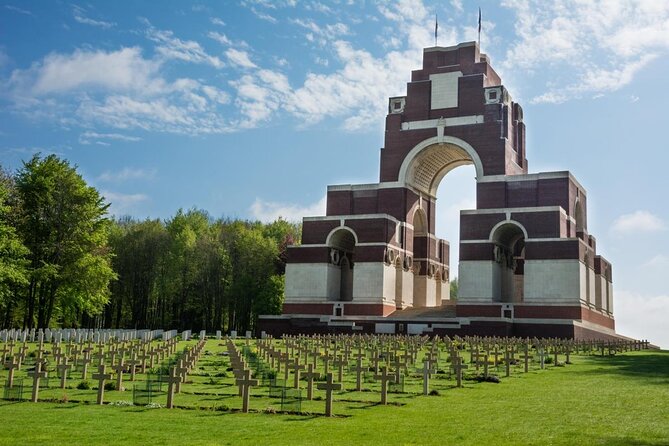
Your first major stop is the Thiepval Memorial of the Missing. Thirty minutes is enough to see the monument and read some of the names, but not enough for a slow, detailed study of every panel.
More than 72,000 United Kingdom and South African servicemen who died in the Somme area and have no known grave are named here. The scale can be difficult to absorb. A cemetery gives you individual headstones, while Thiepval presents loss in vast columns of names.
Your guide’s explanation matters at this stop. Without context, the memorial can feel like a large stone structure in an empty field. With a clear account of the battle and the problem of unidentified dead, the names become the focus.
Take a moment to look around before returning to the van. This is one of the places where the silence does much of the work.
Lochnagar Crater, a huge scar from July 1, 1916
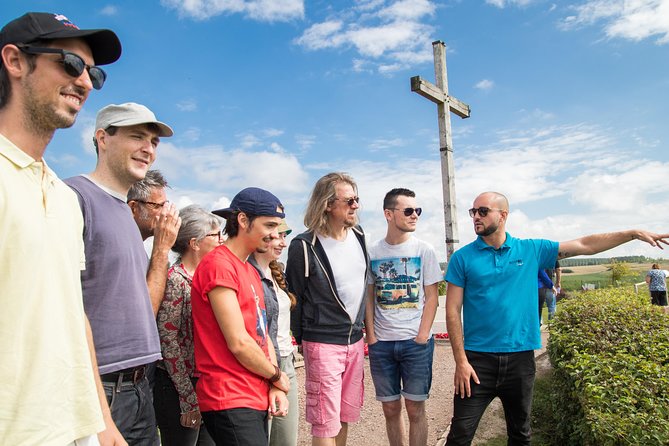
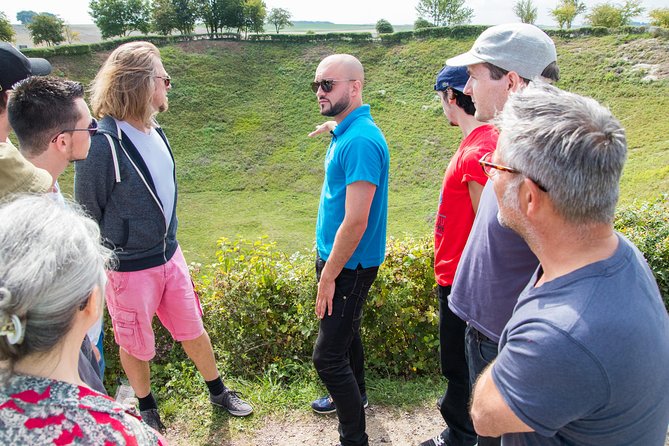
At Lochnagar Crater, you see one of the clearest physical signs of the opening day of the Battle of the Somme. A mine explosion on July 1, 1916, created a crater about 30 meters deep and 100 meters wide.
The 30-minute stop gives you time to walk around the rim and understand its size. Photographs rarely convey the scale. The crater is not simply a shallow dip in the ground, but a broad, unmistakable hollow left by the blast.
This stop is outdoors, so muddy conditions are possible. Good footwear is not just a winter suggestion. If the ground is wet, shoes with decent tread will make the short walk easier and safer.
The crater also helps connect the military story to the ground itself. You are no longer hearing only about artillery, mines, and troop movements. You can see what one explosion did to the earth.
Same city, a completely different afternoon:
- Paris: Evening River Cruise with Music
★ 4.4 · 22,721 reviews - Paris: Eiffel Tower Entry Ticket with Optional Summit Access
★ 4.4 · 20,035 reviews - Paris: Eiffel Tower Summit or Second Floor Access
★ 4.3 · 17,248 reviews - Paris: Louvre Guided Tour with Reserved Access & Boat Cruise
★ 4.3 · 16,353 reviews
Beaumont-Hamel and the Newfoundland trenches
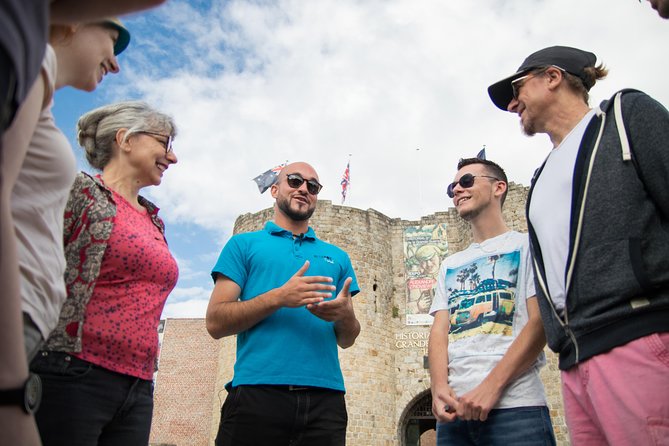
The Newfoundland Memorial at Beaumont-Hamel is one of the strongest stops for seeing battlefield remains. It is described as the largest preserved Somme battlefield site, and sections of the trenches remain visible enough for you to walk through them.
You get about 30 minutes here. That is a useful introduction, though anyone with a strong interest in trench systems may wish for more time. The preserved lines, uneven ground, and memorial setting make this a more tactile visit than a standard monument stop.
The site is important for understanding Newfoundland’s role in the battle. The guide can place the preserved trenches within the broader fighting, helping you picture how close and confined the front line was.
This is also a good place to remember that the sites are memorials first, not adventure attractions. Watch your footing, stay respectful, and give yourself time to take in the quiet.
Pozieres and the Australian connection
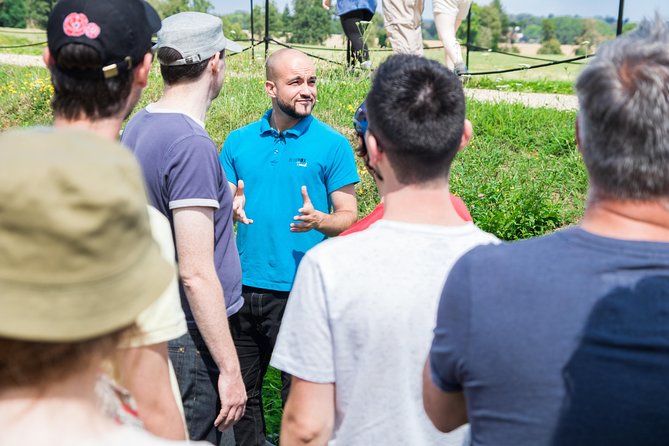
The brief stop at the Pozieres Memorial lasts about 10 minutes. That makes it more of a focused orientation than a full visit, but Pozieres is central to the Australian story of the Somme.
Several people who particularly valued the Australian focus found the sequence of Villers-Bretonneux, Pozieres, and the Monash Centre effective. It shows how Australian forces were involved in some of the hardest fighting on the Western Front, beyond the better-known story of Gallipoli.
Because this is a short stop, listen closely to the guide’s explanation before walking around. You will not have a long period for reading every inscription or exploring the site at your own pace.
Villers-Bretonneux Military Cemetery
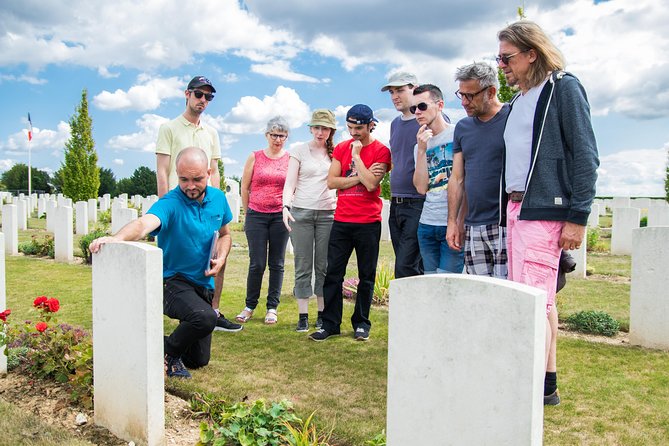
The Villers-Bretonneux Military Cemetery commemorates 10,738 Australian servicemen with no known grave who died on the Western Front. For Australian visitors, this can be the emotional center of the day.
The town’s connection to the Australian forces is also significant. Australian defense of Villers-Bretonneux helped prevent German forces from advancing toward Amiens, and the town became a safe area for Allied forces.
You have about 30 minutes at the cemetery. Use that time to look at the names, read the inscriptions, and consider any family connection you may have. If you know a relative’s unit or service number, carry the details with you, though the tour does not promise a genealogy search.
Anzac Day ceremonies take place at the memorial every April 25. If you are visiting around that date, expect the site to have a special national meaning for Australians, but the memorial remains powerful throughout the year.
The Sir John Monash Centre’s modern presentation
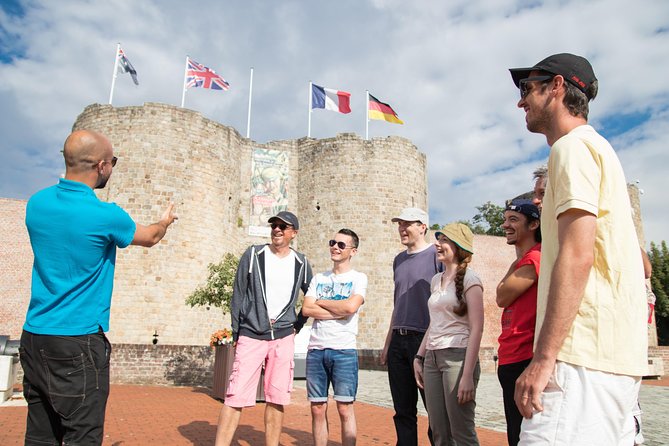
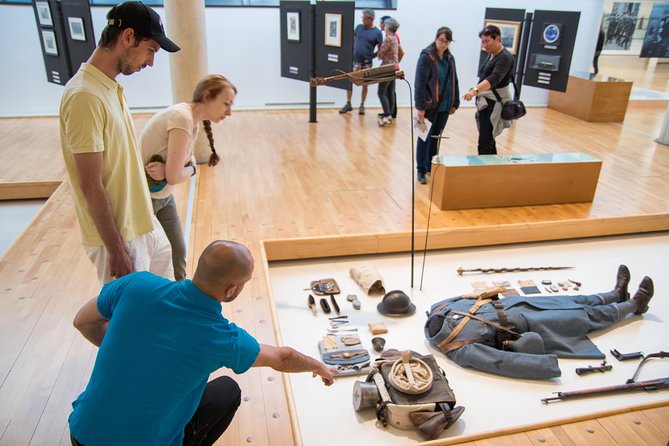
The one-hour visit to the Sir John Monash Centre gives the day a needed change from open fields and stone memorials. Video testimonies and interactive displays tell personal stories of men who lived through the hardship and violence of the Great War.
This is where the military details become easier to connect with individual lives. The center is particularly helpful if your World War I knowledge is general rather than specialized. You do not need to arrive knowing every commander or battle name.
The center also adds context to the Australian stops. Sir John Monash was an important Australian commander, and the displays help explain the planning, cooperation, and cost behind the Allied operations.
One hour is a sensible amount of time, but history enthusiasts may want longer. The overall schedule has many stops, so this tour gives you a broad, carefully chosen introduction rather than an exhaustive study of every battlefield.
Lunch at Le Tommy in Pozières
The lunch break at Le Tommy lasts about one hour, and food is not included. The restaurant serves classic meals at reasonable prices and is run by Dominique, a local figure with a strong interest in the Somme.
The café also includes a private collection of battlefield artifacts. That collection is a real part of the stop, not just a place to eat. You can look at objects connected with the fighting and see how one local person has preserved material from the war.
Food quality may be uneven. One account described a poor steak meal, while other comments praised the lunch. I would treat Le Tommy primarily as a practical rural lunch stop with an interesting collection, not as a reason to book the tour.
Vegetarian or vegan choices may be limited. One vegan visitor found there was nothing suitable, so contact the provider ahead of time if your diet is strict. Since lunch is not included, you should also budget separately for the meal.
Amiens Cathedral closes the day
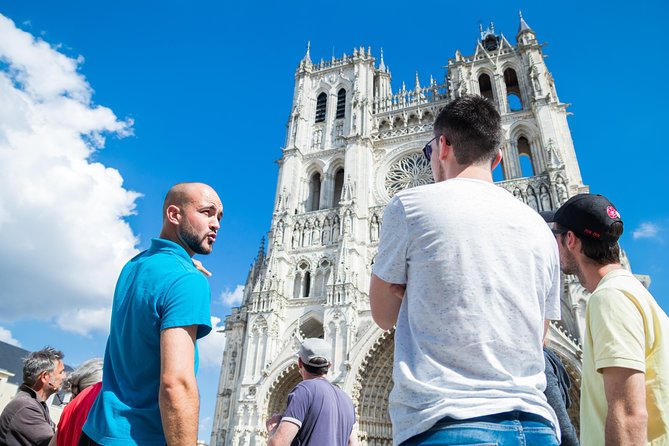
The final stop is Notre-Dame d’Amiens, a 13th-century cathedral and the largest cathedral in France. You have about 20 minutes inside, so this is a quick look rather than a full architectural visit.
The cathedral provides a welcome contrast after a day focused on death and destruction. Its scale, craftsmanship, and long survival give you a chance to think about a different part of northern France’s story.
The building was damaged by German bombing in 1918, adding another wartime connection to the visit. Still, the stop is not presented as another battlefield memorial. It broadens the day and prevents the itinerary from ending on an unbroken sequence of cemeteries and trenches.
If you want time to study the interior, 20 minutes will feel short. See the main space first, then use any remaining minutes for details that catch your eye.
Price, pace, and overall value
At $278.26 per person, this is not a cheap day trip. The value comes from what is bundled together: round-trip transport from Paris, an English-speaking driver-guide, a small group of up to eight, and visits to several sites that would be difficult to connect without a car.
Admission to the listed memorials, the battlefield sites, the Sir John Monash Centre, and Amiens Cathedral is included. Lunch is the main extra cost.
I think the price is reasonable for someone who wants a single, organized day and does not want to rent a car or build a complicated route. It is less compelling if you have several days in northern France and prefer to spend hours at one or two sites.
The small group is a major part of the value. Strong guides such as Aaron, Etienne, Pierre, and Matthew have been praised for clear explanations, personal attention, and a willingness to adjust the day. One solo participant even received an itinerary tailored to specific interests.
Guide quality is not perfectly consistent. One very poor account described a late arrival, weak site information, and unsafe driving. That experience appears out of step with the large number of positive accounts, but it is still worth recognizing. A tour built around interpretation depends heavily on the person in the front seat.
Who should book this tour?
I would choose this tour if you are visiting Paris and have a serious interest in World War I, especially the Australian, Canadian, Newfoundland, British, or South African experience. It also suits families with older children. The minimum age is seven, but the subject matter is serious, and teenagers are more likely to engage with the cemeteries and military history.
This is a good choice for anyone with a family connection to the Western Front. Bring names and locations if you have them. The guide may be able to help place your relative’s service within the broader story, though no personal research service is promised.
I would think twice if you want a relaxed day, dislike long drives, need a generous amount of free time, or expect a polished food experience. The schedule moves quickly, and several stops allow only 10 to 30 minutes.
Book at least several weeks ahead if possible. The tour is booked an average of 113 days in advance, suggesting that dates can fill well before a Paris visit. Confirmation is provided when you book, and free cancellation is available up to 24 hours before the start time.
Should you book the Somme Battlefields tour?
Book it if you want the Somme explained through real ground, memorial names, preserved trenches, and personal stories rather than through a textbook alone. The Australian focus is especially strong, but the route also gives proper attention to British, South African, Canadian, and Newfoundland forces.
The best reasons to go are the small vehicle, the range of sites, and the chance to have a guide such as Aaron, Etienne, or another strong historian connect the stops. Dress for rain and cold, expect a long day, and keep your lunch expectations modest.
For many visitors, this will be one of the most serious and memorable days available from Paris. It is not light sightseeing, but it offers a clear, respectful way to understand what happened on the Somme and why these places still matter.
FAQ
How long is the Somme Battlefields tour from Paris?
The tour lasts approximately 11 hours, including transport, battlefield visits, lunch time, and the stop at Amiens Cathedral.
Where does the tour start?
It starts at Dada12, 12 Avenue des Ternes, 75017 Paris, at 7:00 a.m.
Where does the tour end?
The activity ends back at the same meeting point in Paris.
How many people can join the tour?
The maximum group size is eight participants.
Is transport included?
Yes. Round-trip transport in an air-conditioned minivan is included.
Is the tour offered in English?
Yes. The tour is offered in English and includes a driver-guide.
Is lunch included in the price?
No. Lunch at Le Tommy is not included, so you pay for your own food.
What should I wear?
Dress for all weather conditions. Warm layers, waterproof clothing, and waterproof shoes with good tread are especially useful in cold or wet weather.
Can children join the tour?
The minimum age is seven years old.
Can I cancel for a full refund?
Yes. You can cancel at least 24 hours before the experience start time for a full refund. Cancellations or changes made less than 24 hours before the start are not accepted for a refund.
Just listed in Paris
- Paris: Louvre Mona Lisa Discovery Guided Tour with Ticket★ 4.9 · 48 reviews
- Paris Photoshoot: Eiffel Tower Exclusive Private Experience★ 5.0 · 48 reviews
- 2 hour outdoor group activity in Paris: SAINT GERMAIN★ 5.0 · 48 reviews
- No Diet Club – Unique local Food in Paris! Canal st Martin★ 4.9 · 48 reviews
- Paris Dinner Show Opera Bel Canto★ 4.5 · 48 reviews
- Secrets & Scandals of the Louvre – Limited to 6 Guests★ 5.0 · 48 reviews
- Private Half-Day Guided Tour of Paris★ 4.5 · 48 reviews
- Paris Desserts and Pastries Small Group Cooking Class with a Chef★ 4.5 · 49 reviews
Paris Tours, compared.



Versailles Palace and Gardens Full Access Ticket
Read our review →

Eiffel Tower Entry Ticket with Optional Summit Access
Read our review →

Louvre Guided Tour with Reserved Access & Boat Cruise
Read our review →