
Reviewed · MONTMARTRE & SACRE-COEUR TOURS
ESSENTIAL MONTMARTRE Walking Tour: the essential highlights+MORE!
Montmartre is at its best when you connect the famous sights with the odd little stories between them. This three-hour walk takes you from the Anvers area up to Sacré-Cœur, then through artists’ squares, old vineyards, windmills, movie locations, and the homes of Dalida and Van Gogh before finishing at the Moulin Rouge. You get far more than a basilica photo.
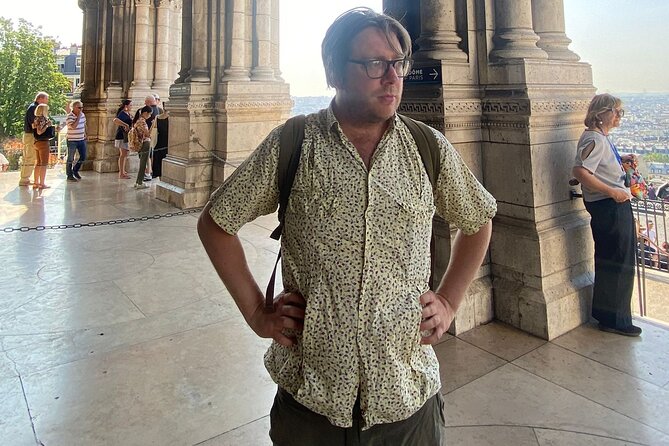
I like the tour’s clear sense of place, especially its focus on the artists, musicians, cabarets, and local characters who made Montmartre famous. I also like the human scale: groups are capped at 20, and guides such as Ewan, Johnny, Shelby, and Laleh are known for answering questions and adjusting the pace when needed. The main catch is physical. This is a hilly walk with stairs, and a few tours have run long enough that participants were tired or did not reach the final stops.
Key points to know before booking
- Sacré-Cœur is only the beginning: The route moves beyond the basilica to less obvious corners of Montmartre.
- Art history shapes the walk: You visit places linked to Picasso, Van Gogh, Renoir, Modigliani, Matisse, and other major artists.
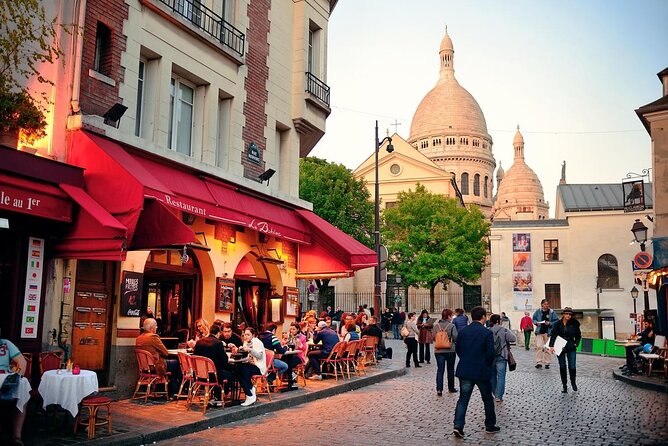
- The route mixes real life with pop culture: Dalida’s former home, Amélie’s café, the Moulin Rouge, and a storybook sculpture all appear.
- Expect hills and uneven walking: Comfortable shoes matter, and the walk may feel demanding in hot, cold, or wet weather.
- The guide makes a major difference: Ewan is often singled out for lively storytelling, while Johnny, Shelby, and Laleh have also led highly praised tours.
- The finish is at the Moulin Rouge: The show is not included, but the location makes it easy to continue your evening in the Pigalle area.
Starting at Anvers and climbing to Sacré-Cœur
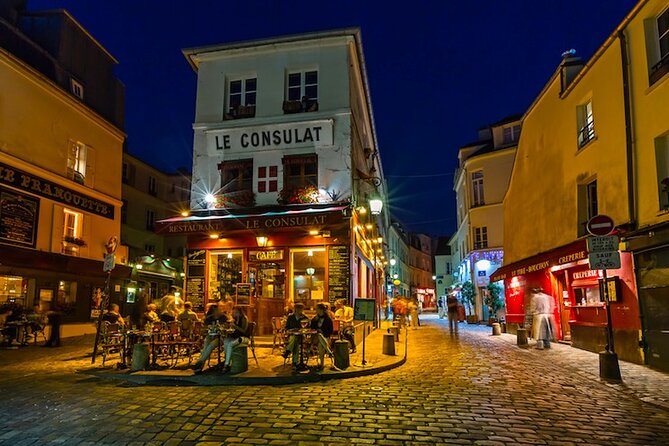
The meeting point is on Rue de Steinkerque near Anvers, in the 18th arrondissement. This places you at the foot of Montmartre, where souvenir shops, cafés, and the steady flow toward Sacré-Cœur quickly give way to the hill itself.
The first section takes about 20 minutes. You walk from Anvers toward the gardens below the basilica, then use the funicular to reach the upper level. The funicular is a useful touch because it saves some of the initial climb, though you should not mistake this for a flat walk. Stairs and slopes return later.
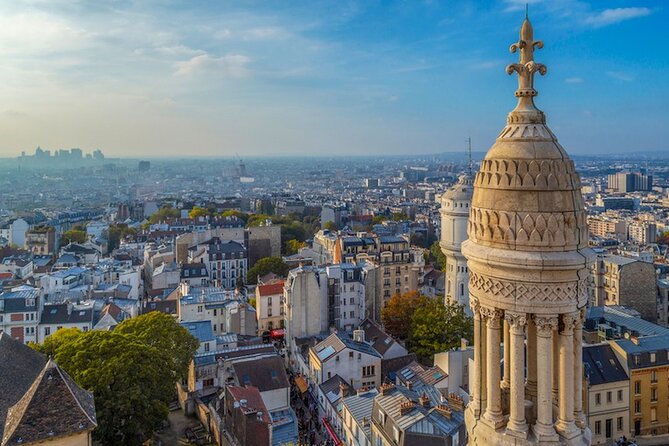
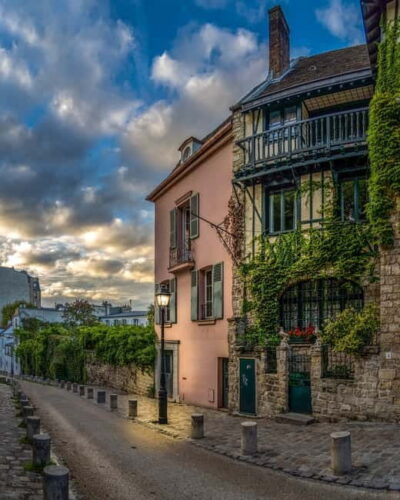
This opening gives you a useful view of Montmartre’s two sides. At street level, you see the busy tourist approach. Higher up, the gardens and broad steps create a calmer setting, with Paris spreading out below. The transition is one reason I like starting here: you feel the neighborhood rise above the rest of the city instead of simply arriving at a monument by metro or taxi.
Three start times are offered, which helps you fit the walk around other plans. An early start can make sense if you want cooler weather and a quieter feel. An afternoon or evening start may give you a livelier Montmartre, but the hills can feel harder after a full day of sightseeing.
More Walking Tours in Paris
- Paris Top Sights Half Day Walking Tour with a Fun Guide
★ 5.0 · 2,893 reviews - Montmartre Hidden Gems and Scenic Highlights Walking Tour
★ 5.0 · 2,684 reviews - Montmartre Hill French Gourmet Food and Wine Tasting Walking Tour
★ 5.0 · 2,588 reviews
A quiet pause inside Sacré-Cœur
The Basilique du Sacré-Cœur takes about 20 minutes. The visit is free, and the guide sets aside time for a moment of quiet inside the monumental church.
This is not a long architectural lecture or a separate paid entrance experience. It is a short stop that lets you absorb the basilica and its setting before moving into the narrower streets behind it. That balance works well. You get context, but the tour does not spend the full three hours in one building.
The overlook is one of Montmartre’s great rewards. From the hill, you can look across Paris and get your bearings before the walking route turns inward. Bring a layer in cooler weather, and remember that the broad exposed steps and hilltop paths can feel hot in direct sun.
The basilica section can also be the most crowded part of the tour. Stay close to your guide as the group moves through the approach and into the church. A maximum of 20 people is manageable, but it still helps to listen for the meeting point before the group heads onward.
Place du Tertre and Montmartre’s working artists
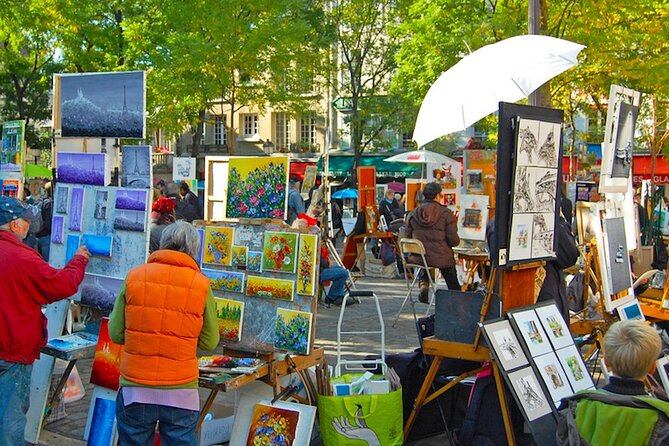
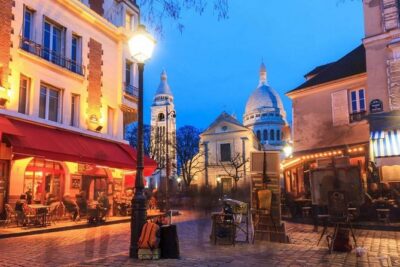
Place du Tertre is a 15-minute stop, and it is one of the clearest links between present-day Montmartre and its artistic past. The small medieval market square is filled with artists working outdoors, painting Paris scenes, portraits, caricatures, and abstract pieces.
You have time to look around, but this is not designed as a shopping stop. The value comes from seeing the square as a working place rather than a backdrop. Montmartre’s artistic identity is not only something preserved in museums. It still appears in the easels, brushes, and portraits taking shape in front of you.
The square can be crowded, and the lanes around it are narrow. If you want a portrait or painting, ask about the price and timing before agreeing. The tour itself does not include artwork, snacks, or drinks.
Vineyards, windmills, and the old village feel
The route then turns to details that many first-time visitors miss. At the Vigne du Clos Montmartre, you see a small historic vineyard tucked into the neighborhood. The stop lasts about 10 minutes.
It is not a vast wine estate, and it should not be treated as one. Its appeal is symbolic and local. The vines show that Montmartre was once a village-like hill beyond central Paris, with its own rural traces and traditions. This small patch of greenery also breaks up the steady rhythm of stone streets and crowded viewpoints.
Next comes Le Moulin de la Galette, a 10-minute stop. You see the last remaining windmill in Montmartre, alongside the Moulin Blute-Fin. The site is tied to the famous Bal de la Moulin de la Galette, later captured in paintings by Renoir, Picasso, and other artists.
This is a good example of what the walking tour adds. You are not just told that Montmartre inspired artists. You are shown the places, streets, and buildings that fed their work. The windmill is not a grand museum display, so a guide’s explanation gives the stop its meaning.
A few other Paris half-days to compare
- Paris: Moulin Rouge Cabaret Show Ticket with Champagne
★ 4.7 · 16,088 reviews - Paris: Dinner Show at the Moulin Rouge
★ 4.8 · 3,333 reviews - Seine Dinner Cruise, Eiffel Tower Access and Moulin Rouge Show
★ 4.0 · 2,310 reviews - Paris: Montmartre Cheese, Wine & Pastry Guided Walking Tour
★ 4.8 · 2,255 reviews
Bateau-Lavoir and the birth of modern art
Le Bateau-Lavoir receives about 15 minutes. The building was once home to Pablo Picasso, Le Douanier Rousseau, Amedeo Modigliani, Henri Matisse, Georges Braque, Guillaume Apollinaire, Jean Cocteau, and other major figures.
You should not expect to enter a preserved artists’ studio. The point is to understand the building’s role as a meeting place for artists and writers. Montmartre became a center of modern art because people, ideas, arguments, and experiments gathered in the same small area.
This is one of the strongest parts of the tour for anyone interested in art history. Guides often use pictures and stories to connect the buildings with the people who lived or worked there. Ewan, in particular, has been praised for making this material conversational rather than turning it into a long classroom talk.
The amount of information can be a strength and a weakness. If you enjoy names, dates, and personal stories, you will likely want even more time here. If your group prefers a brisk walk, ask the guide to keep the pace moving.
The Moulin Rouge and Montmartre after dark
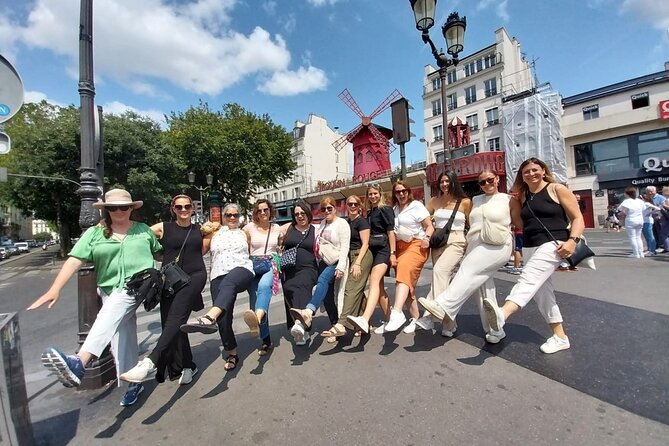
The Moulin Rouge takes about 10 minutes and marks the end of the main route. It is the famous cabaret associated with the French can-can, and the tour finishes outside at 82 Boulevard de Clichy.
The show is not included. This distinction matters because the cabaret can be part of a separate evening plan, but booking the walking tour does not reserve a seat or cover admission. You can simply take photos outside, continue along Boulevard de Clichy, or arrange a later performance on your own.
The area around the Moulin Rouge is busy and nightlife-oriented. Some people may find it less comfortable late at night than the quieter upper streets of Montmartre, so plan your onward route in advance. Public transportation is nearby, and the tour’s ending point is clear.
There is an odd timing issue here. The Moulin Rouge appears both as the endpoint and as one of the later stops, while the route also continues through several sights after a separate cabaret-related stop. The practical lesson is simple: confirm the exact order with your guide at the start, especially if you have a dinner booking or a show afterward.
Le Passe-Muraille, Lapin Agile, and Montmartre’s stories
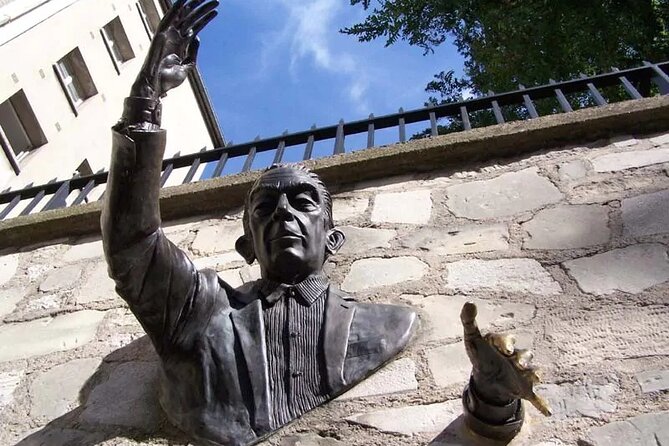
Le Passe-Muraille is a quick five-minute stop for a curious sculpture of a man passing through a wall. It comes from a story by French novelist Marcel Aymé.
This is the kind of detail that makes the tour feel less like a checklist of major monuments. You get a small piece of local literary culture, and the sculpture provides an easy pause between the better-known sights.
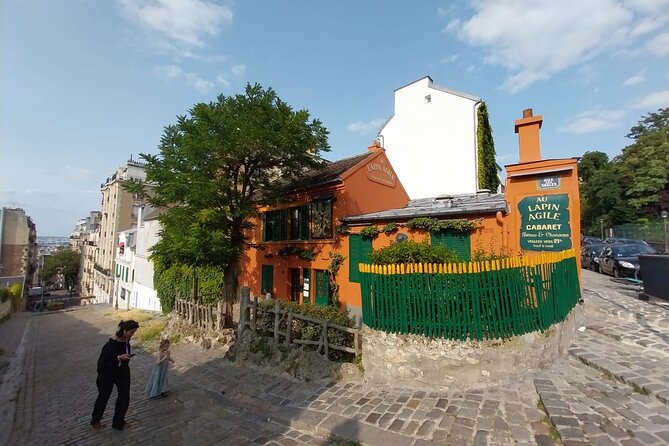
The route also includes Le Lapin Agile, a historic cabaret in a quaint building. Picasso, Max Jacob, Blaise Cendrars, and other Montmartre figures once frequented the venue. The cabaret remains associated with humor and French folk music, so you may want to note it as a possible evening stop.
The tour does not include a performance there. Still, the guide can give you the background needed to decide if it belongs on your own Paris schedule.
Dalida, Van Gogh, and the people behind the streets
The Dalida section includes her statue and former home. The statue stop lasts about five minutes, followed by about 10 minutes at La Maison de Dalida.
Dalida was a legendary pop singer with a beautiful but tragic life, and her connection to Montmartre adds a modern, personal thread to a route often dominated by painters. Her statue is also one of the neighborhood’s popular photo stops. The guide’s explanation helps turn a quick picture into a story about the performer and her place in Parisian culture.
You then pass Van Gogh’s house, where he lived with his brother Theo. The stop is brief, about five minutes, and you will not be entering a museum or private home. Its value lies in locating the artist within the streets of Montmartre and connecting his personal life with the wider art world around him.
For me, these stops help prevent the tour from becoming a roll call of only the most famous painters. Music, literature, film, and personal tragedy all have a place here.
Amélie’s café and Rue des Abbesses
Café des Deux Moulins is the film location associated with Amélie, also known as The Fabulous Destiny of Amélie Poulain. The stop lasts about 10 minutes.
Movie fans will recognize the café from the film, but the visit is still useful if you have never seen it. You get a tangible link between modern Paris on screen and the real streets of Montmartre. Drinks are not included, though the tour includes a coffee stop, so you should expect to pay for anything you order yourself.
The final walk along Rue des Abbesses takes about 15 minutes. This charming street was once described by the Guardian as one of the most beautiful in Paris. It is a fitting finish because it shifts attention from famous names to everyday neighborhood life.
You see shops, cafés, local buildings, and the ordinary rhythm of Montmartre. That contrast matters. The basilica, windmills, and artists’ names draw you uphill, but streets such as Rue des Abbesses show why people enjoy spending time here after the main sights are done.
How demanding is the three-hour walk?
The tour lasts about three hours, though the actual pace can vary. Several sections involve hills, stairs, and winding streets. One tour participant found the walk tiring and noted that the group did not finish every planned stop, while others managed the length comfortably even in cold weather or temperatures around 30 degrees Celsius.
I would rate it as manageable for most people who can walk for three hours, but not effortless. Wear shoes with a firm sole, carry water, and dress for changing weather. Montmartre’s hill can feel very different on a chilly morning, a rainy afternoon, or a hot sunny day.
Families can enjoy it, and children may respond well to the windmill, the wall-passing sculpture, the movie café, and the stories of artists. Still, younger children may tire during the later sections. Older walkers can ask for a slower pace or route advice. A guide once adjusted the walk for a group in their seventies, which suggests that the experience can be adapted when the group communicates its needs.
The coffee stop is a pleasant break, but your drink is not included. Snacks are also not included, so eat beforehand or plan to buy something during the day.
Guide style and group size
The guides are central to the experience. Ewan is often praised for combining art history with local social background, answering many questions, taking photos, and keeping the tone friendly. Johnny has also been noted for strong neighborhood knowledge and engaging stories, while Shelby and Laleh have led tours that felt attentive and personal.
The small maximum group size of 20 helps, though the experience can become more intimate if fewer people book. On one occasion, two people received what felt like a private tour because they were the only participants. That is not guaranteed, but it shows how group size may vary.
The strongest reason to book this particular walk is the storytelling. You can visit Sacré-Cœur and Place du Tertre on your own, but it is harder to locate the artists’ homes, understand the windmills, connect Dalida to the neighborhood, and spot the meaning behind Le Passe-Muraille without guidance.
The main thing to watch is time management. Enthusiastic guides can spend longer than planned on art stories and local anecdotes. That adds value when you have open time, but it can cause trouble if you need to reach the Moulin Rouge by a fixed hour.
Is $59.13 a fair price?
At $59.13 per person, this is not a cheap way to simply see Sacré-Cœur. Most of the stops are free, and you could walk through several of the same streets without paying an admission fee.
The price makes more sense if you want interpretation rather than directions. You are paying for about three hours of guided context, a planned route, a funicular segment, help locating lesser-known sites, and the chance to ask questions in English. For first-time visitors who want Montmartre to make sense, that can be good value.
It is less appealing if you prefer wandering alone, already know the neighborhood well, or want to spend long periods inside the Moulin Rouge, Lapin Agile, or the café. The tour does not include a cabaret show, snacks, drinks, or artwork from Place du Tertre.
Free cancellation is available up to 24 hours before the start time. If the minimum number of participants is not reached, an alternative or full refund is offered. A small number of cancellations have caused serious inconvenience in the past, so I would avoid placing a tightly timed dinner or airport transfer immediately after the tour.
Who should book this Montmartre walk?
I would choose this tour if you want a first look at Montmartre that connects landmarks with people and stories. It suits families, art lovers, film fans, and visitors who want an English-speaking guide rather than a self-guided route.
It also works well early in a Paris stay. After three hours, you will know which streets and cafés deserve a return visit, and you can use the finish near the Moulin Rouge to plan dinner or an evening show.
I would think twice if hills are difficult for you, if your schedule is packed, or if you want a slow photographic walk. The route covers a lot, and the guide may need to choose between lingering over a story and keeping every stop on time.
FAQ
How long does the Montmartre walking tour last?
The tour lasts approximately three hours.
Where does the tour start?
It starts on Rue de Steinkerque near Anvers, in Paris 75018.
Where does the tour finish?
The tour finishes at the Moulin Rouge, at 82 Boulevard de Clichy.
Is the Moulin Rouge show included?
No. The tour ends at the Moulin Rouge, but admission to a Moulin Rouge show is not included.
Is food or coffee included?
No. The tour includes a coffee stop, but drinks and snacks are not included in the price.
How large is the group?
The tour has a maximum of 20 participants.
Is the tour offered in English?
Yes. The experience is offered in English and uses a mobile ticket.
Can I cancel for a full refund?
Yes, if you cancel at least 24 hours before the scheduled start time. Cancellations made less than 24 hours in advance are not refunded.
Should you book it?
Book it if you want Montmartre explained, not just photographed. The mix of Sacré-Cœur, artists’ homes, windmills, Dalida, Van Gogh, Amélie, and the Moulin Rouge gives you a strong sense of why this hill remains one of Paris’s most fascinating neighborhoods.
Wear good shoes, leave a little flexibility after the three-hour estimate, and tell the guide about mobility needs or time limits at the start. If you can handle the climbs and value lively local stories, this is a useful and entertaining way to get your bearings in Montmartre.
Just listed in Paris
- Chartres Cathedral 5 Hours Tour from Paris with Private Transport★ 4.5 · 49 reviews
- Paris: Giverny & Versailles Small Group or Private Tour★ 4.5 · 49 reviews
- Paris: Louvre photoshoot or Seine bridges Eiffel Tower walk★ 5.0 · 49 reviews
- Paris: Choux Pastry and Chocolate Éclair Making Class★ 4.9 · 50 reviews
- Private tour of the Champagne area, meet local producers and taste their Champagne, start from your hotel in Paris.★ 5.0 · 50 reviews
- Paris Eternelle Notre-Dame Virtual Reality Tour★ 4.5 · 50 reviews
- Normandy D-Day Landing Beaches Private Day Trip from Paris★ 5.0 · 50 reviews
- Disneyland® Paris 1 Day with Round-Trip Train Tickets from Paris★ 4.0 · 50 reviews
Montmartre & Sacre-Coeur Tours, compared.

Moulin Rouge Cabaret Show Ticket with Champagne
Read our review →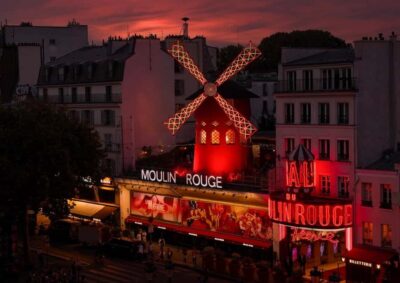
Montmartre Hidden Gems and Scenic Highlights Walking Tour
Read our review →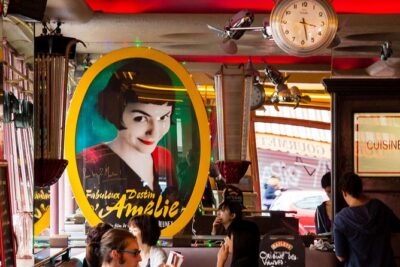
Montmartre Hill French Gourmet Food and Wine Tasting Walking Tour
Read our review →
Seine Dinner Cruise, Eiffel Tower Access and Moulin Rouge Show
Read our review →
Montmartre Cheese, Wine & Pastry Guided Walking Tour
Read our review →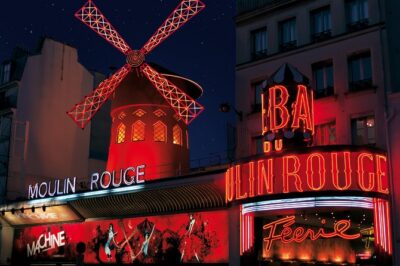
Montmartre Highlights Walking Tour with a Local Guide
Read our review →Browse the lists this tour appears in