
Reviewed · PARIS TOURS
Unique Guided Walking Tour of Great Women in Parisian History
Paris has plenty of grand monuments, but this walk asks a sharper question: which women helped build, defend, study, and shape the city? You move from the gardens commissioned by Marie de Médicis to the Latin Quarter, Marie Curie’s institute, and the Panthéon. The route is not just a parade of names. It connects power, science, religion, politics, and daily life.
I like the way the walking route links beautiful places with overlooked stories, and I like the guides’ storytelling style. Pat, Pam, Emily, and Wassily are all praised for making the subject lively, answering questions, and adjusting to the group. The main drawback is its short length. At about two hours, the tour can introduce many women, but it cannot give equal time to every century. One past participant also wanted more focus on women of the 20th century.
Key points to know before booking

- Luxembourg Gardens opens the story: Spend about 40 minutes learning about Marie de Médicis, the palace gardens, and the women honored among the garden’s statues and memorials.
- The Latin Quarter supplies the city’s oldest setting: This historic neighborhood provides the backdrop for stories about early Paris and a woman who helped save the city from attack.
- Marie Curie gets a focused stop: You pass the Curie Institute, founded by Curie in 1920, with time to connect her scientific work to the city around you.
- The Panthéon adds a powerful ending: You learn about the first woman buried inside this major monument, then finish near Saint-Étienne-du-Mont.
- The tone depends on your guide: Pat, Pam, Emily, and Wassily are noted for warmth, enthusiasm, patience, and strong storytelling.
- Plan for weather and walking: The tour runs in all weather, lasts about two hours, and allows up to 20 people, so comfortable shoes and suitable clothing matter.
Why this women’s history walk feels different
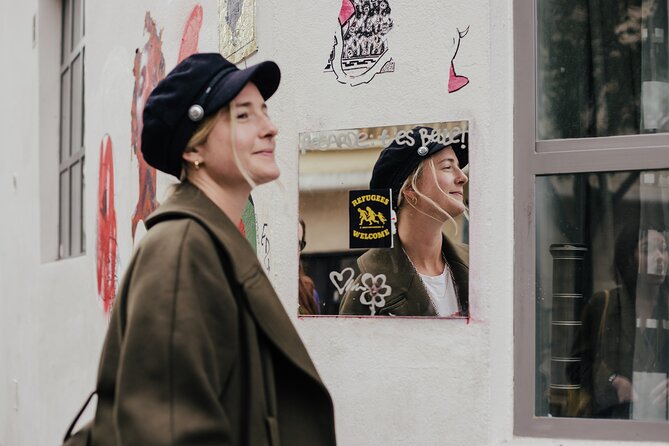
This is not a standard tour of Paris monuments with a few female names added at the edges. The subject comes first. The buildings, streets, gardens, and hilltop views act as evidence and setting for stories about women who commissioned places, defended the city, advanced science, or earned a place in the national memory.
That approach gives you a useful change of pace from tours focused mainly on kings, generals, and famous male artists. You still see familiar Paris landmarks, but you learn to read them through another set of lives. The guide’s role matters a great deal here. A dry list of dates would miss the point, while a strong storyteller can show how women worked within, around, or against the limits of their time.
The tour is offered in English, with morning and afternoon start times. Its average booking lead time is 39 days, which suggests that you should not leave it until the last minute if the time slot matters to you. The group can reach 20 people, large enough for a social outing but still manageable for a walking guide.
More Historical Tours in Paris
- Paris: Louvre Museum Entry with History of Mona Lisa
★ 3.9 · 2,823 reviews - Paris: Dark History and Ghostly Guided Walking Tour
★ 4.7 · 1,000 reviews - Le Marais/Paris – The Historic, Trendy, Jewish, LGBT district
★ 5.0 · 341 reviews
Luxembourg Gardens and the power behind the palace
The walk begins at Treize au Jardin, at 5 Rue de Médicis, beside Luxembourg Gardens. This is an excellent starting point because the gardens immediately provide both visual pleasure and historical purpose.
You spend roughly 40 minutes here, the longest stop on the route. The focus includes the woman who commissioned the gardens, Marie de Médicis, along with the 20 French queens and other notable women remembered in this setting. The garden is not simply a pleasant place to stroll. It becomes a way to discuss power, public memory, and how women have been represented in Paris.
I like this opening because it gives the tour room to breathe. You are not rushed from one plaque to the next. The garden setting also helps younger participants and anyone who prefers history with a strong sense of place. The walk can feel less like a classroom and more like a guided conversation among trees, paths, sculptures, and palace views.
Your guide may build the story around the women linked to the garden, but you should expect a broad introduction rather than an exhaustive account of each figure. Forty minutes is enough to set the theme and introduce several names. It is not enough for a full biography of 20 women.
Wear shoes you can trust on paved paths and city streets. If the weather turns wet, the gardens may be less comfortable, but the tour operates in all weather. A raincoat is more useful than an umbrella in a group, since you will need your hands free and your guide’s voice may be easier to follow without a large canopy overhead.
The Latin Quarter and Paris before the grand boulevards
From Luxembourg Gardens, the route moves into the Quartier Latin, often called the cradle of Paris. This is the historic core of the tour, and about 30 minutes are devoted to early Paris and the role of a woman who helped protect the city from the threat of attack.
This section gives the experience a wider time span. The opening stop deals with royal power and public remembrance. Here, the subject shifts toward the city’s survival and the women who acted during moments of danger. You get a sense that women’s influence was not limited to court life or private households.
The Latin Quarter is also a practical choice for a walking tour. You can connect the story to the old streets and hill of Sainte-Geneviève rather than hearing about distant events in a modern conference room. That physical setting helps you picture how compact and vulnerable early Paris could have been.
The guide’s storytelling is especially important here. Pat has been praised for making French women’s stories exciting and fun, while Emily is noted for answering questions and adding information that many people had never encountered. Wassily is described as passionate and incisive, with a focus on the political and cultural challenges women faced across the centuries.
You should expect interpretation rather than a long stop at one single monument. The tour keeps moving, so this part works best if you enjoy connected stories and a guide who can explain why a figure matters. If you want a detailed architectural tour of every street, this is not that kind of walk.
Marie Curie at the Curie Institute
The stop at the Curie Institute lasts about 10 minutes. You stroll past the research center opened by Marie Curie in 1920, which today is also partly a museum devoted to her life and work.
This is one of the most distinctive parts of the route. Marie Curie is globally famous, but seeing the institute in the neighborhood where the tour is unfolding gives her achievements a local anchor. The story moves from queens and defenders of Paris to a woman whose work changed modern science.
The museum itself is not included, and the tour does not present an interior visit. You should think of this as an exterior stop and a chance to hear about Curie’s contribution. If you want a longer look at her life, you would need to plan a separate visit, but the short stop works well within a two-hour route.
I also appreciate the contrast. The tour does not treat women’s history as a single subject tied only to politics or royal families. Marie Curie adds research, education, scientific institutions, and professional achievement to the picture. The stop may be brief, but it helps show how the city’s women’s history continues into the 20th century.
One useful expectation to set: most of the time is devoted to stories across several periods, so Curie is part of a larger arc rather than the central subject. One participant wanted more 20th-century women included. If modern history is your main interest, you may find the coverage lighter than you hoped.
More Walking Tours in Paris
- Paris Top Sights Half Day Walking Tour with a Fun Guide
★ 5.0 · 2,893 reviews - Montmartre Hidden Gems and Scenic Highlights Walking Tour
★ 5.0 · 2,684 reviews - Montmartre Hill French Gourmet Food and Wine Tasting Walking Tour
★ 5.0 · 2,588 reviews - Paris Île de la Cité and Notre-Dame Walking Tour With Crypt
★ 5.0 · 2,272 reviews
The hill of Sainte-Geneviève and the view toward Notre-Dame
The walk reaches the top of the so-called Montagne de Sainte-Geneviève, the hill of the Latin Quarter. From here, you can look toward landmarks including the Eiffel Tower and Notre-Dame Cathedral.
This is a five-minute stop, so it is mainly a visual pause and orientation point rather than a long lecture. That brevity makes sense. The view gives you a chance to understand the placement of central Paris, while the guide connects the hill to the women’s stories already unfolding around you.
Do not book this expecting rooftop access or an extended sightseeing viewpoint. You are looking down toward the landmarks from the hill, not entering Notre-Dame as part of the experience. The attraction is the combination of perspective and context.
Short stops like this can also help break up the more information-heavy parts of the walk. You can take in the city, listen, and regain your bearings before the final major site. Bring a camera if you like, but the main value is the guide’s explanation of what you are seeing and why this part of the Latin Quarter matters.
The Panthéon and a memorable final question
The tour spends about 10 minutes at the Panthéon, one of Paris’s most imposing landmarks. Here, you learn the story of the first woman buried inside.
That detail gives the ending a clear point. The Panthéon is a national monument associated with honor and remembrance, so asking who was first admitted among its celebrated dead opens a discussion about recognition. Who gets remembered? Who is honored late? Who had to overcome barriers before receiving public acknowledgment?
Admission to the Panthéon is not included. The tour finishes outside, on Place Sainte-Geneviève, in front of Saint-Étienne-du-Mont, just behind the Panthéon. You can ask the guide for directions to your next stop, which is useful if you want to continue around the Latin Quarter or arrange a separate visit inside.
The ending is compact, but it leaves you with a strong place to continue exploring. You might visit the Panthéon separately, walk around the nearby streets, or use the guide’s directions to reach your next destination. Since the tour does not include hotel pickup or drop-off, the central ending is more useful than a return to your accommodation.
The guides make or break this two-hour format
The experience is led by a local guide, and the individual guide can vary. Names associated with the tour include Pat, Pam, Emily, and Wassily.
Pat comes through as warm, flexible, and well prepared, including during heavy rain. One especially useful detail is that Pat took care with a participant who had difficulty walking. That does not turn the tour into an accessible route guarantee, but it suggests a guide who pays attention to the pace and needs of the group.
Pam is described as enthusiastic, patient, and ready to answer questions. Emily is praised for explaining unfamiliar facts and encouraging curiosity. Wassily is noted for a lively presentation that connects women’s political and cultural influence with the obstacles they faced.
Those qualities matter because the subject covers a lot of ground. You are not simply looking at buildings. You are following stories that span royal life, early Paris, defense, science, and national honor. A guide who can tell a clear story and respond to questions adds real value.
The tour is capped at 20 people. That is not a private walk, but it gives the guide a reasonable chance to speak with the group and take questions. Children must be accompanied by an adult, and most people can participate. Service animals are allowed.
Is $54.42 a fair price?
At $54.42 per person, this is not the cheapest way to walk through the Latin Quarter. You are paying for a specialist subject, an English-speaking local guide, and a planned route that connects several locations rather than simply wandering between them.
The value is strongest if you want interpretation. Luxembourg Gardens and the streets around the Latin Quarter are free to enter, and the Notre-Dame view costs nothing. The Curie Institute and Panthéon stops are also exterior visits, with no admission included. The price therefore does not buy access to paid sights. It buys the guide’s time, research, organization, and storytelling.
I think that is fair for people who actively want women’s history and prefer a small-scale walking experience to a large bus tour. It is less appealing if you mainly want interior visits or a broad introduction to every major Paris monument.
The two-hour length also helps with value. You can fit it into a morning or afternoon without giving up a full day. The tradeoff is that the content is selective. You will hear many stories, but some will receive only a few minutes.
Who should book this walk?
I would suggest it to:
- Families with older children or teenagers who enjoy stories about people overcoming limits
- First-time Paris visitors who want a different route through familiar central districts
- Returning visitors who have already seen the main monuments and want a new theme
- Anyone interested in women’s political, cultural, royal, or scientific roles
- Solo visitors who prefer a guided walk with a clear subject and social setting
- Readers who want to follow the tour with a separate visit to the Panthéon or Curie Museum
It may not suit you if you dislike walking, want a private guide, need extensive indoor shelter, or expect a detailed tour of the Panthéon interior. It also may feel too general if your main goal is modern women’s history, since the route reaches across many centuries and gives Marie Curie only a short stop.
The route is near public transportation, but hotel transfers are not included. Meet at Treize au Jardin, 5 Rue de Médicis, and finish at Église Saint-Étienne-du-Mont on Place Sainte-Geneviève. Check the route between your hotel and the meeting point, and allow time to arrive without rushing.
Practical details that affect your day
The tour lasts about two hours and is available in the morning or afternoon. It is offered in English and includes a mobile ticket, which makes it easy to keep the booking details on your phone.
Children need an adult with them. Most people can take part, but you should be ready for continuous outdoor walking and should wear comfortable shoes. Since the tour runs in all weather, dress for the forecast rather than hoping Paris will provide a dry interval.
Food and drinks are not included. That is easy to manage in the Latin Quarter, where you can arrange a coffee or meal before or after the walk, but do not expect a refreshment break built into the route.
The tour requires at least three people to operate. If that minimum is not reached and the experience is canceled, you are offered another date or experience, or a full refund. You can cancel for a full refund up to 24 hours before the start time. Changes or cancellations inside that window are not accepted for a refund.
Should you book the Women of Paris walking tour?
Book it if you want Paris presented through women’s lives rather than the usual parade of rulers and monuments. The strongest reasons are the thoughtful route, the mix of royal and scientific stories, and guides such as Pat, Pam, Emily, and Wassily, who bring warmth and energy to a subject that could easily become a list of dates.
Skip it if you need a fully indoor activity, a long museum visit, or a tour focused mainly on 20th-century women. For everyone else, the $54.42 cost is reasonable when you value a well-shaped story and a guide who helps you see familiar Paris with fresh questions.
FAQ
Where does the tour begin?
It begins at Treize au Jardin, 5 Rue de Médicis, 75006 Paris, France.
Where does the tour finish?
The tour ends on Place Sainte-Geneviève in front of the Saint-Étienne-du-Mont church, just behind the Panthéon.
How long does the walking tour last?
The tour lasts approximately two hours.
Is the tour offered in English?
Yes. The experience is offered in English.
What sights are included in the route?
The route includes Luxembourg Gardens, the Quartier Latin, the Curie Institute, a view toward Notre-Dame and the Eiffel Tower from the hill of Sainte-Geneviève, and the Panthéon.
Is admission to the gardens included?
Yes. Admission to Luxembourg Gardens is free.
Are Panthéon and Curie Institute admission tickets included?
No. Admission is not included for the Curie Institute or the Panthéon. The tour includes a stroll past the Curie Institute and an exterior visit to the Panthéon area.
Does the tour operate in bad weather?
Yes. The tour operates in all weather conditions, so you should dress appropriately and wear comfortable shoes.
What is the cancellation policy?
You can cancel up to 24 hours before the start time for a full refund. Cancellations or changes made less than 24 hours before the start time are not accepted for a refund.
More Historic Sites in Paris
- Paris City of Fashion History Private Guided Walking Tour
★ 5.0 · 221 reviews - History of Paris City Center w/ Notre Dame Semi-Private 12ppl Max
★ 5.0 · 194 reviews - Paris: Le Marais & Montmartre Jewish History Walking Tour
★ 4.8 · 170 reviews - Paris Walking Tour , Historical Sites .
★ 5.0 · 150 reviews
Just listed in Paris
- Paris: Giverny & Versailles Small Group or Private Tour★ 4.5 · 49 reviews
- Chartres Cathedral 5 Hours Tour from Paris with Private Transport★ 4.5 · 49 reviews
- Paris: Louvre photoshoot or Seine bridges Eiffel Tower walk★ 5.0 · 49 reviews
- Paris: Choux Pastry and Chocolate Éclair Making Class★ 4.9 · 50 reviews
- Private tour of the Champagne area, meet local producers and taste their Champagne, start from your hotel in Paris.★ 5.0 · 50 reviews
- Paris Eternelle Notre-Dame Virtual Reality Tour★ 4.5 · 50 reviews
- Normandy D-Day Landing Beaches Private Day Trip from Paris★ 5.0 · 50 reviews
- Disneyland® Paris 1 Day with Round-Trip Train Tickets from Paris★ 4.0 · 50 reviews
Paris Tours, compared.



Versailles Palace and Gardens Full Access Ticket
Read our review →

Eiffel Tower Entry Ticket with Optional Summit Access
Read our review →

Louvre Guided Tour with Reserved Access & Boat Cruise
Read our review →
Moulin Rouge Cabaret Show Ticket with Champagne
Read our review →Browse the lists this tour appears in