
Reviewed · REIMS TOURS
Reims afternoon tour Champagne and family growers
Champagne is best understood close to the vines, not from a tasting-room counter in town. This afternoon tour takes you from Reims into the countryside, introduces you to two small producers, and connects the wine in your glass with the work of growers, cellars, and family businesses. Six tastings are included, with guides such as Anne, Thomas, Martin, and Suzanne bringing plenty of industry experience.
I like the capped group of eight, which gives the afternoon a personal feel, and I like the comparison between two family-run wineries. The main drawback is the tight four-and-a-half-hour schedule. You see a lot, but this is an introduction rather than a slow, full-day exploration of Champagne.
Key points to know before booking
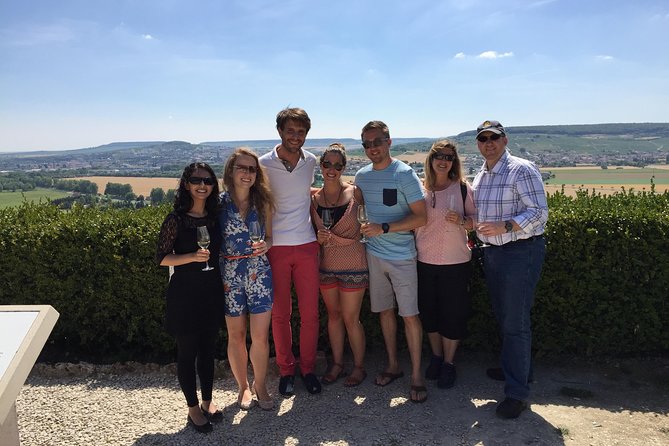
- Two small producers: Visit family-run wineries and hear how their methods and stories differ.
- Six glasses included: Three tastings at each winery let you compare styles rather than sample only one house pour.
- Hautvillers connection: See the church at the abbey associated with Dom Pérignon and drive through the village.
- Small-group format: The vehicle carries no more than eight people, making questions and conversation easier.
- Afternoon timing: The tour begins at 2:00 pm and returns to the Reims meeting point after about 4 hours 30 minutes.
- Simple logistics: Air-conditioned transport and entrance fees are included, but not hotel transfers, lunch, water, or snacks.
Why small growers make this Reims tour worthwhile
The big Champagne houses have their place. Their grand entrances and polished cellars are easy to find in Reims and Épernay. But Champagne is also made by families who grow grapes, press them, bottle them, and sell wine under their own names. This tour puts that side of the region at the center.
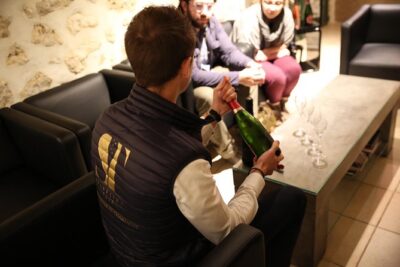
You visit two small wineries and taste three glasses at each. That structure matters. One glass can tell you what a producer pours, but three give you a better sense of its range. You may notice differences in grape blends, aging, sweetness, or house style, though the exact wines served can vary.
The visits also give you a chance to hear the business side of Champagne. Guides have explained farming techniques, production, selling wine, and the practical work behind the famous label. That wider view helps you understand that Champagne is not simply a luxury product. It is an agricultural region shaped by growers, weather, cellars, family decisions, and international demand.
I especially value the chance to meet producers rather than only hear a general lecture. The family businesses visited can explain their own approach in a way a large commercial tour often cannot. If you enjoy wine but are new to Champagne, the guide can make the subject approachable. If you already know your blanc de blancs from your rosé, the small-group setup gives you room to ask more precise questions.
A few other Reims half-days to compare
- From Reims: Morning Champagne Tour and Tastings
★ 4.8 · 463 reviews - Small Group – Half Day Champagne Tour – Visit of 2 Small Producers/Growers
★ 5.0 · 341 reviews - Champagne Day Trip from Reims including 9 Champagne Tastings
★ 4.5 · 272 reviews
The afternoon begins at Reims train station
The meeting point is the Office de Tourisme du Grand Reims at the train station, on Cour de la Gare. The start time is 2:00 pm, and the tour ends back at the same meeting point.
That location is useful if you are staying in Reims or arriving by train. It is also near public transportation. You do need to make your own way there, since hotel pickup and drop-off are not included.
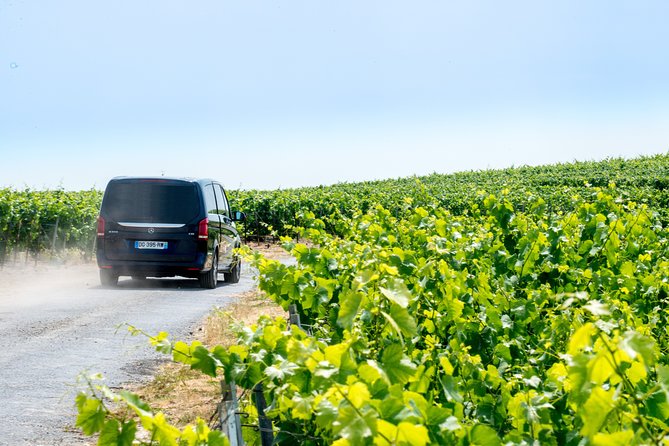
The included air-conditioned vehicle handles the driving between Reims and the Champagne countryside. That is a real benefit. You can taste without worrying about driving afterward, and you avoid the trouble of arranging separate transport to rural wineries.
The group maximum is eight people. That is small enough for the guide to speak with the whole group and for you to ask questions without shouting across a bus. It also keeps the winery visits more manageable. The trade-off is that this is a shared experience, so the pace and conversation depend partly on the other people in your group.
First winery: three glasses and a close look at production
The first winery visit lasts about 1 hour 30 minutes. It is a small, family-run operation, and three Champagne tastings are included.
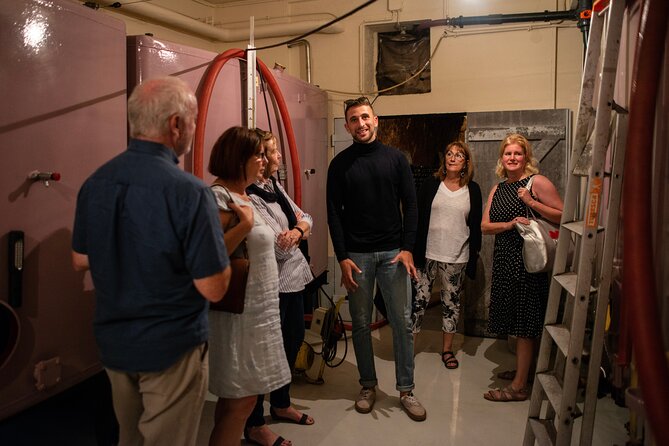
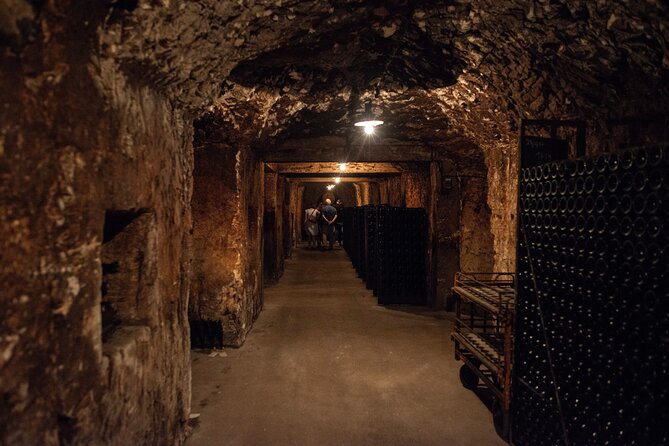
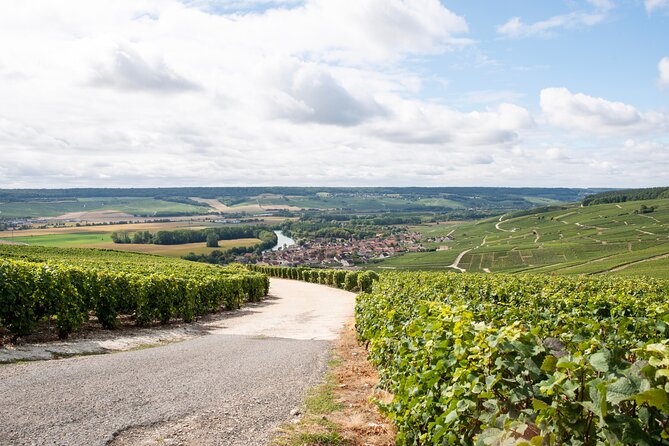
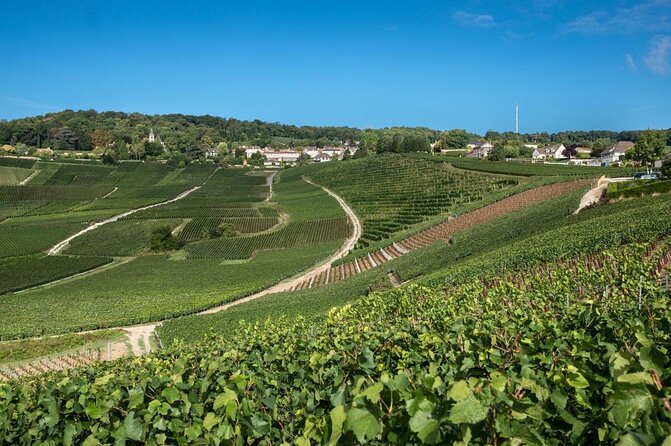
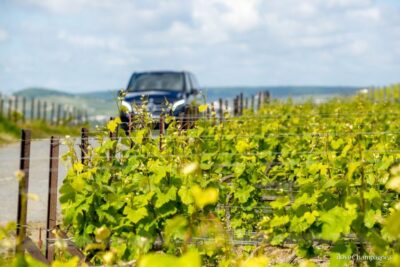
This is the part of the afternoon where the tour earns its keep. You are not simply handed a flute and sent on your way. The guide explains how Champagne is made, from the vines and farming practices to pressing, fermentation, bottling, and the finished wine. Visual details such as vines on the hillsides, presses, and bottles stored in cellars help connect the explanation to something you can see.
The exact presentation depends on the producer and guide, but the central value remains the same: you learn how a small house works. A guide with professional experience in the Champagne industry can explain the process in plain language and answer questions from both beginners and experienced wine drinkers.
Three glasses also make this a useful tasting lesson. Pay attention to how the wines differ in aroma, body, acidity, and finish. You do not need expert vocabulary. Simply notice which glass you prefer and ask why it tastes different. The guide can then link that difference to the wine’s production or style.
Do not expect lunch or a substantial snack here. Food is not included, and the tour takes place during the afternoon. If you need something to eat before leaving Reims, plan ahead.
Hautvillers and the Dom Pérignon connection
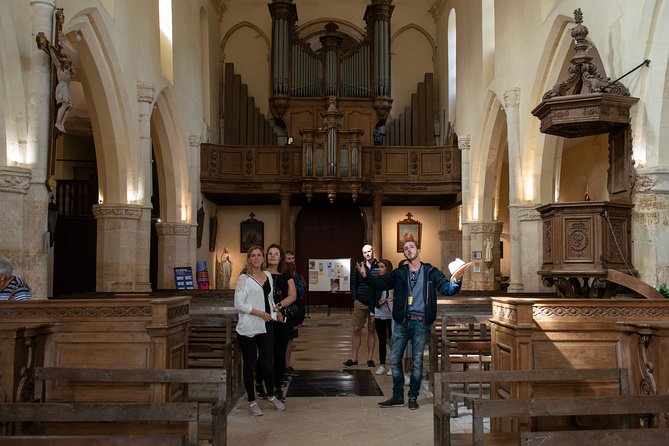
After the first winery, the tour spends about 15 minutes at the church portion of Abbaye Saint-Pierre d’Hautvillers, followed by roughly 30 minutes driving through Hautvillers.
This stop adds a human and historical layer to the wine lesson. Dom Pérignon lived at the abbey, and the site is closely connected with the story of Champagne. The church visit is brief, so you should think of it as a focused stop rather than a long abbey tour.
The short visit works well in a half-day itinerary because it breaks up the tastings and gives you a sense of the place tied to one of Champagne’s most familiar names. You may also see the burial site associated with Dom Pérignon during this portion of the outing, depending on how the guide structures the stop.
The drive through Hautvillers is another small but worthwhile detail. You get to see the village and the surrounding Champagne country rather than spending the entire afternoon indoors. The route helps you place the wineries in their setting, where vineyards and villages are part of the same working region.
Keep your expectations in check. A 30-minute drive through a village is not a detailed walking tour. If you want extensive church architecture, a long village stroll, or a full abbey visit, you will need more time elsewhere. Here, the purpose is to connect the famous Champagne story with the countryside and the producers you visit.
Same city, a completely different afternoon:
- From Reims: Champagne Small-Group tour with tastings & Lunch
★ 5.0 · 253 reviews - Small Group – Full Day Champagne Tour 3 Small Champagne Growers
★ 5.0 · 231 reviews - Reims or Epernay: Full day Champagne Mumm, family grower & lunch
★ 5.0 · 202 reviews - From Reims: Champagne Day Trip to 3 Family Domains & Lunch
★ 4.8 · 194 reviews
Second winery: compare another family approach
The second winery visit lasts another 1 hour 30 minutes and includes three more glasses. By this point, you have already learned the basic production steps, so the second visit can become more revealing.
The best way to use it is as a comparison. Notice how the second producer presents its wines, explains its work, and differs from the first. One visit may feel more intimate, while another may offer a different view of production or sales. A guide can help you compare two styles of making Champagne instead of treating each tasting as an isolated stop.
Several guides associated with this experience have different strengths. Anne has been described as bringing past professional experience in the Champagne industry, while Thomas is known for combining regional history with a broad understanding of Champagne. Martin is particularly well suited to questions from both beginners and more experienced tasters, and Suzanne has a strong grasp of growing and production. Other guides, including Chloe, Julie, and Jérôme, may lead the afternoon.
That range means your guide can shape the experience. The common thread is an educational, friendly approach with room for humor and questions. You should still remember that the specific guide is not guaranteed, so book this for the structure and access rather than for one named individual.
At the end of the second visit, you will have tasted six glasses in total. The amount is generous for a four-and-a-half-hour tour. It also means you should pace yourself and use the opportunity to taste thoughtfully rather than treating every pour as a full drink.
What the $151.16 price includes
At $151.16 per person, this is not the cheapest way to drink Champagne. The price makes more sense when you add up what is covered: an English-speaking local guide, air-conditioned transport, entrance fees, two winery visits, and six tastings.
The transport is important. Rural Champagne producers are not always convenient to reach without a car, and a private taxi between several stops could quickly become expensive. You also avoid driving after tastings, which is both safer and simpler.
The small group adds value, too. A maximum of eight people is a meaningful difference from a large coach excursion. You get more access to the guide, and visits to small producers feel less like crowd management.
Still, this tour is best judged as a compact regional introduction. It does not include a meal, bottled water, snacks, hotel transportation, or other drinks. You are paying for guided access and transport, not an all-day food-and-wine package.
If you compare it with visiting only one winery on your own, the tour may look costly. If you compare it with arranging transportation, booking two producers, learning the regional story, and sampling six glasses independently, the price becomes easier to justify.
Timing, comfort, and practical limits
The 2:00 pm start is convenient for an afternoon in Reims. You can spend the morning visiting the city, eating lunch on your own, and then meet at the station. The tour returns to that same meeting point, which keeps the finish straightforward.
The tour lasts approximately 4 hours 30 minutes. That is enough time for two substantial winery visits and the Hautvillers stops, but not enough for a leisurely pace at every location. You will spend part of the afternoon in the vehicle, moving between Reims, the wineries, and Hautvillers.
Most people can take part, and the vehicle is air-conditioned. Children under 10 are not accepted, and animals are not allowed on shared tours. Those rules help keep the tasting environment calm, but they make the experience less suitable for families with younger children.
Wear practical clothing and shoes suitable for moving around winery grounds and village streets. Specific cellar conditions are not provided, so bringing an extra layer may be sensible if you tend to feel cold indoors. Bottled water is not included, so bring your own if you want it during the afternoon.
The tour is offered in English and uses a mobile ticket. Confirmation is provided when you book. If your wider trip depends on a tight train connection, leave some buffer after the scheduled return, since the duration is approximate.
Who will enjoy this Champagne afternoon most
I would choose this tour if you want to understand Champagne beyond famous brand names. It suits couples, friends, solo visitors, and small groups who like wine, regional culture, and relaxed conversation.
It is especially useful for first-time visitors to the Champagne region. You get a basic production lesson, countryside views, a famous historical connection, and access to two small producers without having to solve the transport puzzle yourself.
It also works for wine enthusiasts who want to compare family operations. The guides can discuss farming, production, business, and regional history, so the experience is not limited to tasting notes.
I would hesitate if you want a long cellar walk, a large meal, extensive time in Hautvillers, or a tour focused on one major Champagne house. The schedule is designed for variety and efficiency. You see several sides of the region, but none receives a full day.
The group size makes it more personal, but it does not make the tour private. If you want to choose every winery, set your own pace, or spend an hour photographing each village view, a private tour would give you more control.
Cancellation and booking details
You can cancel for a full refund up to 24 hours before the 2:00 pm start time. Changes or cancellations made less than 24 hours in advance are not accepted for a refund.
The tour requires a minimum number of participants. If that minimum is not reached and the operator cancels, you are offered another date or experience, or a full refund.
Because the tour averages being booked 44 days in advance, I would not leave it until the last minute if your Reims dates are fixed. The eight-person limit can fill quickly, especially during popular Champagne travel periods.
Should you book this Reims Champagne tour?
Book it if you want a well-organized half-day that puts small producers and regional context ahead of grand-brand glamour. The two winery visits, six tastings, Dom Pérignon connection, and included transport give you a lot in 4 hours 30 minutes.
The strongest reason to go is the combination of access and explanation. Guides such as Anne, Thomas, Martin, and Suzanne bring practical Champagne experience, while the small group gives you room to ask questions. You should book lunch and drink water before or after the tour, and you should allow extra time after the return if you have a train to catch.
Skip it if you want a private itinerary or a full-day wine pilgrimage. For most visitors based in Reims, though, this is a useful and enjoyable way to meet family growers, taste six Champagnes, and see why Hautvillers matters.
FAQ
Where does the tour start and end?
The tour starts at the Office de Tourisme du Grand Reims at the train station, Cour de la Gare, 51100 Reims. It ends back at the same meeting point.
What time does the tour begin?
The tour begins at 2:00 pm.
How long does the Champagne tour last?
The experience lasts approximately 4 hours 30 minutes.
How many people can join the tour?
The maximum group size is eight people.
How many Champagne tastings are included?
Six glasses are included, with three tastings at each of the two family-run wineries.
Are children and animals allowed?
Children under 10 are not accepted, and animals are not allowed on shared tours.
Just listed in Reims
- Private Full Day Tour – Visit of 3 Champagne Growers from Reims.★ 5.0 · 56 reviews
- From Reims: Day Trip to Veuve Clicquot Family Grower & Lunch★ 4.8 · 62 reviews
- Reims: Veuve Clicquot and Family-Run Winery Day Tour & Lunch★ 4.8 · 71 reviews
- From Reims Full day Electric bike Champagne and lunch★ 5.0 · 98 reviews
- From Reims Champagne Day Trip Veuve Clicquot Local Domain & Lunch★ 4.5 · 117 reviews
- From Reims morning Champagne family growers★ 5.0 · 176 reviews
- Champagne: E-Bike Champagne Day Tour with Tastings and Lunch★ 4.7 · 192 reviews
- From Reims: Champagne Day Trip to 3 Family Domains & Lunch★ 4.8 · 194 reviews
Reims Tours, compared.
Small Group – Half Day Champagne Tour – Visit of 2 Small Producers/Growers
Read our review →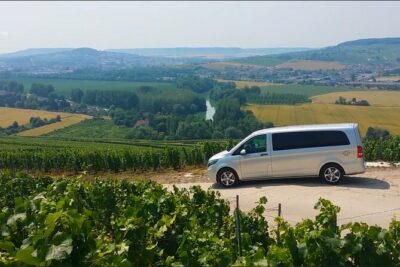
Champagne Day Trip from Reims including 9 Champagne Tastings
Read our review →
Champagne Small-Group tour with tastings & Lunch
Read our review →
Small Group – Full Day Champagne Tour 3 Small Champagne Growers
Read our review →
Reims or Epernay: Full day Champagne Mumm, family grower & lunch
Read our review →
Champagne Day Trip to 3 Family Domains & Lunch
Read our review →
E-Bike Champagne Day Tour with Tastings and Lunch
Read our review →Browse the lists this tour appears in