
Reviewed · PARIS TOURS
Paris: Entrance Ticket to the Chocolate Museum
The most tempting part of this Paris museum is also the simplest: you learn how chocolate is made while tasting it along the way. The 850-square-meter exhibition follows cocoa from ancient Mesoamerican rituals to modern chocolate production, with more than 1,000 objects, displays, and demonstrations to keep the story moving.
I like the museum’s clear historical journey, especially the stories of the Olmecs, Mayas, and Aztecs, and I like the hands-on tasting stops, which turn a standard museum visit into a proper treat. The children’s treasure hunt is another strong point. The main drawback is scale: some people move through the museum in under an hour, so the $21 admission feels better value if you read the displays, use the demonstrations, and take your time.
Key Points
- Chocolate across 4,000 years: Trace cocoa from ancient rituals to modern confectionery.
- More than 1,000 objects: See tools, containers, utensils, displays, and chocolate-related artifacts.
- Expert demonstration: Watch a virtual presentation featuring two Meilleurs Ouvriers de France, France’s highly respected master craftsmen.
- Tastings included: Sample chocolate products, including praliné and ganache, and compare cocoa from places such as Costa Rica, Peru, and Vanuatu.
- Family-friendly visit: Children receive activities and a treasure hunt with stickers and a prize.
- Easy self-guided format: Read panels in English, French, or Spanish, or rent a multilingual audioguide for €3.
A Chocolate Museum With a Real Story to Tell
Le Musée Gourmand du Chocolat is not simply a shop with a few old molds on the wall. It lays out the story of cocoa over roughly 4,000 years, beginning with the Olmecs and continuing through Maya and Aztec culture, European contact, industrial production, and the chocolate you buy today.
That long timeline gives the tasting a useful context. You are not just trying a sweet from Peru or Vanuatu. You are learning how the cocoa bean moves from cultivation and ritual use to fermentation, processing, and finished confectionery.
The museum occupies about 850 square meters at 28 Boulevard de Bonne Nouvelle in the 10th arrondissement. It is a self-guided visit, so you set your own pace. That works well if you want to read every panel, but it also means the quality of your visit depends partly on how much attention you give the displays.
You can walk through quickly, but I would not recommend treating this as a 20-minute stop. The museum has enough material for a slower visit, particularly if you are interested in food, trade, museum design, or the origins of familiar ingredients.
A few other Paris half-days to compare
- Paris: Day or Sunset Cruise with Drink, Ice Cream or Dessert
★ 4.4 · 4,225 reviews - Private Montmartre Food Tour with Wine, Cheese & Pastries
★ 5.0 · 1,027 reviews - Paris French Sweets Tasting Tour with Pastries and Chocolates
★ 4.5 · 947 reviews
Following Cocoa From Ritual to European Fashion
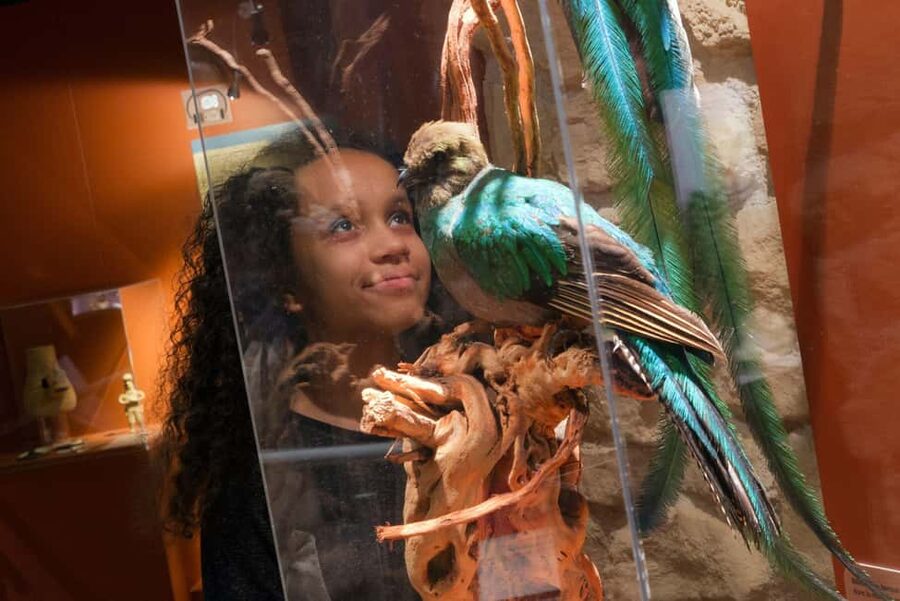
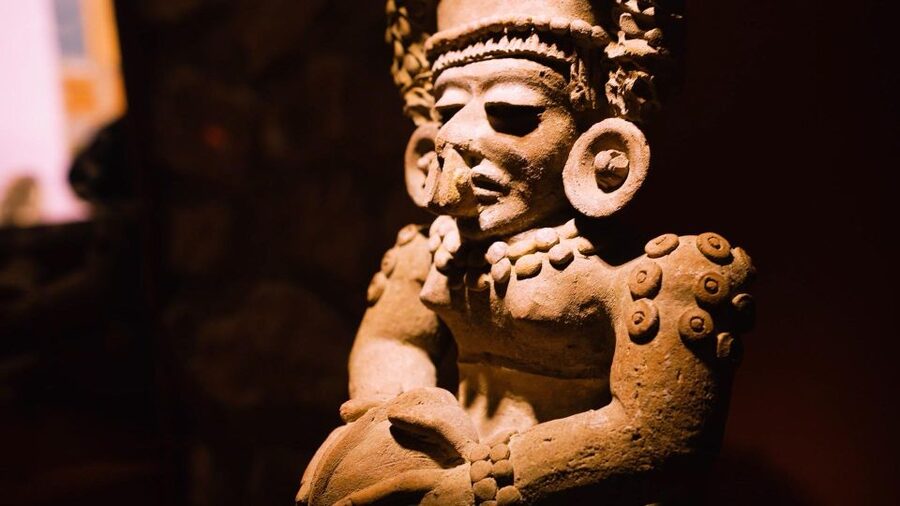
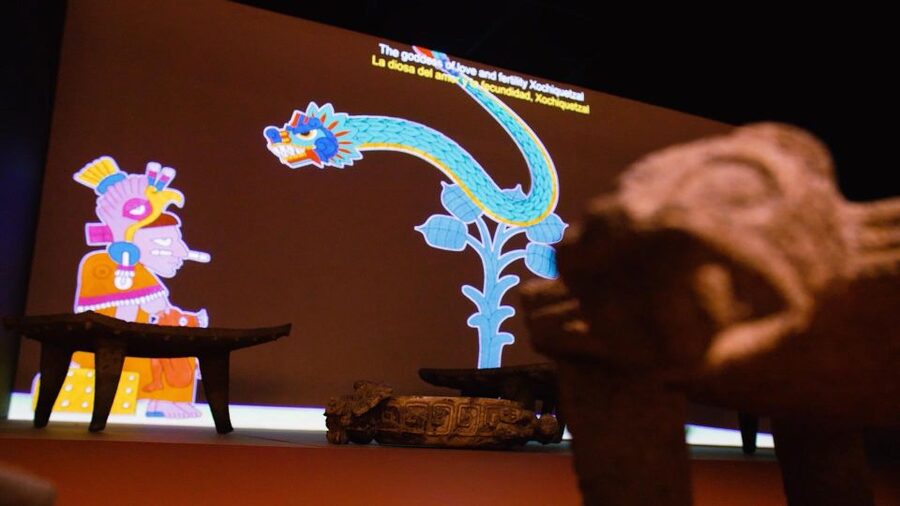
The opening section explains why cocoa mattered long before it became a dessert. In ancient cultures, cocoa was connected with important ceremonies and mystical rituals. That is a useful correction to the modern view of chocolate as an everyday snack.
The displays introduce the Olmecs, Mayas, and Aztecs, placing cocoa within the customs and beliefs of each culture. You learn that chocolate began as a drink and that its meaning changed as it moved between societies.
The story then reaches the 1500s and the Aztec emperor Montezuma, who is linked with the introduction of cocoa to Europe. Christopher Columbus was the first European named in the museum’s account to taste the drink called tchocoatl, but he did not like it and paid little attention to it.
That small detail makes the history memorable. Columbus’s lack of interest did not stop chocolate from spreading. Other Europeans tried it, adapted it, and eventually helped turn it into a luxury product and later a mass-market food.
I like this part because it shows that food history is rarely a straight line. An ingredient can be prized in one culture, misunderstood in another, and transformed again by trade and technology.
The Objects Make the Timeline Concrete
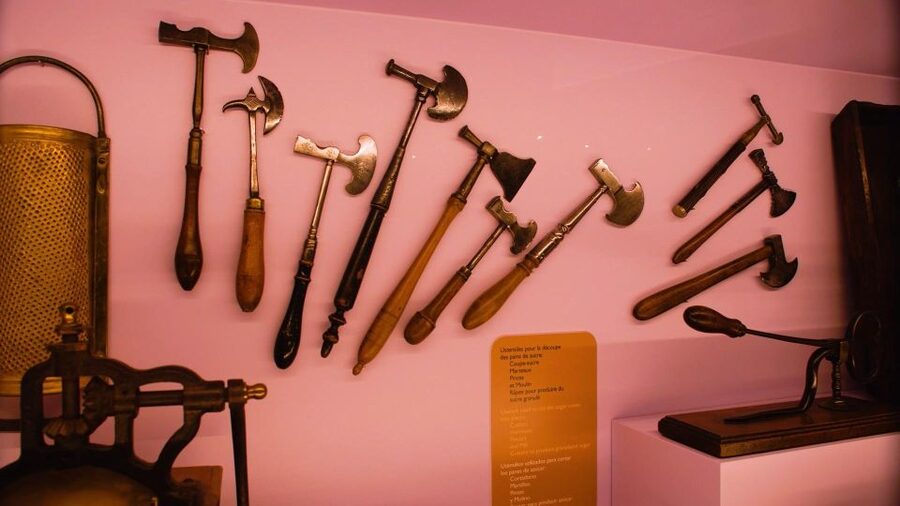
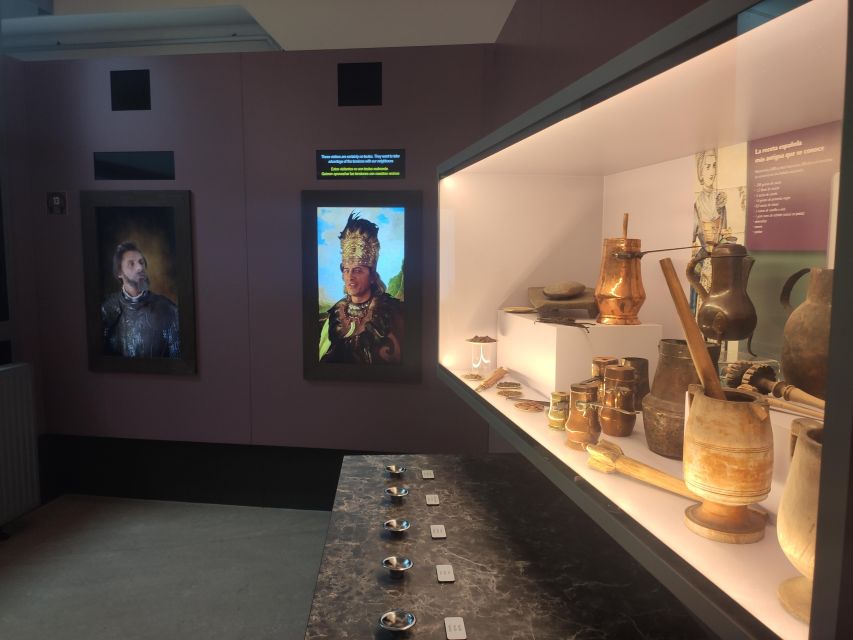
More than 1,000 chocolate-related artifacts are displayed throughout the museum. They help connect the historical story to the practical business of making, serving, and enjoying chocolate.
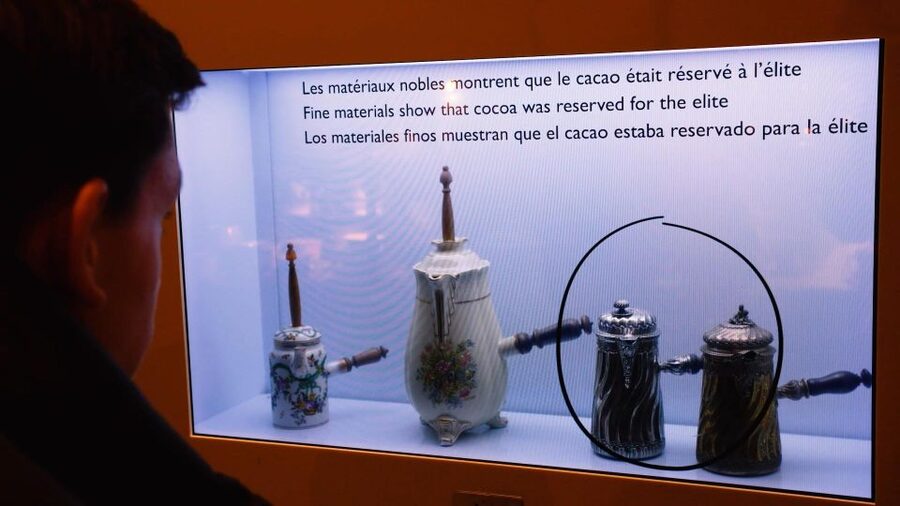
You can see chocolate utensils, containers, molds, and other objects linked with cocoa culture. One especially appealing feature is the collection of pretty chocolate utensils and serving pieces. These objects show how chocolate was presented as both food and a sign of taste and status.
The displays are presented in English, French, and Spanish. That is useful for international visitors and means you can follow the main story without paying extra for an audio option.
Still, the museum rewards readers. If you skim the panels, you will get the broad outline, but you will miss much of the detail about cultivation, harvesting, preparation, and cultural use. I would plan enough time to stop at the sections that interest you rather than simply following the room from entrance to exit.
The Demonstration Explains Why Chocolate Shines
A central part of the visit is the demonstration area. You watch a virtual presentation featuring two Meilleurs Ouvriers de France, an honor awarded to highly skilled French craftspeople.
The focus is the chocolate-making process, including the secret behind the smooth, shiny outer coating on finished chocolate. This is a valuable addition because it explains something you normally take for granted. A polished chocolate surface is not just decoration. It reflects careful handling and a precise production process.
You also learn how chocolate sweets are made, with praliné and ganache among the featured examples. The demonstration gives the tastings more meaning. You can pay attention to texture, shine, filling, and finish instead of simply eating the sample and moving on.
One practical caution: the demonstration may be harder to enjoy when the museum is busy. A school group once made it difficult for one visitor to view the presentation. The self-guided format gives you freedom, but it does not guarantee an empty demonstration area.
If this part matters most to you, avoid rushing and ask at the welcome desk about the best time to see it. Specific daily show times are not provided, so you should confirm what is running when you arrive.
More museums in Paris:
- Paris: Louvre Museum Timed-Entrance Ticket
★ 4.6 · 71,977 reviews - Louvre Museum Masterpieces Guided Tour with Access
★ 4.5 · 12,023 reviews - Paris: Louvre Museum Entry Ticket With Host and River Cruise
★ 4.6 · 9,926 reviews - Les Invalides: Napoleon’s Tomb & Army Museum Entry
★ 4.6 · 9,185 reviews
The Tastings Are the Main Reward
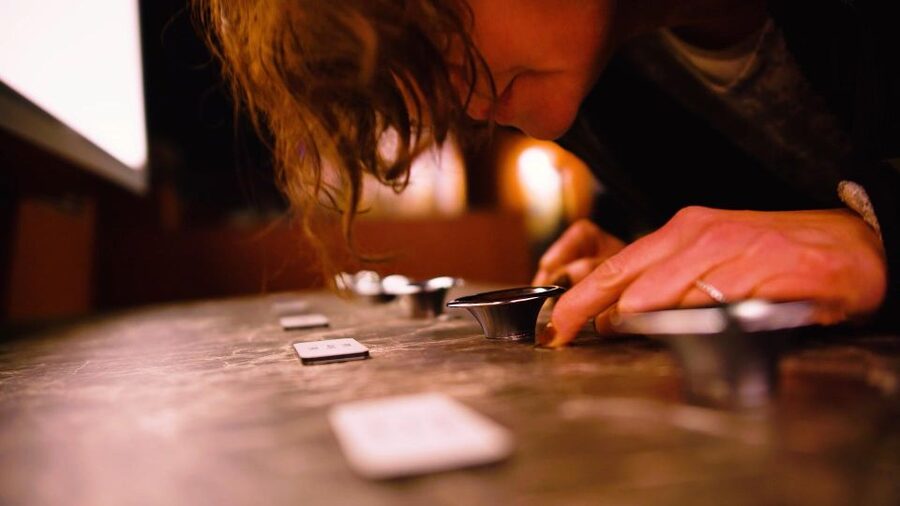
The samples are included with admission, and they are an important reason this museum feels different from a conventional history exhibit. You taste chocolate products made on-site and compare flavors from different cocoa-growing regions.
The featured examples include the milky smoothness of Costa Rican chocolate, the fruitier character associated with Peruvian chocolate, and the sweet aromas of cocoa beans from Vanuatu. These comparisons help you notice that chocolate does not have one single flavor.
You can also taste a praliné and a ganache. The contrast is useful: praliné brings a nutty, sweet texture, while ganache shows the softer, creamier side of chocolate preparation. The point is not to turn you into a professional taster. It is to help you understand how ingredients and technique affect the final product.
The tastings are spread through the visit, so you can use them as small pauses between historical sections. This is a better approach than treating the museum like a single chocolate stop at the end.
A hot chocolate is also available, but it is not included in the entrance fee. It costs €3 per cup. Some people consider it a highlight, while others find it unnecessary after the samples. I would decide based on your appetite and the price you are willing to pay beyond the $21 admission.
Children Have Their Own Mission
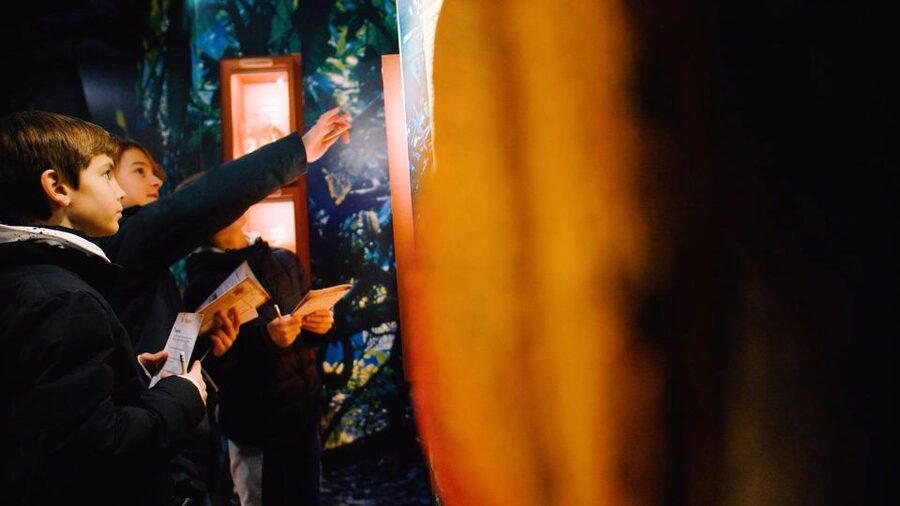
This is one of the better Paris museum choices for families because children are not expected to stand quietly beside long blocks of text. The museum provides a treasure hunt, activity materials, stickers, and a prize at the end.
The activity is aimed at keeping children involved as they move through the exhibits. It gives them something to find and complete, while adults can spend more time with the historical displays.
The format has worked especially well for children around five to eleven years old. A five-year-old may need help with the written material, while an older child can follow the booklet more independently. An 11-year-old can still find the treasure hunt rewarding, especially with tasting stops along the way.
There is also a chocolate-making activity for children in some visits, but the supplied information does not give a regular schedule or confirm that it is part of every admission. Ask the museum directly if this is important to your plans.
Families should also keep in mind that chocolate samples can add up quickly. It is a fun stop, but very young children may need a break between tastings.
How Long You Need at 850 Square Meters
The ticket is valid for one day, but this does not mean you need an entire day inside. The museum is compact enough for a short visit, yet detailed enough to reward a longer one.
Some people finish in less than 30 minutes, especially if they move quickly or arrive when a demonstration is not available. Others spend around three hours reading the material, watching the presentation, taking part in the children’s activity, and enjoying the samples.
I would allow about one to two hours for a comfortable visit. Add time if you are traveling with children or want to study the artifacts and historical panels closely.
The self-guided setup is useful on a packed Paris itinerary. You do not have to keep up with a group or wait for a guide. You can also linger in the sections you prefer, then move on when your attention starts to fade.
The trade-off is that the visit has no live guide leading you from room to room. If you like a strong narrative voice and the chance to ask questions, the optional audioguide will help.
The €3 Audioguide Can Be Worth It
The audioguide is available at the welcome desk for €3 per person. It comes in French, English, German, Dutch, Spanish, Italian, and Portuguese.
The written panels already cover the main information in English, French, and Spanish, so the audioguide is not essential for everyone. I would consider paying for it if you enjoy listening while looking at objects, or if reading every panel feels tiring.
One English-speaking visitor found the audioguide added a lot to the visit, while another managed well with the translated displays. That makes the choice simple: use the panels if you want to keep costs down, and add the audioguide if you prefer a guided flow.
The audio option may also help families divide their attention. One adult can listen while another helps children with the treasure hunt.
Is $21 Good Value?
At $21 per person, this is not the cheapest small museum in Paris. The value depends on how you use the visit.
The price includes entrance, chocolate samples, and the virtual demonstration with two Meilleurs Ouvriers de France. Children also receive the treasure hunt. Those extras make the ticket more appealing than a basic exhibition admission, especially for a family where several people will take part in the activities.
The price feels less favorable if you expect a large national museum or several hours of major displays. The museum is small, and some people complete it in under 30 minutes. You also pay €3 extra for the audioguide and €3 for hot chocolate.
I think the ticket makes the most sense for chocolate fans, families, and anyone looking for a lighter Paris activity between larger sights. It is also a good rainy-day option because the visit combines indoor exhibits, food history, and tastings.
For a couple who simply wants a quick sample and a drink, buying chocolate elsewhere may offer better value. For a family that will use the activity booklet and stay for the demonstration, the admission is easier to justify.
Location and Practical Details at Bonne Nouvelle
The museum is at 28 Boulevard de Bonne Nouvelle, 75010 Paris. You meet at the museum itself, not at a separate city meeting point.
This is a central enough address to fit into a day of sightseeing in Paris, but the supplied activity details do not specify walking times from major landmarks or public transport instructions. Use the exact street address when planning your route.
Large bags and luggage are not allowed. Do not arrive with suitcases or bulky shopping bags, particularly if you are visiting between hotels or train connections.
The museum is wheelchair accessible. The last admission is at 4:30 PM, so check the available start times and avoid leaving the visit until late in the afternoon.
You can cancel up to 24 hours before the visit for a full refund, and the reserve-now, pay-later option allows you to keep your plans flexible. These terms are useful in Paris, where weather, transport, and museum schedules can change your day.
Who Will Enjoy This Museum Most?
I would recommend it first to families with children. The treasure hunt gives younger visitors a job, and the tasting stops provide an easy reward for paying attention.
Chocolate lovers will also get the most from the visit. You can compare cocoa from several regions, watch how sweets are finished, and browse the shop for books, souvenirs, molds, and other chocolate-related products.
It suits adults who enjoy food history, too. The museum connects chocolate with ritual, trade, craft, and changing technology rather than treating it as a simple confection.
Couples and solo visitors should consider their expectations. If you want a quiet, highly detailed museum with long galleries, this may feel small. If you want an easygoing indoor stop with useful historical context and things to taste, it fits well.
Should You Book the Chocolate Museum?
Book it if you want a family-friendly Paris activity with food at the center, or if you are curious about how cocoa changed from an ancient ritual drink into modern chocolate. The history, regional tastings, artifacts, and children’s treasure hunt give the visit more substance than its sweet theme suggests.
Skip it if you have little interest in chocolate, dislike self-guided museums, or expect a full-day attraction for $21. Also budget separately for the optional €3 audioguide and €3 hot chocolate.
My best advice is to allow at least an hour, read the panels in your preferred language, and make time for the demonstration. That is when the museum’s value becomes clearest. You leave with a better sense of what is in your chocolate, where it came from, and why the finished piece shines.
FAQ
Where is the Chocolate Museum Paris?
The museum is at Le Musée Gourmand du Chocolat, 28 Boulevard de Bonne Nouvelle, 75010 Paris.
How much does admission cost?
The listed price is $21 per person.
How long is the ticket valid?
The ticket is valid for one day.
Is the visit guided?
No. This is a self-guided museum visit. An audioguide is available at the welcome desk for €3 per person.
Which languages are available for the audioguide?
The audioguide is available in French, English, German, Dutch, Spanish, Italian, and Portuguese.
What languages are used on the museum panels?
The descriptive panels are in English, French, and Spanish.
Are chocolate tastings included?
Yes. Chocolate samples are included with admission, including tastings such as praliné and ganache.
Is hot chocolate included in the ticket?
No. Hot chocolate costs €3 per cup.
Is the museum suitable for children?
Yes. Children can take part in activities including a treasure hunt, booklet tasks, stickers, and a prize.
Can I bring luggage into the museum?
No. Luggage and large bags are not allowed.
Is the museum wheelchair accessible?
Yes. The museum is wheelchair accessible.
What time is the last admission?
The last admission is at 4:30 PM.
Can I cancel my booking?
Yes. You can cancel up to 24 hours in advance for a full refund.
Just listed in Paris
- Chartres Cathedral 5 Hours Tour from Paris with Private Transport★ 4.5 · 49 reviews
- Paris: Giverny & Versailles Small Group or Private Tour★ 4.5 · 49 reviews
- Paris: Louvre photoshoot or Seine bridges Eiffel Tower walk★ 5.0 · 49 reviews
- Private tour of the Champagne area, meet local producers and taste their Champagne, start from your hotel in Paris.★ 5.0 · 50 reviews
- Paris: Choux Pastry and Chocolate Éclair Making Class★ 4.9 · 50 reviews
- Paris Eternelle Notre-Dame Virtual Reality Tour★ 4.5 · 50 reviews
- Normandy D-Day Landing Beaches Private Day Trip from Paris★ 5.0 · 50 reviews
- Disneyland® Paris 1 Day with Round-Trip Train Tickets from Paris★ 4.0 · 50 reviews
Paris Tours, compared.
Versailles Palace and Gardens Full Access Ticket
Read our review →

Eiffel Tower Entry Ticket with Optional Summit Access
Read our review →

Louvre Guided Tour with Reserved Access & Boat Cruise
Read our review →
Moulin Rouge Cabaret Show Ticket with Champagne
Read our review →Browse the lists this tour appears in