
Reviewed · PARIS TOURS
From Paris: Guided Day Trip to Monet’s Garden in Giverny
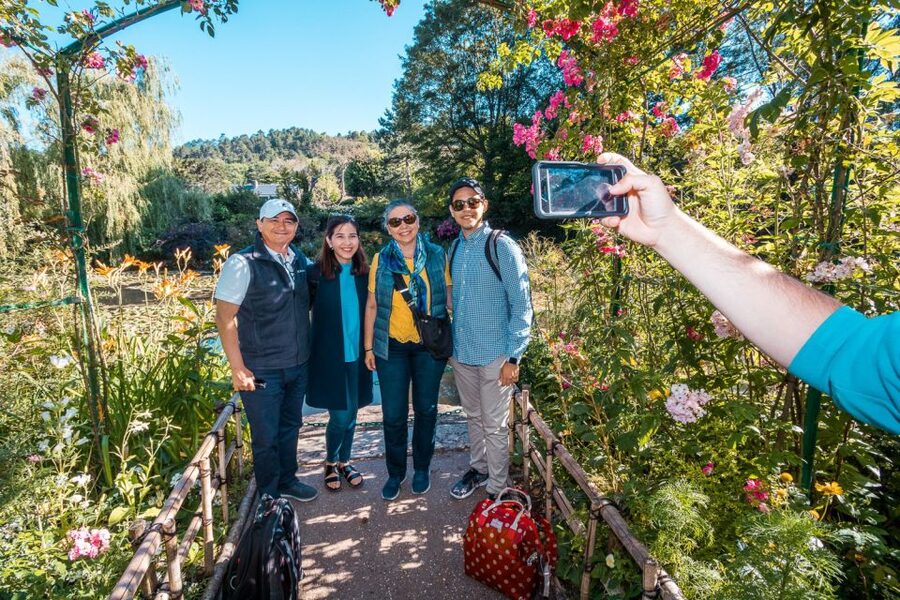
Claude Monet’s garden is one of those rare art sites where the subject of the painting is still in front of you. At Giverny, you walk past the flower beds, cross the Japanese bridge, and look across the water lilies that shaped more than 250 of Monet’s paintings. The setting makes Impressionism feel less like a chapter in an art book and more like a way of looking.
I like the small minibus format, which saves you the trouble of arranging the trip from Paris, and I like the way the guides handle the visit. Laurent, Lucy, Tim, Etienne, Frankie, and several others are praised for warm personalities, safe driving, and clear explanations. The main drawback is time: five hours is enough for the essentials, but not for a slow village visit, a long lunch, and every corner of the gardens.
Key points at a glance
- The water garden is the star: See the lily pond, Japanese bridge, and views that inspired Monet’s famous series.
- Early timing matters: Guides often lead groups to the house or water garden first, helping you avoid the worst queues.
- You travel in a small group: The minibus feels more personal than a large coach, though eight people can feel snug.
- The house is part of the story: Monet’s rooms and family home add context to the gardens and paintings.
- The grave is a quiet final stop: His modest tomb in the local churchyard gives the visit a reflective finish.
- Plan for weather: The tour runs rain or shine, and most of the visit takes place outdoors.
Why Giverny makes a strong half-day from Paris
Giverny lies in Upper Normandy, in the Seine Valley, about an hour from Paris by minibus. That short ride takes you from city streets to a small village shaped by Monet’s home, garden, and artistic life. It is an easy way to add a rural French stop without giving up a full day in Paris.
Monet lived at Giverny for the last 40 years of his life, after moving there in 1883. He did not simply find a pretty garden and paint it as he found it. He designed, planted, altered, and tended the grounds over time, turning the property into a living source of ideas.
That matters when you visit. The flower beds are not just decoration around a historic house. Their color, height, and arrangement helped create the changing light and shapes that Monet wanted to capture. The water garden, with its pond and lilies, takes the idea even further. You can see the subject, then stand in roughly the same world that fed his paintings.
A few other Paris half-days to compare
- Disneyland® Paris 1-Day Ticket
★ 4.6 · 49,412 reviews - Normandy D-Day Sites & Cemetery Day Trip from Paris with Lunch
★ 5.0 · 6,877 reviews - Day Trip to Mont-Saint-Michel from Paris
★ 4.5 · 4,876 reviews
The Paris meeting point and one-hour drive
The meeting point is outside La Flamme café at 6 Avenue de Wagram, near the Arc de Triomphe. Look for the café with the black front. The location is easy to find, but I would still arrive early since this is a scheduled group departure, not a flexible taxi pickup.
There is no hotel pickup or drop-off. You need to reach the avenue on your own and return there at the end. That arrangement keeps the route efficient, but it may be less convenient if your hotel is far across Paris or if you are carrying heavy luggage.
The ride takes about an hour each way. A good guide can make that transfer feel like part of the outing rather than dead time. Several guides use the drive to explain Monet, Giverny, and the surrounding area. One guide played French music and added a quiz, while another gave useful suggestions for the rest of a Paris stay.
The standard vehicle is a minibus. It is more intimate than a full-size coach and easier to move through town, but space depends on the group. Six people should feel comfortable. Eight can be tight, especially if you are tall or carrying a day bag. Air conditioning was especially welcome during a hot July visit.
Entering Monet’s flower garden
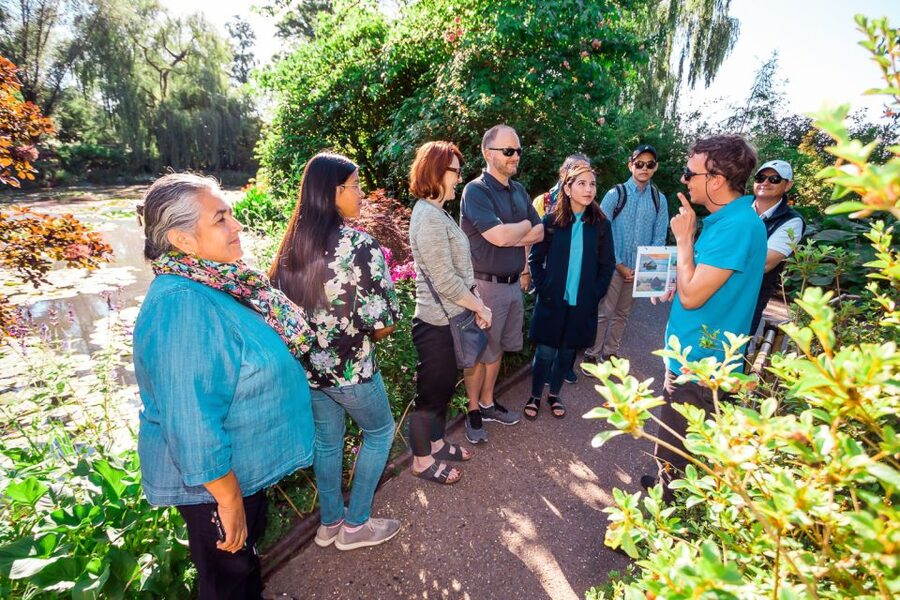
The first garden is often called the Clos Normand, or Flower Garden. It is a long, colorful planting area in front of the house, filled with more than 100 types of flowers and interwoven foliage. The effect is carefully arranged, but not stiff. Paths cut through beds that seem to spill toward one another.
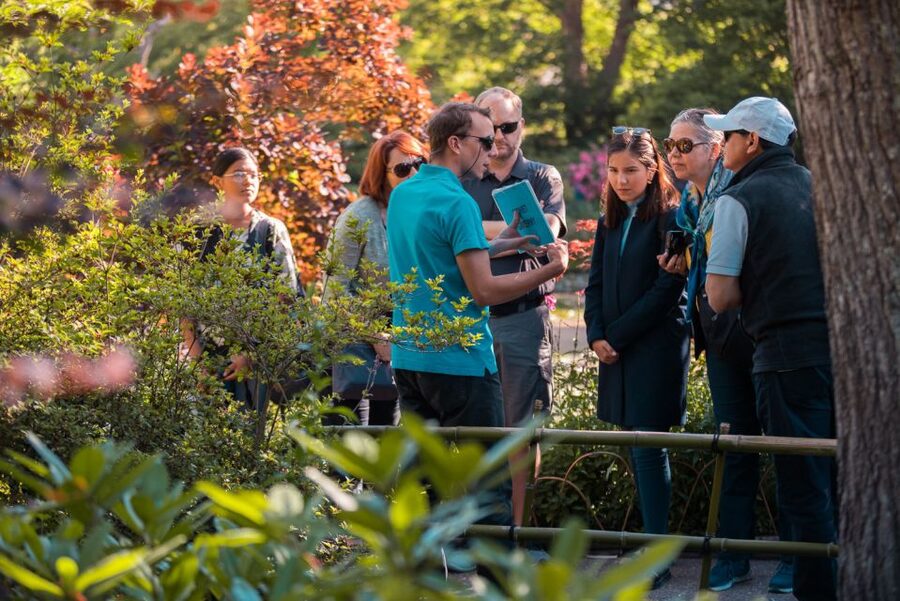
Your guide will usually give you an overview, then allow you to explore at your own pace. That balance works well here. You need some context to understand why Monet changed the property, but you also need quiet time to look at the flowers without listening to a running commentary.
The garden changes greatly with the season. May is especially strong for roses, irises, and peonies. Summer brings fuller beds and the classic color combinations most people expect from Monet’s garden. October can still be rewarding, with autumn flowers and turning trees, while lower visitor numbers may give you more room around the paths.
Do not expect every flower to be at its peak on every visit. This is a working garden, not a painted backdrop frozen in time. The appeal is in the layers of planting, the shifting color, and the sense that Monet built a place meant to change.
Walking through Monet’s house
The house helps explain the man behind the garden. You move through the rooms where Monet lived and worked with his family, gaining a sense of the domestic setting that surrounded his art. The rooms are more intimate than grand, and the modest scale suits the visit.
The house can become the slowest part of the experience. Entry is handled through a separate entrance for the tour, but the house itself is not presented as a guaranteed skip-the-line visit. Once inside, movement may be slow, especially when several large groups arrive together.
This is why timing matters. Guides such as Laurent and Valerie have been praised for getting groups to the right area early, while other guides start with the house before the crowds build. Follow your guide’s order rather than assuming the water garden should always come first.
The house is not a replacement for an art museum. You will not find a full survey of Monet’s paintings there. Its value is more personal: it connects the gardens, family life, and working environment. If you already know Monet’s work, the rooms add atmosphere. If you are new to him, the guide’s explanation will help you understand why Giverny mattered.
Same city, a completely different afternoon:
- Paris: Louvre Museum Timed-Entrance Ticket
★ 4.6 · 71,977 reviews - Paris: Versailles Palace and Gardens Full Access Ticket
★ 4.6 · 41,579 reviews - Paris: Evening River Cruise with Music
★ 4.4 · 22,721 reviews - Paris: Eiffel Tower Entry Ticket with Optional Summit Access
★ 4.4 · 20,035 reviews
The Japanese garden and water lilies
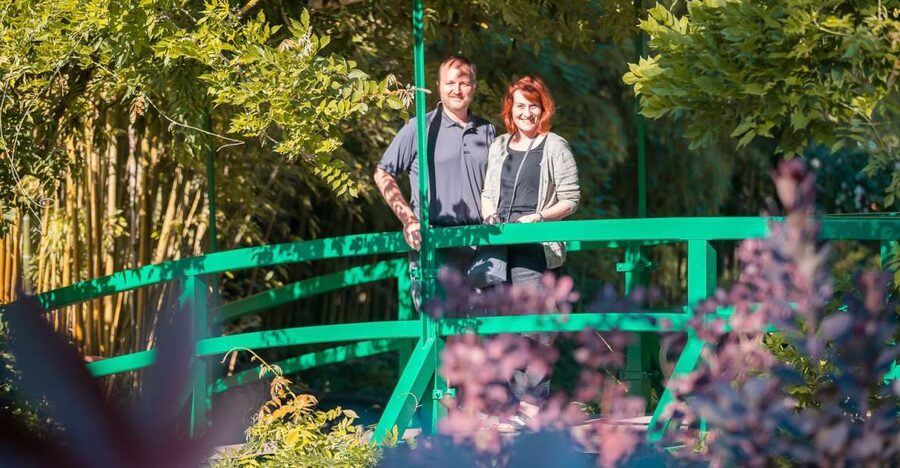
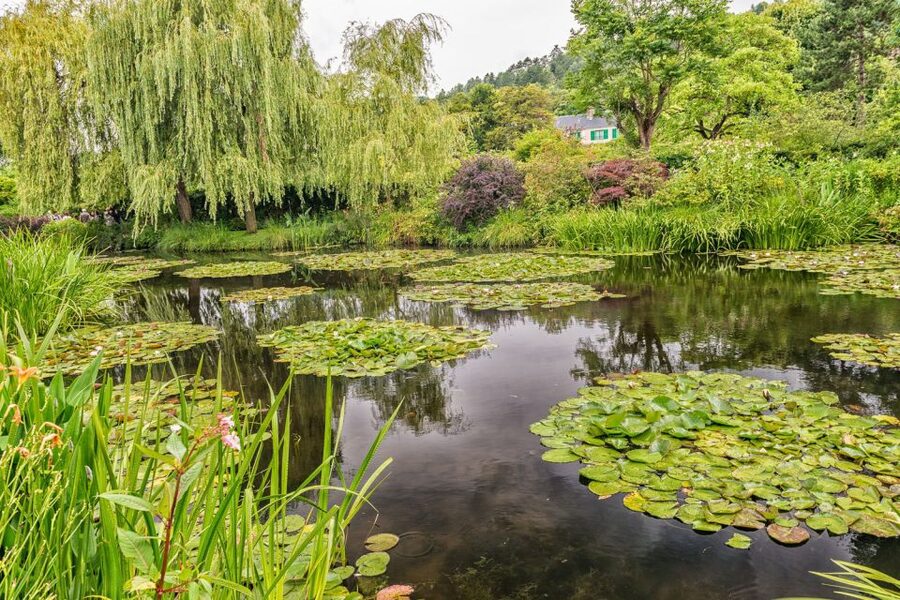
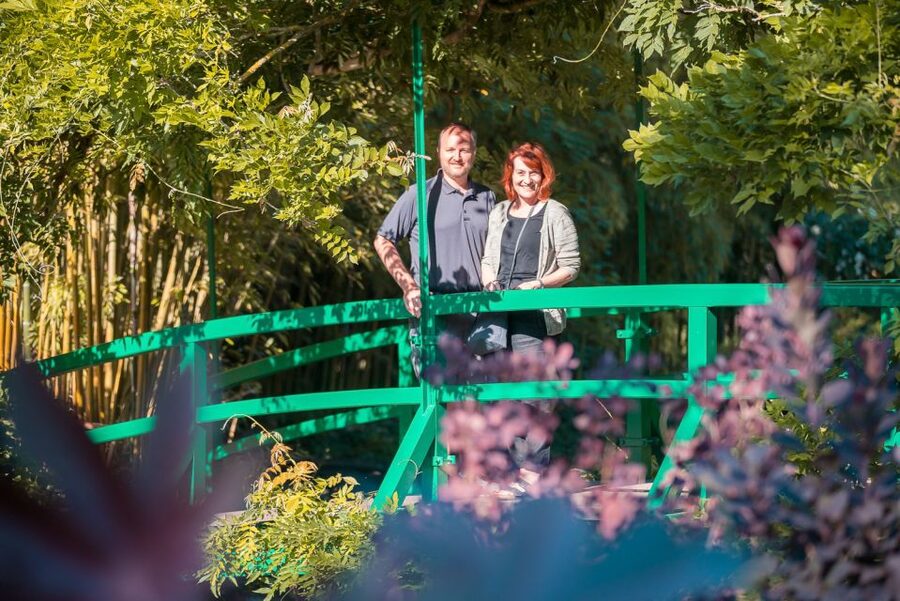
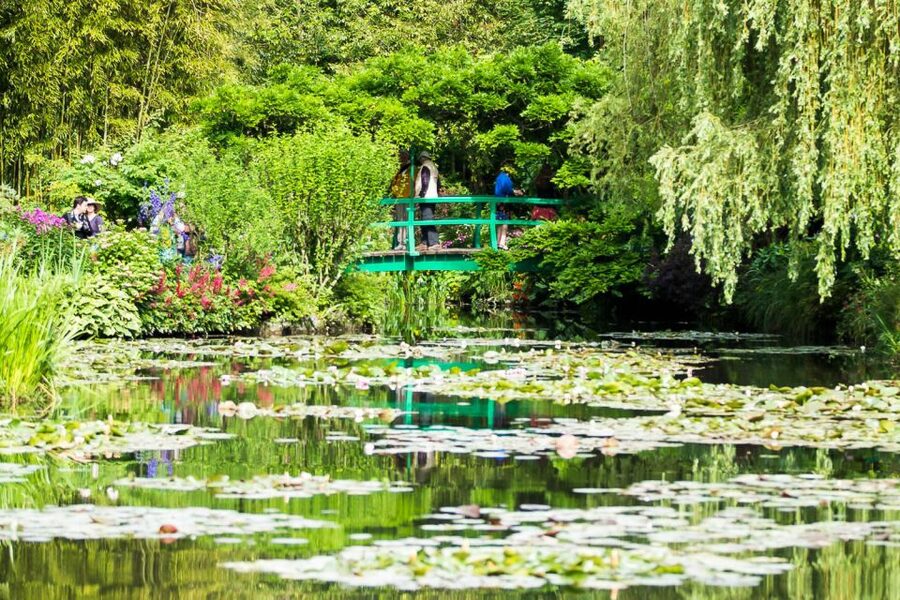
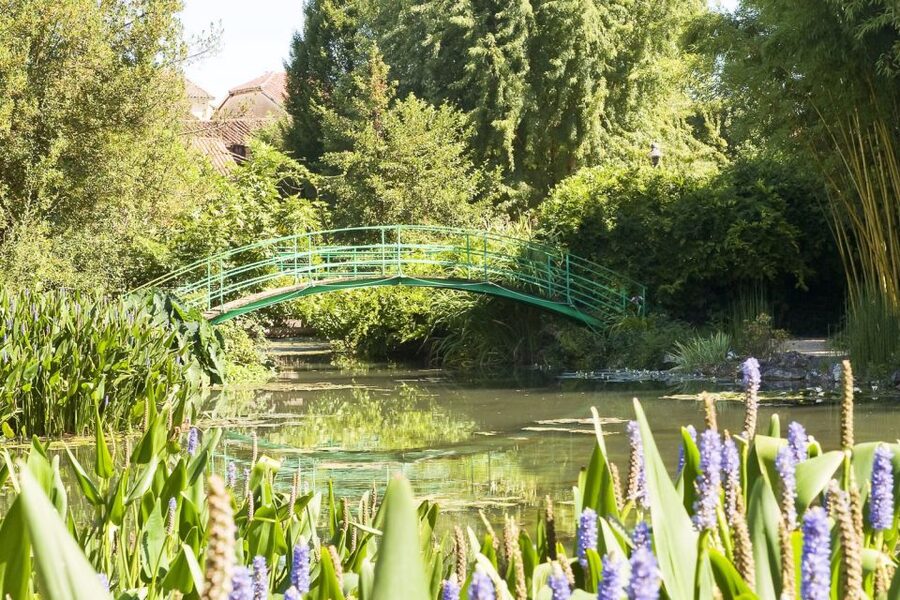
The Japanese Garden is the emotional center of the visit. You cross toward the pond, see the bridge and water, and begin to recognize the visual ingredients behind Monet’s water-lily paintings. The scene is not an exact copy of a canvas, and it should not be. The light, weather, and season keep changing.
Take your time here. Look beyond the obvious photograph of the bridge. Notice the reflections, the surface of the pond, and the way plants frame the water. This is the place where a short explanation from your guide can sharpen your eye, then you can walk on your own and make the scene personal.
The water garden portion is scheduled for about 110 minutes, making it the longest part of the outing. That gives you room for photographs and a steady walk through the grounds. On busy summer days, though, the paths and house can feel crowded. One June visit was described as so full that moving through the house became a slow shuffle.
Early morning is the best choice if you care about calm views and photographs. Groups arriving before opening or close to opening have sometimes had stretches of the garden with very few people. Late-day departures can also work when crowds thin, but the available starting time depends on the day.
Monet’s grave in the village churchyard
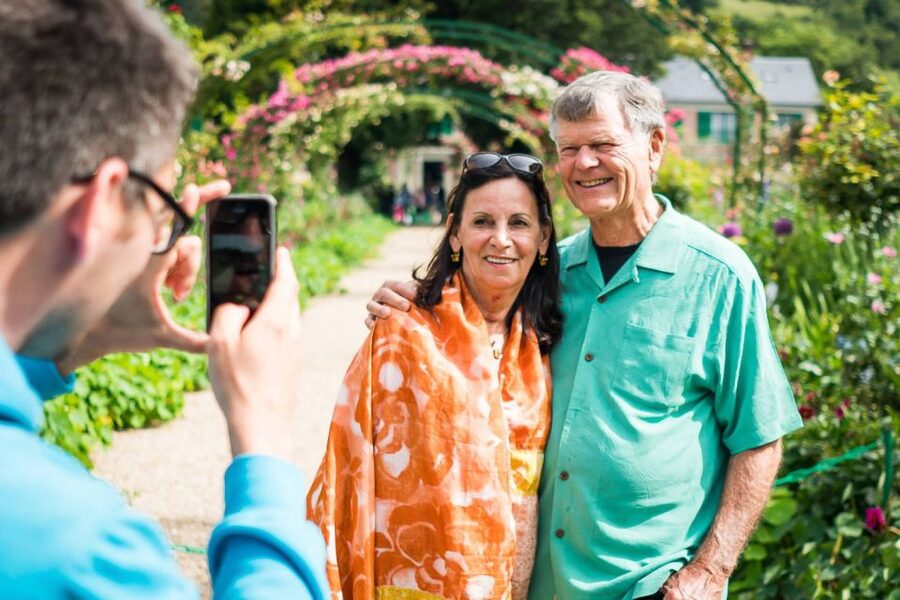
The stop at Monet’s grave takes about 15 minutes. His tomb is modest, and the quiet churchyard offers a sharp contrast to the carefully planted gardens. It is not a major monument, and that is part of its appeal.
You will not spend long here. The guide provides context about Monet’s final resting place and the village, then the group moves on. This stop works best as a brief pause, not as a separate sightseeing attraction.
Some guides also point out nearby artistic connections or less obvious corners of Giverny. One rainy-day visit included an abandoned artist studio or workshop linked with the Impressionists. That extra stop is not listed as a standard part of every outing, so treat it as a possible bonus rather than something to count on.
How the five-hour schedule feels
The listed plan allows roughly one hour from Paris, 110 minutes at the water garden, 20 minutes around Monet’s Foundation and house arrangements, 15 minutes at the grave, and one hour back to Paris. In practice, the exact order can shift with opening times, traffic, and crowd levels.
Five hours is a sensible length for a first visit. You see the house, both gardens, the pond, and the grave without turning the day into a tiring marathon. Several people found the pace just right, with enough time to explore but no long stretch of waiting.
The trade-off is limited free time. You may not have time for a proper local lunch, extended shopping, or a relaxed wander through every part of Giverny. A café stop may be possible, but food is not included and should not be assumed. One morning group finished the main visit early enough to buy takeaway sandwiches before continuing to the churchyard.
If lunch matters to you, eat before meeting the minibus or ask the guide at the start how the timing looks. Do not wait until the last few minutes and hope for a full meal.
What the guides add
The guide is a major part of the value here. You are not getting a private art historian, but the best guides provide a useful mix of Monet’s life, his family, the village, and the practical order of the visit.
Laurent was praised for reaching the garden before opening and advising the group where to begin. Lucy brought humor and clear explanations. Tim was described as relaxed, proud of his country, and a careful driver. Etienne, Frankie, Martijn, Marius, Izy, Valerie, Clement, and others were also singled out for strong driving and lively presentations.
That range of names matters because the experience can vary slightly by guide. Some give more art context. Others focus on efficient crowd management or the surrounding area. The consistent theme is a friendly English-speaking guide who drives, explains, and then gives you room to explore.
The ride itself is not a full sightseeing tour of Normandy. If you want detailed commentary on every village and field along the route, ask about it. One person wanted more information during the drive, while most of the useful teaching happened once the group reached Giverny.
Is $153 a fair price?
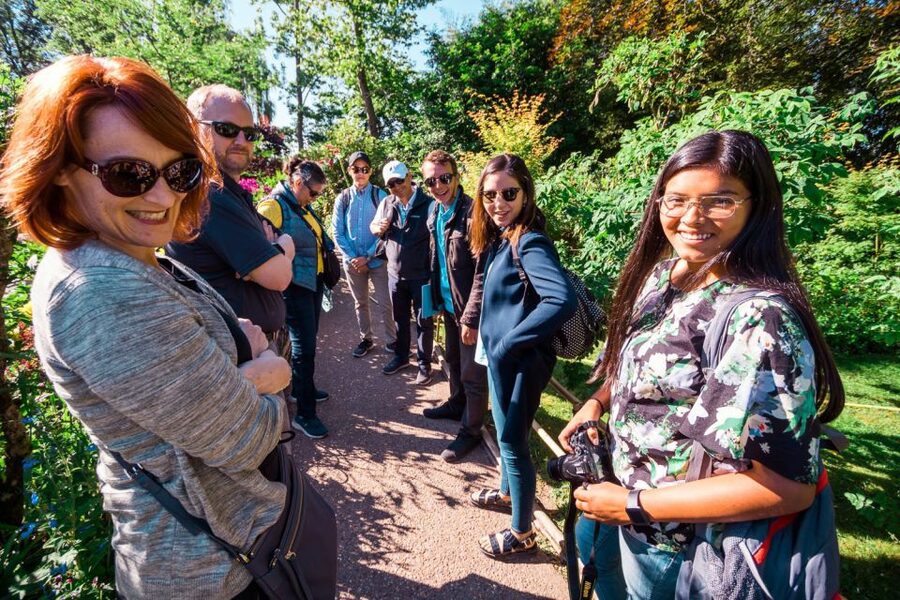
At $153 per person, this is not the cheapest way to reach Giverny. You are paying for round-trip minibus transport, garden admission, access to Monet’s house, a live English-speaking guide, and the ease of joining a planned small-group outing from central Paris.
The value is strongest if you do not want to rent a car or work out the train connection and local transfer yourself. You also avoid the stress of driving out of Paris and navigating the countryside. Several people specifically liked being collected at a clear central point and returned there after the visit.
The price is less compelling if you are comfortable arranging transport independently and want to spend a full day in Giverny. Going on your own can give you more control over lunch, the village, and the time spent at the garden. You would, however, lose the guide’s advice about crowd flow and Monet’s life.
The small-group setting makes the cost easier to justify than a large coach tour. Still, check the group size when booking if vehicle space matters to you. A minibus with six feels pleasant; a full vehicle can be snug.
Practical tips for a better visit
- Choose early if you can: The house and pond are easier to enjoy before large groups arrive.
- Wear shoes for garden paths: You will spend most of the visit outdoors and walking between separate areas.
- Bring a rain layer: Tours run in all weather, and rain can change how long you want to linger outside.
- Plan food ahead: Lunch is not included, and a café stop is not guaranteed.
- Keep your bag modest: A small day bag is easier in the minibus and through the house.
- Ask about the route at the start: Your guide may change the order to handle crowds.
- Save time for the pond: Do not rush through the water garden just to reach the next stop.
- Expect seasonal differences: May is strong for roses, irises, and peonies. October offers fall color and often fewer people.
Who should book this Giverny tour?
I would choose this outing if you have one free half-day in Paris and Monet’s garden is high on your list. It suits first-time visitors who want transport and an introduction to the site without building the day themselves.
It is also a good fit for couples, families with older children, and anyone who prefers a small group to a large bus. The guides are often praised for patience, humor, safe driving, and useful art background. You should be comfortable walking outdoors and accepting a fixed schedule.
I would look elsewhere if you want a leisurely full-day visit, a long meal in Giverny, or extensive time in the wider Normandy area. The tour gives you the essential Monet experience, not an open-ended day in the village.
At 4.8 from 751 ratings, the experience has a strong record, especially for its guides, transport, and garden timing. The fairest way to view it is as a convenient, well-paced introduction rather than a complete Normandy excursion.
FAQ
Where does the tour meet in Paris?
Meet outside La Flamme café at 6 Avenue de Wagram. The café has a black front.
Is hotel pickup included?
No. Hotel pickup and drop-off are not included. You meet the minibus at the stated central Paris location and return there.
How long does the tour last?
The advertised duration is five hours. The schedule includes about one hour each way by minibus, time in the gardens and house, and a short stop at Monet’s grave.
What language is the tour conducted in?
The live tour guide speaks English.
Is transportation included?
Yes. Round-trip transportation by minibus is included.
Are tickets to Monet’s garden included?
Yes. Entry to the gardens and Monet’s house is included.
Does the tour skip the line?
The tour uses a separate entrance for the gardens. Entry to Monet’s house is included, but the house is not described as skip-the-line access, so you may still encounter a slow-moving line inside.
Does the tour run when it rains?
Yes. Tours run rain or shine. Bring suitable clothing since much of the visit takes place outdoors.
Can I cancel the booking?
You can cancel up to 24 hours in advance for a full refund. A reserve-now, pay-later option is also available.
Just listed in Paris
- Chartres Cathedral 5 Hours Tour from Paris with Private Transport★ 4.5 · 49 reviews
- Paris: Giverny & Versailles Small Group or Private Tour★ 4.5 · 49 reviews
- Paris: Louvre photoshoot or Seine bridges Eiffel Tower walk★ 5.0 · 49 reviews
- Paris: Choux Pastry and Chocolate Éclair Making Class★ 4.9 · 50 reviews
- Private tour of the Champagne area, meet local producers and taste their Champagne, start from your hotel in Paris.★ 5.0 · 50 reviews
- Paris Eternelle Notre-Dame Virtual Reality Tour★ 4.5 · 50 reviews
- Normandy D-Day Landing Beaches Private Day Trip from Paris★ 5.0 · 50 reviews
- Disneyland® Paris 1 Day with Round-Trip Train Tickets from Paris★ 4.0 · 50 reviews
Paris Tours, compared.



Versailles Palace and Gardens Full Access Ticket
Read our review →

Eiffel Tower Entry Ticket with Optional Summit Access
Read our review →

Louvre Guided Tour with Reserved Access & Boat Cruise
Read our review →
Moulin Rouge Cabaret Show Ticket with Champagne
Read our review →Browse the lists this tour appears in