
Reviewed · BORDEAUX TOURS
Bordeaux: Cité du Vin Entry Ticket and Wine Tasting
Bordeaux’s Cité du Vin is not a traditional museum of dusty bottles and stern portraits. It is a hands-on trip through the world of wine, with sensory stations, films, sound, and touchscreens covering vineyards, winemaking, trade, culture, and drinking customs. I especially like the well-designed interactive displays and the freedom to move at your own pace.
The included glass of wine and the 360-degree view from the 35-meter Belvedere are excellent finishing touches. The main caution is simple: this place is much larger than it first appears, so a rushed visit can feel thin, while a proper visit may take three hours or more.
Key points at a glance
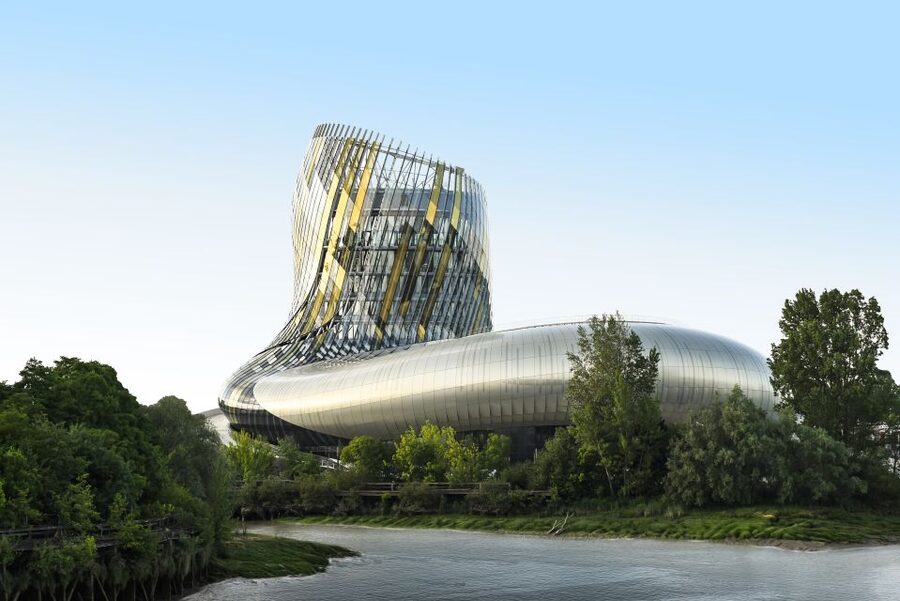
- Eighteen themed spaces: Follow wine from soil and grapes to production, culture, and the finished bottle.
- A digital guide in eight languages: Choose Chinese, Dutch, English, French, German, Italian, Spanish, or Portuguese.
- A tasting with a view: Select one glass from a changing group of about 15 world wines on the 8th floor.
- A flexible route: Scan individual stations and return to areas that are busy or especially interesting.
- A strong choice for beginners: The museum explains wine clearly without assuming you already know the difference between tannin, terroir, and toast.
- Allow real time: You can pass through in roughly 1.5 to 2 hours, but three to five hours is more realistic if you try most activities.
Why the Cité du Vin is different from a standard wine museum
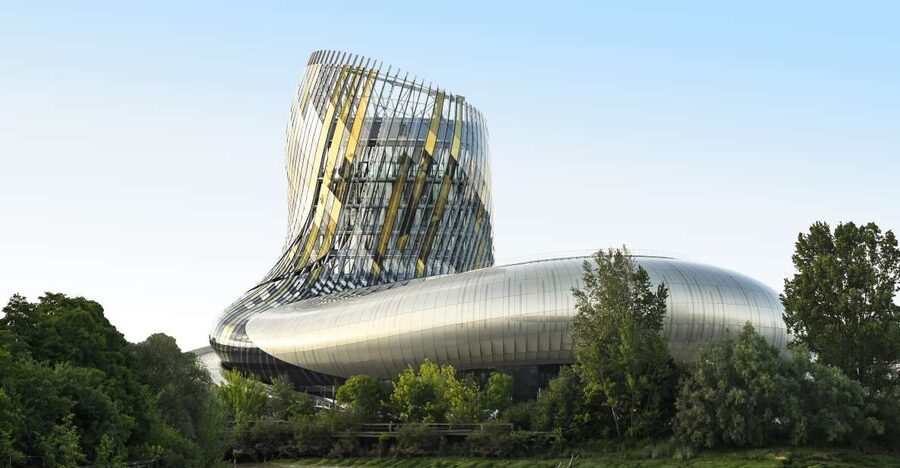
The Cité du Vin focuses on wine as a global subject, not only as a Bordeaux product. You will learn about the region, but you will also see vineyards and traditions from around the world. That broad view matters because it places Bordeaux in a wider story rather than treating it as the entire wine universe.
The permanent exhibition is spread across 18 themed spaces. Each one approaches wine from a different angle. You may move from the physical work of growing grapes to the social role of wine, then to sensory perception, shipping, advertising, and the rituals connected with opening and sharing a bottle.
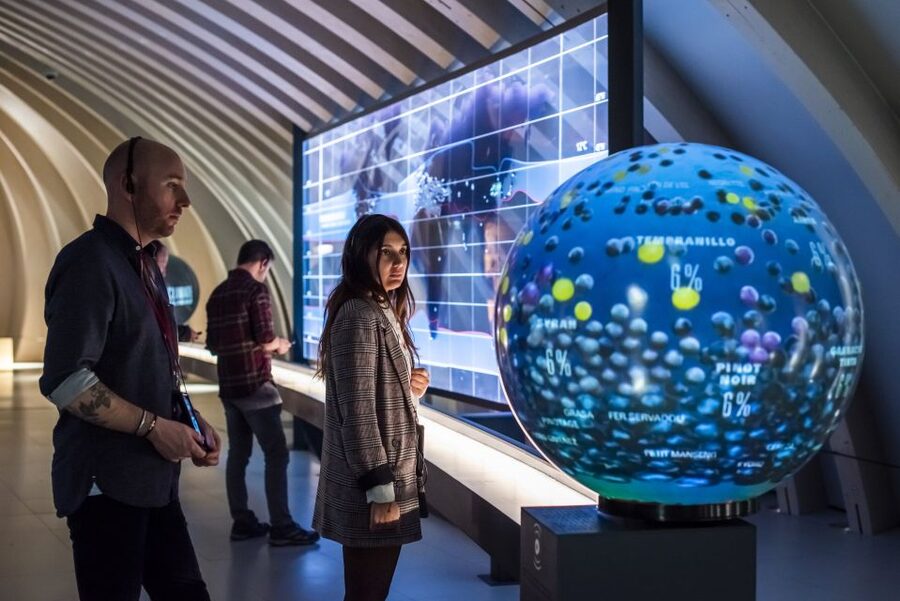
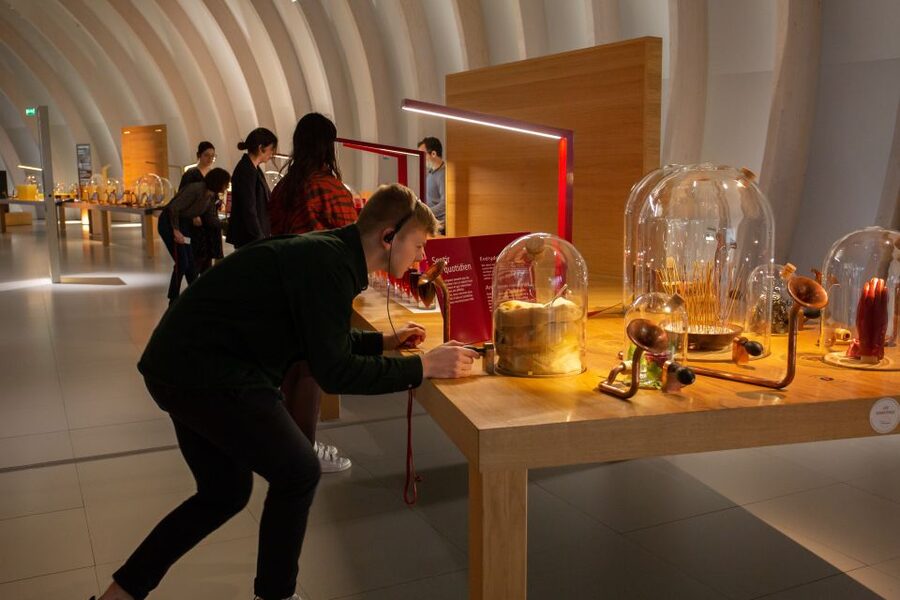
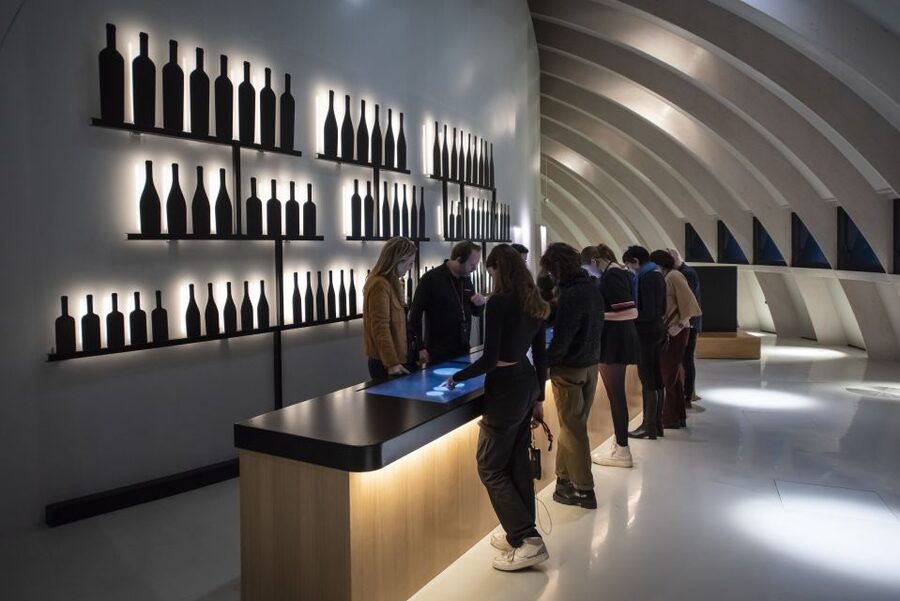
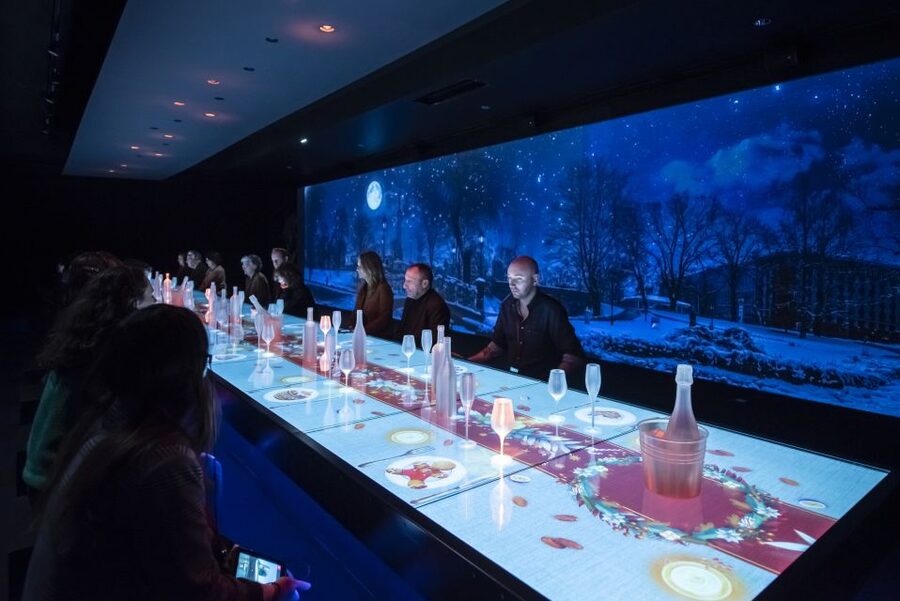
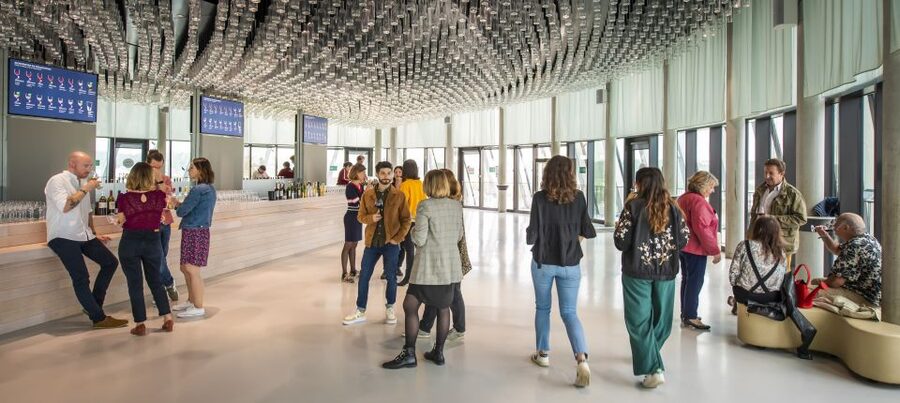
The presentation is modern and active. Large screens, videos, audio, touch-based displays, and scent-focused activities replace long blocks of wall text. If you learn best by doing, this is a welcome change from the usual museum routine.
I also like that you are not forced into one rigid path. You scan the points that interest you with the digital guide, pause when you want, and return later if a station is occupied. That flexibility is useful on busy days, though the scanning system can slow down when several people are waiting for the same station.
More wine tastings in Bordeaux:
- From Bordeaux: Afternoon Saint-Emilion Wine Tasting & snack
★ 4.8 · 1,581 reviews - Medoc or Saint Emilion Wine Tasting and Chateau from Bordeaux
★ 5.0 · 1,415 reviews - Saint Emilion Day Trip with Sightseeing Tour & Wine Tastings from Bordeaux
★ 5.0 · 1,120 reviews
Start on the second floor, not at the downstairs desk
With a prebooked ticket, go directly to the second floor and scan your voucher. You do not need to join the line at the reception desk downstairs. This saves a small but useful bit of time, especially if you arrive when other people are buying tickets.
There is one point to understand: this direct entry does not mean you receive priority over other people already waiting to enter. It simply avoids the ticket desk. Follow the signs upstairs rather than stopping at the first reception area.
Bring your passport or identity card. The practical details are straightforward, and the building is wheelchair accessible. The ticket is valid for one day, with available starting times shown when you book.
The permanent exhibition: wine explained without the usual fuss
Plan on about three hours for a solid visit. You can move more quickly in 1.5 to 2 hours, or spend four to five hours if you want to try nearly every activity and listen to the material in full.
The exhibition works well for people at different levels. If you are new to wine, it gives you a useful base. If you already know Bordeaux, the international focus and sensory sections add a broader frame to familiar subjects.
Vineyards around the world
One of the most useful features is the attention given to vineyards outside France. Wine can seem like a collection of French terms and famous estates when you first encounter it. Here, the subject is opened up to different regions, climates, grape-growing methods, and cultural traditions.
You are not simply memorizing names. The displays help connect the finished drink with the places and decisions behind it. That makes the subject easier to follow and gives you better questions to ask later at a wine shop, restaurant, or château visit.
A few other Bordeaux half-days to compare
- Saint Emilion Half-Day Trip with Wine Tasting & Winery Visit from Bordeaux
★ 4.5 · 1,034 reviews - From Bordeaux: Half-Day Saint-Émilion Tour and Wine Tasting
★ 4.6 · 657 reviews - Bordeaux Wine and Trade Museum Admission Ticket with Wine Tasting
★ 4.5 · 599 reviews - Bordeaux: Vineyards Wine Tasting Half-Day Trip
★ 4.2 · 470 reviews
How wine is made
The museum also traces the winemaking process. You will see how grapes become wine and how many choices affect the final result. The presentation helps explain why production is not just a matter of picking grapes and waiting.
This section is particularly good for beginners because it turns a complicated process into a sequence of understandable steps. I would not treat it as a replacement for a working winery visit, but it gives you useful context before you visit the vineyards around Bordeaux.
The senses and the scent stations
The sensory displays are among the most memorable parts of the museum. You can test how sight and smell affect the way you think about wine, with visual and aromatic elements that make the subject less abstract.
This is also where the Cité du Vin feels most playful. You are encouraged to notice what your senses are doing rather than simply accept a formal tasting vocabulary. Some aromas may seem odd or unexpected, which is part of the point. The station can reassure you that unusual smells in wine are not necessarily imaginary or a sign that you are doing the exercise wrong.
The area can become crowded because several people may want to use the same interactive point. The ability to return later helps, but you should expect a little waiting at popular displays.
History, culture, and the social side of wine
Wine is presented as more than agriculture and chemistry. The exhibition looks at its place in daily life, traditions, commerce, and storytelling. This wider approach is one reason the museum can work even if you are not a serious wine drinker.
You will find enough material to connect wine with people and places, not just labels and rankings. That makes the visit a reasonable choice for a mixed group where one person is fascinated by wine and another is only mildly curious.
The digital guide keeps the visit personal
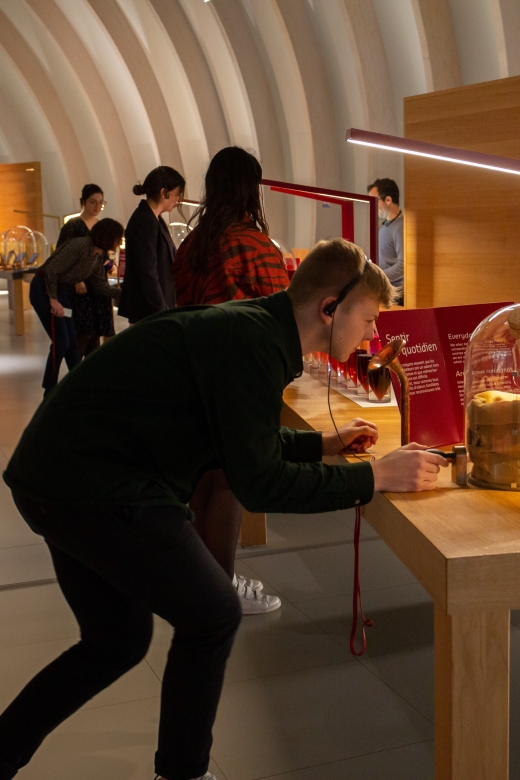
The portable digital guide is available in eight languages: Chinese, Dutch, English, French, German, Italian, Spanish, and Portuguese. That is a real advantage, especially in a museum with a large amount of audio and explanatory material.
You use it at individual stations rather than following one continuous spoken tour. This lets you set your own pace. You can listen carefully to one subject, skip another, and go back when you have more time.
The system is not perfect. At some stations, audio may already be playing for someone else, so you may have to wait before starting. It can also be awkward for a person using a hearing aid if the headphones do not connect properly. If you are visiting with someone who has hearing equipment, ask staff for help early and consider how much of the exhibition can be followed through the visual material.
Still, the guide makes the museum far easier to use than a wall of untranslated text. You can focus on the material in your own language without needing to arrange a separate tour.
Finish on the 8th floor with wine and Bordeaux views
After the exhibition, take the lift to the 8th-floor Belvedere. At 35 meters above the ground, it offers a 360-degree view over Bordeaux and the surrounding area.
The view is not a minor extra. It gives you a chance to pause after the information-heavy exhibition and see the city from above. If you have spent the day walking Bordeaux’s historic center, the change of scale is welcome.
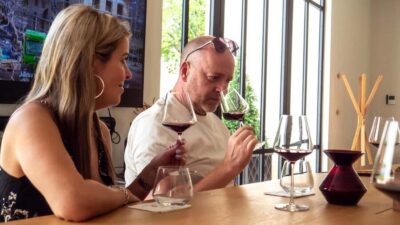
You also receive one glass of wine. The selection changes, with roughly 15 wines available at a time and an international range rather than a promise of one particular bottle. That means the tasting is a pleasant introduction, not a formal flight led by a sommelier.
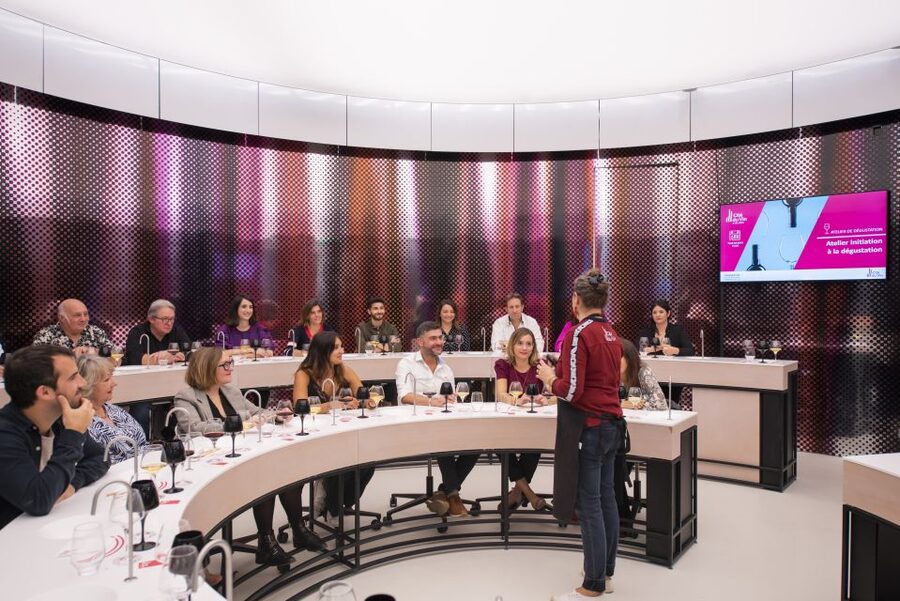
The glass is included with the ticket, but this is not the same as booking a dedicated tasting workshop. If you want instruction, several visitors have found the separate one-hour tasting session worth considering, particularly because it provides more guidance and discussion. The standard ticket is better for a light tasting at the end of a museum visit.
Take your time choosing. The point is not to collect a prestigious label, since the selection changes. It is to finish by connecting the exhibition’s ideas with an actual glass in your hand.
What the $27 ticket is really worth
At about $27 per person, this is not a bargain attraction for a quick look. It becomes good value when you use the museum as a substantial half-day stop.
The ticket includes direct entry, the entire permanent exhibition, the multilingual digital guide, the Belvedere, and one glass of wine. You are not paying separately for each display, and the flexible route means you can stay longer if a subject grabs you.
For a wine enthusiast, the price is easy to justify. You get a broad survey of wine culture, not only a short tasting. For a casual drinker, the value depends on your interest in museums and interactive displays. If you want only a glass with a view, the ticket may feel expensive. If you want to understand Bordeaux and wine before heading into the surrounding region, it makes much more sense.
A separate tasting workshop costs extra. One visit described an added one-hour tasting as about €27 for two people after a museum-ticket discount, but prices and availability can change. Treat that as a possible add-on, not part of the standard admission.
How long should you allow?
I would reserve at least three hours. That gives you time to use the digital guide, try the sensory activities, see the main displays, and reach the Belvedere without racing.
If you have limited time, you can make a shorter visit. Spend about 1.5 to 2 hours on the exhibition, then go upstairs for the tasting and view. You will miss some details, but the flexible layout lets you choose what matters most.
Families should allow extra time. The interactive format can hold the attention of children, and even a baby may find the visuals and movement engaging, but the exhibition is still information-heavy. Older children and teenagers will get more from the sensory and production displays than from simply being led through the building.
Go early if you want a calmer visit. Popular stations can create small bottlenecks, and some exhibits require people to take turns. The museum’s open layout helps, but patience is useful.
Places to visit after the exhibition
The Cité du Vin has more than the permanent exhibition. You can browse the boutique, visit the wine cellar, use the reading room, or stop at one of the restaurants.
A restaurant on the 7th floor offers a panoramic setting, giving you another reason to stay in the building after the museum. The wine cellar has a broad international selection, which is useful if the museum has introduced you to regions or bottles you want to explore further.
The boutique is a practical final stop for gifts and wine-related books or objects, though you should not feel obliged to buy anything. The reading room offers a quieter change of pace after the bright screens and interactive stations.
Access to these areas is included as part of the visit, but food, drinks beyond the included tasting, and purchases are not included.
Who will enjoy this most?
I would recommend the Cité du Vin to:
- People visiting Bordeaux for the first time
- Wine beginners who want clear explanations
- Experienced drinkers who want a global view beyond Bordeaux
- Couples and families who prefer active museums
- Anyone planning a château or vineyard visit afterward
- Visitors who need an indoor plan for part of the day
It is less suitable if you dislike digital exhibits, audio guides, or museums that require standing and moving between stations. Seating may not always be plentiful, so anyone who finds long periods on their feet difficult should plan a slower pace and ask staff about places to rest.
The museum is also not a substitute for a traditional tasting led by a wine professional. The included glass is a pleasant conclusion, but the separate workshop is the better choice if your main goal is to compare wines and learn tasting technique.
A few practical tips before you go
- Start upstairs: Scan your voucher on the second floor instead of waiting at the downstairs ticket desk.
- Bring identification: A passport or ID card is listed as required.
- Choose your guide language: Audio is available in Chinese, Dutch, English, French, German, Italian, Spanish, and Portuguese.
- Leave room in your schedule: Three hours is a sensible target, and four to five hours is possible.
- Return to busy stations later: The exhibition does not require you to follow one fixed route.
- Check holiday hours: On December 24, the Cité du Vin closes at 4 PM.
- Consider the workshop separately: The standard ticket includes one glass, not the more extensive tasting sessions.
Should you book the Cité du Vin?
Yes, if you want more than a quick Bordeaux wine tasting. The Cité du Vin gives you a clear introduction to winemaking, sensory perception, and wine culture around the world, then rewards you with a glass and a fine view from the Belvedere.
I would book it especially before a vineyard day. You will arrive at the château country with a better grasp of what you are seeing and tasting. If your schedule is tight, choose the museum only when you can spare at least two hours. And if wine itself is your main interest, look at the separate tasting workshop rather than expecting the included glass to provide a full lesson.
For most visitors, the $27 ticket earns its keep through time, variety, and the freedom to explore at your own speed. Just do not treat it as a one-hour stop. The Cité du Vin rewards curiosity, patience, and a willingness to press a few buttons.
FAQ
Where do I enter the Cité du Vin with this ticket?
Go directly to the second floor and scan your voucher. You do not need to wait at the reception desk downstairs.
Does the ticket provide priority access?
No. It saves you a trip to the ticket desk, but it does not give priority over other people entering the museum.
What does the ticket include?
It includes direct entry, the permanent exhibition with 18 themed displays, the digital guide, access to the 8th-floor Belvedere, and one glass of wine from a choice of approximately 15 wines.
How long does the visit take?
The permanent exhibition takes about three hours for a thorough visit. You can move through it in roughly 1.5 to 2 hours, or spend four to five hours if you explore nearly every interactive section.
Which languages are available for the digital guide?
The guide is available in Chinese, Dutch, English, French, German, Italian, Spanish, and Portuguese.
Are wine-tasting workshops included?
No. The ticket includes one glass of wine, but tasting workshops and temporary exhibitions require separate access.
Is the Cité du Vin wheelchair accessible?
Yes. The experience is wheelchair accessible.
Just listed in Bordeaux
- Bordeaux: Exclusive Private Guided Walking Tour★ 4.6 · 50 reviews
- Bordeaux:Wine Masterclass & Blending workshop with appetizer★ 4.8 · 54 reviews
- From Bordeaux: Essential Morning Tour with Wine Tasting★ 4.8 · 55 reviews
- Full-day Saint-Emilion: Village, Undergrounds and Châteaux★ 4.5 · 55 reviews
- Bordeaux Old Town & Market Local Food with Wine Tastings Tour★ 4.0 · 56 reviews
- Bordeaux: Saint-Emilion Village Day Trip, 2 Chateaux & Lunch★ 4.8 · 57 reviews
- Bordeaux Free Walking Tour (Tips-Based)★ 4.5 · 57 reviews
- The Ultimate Bordeaux Food Tour: Full Meal & Fine Wines★ 4.8 · 61 reviews
Bordeaux Tours, compared.
River Garonne Cruise with Glass of Wine and Canelé
Read our review →
Afternoon Saint-Emilion Wine Tasting & snack
Read our review →
Medoc or Saint Emilion Wine Tasting and Chateau from Bordeaux
Read our review →
Saint Emilion Day Trip with Sightseeing Tour & Wine Tastings from Bordeaux
Read our review →
Saint Emilion Half-Day Trip with Wine Tasting & Winery Visit from Bordeaux
Read our review →

Browse the lists this tour appears in