

Reviewed · PARIS TOURS
Behind the Scenes of the Roland Garros Stadium
Roland Garros is more than a tennis stadium. This tour takes you through the players’ changing rooms, press rooms, presidential stand, and tunnel to the clay court, giving you a look at the French Open beyond the television picture. You follow the route used by players, journalists, officials, and tournament staff.
I like the chance to see the working side of a Grand Slam venue, especially the player corridor and interview areas. I also like the strong tennis focus: guides have shared stories about Nadal, Federer, Graf, French tennis, and the tournament’s many famous names. The main caution is practical: the meeting point can be hard to find, and late arrivals are not admitted.
Key points
- Walk the player route to the court: Follow the corridor leading from the changing rooms toward the clay of Philippe-Chatrier Court.
- See working areas, not just seating: Visit press rooms, interview spaces, changing rooms, and the presidential stand.
- Expect about 90 minutes on foot: Comfortable shoes matter, since the route includes walking and stairs.
- A strong choice for tennis fans: The tour adds context to the stadium you usually see only during televised matches.
- Access can change: Events, covered courts, or stadium activity may make some areas unavailable.
- Plan the arrival carefully: Meet at 1 Av. Gordon Bennett, arrive 15 minutes early, and finish at the Roland-Garros Boutique.
From television court to working stadium
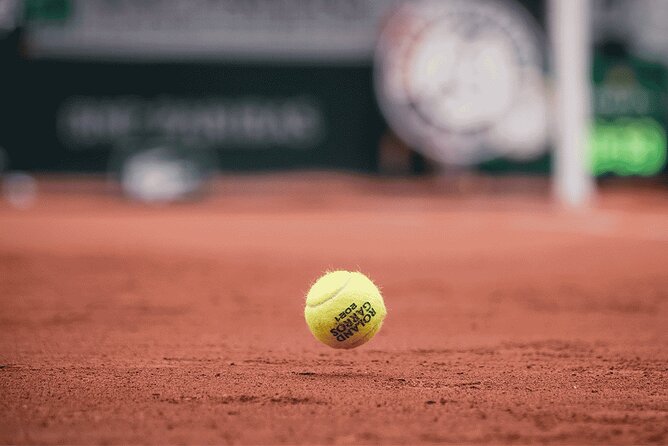
For tennis fans, Roland Garros carries a special pull. The red clay, the long rallies, and the Paris setting are familiar from the French Open broadcast. This guided visit lets you see what the cameras usually miss.
The tour is built around the stadium’s backstage spaces. You are not simply led to a seat and given a few dates. You move through the areas used by players and tournament staff, then trace the route toward the court. That change of viewpoint is the real value.
I find the player corridor especially effective. On television, a competitor appears at the court entrance almost as if by magic. Here, you can see the passage that connects the private world of the changing rooms with the public drama of the match.
The tour also covers the press rooms and interview spaces. These rooms help explain how the French Open operates away from the baseline. After a match, players move from competition to media duties, and this visit shows part of that routine.
The presidential stand adds a different angle. It gives you a glimpse of the formal side of the tournament, while statues, trophies, plaques, and displays help connect the physical site with the players who made it famous.
A few other Paris half-days to compare
- Paris: Louvre Museum Timed-Entrance Ticket
★ 4.6 · 71,977 reviews - Disneyland® Paris 1-Day Ticket
★ 4.6 · 49,412 reviews - Paris: Versailles Palace and Gardens Full Access Ticket
★ 4.6 · 41,579 reviews
The route through Roland Garros

The experience lasts about one hour and 30 minutes, though the actual finish can vary. One review described a tour closer to an hour and 10 minutes, while most of the supplied feedback points to a full, well-filled visit. I would allow at least two hours around the booking time so you are not rushed.
The tour begins at Roland Garros Stadium, at 1 Av. Gordon Bennett in Paris’s 16th arrondissement. From there, the guide takes the group through the available stadium areas.
Changing rooms and player spaces
The changing rooms are among the most anticipated stops. These are areas usually reserved for competitors and tournament personnel, so they offer a more personal sense of the event than an ordinary stadium seat.
You may hear stories about the routines and personalities of famous players. The guide’s storytelling makes a difference here. Several comments praise guides who brought the place alive with stories about Nadal, Federer, Graf, and other major figures. One guide named Lionel was singled out for an interactive approach and strong communication.
The level of energy can vary by guide. Some visitors found their guide warm, funny, and deeply interested in tennis. A small number found the presentation flat or less engaging than expected. That matters because the stadium itself cannot do all the work. The best parts of this visit depend on the guide explaining what you are seeing.
Press rooms and interview areas
The press rooms show another side of the French Open. You can picture players arriving after a match, answering questions, and dealing with the attention that follows a win or loss.
This stop is useful even if you are not a serious tennis expert. It shows how much of a major tournament happens away from the court. If you follow tennis closely, you may enjoy imagining the post-match scenes connected with famous finals and champions.
The tour is conducted in English, though one group was combined with French speakers and led by a guide who spoke three languages. The official offering is English, so you should select that option when booking. In mixed groups, the pace and amount of English explanation may depend on the guide.
Same city, a completely different afternoon:
- Paris: Evening River Cruise with Music
★ 4.4 · 22,721 reviews - Paris: Eiffel Tower Entry Ticket with Optional Summit Access
★ 4.4 · 20,035 reviews - Paris: Eiffel Tower Summit or Second Floor Access
★ 4.3 · 17,248 reviews - Paris: Louvre Guided Tour with Reserved Access & Boat Cruise
★ 4.3 · 16,353 reviews
Presidential stand and central court
The presidential stand offers a look at the stadium from a more formal viewing area. The exact court access can change, but the central court is a major part of the experience when it is available.
Some groups have been able to see or step onto the clay surface, though this should not be treated as guaranteed permission. One guide allowed members of a group onto the court, but the tour’s advertised focus is access to the stadium areas and the route toward the court, not court play or a photo session on the playing surface.
During one visit, an event meant the main court was covered by a platform and photographs were restricted. This is an important point. Roland Garros is an active venue, and some areas may be closed or altered on the day. You should book this for the access and stories, not for a promise of one exact court view.
Why the clay-court connection matters
The tour’s strongest feature is its connection with the actual French Open setting. Roland Garros is not a generic tennis arena. Its identity is tied to clay, and the player route gives you a physical sense of how competitors approach the court.
The visit also includes reminders of the tournament’s champions. Nadal’s plaque receives special attention from many tennis fans, and one visitor valued seeing a name connected with Tony Trabert on the stairs near the court entrance. These small details can mean a great deal if you follow tennis history.
I would not expect an elaborate museum visit. The appeal is more direct: you are walking through the place where the tournament is organized and played. Statues, trophies, and displays add context, but the tour is mainly about restricted spaces and the movement of people through the stadium.
That makes it particularly good for someone who has already attended the French Open and wants to understand what happens outside the public grounds. It also works for someone who has only seen Roland Garros on television and wants a closer look without buying a tournament ticket.
What the guide adds to the experience
The guide is the difference between a pleasant stadium walk and a memorable tour. A strong guide points out details you would otherwise pass, explains the player journey, and connects rooms and corridors with actual tournament moments.
The most successful tours appear to be lively and story-driven. Guides have discussed Nadal’s career, French tennis, the experiences of journalists, and the work required to stage a Grand Slam event. You should expect information about the venue as well as stories about players.
There have also been isolated problems with guide timing and group management. One group began late because the guide and participants were unclear about where to meet. Another account described a guide losing part of the group and failing to wait. These are not the normal expectation suggested by the overall 4.5 rating from 197 reviews, but they are worth bearing in mind.
Stay close to your group, especially around doors and stairways. If you need to stop for a photo or read a display, tell the guide rather than falling behind. The group can contain up to 30 people, which is manageable but not intimate.
Finding the entrance without a scramble
The meeting instructions deserve extra attention. The starting address is 1 Av. Gordon Bennett, 75016 Paris, while the tour ends at the Roland-Garros Boutique at 2 Av. Gordon Bennett.
The stadium grounds may not have obvious signs explaining where a guided tour begins. A security guard at one entrance may not know the details of the tour, and map apps can bring you to a side entrance rather than the correct starting point.
I would arrive at least 20 to 25 minutes early, even though the official instruction is 15 minutes. Go to the stated meeting point first, keep your mobile ticket ready, and allow time to ask for directions. The tour does not accept latecomers, and there is no refund for missing the start.
The visit ends at the stadium shop. The boutique is open from 9:30 to 18:30, and access is available before or after the tour. One supplied account notes a 10 percent merchandise discount, but because that detail is not included in the formal tour information, confirm the current offer when you arrive.
Use the toilet before the tour if possible. The route includes walking and stairs, and access back into the stadium after the guide leaves may not be possible. Public facilities are available across the street in the garden area, but it is easier to plan ahead.
Timing, walking, and changing access
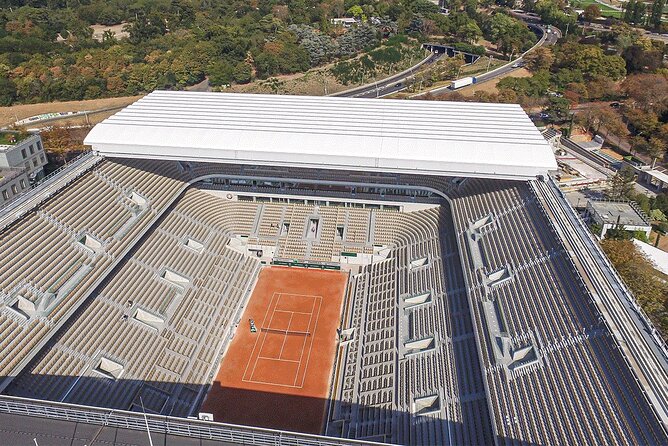
This is a walking tour, not a seated presentation. Comfortable shoes are a smart choice, since you may spend the full 90 minutes moving through corridors and climbing stairs.
Most people can take part, but the tour does not promise that every space will be accessible on every date. Stadium activity can close certain rooms or court areas. An event may cover the main court, limit photography, or redirect the group.
That uncertainty is part of touring a working sports venue. The benefit is that you are seeing Roland Garros as an active place rather than a preserved shell. The tradeoff is that you should not expect every stop to be available every time.
The visit is offered in English and uses a mobile ticket. Food, drinks, and transfers are not included. You will need to arrange your own transport to the stadium and your own refreshment before or after the tour.
The site is near public transportation, which makes it practical from central Paris, though the supplied information does not specify a particular route or travel time. Check your journey on the day and build in a cushion for Paris traffic and station walking.
Is $25.77 good value?
At about $25.77 per person, the tour is reasonably priced for a guided visit to a famous sports venue. The fee includes the guided tour and entrance tickets for the visit, while transfers and food are extra.
I see the value in the restricted access. You are paying to enter spaces that ordinary sightseeing at Roland Garros does not provide, including the changing rooms, press areas, presidential stand, and player corridor.
The value is strongest if you already care about tennis, a particular champion, or the French Open itself. A casual sightseer may find a stadium tour less rewarding than a major Paris museum, especially if the central court is closed or the guide is uninspiring.
The maximum group size of 30 keeps the cost lower than a private tour, but it also means you may not have much individual time with the guide. If you want personal attention or a quiet visit, choose a date with a smaller group if the booking system allows it.
Who should book this Roland Garros visit?
I would recommend it first to tennis fans. You get the most from the plaques, player stories, changing rooms, court route, and behind-the-scenes details if you can place them in the context of the sport.
It is also a good choice for families with teenagers who play tennis. The stadium becomes easier to understand when you follow the player journey from locker room to court and then to the press room.
I would also consider it if you attended the French Open in the past. The public tournament experience shows you the crowds and matches. This visit fills in the backstage side afterward.
If you are visiting Paris with no interest in tennis, think carefully before booking. The tour is not designed as a general architectural tour, and access can be affected by stadium activity. You may enjoy the setting, but the stories and restricted rooms are the main reason to go.
Book it if the player route matters to you
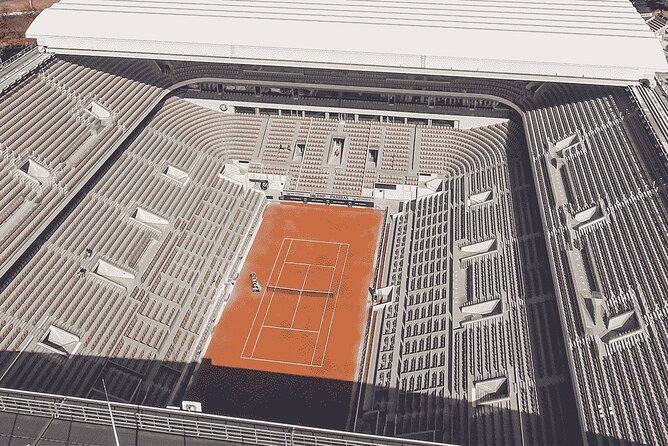
Book this tour if you want to see how Roland Garros works beyond its televised matches. The changing rooms, press rooms, presidential stand, trophies, and corridor toward the clay court give you a fuller picture of the French Open machine.
Go with realistic expectations. The exact route can change, the main court may be covered, photography may be restricted, and the guide’s personality can shape the experience. Arrive early, wear comfortable shoes, stay with the group, and leave time for the boutique.
For a tennis enthusiast, $25.77 is a fair price for access to the stadium’s working spaces and a chance to stand close to one of the sport’s most famous courts. For anyone else, book only if the French Open itself is part of your Paris interests.
FAQ
Where does the Roland Garros tour start?
The tour starts at 1 Av. Gordon Bennett, 75016 Paris, France.
Where does the tour end?
The tour ends at the Roland-Garros Boutique at 2 Av. Gordon Bennett, 75016 Paris, France.
How long does the tour last?
The scheduled duration is approximately one hour and 30 minutes.
Is the tour offered in English?
Yes. The experience is offered in English and uses a mobile ticket.
What areas can I see during the visit?
The tour includes access to the press rooms, changing rooms, presidential stand, and the corridor leading players toward the clay court. Some spaces may be inaccessible because of stadium activity.
How early should I arrive?
You should arrive 15 minutes before the scheduled start. Latecomers will not be accepted, and no refund is available for missed departures.
Just listed in Paris
- Paris: Louvre Mona Lisa Discovery Guided Tour with Ticket★ 4.9 · 48 reviews
- Paris Photoshoot: Eiffel Tower Exclusive Private Experience★ 5.0 · 48 reviews
- 2 hour outdoor group activity in Paris: SAINT GERMAIN★ 5.0 · 48 reviews
- No Diet Club – Unique local Food in Paris! Canal st Martin★ 4.9 · 48 reviews
- Paris Dinner Show Opera Bel Canto★ 4.5 · 48 reviews
- Private Half-Day Guided Tour of Paris★ 4.5 · 48 reviews
- Secrets & Scandals of the Louvre – Limited to 6 Guests★ 5.0 · 48 reviews
- Paris Vintage Tour by Night on a Sidecar with Champagne★ 5.0 · 48 reviews
Paris Tours, compared.



Versailles Palace and Gardens Full Access Ticket
Read our review →

Eiffel Tower Entry Ticket with Optional Summit Access
Read our review →

Louvre Guided Tour with Reserved Access & Boat Cruise
Read our review →