
Reviewed · MARSEILLE TOURS
Beyond Bouillabaisse: Diving into Marseille’s Multicultural Stew
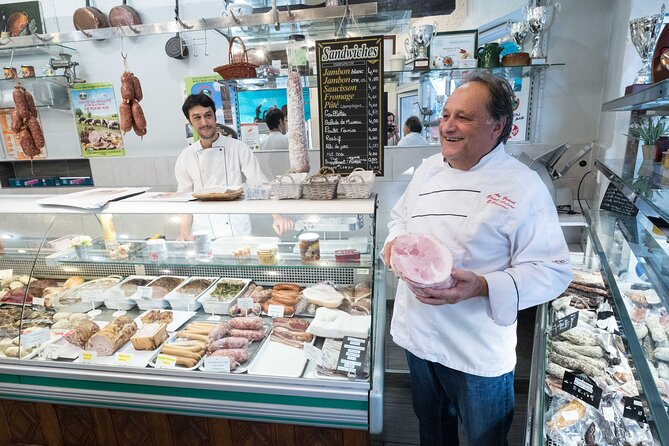
Marseille’s best food story is not limited to bouillabaisse. This small-group walk follows the city’s Algerian, Provençal, North African, Mediterranean, and other immigrant influences through cafés, markets, bakeries, spice shops, and a former sailors’ bar. You eat a great deal, but the real point is learning how people and food have shaped Marseille.
I especially like the seven-person maximum, which gives the walk a friendly, flexible feel. I also like the way the route begins near Saint-Charles station and ends at the Old Port, giving you both a useful city orientation and a good place to continue exploring.
The main consideration is expectation. This is a tour about Marseille’s mixed food culture, not a parade of classic French dishes. One person found the food too heavy on bread and vegetarian bites, with too little seafood, meat, and sit-down dining. You should also arrive hungry and wear comfortable shoes.
What makes this Marseille food walk special
- A food tour built around migration: Algerian specialties, mint tea, spices, market foods, Provençal biscuits, seafood, wine, cheese, and other tastes show how Marseille has changed.
- A practical first-day introduction: The route helps you get oriented between Saint-Charles, La Canebière, Noailles, and the Vieux-Port.
- A truly small group: No more than seven people means more conversation and a better chance to ask your guide for personal advice.
- Two substantial meals plus many tastings: Do not eat breakfast before the morning start. Coffee, pastries, snacks, and full meals add up quickly.
- Guides who shape the experience: Coco, Séverine, Chloé, and Alexis have all led this walk, bringing their own stories and local relationships.
- A useful finish at the Old Port: You do not return to the starting point, so you can continue directly into Marseille’s waterfront district.
Why start at Saint-Charles station
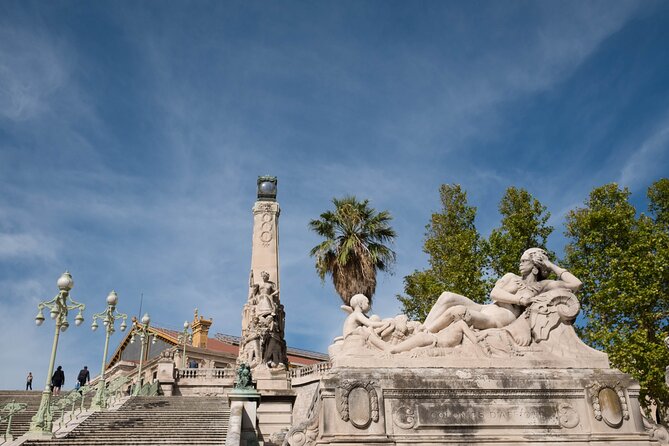
The meeting point is Place des Marseillaises beside Gare de Marseille Saint-Charles, one of the city’s main transport hubs. This is a smart place to begin. If you arrive by train, you are already nearby, and the station gives your guide an easy setting for explaining how Marseille connects France with North Africa and the wider Mediterranean.
The first hour uses food to introduce the city’s migratory past. An Algerian delicacy sets the tone: you are not simply being handed a snack, but being shown how Marseille’s cooking has been shaped by arrivals, trade, family businesses, and neighborhood life.
This beginning also signals that the tour will not follow the usual postcard version of Marseille. You will hear about the city through the people who eat, sell, cook, and share food here. That is far more useful than a short list of famous dishes.
If you are coming from a cruise ship, plan your transport carefully. One group had trouble with a taxi that dropped them more than two miles from the meeting point. The tour did wait for the late arrival, but you should not rely on that. Confirm that your driver understands Place des Marseillaises, not simply Marseille’s port area.
A few other Marseille half-days to compare
- Calvi: Introduction to Diving Dive with an Instructor
★ 4.8 · 112 reviews
Saint-Vincent de Paul and the case for arriving hungry
From the station, the walk continues to Église Saint-Vincent de Paul, also known as the Réformés church. You spend about half an hour here, combining a look inside Marseille’s grand Gothic church with a stop at a traditional café.
The food at this point may be simple, but it gives the morning a pleasant rhythm. Provençal biscuits and coffee make a natural introduction to the region’s everyday tastes. One useful tip is repeated often: skip breakfast. The coffee and pastries arrive early, and the later food is generous.
I like this stop because it prevents the tour from becoming a series of hurried bites. You have a chance to sit, talk with your guide, and let the setting add context. The church also provides a change of pace after the station and before the markets.
This is not a formal architecture tour, so do not expect a long lecture on every detail of the building. Instead, the church works as a short cultural pause within a food-focused morning.
La Canebière, spices, and Marseille in motion
La Canebière is Marseille’s best-known boulevard, stretching toward the Old Port. The route spends about an hour in this central corridor, looking at the city’s public face while seeking out food shops that many visitors would miss.
A colorful spice shop and a market are key parts of this section. For me, this is one of the most useful elements of the experience because spices tell you a great deal about a port city. They point to cooking traditions carried across borders, as well as the ordinary shopping habits of local families.
You may taste ingredients here, but the value is also visual and practical. Your guide can explain what unfamiliar products are used for and how they fit into Marseille’s many food traditions. The tour is particularly helpful if you are curious about North African or other non-French cooking but do not know where to start on your own.
The central location can feel busy, and the group spends much of this part on foot. Keep your belongings secure in crowded areas and wear shoes suited to several hours of walking. The route does include regular stops for food and conversation, but it is not a seated tasting menu.
Noailles, the belly of Marseille
Marché de Noailles is where the tour’s main idea becomes easiest to understand. This neighborhood is often called the belly of Marseille, and its food stalls reflect the city’s connections with Algeria, Morocco, Tunisia, the Comoros, the wider Mediterranean, and Provence.
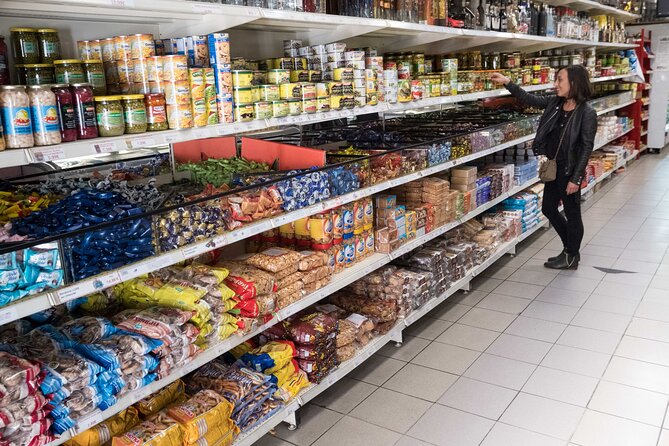
The hour here is about browsing, smelling, tasting, and listening. Expect food stalls, ethnic grocery shops, unusual fruits, flowers, spices, salts, and other products that can be hard to interpret without help. One especially memorable stop for some groups has been mint tea in a side shop, a small experience that shows how a drink can open a door into a neighborhood’s culture.
Do not expect every item to be polished or familiar. The appeal is working-class, local food rather than fine dining. One person described the food as mediocre, ordinary fare, while still enjoying the group experience. Another felt there were too many breads and vegetarian items and wanted more meat and seafood.
That difference matters. If you want elegant restaurants, a parade of French classics, or carefully plated dishes, this may not be your ideal food tour. If you want to understand how people actually shop and eat across Marseille’s communities, Noailles is likely to be the strongest part of the route.
Same city, a completely different afternoon:
- Marseille: City Sightseeing Hop-On Hop-Off Bus Tour
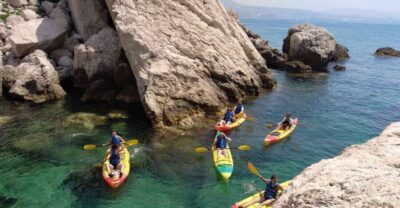
★ 3.8 · 2,820 reviews - Marseille: Côte Bleue Calanques Half-Day Kayak Tour
★ 4.7 · 877 reviews - Marseille Food Tour – Full Meal of Local Tastes by Do Eat Better
★ 5.0 · 530 reviews - Marseille: Calanques National Park Guided Hike with Picnic
★ 4.9 · 516 reviews
Two full meals, not just token samples
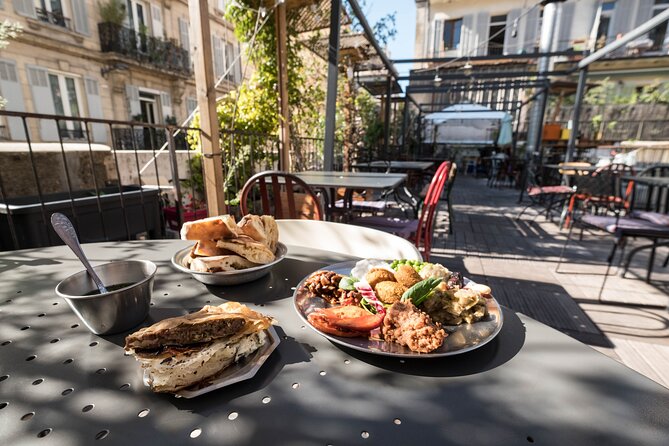
The tour promises two full meals during its five-and-a-half-hour route, along with the coffee, pastries, biscuits, market food, drinks, and smaller tastings. The total amount can be substantial. Several people found themselves very full by the end, and one nearly had to stop eating.
This makes the $160 price easier to assess. You are paying for a long guided walk, a maximum group size of seven, a large amount of food, drinks, and access to small businesses you might not locate alone. You are also paying for interpretation: your guide explains the link between food, immigration, architecture, neighborhoods, and daily life.
Still, the value depends on what you count as a meal. The food is spread across the route rather than presented as two conventional restaurant sittings. One critical account felt that the amount of food was not worth the cost, while most of the available ratings are very positive, with 98 percent recommending the experience and a five-star score from 193 ratings.
I would book it for the stories and access as much as for the food. If your only goal is the greatest possible quantity of seafood or the most traditional Provençal menu, spend the money elsewhere. If you want a guided introduction to Marseille’s food communities, the price is more defensible.
Walking from Noailles to the Old Port
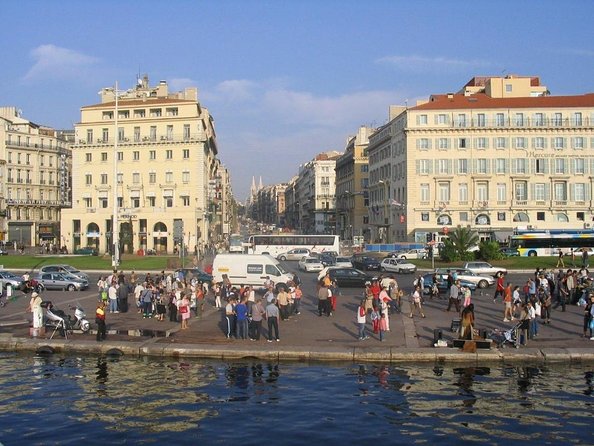
The route finishes at the Vieux-Port, Marseille’s boat-filled harbor. About an hour is devoted to the port’s history, followed by an apéro in a former sailors’ bar.
The apéro is an important local custom rather than just another drink stop. It gives the group time to sit, talk, and reflect on the neighborhoods you have crossed. After the markets and shops, the harbor offers a broad, familiar view of Marseille and a satisfying sense of arrival.
Ending here is practical. You can continue along the waterfront, find lunch or dinner, visit nearby sights, or return to a cruise ship by taxi. The tour does not return to Saint-Charles, so keep that in mind when planning your afternoon. A cruise passenger had a guide help arrange a taxi back to the ship, but you should allow extra time and confirm your own port transportation.
The ending also makes this a good first-day activity. Your guide can suggest places to eat later, and you finish with a better sense of which districts you want to revisit.
The guides make a major difference
The named guides associated with this walk include Coco, Séverine, Chloé, and Alexis. Their styles may differ, but the strongest pattern is clear: the guide is central to the experience.
Coco is praised for making the walk feel like time spent with a friend, while also explaining food, architecture, festivals, and local customs. Séverine is described as warm and adaptable, with strong relationships at the places visited. Chloé has been especially appreciated for explaining the connection between immigration and Marseille’s changing identity. Alexis has also been singled out as a major strength of the day.
That personal element matters because this is not a rigid museum route. Guides may adjust the pace, explain unfamiliar foods, answer questions, and help you think about the city beyond the next tasting. One private group had tastings modified to suit its preferences, though you should not assume every request can be accommodated.
The strongest guides also help after the tour. Several people received restaurant suggestions for the rest of their stay. This is one reason I recommend taking the walk early in your visit, not on your final day.
What to bring and how to pace yourself
Wear comfortable walking shoes. The route covers several neighborhoods, and the tour lasts about five and a half hours. It is broken up by food, sitting, and conversation, but you will still spend a meaningful part of the day on foot.
Arrive with an empty stomach, but do not treat the experience as a race. The point is to notice what you are eating and ask questions. If you have dietary preferences or restrictions, communicate them when booking and again at the start, since the published information does not promise a specific dietary program.
English is the offered language. Most people can participate, and service animals are allowed. The route is near public transport, but the exact level of step-free access is not specified, so anyone with mobility concerns should ask the provider before booking.
The activity depends on good weather. If poor weather causes cancellation, you are offered another date or a full refund. The same applies if the minimum number of participants is not reached.
Who should book Beyond Bouillabaisse
I would recommend this walk to first-time visitors who want food and city orientation in one outing. It suits curious eaters, couples, families with adult children, solo visitors who enjoy meeting a small group, and cruise passengers with enough time away from the ship.
It is especially good for you if the phrase Marseille beyond the postcard sounds appealing. You will see ordinary food shops, immigrant neighborhoods, markets, cafés, and a harbor bar, while learning why the city tastes different from other parts of France.
I would hesitate if you want a classic French food itinerary centered on bouillabaisse, cheese courses, high-end restaurants, or abundant seafood. I would also think twice if you dislike bread, vegetarian food, unfamiliar ingredients, or long walks.
Should you book it?
Book it if you want a generous, people-centered introduction to Marseille and are happy to let the city’s many cultures guide the menu. The small group, strong guides, useful restaurant tips, and route from Saint-Charles to the Old Port give the experience real practical value.
Skip it if you want a tightly controlled tasting menu or a traditional French-food checklist. For everyone else, take it early in your stay, wear good shoes, skip breakfast, and leave the afternoon free for a slow walk around the Vieux-Port.
FAQ
How long is the Beyond Bouillabaisse tour?
The experience lasts approximately five hours and 30 minutes.
How many people can join the tour?
The group is limited to a maximum of seven participants.
Where does the tour begin and end?
It begins at Place des Marseillaises beside Gare de Marseille Saint-Charles and ends at the Old Port of Marseille. It does not return to the original meeting point.
Is the tour offered in English?
Yes. English is the listed language for this experience.
What food and drink are included?
The tour includes two full meals, along with multiple tastings such as an Algerian delicacy, Provençal biscuits, pastries, coffee, market foods, and an apéro. The exact dishes can vary.
Can I cancel for a full refund?
Yes, if you cancel at least 24 hours before the local start time. Cancellations or changes made less than 24 hours in advance are not refunded. Weather or minimum-participant cancellations offer a different date or a full refund.
Just listed in Marseille
- Marseille: Frioul Archipelago Catamaran Cruise with Lunch★ 4.4 · 49 reviews
- Marseille: Self-Guided Smartphone Tour by E-Scooter★ 4.7 · 50 reviews
- Cassis National Park E-Mountain Bike Experience with Virtual Guide★ 5.0 · 52 reviews
- Lavender Small-Group Tour In Valensole from Marseille★ 4.5 · 53 reviews
- Provence : Aix en Provence, Cassis and Marseille Private Tour★ 4.5 · 53 reviews
- Marseille : Calanques Catamaran Cruise with Lunch & Wine★ 4.8 · 54 reviews
- Rando-Palmée Getaway Around an island★ 4.0 · 54 reviews
- Aix-en-Provence, Cassis, Marseille – Private Tour From Marseille★ 5.0 · 55 reviews
Marseille Tours, compared.
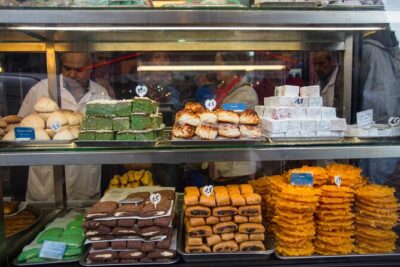
Marseille Food Tour – Full Meal of Local Tastes by Do Eat Better
Read our review →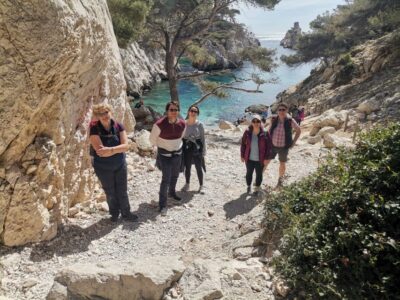
Calanques National Park Guided Hike with Picnic
Read our review →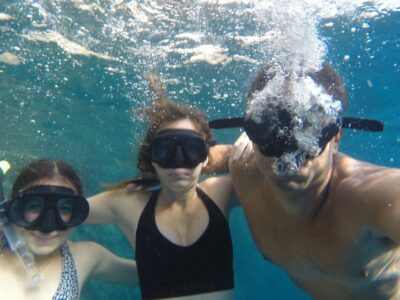
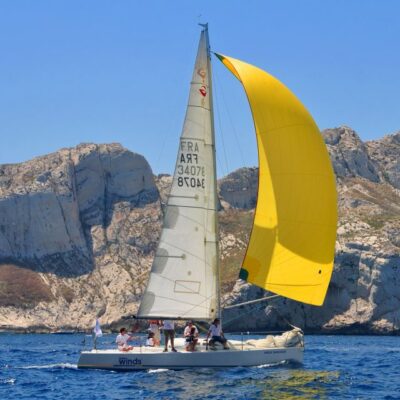
Calanques Sailing Day Trip with Lunch and Wine
Read our review →Browse the lists this tour appears in