Reviewed · CARCASSONNE TOURS
Carcassonne During World War 2
Carcassonne’s medieval walls draw most people uphill, but this tour turns your attention to the streets and memorials where the town faced occupation, repression, and resistance. Paul’s wartime stories connect ordinary buildings with the men and women who lived through the years from 1939 to 1945.
I like two things right away: the use of black-and-white photographs beside present-day places, and the focus on local people rather than only famous national figures. The route also puts Carcassonne into the wider story of Vichy France, the Free Zone, and the liberation. The main caution is group size. A group of 23 proved too large for narrow streets, so ask about the expected number when you book.
Key points to know before you go
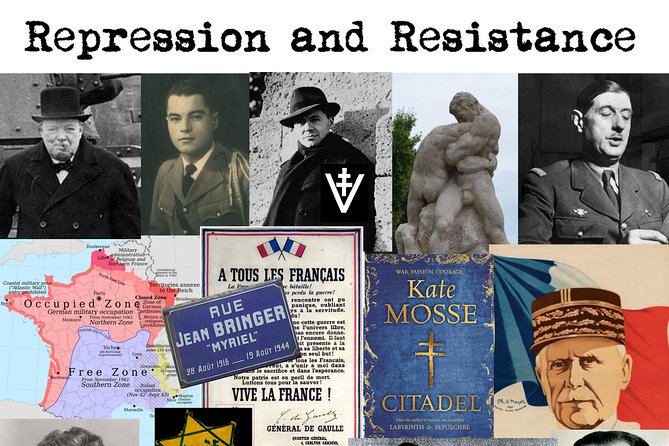
- Local wartime stories: Hear about national heroes, local heroes, collaborators, and people whose names have largely been forgotten.
- A lower-town route: The walk gives attention to la Bastide, an area many people pass through quickly while heading to la Cité.
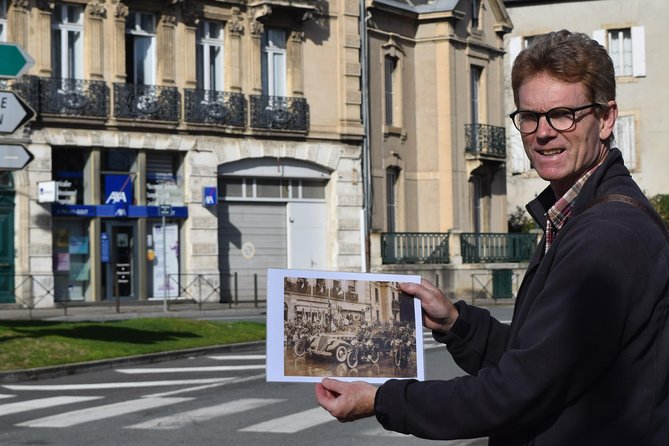
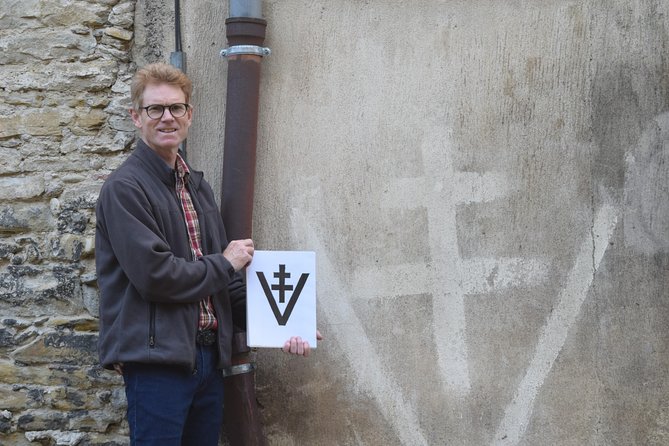
- Archive photographs: Paul uses black-and-white images to connect current streets with their wartime appearance.
- Private format: Only your group participates, although the actual group size should still be confirmed.
- Two-hour morning walk: The tour begins at 9:30 a.m. and lasts about two hours to two hours and fifteen minutes.
- Good value for history fans: At $24.19 per person, the price is modest for a guided, specialized walk with a private guide.
Why Carcassonne’s lower town matters in World War II
The usual Carcassonne visit is built around la Cité, the restored medieval fortress above the modern town. This experience takes a different route. It concentrates on the lower town, or la Bastide, where daily life continued under wartime pressure.
That change of focus is the main reason to choose this walk. You are not simply looking at old stones and hearing dates. You are using present-day streets as clues to a difficult period, then matching them with photographs and stories from the time.
The tour covers the fall of France, the division between occupied and non-occupied zones, and the invasion of the Free Zone. Those subjects can feel abstract in a classroom, but the walking format gives them a local frame. You follow how national decisions affected one town and its residents.
I also appreciate the attention given to moral uncertainty. The story includes resistance and collaboration, but it does not treat the war as a simple tale of good people on one side and bad people on the other. Rationing, pressure from authorities, compulsory labor, fear, and personal survival all form part of the picture.
A few other France half-days to compare
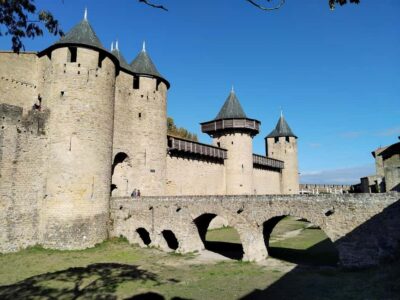
- Carcassonne: Private Guided Tour of the Medieval Fortress
★ 4.5 · 64 reviews - Languedoc: Tour and Tasting at Domaine de Baronarques
★ 4.8 · 64 reviews - Private guided tour of the city of Carcassonne
★ 5.0 · 58 reviews
Meeting Paul at 9:30 a.m.
The tour starts at Brasserie a 4 Temps, 2 Boulevard Barbès, at 9:30 a.m. That morning start works well if you want to keep the afternoon free for la Cité, museums, or a slower lunch in town.
Paul is the named guide, and his approach is central to the experience. He has spent considerable time researching Carcassonne during the war and presents the subject with a mix of careful detail, photographs, questions, and personal stories. His delivery is described as clear and well paced, with enough humor to keep the walk from becoming relentlessly heavy.
That balance matters. The material includes repression, forced labor, betrayal, and purges, so this is not a light sightseeing stroll. Yet the presentation is intended to remain accessible to people with different levels of prior knowledge. If one person in your group is a serious World War II enthusiast and another only has a passing interest, the format should give both something to follow.
Paul also makes room for questions. That is useful here because local wartime history raises difficult issues. You may want to ask about a person mentioned in a photograph, the difference between resistance groups, or how events in France affected Carcassonne specifically.
Following the fall of France and the divided country
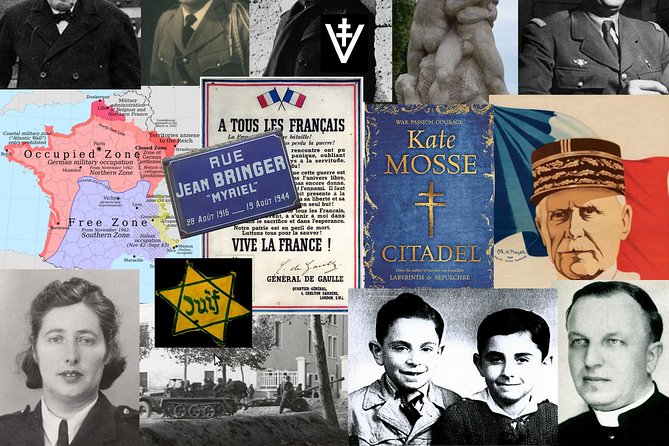
The opening section sets up the political situation after France’s defeat. You learn about the occupied zone and the non-occupied zone, then follow the consequences when German forces invaded the Free Zone.
This background is necessary because Carcassonne’s wartime experience cannot be understood in isolation. The town was part of a country caught between German control, the Vichy government, local administration, and competing forms of French resistance. Paul uses the local setting to explain how those forces overlapped.
I like this structure because it prevents the walk from becoming a string of unrelated anecdotes. The wider national story gives each local person or site a reason for being included. You can see how a policy reached the street level, affecting work, food, movement, and personal choices.
The guide also addresses rationing. That topic may sound less dramatic than battles or sabotage, but it helps explain what occupation felt like for ordinary households. A tour focused only on armed resistance can miss the daily strain that shaped decisions long before anyone took direct action.
Repression, the Milice, and the S.T.O.
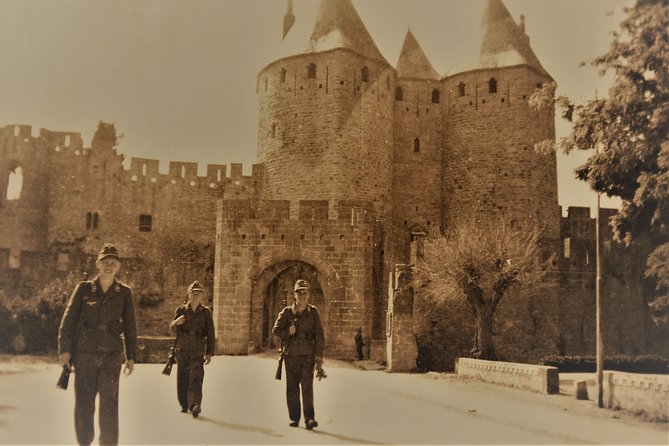
The tour then moves into the machinery of control. The Milice, a French collaborationist force, forms part of the discussion, as does the S.T.O., the compulsory labor system that sent French workers to Germany.
These subjects are important because collaboration was not limited to distant officials. The walk examines how local people and institutions negotiated, supported, resisted, or suffered under wartime authority. You get a more complete picture than a simple account of German occupation alone.
This is also where the tour becomes more somber. Stories of repression and forced labor carry real weight, and the guide does not appear to soften every difficult point. Still, the presentation is described as thoughtful rather than sensational. That tone should suit you if you want history handled with care.
Bring your attention as much as your camera. The value lies in the connection between a place and a story, not in collecting a long series of photographs. The walk uses buildings, streets, plaques, and memorials as prompts for discussion.
Same city, a completely different afternoon:
- Paris: Louvre Museum Timed-Entrance Ticket
★ 4.6 · 71,977 reviews - Disneyland® Paris 1-Day Ticket
★ 4.6 · 49,412 reviews - Paris: Versailles Palace and Gardens Full Access Ticket
★ 4.6 · 41,579 reviews - Paris: Evening River Cruise with Music
★ 4.4 · 22,721 reviews
Resistance told through people, not just organizations
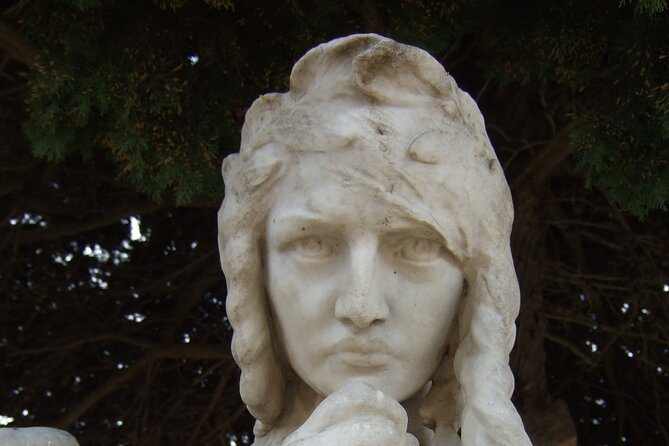
The strongest part of the experience is its human scale. Paul discusses the spectrum of resistance, from well-known figures to local and forgotten heroes. The focus includes both men and women, giving the story more breadth than a list of famous military names.
You may hear about people who took great risks to save another person, pass information, or oppose the occupation in less visible ways. Those individual accounts show why the word resistance covers many different acts, not one single movement with a neat chain of command.
The tour also addresses the spectrum of collaboration. That is an important inclusion. It helps you understand the pressure of the period and the difficult choices facing residents, while also leaving room for accountability after liberation.
The use of black-and-white photographs adds a strong visual layer. Paul can show you an image from the war years, then explain what happened at that location or who was connected with it. This method gives you something concrete to watch for as you walk, and it encourages you to look closely at streets you might otherwise cross without a second thought.
Liberation and the uncomfortable post-war aftermath
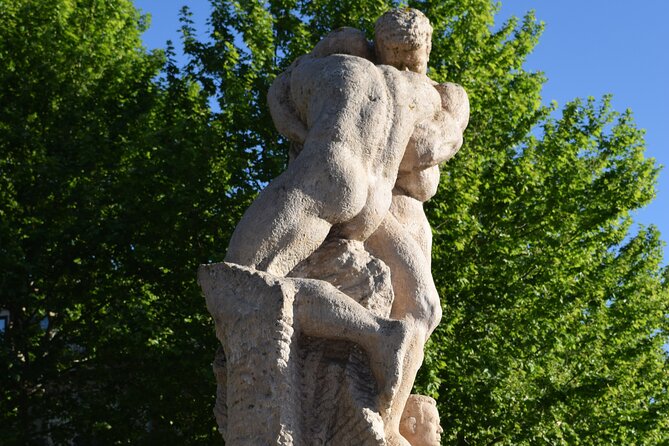
The final part covers liberation and the post-war purges. That ending is valuable because the story does not stop when German control ends. France then had to decide how to respond to collaboration, punishment, revenge, and the question of who had done enough, or too much, to help the enemy.
This section gives the walk a more considered finish. You are not left with a tidy victory story. Instead, you see how the end of occupation opened another period of tension and judgment.
The tour ends at the Resistance memorial on Square Gambetta, listed as 16 Avenue Arthur Mullot. Finishing there gives the walk a clear emotional and historical destination. It also leaves you near a place where you can pause and reflect before moving on to another part of Carcassonne.
Because the end point differs from the starting brasserie, you should be ready for a one-way walk rather than a return to your original meeting place. The route is close to public transportation, which makes the finish practical for continuing your day.
How the walking pace and group size affect the experience
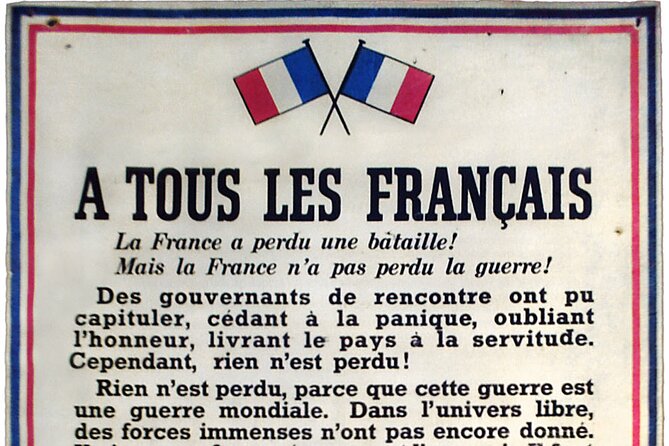
The advertised duration is approximately two hours and fifteen minutes, while the route description gives two hours. In practical terms, plan on a little over two hours, especially if questions or a short coffee stop are included.
The pace appears to be steady rather than rushed. That is important for this subject. You need time to look at photographs, listen to a personal story, and understand how one location fits into the larger wartime sequence.
Most people can take part, and the route is in the town rather than on a demanding trail. Still, this remains a walking tour through streets, including narrow sections. Comfortable shoes will make the morning easier, and you should stay alert when the group pauses near active streets or busy public areas.
Group size deserves special attention. The experience is described as private, meaning only your group participates, but one recorded outing had 23 people. That made it harder for some people to hear and find a safe place to stand. The guide acknowledged the problem and indicated that a limit of 12 would give a better experience.
If you are booking for a small family or a few friends, the private format should be a real advantage. You can hear more easily, ask questions without holding up a large crowd, and make better use of narrow streets. If the provider cannot confirm a small group, bring this issue into your decision.
What $24.19 buys you
At $24.19 per person, this is an inexpensive specialist tour. You are paying for about two hours of guiding, a focused subject, local research, archive photographs, and a route that adds historical meaning to parts of Carcassonne you might otherwise overlook.
The value is strongest if you would normally spend time walking around town without knowing what happened there between 1939 and 1945. A general city tour may point out architecture and major sights, but this experience gives you a clear theme and a specialist guide.
It is also good value for couples, families, or small private groups who want a personal discussion rather than a large scheduled excursion. The low price makes it easy to add alongside a visit to la Cité.
The cost is less compelling if you have no interest in World War II or dislike serious historical subjects. This is not a broad introduction to every period of Carcassonne’s past. It is a focused walk about occupation, resistance, collaboration, liberation, and the difficult years around them.
Who should book this Carcassonne walk
I would choose this tour if you are interested in the French Resistance, Vichy France, occupation history, or the way major events affected ordinary towns. It also suits readers of historical fiction set in wartime France, since the route supplies local context for themes that can otherwise remain distant.
You do not need to be a specialist. The presentation is built to explain the setting and people clearly, and the guide uses questions, photographs, and anecdotes to keep the material approachable.
It is especially useful for repeat visitors. Someone who has already seen la Cité may find more interest in spending a morning in la Bastide, learning why certain monuments or plaques matter. The walk can also help you notice details during the rest of your stay.
I would think twice if your schedule is tightly packed around the fortress. The route begins and ends in different places, and more than two hours is a meaningful part of a short day. The content is serious, too, so choose it because you want this subject, not simply because you need a way to fill the morning.
Booking, weather, and cancellation notes
Confirmation is sent within 48 hours of booking, subject to availability. The tour requires good weather, and if poor conditions cause cancellation, you are offered another date or a full refund.
You can cancel up to 24 hours before the start time for a full refund. Changes or cancellations made less than 24 hours before the local start time are not accepted for a refund.
A minimum number of participants is required. If the tour is canceled because that minimum is not reached, you are offered another date or experience, or a full refund.
Should you book Carcassonne During World War 2?
Book it if you want the town’s wartime story told through real places, local people, and period photographs. Paul’s careful preparation, friendly delivery, and focus on both resistance and collaboration make this more useful than a simple roll call of dates.
The best match is a small group with two hours to spare and a genuine interest in France from 1939 to 1945. Confirm the group size if narrow streets and clear hearing matter to you. At $24.19, it offers strong value, especially for anyone who has already seen the famous fortress and wants to understand the town below it.
FAQ
Where does the tour start?
The tour starts at Brasserie a 4 Temps, 2 Boulevard Barbès, 11000 Carcassonne, France.
What time does the tour begin?
The start time is 9:30 a.m.
Where does the tour end?
The tour ends at the Resistance memorial on Square Gambetta, listed at 16 Avenue Arthur Mullot, 11000 Carcassonne, France.
How long does the walking tour last?
The tour lasts approximately two hours and fifteen minutes. The route description also gives a duration of two hours, so allow a little over two hours.
Is the tour offered in English?
Yes. The tour is offered in English and includes an English-speaking guide.
Is this a private tour?
Yes. It is described as a private activity, with only your group participating.
How much does the tour cost?
The listed price is $24.19 per person.
Can I cancel for a full refund?
Yes. You can cancel at least 24 hours before the local start time for a full refund. Cancellations made less than 24 hours before the start time are not refunded.
Just listed in France
- Paris: Giverny & Versailles Small Group or Private Tour★ 4.5 · 49 reviews
- Half-Day Walking Food Tour in Nice with Lunch★ 5.0 · 49 reviews
- Chartres Cathedral 5 Hours Tour from Paris with Private Transport★ 4.5 · 49 reviews
- Marseille: Frioul Archipelago Catamaran Cruise with Lunch★ 4.4 · 49 reviews
- Paris: Louvre photoshoot or Seine bridges Eiffel Tower walk★ 5.0 · 49 reviews
- Private tour of the Champagne area, meet local producers and taste their Champagne, start from your hotel in Paris.★ 5.0 · 50 reviews
- Bonifacio: sunset catamaran trip and aperitif★ 4.6 · 50 reviews
- Paris: Choux Pastry and Chocolate Éclair Making Class★ 4.9 · 50 reviews
Carcassonne Tours, compared.
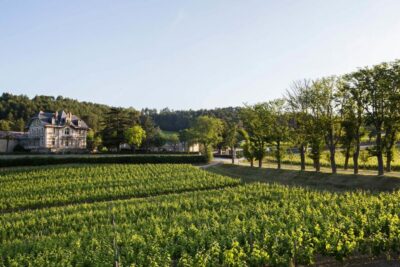
Languedoc: Tour and Tasting at Domaine de Baronarques
Read our review →