
Reviewed · PARIS TOURS
Craft a unique souvenir hat with Lady Gaga’s renowned hatmaker
Making a hat by hand is a wonderfully odd Paris souvenir. At Chapellerie MiniMe Paris, you choose the felt or straw, stretch it over a wooden block, shape it with steam and water, and leave with something you can actually wear. The atelier is also associated with hats made for stars including Lady Gaga, which adds a little show-business sparkle to an otherwise hands-on craft lesson.
I like two things here. First, you do real work rather than simply decorating a ready-made hat. Second, the instructors give you room to make your own choices, from color and shape to ribbon, feathers, charms, and buttons. The main caution is that the workshop can run longer than the advertised three hours, and some decorations cost extra.
Key points to know before you book
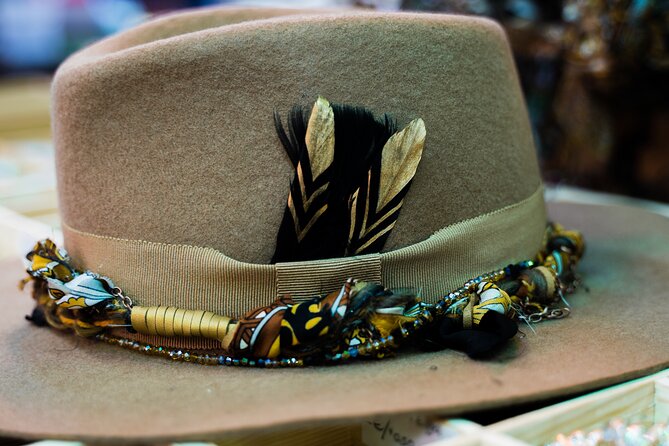
- Choose from about 30 felt colors: Merino wool and rabbit felt are available alongside natural straw and other traditional or modern materials.
- Make the hat from the start: You’ll stretch, steam, hammer, pin, and shape the material over a wooden mold.
- Pick your own classic form: Options can include a fedora, trilby, boater, capeline, or another familiar hat shape.
- Expect a French-led class: English is offered, and instructors have used translation technology effectively, but communication can still take extra time.
- Budget for finishing touches: A basic set of decorations is included, while premium ribbons, charms, feathers, scarves, and designer buttons may add to the bill.
- Plan a loose afternoon: The class is listed at about three hours, but some sessions have lasted four hours or more.
A real Paris hatmaking workshop, not a paint-and-sip souvenir
The appeal here is simple: you make a hat with your own hands. You begin with a flat or partly formed piece of material, then turn it into a wearable object through heat, moisture, pressure, and patience.
That process gives the souvenir meaning. A shop-bought hat may be attractive, but it does not tell the story of standing at a worktable in Paris, pulling felt over a wooden block while an instructor shows you where to press and where to ease off.
The workshop takes place at Chapellerie MiniMe Paris, at 25 Rue de Turbigo in the second arrondissement. You meet the designer and instructor at the atelier, then move through the material selection, shaping, fitting, and decorating stages in one session. The activity ends at the same address, so you do not need to arrange transportation between separate locations.
The connection to celebrity millinery, including hats worn by Lady Gaga, is fun background rather than the whole point. The real value comes from seeing how a hat is built and learning why small changes in tension, steam, and proportion affect the final shape.
A few other Paris half-days to compare
- Paris: Louvre Museum Timed-Entrance Ticket
★ 4.6 · 71,977 reviews - Disneyland® Paris 1-Day Ticket
★ 4.6 · 49,412 reviews - Paris: Versailles Palace and Gardens Full Access Ticket
★ 4.6 · 41,579 reviews
Choosing your material and hat shape
The first decision may be the hardest: what kind of hat do you want to wear after Paris?
You can choose from around 30 colors of merino wool or rabbit felt, along with natural straw and other materials. The range gives you plenty of creative freedom, but it can also slow you down. If you arrive without a general idea, you may spend a while comparing shades and forms.
The classic shapes help narrow the field. A fedora gives you a structured crown and brim. A trilby has a related shape with a somewhat narrower brim. A boater offers a flatter, more graphic look, while a capeline can create a broad, softer silhouette. Other traditional or contemporary forms may also be available depending on the workshop.
The instructor measures your head so the finished hat fits properly. This matters more than it may seem. A hat that looks good on a display stand can feel awkward if the crown is too tight or the brim sits at the wrong angle.
I recommend choosing a shape you can imagine wearing at home, not just one that looks dramatic in the atelier mirror. The best souvenir is the hat that comes out of your suitcase and earns compliments, not the one that stays in a closet because it feels too theatrical.
The wooden block sets the form
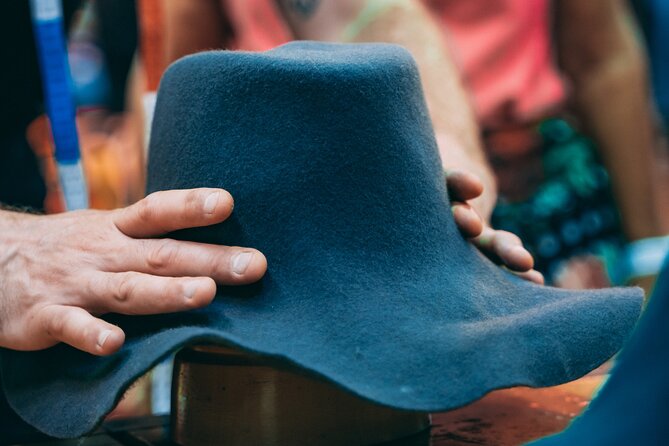
Once you choose your material and style, you select a wooden block that matches the intended shape and your head size. The material is then molded and stretched over it.
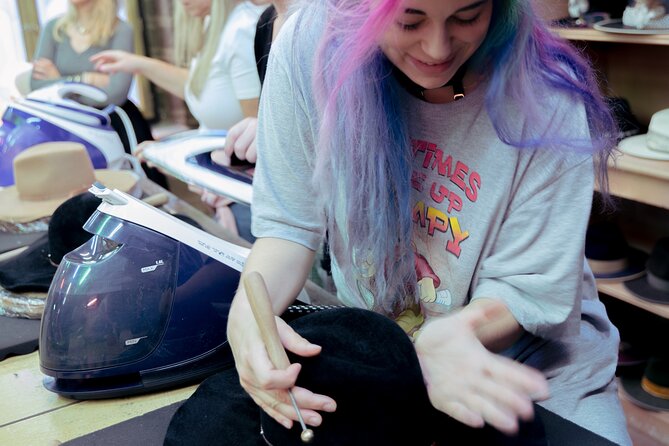
This is where the workshop becomes physical. You use water, steam, hammers, and pins to persuade the felt or straw into place. Stretching the material takes some elbow grease, though it is not described as especially difficult. You are guided through the process, and the instructor steps in when a section needs correction.
Do not expect to sit quietly for most of the class. The work is done around a table, and much of the session is spent standing. A few seats are available, but the activity is active and practical rather than a seated demonstration.
The heat and steam also make the room feel warm. One account describes a session in very hot weather that ran from morning into early afternoon. Bring water, especially if Paris is having a hot spell. Drinks are not consistently part of the experience, although one session included a beverage on arrival.
The physical work is part of the charm, but it is also the main reason this may not suit everyone. If you have difficulty standing for several hours or using your hands repeatedly, ask yourself if the craft process sounds enjoyable before booking.
Working with Fabrice, Marie, Mary, or Sara
The workshop has received warm praise for its instructors, with Fabrice, Marie, Mary, and Sara all singled out in different sessions. The common thread is individual help, patience, and a willingness to rescue a hat when the shaping goes off course.
Fabrice is described as funny and attentive, and one participant appreciated his use of translation technology. Mary has helped with English communication and gave individual attention during a mixed-language class. Marie has also led sessions and worked directly with participants.
The teaching language can vary. The activity is offered in English, but several sessions have been primarily in French. Instructors have used a translation app and Bluetooth speaker to provide instructions. That system can be effective for clear steps, though automatic translation may be awkward or amusing at times.
You should not assume the experience will feel like a fully English-language class from start to finish. If you speak no French, you may need to watch demonstrations closely, ask for repetition, and use the translation tool. Other participants may also help with informal interpretation.
This language issue is not a deal-breaker for most people because the work is visual. You can see how to steam, pull, pin, and press the material. Still, communication affects the pace. A class with several languages may take longer, especially when everyone needs help at the same time.
Same city, a completely different afternoon:
- Paris: Evening River Cruise with Music
★ 4.4 · 22,721 reviews - Paris: Eiffel Tower Entry Ticket with Optional Summit Access
★ 4.4 · 20,035 reviews - Paris: Eiffel Tower Summit or Second Floor Access
★ 4.3 · 17,248 reviews - Paris: Louvre Guided Tour with Reserved Access & Boat Cruise
★ 4.3 · 16,353 reviews
Decorating your finished hat
After the hat has been shaped and set with heat, you move on to the part many people find most enjoyable: the decorations.
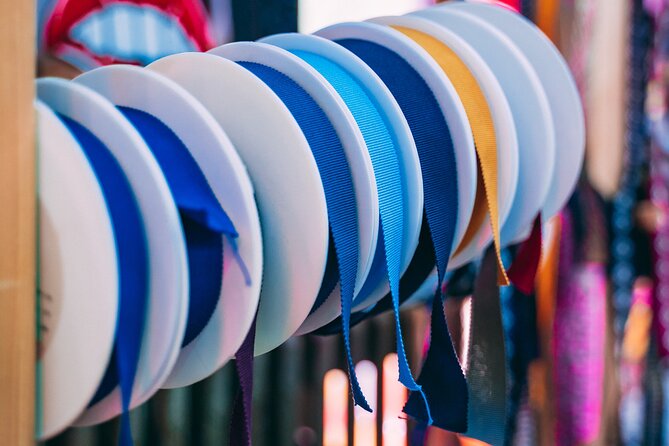
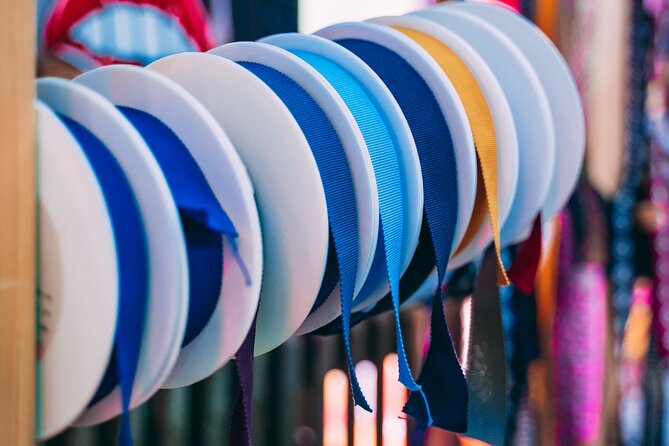
You can select ribbons, feathers, scarves, charms, buttons, and other adornments. The shop has a large display of materials, with choices ranging from restrained and tasteful to highly theatrical. If the first impression feels a little flashy, spend time looking through the full selection. There are plenty of quieter options too.
A basic ribbon and feather are included, according to the practical details provided by past participants. Extra buttons, pins, charms, scarves, and special trims may cost more. Premium designer buttons can be particularly expensive, with some priced above $100 each.
This is the point where the price can rise. Decide in advance how much you want to spend on extras, and ask which pieces are included before you settle on a decoration. You can make an attractive hat without buying every eye-catching item in the room.
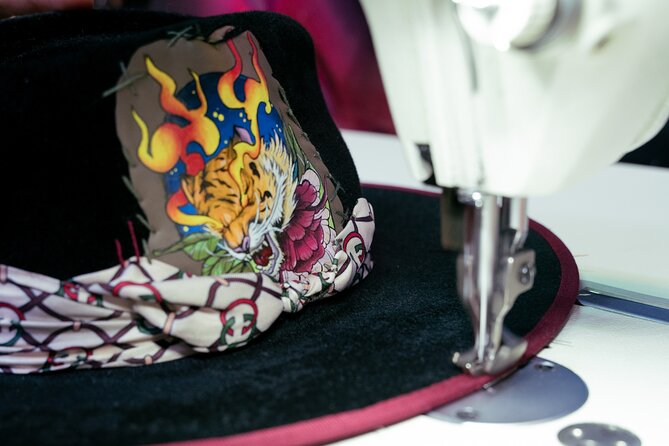
Some sewing may be done by the instructor on a machine, particularly for ribbons, buttons, or other finishing work. You still make the main creative decisions, while the instructor handles tasks that require more specialized sewing equipment.
The final result is personal. Two people working from the same basic materials can produce very different hats. One may choose a simple band and clean brim, while another may add feathers, charms, or a more elaborate trim.
What the studio feels like
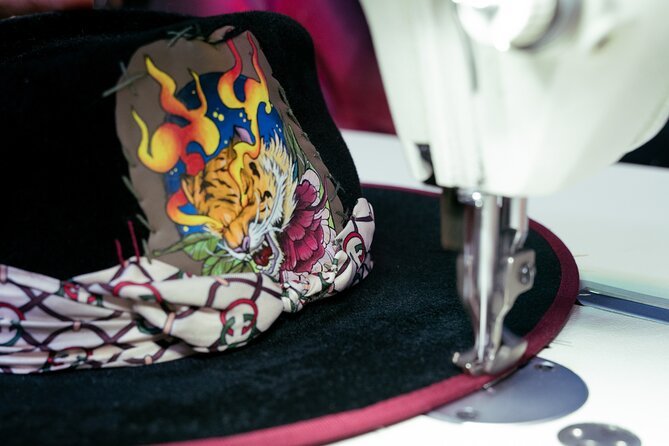
Chapellerie MiniMe Paris is described as a whimsical atelier filled with artwork, unusual objects, and finished pieces. The space itself adds atmosphere to the workshop and gives you plenty to examine while waiting for the next step.
The trade-off is space. The maximum group size is 10, and one session with eight people involved a single small table, one mirror for trying sample hats, and periods of waiting for assistance. The room can become noisy and warm, with cables underfoot and music playing.
That does not describe every class. One participant had the workshop almost entirely to themselves and received very personal attention. Group size can make a major difference, so it is worth keeping your schedule flexible and expecting a less polished setup than you might find at a formal design school.
You are asked to place belongings in lockers during the class. One participant was unhappy that a locker was left open at the end, so I would keep valuables organized and check your compartment before leaving. The practical lesson is simple: bring only what you need, and make sure you have your passport, phone, and wallet before walking out with your new hat.
Is $175.36 a fair price?
The listed cost is $175.36 per person. That is not cheap for a three-hour activity, especially once you learn that some decorative materials are charged separately.
The value depends on what you want. If you are looking for an inexpensive souvenir, this is the wrong choice. A scarf, postcard, or ready-made hat will cost less and require no physical effort.
If you want a personal object plus a craft lesson, the calculation improves. You receive instruction, materials for the basic hat, use of the equipment, and a finished piece to take home. The work also gives you an experience that cannot be repeated by simply buying something in a boutique.
Past pricing has varied, and one older session was remembered as unusually good value. Current pricing is higher, so treat that older figure as historical rather than a guide to what you will pay now.
The biggest financial warning is decoration. Ask exactly what the base fee includes before choosing luxury buttons or elaborate trims. You can keep the final cost close to the advertised amount if you choose the included options, but the shop offers enough tempting additions to make overspending easy.
Allow more than three hours
The advertised duration is about three hours. In practice, the workshop may take longer.
Several factors affect the timing: the number of participants, the mix of languages, how quickly everyone chooses a style, the amount of help needed during shaping, and whether you pay for extra finishing work. Some sessions have lasted four hours, including one that ran from 9 a.m. to 1 p.m.
I would not book this on a tight schedule between a timed museum entry and a dinner reservation. Leave a generous buffer afterward. A class that runs late is less stressful when your next plan is simply an evening stroll.
The experience is booked, on average, 38 days ahead, so reserve early if your Paris dates are fixed. Confirmation is provided at booking, and the activity requires a minimum number of participants. If the minimum is not met and the session is canceled, you are offered another date or experience, or a full refund.
Free cancellation is available up to 24 hours before the start time. Changes or cancellations inside that window are not refunded, so keep that deadline in mind when arranging a busy Paris schedule.
Who will enjoy making a hat?
This is a strong choice for creative people, fashion fans, couples, families with older children, and anyone who prefers a hands-on activity to another sightseeing stop.
It works especially well for a parent and child or two friends who want matching memories without making identical hats. One family returned years later because a child had outgrown a much-loved hat made during an earlier visit. That tells you something important: the finished item can have a life beyond the trip.
The class is also good for people who want a useful souvenir. With a sensible choice of shape and color, your hat can become practical clothing rather than a decorative object that stays packed away.
Children must be accompanied by an adult. Most people can participate, but the work involves standing, stretching, steam, and manual effort. This is not a passive demonstration.
I would be cautious about booking it for someone who dislikes making decisions, gets frustrated by slow handwork, or wants a tightly timed activity. The class asks you to choose, adjust, wait, and try again. That is precisely what makes it satisfying for the right person.
Getting to Rue de Turbigo
The meeting point is 25 Rue de Turbigo, 75002 Paris, and the atelier is near public transportation. You meet the instructor directly there, and the activity returns to the same point at the end.
Because the workshop can overrun, avoid assuming you can cross Paris immediately afterward. The central location makes it easy to continue sightseeing later, but your schedule should allow for an unhurried finish, photographs, packing the hat, and any final purchases.
Take a small bag or leave room in your day bag for the finished piece. You will leave wearing it or carrying it, and a newly shaped hat is not always easy to compress without damaging its form.
Should you book this Paris hatmaking experience?
Book it if you want to create something personal, enjoy learning through your hands, and can accept a warm, busy atelier with French-led instruction and a flexible finish time.
I would book it for a memorable Paris afternoon, a family activity, or a special occasion with someone who likes fashion and craft. I would skip it if your budget is strict, your schedule is packed, or you are uncomfortable with possible extra charges for decorations.
The strongest reason to go is that you do not simply buy a Paris souvenir. You shape one, make mistakes, fix it, decorate it, and take home the result. Just bring patience, water, a little elbow grease, and a clear limit for add-ons.
FAQ
Where does the hatmaking workshop take place?
The workshop takes place at Chapellerie MiniMe Paris, located at 25 Rue de Turbigo, 75002 Paris, France.
How long does the experience last?
The listed duration is approximately three hours. Some sessions have lasted four hours or longer, particularly when extra finishing work or translation is involved.
What types of hats can I make?
Available styles can include a fedora, trilby, boater, capeline, or another classic or contemporary shape selected with the instructor.
What materials can I choose from?
You can choose from about 30 colors of merino wool or rabbit felt, natural straw, and other traditional or contemporary materials.
Is the workshop offered in English?
English is offered, but some instructors primarily speak French. Translation technology has been used to explain the process, and communication may take extra time in a mixed-language group.
Are decorations included in the price?
Basic decorations, including a ribbon and feather, have been included in some sessions. Additional ribbons, feathers, charms, scarves, buttons, and other decorations may cost extra, so confirm the included options before choosing.
How many people can join the class?
The maximum group size is 10 participants.
Can children take part?
Children may participate when accompanied by an adult. Most people can take part, but the class involves standing and hands-on work with steam, water, hammers, and pins.
What is the cancellation policy?
You can cancel up to 24 hours before the start time for a full refund. Cancellations or changes made less than 24 hours before the experience are not accepted for a refund.
Just listed in Paris
- Paris: Giverny & Versailles Small Group or Private Tour★ 4.5 · 49 reviews
- Chartres Cathedral 5 Hours Tour from Paris with Private Transport★ 4.5 · 49 reviews
- Paris: Louvre photoshoot or Seine bridges Eiffel Tower walk★ 5.0 · 49 reviews
- Private tour of the Champagne area, meet local producers and taste their Champagne, start from your hotel in Paris.★ 5.0 · 50 reviews
- Paris: Choux Pastry and Chocolate Éclair Making Class★ 4.9 · 50 reviews
- Paris Eternelle Notre-Dame Virtual Reality Tour★ 4.5 · 50 reviews
- Normandy D-Day Landing Beaches Private Day Trip from Paris★ 5.0 · 50 reviews
- Disneyland® Paris 1 Day with Round-Trip Train Tickets from Paris★ 4.0 · 50 reviews
Paris Tours, compared.



Versailles Palace and Gardens Full Access Ticket
Read our review →

Eiffel Tower Entry Ticket with Optional Summit Access
Read our review →

Louvre Guided Tour with Reserved Access & Boat Cruise
Read our review →