Reviewed · BERGERAC TOURS
Dordogne Day Tour : Prehistory and The Art of the Caves from Sarlat
The most striking part of this Dordogne day is the contrast between real prehistoric caves and Lascaux IV, a painstaking modern copy of the famous painted cave. You begin with the museum, see how early humans lived, then move into cliff shelters and underground art. By day’s end, the past feels less like a museum subject and more like a place you can picture.
I like the small group, limited to eight people, and the way guides such as Benoît, Martin, Anne, Florence, Marion, and Miriam bring order to a huge amount of material. I also like that entrance fees are included, so you can focus on the sites instead of juggling timed tickets. The main drawback is language: English tours inside Lascaux IV are limited, and some cave explanations may be in French.
Key points to know before booking
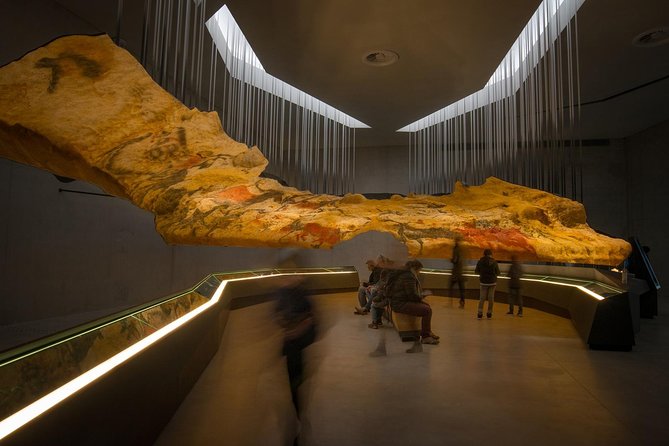
- Lascaux IV is a replica, not the original cave: You see the paintings in a carefully made reconstruction, with a modern museum complex around it.
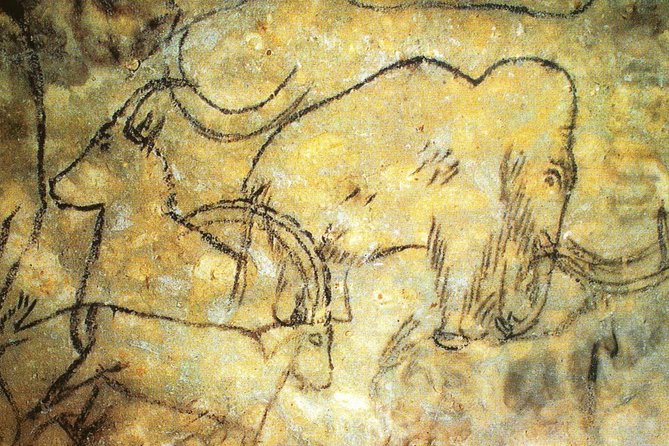
- Rouffignac may be the day’s most powerful cave visit: Several outings include a small train ride into the real cave, with prehistoric drawings and engravings.
- The Prehistory Museum comes first for a reason: It gives you the timeline and background needed to understand the caves.
- The group is capped at eight: That makes it easier to ask questions and stay connected to your guide.
- Bring a warm layer: Cave temperatures are about 13°C, or 56°F, even when the Dordogne day is warm.
- Meet in Sarlat at 9 a.m.: Hotel pickup and drop-off are not included, and the tour returns to the same meeting point.
Why this Dordogne prehistory day works
The Dordogne is one of Europe’s best places to connect prehistoric art with the people who made it. That connection is easy to miss if you visit Lascaux IV on its own. You see beautiful animals and mysterious markings, but without a sense of tools, human development, shelter, and time, the experience can feel detached.
This tour builds the story in a sensible order. The National Museum of Prehistory at Les Eyzies gives you a long timeline of human life in the area. Your guide can point out tools, skulls, artifacts, and changes between different human groups without forcing you to read every label in a large museum.
Then the day moves outdoors and underground. Depending on reserved time slots, the order can change, and the cave site described for the day may be La Roque Saint-Christophe or Rouffignac. The supplied route names La Roque Saint-Christophe, a cliff settlement with prehistoric shelters and later human engineering, while many of the detailed outings include Rouffignac and its little train.
That difference matters. La Roque Saint-Christophe is an exposed cliff site, where you learn how people adapted homes and work areas to a tall limestone wall. Rouffignac is a genuine cave, and the small electric train carries you into its chambers. If Rouffignac is part of your departure, confirm it before booking, since the two sites offer very different experiences.
The guide is the thread holding the day together. Names associated with this outing include Benoît, Martin, Anne, Florence, Marion, Miriam, and others. The strongest guiding reports describe people who explain the museum clearly, suggest good lunch stops, point out cliff communities from the road, and connect the art to theories about early human life.
A few other France half-days to compare
- Sarlat la Canéda: The Dordogne valley by canoe
★ 4.5 · 297 reviews - Sturgeon Fish-Farm Visit and Caviar Discovery Tasting in Neuvic
★ 4.5 · 81 reviews - Dordogne Villages Half Day Tour from Sarlat
★ 4.5 · 63 reviews
Starting with two hours at the National Museum of Prehistory
Beginning at the National Museum of Prehistory is one of the smartest features of the schedule. The museum can be overwhelming because its displays cover such a long span of human development. A good guide helps you focus on the objects that matter and understand how the pieces fit together.
You might spend two hours here, with your guide explaining Paleolithic tools, human species, and the setting of the Vézère Valley. Martin is particularly praised for walking people through the timeline and selecting important objects from the large displays. Anne is also noted for giving a clear tour of the museum rather than leaving people to wander without direction.
This stop is not a quick hallway introduction. It has enough material to reward anyone with a serious interest in prehistory, but the guide’s role is important. Without help, you could spend too much time on details and have less energy for the caves later.
I would pay close attention to the tools and practical objects. Cave paintings get the attention, but the museum shows the everyday side of early human life: how people shaped materials, worked, moved, and survived. That context makes the paintings feel like part of a living culture, not isolated decoration.
The museum visit also helps families. Children may not want a long technical lecture, but a guide who picks out unusual objects and explains them in plain language can keep the subject moving. Children under four are not permitted, and all children must be accompanied by an adult.
La Roque Saint-Christophe and the cliff communities
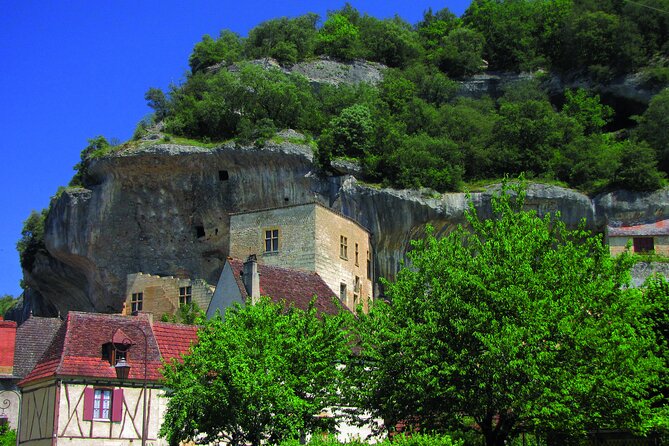
The published route includes about two hours at La Roque Saint-Christophe. This is a dramatic limestone cliff once used for shelter and settlement. The site helps you understand how people made use of natural rock faces long before modern construction methods.
The appeal here is not painted cave art alone. You see the relationship between stone, height, shelter, and daily life. Guided explanations cover prehistoric occupation and the engineering used to adapt the cliff. The site also gives you a chance to stand in open air after time indoors at the museum.
This stop suits you if you like human history with a physical setting. A display case can show you a tool, but a cliff settlement shows the problem early people were solving: where to live, how to protect a community, and how to make a difficult place useful.
There is a practical caution. The tour includes stairs and climbing, so it is not suitable for people with mobility issues. Wear shoes that are comfortable on uneven ground, although the supplied information does not specify a required type of footwear.
Several detailed outings also include Rouffignac instead of, or alongside, the cliff site. Since the route may be changed to fit the timed Lascaux entry, ask the operator exactly which cave or cliff stop is scheduled for your date.
Rouffignac, the real cave and its small train
When Rouffignac is included, it can become the emotional center of the day. You ride a small train farther into the cave, then see prehistoric drawings and engravings in their original setting. The train ride itself is unusual and makes the cave accessible without turning the visit into a long hike underground.
Rouffignac is also where an English-speaking guide can make a major difference. Cave tours are often conducted in French, and the local guide may explain the art with drama and detail that is hard to follow if you do not speak the language. Your tour guide provides the introduction and helps you understand what you are seeing before and after the cave visit.
The real cave has a different feel from Lascaux IV. You are not looking at a replica designed for a large public presentation. You are moving through a natural underground space where the art remains tied to the original walls and chambers.
That does not mean every moment will be easy to follow. Cave lighting is controlled, and guides may use a flashlight to highlight details. Stay close, listen carefully, and ask your main guide to repeat anything you miss afterward. One English-language cave presentation was difficult to understand because of a strong accent, and some paintings were not illuminated clearly at the front of the route.
The cave is cold at about 13°C. Take a sweater or light jacket even in summer. The temperature is not dangerous, but nine hours of changing conditions can make a thin shirt uncomfortable by the final stop.
Same city, a completely different afternoon:
- Paris: Louvre Museum Timed-Entrance Ticket
★ 4.6 · 71,977 reviews - Disneyland® Paris 1-Day Ticket
★ 4.6 · 49,412 reviews - Paris: Versailles Palace and Gardens Full Access Ticket
★ 4.6 · 41,579 reviews - Paris: Evening River Cruise with Music
★ 4.4 · 22,721 reviews
Lunch in Montignac or a nearby village
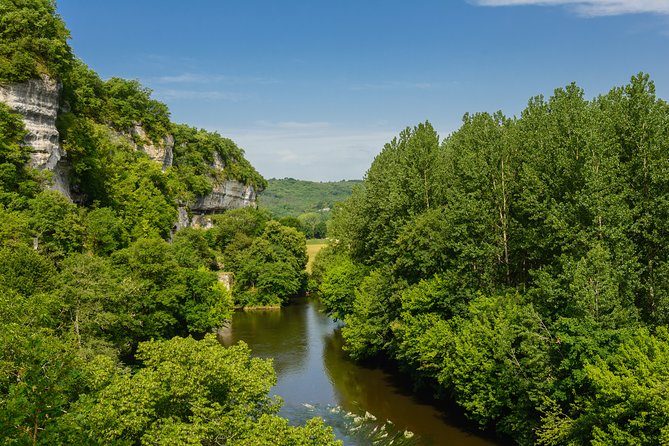
The day includes about two hours around Montignac for lunch, with the meal paid separately. Your guide can suggest a restaurant, or you can choose your own place. That freedom is useful, but two hours is a large portion of a tightly timed day, so keep an eye on the meeting time.
Some departures include an extra stop in Saint-Léon-sur-Vézère, a small and peaceful village. It is not presented as a guaranteed feature of every departure, so consider it a welcome possibility rather than a promise. When included, it gives the day a gentler pause between museums and caves.
A good guide can also help you choose a practical meal and offer tips for restaurants, gourmet shops, and places to see in Sarlat. Anne is specifically praised for this kind of local advice, while other guides have helped with lunch suggestions in the Vézère Valley.
Do not expect lunch to be covered by the $199.55 price. The cost includes the guide, vehicle commentary, and admission to the listed sites, but not food. If you have dietary needs, the supplied information does not state what restaurants can accommodate, so ask the operator before departure.
Lascaux IV and the art of the famous cave
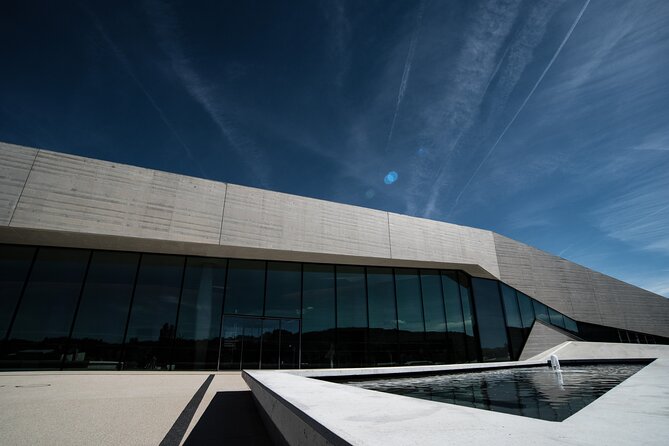
Lascaux IV is a complete replica of the famous decorated cave, paired with a modern interpretation center. The original Lascaux cave is closed to ordinary public visits in order to protect its paintings, so this reconstruction is the practical way to see the full artistic program.
The copy is not a minor substitute. It retraces the discovery and reproduces the painted surfaces so you can study the animals, lines, and forms at close range. The surrounding complex adds technology and displays that explain how the paintings were made and how the cave was recreated.
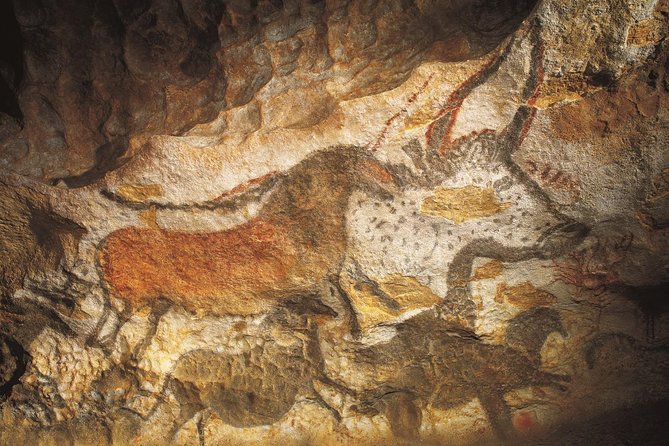
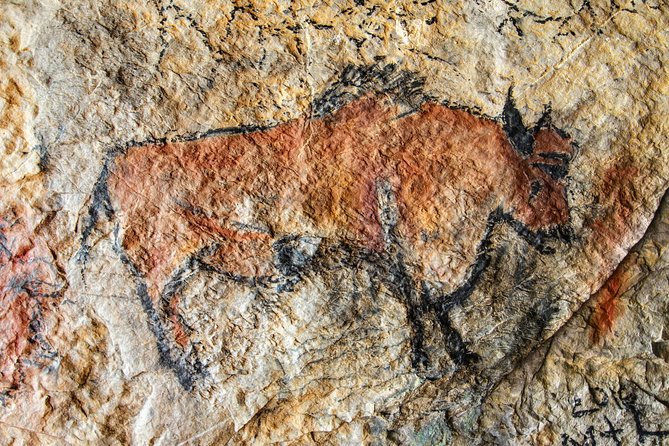
The art can be breathtaking. Horses, bulls, deer, and other figures appear with a force that is hard to explain from photographs. The skill is one part of the experience, but the larger mystery is why people made these images in darkness, far from ordinary living spaces.
Your guide usually gives an orientation before you enter and helps explain the visit afterward. That is especially important because simultaneous translation is not allowed inside the cave. English tours at Lascaux IV are limited, and most scheduled visits are in French.
You should also expect crowds. Lascaux IV uses timed entry, which keeps the schedule organized but can put many people into the same presentation. Some visits feel crowded, making it harder to see the cave walls or hear the guide. This is a limit of the site rather than something your small tour group can control.
Time can be another concern. One outing allowed too little time at Lascaux IV, particularly because it was the final stop. The full Lascaux complex deserves attention, so ask how much time is allocated on your departure date and pace yourself earlier in the day.
Small-group guiding and the value of $199.55
At $199.55 per person, this is not a budget sightseeing shuttle. You are paying for a nine-hour day, an English-speaking driver-guide, live commentary, a small vehicle, and admission to the Prehistory Museum, Lascaux IV, and La Roque Saint-Christophe. When Rouffignac is included, its admission is also handled as part of the arranged visit.
The value depends on how much structure you want. You could arrange individual admissions yourself, but you would need to match timed cave slots, navigate the rural roads, organize transport from Sarlat, and make sense of the museum. The tour removes much of that work and gives you one person to explain the region as you move between stops.
The maximum of eight people is a real advantage. A guide can answer questions, keep the day moving, and adjust explanations to the group. Several of the strongest experiences involved only a few people in the van, which made the outing feel more like a guided field trip than a standard coach excursion.
The vehicle is also part of the value. You spend a full day moving among sites, so a small van is more practical than public transport for this particular route. Hotel pickup and drop-off are not included, though, and the tour begins and ends at Place Pasteur in Sarlat-la-Canéda.
The meeting point deserves care. Arrive early and confirm the exact pickup location, since Place Pasteur can be understood as the parking area or nearby bus stop. One family lost the first part of the outing after a parking and meeting-point mix-up, and the guide could not wait beyond the agreed period without delaying the rest of the group.
This is also why a private tour may make more sense for a larger family group or anyone who needs flexibility. A shared departure follows the schedule for everyone, especially when cave entries are timed.
Who should book this tour
I would choose this tour if you have one full day in the Dordogne and want a clear introduction to prehistoric art, early human life, and the Vézère Valley. It is especially good for first-time visitors who do not want to research several separate tickets or drive between rural sites.
It also suits adults and older children who enjoy museums, unusual places, and questions without simple answers. The day is long, and the museum plus caves require attention, so very young children may struggle even though most participants can take part.
You should be comfortable with stairs and some climbing. The tour is not suitable for people with mobility problems, and the cold cave temperature makes warm clothing important.
Language needs careful planning. Your main guide should provide English commentary, but the local cave presentation at Lascaux IV may be in French. Since translation inside the cave is prohibited, the pre-visit explanation from your guide becomes essential.
The tour is a strong choice for art lovers, amateur historians, and anyone fascinated by the gap between modern life and Paleolithic creativity. It is less suited to someone who wants a slow lunch, a relaxed village tour, or a day with no fixed timetable.
Should you book it?
Book this Dordogne prehistory tour if you want the most efficient way to connect the museum, cave art, cliff shelters, and Lascaux IV in one day. The best guides, including Benoît, Martin, Anne, Marion, and Florence, add real value by selecting the important museum pieces and explaining the area between stops.
Before paying, confirm whether your departure includes Rouffignac or La Roque Saint-Christophe, how much time is set aside for Lascaux IV, and where exactly you will meet in Sarlat. Arrive early, bring a warm layer, budget separately for lunch, and expect some French inside the caves.
For most visitors with a serious interest in prehistory, the price is fair because admission, transport, and expert interpretation are bundled together. If you need complete flexibility, have mobility limits, or are traveling with a larger family group, a private arrangement may be the better fit.
FAQ
Where does the Dordogne prehistory tour begin?
The tour begins at Place Pasteur in Sarlat-la-Canéda at 9:00 a.m. It ends back at the same meeting point.
How long does the tour last?
The tour lasts approximately nine hours.
Is hotel pickup and drop-off included?
No. Hotel pickup and drop-off are not included. You must reach the meeting point in Sarlat and return there at the end.
What admissions are included?
Admission to the National Museum of Prehistory, Lascaux IV, and La Roque Saint-Christophe is included. The route may vary according to the reserved time slot at Lascaux IV.
Is lunch included in the price?
No. Lunch is not included. You can choose a local restaurant, or your guide can suggest one.
Is the tour conducted in English?
The driver-guide and professional guide provide English commentary. English tours inside Lascaux IV are limited, and most visits there are in French. Simultaneous translation inside the cave is not allowed.
Are the caves cold?
Yes. Cave temperatures are about 13°C, or 56°F. Warm clothing is strongly recommended.
Can children and people with mobility issues join?
Children must be accompanied by an adult, and children under four are not allowed. The tour includes stairs and climbing, so it is not suitable for people with mobility issues.
Just listed in France
- Paris: Giverny & Versailles Small Group or Private Tour★ 4.5 · 49 reviews
- Half-Day Walking Food Tour in Nice with Lunch★ 5.0 · 49 reviews
- Chartres Cathedral 5 Hours Tour from Paris with Private Transport★ 4.5 · 49 reviews
- Marseille: Frioul Archipelago Catamaran Cruise with Lunch★ 4.4 · 49 reviews
- Paris: Louvre photoshoot or Seine bridges Eiffel Tower walk★ 5.0 · 49 reviews
- Bonifacio: sunset catamaran trip and aperitif★ 4.6 · 50 reviews
- Paris: Choux Pastry and Chocolate Éclair Making Class★ 4.9 · 50 reviews
- Private tour of the Champagne area, meet local producers and taste their Champagne, start from your hotel in Paris.★ 5.0 · 50 reviews
Bergerac Tours, compared.

Sturgeon Fish-Farm Visit and Caviar Discovery Tasting in Neuvic
Read our review →