
Reviewed · PARIS TOURS
From Paris: Giverny and Monet’s Home Day Trip
Claude Monet’s home and gardens at Giverny are the real attraction here. You see the lily ponds, Japanese bridge, wisterias, and flower beds that gave shape to some of the best-known paintings of the Impressionist age. The clever part is the small-group minibus ride, which takes the strain out of reaching this rural corner of Normandy.
I like the scenic drive and the practical commentary from guides such as Sebastien, Michelle, Matthieu, and Isabelle. I also like the prepaid admission, since you can get to the entrance without arranging a train, local bus, or separate ticket. The main drawback is simple: at $152, this is a costly ride if you want only transportation, and the site visit is not accompanied by a guide.
Key points at a glance
- Monet’s actual setting: Walk beside the water garden, Japanese bridge, wisterias, azaleas, and lily ponds seen in his paintings.
- Easy transport from Paris: A deluxe minibus avoids the train connection through Vernon and the need to arrange local transport.
- Useful drive-time commentary: English-speaking driver-guides provide background on Monet, French art, Normandy, villages, and nearby sights.
- Mostly independent visit: Your driver-guide brings you to the entrance, then you explore the house and gardens at your own pace.
- Crowds affect the experience: Popular paths, rooms, and photo spots can become very crowded, especially during the flower season.
- Four and a half hours total: The 270-minute outing usually leaves roughly two hours at Giverny, so plan your route before entering.
From Paris to a painter’s garden
The meeting point is at 41 Avenue de la Bourdonnais in Paris, near the Eiffel Tower area. You can reach it from École Militaire on Metro line 8, Trocadéro on lines 6 and 9, or Pont de l’Alma on RER C.
From there, you leave the city by deluxe minibus for the drive toward Giverny. The trip takes about an hour each way, depending on traffic. That timing matters: a 270-minute tour sounds generous, but the road journey uses a large part of the afternoon.
The drive is one of the better reasons to choose this outing over making the trip alone. Guides including Sebastien, Nickolas, Honorè, Michelle, and Matthieu have provided commentary on Monet, French art, Normandy, and the small villages along the route. One guide even pointed out a church built into a cave on the return journey, while another highlighted thatched-roof houses and other local sights.
You should not expect a formal lecture from every driver, but the commentary can give you useful context before you arrive. That makes the paintings easier to understand because you have already heard about Monet’s life, his work, and the role of Giverny in the Impressionist movement.
The minibus also keeps the outing manageable on a busy travel day. You do not need to handle the train to Vernon, find onward transport, or worry about driving on unfamiliar roads. In hot weather, the comfortable vehicle is a real advantage. Traffic can still affect the schedule, though, so I would not book a demanding evening activity immediately after the return to Paris.
A few other Paris half-days to compare
- Disneyland® Paris 1-Day Ticket
★ 4.6 · 49,412 reviews - Normandy D-Day Sites & Cemetery Day Trip from Paris with Lunch
★ 5.0 · 6,877 reviews - Day Trip to Mont-Saint-Michel from Paris
★ 4.5 · 4,876 reviews
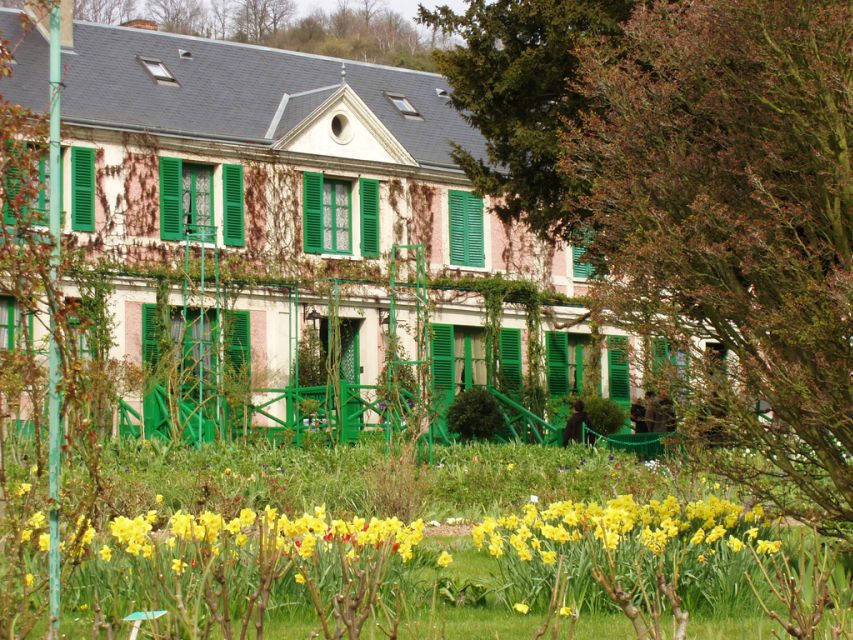
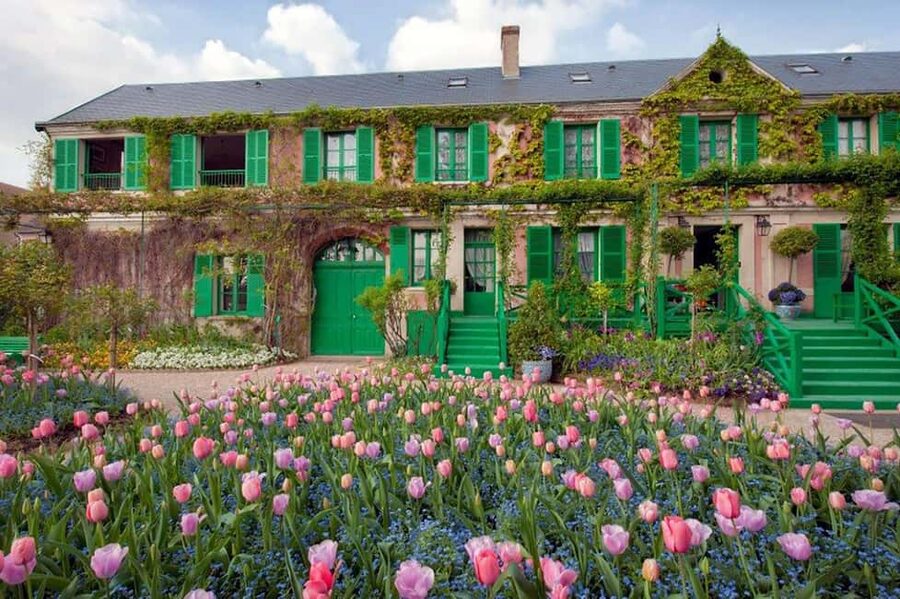
Entering Monet’s house and Clos Normand
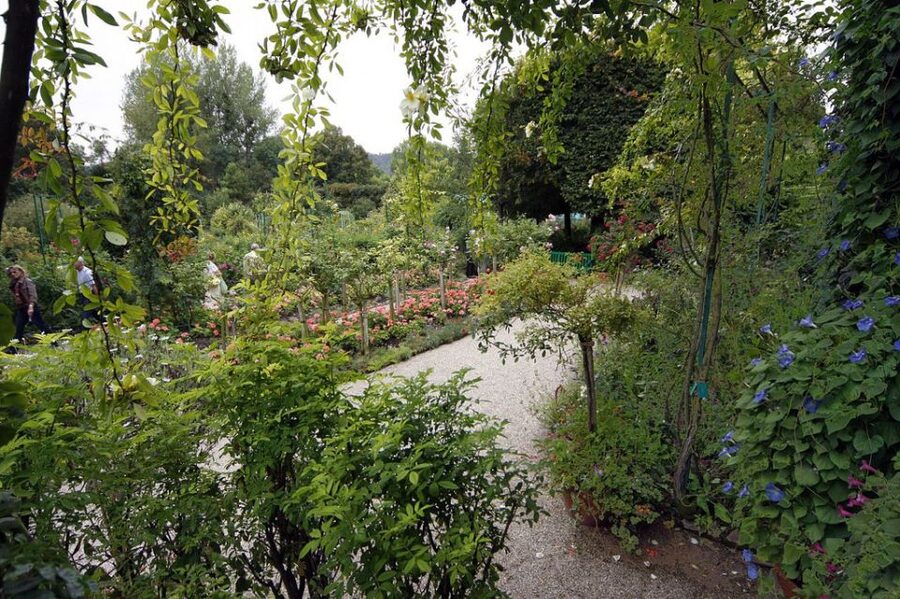
Your prepaid ticket covers Monet’s house and gardens. Once you enter, the visit begins with Clos Normand, the flower garden directly in front of the house.
Clos Normand is a long, carefully arranged garden filled with archways, climbing plants, shrubs, and flowers that change with the seasons. It is not a quiet lawn with a few beds. The planting is dense and theatrical, with color arranged to create views in several directions.
Spring through autumn brings different effects. May and early June are especially strong for flowers, according to the experience of past departures, but the garden has something to offer throughout its opening season. If you care about a particular flower, check the seasonal conditions before you book, since no garden can promise the same display every week.
I like seeing Clos Normand before the water garden because it shows how Monet worked with color away from the canvas. The flowers are not simply decoration around the house. They help you understand his interest in shifting light, repeated forms, and patches of color that blend as you move past them.
The paths can become crowded. You may need patience when stopping for photographs, especially near the most recognizable views. If you want clear pictures, move beyond the first obvious viewpoint and be ready to wait rather than blocking a narrow path.
Monet’s rooms and Japanese prints
Monet’s house is modest in scale but full of personal touches. You move through rooms connected with his family life and working years, then see the collection of Japanese engravings displayed inside.
The Japanese prints are important because they help explain the visual ideas behind the gardens. Their influence can be felt in the strong horizontal lines, framed views, bridge design, and attention to garden composition. Seeing them in the house gives the visit more substance than a quick look at a famous painter’s former address.
The interior is also one of the busiest parts of the visit. Rooms are not large, and groups move through in a steady stream. You may have to wait for a clear view of a wall or table. It is worth slowing down, but you should not expect the calm of a private house museum.
The house has a different mood from the gardens. Inside, you see the domestic setting and art collection. Outside, you see the living subject that Monet returned to again and again. If your main interest is painting, give yourself enough time for both rather than rushing through the house to reach the ponds.
The famous water garden and Japanese bridge
The water garden is the emotional center of the visit. Cross toward the pond and you will find the scene connected with Monet’s Nymphéas paintings, including the familiar Japanese bridge and water framed by trees.
The bridge is graceful rather than grand. Wisterias climb around it, while weeping willows shade parts of the pond. Azaleas, water plants, and reflections fill the view. The setting changes as you walk, so it is worth seeing the bridge from both sides instead of taking one photograph and moving on.
This is where the connection between the paintings and the place becomes clearest. You are not standing before a perfect copy of a canvas. You are seeing the same type of subject from a changing angle, with real weather, moving leaves, and other people sharing the path. That difference helps explain why Monet painted the pond repeatedly.
Crowds are the chief problem. The bridge is one of the most photographed points in Giverny, and a clear view may take time. You can still enjoy the garden, but the experience rewards politeness and patience. Go early if you have a choice of departure, although afternoon traffic and visitor levels may vary by date.
The tour information does not promise a specific arrival time inside the afternoon. Check the available start times before booking and choose the earliest practical option if photography matters to you.
Same city, a completely different afternoon:
- Paris: Louvre Museum Timed-Entrance Ticket
★ 4.6 · 71,977 reviews - Paris: Versailles Palace and Gardens Full Access Ticket
★ 4.6 · 41,579 reviews - Paris: Evening River Cruise with Music
★ 4.4 · 22,721 reviews - Paris: Eiffel Tower Entry Ticket with Optional Summit Access
★ 4.4 · 20,035 reviews
The Nympheas studio and village atmosphere
The Nympheas studio now houses the Foundation’s Shop. You can stop here for a souvenir after seeing the garden and house. It is a useful final pause because you have already seen the paintings’ setting and can choose something with a clearer sense of why the subject matters.
Giverny itself is small and attractive, with the quiet character of a Normandy village. It became an important artist colony between 1883 and 1920, drawing American artists as well as Monet. That artistic connection adds interest, though the scheduled visit gives you limited time beyond the main property.
This is where the tour can feel rushed for people who want a slow village walk. The usual plan allows about two hours at the house and gardens, the shop, and perhaps a nearby café. That is enough for a focused visit, but not enough to linger everywhere.
You might have time to stroll through part of the village, depending on the day’s traffic and how quickly you move through the gardens. One useful nearby stop is the church at the top of the hill, where Monet and members of his family are buried. Do not count on fitting it in unless your driver-guide confirms that the schedule allows it.
How much time will you really have?
The total duration is 270 minutes, or four and a half hours. With roughly two hours spent driving, you should prepare for around two hours at Giverny, sometimes a little more or less depending on traffic and the day’s arrangements.
Two hours works if you enter with a plan. I would use the following order:
- Start with Clos Normand and take in the main flower beds.
- Go through Monet’s house and look for the Japanese engravings.
- Continue to the water garden and Japanese bridge.
- Allow a few minutes for the Nympheas studio and shop.
- Use any remaining time for a café or a short look at the village.
The route through the property may vary with crowd control, so treat this as a practical guide rather than a fixed instruction. The key point is to avoid spending your first hour taking photographs in one section.
People who enjoy sitting in gardens may find the schedule too tight. You can see the major sights, but you probably will not have time to linger beside the pond for a long sketching session, explore every lane, and stop for a full meal. If you want an unhurried day, independent travel may suit you better.
On the other hand, the half-day format is useful if you have only a short stay in Paris. You can see one major Normandy sight without giving up a full day in the city.
The value of $152
At $152 per person, this is not a bargain transportation option. The price includes the minibus, driver, and prepaid ticket for Monet’s house and gardens. It does not include a separate guided tour inside Giverny.
I see the value in three areas. First, you save yourself the work of connecting Paris, Vernon, and Giverny. Second, you get door-to-door group transport from the Paris meeting point to the property. Third, the drive-time commentary adds background that you would otherwise need to find on your own.
The value is weaker if you are comfortable arranging public transport and want a long visit. In that case, much of the fee pays for convenience rather than extra time or a personal tour. You also need to pay for any food and personal purchases at the shop.
The strongest case for booking is a busy Paris itinerary, limited confidence with French transport, or a preference for a small vehicle and an English-speaking driver. If you are comparing this with a simple train fare, the tour will look expensive. If you are comparing it with the time and uncertainty of organizing every connection, the price becomes easier to defend.
What the driver-guide adds
This experience depends heavily on the person behind the wheel. The best guides do more than point the minibus toward Giverny. Michelle, for example, has combined French art history with stories about Monet, then added cultural sights on the ride home. Sebastien has been praised for friendly conversation, strong English, safe driving, and clear information before arrival.
That range is worth keeping in mind. The driver-guide is there to manage transport and provide commentary, but the house and garden visit is generally independent. You should not book this expecting a personal escort through every room and path.
The practical guidance can still make a real difference. A good driver may explain the best order for visiting, help you get inside before larger groups, or suggest which parts deserve the most time. You will also benefit from someone else handling Paris traffic and the narrow village roads.
The tour runs rain or shine. Bring a plan for wet weather, since the gardens remain the main event and the visit does not move indoors simply because the forecast changes.
Who should book this Giverny trip?
I would choose this outing if you meet several of these conditions:
- You want to see Monet’s home without organizing train connections.
- You have a strong interest in Impressionism, gardens, or Japanese art.
- You prefer a half-day trip rather than giving up a full day in Paris.
- You value an English-speaking driver and useful background during the ride.
- You are comfortable exploring the property independently.
- You can tolerate crowds and a fairly brisk schedule.
I would hesitate if you use a wheelchair, since the outing is not suitable for wheelchair users. I would also think twice if your main goal is quiet garden time. Giverny can be packed, particularly around the bridge, pond, house, and popular flower beds.
Families with older children and teenagers may find the visual setting easier to appreciate after visiting Monet paintings in Paris. A visit to the Musée d’Orsay before or after Giverny can make the experience more meaningful, since you will recognize the garden subjects in a new way.
Booking details worth knowing
The meeting point is 41 Avenue de la Bourdonnais, 75007 Paris. The nearest listed transport stops are École Militaire, Trocadéro, and Pont de l’Alma. Give yourself time to reach the meeting point, since the minibus schedule depends on an on-time departure.
The driver speaks English, and the activity language is English. Free cancellation is available up to 24 hours before departure for a full refund. You can also reserve now and pay later, which helps if your Paris plans are still shifting.
The activity receives a 4.8 rating from 118 reviews, with transport receiving a perfect score from 88 percent of the rating group. That fits the main strength of the outing: reliable, comfortable transport paired with a beautiful destination.
Should you book it?
Book this Giverny trip if you want the easy version of the visit, with a comfortable minibus, prepaid entry, and art commentary on the road. The gardens, pond, bridge, house, and Japanese prints make the outing worthwhile, especially in May or early June when the flower displays can be particularly strong.
Skip it if you want a full day, a formal guided tour inside the property, or the lowest possible price. You will have limited time at the site and may need to share the prettiest views with a large crowd.
For most first-time visitors who want to add Monet to a Paris stay without transport hassle, this is a practical choice. Just arrive with realistic expectations: it is a well-organized half-day visit to a very popular place, not a quiet private garden tour.
FAQ
Where does the Giverny tour meet in Paris?
The meeting point is 41 Avenue de la Bourdonnais, 75007 Paris. Nearby stops include École Militaire on Metro line 8, Trocadéro on lines 6 and 9, and Pont de l’Alma on RER C.
How long does the experience last?
The total duration is 270 minutes, or four and a half hours. The drive from Paris takes about an hour each way, leaving roughly two hours for the house and gardens, depending on traffic and timing.
Is a guided tour of Monet’s home included?
No. The package includes transportation, a driver, and a prepaid ticket for Monet’s house and gardens. Your English-speaking driver-guide may provide commentary during the drive and practical advice, but you explore the property independently.
What can I see at Giverny?
You can visit Monet’s home, see his collection of Japanese engravings, walk through Clos Normand, and explore the water garden with its lily ponds, weeping willows, wisterias, azaleas, and Japanese bridge. The Nympheas studio contains the Foundation’s Shop.
Is the tour suitable for wheelchair users?
No. The experience is listed as unsuitable for wheelchair users.
Can I cancel the booking?
Yes. You can cancel up to 24 hours in advance for a full refund. The reserve-now, pay-later option also lets you hold a place without paying immediately.
Just listed in Paris
- Chartres Cathedral 5 Hours Tour from Paris with Private Transport★ 4.5 · 49 reviews
- Paris: Giverny & Versailles Small Group or Private Tour★ 4.5 · 49 reviews
- Paris: Louvre photoshoot or Seine bridges Eiffel Tower walk★ 5.0 · 49 reviews
- Private tour of the Champagne area, meet local producers and taste their Champagne, start from your hotel in Paris.★ 5.0 · 50 reviews
- Paris: Choux Pastry and Chocolate Éclair Making Class★ 4.9 · 50 reviews
- Paris Eternelle Notre-Dame Virtual Reality Tour★ 4.5 · 50 reviews
- Normandy D-Day Landing Beaches Private Day Trip from Paris★ 5.0 · 50 reviews
- Disneyland® Paris 1 Day with Round-Trip Train Tickets from Paris★ 4.0 · 50 reviews
Paris Tours, compared.



Versailles Palace and Gardens Full Access Ticket
Read our review →

Eiffel Tower Entry Ticket with Optional Summit Access
Read our review →

Louvre Guided Tour with Reserved Access & Boat Cruise
Read our review →
Moulin Rouge Cabaret Show Ticket with Champagne
Read our review →Browse the lists this tour appears in