
Reviewed · SARLAT LA CANEDA TOURS
From Sarlat-la-Canéda: Lascaux IV and Cave Art Full-Day Tour
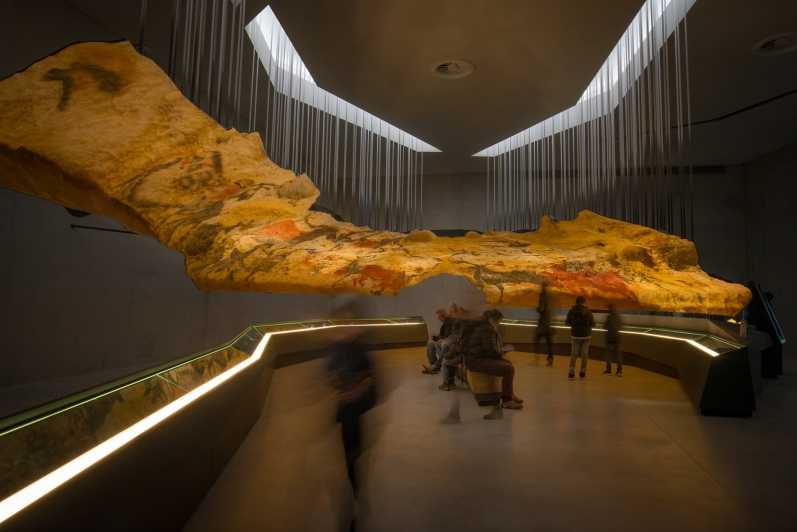
Lascaux IV is the star here: a painstaking recreation of the famous painted cave, complete with finely copied reliefs and 17,000-year-old colors. I like the small group of up to eight, which keeps the day personal, and I like having a guide connect the caves, museum, and Dordogne countryside. The main catch is that most Lascaux IV cave visits are in French, even on an English-language day.
I also like the mix of experiences. Rouffignac gives you a visit inside a genuine cave, while Lascaux IV shows how modern science and craft can preserve a site that cannot handle regular public access. The day is long, and La Roque Saint-Christophe involves stairs, so this is not a good fit for wheelchair users or anyone with serious mobility limits.
Key points to know before booking
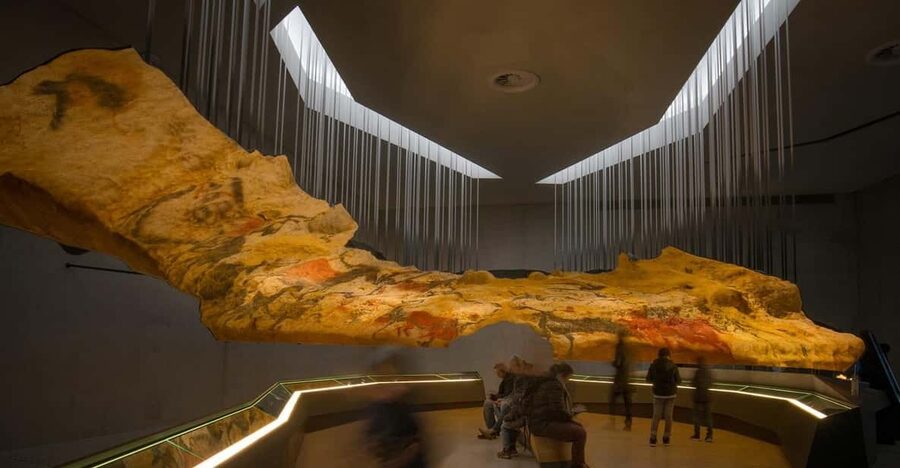
- Lascaux IV is a full-scale replica: The recreated cave uses natural pigments, detailed rock reliefs, and shipbuilding methods to reproduce the original setting.
- Rouffignac adds an authentic cave visit: You experience a real prehistoric cave rather than only a museum reconstruction.
- Les Eyzies puts the art in context: The National Prehistory Museum holds one of the world’s largest collections of prehistoric artifacts.
- La Roque Saint-Christophe brings prehistory outdoors: A sheer limestone cliff reveals how people adapted shelters and later buildings to the rock.
- The guide makes the schedule work: Guides such as Anne, Marion, Benoit, Florence, Martin, and Lena have been praised for clear explanations, local stories, and calm handling of timetable changes.
- Plan for cool caves and a long day: Bring a warm jacket, wear good shoes, and expect roughly nine hours from Sarlat and back.
Why this Dordogne day trip works so well
The Dordogne is one of the best places in France to connect human prehistory with actual places. Around Les Eyzies, early modern humans lived in rock shelters, moved through limestone caves, and left behind drawings, engravings, tools, and bones. A quick visit to one attraction can feel disconnected. This full-day route gives you a useful sequence: museum first, genuine cave next, famous replica after that, then a dramatic cliffside site.
I especially like the balance between authentic and recreated sites. Rouffignac supplies the atmosphere of a real cave, with prehistoric markings and animal images. Lascaux IV supplies access to art that you cannot see in the original cave, which has been closed to the public for decades to protect it.
Your English-speaking driver-guide fills in the gaps between stops. The guides do not simply shuttle you from one ticket desk to another. They explain the geology, the Cro-Magnon discoveries, the cave art, and the surrounding region during the drives. Past guides have included Anne, Marion, Benoit, Florence, Martin, and Lena, though the guide assigned to your date will vary.
The group is capped at eight people. That matters in a day with several fixed admission times. A small van can use the narrow roads more comfortably than a large coach, and you can ask questions without trying to catch a guide’s attention across a crowd.
A few other France half-days to compare
- Normandy American D-Day Beaches Full Day Tour from Bayeux
★ 5.0 · 2,103 reviews - Paris: Parc Astérix Full-Day Entrance Ticket
★ 4.4 · 1,697 reviews - From Paris: Full-Day Loire Valley Chateaux Tour
★ 4.4 · 1,269 reviews
Les Eyzies and the National Prehistory Museum
The day begins with a drive of about 30 minutes from the meeting point at the Place Pasteur bus stop in Sarlat-la-Canéda. The first major stop is Les Eyzies-de-Tayac, where the first five Cro-Magnon skeletons were found in 1868.
The National Prehistory Museum opened in 2004 and holds an exceptionally large collection of prehistoric objects. Its displays help you see more than isolated cave paintings. You get a broader picture of human development, tools, burial practices, animals, and daily life across the prehistoric periods.
This stop is especially useful if you arrive with only a general idea of cave art. Your guide can point out details that are easy to miss and explain how archaeologists interpret what remains. Several guides have been praised for presenting the subject at the right level, with enough detail to be interesting without turning the morning into a lecture.
Allow about an hour and a half here. That is enough for a guided visit and a look around, but not enough for every display. If museums are not your thing, this may be the least exciting stop of the day. One past participant would have preferred less museum time and more outdoor sites. I would still keep it, especially if you are new to prehistoric art, because it makes the cave visits easier to understand.
The museum also gives the day a human scale. Lascaux is famous, but its painted animals can feel like a beautiful mystery. Les Eyzies helps you think about the people who made the marks, the tools they used, and the conditions in which they lived.
Rouffignac, the real cave experience
The route then heads toward the cave area around Peyzac-le-Moustier and Rouffignac. The exact order can change because Lascaux IV admissions are tied to reserved time slots. That flexibility is useful, but it means you should not expect the published sequence to be fixed.
Rouffignac is the part of the day that gives you a direct sense of an actual prehistoric cave. The visit includes animal outlines and engravings made by prehistoric people. The cave is also known for its small electric train, which carries you into the underground passages and makes the visit less physically demanding than a long walk through a cave.
I like the contrast with Lascaux IV. At Rouffignac, the cave itself is part of the story: the dark passages, natural rock, and marks left on the walls. At Lascaux IV, the art receives more theatrical presentation because the entire setting has been recreated for public access.
Language can be a concern. Cave tours are not always offered in English, and a past visit included a German-only tour at Rouffignac. The English-speaking guide can prepare you before entering and explain what you have seen afterward, but the cave-site guide may not always conduct the visit in English. Ask about the language arrangements when booking if this matters greatly to you.
That limitation does not ruin the visit, but it changes what you should expect. You may need to rely on the guide’s explanation before and after the cave, along with your own close attention inside. The original cave atmosphere remains the main reason to include Rouffignac.
Montignac and the lunch break
The schedule provides about two and a half hours in Montignac, including time connected with the Lascaux visit. This is your chance to eat and take a short walk rather than rush through the day with a sandwich in the van.
Lunch is not included, so budget separately for food and drinks. Guides have recommended places to eat, and one guide’s lunch suggestion was singled out as a highlight. You can use the break to sit with the group, stretch your legs, and see a little of the town.
The long pause also helps the day feel less exhausting. Nine hours is a substantial outing, but it is broken into museum time, cave time, driving, lunch, and the cliffside visit. You are not standing in one queue or walking continuously for the whole day.
Do not expect a full independent tour of Montignac. The focus remains Lascaux, and the timing depends on the admission slot. Think of Montignac as a practical and pleasant pause with some room to look around.
Same city, a completely different afternoon:
- Paris: Louvre Museum Timed-Entrance Ticket
★ 4.6 · 71,977 reviews - Disneyland® Paris 1-Day Ticket
★ 4.6 · 49,412 reviews - Paris: Versailles Palace and Gardens Full Access Ticket
★ 4.6 · 41,579 reviews - Paris: Evening River Cruise with Music
★ 4.4 · 22,721 reviews
Lascaux IV and the power of a careful replica
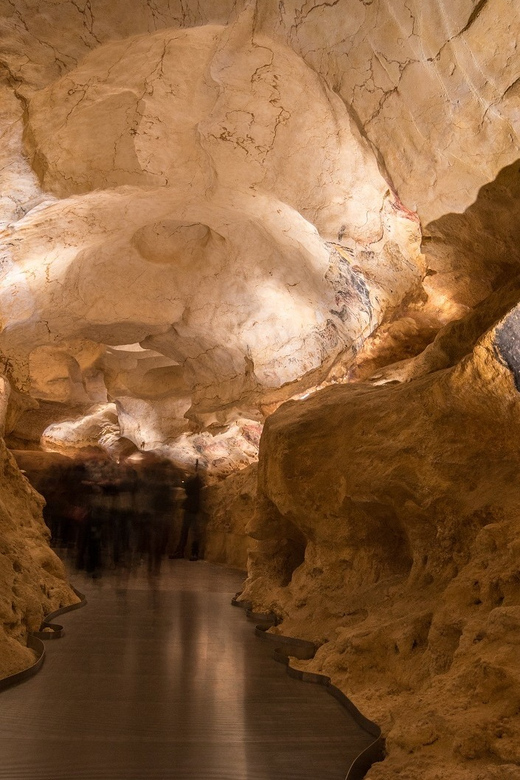
Lascaux IV opened in 2016 and recreates the original cave and its paintings using an unusual mix of art, engineering, and scientific research. A reinforced concrete shell was made with methods borrowed from shipbuilding. The shape of the cave was copied in fine detail, including the uneven surfaces and changing contours of the rock.
The paintings were recreated with natural pigments to match the original polychromatic images. The goal is not simply to hang copies of paintings in a gallery. It is to reproduce the feeling of moving through the cave and seeing the images in their original relationship to the rock.
That distinction matters. A replica can never be the original. Some people find Rouffignac more moving because it is a genuine cave with real prehistoric markings. Yet Lascaux IV lets you see the famous paintings at a level of detail that would not be possible in the fragile original. The copy is the reason the original can remain protected.
The building itself is part of the experience. The architecture and technology behind Lascaux IV show how much work goes into preserving art that was created roughly 17,000 years ago. You are looking at ancient images inside a modern structure designed to imitate an ancient space.
English-language cave tours at Lascaux IV are limited. Most scheduled tours are in French, and simultaneous translation inside the cave is not allowed. Your English-speaking guide will explain the paintings before and after the cave visit. This is a key point for English speakers: you will have helpful context, but you should not assume that every word inside the cave will be delivered in English.
The site also offers more than the reconstructed passage itself, although the exact use of available exhibits depends on your timing. Past guides have given personal explanations after the formal visit and allowed time to explore additional displays. The two-hour slot gives Lascaux the attention it deserves without making the entire day about one attraction.
La Roque Saint-Christophe and life on the cliff
La Roque Saint-Christophe is a dramatic limestone cliff with shelters and built spaces cut into or attached to the rock. People used the site from Paleolithic times onward, and the visit explains how successive occupants adapted to the cliff.
This is where the day moves from underground art to human engineering. You can see how a vertical rock face offered protection, space, and a commanding position. The site also shows that prehistoric and later communities were not simply hiding in caves. They were making practical use of difficult terrain.
The visit includes stairs. That makes comfortable shoes essential and rules the site out for wheelchair users and some people with mobility issues. If stairs are difficult for you, ask the operator for a clear explanation of the route before paying. This is the one stop where physical demands should shape your decision.
La Roque Saint-Christophe also provides an outdoor change of pace after the museum and caves. You get open views, exposed limestone, and a better sense of the scale of the Dordogne valley. It is a fine final chapter before the van returns to Sarlat.
The van, guide, and pace of the day
Transport is by small group van, with a maximum of eight participants. The vehicle has received strong marks for comfort, and one useful detail from the day is the microphone, which made it possible to hear the guide from the back row.
Seat assignments may be fixed. One couple was disappointed to spend the day in the last row without the chance to change seats. If you are prone to motion sickness or strongly prefer a front seat, arrive early and ask politely about seating. There is no promise that seats can be rotated.
The guides are the strongest part of the experience. Names frequently associated with especially good days include Anne, Marion, Benoit, Florence, Martin, and Lena. Their strengths have included clear English, regional knowledge, humor, safe driving, and the ability to adjust when a museum or cave changes its timetable.
This matters more than it might on a simple sightseeing ride. The Dordogne roads can be narrow, and the sites are spread out. A guide who explains what you are seeing during the drives saves you from trying to assemble the story alone.
The tour requires at least two adults to operate. It cannot accept children under four, and you should provide a child’s age when booking so an appropriate car seat can be arranged if needed. Pets are not allowed.
Is $265 a fair price?
At $265 per person, this is not a cheap day trip. The price needs to be judged against what you would have to arrange yourself: transport from Sarlat, several admission reservations, the timing of Lascaux IV, parking, navigation, and an English-speaking guide who understands the subject.
The value is strongest for visitors without a car, visitors who do not want to drive unfamiliar rural roads, and anyone who wants the prehistoric sites explained in a connected way. A private car could give you more control, but you would still need to manage the fixed Lascaux schedule and decide how to divide your time between Les Eyzies, Rouffignac, Montignac, and La Roque Saint-Christophe.
Meals and drinks are extra. Admission to the named attractions is included as part of the program, while entrance fees to other monuments, museums, or attractions are not included. Check the final booking details carefully so you know exactly what your date covers.
For a specialist day built around major prehistoric sites, I consider the price reasonable if you value convenience and interpretation. It is less compelling if you prefer slow museum visits, long meals, or independent wandering. You are buying an organized route and an expert human link between the sites, not just a ride.
Practical advice for a better day
Bring a passport or identity card, even though you are staying within France. Wear shoes with a good grip, since La Roque Saint-Christophe includes stairs and the day involves walking over uneven surfaces.
The caves are kept at about 14°C, or 57°F. A warm jacket is not optional for comfort, especially if you tend to feel cold. The tour runs in rain or shine, so bring weather protection for the outdoor portion.
July departures begin at 8:30 a.m. rather than 9 a.m. The tour is not available in August. The order of stops may change, so avoid booking a separate activity in Sarlat immediately after the stated return time.
Free cancellation is available up to 24 hours before departure, and you can reserve now and pay later. Those terms help if your Dordogne schedule is still shifting, but always confirm the conditions shown for your specific date.
Who should book this tour?
I recommend it most strongly to first-time visitors to the Dordogne who want the major prehistoric sites without renting a car. It also suits people with a serious interest in archaeology, cave art, geology, or early human culture. The English-speaking guide adds real value because the subject can be difficult to understand from labels alone.
Families with children over four can enjoy it, provided everyone is comfortable with a long day and the stairs at La Roque Saint-Christophe. Young children may find the museum and explanations demanding, so consider their attention span before booking.
You should think twice if you need full wheelchair access, dislike fixed schedules, or want every cave tour conducted in English. The Lascaux visit is especially important to research in advance because English sessions are limited.
Should you book it?
Book this tour if you want a well-planned day that combines the real atmosphere of Rouffignac, the carefully made Lascaux IV replica, the National Prehistory Museum, and a cliffside site in one route. The guides are consistently the main strength, and their explanations turn a busy collection of stops into a clear story about people, art, and place.
Skip it if you would rather choose one cave and explore at a slower pace, or if stairs and cool underground spaces are a problem. For most visitors based in Sarlat, though, this is an efficient and unusually thoughtful way to reach the Dordogne’s prehistoric heart.
FAQ
Where does the tour meet in Sarlat?
The meeting point is the Place Pasteur bus stop in Sarlat-la-Canéda.
How long does the experience last?
The tour lasts about nine hours, including transportation from Sarlat and the return journey.
Is the tour conducted in English?
The driver-guide speaks English. English tours inside Lascaux IV are limited, and most cave visits are in French. Your guide explains the cave before and after the visit because simultaneous translation inside is not permitted.
What should I bring?
Bring a passport or identity card, comfortable walking shoes, and a warm jacket. The caves are kept at about 14°C, or 57°F.
Is the tour suitable for wheelchair users?
No. La Roque Saint-Christophe includes stairs, and the activity is not suitable for wheelchair users or people with significant mobility issues.
Can young children join the tour?
Children under four cannot join. When booking for an older child, provide the child’s age so an appropriate car seat can be arranged if needed.
Just listed in France
- Paris: Giverny & Versailles Small Group or Private Tour★ 4.5 · 49 reviews
- Half-Day Walking Food Tour in Nice with Lunch★ 5.0 · 49 reviews
- Chartres Cathedral 5 Hours Tour from Paris with Private Transport★ 4.5 · 49 reviews
- Marseille: Frioul Archipelago Catamaran Cruise with Lunch★ 4.4 · 49 reviews
- Paris: Louvre photoshoot or Seine bridges Eiffel Tower walk★ 5.0 · 49 reviews
- Bonifacio: sunset catamaran trip and aperitif★ 4.6 · 50 reviews
- Paris: Choux Pastry and Chocolate Éclair Making Class★ 4.9 · 50 reviews
- Private tour of the Champagne area, meet local producers and taste their Champagne, start from your hotel in Paris.★ 5.0 · 50 reviews
Sarlat La Caneda Tours, compared.
Lascaux IV: Full Replica Cave Experience Ticket
Read our review →
From Sarlat: Beynac & Domme Tour & Dordogne Boat Ride
Read our review →
Sarlat Gourmet Tour & Market Visit with Tastings
Read our review →Browse the lists this tour appears in