
Reviewed · FRANCE
Hameau Duboeuf, 1st theme park on Vine and Wine in Europe
Hameau Duboeuf is not a normal wine museum. It is a full-scale vine-and-wine theme park spread across 30,000 square meters, with old tools, multimedia shows, 3D cinema, a tasting room, and a surprising railway section. I like the way it explains wine from soil and grape varieties through fermentation and finished bottle, rather than treating tasting as the whole story.
I also like the generous tasting at the end and the easy train access, since the site sits directly across from the station in Romanèche-Thorins. The main caution is value: admission costs about $25.34 per person, and some extras cost more. The presentation can feel uneven, with some excellent displays and some theatrical films that may strike you as odd.
Key points to know before you go
- A 30,000-square-meter wine park: Expect a large site with roughly a dozen themed buildings and several different exhibition areas.
- The visit lasts three to six hours: You can make it a short museum stop, but the films, tasting, restaurant, and optional gardens can turn it into most of a day.
- Beaujolais takes center stage: Learn about local grape varieties, soil types, vineyard work, pests, and wine production before tasting.
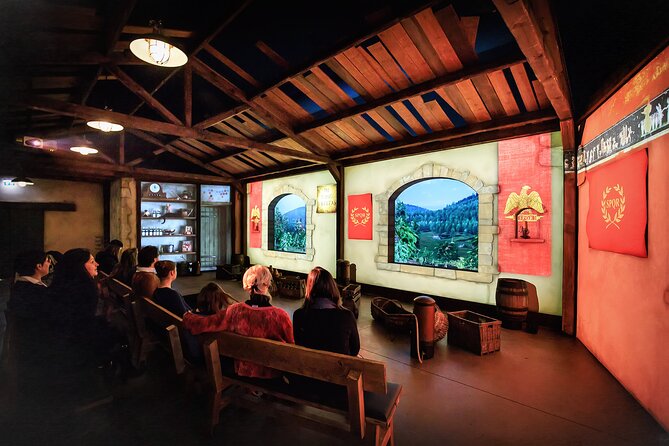
- Multimedia is part of the experience: Dynamic cinema, 3D film, moving effects, and staged presentations replace a traditional guided tour.
- The train collection adds a second theme: See railway material, PLM displays, and the imperial carriage associated with Napoleon III.
- Extras affect the final price: The Explor Games digital investigation costs €5 more per person, and the gardens cost an additional €3.
Entering Hameau Duboeuf near Romanèche-Thorins
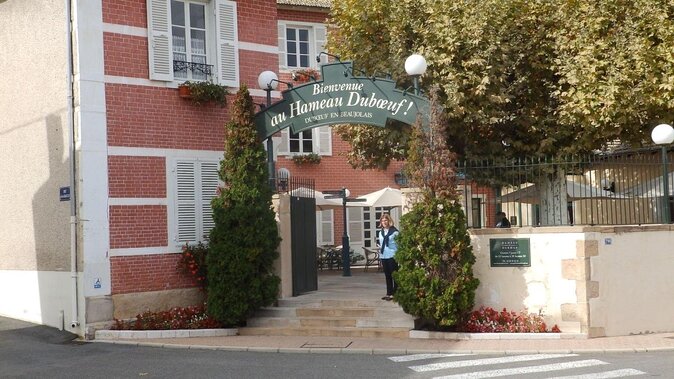
You begin at Hameau Duboeuf, 796 Route de la Gare, in Romanèche-Thorins, about one hour north of Lyon by car. The train is especially handy here. The site is right across from the station, making this one of the easier wine attractions to reach without a car.
The experience is self-guided rather than built around a single guide leading a fixed group. That gives you freedom to move at your own pace, but it also means you need to pay attention to the timing of the multimedia presentations. Some rooms open or progress according to show schedules, so you may occasionally wait before entering the next section.
The site is open Wednesday through Sunday from 10 a.m. to 6 p.m. during the stated operating period, which runs from December 12, 2023, through February 20, 2027. Allow at least three hours if you want to see the main exhibits and taste the wine. If you add lunch, the gardens, and the children’s activities, six hours is quite reasonable.
Confirmation is provided at booking, and the maximum stated capacity is 300 people. Service animals are allowed, and the site is near public transportation. Most people can take part, but access is not equally easy throughout the entire visit for people with reduced mobility.
What else people book in France on the same visit:
- Paris: Louvre Museum Timed-Entrance Ticket
★ 4.6 · 71,977 reviews - Disneyland® Paris 1-Day Ticket
★ 4.6 · 49,412 reviews - Paris: Versailles Palace and Gardens Full Access Ticket
★ 4.6 · 41,579 reviews
Following the grape from vineyard to bottle
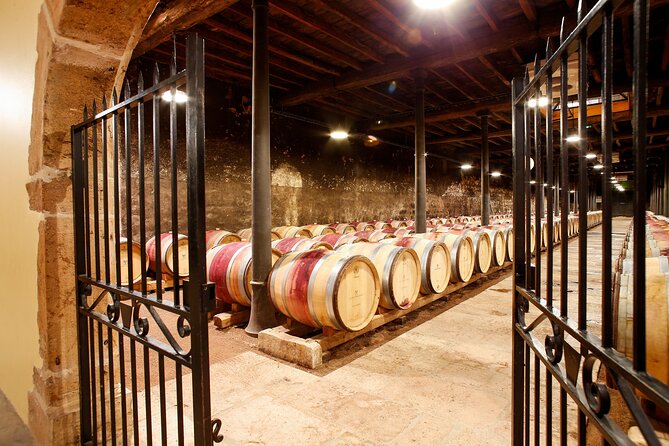
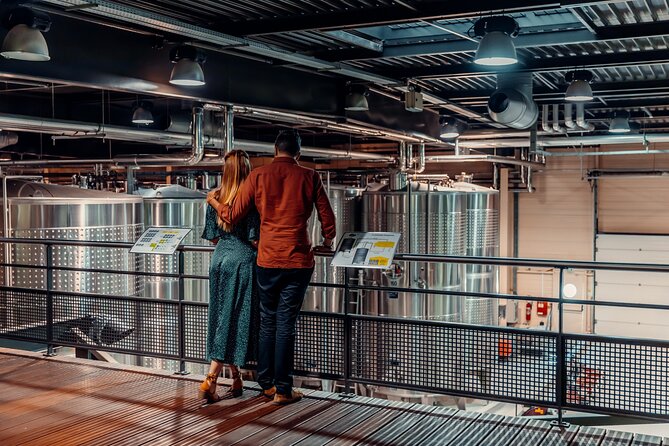
The strongest part of Hameau Duboeuf is its attempt to show the complete wine-making chain. You are not simply shown bottles behind glass. The displays cover vineyard tools, manual labor, grape varieties, pest management, fermentation, and the differences between local growing areas.
For a first visit to Beaujolais, this gives useful background before you taste. You can connect the physical work of the vineyard with the wines poured later. Displays about old hand tools and pest control are particularly worthwhile because they make the work feel practical rather than abstract.
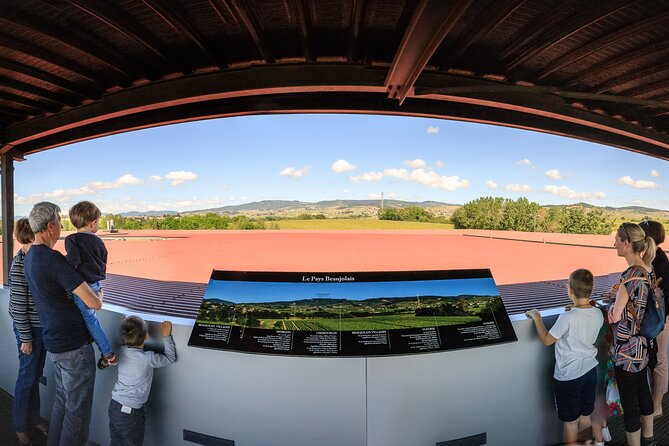
The site also explains the various Beaujolais terroirs and grape varieties. That matters because Beaujolais is not one uniform wine style. The soil and growing conditions change from place to place, and the exhibits help you understand why bottles from different areas can taste different.
Some sections are traditional museum displays, while others use theatrical staging. You might see animated graphics, projections, reconstructed scenes, and video rooms with comfortable seating. The quality is not perfectly even. Some films are informative, while others use unusual graphics and a playful style that may feel dated or confusing.
I would approach the multimedia with an open mind. If you prefer quiet labels and carefully arranged objects, you may find the presentation overdone. If you enjoy a show and want children to stay engaged, the movement and visual effects make the subject easier to approach.
The Beaujolais show and regional storytelling
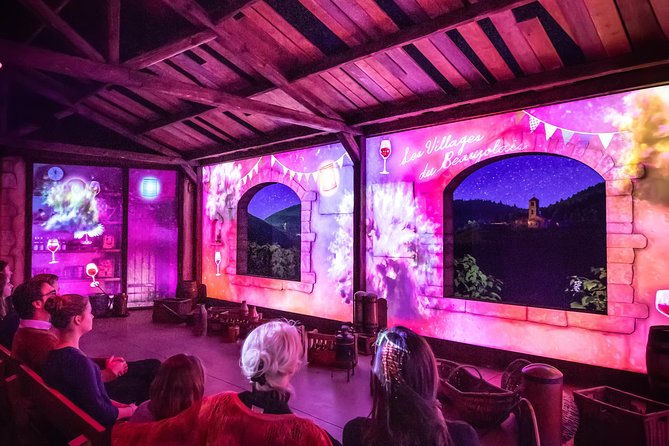
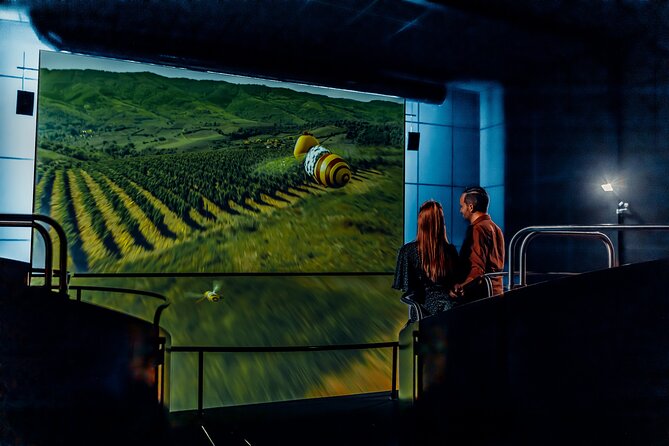
One of the central presentations is My Beaujolais, an immersive show about the Beaujolais region. It aims to explain the area through images and staged effects rather than through a standard lecture.
This can be a good way to get a broad sense of the region before visiting vineyards or villages. It gives the wine a place and a setting, instead of presenting it as a product without context. However, the presentation does not provide every detail a serious wine student may want. Some information is presented quickly, and village names may not always receive subtitles or detailed explanation.
Another presentation focuses on the supposed meeting of Napoleon III and Queen Victoria in Romanèche-Thorins. This section is deliberately theatrical, including the railway setting and imperial carriage. It has been described as bizarre, and that is useful advice: do not expect a restrained historical reconstruction.
The best way to enjoy it is to treat it as a piece of local storytelling. It is less a formal lesson than a stage show built around the station, royal visitors, and the romance of nineteenth-century rail travel. You may find it amusing, strange, or simply unnecessary. Either way, it gives the visit a character you would not get from a standard wine museum.
The tasting at the end of the route
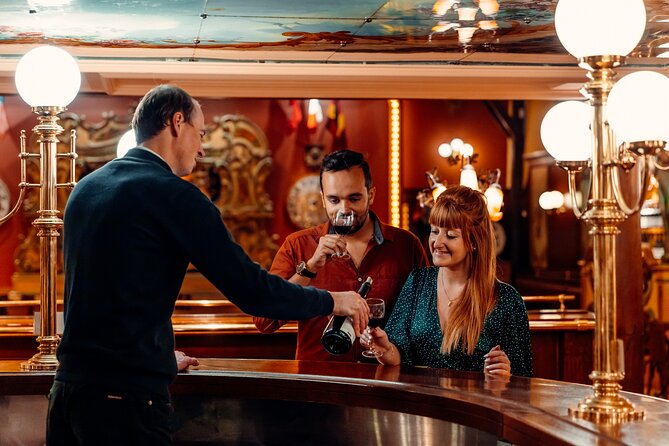
The wine tasting comes after the main self-guided route, in a larger room with tables and chairs. It is accompanied by a limonaire, a mechanical musical instrument or band, which adds an old-fashioned touch to the finale.
The tasting is an important part of the admission value. The experience costs about $25.34, and the wine samples help make the price easier to justify, especially if you already planned to buy a bottle or learn more about Beaujolais. The tasting is described as generous, with two wines noted in one account, though the exact pours can vary.
You do not need to be a wine expert to benefit. The earlier exhibits give you enough basic information to understand what you are tasting. Pay attention to the explanation of grape varieties and local soil, then compare the wines with those ideas in mind.
The mechanical music is part of the charm, though the limonaire may not always be operating in the way you expect. If you remember the visit mainly as a tasting, you will still have received a useful introduction to Beaujolais. If you hope for a formal sommelier lesson, the format may feel lighter and less technical.
Same city, a completely different afternoon:
- Paris: Evening River Cruise with Music
★ 4.4 · 22,721 reviews - Paris: Eiffel Tower Entry Ticket with Optional Summit Access
★ 4.4 · 20,035 reviews - Paris: Eiffel Tower Summit or Second Floor Access
★ 4.3 · 17,248 reviews - Paris: Louvre Guided Tour with Reserved Access & Boat Cruise
★ 4.3 · 16,353 reviews
Railway history beside the vineyards
Hameau Duboeuf also takes you into the world of trains, PLM railway history, and the imperial carriage linked with Napoleon III. This is an unexpected second attraction, and it helps explain why the old station setting matters so much.
The railway displays give families and history fans another reason to visit. Children who are less interested in fermentation may pay closer attention to the carriages, transport displays, and mechanical elements. The imperial wagon is the visual centerpiece, although you should keep your expectations measured. The surrounding station presentation is more theatrical than scholarly.
This mixture of wine and railways can feel unusual, but it reflects the practical link between agriculture and transport. Wine had to move from the vineyard to markets, and the railway changed how quickly and widely that could happen. Hameau Duboeuf does not present only one narrow slice of wine culture. It connects production, trade, machinery, and regional identity.
Optional gardens and the Explor Games activity
The gardens are not included in the basic admission. Entry costs an additional €3 per person on site. The garden section includes a small train ride to the property where the wines are produced, along with free activities such as cycling and miniature golf.
For a family, the gardens may be the difference between a short museum visit and a full-day outing. A young child may not follow the explanations about geology or fermentation, but a train ride and open-air activities offer a welcome change from indoor displays.
The Explor Games digital investigation is another optional extra, priced at €5 per person. The available information identifies it as a digital investigation game, but does not give enough detail to describe its exact challenges or length. Think of it as an add-on for families and groups who want an interactive activity beyond the exhibitions.
You should budget for these additions before booking. The basic ticket covers the exhibitions, cellars, dynamic cinema, 3D experience, staged displays, and tasting. It does not cover lunch, the gardens, or Explor Games.
Eating, shopping, and pacing your visit
A restaurant operates on site, so you do not need to leave for lunch. The menu includes à la carte choices and a fixed-price option, along with a selection of Beaujolais wines. The dining room is part of the attraction, with a decorative setting that suits the theme.
Service can be helpful when the restaurant is busy. Anthony, the maître d’hôtel, has been singled out for finding a table even when the room was full, and Fabienne is also noted for good service. Those details matter because a site that can occupy most of a day works better when you can eat without breaking the visit into separate stops.
Still, lunch is not part of the ticket price. Add the meal to your budget, especially if you plan to stay five or six hours. If you want to control costs, you can treat the restaurant as optional and focus on the included tasting.
The shop is large and carries wines from Beaujolais and other areas, along with wine-related gifts. Prices in the shop have been described as reasonable, though one account found the general shop prices expensive. I would compare a few bottles and treat the shop as a place to browse rather than assume every item is a bargain.
Is the $25.34 admission good value?
The price makes sense for the amount of material on site, but only if you use the attractions included in the ticket. For a quick look at the imperial carriage and a short walk through the museum, the cost may feel high. For three to six hours of exhibits, films, 3D presentations, a tasting, and railway displays, the value is better.
The site is especially useful when you want one destination that can serve several interests. Wine lovers get grape varieties, soil, tools, and tasting. Families get moving images, themed rooms, trains, and optional outdoor play. History fans get the station, PLM material, and imperial carriage.
The value drops if you dislike theatrical presentations or expect every film to be precise and polished. Some multimedia sections are informative, while others are more eccentric than educational. You are paying for an entertainment-focused museum, not a quiet academic collection.
Hameau Duboeuf is also more valuable as part of a Beaujolais day than as an isolated stop. You can learn the basics here, taste the wines, then continue into the surrounding area. A nearby Museum of Compagnonage in town is also worth considering if you want a more traditional and carefully arranged museum experience.
Practical comfort and accessibility notes
Bring a light layer. Some cellar areas can feel cool, and one visitor specifically recommended carrying a vest for the visit. Comfortable shoes are sensible because the site covers a large area and includes several buildings.
People with reduced mobility should plan carefully. Access is reported to be poor in parts of the visit, so the general statement that most people can participate should not be taken as a guarantee of full accessibility. Contact the provider before booking if a member of your party uses a wheelchair or has limited mobility.
English is offered, which makes the attraction more approachable for English-speaking visitors. The material supplied does not specify how every film, sign, or presentation is translated, so you may want to confirm the language format if detailed English interpretation is essential.
The activity is non-refundable and cannot be changed after booking. That makes it wise to check the Wednesday through Sunday schedule, transport plans, and accessibility needs before paying.
Who will enjoy Hameau Duboeuf most?
I would recommend it to families, casual wine drinkers, first-time visitors to Beaujolais, and anyone who likes museums with moving images and theatrical effects. It is also a practical choice when some people in your group love wine and others need trains, games, or hands-on activities to stay interested.
Serious wine students may appreciate the sections on terroir, grape varieties, vineyard tools, and fermentation, but should not expect a full technical course. The tasting is useful, yet the overall experience is designed for a broad audience.
I would be more cautious if you want a small, quiet cellar visit with a winemaker. This is a large attraction with multiple buildings, scheduled presentations, and a strong entertainment element. Its odd moments are part of the package.
Should you book Hameau Duboeuf?
Book it if you want an unusual Beaujolais attraction that combines wine, film, railway history, tasting, and family activities in one place. The easy train access from Lyon, included tasting, broad range of displays, and generous opening hours make it a flexible choice.
Skip it if your main goal is a focused vineyard tour or a refined wine seminar. Also think twice if you have serious mobility limits unless the provider confirms suitable access.
For most people, I would allow at least half a day, arrive early enough to follow the presentations, and reserve extra time for lunch or the gardens. The experience is occasionally strange and uneven, but it is also distinctive. You are unlikely to confuse it with any ordinary wine museum.
FAQ
Where is Hameau Duboeuf located?
Hameau Duboeuf is at 796 Route de la Gare, 71570 Romanèche-Thorins, France, near Mâcon.
How long does a visit take?
The approximate duration is three to six hours. A shorter visit can cover the main exhibitions and tasting, while lunch, the gardens, and family activities can extend the stay.
What are the opening hours?
The stated opening hours are Wednesday through Sunday, from 10 a.m. to 6 p.m., during the operating period from December 12, 2023, through February 20, 2027.
Is the experience offered in English?
English is listed as an available language. The exact language format for every presentation is not specified.
What is included in the admission price?
Admission includes the exhibitions, cellars, dynamic cinema, 3D presentation, tasting, and staged displays.
Is lunch included?
No. Lunch is not included in the admission price, though a restaurant operates on site.
How much do the optional activities cost?
The Explor Games digital investigation costs an additional €5 per person on site. The gardens cost an additional €3 per person on site.
Can I reach Hameau Duboeuf by train?
Yes. The site is located directly across from the train station in Romanèche-Thorins and is near public transportation.
Is the visit accessible for people with reduced mobility?
Most people can participate, but access is reported to be poor in parts of the visit for people with reduced mobility. Contact Hameau Duboeuf before booking if this is a concern.
Just listed in France
- Paris: Giverny & Versailles Small Group or Private Tour★ 4.5 · 49 reviews
- Half-Day Walking Food Tour in Nice with Lunch★ 5.0 · 49 reviews
- Chartres Cathedral 5 Hours Tour from Paris with Private Transport★ 4.5 · 49 reviews
- Marseille: Frioul Archipelago Catamaran Cruise with Lunch★ 4.4 · 49 reviews
- Paris: Louvre photoshoot or Seine bridges Eiffel Tower walk★ 5.0 · 49 reviews
- Bonifacio: sunset catamaran trip and aperitif★ 4.6 · 50 reviews
- Paris: Choux Pastry and Chocolate Éclair Making Class★ 4.9 · 50 reviews
- Private tour of the Champagne area, meet local producers and taste their Champagne, start from your hotel in Paris.★ 5.0 · 50 reviews