
Reviewed · MONTMARTRE & SACRE-COEUR TOURS
Kids/teens escape game in Montmartre
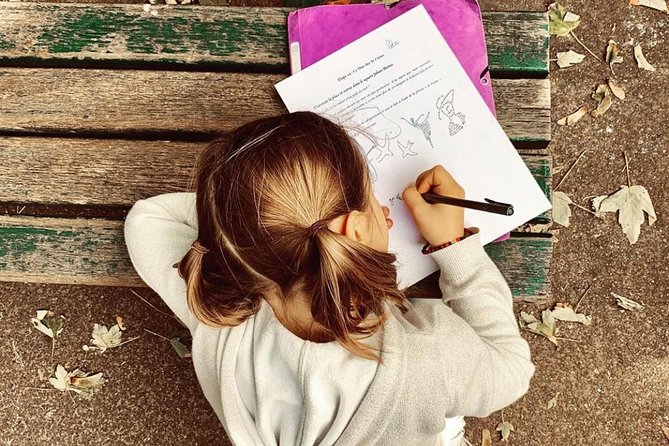
Montmartre becomes a giant outdoor puzzle board on this family escape game. Instead of asking children to trail behind while adults admire Paris, the activity gives them a mission: solve riddles, answer questions, and notice details at some of the district’s best-known spots.
I like two things right away. First, the game turns sightseeing into something children can own, with challenges tied to painting, architecture, arithmetic, language, and observation. Second, your host does more than hand over a booklet. The host guides the walk, shares local stories, helps with practical needs such as finding a toilet, and can take free family photos. The main drawback is that some puzzles may be too hard for children under 10, while younger children may need the simpler version.
Key points about the Montmartre puzzle walk
- A two-hour outdoor game: Your children solve puzzles while you walk through Montmartre.
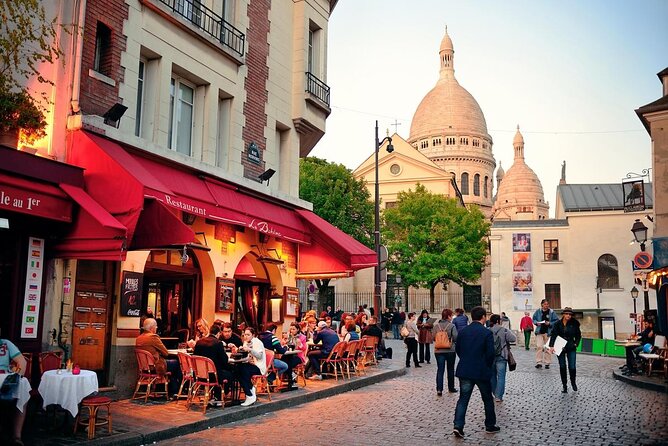
- Seven memorable Paris stops: The route includes Sacré-Cœur, Place du Tertre, Au Lapin Agile, Picasso’s Bateau-Lavoir, and more.
- A host stays with you: Guides explain the neighborhood, help with practical needs, and manage technical snags.
- Learning hides inside play: Questions touch on history, painting, architecture, arithmetic, language, and careful observation.
- Designed for a wide age range: The activity accepts children from age 3, with versions suited to younger children and older kids or teens.
- Good weather matters: The experience takes place outdoors, and poor weather can lead to a new date or a full refund.
Why Montmartre works so well as a family game

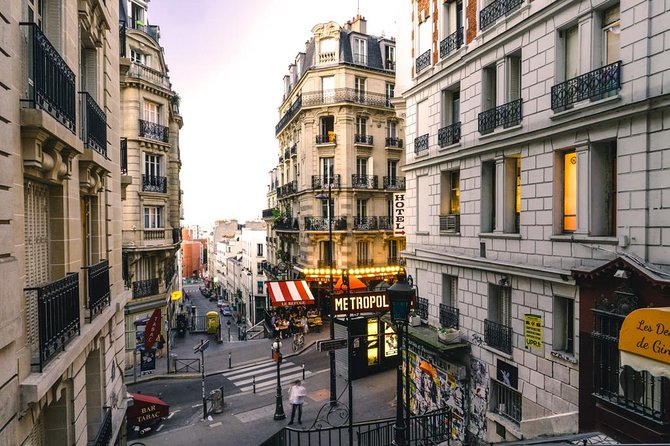
Montmartre is one of the few Paris neighborhoods where a short walk can shift from grand church to crooked lane, from famous artists to a wall covered in the words I love you. That variety gives children plenty to spot and discuss.
The game was developed with help from a mother of three who is also a teacher. That detail matters. The activities are not simply adult trivia copied into a child-friendly format. They aim to build skills while keeping the pace light: counting, reading clues, studying shapes, noticing symbols, and linking a place to a story.
You are not signing up for a formal museum lesson. The cultural material arrives in small portions as you move. One clue may send your child looking closely at a building. Another may ask about a famous artist or a statue. You get a walk through Montmartre, while the children get a reason to pay attention.
The host is an important part of the experience. Guides associated with this activity include Jules, Sasha, Jeanne, Églantine, and William Morris. The exact host depends on your booking, but the role is clear: keep the group moving, explain the rules, offer background, and help children solve problems without simply giving away every answer.
The tone is relaxed rather than rushed. That suits families, though it also means this is not a tightly timed race against the clock. If your children expect flashing timers and dramatic escape-room effects, explain that this is an outdoor walking game, not a locked-room challenge.
More Escape Rooms in Paris
- Who Killed Victor ? Escape Game at Père Lachaise Cemetery
★ 4.8 · 258 reviews - Escape game in Montmartre
★ 5.0 · 247 reviews - Escape Hunt Paris, Escape Game
★ 4.5 · 122 reviews
Starting beside the Sacré-Cœur funicular
The meeting point is at the upper funicular station, at 7 Rue Foyatier. This is a useful place to begin because you are already near the basilica and do not need to start with a long climb through the lower streets.
Sacré-Cœur provides the opening visual punch. The white basilica rises above Montmartre, and children receive a riddle connected to the building. Admission to this stop is free, but the activity does not include a visit inside the basilica. One parent specifically noted that the group saw the church without going up to or into it, so set expectations clearly before you arrive.
That limitation may disappoint adults hoping for an interior visit, but it keeps the activity focused on the neighborhood outside. The church is a backdrop and a clue, not the main attraction.
Give yourself time to locate the host at the meeting point. One family had trouble finding the guide, so use the mobile ticket and check the exact starting place before setting off. The upper funicular station is more precise than simply saying Sacré-Cœur, since the basilica area has several entrances and paths.
Reading Montmartre one riddle at a time

Most of the two-hour experience is spent walking around Montmartre and completing educational games. The guide does not need to lecture for an hour. Instead, the questions make your children look at what is in front of them.
This format helps with a common Paris problem: children can lose interest when adults pause at every monument. Here, the child has work to do. A clue may lead to a detail on a façade, a local name, an artist’s connection to the district, or a small visual feature that is easy to miss.
The route requires a moderate level of physical fitness. Montmartre is hilly, and even a gentle sightseeing walk can feel more demanding when children are stopping to solve clues. Wear comfortable shoes and avoid treating the two hours as a race. The guide can keep the group moving, but the district itself includes slopes and uneven stretches.
The activity is designed for children from age 3, but age suitability needs a little care. Younger children have their own version, while older kids and teens can handle more involved riddles. A family with children aged 7 and 9 found the game well matched to them, while another family found some questions too difficult for children under 10.
That difference probably comes down to the chosen version and the child. If your children read confidently and enjoy puzzles, the older version may work earlier. If they are preschoolers or early readers, ask for the younger format and expect adults to help.
Au Lapin Agile and Montmartre’s artistic side
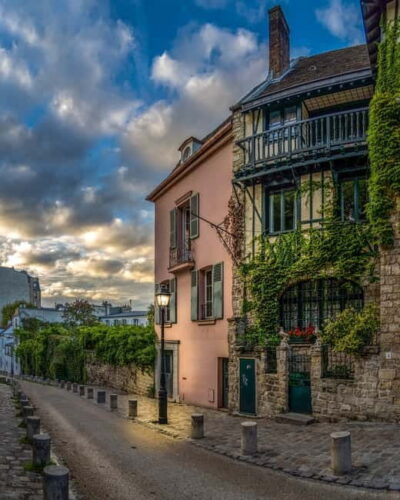
Au Lapin Agile is one of the route’s strongest stops for adults. The old cabaret is presented as Paris’s oldest cabaret, and the children answer questions or complete a game connected with the place.
This is a good example of how the walk links famous names and locations without requiring a full museum visit. Montmartre’s artistic identity can feel vague to children if it is reduced to a list of painters. A stop at a cabaret gives that story a physical address.
You should not expect a long interior visit or a performance. The value is in seeing the place, hearing its story, and using it as part of the puzzle. The stop takes about 10 minutes, which is enough to keep the game moving.
A few other Paris half-days to compare
- Paris: Moulin Rouge Cabaret Show Ticket with Champagne
★ 4.7 · 16,088 reviews - Paris: Dinner Show at the Moulin Rouge
★ 4.8 · 3,333 reviews - Montmartre Hidden Gems and Scenic Highlights Walking Tour
★ 5.0 · 2,684 reviews - Montmartre Hill French Gourmet Food and Wine Tasting Walking Tour
★ 5.0 · 2,588 reviews
Place du Tertre and the working art of the square

Place du Tertre is the postcard version of Montmartre, with its compact square and strong connection to artists. Your children answer questions about what they see here.
The square can be crowded, so this is one place where the game’s observation task is useful. Instead of drifting through, your child has a reason to study the setting. You may also find this stop more interesting if you talk about the difference between a historic artist’s quarter and a modern tourist meeting point.
The activity gives you only a short visit, around 10 minutes. That is enough for a clue, a look around, and perhaps a photo, but not enough for a leisurely café stop or an extended conversation with artists. Plan a separate return if you want time to browse.
Bateau-Lavoir and Picasso’s Montmartre

At Le Bateau-Lavoir, the group discovers the studio linked to Picasso and the creation of cubism. The children then tackle another question or educational game.
This is one of the best stops for showing that art history happened in ordinary places. A studio address can feel more real to a child than a distant painting in a gallery. The clue gives the guide a chance to explain how artists, studios, and new ideas shaped Montmartre.
The stop lasts about 10 minutes and is viewed as part of the walking route. You are not getting a full art lecture, but you are giving children a useful connection between a neighborhood and a major change in painting.
If your family has already visited the Louvre or Musée d’Orsay, this stop adds context without repeating a gallery tour. If you have not, it still offers a simple introduction to Picasso and cubism.
The Wall of Love and the language of Paris

Le Mur des Je t’aime, or the Wall of Love, is a change of mood. This public artwork presents the words I love you in many languages, making it easy for children to connect the stop with language and communication.
The game can turn a quick photo stop into a small observation exercise. Children may look for familiar languages, compare scripts, or follow a clue tied to the wall’s design. Adults get one of Montmartre’s most charming modern landmarks without needing to explain a complicated art movement.
The stop takes about 10 minutes. It is short, visual, and well placed for families who need a change from architectural facts.
The Man Who Walked Through the Wall
Le Passe-Muraille is a statue linked to the famous story of a man who could walk through walls. It is exactly the sort of odd, memorable sight that works in a children’s game.
A statue like this gives the guide room to tell a small local story rather than another formal lesson. The children answer questions about what they see, and the unusual subject can keep the younger members of the group involved.
This stop also shows the range of the experience. You are not only visiting churches and artist studios. The route includes literature, legend, public art, and neighborhood details, so the game does not feel like a string of identical monument questions.
What the host adds beyond the puzzle booklet
The host is the difference between a self-guided worksheet and a social family activity. You can solve riddles on your own, but a guide can adjust the pace, explain a clue, encourage a hesitant child, and share stories that do not fit neatly on a page.
Practical help is part of the promise. If someone needs a toilet, has a question about the route, or runs into a technical problem, the host handles it. That is useful in Montmartre, where the streets can be confusing and family needs rarely follow a fixed timetable.
The guide also takes photos free of charge. That is a small benefit, but it lets you stay in the moment instead of asking one parent to document every stop. Named hosts such as Jules, Sasha, Jeanne, Églantine, and William Morris have each been associated with warm, patient game leadership. The experience depends partly on your particular guide, so a friendly, cooperative attitude helps.
One caution: do not assume the guide will provide a full historical tour. The activity focuses on clues, stories, and fun facts. One parent felt the experience did not provide enough background about Montmartre, while others found the guide highly informative. If your top goal is detailed history, choose a traditional walking tour. If your goal is to help children notice the neighborhood, this format makes more sense.
Price, timing, and what you receive for $41.86
At $41.86 per person, this is not the cheapest way to walk around Montmartre. You can see most of the exterior sights without paying an admission fee, and families can create their own scavenger hunt.
The price makes more sense if you value the host, the prepared educational material, the family photos, and the structure. You are paying to remove the work of planning a route that will hold a child’s attention. For a family that might otherwise spend two hours managing complaints and asking children to keep walking, that support has real value.
The activity lasts about two hours. That is long enough to feel like a substantial part of the morning or afternoon, but short enough to fit beside another Paris plan. Since it is outdoors and requires walking, leave room for slower children, hills, photos, and puzzle-solving.
The group limit is listed as 100 people, though a family game is most useful when the children can hear the host and take part. The available information does not promise a small private group, so check the booking details if group size matters to you.
The activity is recommended by 97 percent of customers and carries a 4.9 rating from 68 ratings. Those figures suggest strong satisfaction, especially with the family format and guide-led play, but they do not erase the age issue. Read the age guidance with your own child in mind.
You can cancel for a full refund up to 24 hours before the start time. Changes or cancellations inside that window are not refunded. Because this is an outdoor experience, poor weather can lead to another date or a full refund. The same applies if the minimum number of participants is not reached.
Who should book this Montmartre experience
I would choose this for families with children who like riddles, treasure hunts, escape rooms, or small challenges. It also suits parents who want to see Montmartre without spending the whole walk saying keep up.
It can work well for a mixed-age family. Older children can take the lead on reading and arithmetic, while younger ones can search for shapes, colors, statues, and other visible clues. The adult version has worked for families with children aged 9 and 11, while a separate version is available for smaller children.
I would be more cautious if your child dislikes walking, has trouble with hills, or becomes frustrated when an answer is not obvious. Some riddles are reportedly tedious or hard, and a younger booklet was printed in cursive, which made it difficult for children who could not yet read that style. Ask about the appropriate version when booking.
This is also not the right pick if you want to go inside Sacré-Cœur, spend long periods at each sight, or receive a detailed lecture on every chapter of Montmartre’s past. The game gives you a broad, playful introduction rather than a full academic tour.
Should you book it?
Book it if you want Montmartre sightseeing with a job for the children. The mix of art, architecture, legends, language, and puzzles gives families a reason to slow down and look closely. The host’s practical help and free photos add value that a self-guided walk does not provide.
Skip it if your children are too young for the selected puzzle level, dislike riddles, or you want a deep historical walking tour. For most families with curious children aged 7 and up, the two-hour format offers a useful balance: enough structure to keep the group together, but enough freedom to enjoy Montmartre’s streets.
FAQ
How long does the kids and teens escape game last?
The activity lasts approximately two hours.
Where does the experience begin?
It begins at the upper station of the Montmartre funicular, at 7 Rue Foyatier, 75018 Paris.
Where does the experience end?
The walk ends at Place Émile Goudeau, 14 Rue Ravignan, 75018 Paris.
Which places are included?
The route includes the Sacré-Cœur Basilica area, Montmartre, Au Lapin Agile, Le Mur des Je t’aime, Place du Tertre, Le Bateau-Lavoir, and Le Passe-Muraille.
Is the activity suitable for very young children?
The activity is offered for children starting at age 3, with a version for smaller children. Older children and teens can use a more challenging format.
Does the guide take family photographs?
Yes. The host is also a photographer and can take photos of your group free of charge.
Can I cancel for a full refund?
Yes. You can cancel at least 24 hours before the start time for a full refund. Cancellations or changes made less than 24 hours before the start time are not refunded.
Just listed in Paris
- Chartres Cathedral 5 Hours Tour from Paris with Private Transport★ 4.5 · 49 reviews
- Paris: Giverny & Versailles Small Group or Private Tour★ 4.5 · 49 reviews
- Paris: Louvre photoshoot or Seine bridges Eiffel Tower walk★ 5.0 · 49 reviews
- Paris: Choux Pastry and Chocolate Éclair Making Class★ 4.9 · 50 reviews
- Private tour of the Champagne area, meet local producers and taste their Champagne, start from your hotel in Paris.★ 5.0 · 50 reviews
- Paris Eternelle Notre-Dame Virtual Reality Tour★ 4.5 · 50 reviews
- Normandy D-Day Landing Beaches Private Day Trip from Paris★ 5.0 · 50 reviews
- Disneyland® Paris 1 Day with Round-Trip Train Tickets from Paris★ 4.0 · 50 reviews
Montmartre & Sacre-Coeur Tours, compared.

Moulin Rouge Cabaret Show Ticket with Champagne
Read our review →

Montmartre Hidden Gems and Scenic Highlights Walking Tour
Read our review →
Montmartre Hill French Gourmet Food and Wine Tasting Walking Tour
Read our review →
Seine Dinner Cruise, Eiffel Tower Access and Moulin Rouge Show
Read our review →
Montmartre Cheese, Wine & Pastry Guided Walking Tour
Read our review →
Montmartre Highlights Walking Tour with a Local Guide
Read our review →Browse the lists this tour appears in