
Reviewed · BORDEAUX TOURS
Make your own cuvée of Bordeaux wine
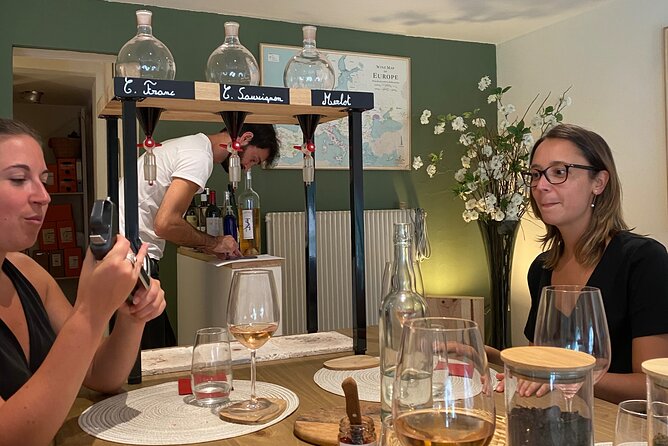
Making your own Bordeaux blend is the heart of this experience. You taste Merlot, Cabernet Sauvignon, and Cabernet Franc as separate wines, then use tubes and pipettes to combine them into a cuvée that suits your palate. The bottle you create is labeled with your name, which makes a far better souvenir than another postcard.
I like the balance between learning and doing. The blind tasting helps you notice tannin, acidity, aroma, and structure, while the Basque cheese and charcuterie keep the session relaxed. I also like the small group limit of 12 and the friendly teaching style associated with James, Pierre, and Geoffroy. The main caution is simple: confirm that the blending portion is included on your date, since two past bookings were mistakenly run as tastings only.
Key points to know before booking
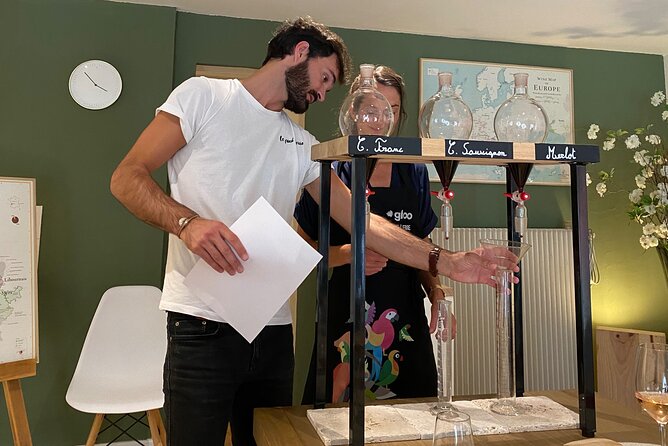
- You make a personal Bordeaux blend: Combine single-varietal wines with measuring tubes and pipettes, then bottle your chosen cuvée.
- The lesson goes beyond a quick tasting: Expect an introduction to Bordeaux regions, grape varieties, aromas, tannins, and tasting technique.
- Three classic red grapes take center stage: Merlot, Cabernet Sauvignon, and Cabernet Franc form the main blending lesson.
- English instruction is available: James, Pierre, or Geoffroy may lead the session, depending on the scheduled host.
- The group is capped at 12 people: That keeps the practical blending work manageable and more personal.
- It costs $71.20 for about two and a half hours: The value is strongest if you want both wine education and a take-home bottle.
At Le Pied à Terre on Rue Judaïque
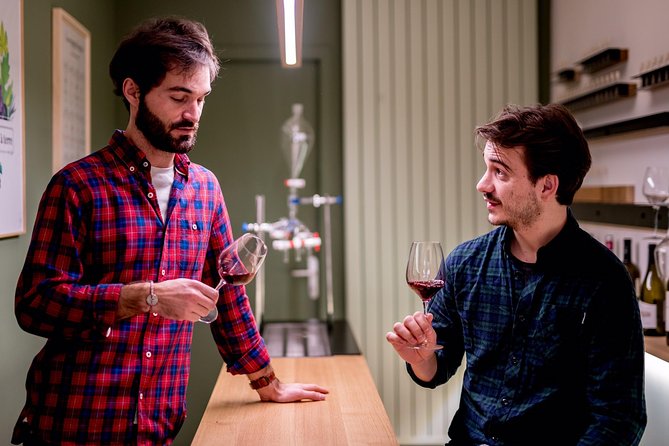
The experience begins at Le Pied à Terre, a wine shop and tasting workshop at 22 Rue Judaïque in Bordeaux. You return to this same spot at the end, so there is no second meeting point to track down across the city.
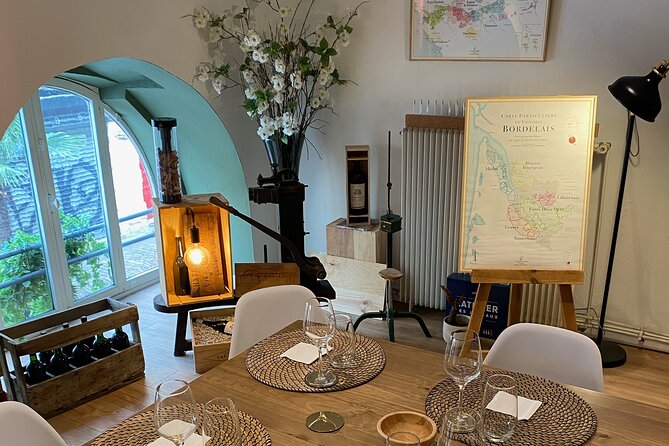
That central Bordeaux setting suits the activity. You are not being whisked out to a château for a formal estate visit. Instead, you spend the session in a cellar atmosphere designed for tasting, discussion, and hands-on work. I would plan this as an easy city activity, paired with a stroll through Bordeaux before or after the class.
The venue also sells wine, so you can browse bottles after the workshop. That is useful if the class gives you a better feel for the styles you want to drink during the rest of your stay.
The experience is offered in English, and confirmation arrives when you book. Since it is booked roughly 45 days ahead on average, I would reserve early if your Bordeaux dates are fixed, especially for a weekend or a small group traveling together.
A few other Bordeaux half-days to compare
- Bordeaux: Cité du Vin Entry Ticket and Wine Tasting
★ 4.6 · 3,885 reviews - Bordeaux: River Garonne Cruise with Glass of Wine and Canelé
★ 4.5 · 3,630 reviews - From Bordeaux: Afternoon Saint-Emilion Wine Tasting & snack
★ 4.8 · 1,581 reviews
First lesson: Bordeaux in the glass
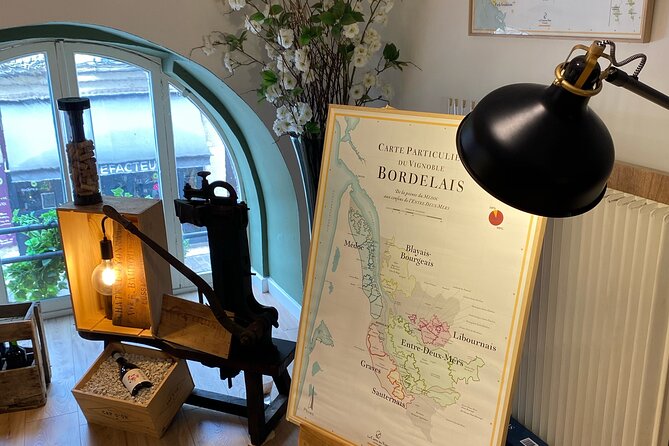
The opening section sets up the rest of the workshop. You learn how Bordeaux is divided into areas commonly described as the Left Bank, Right Bank, and Entre-Deux-Mers. The goal is not to memorize every appellation. It is to understand why Bordeaux wines are often blends and how place, grape, and winemaking choices affect the final bottle.
The class also introduces the main grapes used in the blending exercise. Merlot generally brings softness and fruit, Cabernet Sauvignon adds tannic structure, and Cabernet Franc contributes aroma and freshness. The point is not that every bottle follows a rigid formula. It is that each grape can play a different role in the finished wine.
This is especially useful if you come from a wine culture where bottles are usually labeled by one dominant grape. Bordeaux makes more sense once you stop asking which grape is in the bottle and start asking what each grape contributes to the blend.
The teaching includes basic tasting skills, such as noticing smell, taste, acidity, tannin, and texture. Soil samples and visual aids may also be used to show why different parts of Bordeaux suit different varieties. These touches give the lesson something solid to hold on to, rather than leaving you with a string of place names and percentages.
Cheese, charcuterie, and a relaxed start
The listed food is cheese and charcuterie from the Basque Country. It is a modest but well-chosen match for a red wine session. Salty, savory food gives you a chance to see how the wine changes with something on the plate, and it keeps the tasting from feeling too academic.
I like this part because it encourages conversation. The workshop is not set up as a silent examination of wine. You taste, compare, ask questions, and talk with the people around you. The food also helps if you are attending in the afternoon and do not want several pours on an empty stomach.
Still, this is a wine workshop with a small food pairing, not a meal. If you need lunch or dinner, plan to eat separately. The activity is best treated as an educational tasting with a snack, rather than a culinary tour.
Blind tasting puts your new skills to work
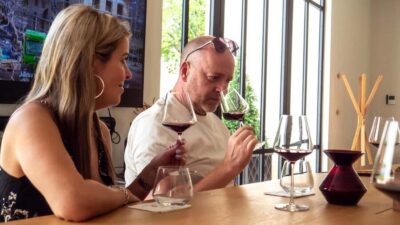
After the introduction, the session moves from explanation to practice. You taste the wines with guidance, then use what you have learned in a blind tasting. This is one of the most useful parts for a first-time Bordeaux drinker because it asks you to identify qualities without relying on a label.
A blind tasting can feel intimidating, but the tone here is meant to be friendly and practical. You are not expected to produce a perfect professional assessment. Instead, you are testing whether you can notice the difference between a wine with more tannic grip, one with softer fruit, and one with a more aromatic or fresh character.
I particularly like the way this prepares you for the blending stage. You are not simply told that Cabernet Sauvignon adds structure or that Merlot feels rounder. You taste the components and begin to recognize those roles for yourself.
The session has been described as lasting close to three hours on some occasions, even though the stated duration is about two hours and 30 minutes. Allow the full advertised time, and avoid scheduling a tight museum visit or dinner immediately afterward.
Same city, a completely different afternoon:
- Medoc or Saint Emilion Wine Tasting and Chateau from Bordeaux
★ 5.0 · 1,415 reviews - Saint Emilion Day Trip with Sightseeing Tour & Wine Tastings from Bordeaux
★ 5.0 · 1,120 reviews - Saint Emilion Half-Day Trip with Wine Tasting & Winery Visit from Bordeaux
★ 4.5 · 1,034 reviews - From Bordeaux: St. Emilion Village Half-Day Wine Tour
★ 4.7 · 728 reviews
The hands-on blending workshop
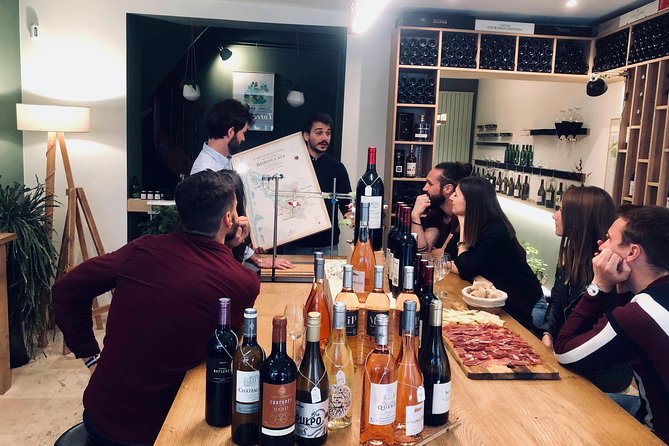
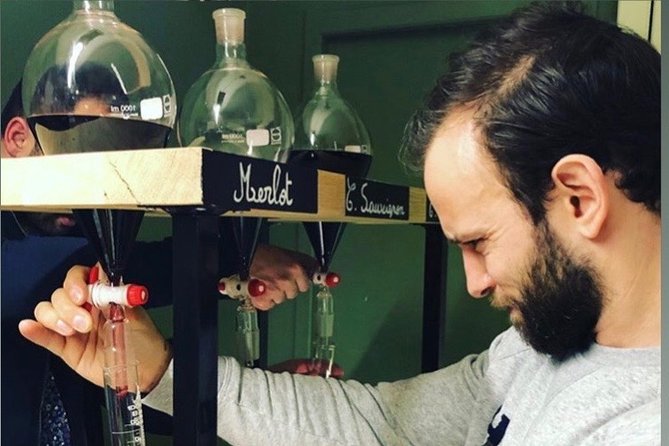
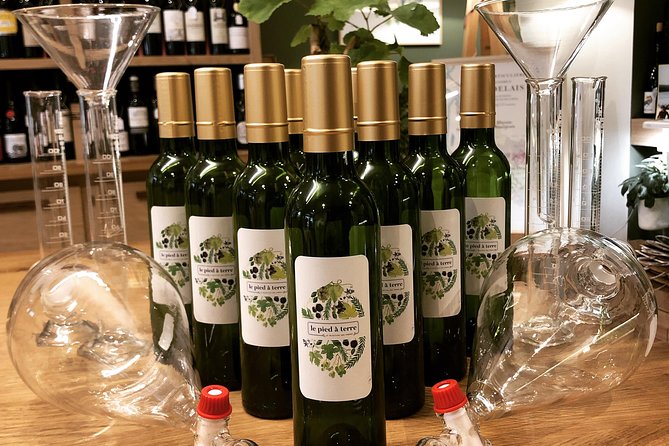
This is the part that makes the activity different from a standard Bordeaux tasting. Each person works with several rigorously selected single-varietal wines and experiments with proportions. Tubes and pipettes make the process precise enough to compare blends, while still keeping it playful.
You might begin with a simple combination of the three core varieties. Then you adjust the balance according to your own preference. A blend with more Merlot may feel softer and fruitier, while extra Cabernet Sauvignon can bring firmer tannins and structure. Cabernet Franc may shift the aroma and freshness.
There is no single correct answer. That is important. The workshop is not asking you to reproduce a famous château blend or pass a winemaking test. You are building a wine that reflects what you like, using the tasting skills from the earlier part of the session.
One useful suggestion for getting more from the exercise is to taste all three components side by side before deciding on your formula. Sequential tasting can make the differences harder to compare. Side-by-side tasting helps you see how each grape changes the whole mixture.
The session focuses on Merlot, Cabernet Sauvignon, and Cabernet Franc. One participant suggested that it could be interesting to work with a small percentage of another grape, such as Petit Verdot, Pinot, or Gamay. That is worth noting if you are hoping for a broad survey of every Bordeaux variety. This workshop is centered on the classic three-grape lesson, not on a large blending laboratory.
Taking home your named cuvée
Once you settle on your preferred proportions, you create and bottle your own cuvée. The final bottle carries your name, giving you a personal reminder of the class and of your time in Bordeaux.
The souvenir also has a practical use. When you open it later, you can think back to the choices you made and compare your blend with the other bottles created by friends or family. One family even planned a blind tasting of their own bottles afterward, which is a fun way to extend the lesson beyond the cellar.
Keep your expectations in check, though. You are not producing a fully aged château wine in two and a half hours. You are combining prepared wines into a personalized blend and bottling it. The value is in understanding the process and making a bottle tied to your own taste.
That distinction matters because two bookings were handled as ordinary tastings without the promised blending activity. The provider apologized for those mix-ups. I would politely confirm at the start that the cuvée-making portion is scheduled, particularly if this is the main reason you booked.
What makes the teaching work
The strongest feature here is the teaching style. The guides explain technical points in plain English and keep the mood light. James is named as the guide for the workshop, while Pierre and Geoffroy are also associated with the sessions and are described as brothers who host the experience together.
You may hear Bordeaux history, regional differences, aroma guidance, and winemaking explanation in the same afternoon. The best sessions move back and forth between short explanations and actual tasting, which keeps the information connected to what is in your glass.
The instructors also appear comfortable with mixed ability levels. I would recommend this to someone who has never taken a formal wine class, but it can also suit a serious wine drinker. One participant with experience at many tastings still found the visuals, blind tasting, and blending exercise useful.
Do not expect a stiff lecture from behind a podium. The atmosphere is casual and social. That works well for couples, friends, and solo visitors who enjoy meeting a few other wine fans. It may be less appealing if you want a quiet, private tasting with no group interaction.
Is $71.20 good value?
At $71.20 per person, this is not the cheapest way to taste Bordeaux. You can find simpler tastings for less, especially if all you want is a few small pours. The comparison changes once you include the teaching, blind tasting, food pairing, blending supplies, and personal bottle.
I see the price as fair for a two-and-a-half-hour activity if you take part in every stage. You are paying for a class and a creative project, not just wine by the glass. The bottle also gives the experience a lasting value that a standard tasting lacks.
The value is strongest for visitors who want to understand Bordeaux during their trip. After the class, terms such as Left Bank, Right Bank, tannin, acidity, and varietal blending should feel less abstract. That can make later wine-shop visits and restaurant choices more rewarding.
It is weaker value for anyone who dislikes red wine, does not want instruction, or expects to make wine from grapes. This is specifically a red Bordeaux blending experience, and the work involves tasting several components before assembling the final bottle.
Who should book this Bordeaux wine workshop?
I would choose this for a first Bordeaux visit if you want an easy introduction before buying bottles or visiting more estates. It gives you a useful framework without requiring a full-day excursion outside the city.
It also suits experienced wine drinkers who have already toured vineyards and want something more active. Several Bordeaux tastings can begin to blur together. Measuring your own blend gives the afternoon a clear purpose.
Families with older children may enjoy the practical side, though the activity is still built around wine tasting. Couples and groups of friends are a natural fit, especially if you plan to compare your finished bottles later.
I would skip it if you want a château tour, vineyard walk, or a meal-focused wine outing. None of those is the main point here. The setting is a city cellar, and the focus is on tasting technique and blending.
The maximum group size is 12, which is small enough for the practical work to function well. It does not guarantee a private class, so book a private arrangement only if that is explicitly offered.
Timing, access, and cancellation details
The meeting point is Le Pied à Terre, 22 Rue Judaïque, 33000 Bordeaux. The activity ends back there, and the venue is near public transportation. A mobile ticket is accepted, which makes arrival simple.
Service animals are allowed. The booking confirmation is issued at the time of reservation.
You can cancel up to 24 hours before the local start time for a full refund. Changes or cancellations made less than 24 hours ahead are not accepted for a refund. The activity can also be canceled if the minimum number of participants is not reached or if poor weather affects the session. In those cases, you are offered another date or experience, or a full refund.
FAQ
Where does the Bordeaux wine blending experience begin?
It begins at Le Pied à Terre, Cave à Vin and Atelier Dégustation, at 22 Rue Judaïque, 33000 Bordeaux, France.
Where does the activity end?
It ends back at the same meeting point, Le Pied à Terre.
How long does the experience last?
The stated duration is approximately two hours and 30 minutes. Some sessions may run closer to three hours, so leave extra time afterward.
What grapes do I use in my Bordeaux blend?
The workshop uses Merlot, Cabernet Sauvignon, and Cabernet Franc as the main single-varietal wines for blending.
Do I take home a bottle?
Yes. You can create your own cuvée and take home a bottle labeled with your name.
Is the workshop offered in English?
Yes. The experience is offered in English.
How many people can join the activity?
The maximum group size is 12 participants.
Can I cancel for a full refund?
Yes, if you cancel at least 24 hours before the experience start time. Cancellations made less than 24 hours ahead are not refundable.
Should you book it?
I would book this if you want to understand Bordeaux by tasting, testing, and making something yourself. The best parts are the clear English instruction, the blind tasting, the Basque cheese and charcuterie, and the chance to leave with a bottle built to your own proportions.
Before you commit, make sure you want a red wine lesson rather than a vineyard visit or a full meal. Also confirm that the hands-on blending section is included on your date. With that one check made, $71.20 buys a useful Bordeaux primer and a personal souvenir, not just another tasting.
Just listed in Bordeaux
- Bordeaux: Exclusive Private Guided Walking Tour★ 4.6 · 50 reviews
- Bordeaux:Wine Masterclass & Blending workshop with appetizer★ 4.8 · 54 reviews
- From Bordeaux: Essential Morning Tour with Wine Tasting★ 4.8 · 55 reviews
- Full-day Saint-Emilion: Village, Undergrounds and Châteaux★ 4.5 · 55 reviews
- Bordeaux Old Town & Market Local Food with Wine Tastings Tour★ 4.0 · 56 reviews
- Bordeaux: Saint-Emilion Village Day Trip, 2 Chateaux & Lunch★ 4.8 · 57 reviews
- Bordeaux Free Walking Tour (Tips-Based)★ 4.5 · 57 reviews
- The Ultimate Bordeaux Food Tour: Full Meal & Fine Wines★ 4.8 · 61 reviews
Bordeaux Tours, compared.
River Garonne Cruise with Glass of Wine and Canelé
Read our review →
Afternoon Saint-Emilion Wine Tasting & snack
Read our review →
Medoc or Saint Emilion Wine Tasting and Chateau from Bordeaux
Read our review →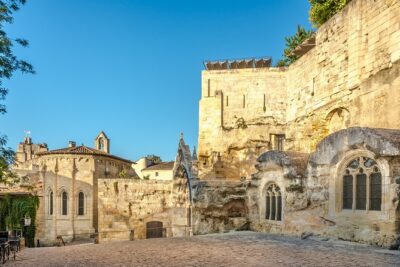
Saint Emilion Day Trip with Sightseeing Tour & Wine Tastings from Bordeaux
Read our review →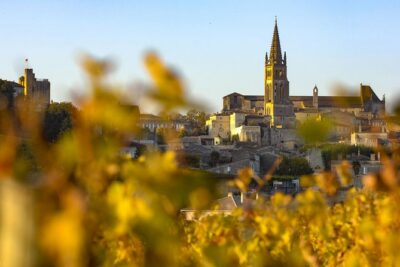
Saint Emilion Half-Day Trip with Wine Tasting & Winery Visit from Bordeaux
Read our review →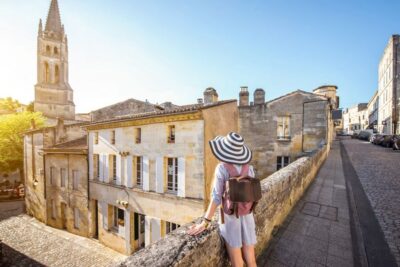
Browse the lists this tour appears in