
Reviewed · MARSEILLE TOURS
Marseille: Essential Guided Walking Tour of the City
Marseille reveals itself best on foot, and this tour connects its strongest sights in one useful sweep. You begin at La Major Cathedral, wander the old lanes of Le Panier, reach the Old Port, then follow the waterfront toward Saint-Victor and the grand terraces of Le Pharo.
I like the small groups, limited to eight, and I like the way Charles uses old photos, maps and stories to explain how the city changed. The main drawback is the 5-kilometer route, which includes hills, uneven streets and plenty of standing, so it is not suited to wheelchair users or anyone wanting a gentle stroll.
Key points at a glance
- A clear first look at Marseille: Cover La Major, Le Panier, the Old Port, Cannebière, Saint-Victor and Le Pharo in 150 minutes.
- Charles leads the walk: Expect a bilingual French and English guide with local knowledge, humor and a personal approach.
- Small groups matter: With no more than eight people, you can ask questions and hear the guide without a megaphone.
- History has a wide reach: The route touches Marseille’s Greek beginnings, Roman influence, World War II and modern city life.
- Bring proper shoes: This is an active 5-kilometer walk through old streets, waterfront paths and some uphill sections.
- Useful early in your stay: Charles provides suggestions for museums, restaurants and other places to visit after the tour.
Starting beneath La Major Cathedral

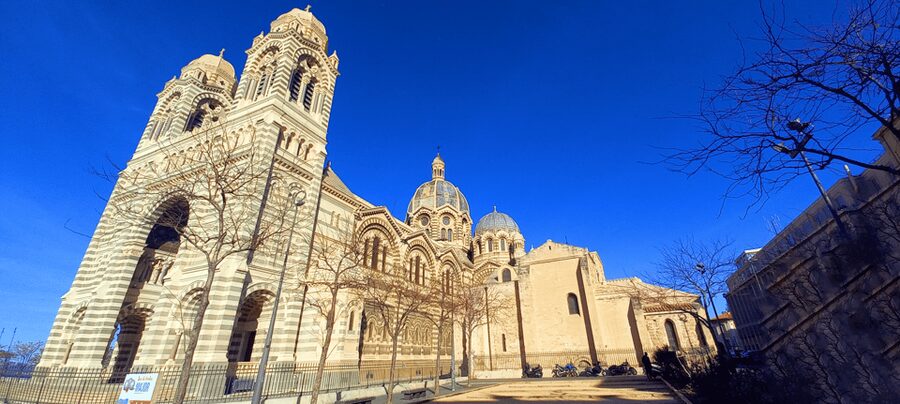
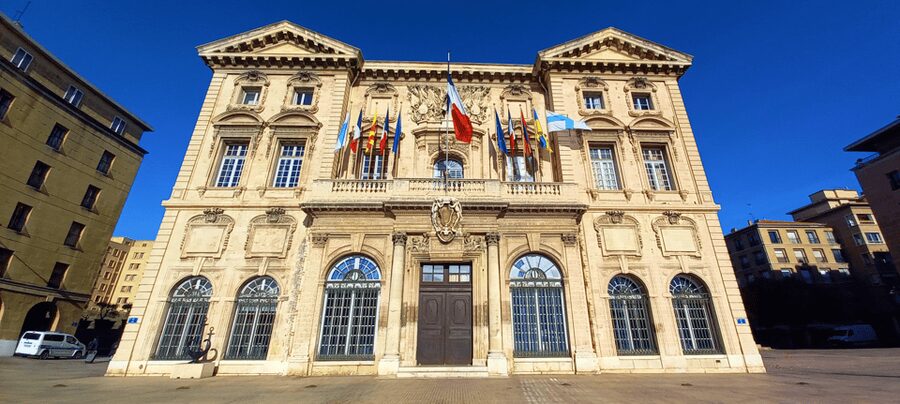
Your meeting point is in front of Cathédrale Basilique Sainte-Marie-Majeure, usually called La Major. Look for Charles wearing a white cap. This is a good starting place because the cathedral immediately gives you a sense of Marseille’s scale and its taste for grand, dramatic architecture.
La Major combines Neo-Byzantine and Romanesque styles, with an ornate exterior that looks especially striking beside the sea. You spend about ten minutes here with a guided introduction before moving into the older parts of the city.
I find this opening useful because you do not begin with a string of anonymous streets. You begin with a major landmark, then learn how Marseille’s port, neighborhoods and monuments fit together. The short stop also keeps the tour moving. This is an overview walk, not a long cathedral visit.
More City Tours in Marseille
- Marseille: City Sightseeing Hop-On Hop-Off Bus Tour
★ 3.8 · 2,820 reviews - Marseille: City Highlights Guided Half-Day E-Bike Tour
★ 4.8 · 325 reviews - Marseille Shore Excursion: City Sightseeing Tour of Marseille
★ 4.0 · 321 reviews
Le Panier, where Marseille gets personal
From La Major, you head into Le Panier, one of Marseille’s oldest districts. The neighborhood climbs the hillside above the Old Port, and its narrow streets feel very different from the broad waterfront roads below.
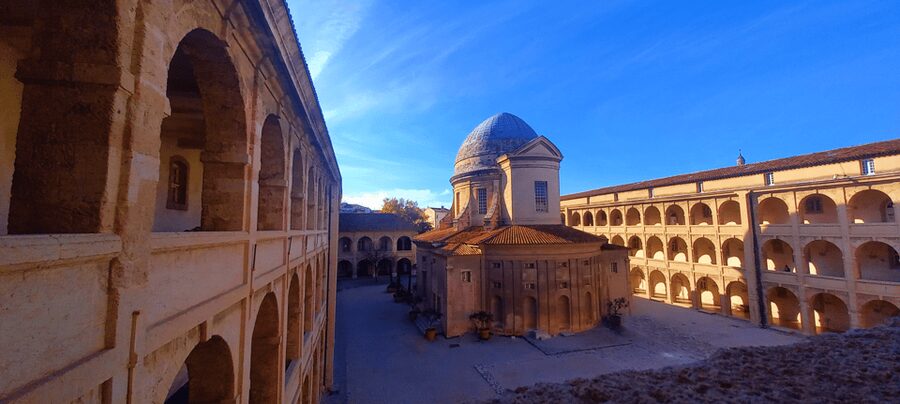
You have about 30 minutes here, enough time to see street-art murals, small lanes, the Vieille Charité and the area known as Windmill Hill. The appeal of Le Panier is not one single monument. It is the contrast between worn façades, painted walls, quiet corners and sudden views toward the port and Mediterranean.
This is also where a guide earns the price of admission. Without context, old lanes can blur together. Charles explains the city through anecdotes and points out details you might otherwise pass without noticing. His style, based on the information provided, includes humor, old photographs and maps, which helps you picture Marseille before and after major changes.
The district is not flat or polished. You should expect slopes, steps and uneven paving. Wear shoes with good grip, and do not treat this as a quick photo stop. The best part is the unhurried movement through the neighborhood, with time to ask questions.
Church of Accoules and the old streets
The Church of Accoules comes next, with roughly ten minutes for a guided visit. This stop adds another layer to the old quarter and keeps the route focused on the city’s religious and civic past.
The tour then moves along Rue de la République for about ten minutes. This broad street offers a useful change of scale after Le Panier’s tight lanes. It also helps you see that Marseille is not one uniform old town. Its character shifts from ancient alleyways to grander urban planning and commercial streets.
I appreciate this kind of transition on a walking tour. You are not simply collecting churches and buildings. You are watching the city change as you move through it. The route also includes less obvious streets, so the experience is not limited to Marseille’s postcard views.
The Old Port and Cannebière
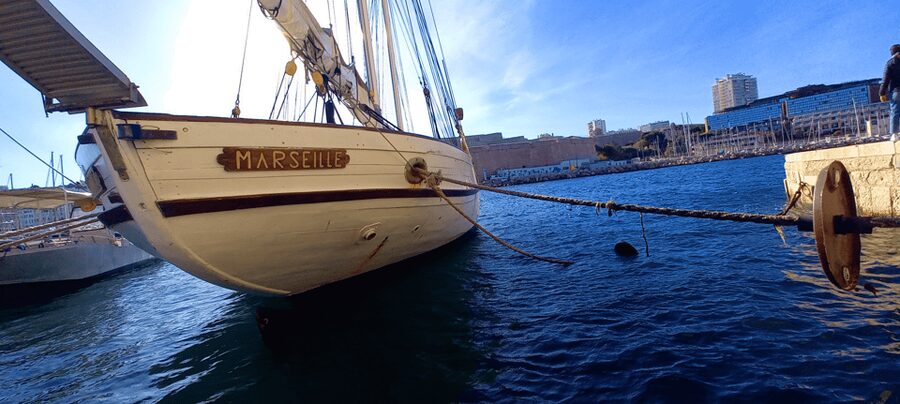
The Old Port gets about 15 minutes of guided sightseeing. This is the heart of Marseille’s public life, with boats and yachts in the water and Fort Saint-Jean and Fort Saint-Nicolas guarding the harbor entrance.
The port has drawn people for roughly 2,600 years, and the guide connects its present-day activity with its ancient Greek foundation and later Roman influence. That long timeline is one of the tour’s strengths. Marseille makes more sense when you understand that the harbor is not just scenic. It is the reason the city exists.
You continue to Cours Honoré d’Estienne d’Orves for around ten minutes, then head toward Cannebière street. Along the way, you pass cafés, bistros, restaurants, galleries, workshops and boutiques. The route gives you a taste of daily Marseille, not only its monuments.
The Old Port can be crowded and lively, especially during busy periods. That is part of its appeal, but it can also make the guide harder to hear if the group drifts apart. The small-group limit helps, and Charles is described as attentive to each person, but you should still stay close.
Cannebière is a useful place to get your bearings. It links the harbor with the city beyond it and gives you options for returning later on your own. This is where Charles’s restaurant and museum suggestions can be especially handy. Several people who joined the tour early in their stay used his advice to plan the rest of their time.
More Walking Tours in Marseille
- Marseille: Half-Day City Highlights Guided Walking Tour
★ 5.0 · 273 reviews - Marseille: No-Diet Club Local Food Tasting and Walking Tour
★ 4.8 · 173 reviews - Marseille: Walking Food Tour with Full Meal
★ 4.7 · 137 reviews - Marseille: Foodie Walking Tour of the Cours Julien District
★ 4.8 · 97 reviews
Saint-Victor’s Abbey and a well-placed break
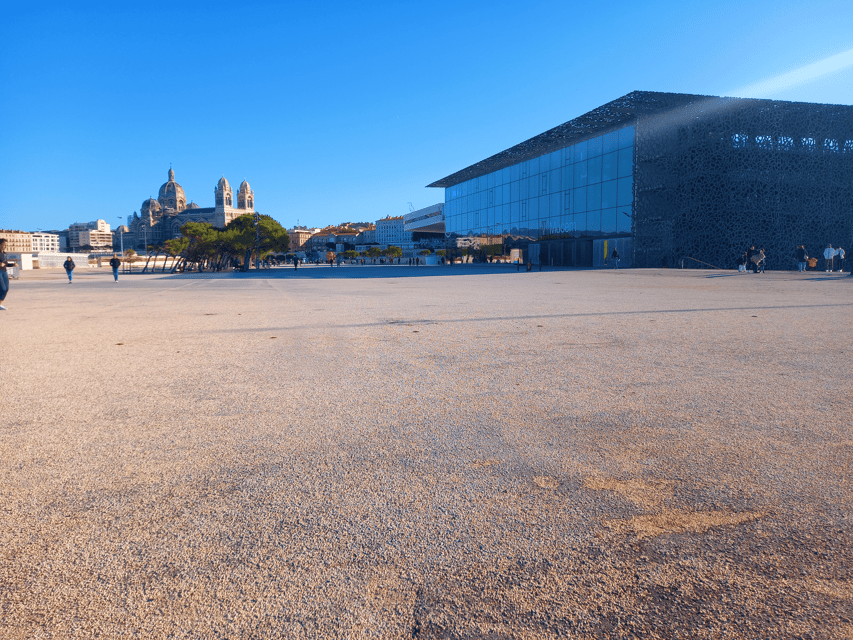
The walk continues to Abbaye Saint-Victor, with about 15 minutes for a guided visit. The abbey brings you back to Marseille’s older religious world and shows another side of the city’s architecture.
After the visit, there is a 20-minute break for sightseeing and scenic views along the way. This pause matters. A 5-kilometer route in Marseille can feel demanding in warm weather, and a planned break gives you time to catch your breath, take photographs and absorb what you have seen.
One useful detail from the experience is Charles’s attention to comfort. He has adjusted stops for shade when heat was an issue, and he is described as keeping a steady pace while paying attention to different needs within the group. That does not make the route easy, but it helps prevent the walk from turning into a race.
Bring water, sunglasses and clothing suited to the weather. Food and drinks are not included, so carry your own supplies. Comfortable shoes are not optional here.
Le Pharo and the final sea views
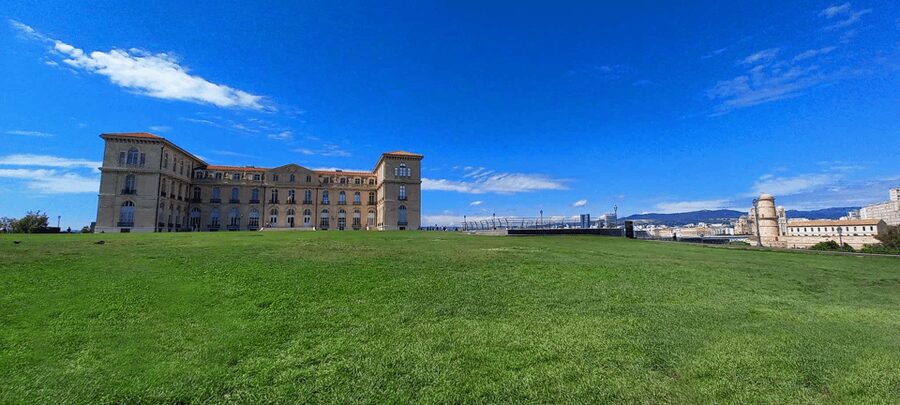
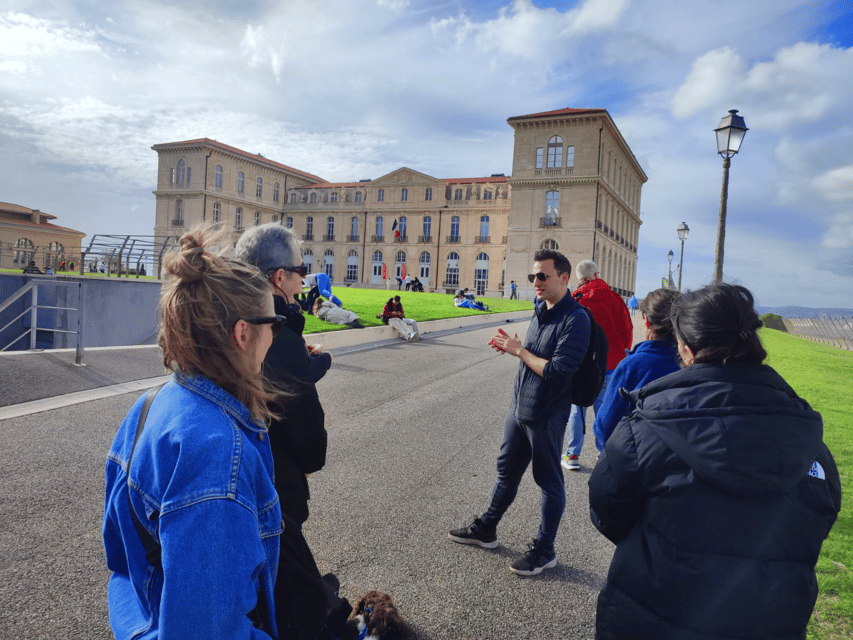
The final major stop is Palais du Pharo, reached after about 30 minutes of walking. Emperor Napoleon III built this grand palace in the mid-19th century for Empress Eugénie. The building’s ornate façade and sweeping terraces provide one of the strongest visual finishes on the route.
From Le Pharo, you can look back toward the Old Port and out across the Mediterranean. It is a fitting place to end because the tour has followed Marseille’s identity from ancient harbor to modern seaside city.
The listed drop-off points are the Old Port and Palais du Pharo. If you need to return to La Major or another part of Marseille, confirm the end point with the guide before setting off. The route description also refers to returning to the meeting point, so the exact finish may depend on the day’s arrangements.
The end at Le Pharo is more than a final monument. It gives you a broad view after two hours and a half of close-up streets, churches and neighborhoods. You see how the districts sit around the harbor, which makes later exploring easier.
What Charles adds to the experience
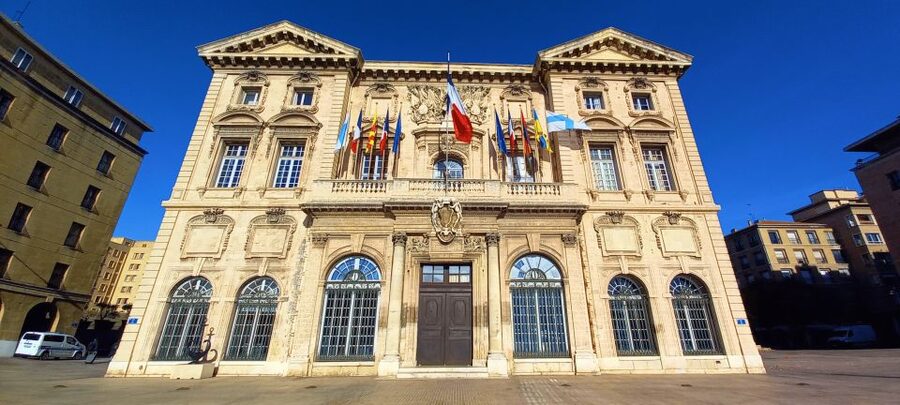
The strongest feature here is the guide. Charles is described as a passionate local guide who works in French and English. He uses humor, historic images and maps, and he adjusts the conversation to the interests of the group.
That personal approach matters in a group of eight or fewer. You can ask about food, museums, architecture or the city’s past without interrupting a large lecture. Solo participants have also found the format welcoming, with the guide making an effort to include everyone.
Charles’s English is described as clear, and his storytelling connects ancient events with recent ones. The tour covers the Greek and Roman periods, Marseille’s maritime role, World War II and the preservation of historic places. It does not try to explain every corner of the city. Instead, it gives you a usable framework for exploring more on your own.
The tone appears friendly rather than academic. If you want a formal lecture packed with dates, this may feel informal. If you want history that is easier to remember, the humor and visual aids should help.
Is $41 a fair price?
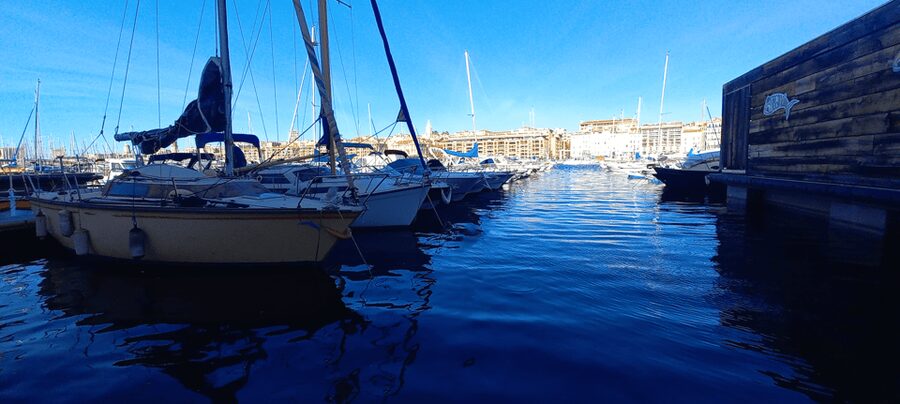
At $41 per person, this tour offers reasonable value if you want a compact introduction to Marseille with a local guide. You receive 150 minutes of guiding, a route of about 5 kilometers and a small group capped at eight people.
The value comes less from admission tickets, since food, drinks and other extras are not included, and more from the route and interpretation. You see several major areas without having to work out the connections yourself. You also get context at places that can be hard to understand from a quick look.
A private tour would normally offer more control, but this small-group format can feel nearly personal when only a few people book. Some departures have had just one couple or a very small number of participants. You should not count on a private tour, but the group limit gives you a good chance of close contact with the guide.
I would book it near the start of a Marseille visit. The route introduces the Old Port, Le Panier and Le Pharo, while the food and museum suggestions can shape the next few days. If you have only a short stop in the city, it also provides a strong visual overview without spending a full day on a tour.
Who should choose this walk?
This experience suits first-time visitors, cruise passengers with several hours in port and anyone who wants a quick sense of Marseille before exploring alone. It is also a good fit for solo visitors because the small group and guide’s inclusive manner can make the walk feel social without forcing conversation.
History fans will appreciate the range of subjects, from Greek origins and Roman influence to World War II. Architecture lovers get La Major, the Vieille Charité, Saint-Victor’s Abbey and Palais du Pharo. Food-focused visitors can use the later recommendations for restaurants and local dishes.
You should think twice if you dislike hills, uneven streets or walking in the sun. The route is not suitable for wheelchair users, and there is no promise of food or drink along the way. Five kilometers over 150 minutes is moderate for an active walker, but it is not a sit-down sightseeing experience.
Practical advice before you go
Wear comfortable shoes and bring water. Sunglasses, weather-appropriate clothing and a small snack are sensible, since food and drinks are your responsibility.
Arrive at La Major with enough time to find the guide in the cathedral’s shadow. The white cap is the visual marker. Keep your phone charged if you want to photograph the maps or historic images Charles may use during the talk.
You can cancel up to 24 hours before the start for a full refund, and the reserve-now, pay-later option keeps your plans flexible. Check available starting times when booking, since the 150-minute duration is fixed but departure times can vary.
Should you book it?
Book this walk if you want a well-paced introduction to Marseille, not a checklist of every attraction. Charles’s local perspective, clear English, humor and practical suggestions add real value, while the small group keeps the experience personal.
Skip it if you need step-free access, want a very short stroll or prefer to explore without a set route. For most first visits, though, this is a smart way to connect La Panier, the Old Port, Saint-Victor and Le Pharo in one afternoon. The final views give you a strong sense of the city, and the advice afterward can help you keep exploring with purpose.
FAQ
Where does the Marseille walking tour start?
The tour starts in front of Cathédrale Basilique Sainte-Marie-Majeure, known as La Major, in Marseille. The guide wears a white cap.
How long does the tour last?
The tour lasts 150 minutes, or two and a half hours.
How far do you walk?
The route covers about 5 kilometers.
Which languages does the guide speak?
The live guide speaks French and English.
How large is the group?
The tour is limited to eight participants.
What sights are included?
The route includes La Major Cathedral, Le Panier, the Church of Accoules, Rue de la République, the Old Port, Cours Honoré d’Estienne d’Orves, Saint-Victor’s Abbey and Palais du Pharo.
Is food included?
No. Food and drinks are not included, so you should bring water and anything else you may need during the walk.
Is the tour suitable for wheelchair users?
No. The tour is not suitable for wheelchair users.
Just listed in Marseille
- Marseille: Frioul Archipelago Catamaran Cruise with Lunch★ 4.4 · 49 reviews
- Marseille: Self-Guided Smartphone Tour by E-Scooter★ 4.7 · 50 reviews
- Cassis National Park E-Mountain Bike Experience with Virtual Guide★ 5.0 · 52 reviews
- Lavender Small-Group Tour In Valensole from Marseille★ 4.5 · 53 reviews
- Provence : Aix en Provence, Cassis and Marseille Private Tour★ 4.5 · 53 reviews
- Marseille : Calanques Catamaran Cruise with Lunch & Wine★ 4.8 · 54 reviews
- Rando-Palmée Getaway Around an island★ 4.0 · 54 reviews
- Aix-en-Provence, Cassis, Marseille – Private Tour From Marseille★ 5.0 · 55 reviews
Marseille Tours, compared.

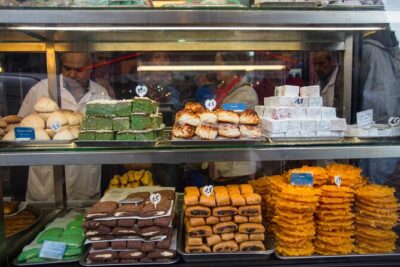
Marseille Food Tour – Full Meal of Local Tastes by Do Eat Better
Read our review →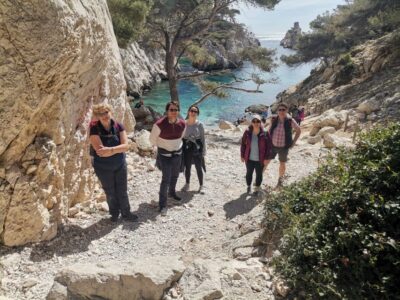
Calanques National Park Guided Hike with Picnic
Read our review →


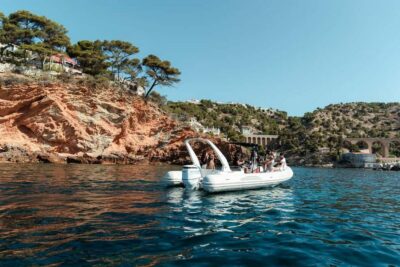
Calanques Sailing Day Trip with Lunch and Wine
Read our review →Browse the lists this tour appears in