
Reviewed · LOUVRE MUSEUM TOURS
Mona Lisa & Louvre Masterpieces Tour with Reserved Access
The Louvre is too big for a casual wander, especially on a first visit. This tour gives you a clear route through its famous works, from the Mona Lisa and Venus de Milo to Michelangelo’s Dying Slave and the Great Sphinx of Tanis. The useful part is not just getting inside, but having someone explain what you are looking at.
I like the reserved museum entry, which can save serious time when the queue stretches outside, and I like the personal headset that keeps the guide audible in crowded galleries. The main drawback is pace: three hours is enough for the Louvre’s greatest hits, not for lingering over every room. You can stay afterward for free time, but your guided visit moves briskly.
Key points to know before booking
- Meet at the Arc de Triomphe du Carrousel: The meeting point is outside the Louvre entrance, beside the horse-topped arch.
- See the essential masterpieces: The route includes the Mona Lisa, Venus de Milo, Winged Victory, Great Sphinx of Tanis, and major Renaissance and French works.
- Expect a busy, active visit: There is plenty of walking and standing, with security screening before entry.
- Your guide makes the difference: Guides such as Saeed, Summer, Omar, Anna, Natalia, and Hugo have been praised for clear explanations, humor, crowd control, and patience.
- Stay longer after the tour: The guided portion lasts about three hours, and the planned free time lets you continue exploring at your own pace.
- Optional wine stop: The upgraded version ends at Ô Chateau for wine paired with cheese and charcuterie.
Why a Louvre guide is worth the $80 price
At $80 per person, this is not the cheapest way into the museum. But the price includes the Louvre ticket, reservation fee, an English-speaking guide, and a headset. That matters because the Louvre can feel less like a museum visit and more like a city with confusing streets, grand staircases, packed rooms, and too many choices.
You could enter alone and spend hours following signs to the Mona Lisa. You might also miss the connection between the former palace, the royal apartments, the painted ceilings, and the art collected by French kings. A good guide gives you a route and a story, which is especially useful when you have only one Louvre visit in Paris.
The tour’s strongest value comes from time and focus. You are not paying to see every painting. You are paying to get through the museum’s scale without wasting your morning, then to understand why its best-known objects matter.
The experience has earned a 4.6 rating from more than 6,800 bookings, and the praise is remarkably consistent about the guides. Saeed is described as bringing works to life with history and anecdotes. Summer is praised for handling the crowds and offering practical advice for viewing the Mona Lisa. Omar receives repeated praise for his background on major works and his calm way of giving people room to look.
Guide quality can vary from one departure to the next, as it does with any scheduled group tour. The guide names associated with especially strong experiences include Anna, Addie, Anais, Natalia, Laurent, Crystal, Hamish, Mo, and Severine. The pattern is clear: this tour works best when your guide turns a crowded art museum into an understandable route.
A few other Paris half-days to compare
- Paris: Louvre Museum Timed-Entrance Ticket
★ 4.6 · 71,977 reviews - Paris: Louvre Guided Tour with Reserved Access & Boat Cruise
★ 4.3 · 16,353 reviews - Louvre Museum Masterpieces Guided Tour with Access
★ 4.5 · 12,023 reviews
Finding the meeting point at the Carrousel
Do not go straight to the Louvre Pyramid entrance expecting to find the group there. The meeting point is beside the Arc de Triomphe du Carrousel, the smaller arch topped by a horse-drawn chariot.
The simplest way to locate it is to stand with your back to the Pyramid. Look across the road toward the entrance to the Tuileries Garden. The tour coordinators wait to the left of the arch, beside the wall railing, wearing blue.
This detail is worth taking seriously. The Louvre grounds are large, and arriving at the wrong side of the building can turn a calm arrival into a rushed search. Give yourself time to identify the arch and find the blue-clad team.
The tour does not include hotel pickup or drop-off. At the end, you can finish near the Louvre Pyramid, or continue to Ô Chateau if you selected the wine tasting upgrade.
Starting beneath the Louvre Pyramid
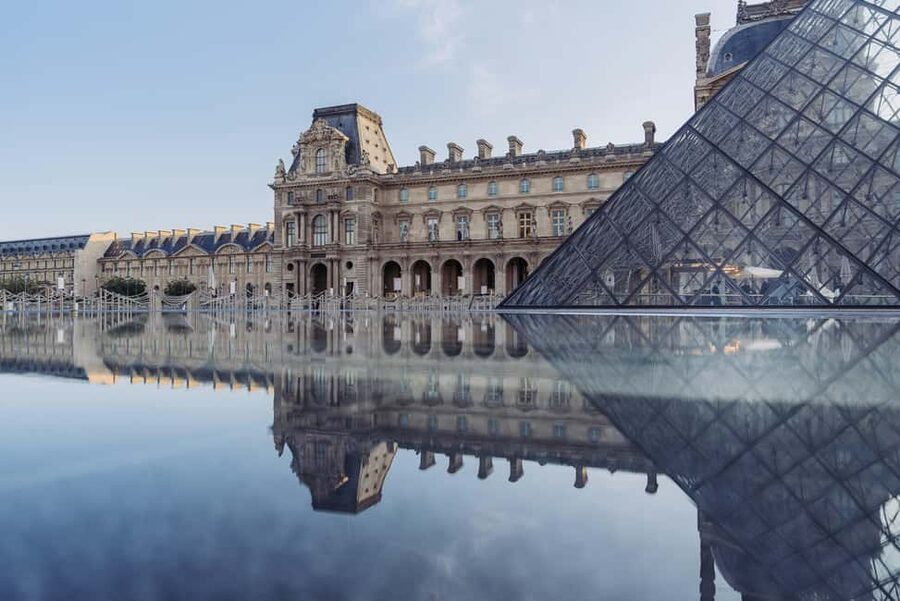
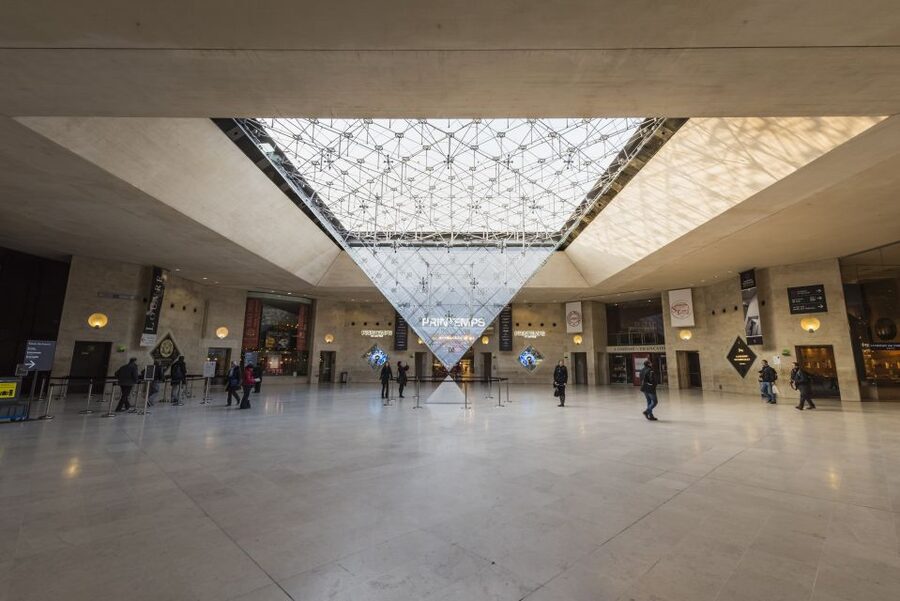
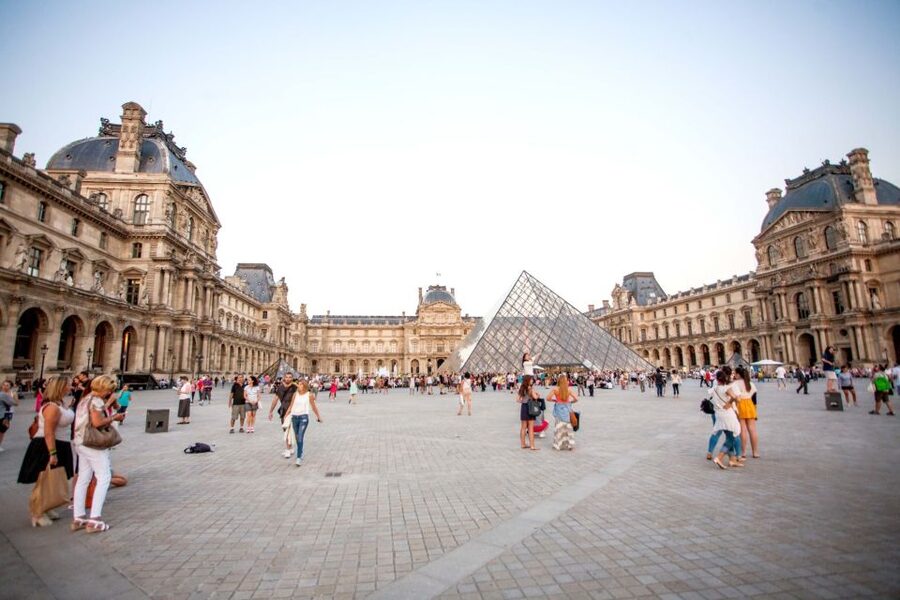
The Louvre Pyramid is more than a photo stop. It is the modern entrance to a museum whose oldest foundations reach back roughly 800 years, and the contrast helps explain why the Louvre feels so unusual.
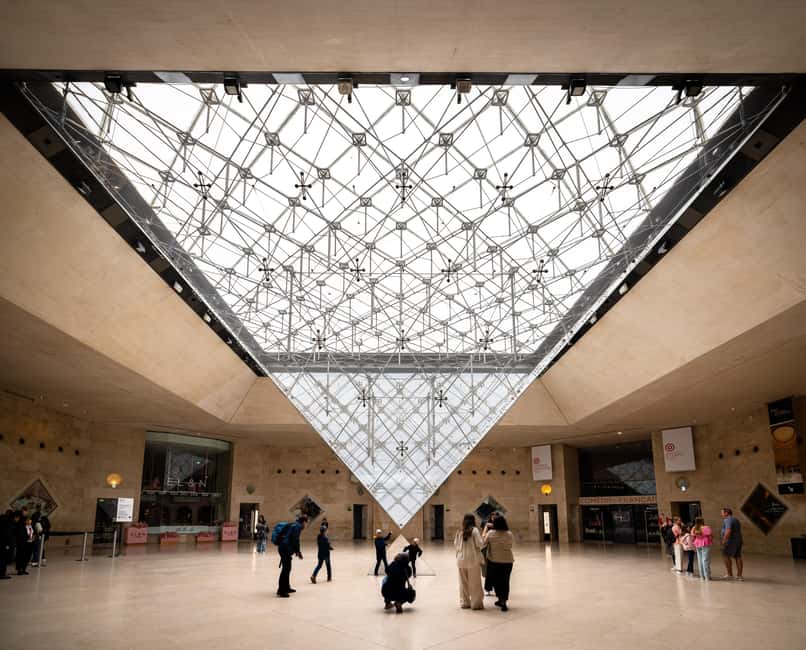
Your guide spends about 30 minutes around the Pyramid and the entrance area. You can expect an introduction to the museum, its layout, and its role as both a former royal residence and one of the world’s major museums. This outside orientation is useful because the interior can quickly become confusing.
You will also have time for photographs. The Pyramid is a practical meeting landmark, but it is also one of Paris’s most recognizable architectural views, with the historic palace surrounding a modern glass structure.
After this introduction, you pass through security and enter the museum. All visitors must complete security screening, even with reserved access. Reserved entry helps you avoid the regular ticket queue, but it does not remove security checks.
Seeing the Louvre’s famous works without wandering aimlessly
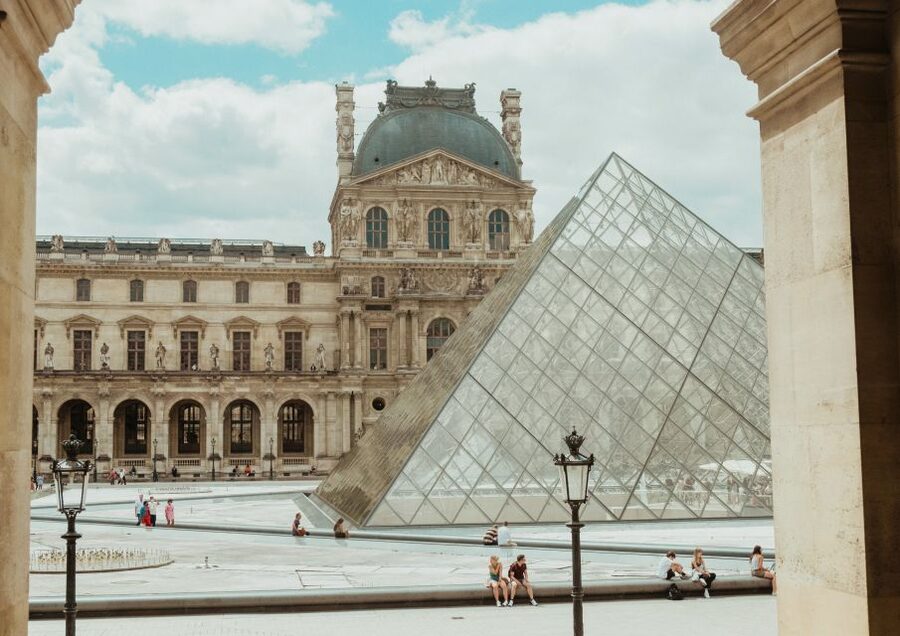
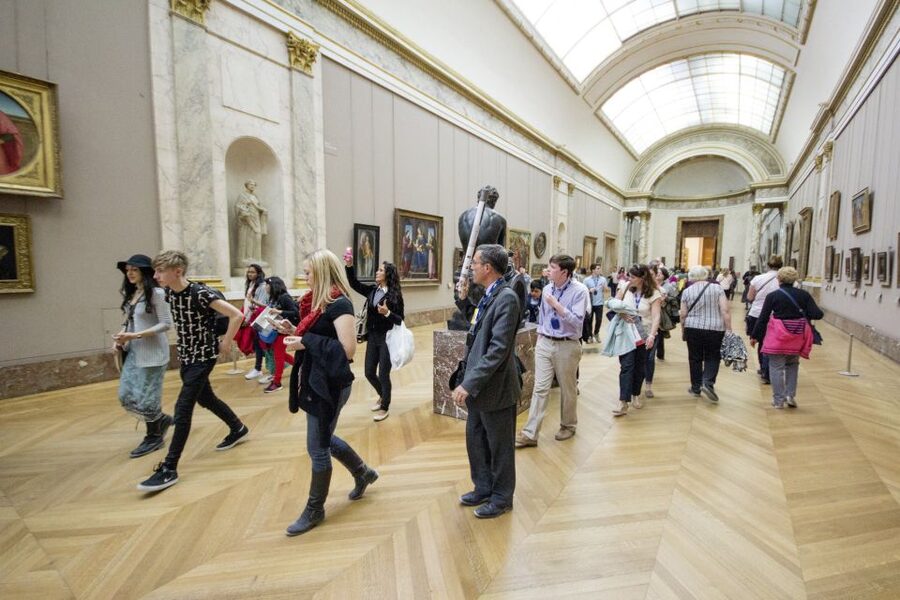
The main guided visit lasts about two and a half hours. The route is designed around major works rather than every wing, so you get a strong first look at the Louvre without trying to cover its entire collection.
That focus is a benefit. Several people who have visited the museum alone found that a guide helped them see more and understand more. One first-time visitor described the tour as a way to check off the major works while building a desire to return for a slower visit.
The tradeoff is time at each object. An artist may want to stop and study a painting, but the group must keep moving. A few visitors felt rushed through rooms, although the chance to stay afterward helps solve that problem.
Your headset is useful here. In crowded galleries, guides can be hard to hear when groups gather around a famous painting. The personal audio system lets you listen while standing a little apart from the main cluster.
Same city, a completely different afternoon:
- Disneyland® Paris 1-Day Ticket
★ 4.6 · 49,412 reviews - Paris: Versailles Palace and Gardens Full Access Ticket
★ 4.6 · 41,579 reviews - Paris: Evening River Cruise with Music
★ 4.4 · 22,721 reviews - Paris: Eiffel Tower Entry Ticket with Optional Summit Access
★ 4.4 · 20,035 reviews
Mona Lisa: famous, crowded, and best approached with patience
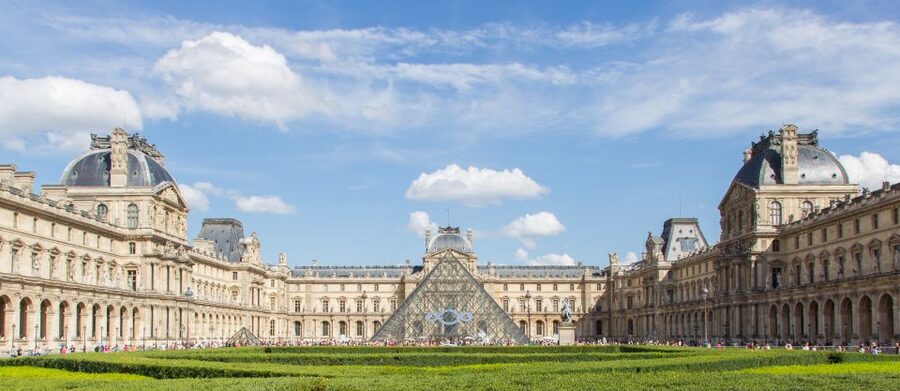
The Mona Lisa is the tour’s headline stop, but it may not be the quiet, face-to-face encounter you imagine. The painting attracts a dense crowd, and the viewing area can feel tightly managed.
Your guide can help you understand how to approach the room and where to position yourself. Summer was singled out for giving practical advice on seeing the painting despite the crowds. Even so, expect a short viewing opportunity rather than a long private look.
The guide’s explanation adds value because the painting is easy to reduce to a smile and a famous name. You will hear about Leonardo da Vinci and the details that make the portrait so closely studied. The point is not simply to take a photograph, but to notice why this small portrait has held such power.
If the Mona Lisa is your main reason for booking, keep expectations realistic. You will see it, but crowd levels can affect how long you can stand in front of it and how clearly you can look.
Venus de Milo and Winged Victory
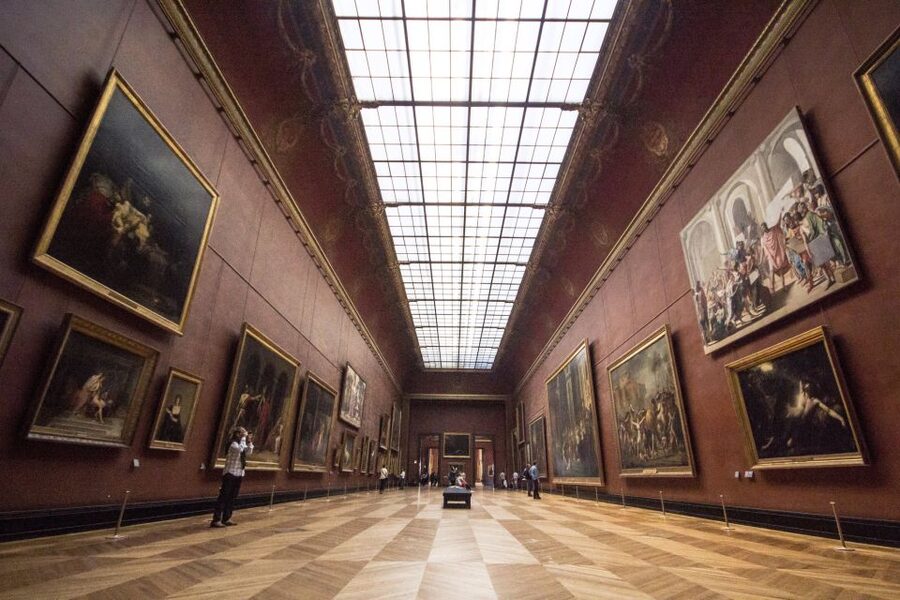
The classical sculpture route brings two of the Louvre’s best-known objects into the same visit.
The Venus de Milo is an ancient Greek statue famous for its missing arms and graceful pose. Your guide can help you look beyond the familiar silhouette and consider how the sculpture’s posture, proportions, and presentation shape your impression.
The Winged Victory of Samothrace has a different effect. Set high on the Daru staircase, it appears to surge forward, with wings spread and drapery shaped by imagined wind. The staircase setting gives the statue a sense of movement even though it is carved in stone.
These works are valuable stops for non-specialists because you can understand their impact immediately, even without an art-history background. A guide adds the historical and visual clues that turn a quick photograph into a more informed look.
The staircase and surrounding galleries also require walking and standing. If you tire easily, the pace may be demanding.
Greek and Roman antiquities, including the Great Sphinx of Tanis
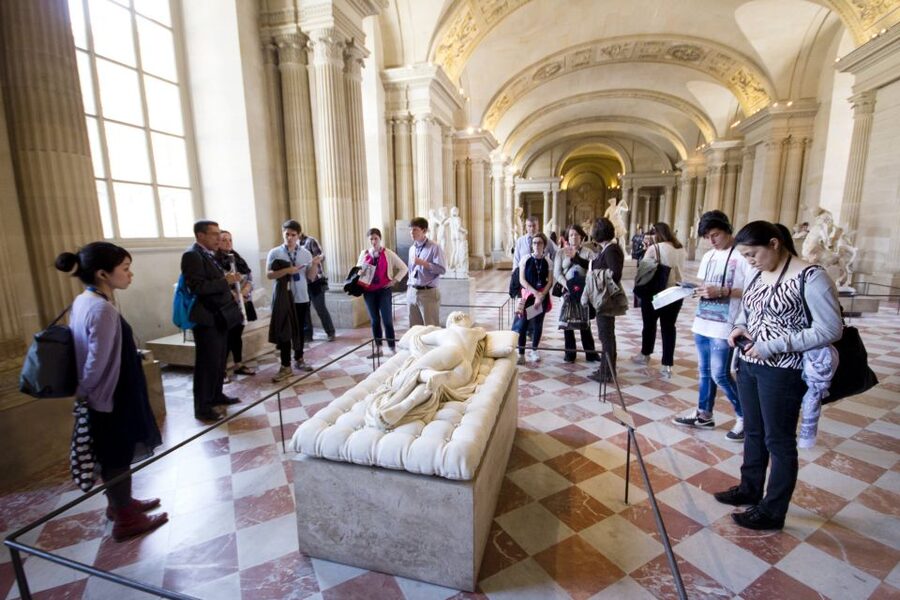
The tour moves beyond the familiar European masterpieces into the Louvre’s ancient collections. One major stop is the Great Sphinx of Tanis, an imposing sculpture more than 4,000 years old.
This is an important change of scale. After standing before relatively intimate paintings, you encounter an object built to project power across thousands of years. The guide connects the sculpture to the museum’s wider collection of Greek, Roman, and Egyptian antiquities.
This part of the visit helps you see that the Louvre is not only a home for Leonardo and Raphael. Its ancient collections are central to the museum’s identity, and they give context to later European art.
You will also see selected Greek and Roman pieces rather than the full antiquities collection. If ancient history is your main interest, plan to use the free time afterward to return to this area.
Renaissance painting and Michelangelo’s Dying Slave
Leonardo da Vinci and Raphael feature among the Renaissance works on the route. The guide’s role is particularly helpful here, since a painting can look beautiful at a glance while its subject, technique, and historical setting remain unclear.
Michelangelo’s Dying Slave provides a strong sculptural counterpoint. The figure appears caught between movement and rest, with the unfinished quality adding to its emotional force. It is one of the stops where a short explanation can change what you notice in the marble.
The tour does not promise every Renaissance master or every major painting. One person specifically wished for works by Monet, but this experience is built around the Louvre’s headline collection, not a survey of all French Impressionism or every famous artist in the building.
That is a useful distinction when choosing. If you want a broad, first-visit overview, the route fits. If you have a narrow interest in Impressionism, modern art, or a particular department, you may prefer more independent time inside the museum.
Canova, Caravaggio, and French Romantic art
The route also includes Canova’s Psyche Revived by Cupid’s Kiss, a polished marble sculpture centered on tenderness and movement. Its smooth finish and theatrical pose make it a memorable stop, especially after the more powerful presence of Michelangelo.
Caravaggio brings a different mood. His paintings are known for dramatic light, strong emotion, and figures that feel close to ordinary human life. Your guide helps place his work within the Renaissance and later European painting traditions.
French Romantic art adds another turn, with passion and drama replacing the controlled calm of much classical sculpture. The tour uses these changes in style to make the museum easier to read. Instead of seeing unrelated masterpieces, you begin to notice how artists respond to earlier ideas.
The exact time spent at each work depends on crowds and the group’s pace. That flexibility is practical in a museum where a blocked gallery or heavy foot traffic can force the guide to adjust the order.
Apollo Gallery and the Napoleon Apartments
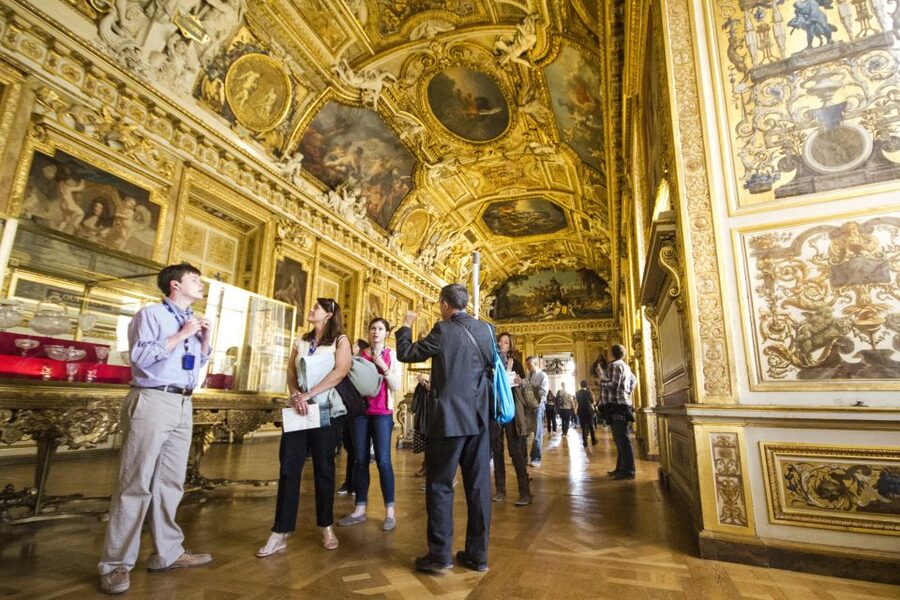
The Apollo Gallery shows the Louvre’s royal side. Its grand decoration and connection to the former palace help explain the building’s past before it became a public museum.
The Napoleon Apartments offer an even clearer look at imperial luxury. Their Second Empire interiors remain filled with opulent decoration, giving you a glimpse of how power and wealth were presented through rooms, furnishings, color, and ceremony.
These rooms are easy to overlook if you are racing only between paintings. I like their inclusion because they make the Louvre itself part of the visit. The building is not just a container for art. Its architecture and rooms tell a parallel story.
One guide, Eric, was praised for covering the museum’s history, important statues and paintings, and royal living quarters in one three-hour route. That balance is what makes the experience feel like a tour of the Louvre, rather than a quick march to the Mona Lisa.
The final two hours: use your freedom wisely
The planned schedule includes two hours of free time inside the Louvre after the guided portion. The advertised activity duration is 210 minutes, or three and a half hours, while the guided portion is described as three hours and the free period may allow you to remain longer. Confirm the exact timing when you choose your departure.
Use the extra time to revisit a work that caught your attention. You can also explore a department the group passed quickly, return to the ancient collections, or simply slow down in a quieter room.
The free time is one of the tour’s best features. A guided group cannot pause for every object, but you do not have to leave once the guide finishes. Several people used the introduction to learn the layout, then continued alone with a better sense of where to go.
You will still need to follow museum rules and pass through any required areas. Large bags and luggage are not suitable. Items larger than 55 by 35 by 20 centimeters are not permitted, and baby strollers are not allowed on this tour.
The wine, cheese, and charcuterie upgrade
The optional upgrade adds a wine tasting at Ô Chateau, a high-end central Paris wine bar. You receive wine paired with artisanal cheese and charcuterie after the museum visit.
This is not part of the basic $80 tour, so check the selected option before paying. It suits you if you want to finish an art-heavy morning with food and conversation rather than continue sightseeing immediately.
The tasting also gives the day a change of rhythm. After several hours on your feet, sitting down with French wine, cheese, and charcuterie can be a pleasant close. If you are more interested in seeing additional Louvre rooms, skip the upgrade and use your free time inside the museum instead.
Who should book this Louvre experience?
I would choose this tour for a first visit, a short Paris stay, or anyone who feels uneasy about navigating a huge museum alone. It is also a good fit if you want the major works explained in plain English rather than relying on wall labels.
Families with older children and adults who enjoy history, sculpture, and famous paintings should get the most from it. The guides are expected to keep the group together, answer questions, and adjust around crowds. Guides including Laurent and Anna have been praised for counting the group and managing busy rooms carefully.
I would think twice if you use a wheelchair or have significant mobility limitations. The experience is not suitable for wheelchair users or people with mobility impairments, and it involves considerable walking and standing.
Wear comfortable shoes. Leave large luggage behind, arrive at the Arc de Triomphe du Carrousel rather than the Pyramid entrance, and allow time for security. Groups of seven or more may be divided into smaller groups at the meeting point.
Should you book it?
Book it if you want a well-organized introduction to the Louvre, especially when the normal queue is long or your Paris schedule is tight. The reserved entry, headset, focused route, and two hours of possible independent exploring make $80 a reasonable price for many first-time visitors.
Do not book it expecting a quiet Mona Lisa viewing or a complete tour of the museum. You will move quickly, and the route favors iconic works, royal rooms, antiquities, and major European art over specialist collections such as Monet.
For most first-time Louvre visitors, I think the guided structure is worth the money. You will see the essential works, learn how the palace became a museum, and leave with a plan for exploring more on your own.
FAQ
Where does the Louvre tour meet?
Meet beside the Arc de Triomphe du Carrousel, not at the Louvre Pyramid entrance. With your back to the Pyramid, look across the road toward the Tuileries Garden. The team waits to the left of the arch beside the wall railing, wearing blue.
Is Louvre admission included?
Yes. The experience includes the Louvre entrance ticket and reservation fee, along with reserved access.
How long does the guided tour last?
The guided visit includes about 30 minutes at the Louvre Pyramid and roughly two and a half hours inside the museum.
Is the tour conducted in English?
Yes. A live English-speaking guide leads the tour, and a personal headset helps you hear clearly.
Does the tour include the Mona Lisa?
Yes. The route includes the Mona Lisa, though crowd levels can make the painting difficult to view for a long time.
Which major sculptures are included?
The route includes the Venus de Milo, Winged Victory of Samothrace, the Great Sphinx of Tanis, Michelangelo’s Dying Slave, and Canova’s Psyche Revived by Cupid’s Kiss.
Can I stay inside the Louvre after the guided visit?
Yes. The schedule includes free time for you to continue exploring the museum on your own. The exact timing should be checked when you select a departure.
Is the wine tasting included in the standard price?
No. Wine paired with artisanal cheese and charcuterie is included only when you select the upgrade option.
Can I bring luggage into the Louvre?
Large bags and oversize luggage are not allowed. Items exceeding 55 by 35 by 20 centimeters are not permitted, and baby strollers are not allowed on this tour.
Is this tour suitable for wheelchair users?
No. The experience is not suitable for wheelchair users or people with mobility impairments. It also involves a considerable amount of walking and standing.
Just listed in Paris
- Chartres Cathedral 5 Hours Tour from Paris with Private Transport★ 4.5 · 49 reviews
- Paris: Giverny & Versailles Small Group or Private Tour★ 4.5 · 49 reviews
- Paris: Louvre photoshoot or Seine bridges Eiffel Tower walk★ 5.0 · 49 reviews
- Paris: Choux Pastry and Chocolate Éclair Making Class★ 4.9 · 50 reviews
- Private tour of the Champagne area, meet local producers and taste their Champagne, start from your hotel in Paris.★ 5.0 · 50 reviews
- Paris Eternelle Notre-Dame Virtual Reality Tour★ 4.5 · 50 reviews
- Normandy D-Day Landing Beaches Private Day Trip from Paris★ 5.0 · 50 reviews
- Disneyland® Paris 1 Day with Round-Trip Train Tickets from Paris★ 4.0 · 50 reviews
Louvre Museum Tours, compared.

Louvre Guided Tour with Reserved Access & Boat Cruise
Read our review →
Louvre Museum Entry Ticket With Host and River Cruise
Read our review →
Louvre Museum – Exclusive Guided Tour (Entry Included)
Read our review →
Louvre Museum Hosted Entry and Mona Lisa Audioguide
Read our review →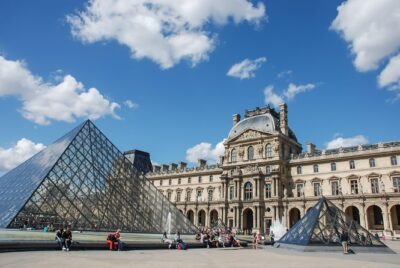
Louvre Priority Access with Mona Lisa Escort or Guided Option
Read our review →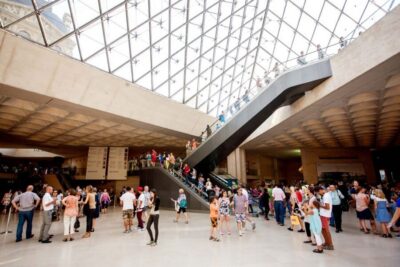
Browse the lists this tour appears in