
Reviewed · MONT SAINT-MICHEL DAY TRIPS
Mont Saint-Michel: 3 Museums Entry Pass
Mont Saint-Michel’s famous Abbey gets most of the attention, but these three smaller museums tell the stories that the grand church cannot. You’ll move from the bay’s huge tides to medieval prison legends, then into the home of knight Bertrand du Guesclin and astrologer Tiphaine de Raguenel. I especially like the 250 old model boats and the chance to see a real medieval residence, not just another scenic street.
I also like that the pass gives you a simple way to add historical context to a visit that can otherwise feel like a climb through shops and crowds. The main caution is presentation: some displays feel dated, and the Maritime and Historical museums may seem more like old-fashioned attractions than polished modern museums. The Logis Tiphaine is the strongest stop for many visitors.
Key Points Before You Buy
- Three museums in one day: Visit the Maritime Museum, Historical Museum, and Logis Tiphaine with one pass.
- 250 model boats: The Maritime Museum has a large collection tied to Mont Saint-Michel’s sea setting.
- A knight’s medieval home: See the residence of Bertrand du Guesclin and Tiphaine de Raguenel.
- Unusual historical displays: Expect ancient weapons, medieval torture instruments, an iron cage linked with Louis XI, and stories of the quicksand.
- Abbey entry is separate: This pass covers the three museums only, not the Abbey.
- Good value for history fans: At $21 per person, it can fill out a full day, but its value depends on how much you enjoy old-style museum displays.
Why Add These Museums to a Visit to Mont Saint-Michel?
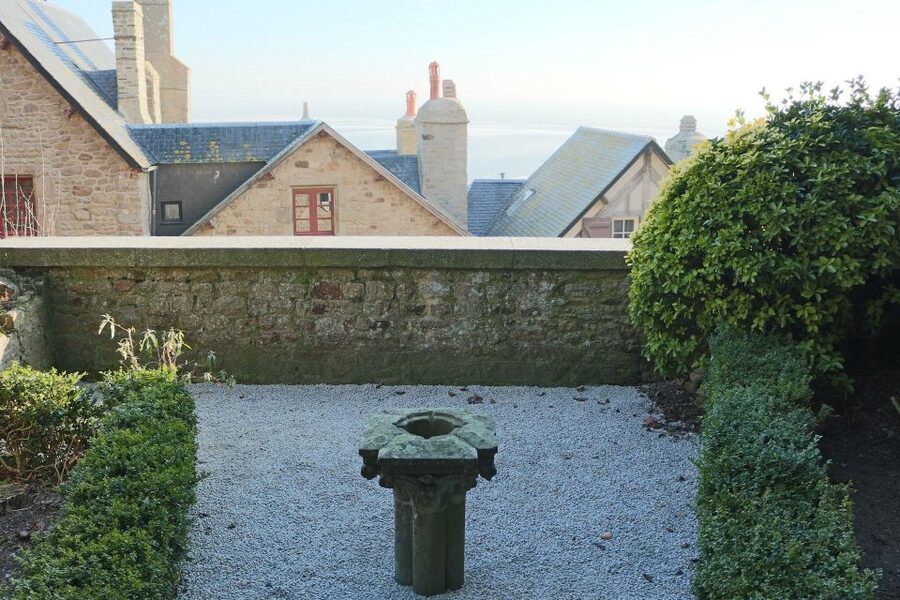
Mont Saint-Michel is easy to experience as a postcard. You cross toward the rocky island, walk up the narrow lanes, take in the walls, and head for the Abbey. That gives you the view, but not always the full story.
The three museums add smaller, more personal chapters. You learn how water shaped life here, how the mount became a place of faith and imprisonment, and how one medieval couple lived inside this unusual setting. I find that useful because the island’s history can otherwise blur together beneath the crowds and steep lanes.
This is not a guided tour with a named historian leading you from room to room. It is a self-guided museum pass. You show your reservation at the Musée Maritime ticket counter, then visit the included sites during its one-day validity.
That format gives you control. You can visit the museums between the Abbey and lunch, or return to one later in the day if the timing works. The trade-off is that you must supply your own context and pace. The displays do the teaching, with some explanations presented in narrative form and some exhibits relying more on atmosphere than detailed interpretation.
A few other France half-days to compare
- Day Trip to Mont-Saint-Michel from Paris
★ 4.5 · 4,876 reviews - Mont Saint Michel Day Trip from Paris with English Speaking Guide
★ 4.5 · 2,750 reviews - From Paris: Mont Saint Michel Day Trip with a Guide
★ 4.6 · 1,970 reviews
Starting at the Maritime Museum
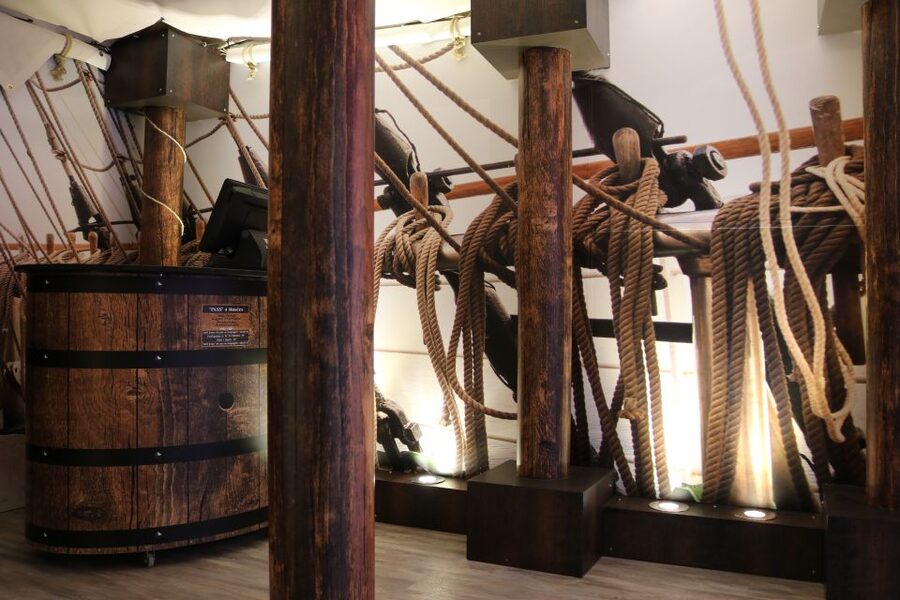
Begin at the Musée Maritime, which is also the meeting point for presenting your reservation at the ticket counter. This is the natural first stop because it explains the water around Mont Saint-Michel, a force that has shaped the mount’s dangers, defenses, food supply, and identity.
The museum focuses on the world’s biggest tides and the environmental project connected with Mont Saint-Michel. The subject matters. The island does not sit in a quiet bay where the shoreline stays fixed. The water can change the character of the approach and the surrounding view, so this museum helps you understand why Mont Saint-Michel has always been more than a church on a rock.
The main visual draw is the collection of about 250 old model boats. I like this kind of display because it gives you a close look at the boats and working craft associated with maritime life. Models can show details that disappear when you are standing on the shore: hull shapes, rigging, and the practical ways people moved across difficult waters.
Keep your expectations in check. The Maritime Museum may feel old-fashioned rather than sleek. If you want a modern science center with interactive screens and polished graphics, this may not be your favorite stop. If you enjoy collections, local subjects, and the link between nature and human history, it earns its place in the pass.
Allow enough time to look closely at the boats rather than rushing through on your way to the Abbey. The museum’s value is not only in the number of models. It is in giving you a better sense of the sea as an active part of Mont Saint-Michel’s story.
The Historical Museum’s Darker Side
The Historical Museum shifts from the bay to the people and institutions that made Mont Saint-Michel what it became. Its displays cover the monks who built the Abbey and the later use of the mount as a prison.
The prison material is the more theatrical part. You may see ancient weapons, medieval instruments of torture, the story of a body pulled down into quicksand, Louis XI’s iron cage, and the oubliettes. These subjects are designed to catch your attention, and they certainly give the museum a darker mood.
The historical material works best if you treat it as an introduction to the legends and hard realities connected with the mount. Mont Saint-Michel was not only a religious center. It also carried stories of confinement, punishment, danger, and political power.
This is the museum most likely to divide opinion. Some displays can feel dated, with a presentation closer to a traditional attraction than a carefully refreshed museum. I would not choose this pass solely for a modern, scholarly museum experience.
Still, the unusual objects and dramatic storytelling can work well for families with older children and for anyone who wants a break from formal religious architecture. The museum also helps explain why the mount has such a strong atmosphere. Its story includes devotion, isolation, imprisonment, and fear, not only fine views and stonework.
Entering the Logis Tiphaine
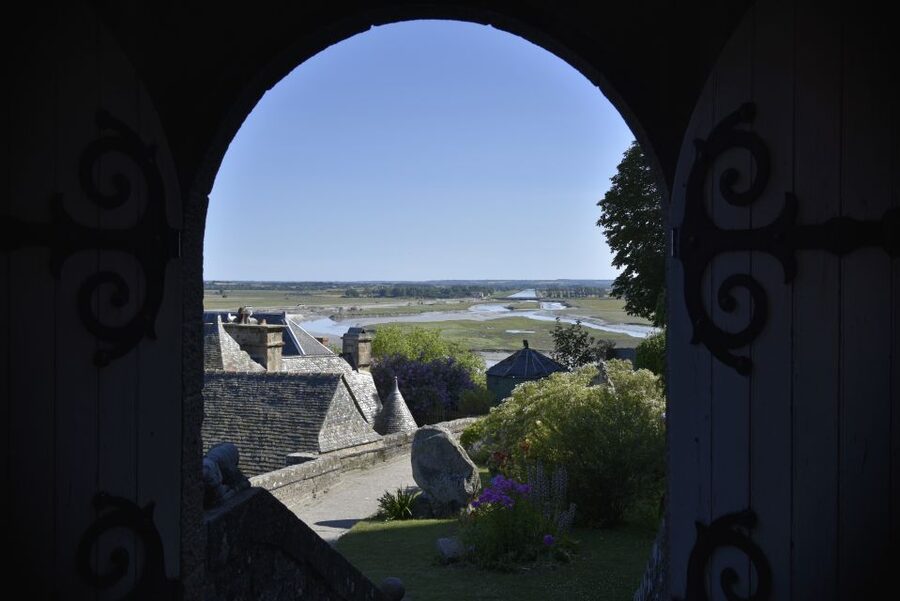
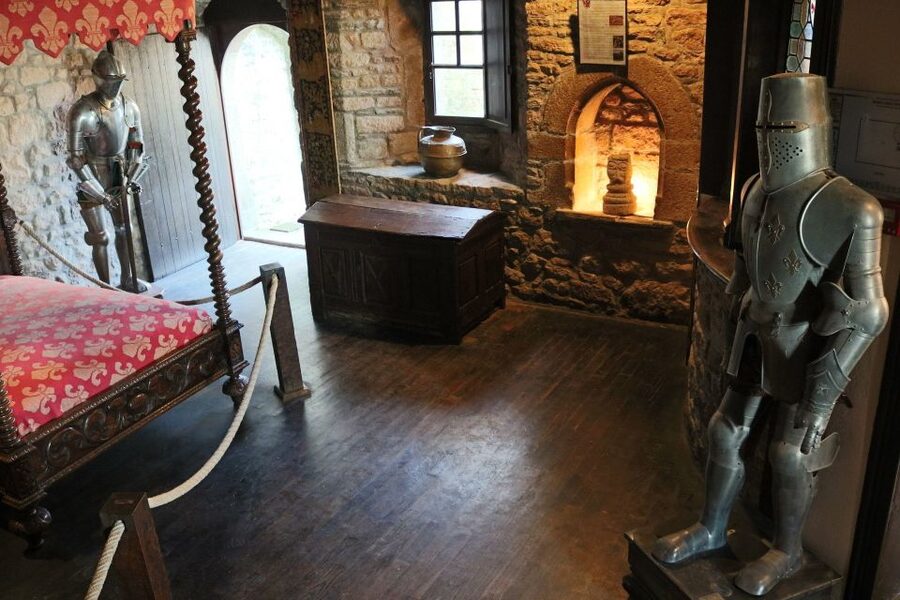
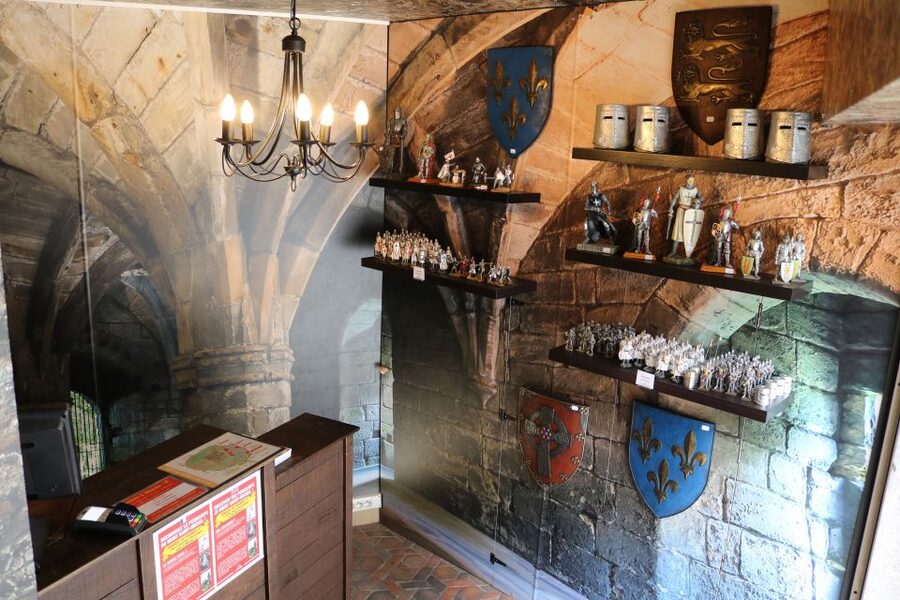
The Logis Tiphaine is the most distinctive stop in the pass. This is the historic residence of Bertrand du Guesclin, a Breton knight and French military commander from the 14th century, and his wife Tiphaine de Raguenel, known as an astrologer who read the world’s destiny in the stars.
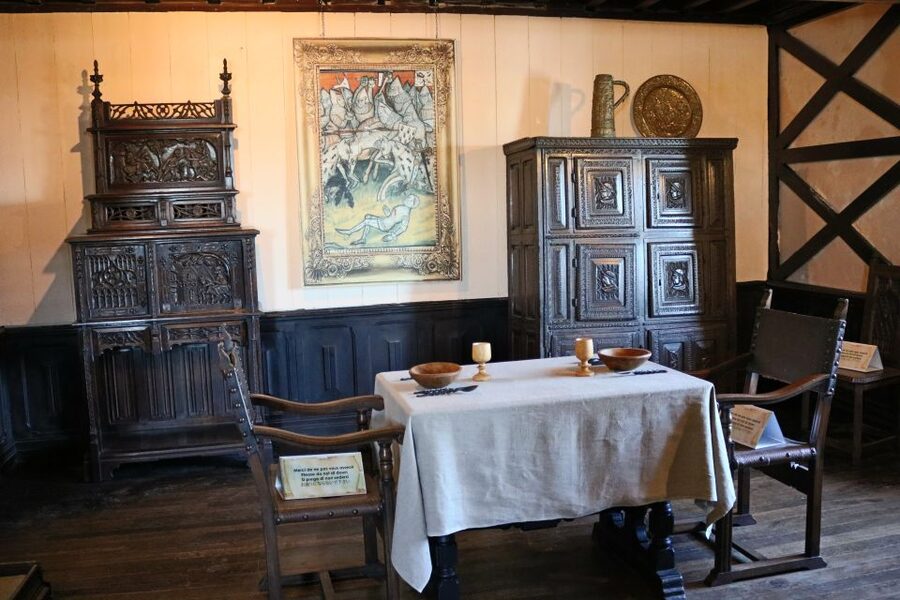
Here, you move through a domestic setting rather than a general collection of objects. The rooms include period furniture, a bridal chamber, Bertrand’s armor, and Tiphaine’s study. Those details bring the past down to human scale. Instead of looking only at walls and monuments, you get clues about how a prominent medieval couple might have organized their lives and displayed their status.
Tiphaine’s study is especially appealing because it gives the house a character beyond military history. Her reputation as an astrologer adds a touch of mystery, while Bertrand’s armor anchors the house in the world of warfare and chivalry. The pairing makes the visit more memorable than a standard room-by-room historic house.
The exhibits also include a medieval chastity belt. It is the kind of object that draws attention quickly, though you should treat it with some caution. Medieval objects tied to popular legends are often surrounded by later stories, and the display’s appeal is partly theatrical.
The Logis Tiphaine is still worth your time because the building, furnishings, and personal associations give you something the other museums cannot: a sense of private life inside Mont Saint-Michel. If you have limited time, I would make this your priority and then add the Maritime and Historical museums as your schedule allows.
More museums in France:
- Paris: Louvre Museum Timed-Entrance Ticket
★ 4.6 · 71,977 reviews - Louvre Museum Masterpieces Guided Tour with Access
★ 4.5 · 12,023 reviews - Paris: Louvre Museum Entry Ticket With Host and River Cruise
★ 4.6 · 9,926 reviews - Les Invalides: Napoleon’s Tomb & Army Museum Entry
★ 4.6 · 9,185 reviews
How the Three Stops Fit Together
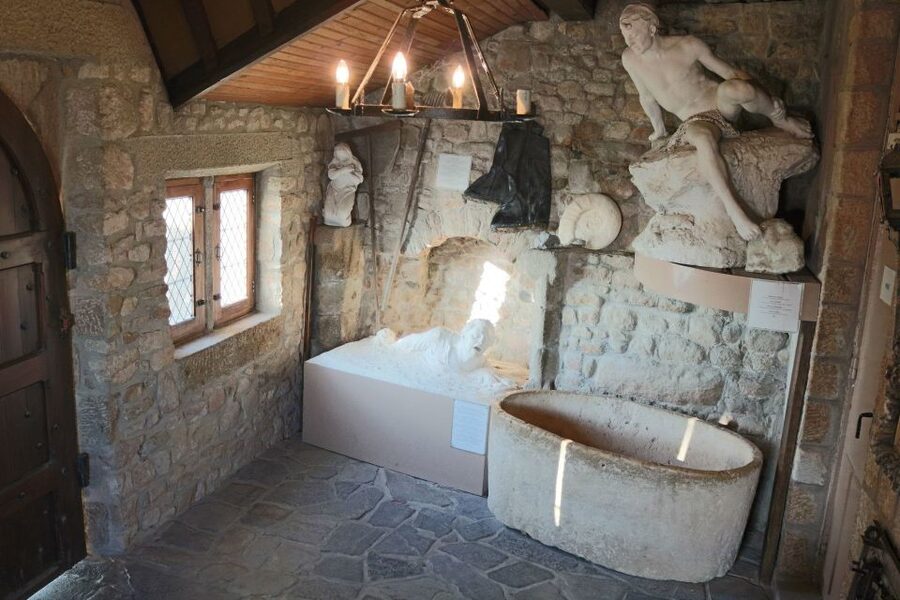
The pass works best as a sequence. Start with the Maritime Museum to understand the bay and tides. Continue to the Historical Museum for the religious and prison stories. Finish at the Logis Tiphaine, where the focus narrows to one medieval household.
That order moves from nature to public history to private life. It also gives the day a useful rhythm. The first museum is about the sea, the second about institutions and legends, and the third about people.
You do not have to treat the museums as a formal route. The pass is valid for one day, so you can fit them around the rest of your visit. Mont Saint-Michel involves plenty of walking, stairs, and pauses for views, and you may not want to visit all three in one stretch.
Because the pass is self-guided, you can spend extra time with the displays that interest you and move quickly through the rest. That flexibility matters more here than a tight schedule. The island itself can take longer than expected, especially if you stop for photographs or explore the lanes around the main route.
What the $21 Price Really Buys You
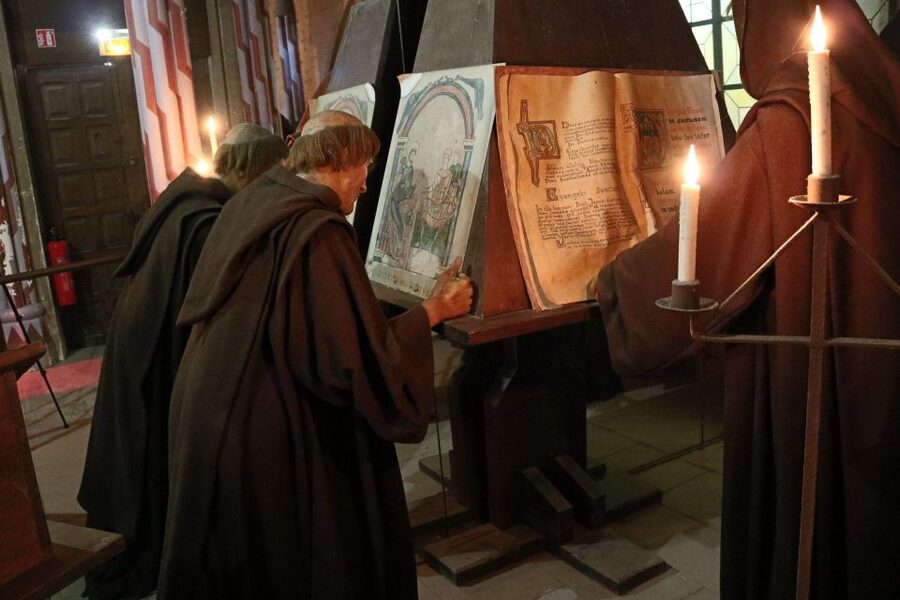
At $21 per person, the pass is not a bargain for everyone. It does not include entry to the Abbey, which is usually the main paid sight many people want to see. You must budget for that separately if the Abbey is part of your plan.
The pass makes better financial sense if you already expect to spend several hours at Mont Saint-Michel and enjoy museums with historic objects, reconstructed rooms, legends, and theatrical displays. Three admissions bundled together are simpler than deciding at each door, and the one-day validity lets you spread the visits through your schedule.
The value is weaker if you mainly want the Abbey, the views, and a quick walk around the island. In that case, the three museums may feel like extra cost and extra time. I would also think twice if you prefer contemporary museums with strong interactive displays. The Historical and Maritime museums have an older presentation style, and that is part of the experience you are buying.
Children under 12 enter free, which improves the price for families. The subjects may appeal to children, especially the armor, prison stories, old boats, and medieval objects, though younger children may find the displays uneven in style.
The pass also comes with practical flexibility. You can cancel up to 24 hours before the activity for a full refund, and you may reserve now and pay later. Check the available start times when booking, since the pass is valid for one day rather than an open-ended period.
Who Will Enjoy This Most?
I would recommend this pass to you if you enjoy:
- Medieval homes, armor, and domestic objects
- Maritime collections and model boats
- Local legends about monks, prisons, quicksand, and royal punishment
- Self-guided sightseeing at your own pace
- Adding smaller museums to a major landmark visit
Families with older children may find the darker historical displays more memorable than a long lecture about architecture. The one-day format also lets you break up the visit instead of asking children to focus on one large monument for hours.
History-minded visitors will get the most from the combination. The Logis Tiphaine gives you personal detail, the Maritime Museum explains the physical setting, and the Historical Museum supplies the mount’s stranger stories.
I would be more cautious about recommending it to someone with only a short visit or a strong interest in the Abbey alone. The pass will not replace the Abbey, and the museums are not presented as one polished, modern institution. Their appeal comes from the variety of subjects and the unusual objects.
Practical Tips for a Better Museum Day
Show your reservation at the Musée Maritime ticket counter first. That is the stated meeting point, so starting there keeps the admission process simple.
Plan around the island rather than trying to race through all three museums. You can visit one before the Abbey, one afterward, and the Logis Tiphaine when you are ready for a quieter look at domestic life.
Do not assume the three museums will feel identical. The Maritime Museum is collection-based, the Historical Museum is more theatrical, and the Logis Tiphaine is a historic house. Their differences are useful, but they also explain why the experience can feel uneven.
Give the model boats and the historic rooms time. They are the strongest reasons to buy the pass, while the prison displays are best approached as dramatic stories and curiosities rather than a modern academic presentation.
Alcohol and drugs are not allowed. Children under 12 enter free, and the pass does not include the Abbey, so check your total plan before booking.
My Verdict: Buy It for the Smaller Stories
I would book the Mont Saint-Michel three-museum pass if you have a full day on the island and want more than the standard Abbey visit. The Logis Tiphaine is the clearest reason to go, with its medieval rooms, Bertrand du Guesclin’s armor, and Tiphaine de Raguenel’s study. The Maritime Museum’s 250 model boats add a separate appeal, especially if you like working collections.
I would not buy it expecting three freshly updated museum experiences. The presentation can feel dated, particularly in the Maritime and Historical museums, and the Abbey is not included. At $21, the pass is fair value for curious visitors who enjoy old objects, legends, and a self-guided day. For a short stop focused on the Abbey, spend your time and money elsewhere.
FAQ
How many museums are included in the pass?
The pass includes three museums: the Maritime Museum, the Historical Museum, and the Logis Tiphaine.
Is entry to Mont Saint-Michel Abbey included?
No. Entry to the Abbey is not included in this pass.
How long is the pass valid?
The pass is valid for one day.
Where do I present my reservation?
Present your reservation at the ticket counter of the Musée Maritime.
How much does the pass cost?
The listed price is $21 per person.
Do children under 12 need to pay?
No. Entrance is free for children under 12.
What can I see at the Maritime Museum?
You can learn about Mont Saint-Michel’s major tides and environmental project, and see a collection of 250 old model boats.
What is shown at the Historical Museum?
The museum covers the monks who built the Abbey and the prisons of Mont Saint-Michel. Displays include ancient weapons, medieval torture instruments, the quicksand story, Louis XI’s iron cage, and oubliettes.
What is the Logis Tiphaine?
The Logis Tiphaine is the historic residence of Bertrand du Guesclin and his wife, Tiphaine de Raguenel. It includes period furniture, a bridal chamber, armor, a medieval chastity belt, and Tiphaine’s study.
Can I cancel the booking?
Yes. You can cancel up to 24 hours in advance for a full refund. You can also reserve now and pay later.
Just listed in France
- Paris: Giverny & Versailles Small Group or Private Tour★ 4.5 · 49 reviews
- Half-Day Walking Food Tour in Nice with Lunch★ 5.0 · 49 reviews
- Chartres Cathedral 5 Hours Tour from Paris with Private Transport★ 4.5 · 49 reviews
- Marseille: Frioul Archipelago Catamaran Cruise with Lunch★ 4.4 · 49 reviews
- Paris: Louvre photoshoot or Seine bridges Eiffel Tower walk★ 5.0 · 49 reviews
- Paris: Choux Pastry and Chocolate Éclair Making Class★ 4.9 · 50 reviews
- Private tour of the Champagne area, meet local producers and taste their Champagne, start from your hotel in Paris.★ 5.0 · 50 reviews
- Bonifacio: sunset catamaran trip and aperitif★ 4.6 · 50 reviews
Mont Saint-Michel Day Trips, compared.

Mont Saint Michel Day Trip from Paris with English Speaking Guide
Read our review →
Mont Saint Michel Guided Day Trip with Abbey Entry from Paris
Read our review →
Mont Saint-Michel Day Trip from Bayeux (Shared tour)
Read our review →
Mont Saint Michel Day Trip with Abbey Entrance from Paris
Read our review →Browse the lists this tour appears in