
Reviewed · MONTMARTRE & SACRE-COEUR TOURS
Montmartre Highlights – Bohemian Streets & Sacré-Coeur Basilica
Montmartre makes the most sense on foot, and this two-hour walk gives you the neighborhood’s best blend of hilltop views, artists, cabarets, and village lanes. You’ll start near Blanche, pass the Moulin Rouge, climb through Pigalle and Montmartre, and finish at Sacré-Coeur and Place du Tertre.
I like the small maximum group of 15, which makes it easier to hear the guide and keep up on crowded streets. I also like the range of guides, including Sacha, Max, Catherine, Katrina, and Christian, who bring maps, old photographs, humor, and art stories to the walk.
The catch is the hill. This is an active outing with steep streets and steps, and some people found the climb strenuous. Choose your start time carefully, wear comfortable shoes, and allow more than two hours if you plan to linger at the basilica or square.
Key points to know before you book
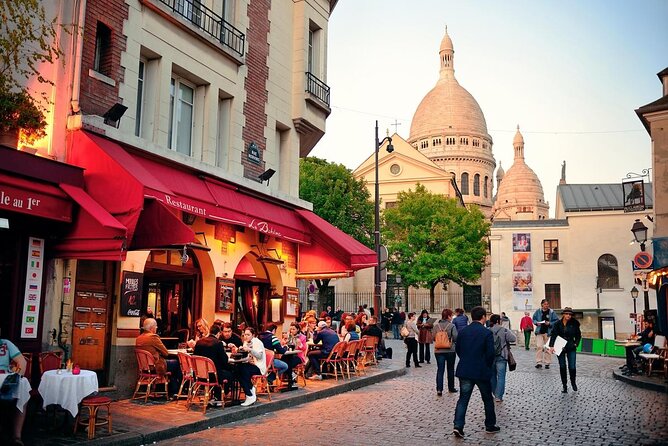
- Sacré-Coeur finishes the walk: You reach the basilica and its famous Paris view after exploring the streets below.
- A maximum of 15 people: The small group keeps live commentary easier to follow in busy Montmartre.
- The Moulin Rouge is an exterior stop: You hear its story and see the red windmill, but no cabaret admission is included.
- Art history is part of the route: The walk connects Montmartre with Van Gogh, Picasso, Monet, Manet, Pissarro, Rodin, and Zola.
- Expect real exercise: The route includes uphill walking, steps, and uneven city streets.
- Several start times are offered: Morning, afternoon, and evening departures let you fit the walk around your Paris plans.
Why Montmartre works best with a guide
Montmartre is easy to wander and surprisingly easy to misunderstand. You can stroll past a café, an old windmill, or a narrow lane without knowing why it matters. A good guide gives those ordinary-looking places a past.
This tour uses the neighborhood as a timeline. You begin around Blanche and Pigalle, where nightlife and cabarets shaped Montmartre’s public image. Then you move uphill into the former artists’ quarter before ending at the basilica and Place du Tertre.
That order matters. Instead of starting at the top and simply walking downhill, you see how Montmartre changes from nightlife district to residential village and then to one of Paris’s grandest viewpoints. The route covers a lot in two hours, but it does not feel like a list of disconnected sights.
The live commentary is the main reason to book rather than walk alone. Guides such as Sacha and Max are praised for adding old maps and photographs to their explanations. Catherine and Katrina are also noted for their energy and clear storytelling. The strongest guiding style here seems to be part history lesson, part neighborhood walk, with plenty of stories about artists and local characters.
The guide uses a loudspeaker to help the group hear while maintaining physical distance. That can be useful on crowded streets, though you should still stay close to the group. Montmartre’s pedestrian lanes can fill quickly, especially around Sacré-Coeur and Place du Tertre.
A few other Paris half-days to compare
- Paris: Moulin Rouge Cabaret Show Ticket with Champagne
★ 4.7 · 16,088 reviews - Paris: Dinner Show at the Moulin Rouge
★ 4.8 · 3,333 reviews - Montmartre Hidden Gems and Scenic Highlights Walking Tour
★ 5.0 · 2,684 reviews
Starting at Blanche and the Moulin Rouge
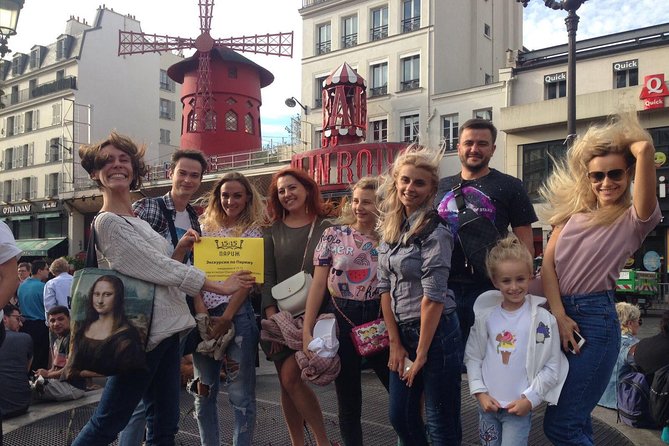
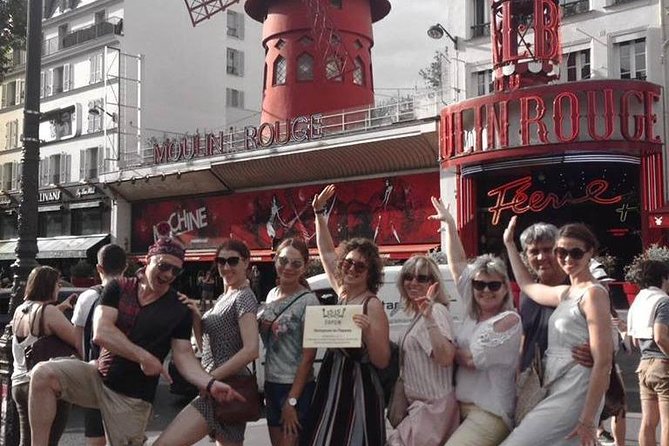
The meeting point is at Blanche, in the 18th arrondissement. The opening stretch brings you to the Moulin Rouge, which you see from outside. This is not a cabaret show, and admission is not part of the price, so set your expectations correctly.
The guide explains the red windmill and the venue’s place in Paris nightlife. You’ll hear about the French Cancan, which was first introduced to Parisian audiences there, along with the cabaret’s role in the popular image of Montmartre.
The exterior stop lasts about 15 minutes. That is enough time for photographs and a clear explanation, but not enough for an extended visit. If you want to attend a performance, you’ll need separate tickets and a separate plan.
Starting at Blanche gives the tour an energetic opening. Pigalle is famous for cafés, cabarets, and sex shops, but the guide also points to traces of an older Montmartre, when painters and writers spent time in the district. That contrast is one of the most useful parts of the route. You see the modern reputation, then learn how it grew from the area’s artistic and working-class past.
Walking through Pigalle’s complicated past
Pigalle is often treated as a quick photo stop, but the tour gives it about 30 minutes. That extra time helps explain why the area became associated with entertainment, artists, and nightlife.
You’ll see the red-light district from public streets, including its cafés, cabarets, and sex shops. The tour also looks for less obvious traces of the past. The point is not simply to label Pigalle as naughty Paris. It is to understand how nightlife, affordable rooms, artists, and theaters helped shape the area.
This part can feel more urban and less postcard-pretty than the streets near Sacré-Coeur. That is a virtue if you want a fuller picture of Montmartre. It also means the walk is not polished from start to finish. You are seeing a district with several identities, not a single movie-set version of Paris.
If you prefer quiet lanes and architecture, Pigalle may be your least favorite section. If you want to understand why Montmartre became famous beyond its basilica, it gives the tour useful context.
Following the artists uphill
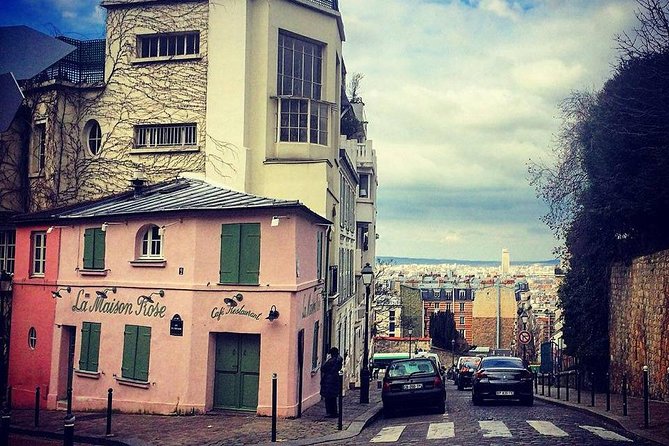
The 30-minute Montmartre section is the heart of the history. The walk follows streets linked with artists and writers who lived or spent time here in the late 19th and early 20th centuries.
The names attached to the district include Monet, Manet, Van Gogh, Pissarro, Rodin, Picasso, and Zola. You hear where some lived, where they went out, and how their lives connected to the neighborhood. The guide’s job is to turn names from an art book into people who actually occupied these streets.
Sacha is especially effective if you enjoy this sort of detail. He has used a notebook with maps and photographs to show how the area looked in earlier periods. That visual aid is valuable because Montmartre has changed while retaining enough old form to make comparisons interesting.
You may also recognize places associated with the film Amélie. The tour does not appear to be built only around cinema, but that extra connection can make the walk more familiar if you have seen the film.
One guide may give you a dense stream of facts, while another may tell fewer stories at a slower pace. That variation is normal in a live tour. If you prefer a light overview, an especially detailed guide could feel like a lot in a short time. If you enjoy art and Paris history, the information is one of the tour’s strongest reasons to go.
Same city, a completely different afternoon:
- Paris: Louvre Museum Timed-Entrance Ticket
★ 4.6 · 71,977 reviews - Disneyland® Paris 1-Day Ticket
★ 4.6 · 49,412 reviews - Paris: Versailles Palace and Gardens Full Access Ticket
★ 4.6 · 41,579 reviews - Paris: Evening River Cruise with Music
★ 4.4 · 22,721 reviews
Reaching Sacré-Coeur and the best Paris view
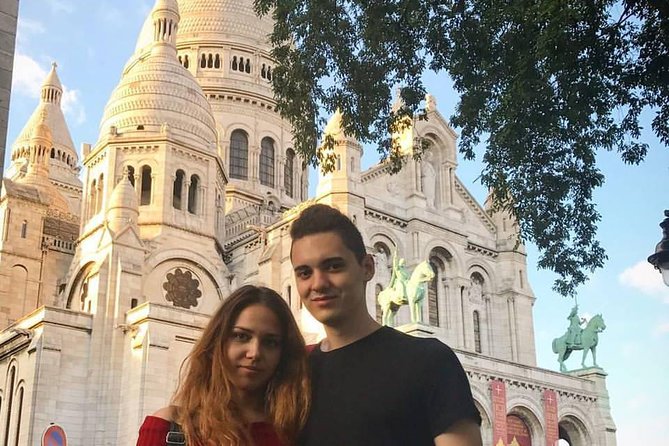
Sacré-Coeur is the major landmark on the route. The basilica sits at the top of Montmartre, one of the highest points in Paris, and the approach gives you a sense of the climb before you reach the church.
Inside, you visit one of Paris’s largest churches. Its main visual feature is the enormous wall fresco, listed at 480 square meters, along with the impressive cupola. Admission to the visit is included, with no separate admission charge stated for this stop.
The tour allows about 15 minutes here. That is enough for a look inside and an explanation of the basilica, but it is not a long, quiet church visit. If you want time to study the interior or sit in reflection, plan to return after the tour.
The payoff is outside. From the hill, you get a broad view over Paris. This is one of the city’s most rewarding outlooks, but the view is weather-dependent and can be less satisfying on a gray or rainy day. Since the experience requires good weather, a poor forecast can also lead to a rescheduled tour or refund.
The climb is the main physical issue. You will go uphill and manage steps, and the route can be tough for anyone with limited mobility or low stamina. One person in the group may be fine while another finds the pace demanding, so do not judge the two-hour duration by the clock alone. A two-hour walking tour on Montmartre’s slopes is more work than two hours on level pavement.
Finishing at Place du Tertre
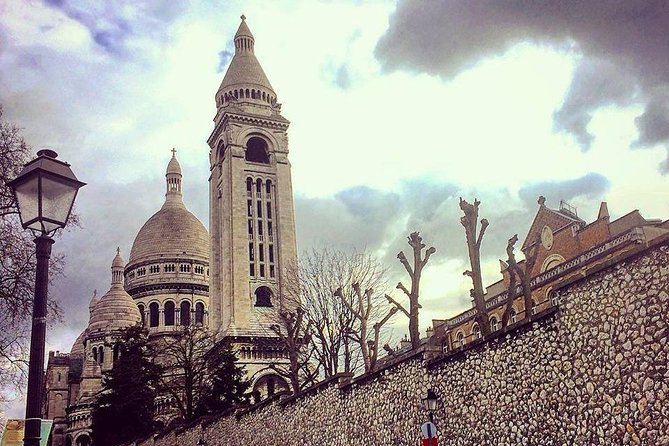
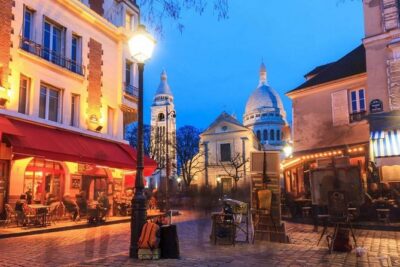
The tour ends at Place du Tertre, the familiar square filled with painters and caricaturists. It is only a short distance from the nightlife of Pigalle, yet it feels calmer and more village-like.
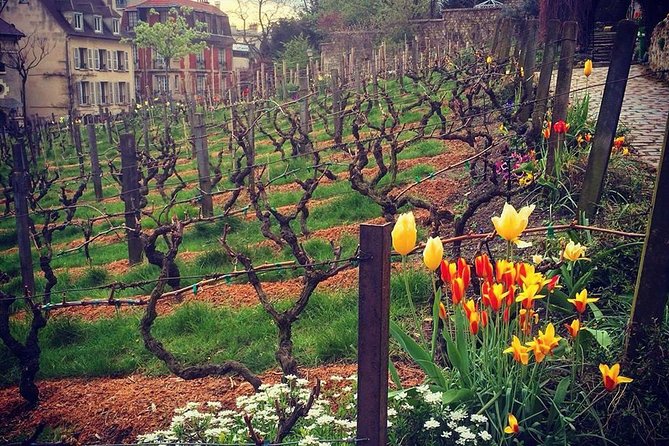
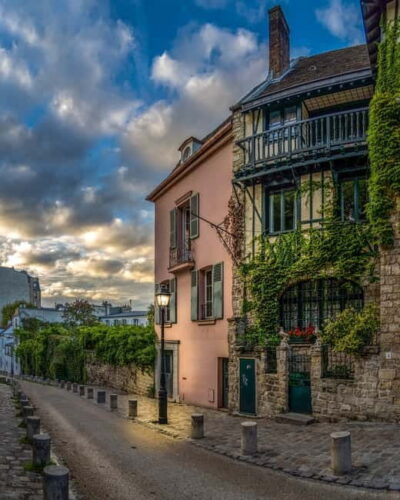
The square preserves what the tour describes as Montmartre’s countryside character, with references to vineyards, bocce fields, and tucked-away parks. The setting helps explain why artists were drawn to the area. Montmartre was not always simply an extension of central Paris. It had a separate village identity before the city expanded to include it.
Place du Tertre is a practical ending point. You can stop for a meal or coffee nearby, browse the artwork, or continue exploring on your own. The route does not include meals, so this is a good place to make your own plans after the guide departs.
I would not rush away from the square. The formal tour ends here, but the neighborhood is worth another hour if you have the energy. You might find the area crowded, especially during popular daytime periods, so keep your belongings secure near Sacré-Coeur and the main square.
What $47.79 buys you
At $47.79 per person, this is not the cheapest way to see Montmartre. You can walk the streets independently for free, visit the outside of the Moulin Rouge, and reach Sacré-Coeur without paying for a guided route.
The value comes from the explanation and the route design. In two hours, you cover Blanche, Moulin Rouge, Pigalle, the artists’ quarter, Sacré-Coeur, and Place du Tertre. You also get a professional guide, live English commentary, and a group capped at 15 people.
That small group makes the price easier to justify. A much larger group would be harder to manage on narrow streets and less pleasant near busy viewpoints. Here, you have a better chance to ask a question, hear the guide’s stories, and keep your bearings.
I would book this if you want a strong introduction to Montmartre and care about art, local history, and the stories behind familiar sights. I would skip it if you only want quick photographs or dislike walking uphill. The tour does not provide a meal, Moulin Rouge admission, or a long basilica visit, so the price is paying for guidance rather than a package of tickets.
The experience is often booked well ahead, with an average lead time of about 55 days. That suggests you should reserve early if a particular morning, afternoon, or evening departure matters to you.
Choosing the right departure time
Morning departures are a sensible choice if you want to handle the climb before the day’s full heat and crowds. They also leave your afternoon open for another Paris sight.
An afternoon start can work well if you prefer a slower morning, but you may encounter more people around the major stops. The route still gives you the same core experience.
An evening departure adds a different mood to Pigalle and the cabaret district. The tradeoff is that daylight may be limited by the time you reach the hilltop, so you may not get the same clear city view. The available start times give you flexibility, but the best choice depends on how much you value daylight at Sacré-Coeur.
No matter which time you choose, wear shoes suited to hills and steps. The walking pace can be adjusted to some degree, and guides have been patient with older participants, but this is not a flat or effortless stroll.
Who will enjoy this walk most
This tour suits a first-time Paris visitor who wants orientation before exploring alone. It is also a good fit for anyone who enjoys art history but prefers stories tied to real streets instead of a formal museum lecture.
Families with older children may like the mix of windmills, artists, cabarets, viewpoints, and village lanes. Couples and solo visitors can also use the tour as a practical way to get their bearings fast in Montmartre.
Older adults should consider the slopes carefully. The walk can be manageable with a moderate fitness level, but it is still strenuous for some people. If anyone in your group has serious mobility limits or needs a very gentle pace, this may not be the right outing.
The tour is offered in English, and service animals are allowed. It is near public transportation, though the supplied details do not specify a particular transit station or route. Confirmation arrives when you book, and the tour requires a minimum number of participants to operate.
Cancellation and weather details
You can cancel up to 24 hours before the start for a full refund. Changes or cancellations made less than 24 hours before the local start time are not accepted for a refund.
Because the route depends on good weather, a cancellation caused by poor conditions brings the choice of another date or a full refund. If the minimum number of participants is not met, you’ll also be offered another date or experience, or a full refund.
Is Montmartre Highlights worth booking?
Yes, if you want more than a quick climb to Sacré-Coeur. The tour connects the basilica, Moulin Rouge, Pigalle, artists’ homes, and Place du Tertre in a compact route, and its best guides add maps, photographs, humor, and useful local advice.
Book it early if your schedule is fixed. Choose daylight if the Paris view matters most, and choose comfortable shoes regardless of the start time. Skip it if steep streets are a serious problem or if you mainly want a cabaret performance.
For most visitors who want a lively introduction to Montmartre, the $47.79 price is fair. You are paying for two hours of direction, context, and stories that can make the neighborhood far more memorable than a self-guided wander.
FAQ
How long does the Montmartre tour last?
The walking tour lasts approximately two hours.
Where does the tour start?
The tour starts at Blanche, 75018 Paris, France.
Where does the tour end?
It ends at Place du Tertre, the main square of Montmartre, where you’ll find painters, caricaturists, restaurants, and cafés.
Is the Moulin Rouge admission included?
No. The Moulin Rouge is viewed from outside, and admission is not included.
Is the Sacré-Coeur visit included?
Yes. The tour includes a visit to the basilica, with no separate admission ticket listed for that stop.
How large is the group?
The group has a maximum of 15 participants.
Is the tour available in English?
Yes. The experience is offered in English with live commentary from a professional guide.
Just listed in Paris
- Chartres Cathedral 5 Hours Tour from Paris with Private Transport★ 4.5 · 49 reviews
- Paris: Giverny & Versailles Small Group or Private Tour★ 4.5 · 49 reviews
- Paris: Louvre photoshoot or Seine bridges Eiffel Tower walk★ 5.0 · 49 reviews
- Paris: Choux Pastry and Chocolate Éclair Making Class★ 4.9 · 50 reviews
- Private tour of the Champagne area, meet local producers and taste their Champagne, start from your hotel in Paris.★ 5.0 · 50 reviews
- Paris Eternelle Notre-Dame Virtual Reality Tour★ 4.5 · 50 reviews
- Normandy D-Day Landing Beaches Private Day Trip from Paris★ 5.0 · 50 reviews
- Disneyland® Paris 1 Day with Round-Trip Train Tickets from Paris★ 4.0 · 50 reviews
Montmartre & Sacre-Coeur Tours, compared.

Moulin Rouge Cabaret Show Ticket with Champagne
Read our review →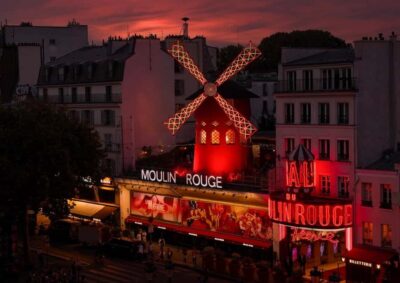
Montmartre Hidden Gems and Scenic Highlights Walking Tour
Read our review →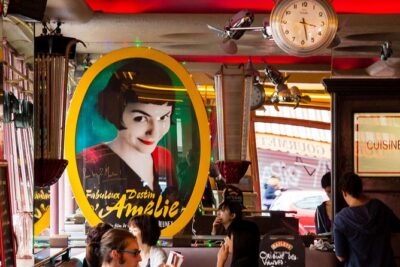
Montmartre Hill French Gourmet Food and Wine Tasting Walking Tour
Read our review →
Seine Dinner Cruise, Eiffel Tower Access and Moulin Rouge Show
Read our review →
Montmartre Cheese, Wine & Pastry Guided Walking Tour
Read our review →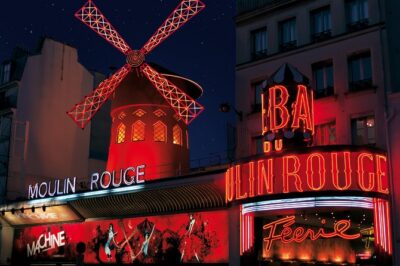
Montmartre Highlights Walking Tour with a Local Guide
Read our review →Browse the lists this tour appears in