
Reviewed · MARSEILLE TOURS
“Old Marseille” district tour and treasure hunt
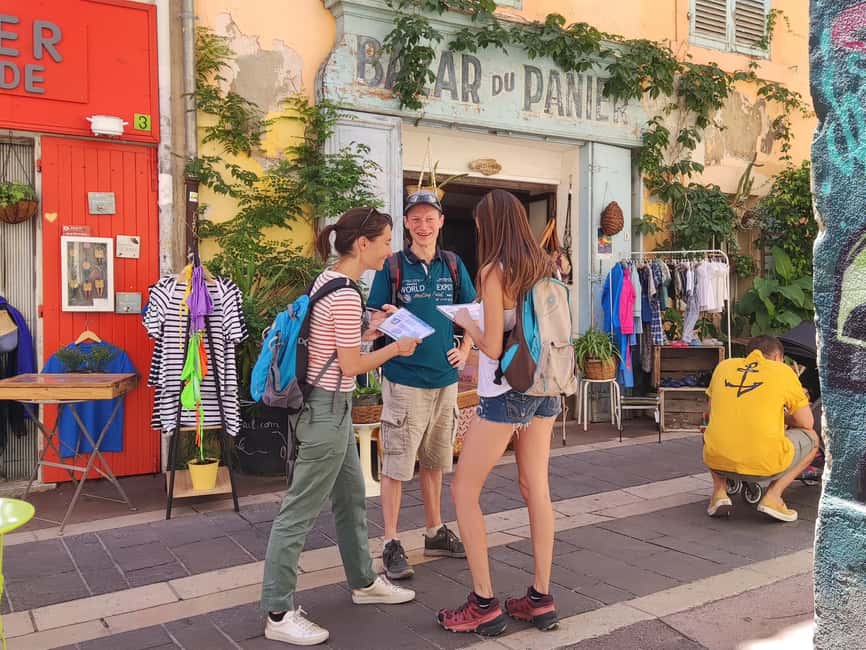
Marseille’s Le Panier district becomes a giant puzzle box on this 150-minute walking game. Starting near City Hall and ending at Fort Saint-Jean, you follow clues through lanes, stairways, facades, and monuments while learning how a Greek settlement grew into France’s oldest major city.
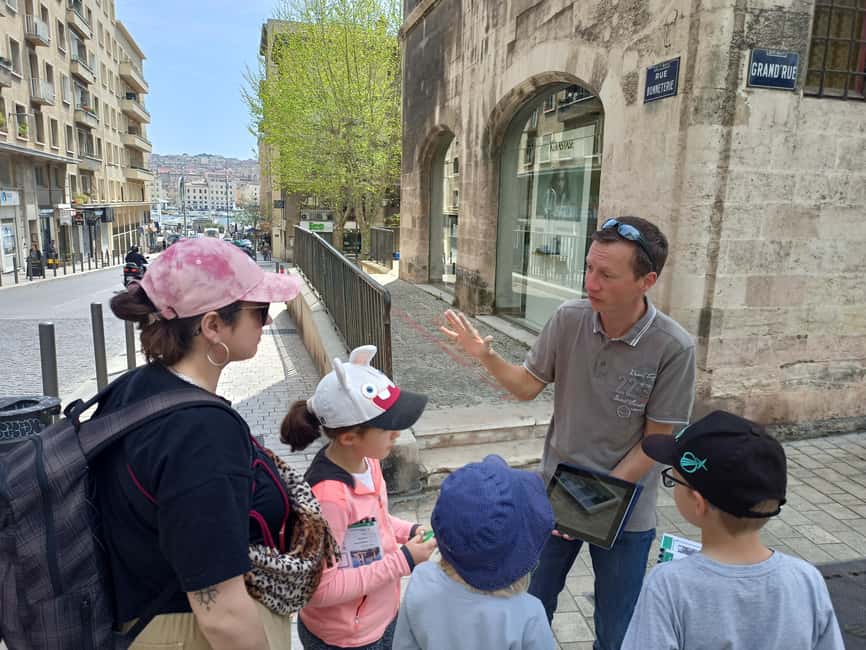
I like the small group limit of 10, which helps keep the game lively instead of turning it into a slow-moving crowd. I also like the booklet created by guide Eric D., since it gives children a real job to do rather than asking them to stand quietly while an adult talks.
The main consideration is the 4.5-kilometre route. It is not especially difficult, but there are stairs, and children under six cannot take part. If your family prefers a short sightseeing stroll, this may feel long. If your children enjoy clues, searching, and friendly competition, the distance passes more easily.
Key points at a glance
- A real treasure hunt through Le Panier: You solve riddles using street names, building details, monuments, and pieces of urban furniture.
- A compact group of up to 10 people: The limited size supports teamwork and keeps the playful mood from getting lost.
- A 4.5-kilometre route through old Marseille: The walk connects City Hall, Le Panier, nearby historic areas, and Fort Saint-Jean.
- A useful choice for multilingual families: Eric D. offers the activity in English, French, or German.
- A prize adds purpose for children: The winner receives a gift at the end of the treasure hunt.
- A walk through 2,600 years of Marseille: Stories connect the present-day streets with the city’s Greek beginnings, monuments, legends, and daily life.
Why a puzzle works so well in Le Panier
Le Panier is a good setting for this kind of activity because the district rewards close attention. A standard walking tour asks you to look at a building or hear a date. Here, you must notice the name of a lane, a detail on a facade, or an object placed in the street before you can move to the next stage.
That changes the rhythm. You are not simply following Eric D. from one stop to another. You are working out where to go, checking clues, and watching the surroundings. Children can take the lead at some points, while adults fill in the background about Marseille’s past.
The booklet is central to the experience. Eric D. provides a game and riddles booklet of his own creation, designed to guide the group from one stage to the next. The Sherlock Holmes comparison is apt in a simple, practical way: you need to keep your eyes open and use small visual details to find the route.
This approach also gives the walk a clear purpose. A child who might lose interest during a long explanation has a reason to inspect a doorway or read a street sign. Adults still receive information about history, culture, legends, and local places, but the teaching is folded into the game rather than delivered as one long talk.
A few other Marseille half-days to compare
- Marseille: City Sightseeing Hop-On Hop-Off Bus Tour
★ 3.8 · 2,820 reviews - Marseille: Côte Bleue Calanques Half-Day Kayak Tour
★ 4.7 · 877 reviews - Marseille Food Tour – Full Meal of Local Tastes by Do Eat Better
★ 5.0 · 530 reviews
Starting near City Hall and the Old Port
The meeting point is near the Ferry-Boat pier beside City Hall, on the north shore of Marseille’s Old Port. This is a useful place to begin because it puts you close to one of the city’s best-known public spaces before the route turns toward the older streets of Le Panier.
You should arrive with comfortable shoes and be ready to walk from the first minute. The experience is not a bus-based introduction or a short stop near the waterfront. It is a moving activity that uses the city itself as the playing field.
The opening section should help your group understand how the clues work. Since the route depends on observation, it is worth letting children handle the booklet and search for answers rather than solving everything for them. Adults may be faster at reading or orientation, but the fun comes from sharing the task.
The Old Port setting also gives the experience a clear sense of place. Marseille’s harbor is not just a backdrop for photographs. It helps explain why this city became a meeting point for people, goods, customs, and flavors. From here, the walk heads into the old district where the clues become part of the street scene.
Entering Le Panier, Marseille’s old district
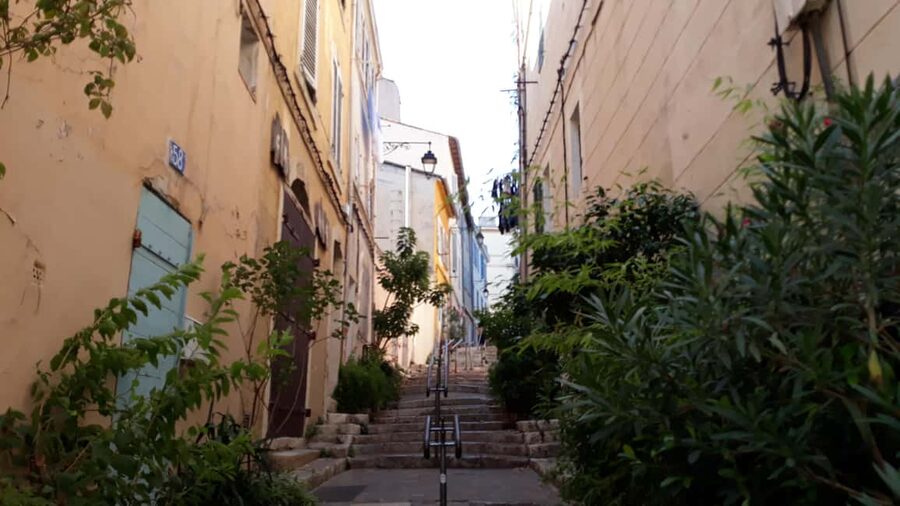
Le Panier is the heart of the activity. The district is known here as old Marseille, and its streets provide the narrow passages, steps, facades, and small details needed for a city treasure hunt.
You can expect the route to mix familiar sights with less obvious corners. Eric D. has lived in Marseille for several years and uses that local connection to point out both must-see places and spots that many people would pass without noticing. The balance matters. A tour made only of obscure details could leave you wondering what you missed, while a tour made only of famous sights would not feel like a hunt.
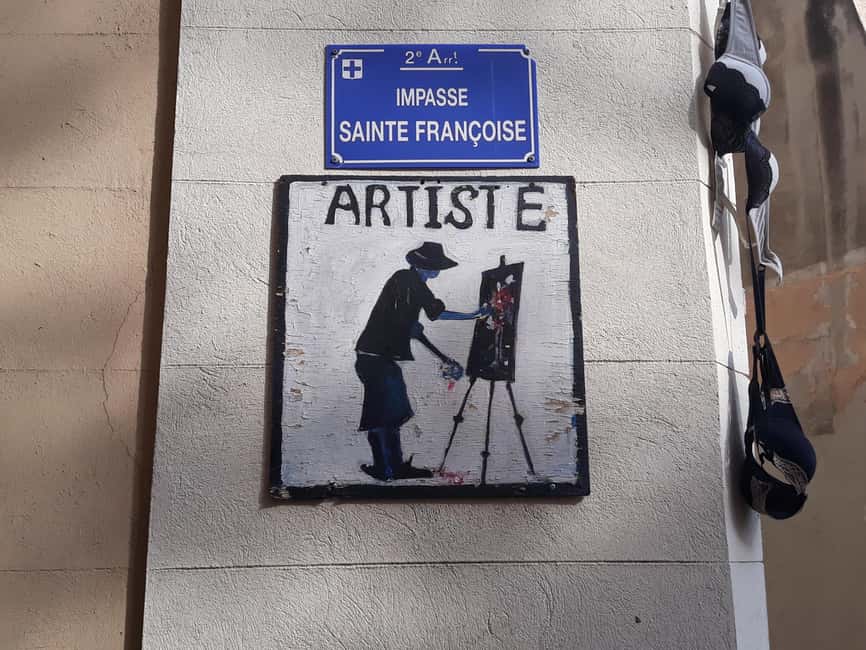
The clues may direct you to read a street or alley name, inspect a monument, study a building front, or identify an item of urban furniture. These tasks sound simple, but they encourage you to look at Marseille as a collection of clues rather than a series of postcard views.
Le Panier is also a place where the route’s physical demands become clear. The walking distance is about 4.5 kilometres, with some stairs but no major difficulty noted. Young children may manage the distance well if they are engaged by the game, though families should think about energy levels, weather, and the pace of their own group.
Following Marseille through 2,600 years
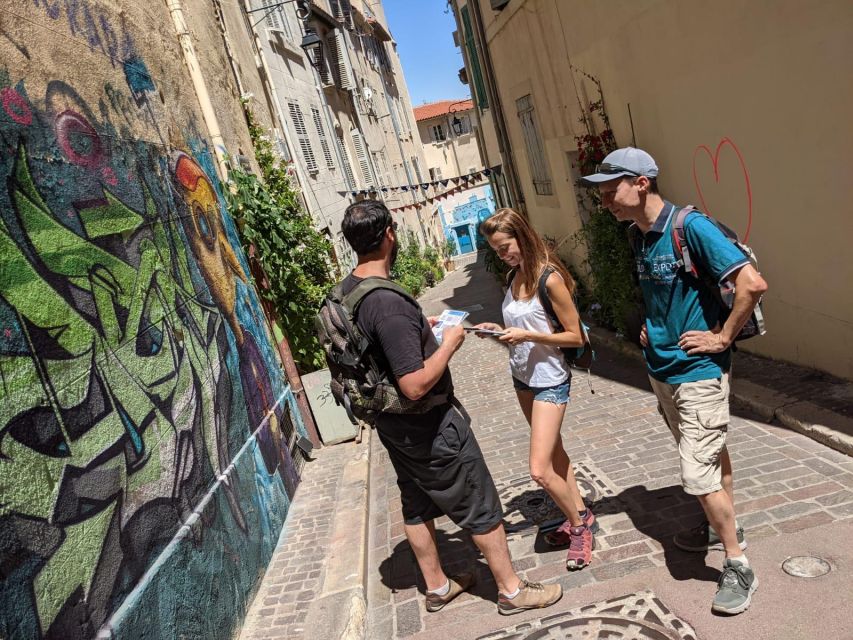
The historical thread gives the game more weight than a simple scavenger hunt. Marseille can trace its beginnings to Greek settlers and has around 2,600 years of history. As you move through the district, Eric D. connects the streets and sites with the city’s long development.
You should not expect a university lecture or a detailed study of every period. The format works through short explanations attached to places you meet along the way. That keeps the group moving and lets the history support the clues instead of competing with them.
This is especially useful for families. Children do not need to remember a long list of dates to gain something from the tour. They see that old streets can preserve clues about earlier communities, and adults can ask follow-up questions as the route continues.
The activity also covers more than architecture. The experience brings together heritage, culture, and flavors, with stories about sites, history, and local legends. The supplied information does not promise food tastings, so you should treat flavors as part of the cultural context, not as an included culinary stop.
Same city, a completely different afternoon:
- Marseille: Calanques National Park Guided Hike with Picnic
★ 4.9 · 516 reviews - From Marseille: Calanques National Park Guided Hike
★ 4.8 · 489 reviews - Marseille: Musée de l’Illusion Entry Ticket
★ 4.1 · 488 reviews - Marseille: Frioul Calanques Sailing Trip
★ 4.8 · 433 reviews
The guide’s role in keeping the game moving
Eric D. is both guide and game leader. That requires a different skill from simply reciting facts. He must explain enough to make each stop interesting, give the group room to solve the clue, and keep the route moving when a team gets stuck.
The small-group format helps here. With no more than 10 participants, the activity can remain social and cooperative. A large group could make it harder for every child to see the clue or take part in the answer. A small group lets the guide respond to the people in front of him.
The available languages are English, French, and German. This is useful for families or mixed groups who do not share the same first language. A German-language option is particularly practical because clear instructions matter in a riddle game, and one review specifically praised Eric D.’s German skills.
The tone is intended to remain playful while still providing serious information about Marseille. That balance is one of the strongest reasons to choose this activity over a standard city walk. You get context, but the children are not asked to be passive for two and a half hours.
The treasure hunt and the winning prize

The treasure hunt runs through the walking tour rather than being a separate activity at the end. Each solved clue helps the group find the next stage, so the route itself becomes the contest.
A gift for the winner gives children a clear goal. It also adds a little friendly tension, which can help keep a family focused when the walk reaches a less exciting stretch. You may want to decide in advance how your group handles competition, especially if younger children are playing with older ones.
The activity is not described as a high-pressure race. Its purpose is to walk, have fun, and discover Marseille. The prize should be seen as a small extra rather than the main reason to book. The best result is a group that works together, notices details, and learns something along the way.
Parents can help by asking questions instead of immediately providing answers. What word appears on the sign? Which detail looks unusual? What might this object be used for? That keeps the children involved and lets the guide give the historical explanation at the right moment.
Fort Saint-Jean gives the walk a clear finish
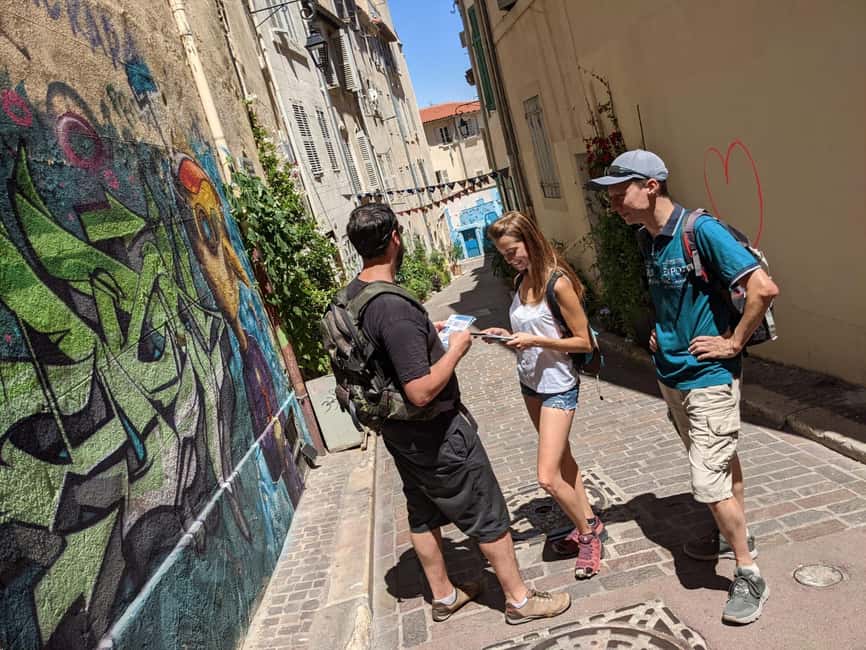
The route ends at Fort Saint-Jean, near the water in the 13002 district. Finishing there gives the activity a definite endpoint instead of leaving you in an unnamed side street after the final clue.
The fort is also a fitting place to end a walk through old Marseille. After moving through lanes and neighborhood details, you arrive at a major historic structure connected with the city’s defensive and maritime setting. The tour information does not promise an interior visit, so you should expect the activity to finish at the fort rather than assume admission or a full fort tour is included.
The endpoint may also help you plan the rest of your day. You can treat the activity as a way to move from the Old Port toward Fort Saint-Jean while seeing Le Panier in between. Since no return transport is included, make sure your later plans account for ending at Fort Saint-Jean rather than back at City Hall.
What the $33 price includes
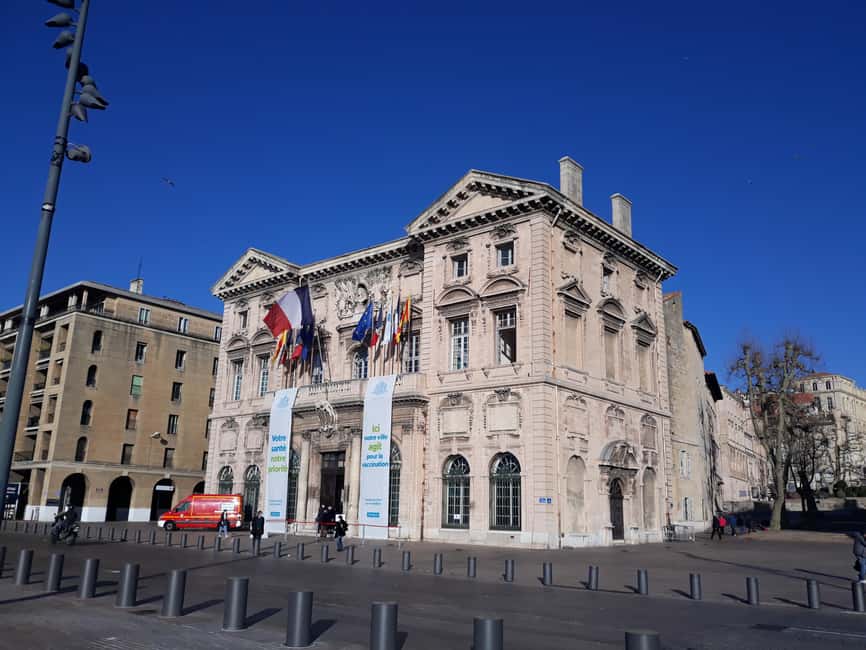
At $33 per person, the cost covers the guide and the game and riddles booklet. For 150 minutes, that works out to roughly $13.20 per hour before considering the value of the small-group format and the prize.
That is a fair price if you want a guided introduction to Marseille that also keeps children involved. You are paying for a planned route, local explanation, a printed activity, and a structured way to explore one of the city’s oldest districts. The price is less compelling if your group wants only a short orientation walk or prefers to explore independently.
The value also depends on how many people in your party will actively use the booklet. If the children enjoy solving clues, the game adds something you would not get from a standard stroll. If nobody wants to play, much of the experience’s special purpose disappears.
The reserve-now-and-pay-later option gives you some flexibility, and cancellation is free up to 24 hours before the activity for a full refund. Keep in mind that these booking terms do not change the route’s physical demands or the need to arrive ready for a long walk.
Who should book this activity
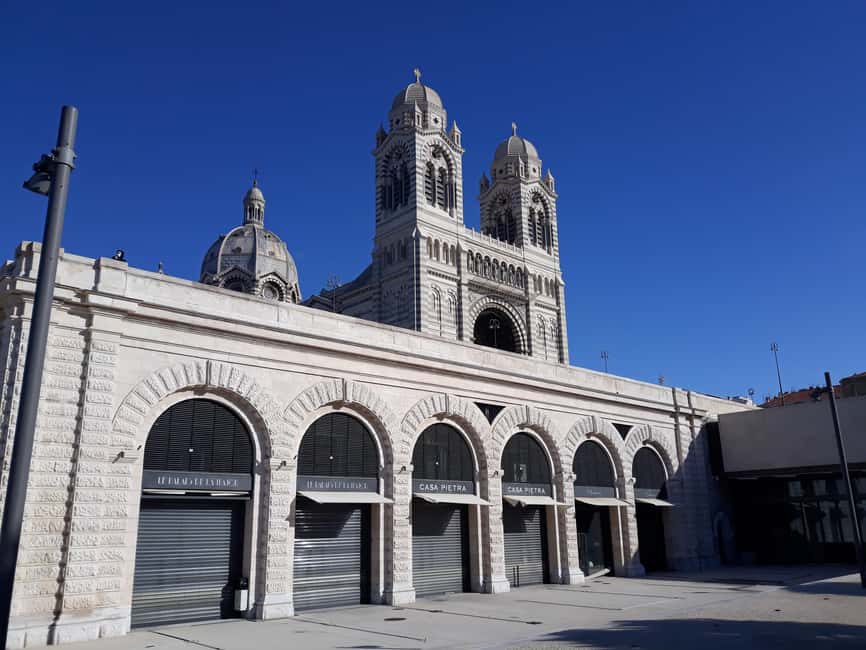
This tour is best for families with children aged six and older who like walking and playing. It also suits adults who want history presented in a lighter way, without giving up local stories or a sense of place.
It can work well for a mixed-age group because the clues allow different people to contribute. A child may spot a visual detail, an adult may interpret the wording, and the guide can add the background. The limited group size supports that shared effort.
You should think twice if someone in your party has trouble with stairs or cannot comfortably walk about 4.5 kilometres. The route is described as not very difficult, but that does not make it a short route. Children under six are not suitable for the activity, and very young children may also find the clue-based format hard to follow.
The multilingual options make it a practical choice for English, French, and German speakers. If your family needs another language, this activity may not be the right fit because only those three languages are specified.
Practical advice before you go
Wear shoes suited to a city walk. The route includes streets, alleys, and some stairs, and the game works best when you can stop, look around, and continue without worrying about uncomfortable footwear.
Give yourself time to reach the meeting point near the Ferry-Boat pier next to City Hall on the north shore of the Old Port. You will want to begin with the group rather than arrive while the first clue is already being explained.
Keep the group’s pace in mind. The activity lasts 150 minutes, so it is longer than a quick city introduction. Children may stay engaged because of the hunt, but they still benefit from a calm pace and adults who let them solve the clues.
If you are comparing this with a conventional guided walk, ask yourself what your family needs. This experience favors participation and discovery. A traditional tour may provide more uninterrupted explanation, while this one gives children a reason to look closely at Marseille.
Should you book the Old Marseille treasure hunt?
Book it if you want your family to explore Le Panier actively rather than simply follow a guide. The combination of a 4.5-kilometre route, Eric D.’s local stories, a self-created riddle booklet, and a small group gives the walk a clear identity.
The strongest reason to choose it is the way the treasure hunt keeps children involved. The main caution is the distance and the stairs. For families with children under six, or for anyone seeking a short and easy stroll, choose another activity. For families ready to walk, notice details, and compete for a small prize, this offers a practical and entertaining way to meet old Marseille.
FAQ
Where does the activity start?
It starts near the Ferry-Boat pier next to City Hall, on the north shore of Marseille’s Old Port.
Where does the activity finish?
The activity finishes at Fort Saint-Jean, in the 13002 area of Marseille.
How long does the treasure hunt last?
The activity lasts 150 minutes, or two and a half hours.
How far do you walk?
The walking distance is about 4.5 kilometres.
Are there stairs on the route?
Yes. The route includes some stairs, though it is described as having no major difficulty.
What languages are available?
The activity is available in English, French, and German.
How many people can join the group?
The group is limited to 10 participants.
Is the activity suitable for young children?
Children under six are not suitable for this activity. It is designed especially for families with older children who enjoy walking and games.
What is included in the price?
The price includes the guide and the game and riddles booklet. A gift is also given to the winner of the treasure hunt.
Just listed in Marseille
- Marseille: Frioul Archipelago Catamaran Cruise with Lunch★ 4.4 · 49 reviews
- Marseille: Self-Guided Smartphone Tour by E-Scooter★ 4.7 · 50 reviews
- Cassis National Park E-Mountain Bike Experience with Virtual Guide★ 5.0 · 52 reviews
- Lavender Small-Group Tour In Valensole from Marseille★ 4.5 · 53 reviews
- Provence : Aix en Provence, Cassis and Marseille Private Tour★ 4.5 · 53 reviews
- Marseille : Calanques Catamaran Cruise with Lunch & Wine★ 4.8 · 54 reviews
- Rando-Palmée Getaway Around an island★ 4.0 · 54 reviews
- Aix-en-Provence, Cassis, Marseille – Private Tour From Marseille★ 5.0 · 55 reviews
Marseille Tours, compared.

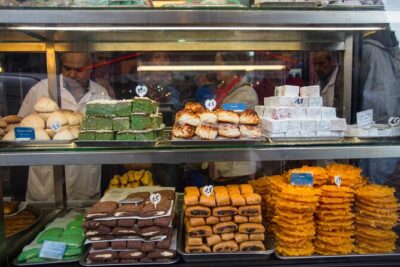
Marseille Food Tour – Full Meal of Local Tastes by Do Eat Better
Read our review →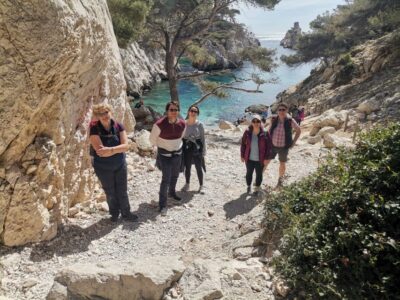
Calanques National Park Guided Hike with Picnic
Read our review →


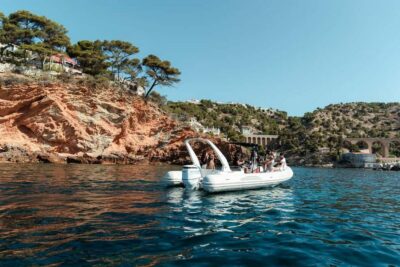

Calanques Sailing Day Trip with Lunch and Wine
Read our review →Browse the lists this tour appears in