
Reviewed · BAYEUX TOURS
Omaha and Utah beaches
The most powerful part of this day is the chance to connect the broad story of D-Day with small, physical places: a church where wounded men were treated, a bridge fought over at La Fière, gun batteries, farm buildings, and the wide sands of Omaha and Utah beaches. The route follows the American V Corps and VII Corps, so you get a clear sense of how the invasion unfolded on the ground.
I like two things right away. First, the tour packs in major sites and lesser-known corners without making you arrange several taxis or rental-car stops. Second, the guides, including Theo, William, Adam, Valentine, Ben, Antoine, and others on the Overlord team, are praised for using maps, photographs, family stories, and individual acts of courage to make the military history easier to grasp.
The trade-off is the pace. Nine hours is a long day, and the beaches can be cold, windy, and wet, especially in autumn and spring. Lunch and drinks are not included, and the van returns to the meeting point rather than dropping you at your hotel.
Key points to know before you book
- Two American landing beaches in one day: Compare the very different settings and stories of Omaha and Utah.
- A small group of up to 16: The van format keeps the day more personal than a large coach tour.
- Major sites plus quieter stops: Pointe du Hoc, the American Cemetery, La Fière, Angoville-au-Plain, and other battle locations all fit into the route.
- Strong guide-led storytelling: Expect maps, photographs, military context, personal anecdotes, and time to ask questions.
- Central Bayeux departure: Meet at Place du Québec at 8:20 a.m. and return there after about nine hours.
- A moving but demanding day: Bring warm layers, sensible shoes, food, and patience for a full schedule.
Why this Omaha and Utah route works
Normandy has enough D-Day sites to fill several days, but first-time visitors often struggle to see how they fit together. This tour gives you a useful American-focused framework. You move from the coastal defenses and landing zones to inland bridges, villages, aid stations, headquarters, and memorials.
That order matters. At Omaha and Utah, you see where troops came ashore. At Sainte Mère Église and La Fière, you follow the airborne and ground fighting inland. At places such as Hiesville and Angoville-au-Plain, the war becomes less about arrows on a map and more about decisions made in houses, fields, churches, and crossroads.
I also like the size. With a maximum of 16 people, you are not trying to hear a guide from the back of a full-size bus. The private vehicle makes it easier to reach small sites, though a smaller van also means less room to spread out during a long day.
The experience is offered in English and includes a driver-guide, local guide, professional guide, and private-vehicle transport. The exact guide matters here because so much of the value rests on interpretation. Theo, William, Adam, Valentine, Ben, Antoine, and other Overlord guides have been singled out for clear explanations, enthusiasm, safe driving, and a knack for turning military details into human stories.
A few other Bayeux half-days to compare
- Normandy American D-Day Beaches Full Day Tour from Bayeux
★ 5.0 · 2,103 reviews - Normandy American D-Day Experience – Group tour from Bayeux
★ 5.0 · 1,566 reviews - Normandy Beaches Half-Day Afternoon Trip from Bayeux (A2)
★ 4.5 · 1,116 reviews
Longues-sur-Mer Battery puts the coast in context
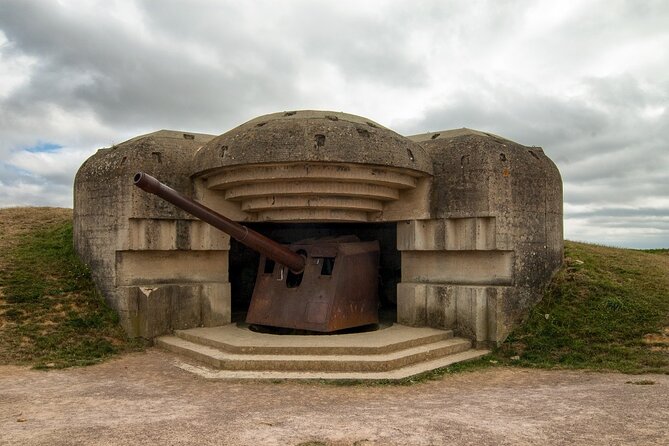
The day begins with the Longues-sur-Mer Battery, a useful first stop before the American beaches. Coastal gun positions help you understand the defensive system the Allied forces faced, rather than viewing the landings as an isolated event on a strip of sand.
You can expect the guide to explain how the battery fitted into the German coastal defenses and why fixed guns shaped the invasion plan. This early stop also gives you a visual reference for the scale of the operation.
The tour lists admission as free, but food, drinks, and lunch are not part of the package. Since you start at 8:20 a.m. and spend the full day moving from place to place, bring something to eat and a drink with you.
Omaha Beach remains the emotional center
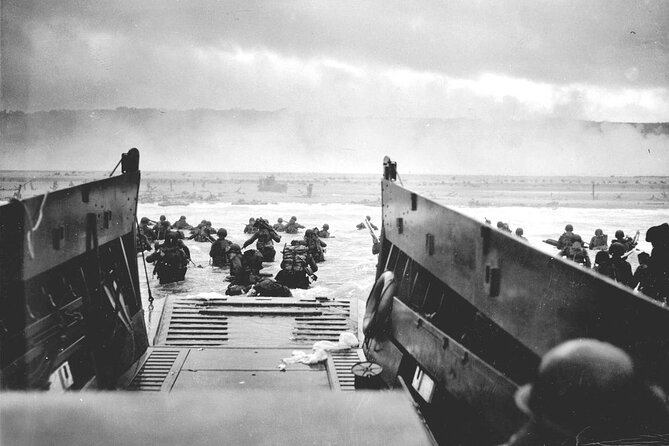
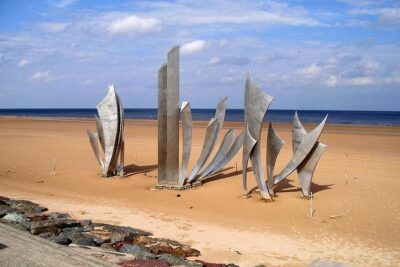
Omaha Beach is not simply a scenic shoreline. The open beach, rising ground, and exposed approaches make it easier to think about the enormous difficulty facing the American troops on June 6, 1944.
Your guide connects the physical setting with the actions of the American V Corps. The strength of a guided visit is that you are not left to stare at the sea without a framework. Maps and wartime photographs, used by guides such as Theo and William, help show how the attack developed and why progress was so costly.
Allow yourself a quiet moment here. The best part of the stop may not be another fact, but the chance to look across the beach after hearing what happened on it. The beach is open and exposed, so wind and rain can make this stop feel colder than the temperature suggests. Warm clothing is a practical necessity, not a fashion choice.
Colleville American Cemetery gives the numbers a human face
The American Cemetery at Colleville is one of the most affecting places on the route. Rows of white markers extend across the grounds above Omaha Beach, and the scale of the cemetery makes the human cost impossible to reduce to a statistic.
Your guide can provide the military setting, but you should also give yourself time to walk and reflect. This is not a stop to rush through while trying to take a quick photograph.
The cemetery is especially valuable after Omaha Beach. You first see the place where the fighting occurred, then encounter the memorial to those who did not return. That pairing gives the morning a strong emotional shape.
Same city, a completely different afternoon:
- Omaha and Band Of Brothers Full Day Tour
★ 5.0 · 1,104 reviews - Omaha Beach D-Day Experience – Afternoon group tour from Bayeux
★ 5.0 · 1,088 reviews - Normandy Battlefields Tour – American Sites (A3)
★ 5.0 · 876 reviews - From Bayeux: American D-Day Sites in Normandy Half-Day Tour
★ 4.9 · 656 reviews
Pointe du Hoc shows the fight for the high ground
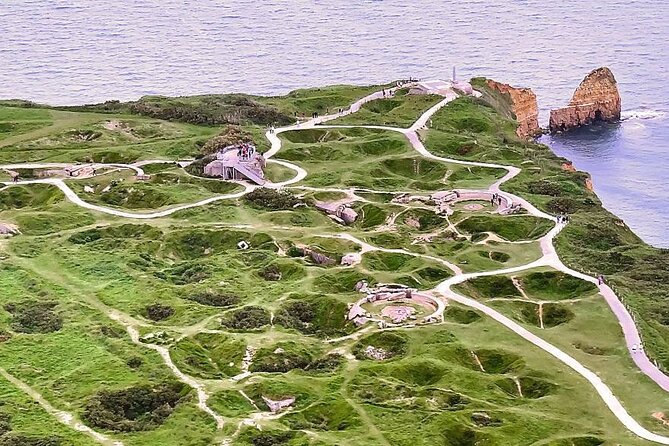
Pointe du Hoc is one of Normandy’s most recognizable battle sites, with its clifftop position and surviving German defensive works. The stop adds another layer to the Omaha story by showing why Allied forces targeted the position and how difficult it was to attack fortified high ground.
Here, the guide’s military background makes a real difference. The terrain and concrete structures tell only part of the story. A well-prepared guide can explain the tactical problem, the risks of the assault, and how the position related to the surrounding beaches.
This is another outdoor stop, so wear shoes that can cope with uneven ground. The tour covers a lot of ground in one day, and you will enjoy it more if you are ready for regular walking and standing.
Sainte Mère Église and La Fière shift the story inland
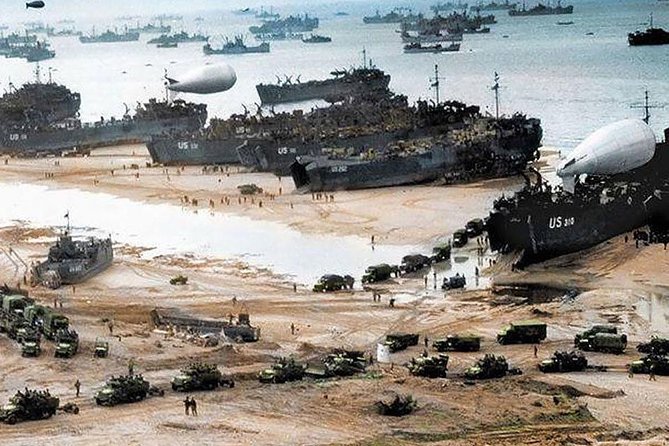
After the coastal sites, the route turns to Sainte Mère Église. This town is closely linked with the American airborne landings and gives you a different view of D-Day. Instead of focusing only on troops coming from the sea, you begin to see the wider effort to secure roads, crossings, and routes inland.
La Fière continues that story. The bridge and surrounding area mattered because control of crossings could affect the movement of troops and equipment. A stop here helps you understand why a seemingly small village feature could become a major military objective.
These are the places where maps and photographs are especially useful. The guide can show how the locations fitted into the airborne operation and how local terrain affected the battle. You might find the inland stops more rewarding than expected because they break up the predictable beach-and-cemetery pattern.
DeGlopper Action and the Holdy Battery add personal detail
The DeGlopper Action stop focuses on an individual act of courage rather than a large formation or famous beach. This is one of the route’s strengths. Military history can become abstract when it is told only through units and dates, but a single soldier’s decision gives the campaign a human scale.
The Holdy Battery and 1st Aid Station continue that close-up approach. You see how defensive positions and medical care formed part of the fighting around Utah Beach. The combination of a gun battery and aid station reminds you that D-Day was both an attack against fortified positions and a medical crisis requiring immediate response.
These smaller sites may have fewer obvious visitor facilities than the major memorials. That is part of their appeal, but it also means the guide does much of the interpretive work. Without explanation, you could easily pass a field or building without realizing its importance.
Utah Beach completes the coastal comparison
Utah Beach gives you a useful contrast with Omaha. The two beaches are often grouped together in a single day, but the terrain, objectives, and course of events were not identical.
Seeing both helps you avoid treating D-Day as one uniform operation. Your guide follows the American VII Corps here, building on the V Corps story from Omaha. By the time you reach Utah, you have enough context to compare the two landings rather than simply collecting another beach photograph.
The visit also works well after the inland stops. You have seen how the operation moved beyond the shoreline, then return to the coast with a broader understanding of the campaign.
Sainte Marie du Mont and the hospital sites make the story local
Sainte Marie du Mont is another important village stop on the Utah side of the route. Small French communities often provide the clearest sense of how the invasion affected ordinary places, roads, farms, and homes.
La Colombière Hospital adds a medical perspective. Along with the Holdy aid station, it shows the strain placed on improvised and established medical facilities during the fighting. These stops are valuable because they widen the story beyond assault troops and commanders.
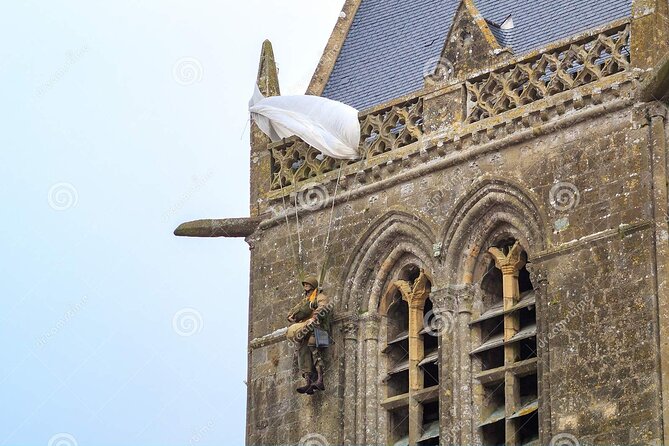
At Angoville-au-Plain, the church is a particularly memorable stop. The site is tied to two medics who cared for about 80 Allied and German soldiers. That detail captures the confusion and humanity of combat better than a broad campaign summary can. It is also the sort of place where a guide’s storytelling can make a modest building feel historically important without exaggerating it.
Hiesville and the General Taylor sites explain command decisions
The route continues to Hiesville, associated with General Taylor’s headquarters, and the General Pratt Memorial. These stops bring the command level back into view after the personal stories and village scenes.
This balance is important. You get the experience of soldiers and medics, but also the planning and leadership behind the American advance. A guide can help connect headquarters locations with the movements you have already traced at the beaches, bridges, and villages.
The full itinerary is ambitious, and time at each stop will vary. Some places are naturally reflective, while others are brief orientation points. If you want hours inside museums or a slow study of every memorial, this is not the right format. If you want a broad, connected field lesson in one day, the range is a major benefit.
Guides make or break this history day
The strongest praise for this experience centers on the guides. That is worth taking seriously because the sites themselves are spread across Normandy, and much of their meaning depends on explanation.
Theo is noted for family anecdotes, maps, photographs, and a comfortable pace. William is praised for bringing the history to life and sharing individual stories of heroism. Adam is described as thorough and engaging, especially at the church where Allied and German soldiers received care. Valentine is credited with giving plenty of detail without allowing the information to become too much.
Ben and Antoine also receive strong marks for balancing facts with stories. Antoine’s approach focuses on humanizing the campaign, which can help younger visitors connect with events from 1944. The guide may also correct popular myths or simplify complicated military claims, something one visitor particularly valued.
The repeated point is simple: the guide shapes the day. You are paying for access to places, but also for the ability to understand what you are seeing. If your guide uses maps, photographs, and personal stories, the long drive between stops becomes useful rather than dead time.
Price, group size, and the real value
At $183.81 per person, this is not a bargain outing. Still, I think the price can make sense if you are staying in Bayeux and want to cover both American landing sectors without renting a car, planning a route, or researching every minor site.
The value comes from the amount of ground covered and the guide’s role. You visit Omaha, Utah, Pointe du Hoc, Colleville, Sainte Mère Église, La Fière, Angoville-au-Plain, and several less familiar locations in roughly nine hours. A private vehicle and a small group also save you from the limitations of a large coach.
The cost feels less favorable if you want a relaxed day, museum time, or a long restaurant lunch. Lunch and drinks are extra, and the schedule is full. One practical way to protect the value is to pack food so you do not lose time searching for a meal during a busy season.
The tour has a 5 out of 5 rating from 1,085 ratings, with 100 percent recommending it. Those figures suggest a very dependable experience, but the main reason to book should still be the format: a serious, full-day American D-Day route with an English-speaking guide.
Practical details for a smoother day
Meet at Place du Québec in central Bayeux at 8:20 a.m. The activity ends back at that meeting point, and hotel pickup or drop-off is not included.
The vehicle carries a maximum of 16 people. That is small enough for a more direct exchange with your guide, though you should expect a full van and a long day on the road.
Wear warm, weatherproof clothing. An autumn morning at the beaches can feel raw, and one March visit included cold weather and intermittent rain. Comfortable walking shoes are sensible for the beach areas, memorial grounds, and outdoor defensive sites.
Most people can take part, and service animals are allowed. The meeting point is near public transportation, which helps if you are staying elsewhere in Bayeux. Confirmation is sent within 48 hours of booking, subject to availability.
You can cancel for a full refund up to 24 hours before the start time. Changes or cancellations made inside that 24-hour window are not accepted for a refund.
Who should book this tour?
I would choose this tour if you have one full day in Bayeux and want a strong first look at the American side of the Normandy campaign. It suits history fans, families with older children, military enthusiasts, and anyone who wants the sites explained rather than simply photographed.
It is also a good fit if you prefer a guide to a rental car. Driving in an unfamiliar region, finding the smaller memorials, and building a sensible route can take much of your time. Here, you can focus on the places and the stories.
I would think twice if you dislike early starts, long van days, outdoor weather, or emotionally heavy memorials. The schedule covers a lot, and the subject is not light. You should also consider another format if your priority is extended museum visits or independent time at one beach.
For most first-time visitors interested in American D-Day history, I would book it. The combination of Omaha and Utah, the cemetery, Pointe du Hoc, Sainte Mère Église, La Fière, and the quieter medical and village sites gives you far more than a quick beach visit. Pack lunch, dress for the weather, and leave room for silence as well as questions.
FAQ
Where does the tour start?
It starts at Place du Québec, Pl. du Québec, 14400 Bayeux, France.
What time does the tour begin?
The start time is 8:20 a.m.
How long does the experience last?
The tour lasts approximately nine hours.
Does the tour return to Bayeux?
Yes. The activity ends back at the meeting point in Bayeux.
Is lunch included?
No. Food, drinks, and lunch are not included.
How many people can join the tour?
The maximum group size is 16 people.
Just listed in Bayeux
- WW2 Jeep or Dodge truck tour of the Omaha Beach site★ 5.0 · 51 reviews
- Private Tour of American Sites with an Expert Guide from DDAY★ 5.0 · 51 reviews
- Mont Saint Michel Full Day Tour from Bayeux★ 5.0 · 52 reviews
- Private Day Tour including Normandy Landing Beaches & Battlefields from Caen★ 5.0 · 53 reviews
- Bayeux: Band Of Brothers Full-Day Tour★ 4.9 · 53 reviews
- From Bayeux: D-Day American Beaches and US Airborne Day Tour★ 4.8 · 56 reviews
- Le Havre Shore Excursion: Private Day Tour with Omaha Beach & American Cemetery★ 5.0 · 57 reviews
- From Bayeux: 2-hour private sidecar tour in Normandy★ 5.0 · 58 reviews
Bayeux Tours, compared.
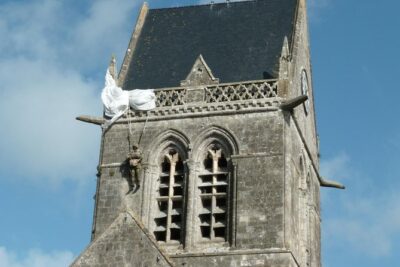
Normandy American D-Day Beaches Full Day Tour from Bayeux
Read our review →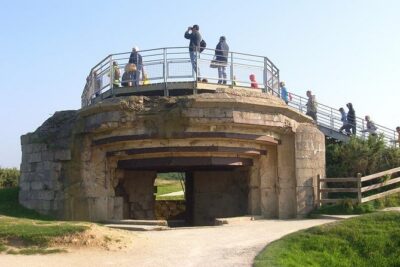
Normandy American D-Day Experience – Group tour from Bayeux
Read our review →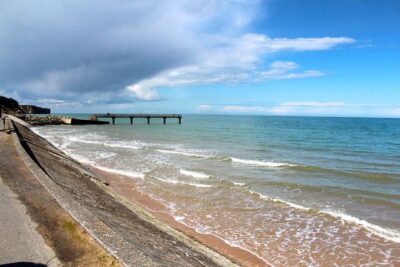
Normandy Beaches Half-Day Afternoon Trip from Bayeux (A2)
Read our review →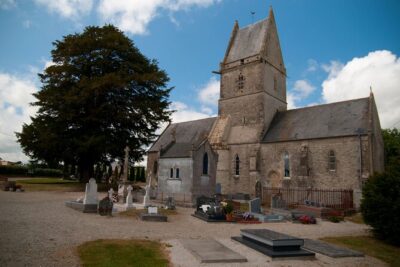
Omaha Beach D-Day Experience – Afternoon group tour from Bayeux
Read our review →
Normandy Battlefields Tour – American Sites (A3)
Read our review →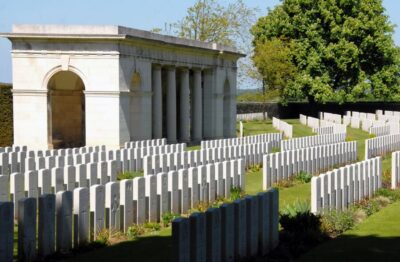
American D-Day Sites in Normandy Half-Day Tour
Read our review →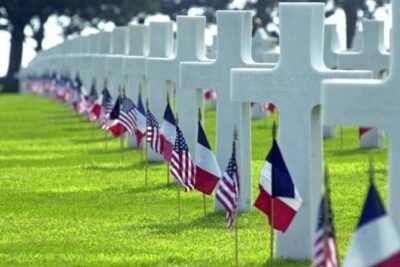
Browse the lists this tour appears in