
Reviewed · PARIS TOURS
Paris Art of Pairing Cheese and Wine Tasting in a Cheese Cellar
Paris Art of Pairing Cheese and Wine Tasting Review
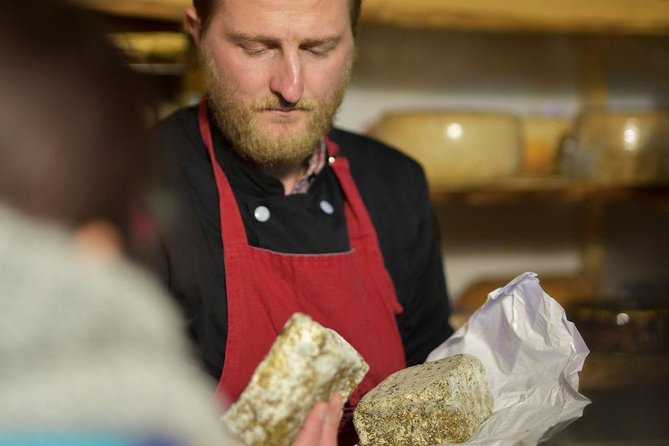
The most unusual part of this Paris food tour comes before the first sip. You put on a protective suit, walk through a cheese shop, and descend into a cool cellar where wheels and blocks of cheese mature, some weighing up to 77 pounds. It is part tasting, part working cheese lesson.
I like the small groups of no more than 12 and the chance to taste seven cheeses cut fresh from the block. I also like that the guides, including Pierre, Agathe, Gabriel, Paul, and others, bring real enthusiasm to the subject and offer useful advice you can apply at Paris restaurants and shops.
The main consideration is that this is more focused on cheese than on wine. A meaningful portion may cover cheesemaking and French cheese traditions before the pairings begin, so book it for food education as much as for drinking.
Key points
- Seven cheeses and three wines: Taste Gruyère, bôfavre, Camembert, Etivaz, Beaufort, and other selections with matched French wines.
- A real cellar visit: Wear the provided hygienic suit and see ripening cheeses in a cold underground setting.
- Small-group teaching: The maximum group size is 12, with occasional especially small sessions.
- Cheese-first instruction: Expect more detail about making, aging, and regions than about wine theory.
- Useful Paris food advice: You leave with better tools for reading menus and choosing cheese and wine during the rest of your stay.
- Simple but important planning: The cellar is reached by stairs, and you should confirm the meeting address before setting out.
What happens at 39 Rue Saint-Louis en l’Île
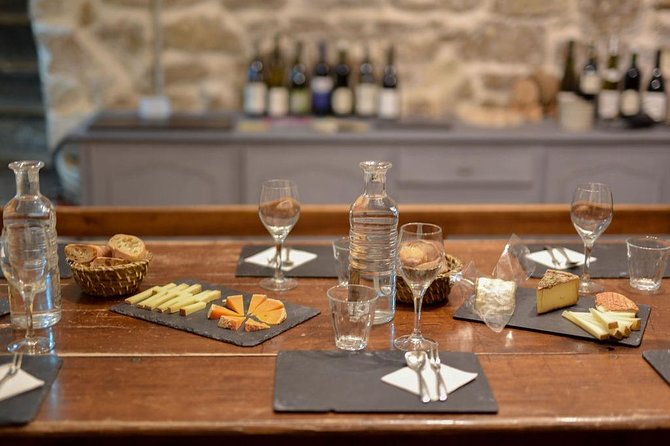
Your meeting point is 39 Rue Saint-Louis en l’Île, on Île Saint-Louis in central Paris. The activity begins at the Musée Vivant du Fromage, a specialty cheese setting rather than a large sightseeing venue. That gives the visit a more intimate feel from the start.
The format is refreshingly direct. You meet the cheese and wine master, receive an introduction, and learn how French cheese is made and matured. The guide explains why the cellar matters, how aging changes texture and flavor, and how different French and Swiss regions produce distinctive styles.
This first part is valuable if you want to understand what you are eating instead of simply receiving a plate of samples. It also helps with French menus. Terms on a cheese board can be confusing, and a good explanation of milk type, age, texture, and region makes later choices much easier.
Allow a little extra time to locate the meeting point. One booking was affected by a change of venue that did not reach the customer clearly, so I would check the latest address and messages shortly before leaving. The listed meeting point is 39 Rue Saint-Louis en l’Île, but current instructions should take priority.
More Food Tours in Paris
- Authentic Parisian Gourmet Food Tour with 10 Local Dishes & Wines
★ 5.0 · 4,754 reviews - Devour Paris Ultimate Food Tour
★ 5.0 · 2,087 reviews - Private Montmartre Food Tour with Wine, Cheese & Pastries
★ 5.0 · 1,027 reviews
Suited up for the cheese cellar
The cellar is the heart of the visit. Before going downstairs, you put on a protective suit designed to help preserve the cheeses. It may feel slightly theatrical, but it serves a practical purpose in a space where delicate products are ripening.
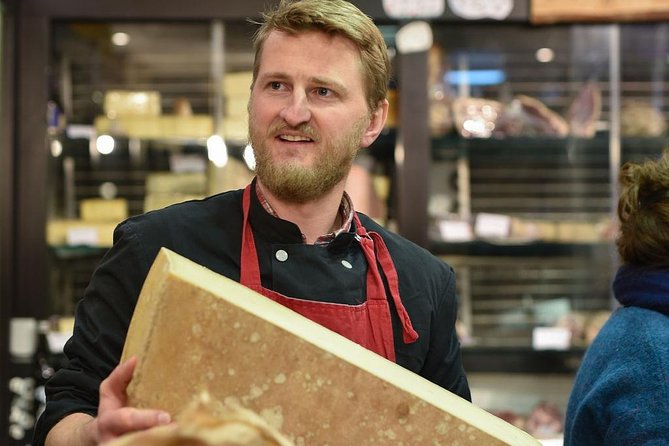
The room is cool, so bring a warm layer even during mild Paris weather. This is not a quick look at a refrigerated display. You see blocks, rolls, and large wheels at different stages of maturation, including pieces that can weigh as much as 35 kilograms.
The cellar visit gives useful context to the tasting that follows. Cheese is not simply made and placed on a plate. Time, temperature, humidity, turning, and careful handling all affect the final product. Seeing the storage area makes those ideas easier to understand.
You will use stairs to reach the cellar. That detail matters for anyone with limited mobility, since the underground room is not described as step-free. Most people can take part, but you should be comfortable walking through the shop and using stairs.
Seven cheeses, cut fresh and explained clearly
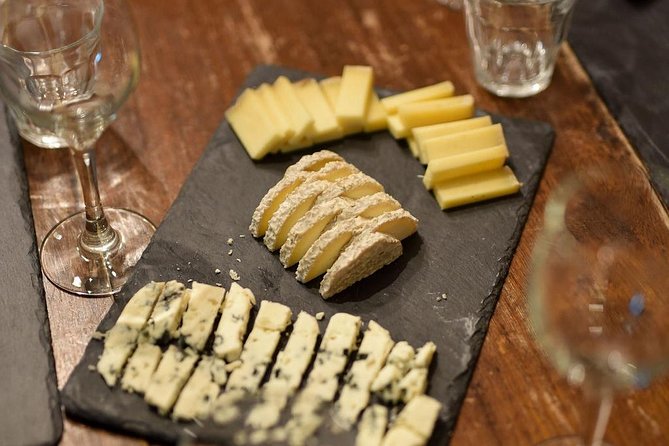
The tasting includes seven cheeses, with examples such as Swiss Gruyère, bôfavre from the Jura Mountains, Camembert, Etivaz from the Alps, and Beaufort, a raw cow’s milk cheese. The exact selection can vary, but the listed examples show a useful range of styles.
Gruyère and the other hard cheeses let you compare firm texture, nutty flavor, and mountain aging. Camembert gives you a softer, more delicate style. Beaufort adds another Alpine example, with a different character despite belonging to the same broad family of firm cow’s milk cheeses.
Bôfavre and Etivaz are especially interesting for anyone who already knows common French supermarket cheeses. They connect the tasting to mountain regions and traditional production. You are not just sampling familiar names. You are also meeting cheeses that can be harder to identify on an ordinary Paris menu.
The cuts are made fresh from the block or wheel. That small detail matters. Cheese tastes and feels different when freshly cut, and the guide can point out texture, aroma, rind, and signs of maturity as you eat.
Bread is served throughout the tasting. It is listed with a playful menu of cheese as the starter, wine as the main course, and bread as dessert. In practical terms, the baguette acts as a useful palate companion and helps make the tasting feel like a light meal rather than a few isolated bites.
How the wine pairing works
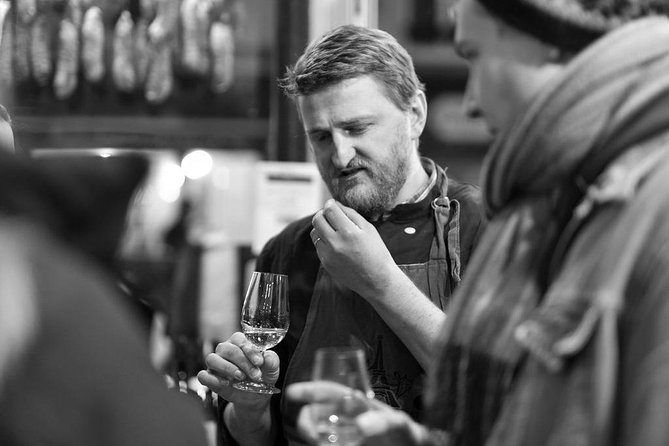
Three wines accompany the seven cheeses. The goal is to compare how a wine changes the taste of a cheese, not simply to drink three unrelated glasses.
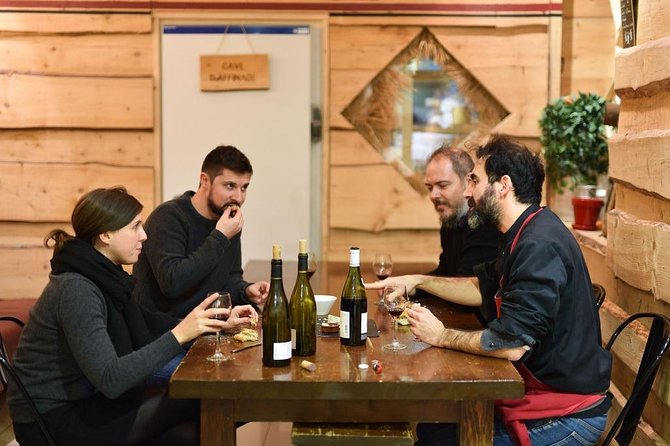
You alternate bites of cheese with sips of wine, paying attention to complementary flavors. A pairing may soften a strong note, bring out a nutty quality, or make a creamy cheese seem brighter. The guide explains the basic logic so you can repeat it at home or order with more confidence in Paris.
The wine portion is enjoyable, but you should set your expectations correctly. The teaching leans more heavily toward cheese than formal wine study. If your main interest is grape varieties, vineyard law, tasting technique, or detailed wine geography, this may feel less thorough than a dedicated wine class.
For most food-focused visitors, that balance works well. Cheese is the central subject, and wine serves as the partner that helps explain it. The approach is friendly and practical rather than technical.
The minimum drinking age is 18. Anyone under that age should not expect to take part in the wine tasting, and the supplied details do not promise a separate nonalcoholic pairing.
More wine tastings in Paris:
- Montmartre Hill French Gourmet Food and Wine Tasting Walking Tour
★ 5.0 · 2,588 reviews - From Paris: Loire Valley Castles Day Trip With Wine Tasting
★ 4.6 · 1,727 reviews - Paris: Les Caves du Louvre Guided Tour with Wine Tastings
★ 4.7 · 932 reviews - Champagne Day Trip with 6 Tastings, Reims and Winery from Paris
★ 5.0 · 902 reviews
The guides make the difference
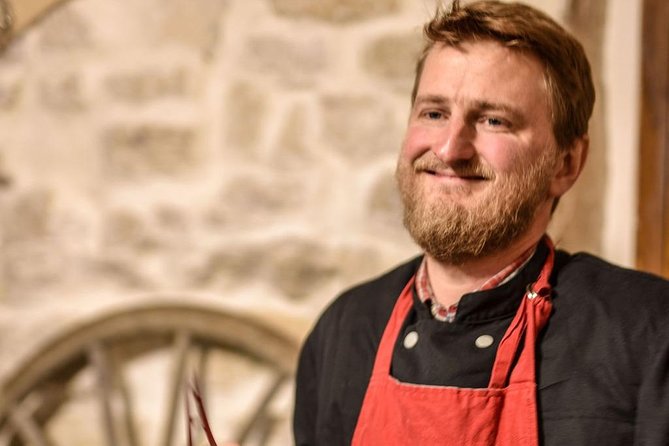
The guide shapes much of the experience. Pierre is described as patient, passionate, and attentive, with a relaxed teaching style. Agathe brings strong enthusiasm for cheese and keeps the group involved. Gabriel is praised for an engaging presentation, while Paul is noted for his enthusiasm and easygoing approach.
Those names do not mean you can choose a specific guide when booking. They do show the range of hosts who may lead the session. The best part of the format is the chance to ask questions while you taste, instead of listening to a fixed presentation in a large hall.
Group size is limited to 12. That is small enough for a personal feel, and some scheduled sessions may be much smaller. One session had only one participant, which allowed for very tailored instruction, though you should not book expecting a private class.
A compact group also helps with the cellar visit. You can hear explanations more easily, examine the cheeses, and ask about a style that catches your attention. It is a better setup than a crowded tasting where the plate arrives without much guidance.
The experience is provided in English. That removes a major barrier for visitors who want to ask questions about French food but are not comfortable discussing cheese or wine in French.
The timing and value of $84.69
The listed price is $84.69 per person, and the session lasts about 90 minutes. That is not a cheap snack, but it includes a structured lesson, a cellar visit, seven cheese tastings, three wines, bread, and a specialist guide.
I see the price as reasonable if you treat the session as both a tasting and a class. Seven cheeses is a substantial comparison, and the cellar adds something you cannot get from ordering a cheese plate at a neighborhood wine bar. You are also paying for interpretation: why the cheese tastes as it does, where it comes from, and how to pair it.
The value is weaker if you only want generous portions or a long evening of wine drinking. This is a short educational activity, not a full dinner. You may want to plan a later meal if you arrive hungry.
Booking about 30 days ahead is common, so do not leave it until the last day of a short Paris visit. The maximum of 12 people limits capacity, and the most convenient times can fill early. Free cancellation is available until 24 hours before the start time. Inside that window, the payment is not refunded, and changes are not accepted.
Who will enjoy this Paris food stop
I would recommend this for anyone who wants a clearer idea of how French cheese works. It suits curious eaters, couples, solo visitors, and small groups looking for an indoor break from walking around Paris.
It is particularly useful early in your visit. Once you understand basic cheese types and pairing ideas, you can make better choices at markets, fromageries, restaurants, and wine bars for the rest of your stay.
The session also works well for people who enjoy conversation. The guides explain, answer questions, and bring personality to the class. If you prefer to quietly taste without instruction, the history and production talk may feel like too much.
Families should check the age details carefully. Most people can participate, but alcohol is limited to those aged 18 and above. The stairs and cold cellar are also worth considering for anyone who needs step-free access or dislikes cool rooms.
What the high rating tells you, and what it does not
The activity carries a 4.9 rating from 386 reviews, with 97 percent of customers recommending it. The strongest praise centers on the hosts, the generous cheese and wine selection, and the feeling of learning something useful rather than just consuming samples.
That positive response makes sense. A charismatic teacher can turn familiar ingredients into a proper lesson, and this experience gives the subject a physical setting: a shop, a cellar, aging wheels, and fresh cuts of cheese.
Still, the format will not suit every expectation. The title puts equal weight on cheese and wine, while the actual teaching gives cheese the larger share. If you want a detailed wine seminar, ask yourself if three wines and a cheese-led lesson are enough.
There is also a practical communication concern. Make sure you have the latest meeting instructions, especially if your confirmation and app show different information. Arriving late can mean missing the introduction to cheesemaking and the first part of the cellar visit.
Tips for getting more from the tasting
Wear comfortable shoes because you will move through the shop and use stairs. Bring a warm layer for the cellar, even if the day outside is warm.
Arrive on time. The opening explanation sets up the tasting, and missing it can make the pairings less clear. It is also considerate to the rest of the small group, since a late arrival can interrupt the session.
Pay attention to the order of the cheeses. The progression is part of the lesson. Notice how a hard Alpine cheese differs from soft Camembert, then test the wine with each rather than eating everything at once.
Use the guide’s advice later in Paris. Ask for regional cheeses, note the names you enjoyed, and try applying the pairing principles at a local shop. The most useful souvenir is not a pamphlet. It is knowing how to describe what you want.
Finally, plan this as a tasting and lesson, not a full meal. Bread is included, but the activity lasts about an hour and a half. A proper dinner afterward is sensible.
Should you book this cheese cellar experience?
Book it if you want a warm, social introduction to French cheese, a small cellar visit, and enough wine to understand the basic pairing idea. The fresh cuts, unusual mountain cheeses, and personable guides give it more substance than a standard cheese plate.
Skip it if your priority is a serious wine course, a step-free activity, or a large meal. The cheese education takes center stage, and the cellar is reached by stairs.
For most food lovers, I would put this near the beginning of a Paris stay. At $84.69, it offers a useful mix of tasting, instruction, and local food culture, with the added fun of dressing for the cellar.
FAQ
Where does the cheese and wine tasting begin?
The activity begins at 39 Rue Saint-Louis en l’Île, 75004 Paris, France, at the Musée Vivant du Fromage. It ends back at the meeting point.
How long does the experience last?
The tasting and cellar visit last approximately one hour and 30 minutes.
How many people can join the group?
The activity has a maximum of 12 participants. Some sessions may be smaller.
What food and drink are included?
You receive tastings of seven cheeses, three wines, and bread. Examples of the cheeses include Gruyère, bôfavre, Camembert, Etivaz, and Beaufort.
Is the cellar accessible without stairs?
No. The cellar is accessible only by stairs. It can also be cold, so warm clothing is recommended. A hygienic protective suit is provided.
What is the cancellation policy?
You can cancel at least 24 hours before the start time for a full refund. Cancellations or changes made less than 24 hours before the start time are not accepted and are not refunded.
More Cheese in Paris
- Paris: Montmartre Cheese, Wine & Pastry Guided Walking Tour
★ 4.8 · 2,255 reviews - Paris Le Marais Food Tour With 10+ Tastings, Cheese, Wine & More
★ 5.0 · 985 reviews - Paris: Wine and Cheese Lunch
★ 4.9 · 596 reviews - Cheese & Wine Tasting in Montmartre with Local Cheesemonger
★ 5.0 · 470 reviews
Just listed in Paris
- Chartres Cathedral 5 Hours Tour from Paris with Private Transport★ 4.5 · 49 reviews
- Paris: Giverny & Versailles Small Group or Private Tour★ 4.5 · 49 reviews
- Paris: Louvre photoshoot or Seine bridges Eiffel Tower walk★ 5.0 · 49 reviews
- Paris: Choux Pastry and Chocolate Éclair Making Class★ 4.9 · 50 reviews
- Private tour of the Champagne area, meet local producers and taste their Champagne, start from your hotel in Paris.★ 5.0 · 50 reviews
- Paris Eternelle Notre-Dame Virtual Reality Tour★ 4.5 · 50 reviews
- Normandy D-Day Landing Beaches Private Day Trip from Paris★ 5.0 · 50 reviews
- Disneyland® Paris 1 Day with Round-Trip Train Tickets from Paris★ 4.0 · 50 reviews
Paris Tours, compared.



Versailles Palace and Gardens Full Access Ticket
Read our review →

Eiffel Tower Entry Ticket with Optional Summit Access
Read our review →

Louvre Guided Tour with Reserved Access & Boat Cruise
Read our review →
Moulin Rouge Cabaret Show Ticket with Champagne
Read our review →Browse the lists this tour appears in