
Reviewed · PARIS TOURS
Paris by Night Walking Tour: Ghosts, Mysteries and Legends
Paris by Night Walking Tour: Ghosts, Mysteries and Legends
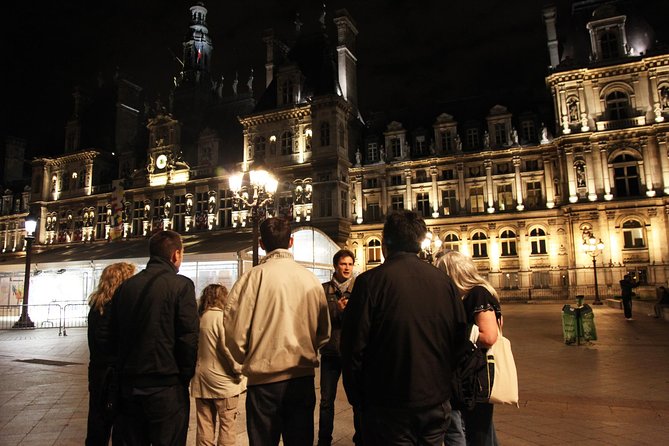
Paris looks different after sunset. The bridges glow, the narrow streets quiet down, and familiar landmarks take on a harder edge when your guide starts talking about public executions, plague, torture, political murder, and religious massacres. This is less a haunted-house stroll than a dark history walk through central Paris.
I like two things right away: the route uses famous sights such as the Conciergerie and Palais de Justice, but also pauses at less obvious places, including Square du Vert-Galant and Saint-Germain-l’Auxerrois. I also like the price, $18.10 for roughly two hours, and the group limit of 20 people. The main caution is simple: the ghost content is light. You are more likely to hear about real violence and political turmoil than to encounter a parade of spirits.
Key points to know before you book
- The Templars meet their grim end at Square du Vert-Galant: This peaceful riverside spot is linked to the burning of the last Knights Templar.
- Marie Antoinette’s prison is part of the route: The Conciergerie gives the evening a direct connection to the French Revolution.
- Saint-Germain-l’Auxerrois carries a terrible religious history: Your guide explains its connection to the St. Bartholomew’s Day Massacre.
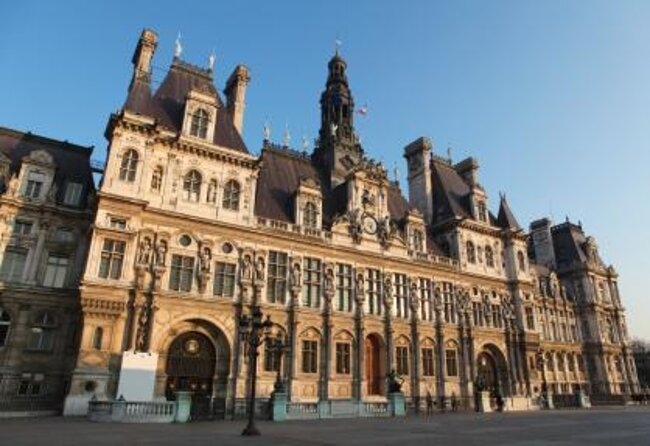
- The walk ends at a former execution site: Place de l’Hôtel de Ville was used for public executions from 1310 to 1830.
- Expect about 10,000 steps: Comfortable shoes matter, and there are stretches of walking between story stops.
- This is history with a spooky label: It suits curious first-time visitors more than serious enthusiasts of hauntings.
Starting beneath Henri IV at Pont Neuf
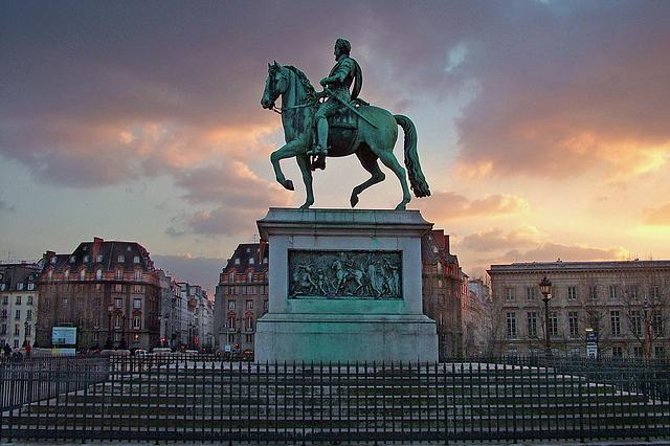
The meeting point is the Equestrian Statue of Henri IV at 15 Place du Pont Neuf. That puts you on the western end of Île de la Cité, a useful central location near public transportation and several of Paris’s most important historic sites.
The tour begins with a broad look at Paris’s darker past. You hear about murders, wars, plagues, brutal monarchies, religious conflict, and political unrest. The time span is wide, running from medieval Paris through the French Revolution, the Paris Commune, and the city under Nazi occupation.
That wide range gives the walk good variety. You are not stuck with two hours of beheadings or one long lecture about the Revolution. The stories move between royal intrigue, religious violence, prison life, execution, and urban history.
The downside is that the route cannot give every period much depth. If you already know Paris well, some of the material may feel familiar. One particularly critical assessment also raised concerns about historical errors in stories involving Catherine de’ Medici, Henri IV, and the Templars. I would treat the tour as an entertaining introduction, not as a scholarly source.
More Walking Tours in Paris
- Paris Top Sights Half Day Walking Tour with a Fun Guide
★ 5.0 · 2,893 reviews - Montmartre Hidden Gems and Scenic Highlights Walking Tour
★ 5.0 · 2,684 reviews - Montmartre Hill French Gourmet Food and Wine Tasting Walking Tour
★ 5.0 · 2,588 reviews
Square du Vert-Galant and the Knights Templar
The first named stop is Square du Vert-Galant, the small green point at the western tip of Île de la Cité. Today it is a pleasant place connected with Henri IV and his mistresses. Its present character is almost comically at odds with the story told here.
Your guide describes the execution of the last Knights Templar, who were burned at the stake in the early 14th century. The contrast is the point: a quiet riverside corner becomes a stage for the end of a powerful medieval order.
This is one of the better stops for atmosphere. Night makes the riverfront feel removed from the traffic and crowds of central Paris. Still, keep your expectations in check. You are hearing about the location and its associations, not entering a preserved execution site. A critical account also questioned the claim that a modern stone pillar at the stairs was the exact place where the Templars were tied. That is a useful warning to enjoy the drama while separating storytelling from proven detail.
The stop is listed at about five minutes, but the walk between points adds much more time. One participant estimated roughly 10,000 steps over the full evening, so the physical effort is greater than the short stop lengths suggest.
Saint-Germain-l’Auxerrois and the 1572 massacre
From the island, the route moves toward the church of Saint-Germain-l’Auxerrois. This old church is tied to the St. Bartholomew’s Day Massacre, one of the most violent episodes in France’s religious wars.
Your guide explains how the conflict between Catholics and Huguenots led to mass killings in 1572. The number given on the tour is around 30,000 Huguenots murdered in the wider massacre. The subject is difficult, but it helps explain why Parisian churches and royal politics cannot be separated from the city’s darker past.
This stop is useful because the building looks like a normal historic church to someone passing by. You might admire the architecture, take a quick photograph, and miss the political and religious violence connected with it. The tour gives the site a human and unsettling context.
The church stop is also where the accuracy question matters most. The stories surrounding Catherine de’ Medici, Henri de Navarre, the royal wedding, and the massacre are complicated. Some versions told for tour groups simplify or dramatize the sequence of events. If you know the period well, listen for the broad outline, but do not assume every colorful detail is settled fact.
Île de la Cité, the Roman beginning of Paris
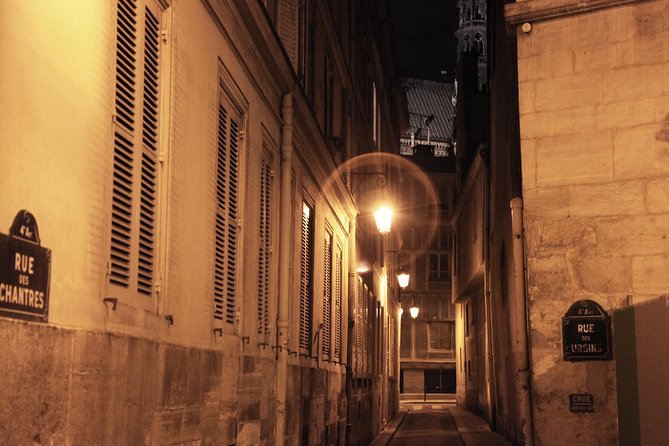
The walk continues around Île de la Cité, the island in the Seine at the center of Paris. In the fourth century, it served as the site of a fortress belonging to the Roman governor.
This is not a long museum-style stop. Instead, it gives the evening a sense of scale. Paris was not born as a romantic city of cafés and boulevards. Its central island was a defensive and political center long before the great royal buildings and modern streets appeared.
The island also links several stories together. Royal prisoners, religious violence, courts, executions, and government power all gather around this small area. I like that the tour makes you walk through the same compact center while shifting your attention from beautiful façades to the events that happened around them.
There are stretches where nothing specific is happening except walking. That is worth knowing before you book. The route is a city walk with stories placed along it, not a nonstop performance at every corner. A guide who adds trivia or speaks with the group during these transitions can make the evening feel much stronger.
Same city, a completely different afternoon:
- Paris: Louvre Museum Timed-Entrance Ticket
★ 4.6 · 71,977 reviews - Disneyland® Paris 1-Day Ticket
★ 4.6 · 49,412 reviews - Paris: Versailles Palace and Gardens Full Access Ticket
★ 4.6 · 41,579 reviews - Paris: Evening River Cruise with Music
★ 4.4 · 22,721 reviews
The Conciergerie and Marie Antoinette’s final days
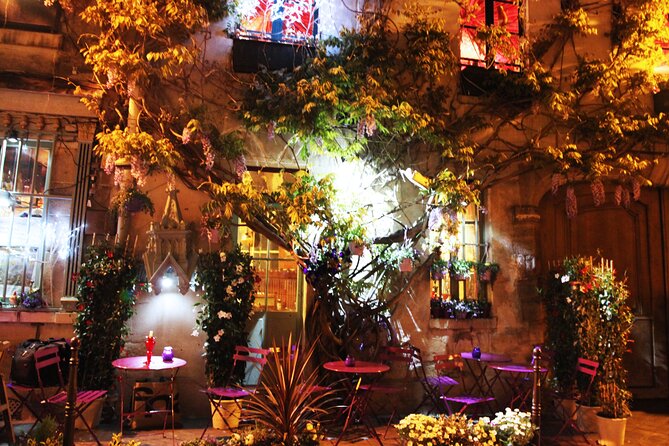
One of the strongest landmarks on the route is the Conciergerie, described in the tour information as the Hotel de Concierge. Marie Antoinette was imprisoned here before her execution, and the building remains one of the clearest links between modern Paris and the machinery of the French Revolution.
You pass by the former prison while hearing how people accused during the Revolution were held, judged, and sent toward the guillotine. The power of this stop comes from the building itself. Even without a long visit inside, the stone walls and restricted royal past make the story feel grounded.
Do not expect an extended interior tour. The experience is a walking tour, and the listed stops are brief. If seeing the Conciergerie inside is important to you, plan a separate visit at another time. Here, the guide supplies the historical frame while you continue through the city.
This is also a good point for understanding the tour’s overall tone. The subject is grim, but the approach is mainly historical. Some guides, including Sophia, Thelma, Daniel, Sylvia, Ami, and others named in the available feedback, have been praised for making the material clear, friendly, and entertaining. The quality can depend on the individual guide’s storytelling style.
Palais de Justice and the public theater of punishment
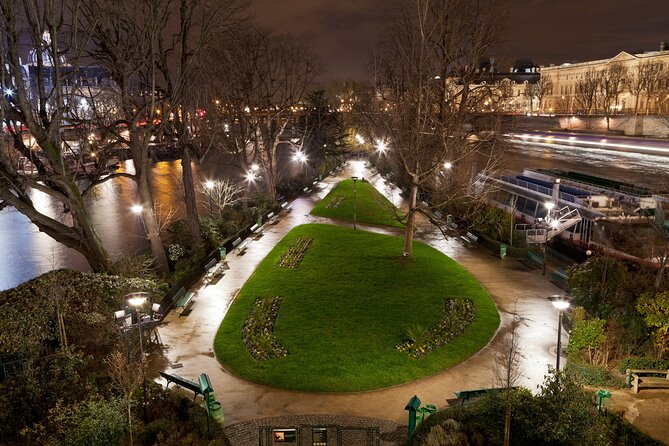
The Palais de Justice de Paris brings the French Revolution’s legal and theatrical side into view. The building received the Grand Prix de l’Empereur as the greatest work of art produced in France during that decade, yet its darker role is the focus here.
You learn how people were judged, condemned, and sent to the guillotine. Executions took place in front of crowds, and the audience could include people who treated punishment as public entertainment. The tour also discusses torture and the fate of people from both sides of the political struggle, including kings and revolutionaries.
This stop helps explain why revolutionary Paris was not only a period of political ideals. It was also a time when law, revenge, spectacle, and fear worked together. The stories are disturbing, but they offer more substance than a made-up ghost tale.
Still, the Palais de Justice is primarily a pass-by landmark on this walk. You should not book this experience expecting access to courtrooms or a detailed architectural tour. The value is in the explanation of what happened here, not in an extended building visit.
Finishing at Place de l’Hôtel de Ville
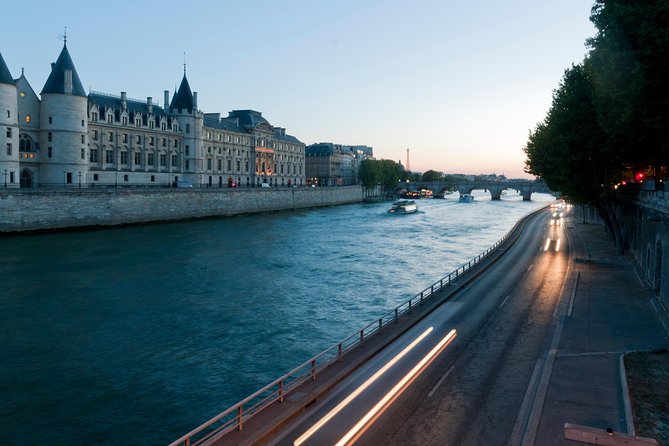
The walk ends near Place de l’Hôtel de Ville, at Hotel La Ville, 70 Rue de Rivoli. This grand square has hosted municipal celebrations and royal family events, including parties marking births and marriages.
It also served as a site of public executions from 1310 to 1830. The tour highlights the executions of François Ravaillac and Marie-Madeleine de Brinvilliers, among others. Once again, Paris’s polished civic spaces reveal a rougher past when you know what to look for.
Ending here works well because the square is easy to recognize and central for continuing your evening. The route does not return you to Pont Neuf, so note the difference between the start and finish. You can use the nearby public transportation connections or continue on foot, but you should not expect hotel pickup or drop-off.
The end also gives the guide a chance to connect the evening’s themes. Royal celebrations and public punishment happened in the same city, sometimes in the same spaces. Paris’s beauty does not erase its violence. It often sits directly on top of it.
What the ghost label really means
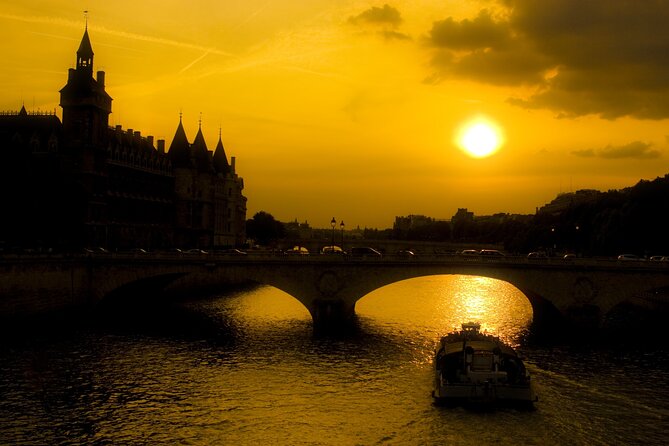
The name promises ghosts, mysteries, and legends. The actual balance is closer to dark historical walking tour with some supernatural flavor.
You may hear about spirits, hauntings, and legends tied to Paris. Several guides have been praised for telling spooky stories and linking the different locations together. The evening setting helps. Seeing the city after dark gives ordinary streets a different mood, especially around the river and old institutional buildings.
But many accounts of the experience describe it as not really a ghost tour. The main subjects are murders, massacres, executions, imprisonment, and political conflict. If you want theatrical scares, frequent ghost stories, or dramatic effects, this may feel restrained.
I would book it if you enjoy true historical episodes with an eerie setting. I would skip it if your main goal is supernatural folklore. The $18.10 price makes it a low-risk introduction, but the title should not be your only reason for choosing it.
Guides, group size, and walking pace
The group is capped at 20 people. That is a reasonable size for a city walk. It is small enough to hear a guide more easily than in a large coach group, but it is not an intimate private tour.
Guide style matters here. Sophia has been praised for spooky stories, clear delivery, and useful suggestions for other places to visit. Daniel has been described as engaging and amusing, while Thelma and Sylvia have received praise for presenting the material clearly and keeping the walk interesting. Ami has been noted for connecting legends across the route.
The feedback is not uniformly glowing. Some guides have been described as pleasant but less interactive, with the experience feeling like a talk delivered to the group instead of a conversation. The walk can also feel fast, especially if the guide is trying to cover a lot of material in two hours.
Wear comfortable shoes. The route covers central Paris on foot, and one estimate put the total at about 10,000 steps. The tour is generally suitable for most people, but the combination of walking, standing, and evening streets may not suit anyone looking for a relaxed seated activity.
Who will get the most from the $18.10 price?
At $18.10, this is one of the cheaper guided evening activities in central Paris. You receive a local guide and a two-hour small-group walk, with no extra admission charge listed for the stops.
The value is best for a first-time visitor who wants a quick introduction to the city’s darker side. You see major landmarks, learn stories that may not appear in a standard sightseeing route, and get a pleasant nighttime walk through the historic center.
The value is weaker for a Paris regular or a specialist in French history. You may already know parts of the material, and the broad storytelling can feel basic. A person deeply interested in the macabre may also want more legends, ghosts, and unusual cases than this route provides.
The tour is also not aimed at young children. The subjects include murder, torture, massacres, imprisonment, and execution. Teenagers with an interest in history may enjoy it, but the content is not gentle family entertainment.
Practical details that affect your evening
The tour is offered in English and lasts about two hours. It begins at the equestrian statue of Henri IV near Pont Neuf and ends near Hôtel de Ville, so plan your evening around a one-way walk.
Confirmation is provided when you book. The meeting point is near public transportation, and the group can include no more than 20 people. Hotel pickup and drop-off are not included.
You can cancel for a full refund if you do so at least 24 hours before the start time. Changes or cancellations inside that window are not accepted for a refund. The experience also requires a minimum number of participants, so a cancellation by the operator is possible if that minimum is not reached. In that case, you are offered another date or experience, or a full refund.
The activity is often booked well ahead, with an average booking time of 25 days in advance. That does not mean you must plan a month ahead, but it is sensible to reserve early if you want a particular evening.
Should you book the Paris night walk?
Book this tour if you want an affordable, guided introduction to Paris’s grim past, especially if you are new to the city. The route combines beautiful nighttime streets with stories of the Templars, Marie Antoinette, the St. Bartholomew’s Day Massacre, revolutionary courts, and public executions.
Go in expecting history first and hauntings second. You may have a lively guide who adds spooky color and answers questions, or you may get a faster, more lecture-like walk. Comfortable shoes are essential, and an open mind helps.
For $18.10, I think it is a fair buy for curious first-time visitors. If you already know Paris well or want a serious ghost hunt, spend your evening elsewhere. If you want a budget-friendly way to see familiar places through a darker lens, this walk earns a place on your short list.
FAQ
How long does the Paris by Night Walking Tour last?
The tour lasts approximately two hours.
What language is the tour offered in?
The tour is offered in English.
Where does the tour begin?
The meeting point is the Equestrian Statue of Henri IV at 15 Place du Pont Neuf, 75001 Paris.
Where does the tour end?
The tour ends at Hotel La Ville, 70 Rue de Rivoli, 75004 Paris, near Place de l’Hôtel de Ville.
What landmarks are included?
The route includes Square du Vert-Galant, Saint-Germain-l’Auxerrois, Île de la Cité, the Conciergerie, Palais de Justice de Paris, and Place de l’Hôtel de Ville.
Is the Conciergerie visited inside?
The tour passes by the Conciergerie and discusses its history as a prison where Marie Antoinette was held. An interior visit is not listed as part of the experience.
How large is the group?
The tour has a maximum of 20 participants.
Is hotel pickup included?
No. Hotel pickup and drop-off are not included.
Can I cancel for a full refund?
Yes. You can cancel at least 24 hours before the start time for a full refund. Cancellations or changes made less than 24 hours in advance are not refunded.
More Evening Experiences in Paris
- Paris: Day or Sunset Cruise with Drink, Ice Cream or Dessert
★ 4.4 · 4,225 reviews - Paris: Big Bus Panoramic Night Tour by Open-Top Bus
★ 4.4 · 4,168 reviews - Paris: Illuminated Evening River Cruise & Waffle Tasting
★ 4.1 · 2,697 reviews - Paris: Evening Sightseeing Tour and Moulin Rouge Show
★ 4.0 · 1,394 reviews
Just listed in Paris
- Chartres Cathedral 5 Hours Tour from Paris with Private Transport★ 4.5 · 49 reviews
- Paris: Giverny & Versailles Small Group or Private Tour★ 4.5 · 49 reviews
- Paris: Louvre photoshoot or Seine bridges Eiffel Tower walk★ 5.0 · 49 reviews
- Paris: Choux Pastry and Chocolate Éclair Making Class★ 4.9 · 50 reviews
- Private tour of the Champagne area, meet local producers and taste their Champagne, start from your hotel in Paris.★ 5.0 · 50 reviews
- Paris Eternelle Notre-Dame Virtual Reality Tour★ 4.5 · 50 reviews
- Normandy D-Day Landing Beaches Private Day Trip from Paris★ 5.0 · 50 reviews
- Disneyland® Paris 1 Day with Round-Trip Train Tickets from Paris★ 4.0 · 50 reviews
Paris Tours, compared.


Versailles Palace and Gardens Full Access Ticket
Read our review →

Eiffel Tower Entry Ticket with Optional Summit Access
Read our review →

Louvre Guided Tour with Reserved Access & Boat Cruise
Read our review →
Moulin Rouge Cabaret Show Ticket with Champagne
Read our review →Browse the lists this tour appears in