
Reviewed · PARIS TOURS
Paris City Center Free Walking Tour (Tip-Based)
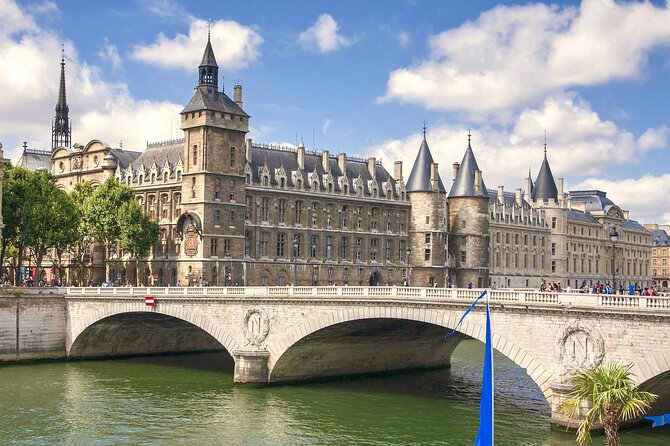
Paris reveals itself best on foot, and this tour links many of the city’s biggest sights with the stories that explain them. In about two hours and 15 minutes, you move from the ancient heart of Île de la Cité to the royal gardens near the Louvre, with the Eiffel Tower appearing in the distance.
I like the strong storytelling, especially from guides such as Alberto, Sanna, Ezra, and Bruce, and I like the practical route: flat streets, major landmarks, and a finish in Tuileries Garden. The main consideration is pace. You will walk and stand for long stretches, and there is no cathedral or museum entry.
Key points to know before you go
- Ancient Paris begins on Île de la Cité: See the island linked to the Parisii tribe, Roman rule, Notre-Dame, and the Seine.
- The route is a history lesson with city views: Expect stories about Henri IV, Napoleon, the French Revolution, World War II, and Gustave Eiffel.
- You do not go inside Notre-Dame or the Louvre: This is an outdoor orientation tour, not an interiors visit.
- Guides use microphones in larger groups: That matters when the group reaches busy bridges and crowded streets.
- The tour ends near Tuileries Garden: You finish in a useful central location, close to major sights and onward transport.
- The low booking price is only the starting point: Tips are accepted by card or electronic payment, and VAT is added to contributions.
A smart first walk through central Paris
This is a classic orientation walk, but it is not a mere parade of photo stops. The guide connects buildings, bridges, kings, revolutions, wars, art, and city planning so you can read Paris with sharper eyes afterward.
The starting point is Fontaine Saint-Michel, near public transportation in the Latin Quarter. From there, the route heads toward Île de la Cité, then crosses the Seine and continues through Place Dauphine, Pont Neuf, the Louvre area, the Arc de Triomphe du Carrousel, and the Tuileries.
I especially like that the tour gives you useful context before you spend time inside paid attractions. After hearing why the Louvre began as a fortress and palace, or how Notre-Dame’s story reaches from 1163 to the 2019 fire, your later visit can feel less like looking at famous objects in isolation.
The guides are a major part of the experience. Alberto is praised for clear delivery, humor, and strong storytelling. Sanna is noted for bringing the sites to life and keeping a group engaged. Ezra is described as friendly, funny, and open to questions, while Bruce used a microphone and sound system effectively in busy areas.
The tone also suits families. The stories are lively enough for teenagers, yet the walking is not described as punishing. Senior visitors have found the pace manageable, though you should still expect extended periods on your feet.
More City Tours in Paris
- Eiffel Tower Summit Option with Seine River Cruise and City Tour
★ 3.5 · 2,176 reviews - Paris in a Day: Louvre or Orsay, Eiffel Tower, City Walk & Cruise
★ 5.0 · 1,956 reviews - Paris: City Highlights Bike Tour
★ 4.7 · 1,835 reviews
From Fontaine Saint-Michel to ancient Île de la Cité
The official meeting point is Fontaine Saint-Michel, at Place Saint-Michel. It is easy to reach by public transportation, and the tour confirmation arrives when you book. Arrive ready to identify your group and guide, since this is a large-city meeting point with plenty of activity around it.
The route then moves to Île de la Cité, the island often treated as the true center of Paris. The Parisii tribe established temples here more than 2,000 years ago, before the area fell under Roman control. That opening gives you a useful sense of scale: Paris did not begin with grand boulevards or palace gardens. It began on this compact island in the Seine.
You will spend roughly 15 minutes here. That is enough for an introduction and outdoor explanation, but not enough for a full archaeological study. Think of it as the first chapter of the city’s story.
Notre-Dame, from medieval building site to modern symbol
Notre-Dame is one of the tour’s most important stops. You hear about construction beginning in 1163, the cathedral’s place in French history, the French Revolution, Napoleon’s coronation, and the 2019 fire.
The guide does not take you inside. That point matters if you are booking this tour mainly to see the interior. Instead, you get an exterior view and a compact explanation of why the cathedral carries such weight in French culture and politics.
The stop lasts about 12 minutes. A good guide can make that short pause count by showing how the cathedral fits into the island and by linking it to the people and events that shaped France. I would treat this as a primer before a separate Notre-Dame visit, not a replacement for one.
Saint-Michel and the bridges that remember war
At Fontaine Saint-Michel, the guide explains the fountain’s role in the grand reconstruction of Paris. The city you see today was shaped by major rebuilding, and the fountain offers a small but visible entry point into that change.
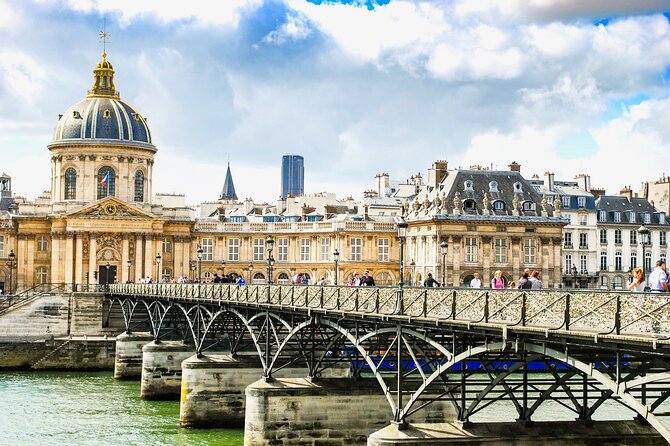
Next comes Pont Saint-Michel. From the bridge, you can see bullet holes left from World War II. The guide also explains why Paris was not destroyed during the war, giving the stop a human and political angle rather than another simple view over the river.
These bridge stops are useful because they break up the standing time with open views. You are not confined to a narrow street while listening. You can look along the Seine, watch the city move around you, and connect the physical setting to the story being told.
More Walking Tours in Paris
- Paris Top Sights Half Day Walking Tour with a Fun Guide
★ 5.0 · 2,893 reviews - Montmartre Hidden Gems and Scenic Highlights Walking Tour
★ 5.0 · 2,684 reviews - Montmartre Hill French Gourmet Food and Wine Tasting Walking Tour
★ 5.0 · 2,588 reviews - Paris Île de la Cité and Notre-Dame Walking Tour With Crypt
★ 5.0 · 2,272 reviews
Place Dauphine and Henri IV’s Paris
Place Dauphine is one of the quietest and most appealing pauses on the route. Henri IV commissioned the square as one of his early projects, and its triangular form and surrounding buildings feel more sheltered than the grand avenues nearby.
The guide points out the square’s link to Henri IV and its restaurants. If you are looking for a calm lunch after the walk, this is a useful place to remember. The tour does not include food or a meal break, although a well-timed coffee and croissant stop has been part of at least one guide’s pacing.
From Place Dauphine, the route reaches the equestrian statue of Henri IV. Here, you get river views while hearing about the king’s short but important reign. This is one of the moments when the tour moves beyond landmark collecting. You are learning why one ruler mattered to the shape and character of Paris.
Pont Neuf and the city’s less polished stories
Pont Neuf is the oldest bridge in Paris, and it offers some of the best river views on the route. Henri IV finished it in 1607, so the bridge becomes a natural place to continue his story.
The guide also tells less regal tales, including stories of Parisian tooth pullers. Details like this give the walk some comic relief. Paris history is not only kings, architects, and military leaders. It also includes the rough trades and strange characters that occupied the city’s streets.
This is a good place to pay attention to the guide’s delivery. The tour’s strongest quality is not simply the number of facts. It is the way those facts are turned into memorable scenes. Alberto, Ezra, Sanna, and other guides may use different styles, but the format gives them room to mix explanation with jokes and questions.
The Louvre without entering the museum
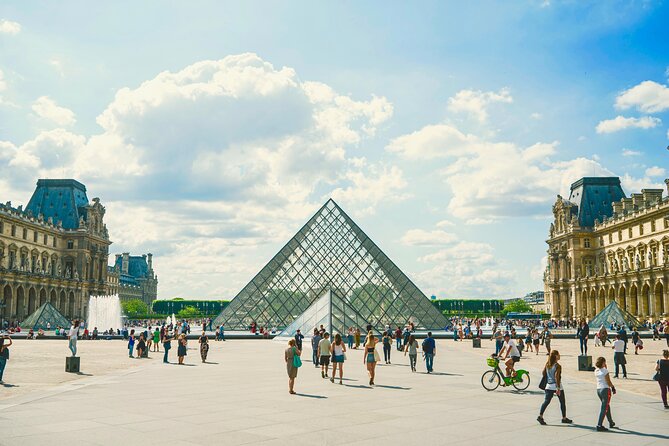
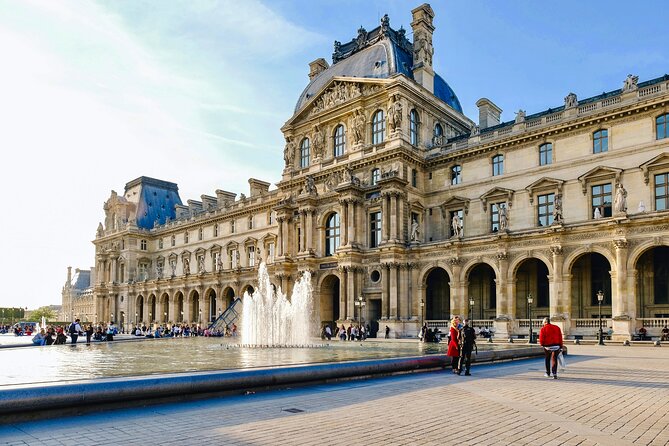
The Louvre stop focuses on the building’s transformation and the story behind Leonardo da Vinci and the Mona Lisa. You meet Francis I, the king who laid the foundations for the Louvre as a fortress and palace, before the complex became one of the world’s best-known museums.
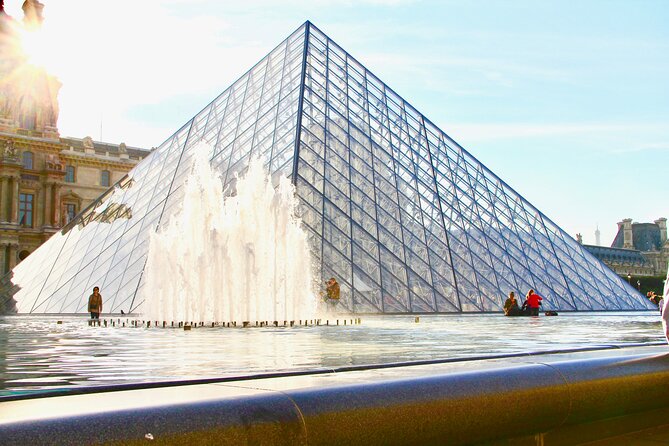
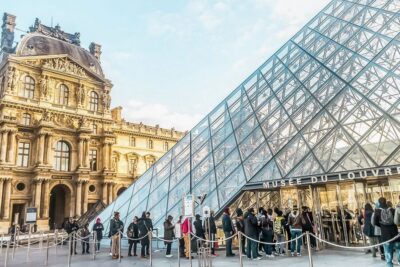
You do not enter the museum, and the visit does not include museum admission. Instead, the guide uses the exterior and the glass pyramid to explain how the Louvre changed over time.
This is valuable for first-time visitors who plan to return for a full museum day. The Louvre can feel overwhelming if you arrive without a plan. A short outdoor introduction helps you understand that the site is not just a container for famous paintings. It is also a record of royal power, changing tastes, and French national ambition.
The tour spends about 12 minutes here. That is enough for orientation and photos, but not enough to discuss the museum’s major collections in detail. If the Mona Lisa is your main goal, book a separate museum visit and allow much more time.
Napoleon’s arch and the Tuileries gardens
The Arc de Triomphe du Carrousel brings Napoleon into the story. Built during his rise as master of Europe, the arch reflects the scale of his ambition and the way monuments were used to shape public memory.
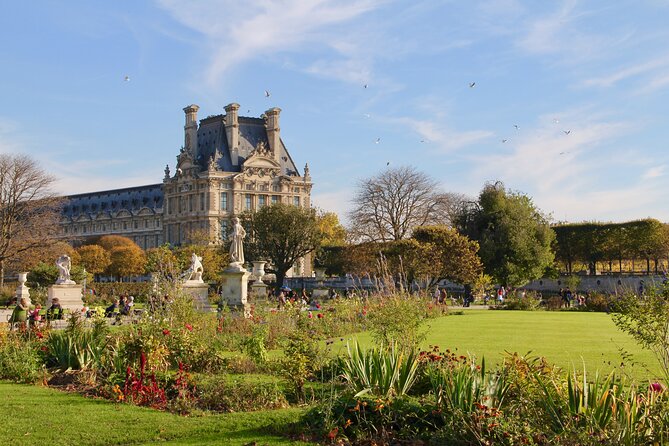
From here, the route moves into the Jardin des Tuileries. The gardens began as the site of a tile factory before becoming royal grounds. Their design is linked to the same garden artist associated with Versailles, which helps explain the formal paths, sculptures, fountains, and carefully framed views.
I like this section because it changes the feel of the walk. After bridges, monuments, and crowded central streets, the gardens give you space to see how Paris uses open ground to create order and ceremony. The Tuileries are not just a pleasant place to pass through. They show how royal design shaped the city’s grand axis.
The tour ends in Tuileries Garden, a practical finish near the Louvre and other major central sights. Since the endpoint differs from the starting point, plan to make your own way onward rather than expecting a return to Fontaine Saint-Michel.
The Eiffel Tower view that closes the walk
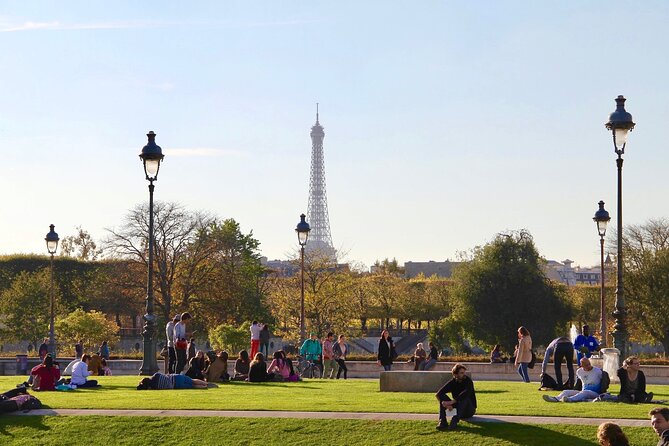
The final planned highlight is a view of the Eiffel Tower from the Tuileries. You do not travel to the tower itself, but you get a long city view toward it while learning how Gustave Eiffel managed its construction for the 1889 exposition.
That makes a fitting ending. The walk begins with ancient Paris on Île de la Cité and finishes with a modern symbol of French engineering. Along the way, you move through medieval religion, royal authority, revolution, empire, war, art, and urban design.
The view will not replace a visit to the Eiffel Tower. It does, however, help you place the monument within the larger city. You see it as part of Paris’s broad visual structure rather than as a separate attraction.
What the price really means
The booking price is listed at $3.62 per group of up to nine people. That is unusually low, but this is a tip-based model, not a completely cost-free tour. Tips are accepted only through credit or debit cards and electronic payments, and VAT is added to contributions.
I would judge the value by the guide you receive and by how much the stories improve your time in Paris. If the guide keeps a good pace, answers questions, and makes the city understandable, a generous tip is fair. The low starting price gives you flexibility, but it should not lead you to treat the guide’s work as having no value.
The group may include as many as 50 people. That is the main tradeoff. A larger group can make street crossings and gathering at monuments less personal, but guides such as Bruce and Sanna have used microphones so people at the back can hear.
Walking comfort, weather, and timing
The route is mostly on flat terrain, but it is still a substantial urban walk. You will stand during explanations, and one person noted that there was no convenient restroom stop until near the Louvre. Use the restroom before meeting the group.
Wear shoes suited to pavement and bring weather protection. The experience requires good weather, so poor conditions can lead to a new date or a full refund. Even in cold or wet weather, strong storytelling can keep the tour enjoyable, but you should not rely on that. A rainy day makes bridge stops and long pauses less comfortable.
The tour is offered in English. Most people can participate, and service animals are allowed. The format works well for solo visitors, couples, families with teenagers, and anyone with only a short time in Paris.
Who should book this walk
Book it if you want a clear first look at central Paris, especially if you enjoy French Revolution and Napoleon-era stories. It is also a good choice for a first morning in the city, when you want to learn the layout before choosing where to spend the rest of your visit.
You should also book it if museum and cathedral interiors are not your immediate priority. The outdoor focus lets you cover a lot of ground without committing half a day to one attraction.
Think twice if you dislike large groups, long periods of standing, or tip-based pricing. This is not a private tour, and you will not enter Notre-Dame or the Louvre. It is also not designed as a food tour, although the guide may offer suggestions for coffee, croissants, lunch, drinks, and further exploring.
The strongest reason to choose it is the guide. Alberto’s storytelling and humor receive especially warm praise, while Sanna, Ezra, and Bruce are also associated with clear, engaging tours. Guide assignments can vary, so book for the route and format rather than assuming a particular person is guaranteed.
Should you book the Paris City Center Walking Tour?
Yes, if you want a lively outdoor introduction to Paris at a very low upfront price. The route covers an impressive run of central sights, and the best guides turn familiar monuments into connected stories about power, faith, war, art, and city life.
No, if you need interior access, a small private group, or a slow stroll with frequent café breaks. For most first-time visitors, though, this is a useful way to get your bearings quickly, learn where the major sights fit together, and leave with better questions for the rest of your Paris stay.
FAQ
Where does the tour start?
The tour starts at Fontaine Saint-Michel, at Place Saint-Michel, 75005 Paris, France.
Where does the tour end?
The listed endpoint is Tuileries Garden, in central Paris.
How long does the walking tour last?
The tour lasts approximately two hours and 15 minutes.
What language is the tour offered in?
The tour is offered in English.
Does the tour enter Notre-Dame Cathedral?
No. Notre-Dame is visited from the outside, and the tour does not include cathedral entry.
Does the tour enter the Louvre Museum?
No. The guide discusses the Louvre and its glass pyramid from outside, but museum admission is not included.
How much does the tour cost?
The listed booking price is $3.62 per group of up to nine people. It is tip-based, and VAT is added to contributions.
How can I pay the tip?
Tips are accepted only through credit cards, debit cards, and electronic payments.
How large can the group be?
The activity can have a maximum of 50 participants.
Can I cancel the booking?
You can cancel up to 24 hours before the start time for a full refund. Changes or cancellations made less than 24 hours before the start time are not accepted, and poor weather may result in another date or a full refund.
Just listed in Paris
- Paris: Giverny & Versailles Small Group or Private Tour★ 4.5 · 49 reviews
- Chartres Cathedral 5 Hours Tour from Paris with Private Transport★ 4.5 · 49 reviews
- Paris: Louvre photoshoot or Seine bridges Eiffel Tower walk★ 5.0 · 49 reviews
- Private tour of the Champagne area, meet local producers and taste their Champagne, start from your hotel in Paris.★ 5.0 · 50 reviews
- Paris: Choux Pastry and Chocolate Éclair Making Class★ 4.9 · 50 reviews
- Paris Eternelle Notre-Dame Virtual Reality Tour★ 4.5 · 50 reviews
- Normandy D-Day Landing Beaches Private Day Trip from Paris★ 5.0 · 50 reviews
- Disneyland® Paris 1 Day with Round-Trip Train Tickets from Paris★ 4.0 · 50 reviews
Paris Tours, compared.

Versailles Palace and Gardens Full Access Ticket
Read our review →

Eiffel Tower Entry Ticket with Optional Summit Access
Read our review →

Louvre Guided Tour with Reserved Access & Boat Cruise
Read our review →
Moulin Rouge Cabaret Show Ticket with Champagne
Read our review →Browse the lists this tour appears in