
Reviewed · PARIS TOURS
Paris Croissant Small-Group Baking Class with a Chef
Fresh croissants come out of the oven at the end of this hands-on baking class, and that is the real attraction. You are not just watching a chef fold dough. You make croissants, pain au chocolat, and pain au raisin yourself, then eat what you have baked in a pastry studio near Place des Vosges.
I like the small-group setup, which gives you time to ask why the butter is folded a certain way and how the dough should feel. I also like the useful souvenir: an illustrated recipe booklet, plus the pastries you take away. The main consideration is the price, $157.21 per person, and the occasional risk of a last-minute cancellation if the chef is unexpectedly unavailable.
Key points to know before booking
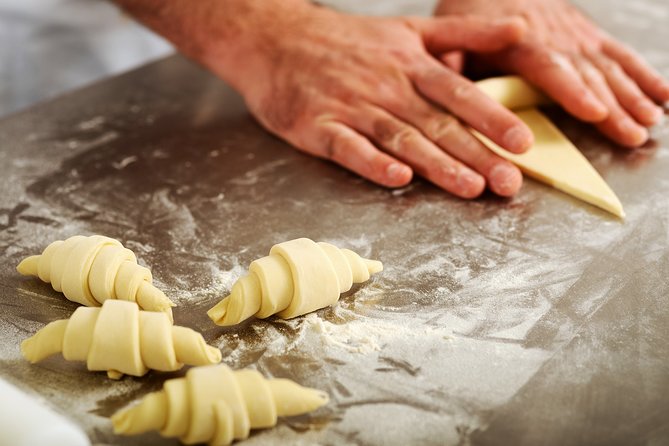
- Three classic French pastries: You work on croissants, pain au chocolat, and pain au raisin in one session.
- A genuinely practical class: You knead, shape, laminate, and bake instead of sitting through a demonstration.
- A central Marais address: The studio is at 7 Rue de Béarn in the third arrondissement, close to Place des Vosges.
- Personal help from the chef: Groups are intended to be small, with the class listing describing a maximum of 12 and many sessions running with about 8 to 10 people.
- Food and recipes included: Hot and cold drinks, pastry tasting, extra baked goods to take away, and an illustrated recipe booklet are part of the experience.
- Strong choice for families: Children as young as seven have taken part successfully, with older children and teenagers also enjoying the work.
Starting at 7 Rue de Béarn in the Marais
The class begins at 7 Rue de Béarn, 75003 Paris, a handy address in the Marais. It is near Place des Vosges, so you can pair the workshop with a walk through one of central Paris’s most appealing neighborhoods.
You enter a fully equipped pastry studio, receive an apron and utensils, and meet the chef and the rest of the group. The class is offered in English, which matters here because pastry depends on small instructions: how far to roll the dough, when the butter is soft enough, and how tightly to shape each pastry.
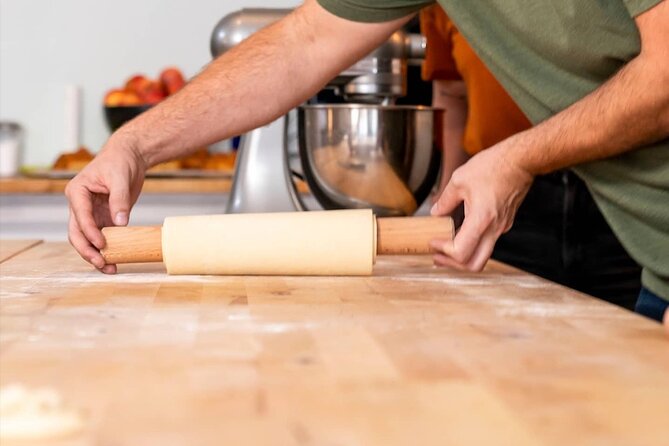
The studio setting gives this outing a different feel from a standard sightseeing stop. You spend time at a worktable, with flour, dough, butter, and baking trays in front of you. If you have spent several days looking at monuments, this offers a welcome change of pace and a reason to slow down.
The meeting point is also simple to reach by public transportation. There is no private transportation included, but you do not need a vehicle for a class in this central part of Paris.
More Cooking Classes in Paris
- Paris Cooking Class and Lunch with Wine plus Market Visit Option
★ 5.0 · 1,024 reviews - Paris: French Croissant Baking Class with a Chef
★ 4.9 · 712 reviews - Paris Cooking Class: Learn How to Make Macarons
★ 5.0 · 634 reviews
The first task is dough, not decoration
The workshop lasts about two and a half hours. The early part focuses on the dough, and this is where the class earns its keep.
You begin by making and kneading the mixture under step-by-step guidance. Croissant dough is not difficult because it uses mysterious ingredients. It is difficult because the temperature, texture, and handling all matter. A good instructor helps you notice those details before you start shaping.
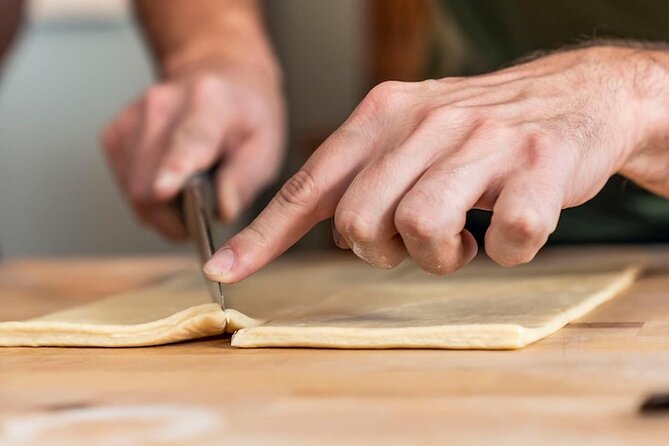
The important technique is lamination, the process of layering butter into the dough. One session specifically included participants laminating the dough with butter rather than simply watching the chef perform it. That hands-on step helps explain why a croissant becomes flaky instead of dense.
You should expect flour on your hands and a fair amount of repeated rolling and folding. This is a working class, not a polished pastry show. The payoff is that you leave with a better sense of what the dough should look and feel like when you try it at home.
Chefs such as Clara, Felix, Milly, Prisca, Lizzy, Delphine, Leslie, Ines, and Rosalie have led sessions. The teaching style can vary slightly from one chef to another, but the strongest pattern is patient, clear instruction. Prisca also added French words and a little food culture to her class, while Milly explained the reasons behind the techniques rather than giving instructions without context.
Shaping croissants and pain au chocolat
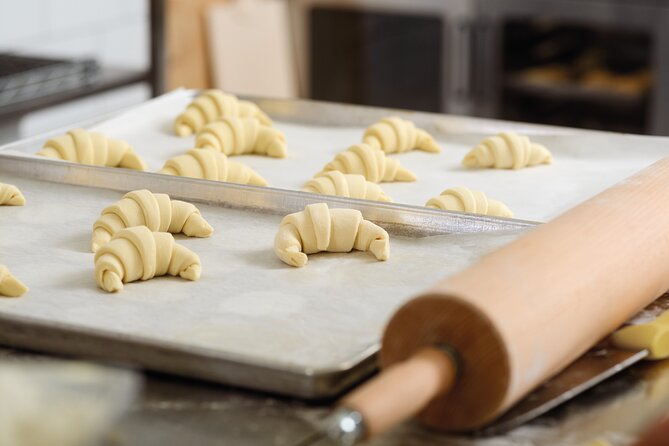
Once the dough is ready, you move to shaping. This is the most recognizable part of the class, and it is also where small errors can change the finished pastry.
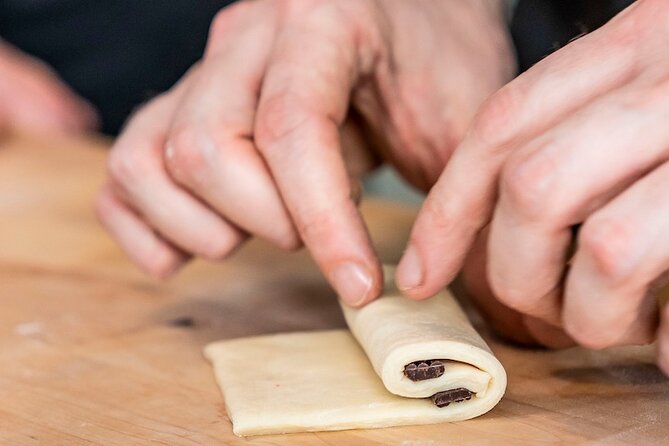
You shape the classic croissant first, then make pain au chocolat and pain au raisin. The three pastries use related dough but give you different tasks. The croissant requires careful rolling and forming, the pain au chocolat is built around chocolate, and the pain au raisin gives you another traditional French shape to practice.
The class is designed so you take part in each stage. You are not handed a finished piece of dough and told to place it in the oven. You work through the process with the chef nearby to correct a fold, answer a question, or show you how to seal an edge.
The group size helps here. The experience is promoted as a small-group workshop, with groups limited to eight in the main description. Additional booking information gives a maximum of 12, and some sessions have had 8 to 10 people. In practice, that means you should expect a class much smaller than a large cooking demonstration, but the exact number can vary.
Several participants have taken the class with children. A seven-year-old managed the instruction well, and families with children aged 9, 12, 13, and 15 also found the work enjoyable. Young children will still need help with rolling and shaping, but the class can suit a family that wants to do something together rather than split up for separate activities.
Fresh pastries at the end of the oven
The best moment comes when the pastries are baked and ready to eat. You taste the results at the studio, with hot and cold drinks included throughout the workshop.
The amount of food can be generous. One group described leaving with two croissants and two pain au chocolat per person, while another warned that you may end up with about four pastries each. The exact mix can vary, but you should not arrive expecting a single small sample.
That generosity is useful and slightly impractical at the same time. Fresh pastries are wonderful during a Paris morning or afternoon, but a full batch can be more than you want immediately after lunch. Plan to take some with you and eat them later if needed.
The class includes the baked goods for tasting and additional products to take away. This makes the cost easier to assess, since you are paying for instruction, ingredients, drinks, and food rather than only for a short demonstration.
The final tasting also gives the class a clear finish. You have handled the dough, shaped the pastries, watched them bake, and then tasted the result while it is fresh. That simple sequence makes the technique easier to remember.
Same city, a completely different afternoon:
- Paris: Louvre Museum Timed-Entrance Ticket
★ 4.6 · 71,977 reviews - Disneyland® Paris 1-Day Ticket
★ 4.6 · 49,412 reviews - Paris: Versailles Palace and Gardens Full Access Ticket
★ 4.6 · 41,579 reviews - Paris: Evening River Cruise with Music
★ 4.4 · 22,721 reviews
Why the recipe booklet matters
The illustrated recipe booklet is one of the most useful parts of the package. A croissant class can be entertaining in Paris and still be hard to repeat at home if you leave with only a vague memory of the steps.
The booklet gives you a way to recall the process, including the order of preparation and shaping. It cannot replace the chef’s advice about dough temperature or butter texture, but it provides a practical starting point.
This class is especially valuable if you want a souvenir that is more useful than a photograph. You can try the recipes again after your trip, and several people have managed to make the pastries successfully at home. You will need patience, good French-style butter, and fresh yeast, but the class gives you more than inspiration.
I would keep the booklet with your baking supplies rather than burying it in a suitcase. The point is to use it while the movements are still familiar.
The chefs make the difference
A pastry class succeeds or fails largely on the teacher. The strongest sessions have been led by chefs who balance clear instruction with a relaxed manner.
Clara has been praised for making the class fun while still teaching useful skills. Felix’s class was interactive, and Milly was noted for explaining not only what to do but why each step mattered. Prisca brought in a little French language and cultural background, which can make the workshop feel more connected to Paris rather than like a generic cooking lesson.
Lizzy was described as warm and welcoming, while Delphine received strong marks from a family with teenagers. Leslie also led a successful family session, and Ines taught a particularly personal class that included croissants, pain au chocolat, and extra pastries made from dough remnants.
Rosalie’s first day teaching was also described positively, with a friendly and helpful approach. That is encouraging, but it also points to a practical truth: the personality and experience of your chef may differ by date.
You should book this for the format and activity, not because one named chef is guaranteed. Specific instructor assignments are not stated as part of the booking information.
Who will get the most from this class
I think the class works best for several types of visitors:
- First-time Paris visitors who want a break from museums and monuments.
- Food lovers who want to understand how French pastries are made, not just eat them.
- Families with children old enough to follow simple instructions and work at a table.
- Couples and friends looking for a shared activity with a clear edible reward.
- Home bakers who want better technique and a recipe to practice after returning home.
You do not need to be an experienced baker. The instruction is built for beginners, but people who already bake can still pick up useful tips about lamination, shaping, and dough handling.
I would be less enthusiastic if you dislike working with your hands, want a quiet sightseeing activity, or have very little time in Paris. Two and a half hours is a meaningful block in a short city break. The class is worthwhile because you take part, but that also means you must be ready to spend the time at the worktable.
Is $157.21 a fair price?
At $157.21 per person, this is not a cheap pastry breakfast. The value comes from the full package: about two and a half hours of chef-led instruction, ingredients and equipment, drinks, fresh pastries, takeaway products, and the illustrated recipe booklet.
If you only want to eat a croissant, visit a good bakery. You can spend far less. If you want to learn how the pastry is built and make several French classics yourself, the price is more defensible.
The small-group format is important to that calculation. A large class would make it harder to get help with rolling, folding, and shaping. Here, the intended format gives you a better chance to ask questions and receive corrections.
The quantity of food also adds value, particularly for a family booking several places. You may leave with enough pastries to share later, though you should not book this solely as a way to save money on breakfast.
With 96 percent of participants recommending the experience and a 4.9 rating from 910 reviews, the overall record is very strong. Still, two serious problems appear in the available feedback: one session had an instructor who did not arrive, and another was cancelled on the day because the pastry chef became ill. The provider offered an alternative location in the cancellation case. Those incidents appear unusual, but they matter if your schedule is tight.
You can cancel for a full refund up to 24 hours before the start time. Changes or cancellations inside that 24-hour window are not accepted for a refund.
Practical tips for a smoother class
Book ahead if this is important to your Paris plan. The activity is booked, on average, 43 days in advance, which suggests that popular dates can fill well before arrival.
Wear something comfortable and suitable for working with food. You receive an apron and utensils, along with health and safety equipment such as hand solution and face masks, but the class still involves flour, dough, and active preparation.
Leave room in your day after the workshop. The studio is in the Marais, so you can continue on foot toward Place des Vosges and nearby streets without adding a long transfer. The experience ends back at the meeting point.
Arrive with an appetite, but not an empty schedule. You will have plenty to taste, and you may also be carrying several pastries when you leave.
Finally, ask questions. The most useful part of the class is not simply learning the shape of a croissant. It is learning how to recognize dough that is ready, butter that is workable, and pastry that needs more or less handling.
Should you book the Maison Fleuret class?
Book it if you want a practical Paris food experience rather than another guided walk. The location is central, the class is conducted in English, and you make three well-known French pastries with help from a professional chef.
I would especially recommend it for families, couples, and anyone who wants to repeat the experience at home. The recipe booklet and takeaway pastries give the class a longer life than the two and a half hours spent in the studio.
Think twice if $157.21 feels high for a cooking activity, if you dislike rich food, or if your itinerary cannot absorb a possible scheduling change. For most visitors who enjoy baking, though, this is a satisfying way to spend part of a Paris day, with a skill and a box of pastries to show for it.
FAQ
Where does the croissant class begin?
The class begins at 7 Rue de Béarn, 75003 Paris, in the third arrondissement near Place des Vosges.
How long does the workshop last?
The workshop lasts approximately 2 hours and 30 minutes.
Is the class taught in English?
Yes. The experience is offered in English.
What pastries will I learn to make?
You will learn to make a classic croissant, pain au chocolat, and pain au raisin.
Is the class hands-on?
Yes. You make and knead the dough, work with the butter, shape the pastries, and take part in the baking process.
How many people are in the group?
The workshop description says groups are limited to eight participants. Additional information lists a maximum of 12 travelers, so the exact group size can vary.
Are drinks included?
Yes. Hot and cold beverages are included throughout the workshop.
Can I take pastries home?
Yes. You can taste the baked goods and take away the additional products made during the class.
Do I receive the recipes?
Yes. Each participant receives an illustrated recipe booklet.
Is private transportation included?
No. Private transportation is not included. The activity begins and ends at the Rue de Béarn meeting point, which is near public transportation.
More Workshops in Paris
- Fragonard Paris: Mini Perfume Workshop
★ 4.5 · 1,924 reviews - Paris: Macaron Class at Galeries Lafayette
★ 4.3 · 905 reviews - Paris: 2-Hour Perfume Creation Workshop
★ 4.8 · 731 reviews - Paris: French Macaron Culinary Class with a Chef
★ 4.9 · 591 reviews
Just listed in Paris
- Paris: Giverny & Versailles Small Group or Private Tour★ 4.5 · 49 reviews
- Chartres Cathedral 5 Hours Tour from Paris with Private Transport★ 4.5 · 49 reviews
- Paris: Louvre photoshoot or Seine bridges Eiffel Tower walk★ 5.0 · 49 reviews
- Paris: Choux Pastry and Chocolate Éclair Making Class★ 4.9 · 50 reviews
- Private tour of the Champagne area, meet local producers and taste their Champagne, start from your hotel in Paris.★ 5.0 · 50 reviews
- Paris Eternelle Notre-Dame Virtual Reality Tour★ 4.5 · 50 reviews
- Normandy D-Day Landing Beaches Private Day Trip from Paris★ 5.0 · 50 reviews
- Disneyland® Paris 1 Day with Round-Trip Train Tickets from Paris★ 4.0 · 50 reviews
Paris Tours, compared.

Versailles Palace and Gardens Full Access Ticket
Read our review →

Eiffel Tower Entry Ticket with Optional Summit Access
Read our review →

Louvre Guided Tour with Reserved Access & Boat Cruise
Read our review →
Moulin Rouge Cabaret Show Ticket with Champagne
Read our review →Browse the lists this tour appears in