
Reviewed · PARIS TOURS
Paris: French Revolution Tour Relive the 14th July 1789
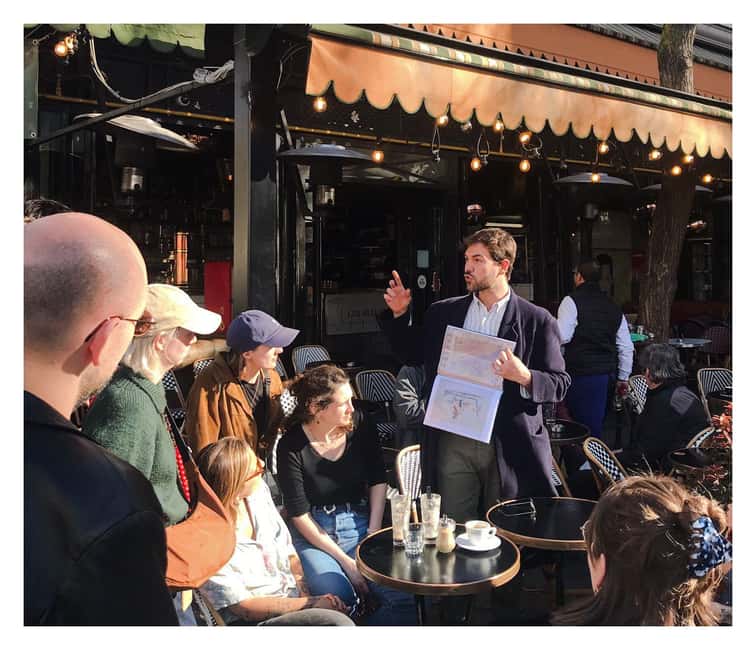
The most interesting part of this Paris walking tour is that it begins away from the usual monuments, in the working neighborhoods where the pressure behind the French Revolution was building. You follow the route toward Bastille while guide Robin, a history professor, explains July 14, 1789 hour by hour.
I like the way this tour connects social conditions to actual streets, workshops, and buildings. I also like its small-group format, which makes room for questions instead of forcing you to listen from the back of a crowd. The main consideration is its short length: the story centers on the events leading to Bastille Day and does not fully cover the Reign of Terror, Napoleon, or the later stages of the Revolution.
Key points to know before booking
- The route begins in Faubourg Saint-Antoine, a working-class district closely tied to the early Revolution.
- Robin teaches through stories and visual aids, including historic images that help you picture the neighborhood in the 18th century.
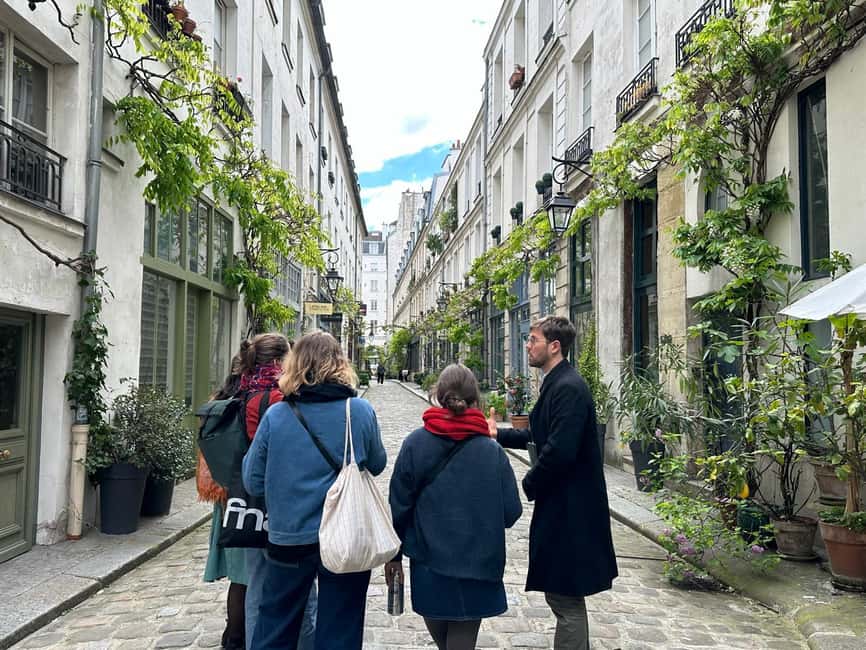
- You walk from a local Paris neighborhood to Place de la Bastille, seeing streets many visitors pass without understanding.
- The tour lasts about 90 minutes, a useful length for fitting into a sightseeing day.
- The advertised group is small, with the activity details listing up to 10 participants, while other information gives a maximum of 12 to 15.
- The focus is mainly on the road to July 14, 1789, not a full survey of every phase of the French Revolution.
Why Faubourg Saint-Antoine tells a different Paris story

Many Paris history walks begin with kings, grand avenues, or famous churches. This one starts in the eastern part of the city, around Faubourg Saint-Antoine, where ordinary working people played a central role in the events of 1789.
That choice gives the tour a useful change of scale. Instead of treating the Revolution as a list of dates and famous names, Robin explains how people lived, worked, and felt squeezed by the old system. You get context about the artisans and laborers of the district, the social tensions of the time, and the reasons anger grew beyond a political argument among elites.
I especially like this approach if you already know the basic Bastille story. The tour asks you to notice the neighborhood itself. A doorway, lane, workshop district, or surviving architectural detail can become part of the lesson. You are not simply walking toward a monument. You are learning how a district helped shape the event that made the monument famous.
The meeting point is between Café les Blouses Blanches and Mon Café, at 1 Place du Dr Antoine Béclère. Since the tour moves through streets rather than beginning at a major landmark, allow a little extra time to identify the café area and meet the guide.
A few other Paris half-days to compare
- Paris: Louvre Museum Timed-Entrance Ticket
★ 4.6 · 71,977 reviews - Disneyland® Paris 1-Day Ticket
★ 4.6 · 49,412 reviews - Paris: Versailles Palace and Gardens Full Access Ticket
★ 4.6 · 41,579 reviews
Following the route from local streets to Bastille
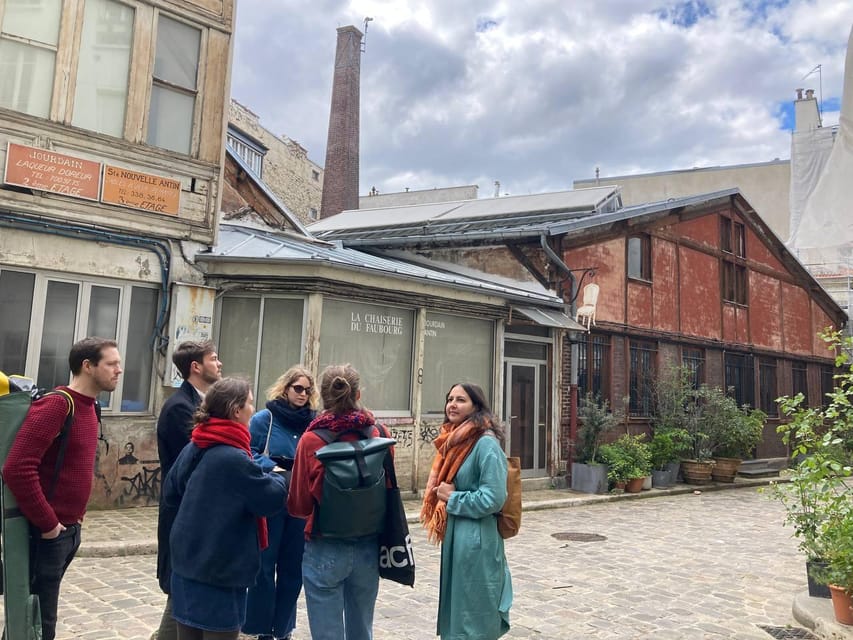
The exact stop names are presented in broad terms, such as hidden gems, a traditional village, secret stops, and a viewpoint. That wording tells you the experience is not built around a standard museum-style sequence. It is a walking lesson, with the guide using several places along the way to explain what happened and why.
The route includes these named areas:
- Le Faubourg Saint-Antoine
- La Folie Titon
- Le Passage de Lhomme
- Place de la Bastille
You can expect the walking portion to take most of the 90 minutes. At several points, Robin pauses for an explanation, then uses the next street or site to add another piece to the story. The route ends at 28 Place de la Bastille, which gives the tour a clear finish rather than leaving you somewhere unrelated to its subject.
That ending is practical. Afterward, you are already in one of eastern Paris’s best-known areas, with cafes, restaurants, and transport options nearby. You can continue exploring Bastille, stop for a meal, or use the area as a starting point for the rest of your day.
La Folie Titon and the local roots of revolt
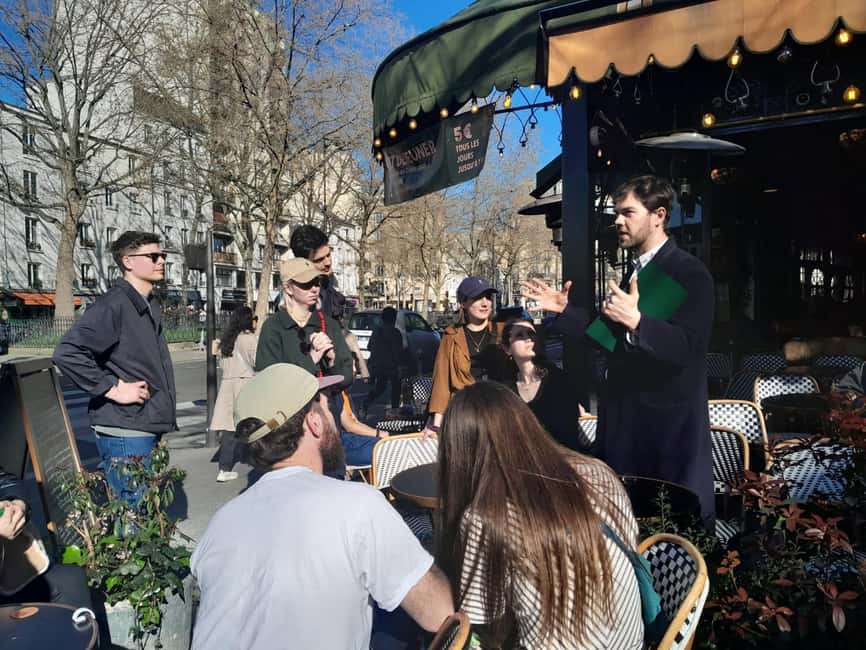
La Folie Titon is one of the places that helps move the story away from the familiar image of nobles and royal palaces. The tour uses the area to show how the eastern districts of Paris connected work, housing, and political unrest.
The value here is the explanation. On your own, you might walk through the neighborhood and see only a pleasant Paris street. With the guide, you begin to ask what the area represented in the late 18th century, who lived there, and how local hardship fed a wider revolt.
Several people who took this walk praised the social background, especially the explanation of how working-class conditions helped set the Revolution in motion. That is an important strength. You are not asked to accept a simplified version in which the Bastille suddenly fell because everyone was angry. Instead, the tour traces the buildup and gives you a better sense of cause and effect.
Robin also brings pictures to help you compare present-day Paris with the earlier appearance of the area. This is useful because much of the Revolution took place in streets that no longer look exactly as they did in 1789. Historic images help bridge that gap.
Passage de Lhomme and the details you could miss
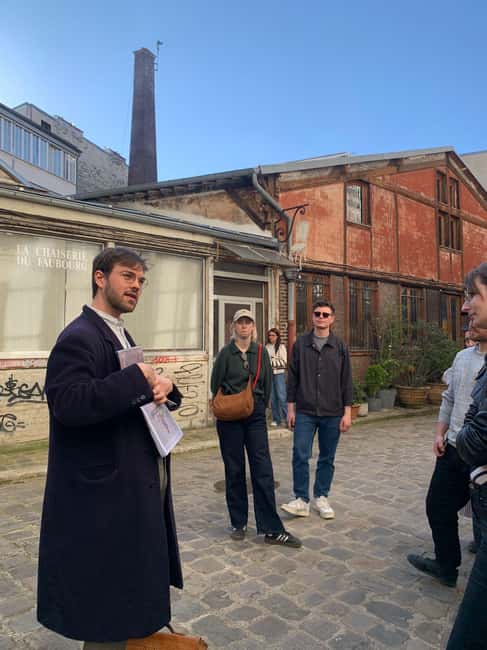
Passage de Lhomme provides one of the tour’s quieter moments. This kind of passage is easy to skip when you are moving between major sights, but it gives the guide room to point out small features that carry historical meaning.
I like this part for the same reason I like good neighborhood walks anywhere: the lesson depends on paying attention. The guide may point out an architectural detail, a street pattern, or a place linked to the district’s earlier life. These are not grand attractions with signs explaining everything. The point is to learn how to read the city.
That makes this tour particularly useful early in a Paris visit. One person who took it wished they had booked it sooner because the historical context would have helped with the rest of their sightseeing. I agree with that advice. After the walk, you may find yourself looking at other parts of Paris with more curiosity, especially when a street or square seems ordinary at first glance.
Do not expect every stop to offer a dramatic monument. Some locations work mainly as evidence for the guide’s explanation. If you prefer a tour packed with famous interiors and major views, this may feel understated. If you enjoy street-level history, that is exactly the appeal.
Same city, a completely different afternoon:
- Paris: Evening River Cruise with Music
★ 4.4 · 22,721 reviews - Paris: Eiffel Tower Entry Ticket with Optional Summit Access
★ 4.4 · 20,035 reviews - Paris: Eiffel Tower Summit or Second Floor Access
★ 4.3 · 17,248 reviews - Paris: Louvre Guided Tour with Reserved Access & Boat Cruise
★ 4.3 · 16,353 reviews
Reaching Place de la Bastille
The tour finishes at Place de la Bastille, the place most closely associated with July 14, 1789. The square today is broad, active, and shaped by modern Paris, so the guide’s storytelling matters. The physical site alone cannot recreate the former fortress or the crowds that gathered there.
Robin’s role is to connect the final stop with the earlier parts of the walk. By the time you reach Bastille, you have heard about the district, the people, the pressure behind the revolt, and the chain of events that brought the crowd here. That gives the square more meaning than a quick photo stop.
The itinerary includes a viewpoint and photo stop near the end. This offers a natural pause before the tour concludes, though the main reward is still the explanation rather than a sweeping postcard view. Bastille is not a preserved medieval fortress waiting to be entered. It is a city square whose historical importance becomes clearer once you know what happened there.
A useful limitation is that the tour mainly ends around the events of 1789. It does not promise a full account of the later violence, the Reign of Terror, the rise of the Republic, or Napoleon’s rule. The broader description mentions the Republic and Napoleon, but the detailed experience and visitor feedback make clear that the strongest focus is the buildup to Bastille Day and the beginning of the Revolution.
If those later chapters are your main interest, ask about another tour or plan a separate visit. One person specifically wished the experience continued into the post-1789 period. That is a fair criticism, but it also confirms that the 90 minutes have a clear subject rather than trying to rush through a decade of upheaval.
Robin’s teaching style and the small group
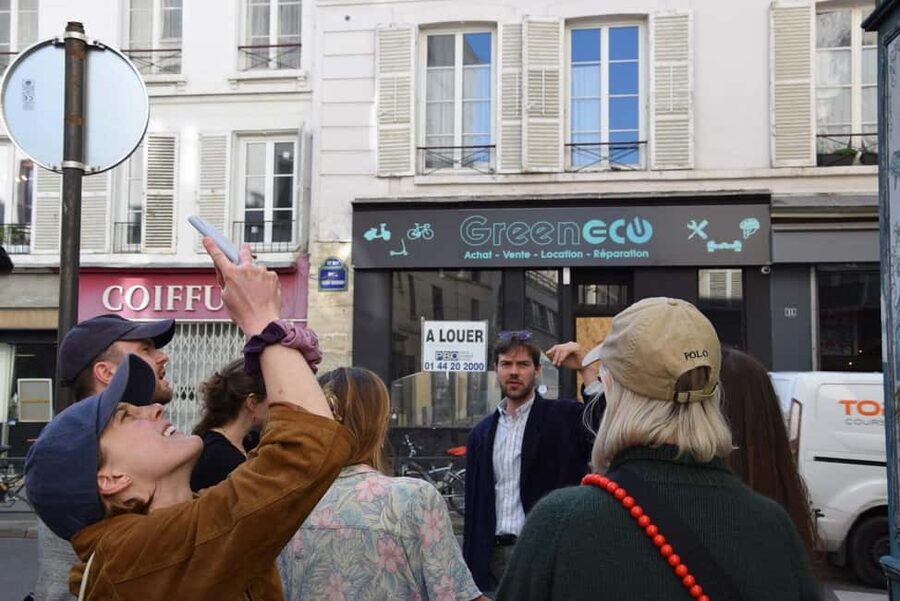
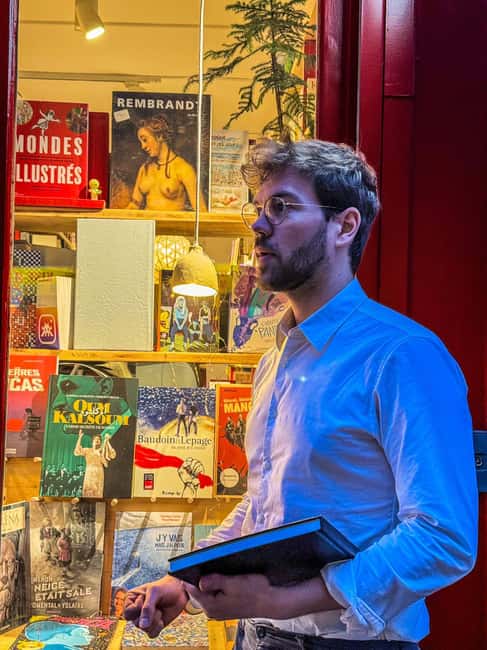
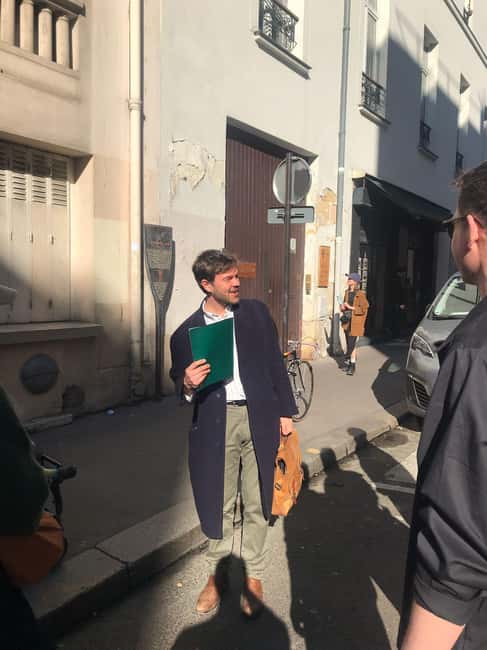
Robin is repeatedly described as funny, friendly, engaging, and exceptionally well informed. Several ratings identify him as a history professor or academic, and that background shapes the walk. He explains complex events in plain language, invites questions, and keeps the group involved.
The best feature of his style is the link between scholarly detail and everyday observation. He can explain the larger political story, then bring it back to the street in front of you. That helps prevent the tour from becoming a lecture with a long walk attached.
He also uses images to show what the neighborhood looked like in the 18th century. This is especially helpful for visitors who want more than dates and names. You can see how the modern district relates to its earlier form, even when the original buildings or streets have changed.
The group size deserves a careful note. The activity details list a maximum of 10 participants, while the included information gives a maximum of 12 to 15. Either way, it is intended to be a small group, not a large parade. Confirm the exact limit for your chosen departure when booking if that matters to you.
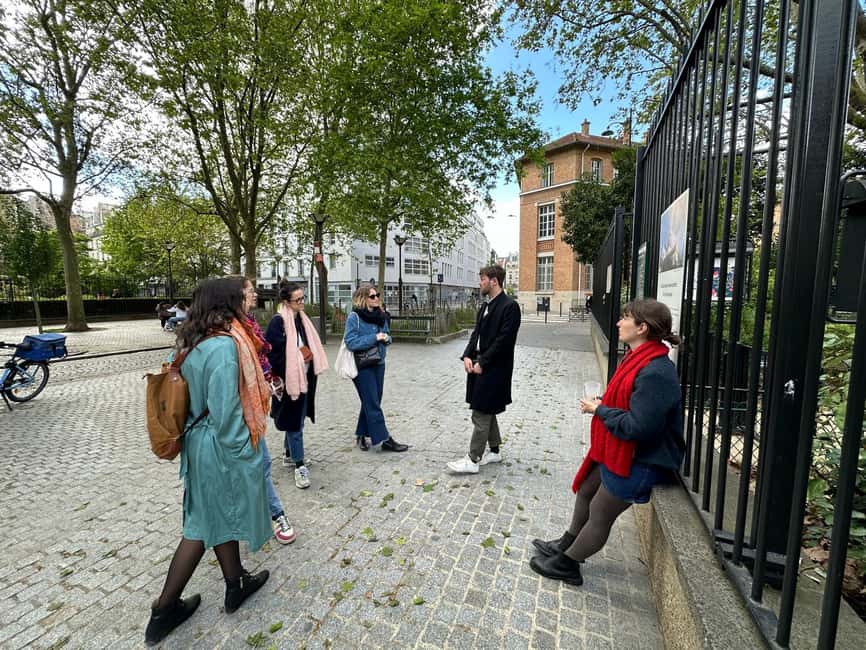
A small group is valuable here because the tour relies on conversation. You can ask about a confusing point, connect the story to another Paris sight, or request clarification without interrupting a large crowd. The result should feel more like a guided discussion than a one-way speech.
Is $37 a fair price for 90 minutes?
At $37 per person, the tour is not the cheapest way to walk from one Paris neighborhood to another. You are paying for the guide’s preparation, historical expertise, route design, and ability to make ordinary streets meaningful.
I think the price is fair if you care about history and want a focused introduction to the Revolution. A standard sightseeing walk may show you Bastille, but it may not explain why this district mattered, how the people lived, or what happened before the famous date. Here, the guide supplies the context you cannot easily get from looking at a map.
The value is also stronger if you take the walk early in your stay. The information can sharpen later visits to Paris museums, monuments, and historic neighborhoods. If your main goal is a quick overview of central Paris, the price may feel less worthwhile because this tour spends its time in a specific eastern district.
There are no additional fees listed. Free cancellation is available up to 24 hours before the tour for a full refund, and you can reserve now and pay later. Those policies make it easier to fit the walk into a changing itinerary.
Who will enjoy this Paris Revolution walk?
I would choose this tour for:
- First-time Paris visitors who want context for the city beyond the famous sights.
- History students and serious history fans.
- Visitors who enjoy neighborhood walks and overlooked architectural details.
- People who prefer a small group and an interactive guide.
- Repeat visitors looking for a different arrondissement.
- Families with older children who can follow a detailed historical story.
It is also a good choice for people living in Paris. One local participant had worked near Faubourg Saint-Antoine and Bastille for almost two years, yet still learned new details about the area. That tells you the tour is not only for first-time tourists.
I would be more cautious if you want to see the Bastille interior, visit a museum, or cover the entire Revolution in one sitting. This is a walking and storytelling experience. It does not replace a full historical course or a museum visit.
You should also be ready to walk outdoors for about an hour and a half. The information provided does not specify accessibility details, so contact ParisVu before booking if you need a particular route or mobility arrangement.
Languages, timing, and practical planning
The tour is offered in English, French, and German. Check the available starting times for your date, since the 90-minute duration does not by itself tell you when departures run.
Wear comfortable shoes and keep your schedule slightly flexible. The walk moves through several neighborhoods and ends at Place de la Bastille, so it works well before lunch, after breakfast, or as an early afternoon activity. You might also pair it with further sightseeing in the Bastille area rather than crossing Paris immediately afterward.
The starting location is at 1 Place du Dr Antoine Béclère, between Café les Blouses Blanches and Mon Café. The finish is at 28 Place de la Bastille. Knowing both ends in advance helps you plan transport and avoid treating the tour as a loop back to the meeting point.
The activity has a 5 out of 5 rating from 161 reviews, with one listed 4 out of 5 rating. The praise is unusually consistent around three points: Robin’s command of the subject, his ability to tell the story in an engaging way, and the value of seeing parts of Paris outside the usual tourist route.
Should you book the Paris French Revolution tour?
Book it if you want to understand how ordinary Paris neighborhoods helped set the French Revolution in motion. The combination of Faubourg Saint-Antoine, La Folie Titon, Passage de Lhomme, and Bastille gives you a grounded view of July 14, 1789, while Robin’s teaching keeps the story lively and clear.
I would schedule it near the beginning of your Paris stay, especially if you plan to visit other historic sites. Just remember the limits: it lasts 90 minutes, focuses most strongly on the lead-up to Bastille Day, and does not give equal time to the later Republic, the Terror, or Napoleon.
For $37, this is a strong pick for curious visitors who want more than a photograph of Bastille. It is less suitable for anyone seeking a grand monument tour, but for street-level history and a small, conversational group, it offers a thoughtful way to see a less familiar side of Paris.
FAQ
How long does the French Revolution tour last?
The tour lasts approximately 90 minutes.
Where does the tour begin?
It begins at 1 Place du Dr Antoine Béclère, between Café les Blouses Blanches and Mon Café.
Where does the tour finish?
The walk finishes at 28 Place de la Bastille.
What places are included on the route?
The route includes Faubourg Saint-Antoine, La Folie Titon, Passage de Lhomme, several additional stops, a viewpoint, and Place de la Bastille.
What languages are available?
The live guide is available in English, French, and German.
How many people are in the group?
The activity details list a maximum of 10 participants. Other supplied information gives a maximum of 12 to 15, so confirm the exact group limit for your departure.
Who leads the tour?
The guide named in the activity information and ratings is Robin. He is described as a history professor and leads the walk in an interactive storytelling style.
How much does the tour cost?
The listed price is $37 per person.
Can I cancel or pay later?
You can cancel up to 24 hours in advance for a full refund. You can also reserve your place and pay later, so no payment is required at the time of booking.
Just listed in Paris
- Chartres Cathedral 5 Hours Tour from Paris with Private Transport★ 4.5 · 49 reviews
- Paris: Giverny & Versailles Small Group or Private Tour★ 4.5 · 49 reviews
- Paris: Louvre photoshoot or Seine bridges Eiffel Tower walk★ 5.0 · 49 reviews
- Private tour of the Champagne area, meet local producers and taste their Champagne, start from your hotel in Paris.★ 5.0 · 50 reviews
- Paris: Choux Pastry and Chocolate Éclair Making Class★ 4.9 · 50 reviews
- Paris Eternelle Notre-Dame Virtual Reality Tour★ 4.5 · 50 reviews
- Normandy D-Day Landing Beaches Private Day Trip from Paris★ 5.0 · 50 reviews
- Disneyland® Paris 1 Day with Round-Trip Train Tickets from Paris★ 4.0 · 50 reviews
Paris Tours, compared.



Versailles Palace and Gardens Full Access Ticket
Read our review →

Eiffel Tower Entry Ticket with Optional Summit Access
Read our review →

Louvre Guided Tour with Reserved Access & Boat Cruise
Read our review →