

Reviewed · PARIS TOURS
Paris: French Wine and Cheese Guided Tasting
French wine can feel like a puzzle of regions, grapes, weather, and old traditions. Simon makes that puzzle friendly over five wines and five cheeses, ending with champagne and a practical lesson in how to taste, compare, and order wine in Paris.
I like the small group of up to eight, which gives you room to ask questions. I also like the perfume exercise, a clever way to train your nose instead of simply being told that a wine smells like fruit, flowers, or spice. The one drawback is price: at $82 per person, it is not a casual glass of wine, though the two-hour lesson and ten tasting elements make the cost easier to justify.
Key Points at a Glance
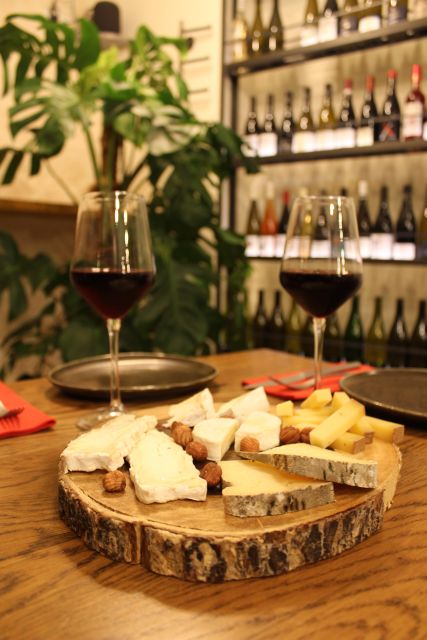
- Five pours with a clear progression: Taste two white wines, two reds, and one champagne.
- Five cheese pairings: Each wine is served with a different cheese so you can notice how food changes the taste.
- Simon leads the class: He explains French wine, geography, history, and dining customs in English or French.
- Perfume samples train your nose: Compare aromas before tasting to get better at identifying what is in the glass.
- Small and adult-only: The group is limited to eight, and the activity is not suitable for children under 18 or pregnant women.
- A useful Paris dining lesson: You leave with practical ideas for choosing wine with meals, not just a memory of a pleasant tasting.
Meeting Simon at L’Oeno’Vice
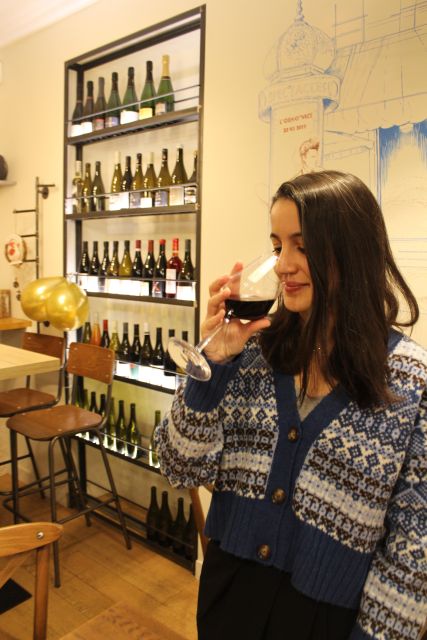
Your two-hour experience begins at L’Oeno’Vice, Simon’s wine bar. This is not a large museum-style wine attraction or a formal cellar tour. It is a seated tasting built around conversation, explanation, and food.
That setting matters. A small wine bar makes it easier to stop and ask why one wine tastes sharper than another, or why a particular cheese works with a certain glass. Several sessions have had only a few people, sometimes just a couple, so the pace can feel closer to a private lesson than a standard group tour.
One practical tip: arrive at the stated meeting time rather than far too early. The bar may not be open before the session begins. Once inside, expect a compact, informal place rather than a grand Paris dining room. One couple found the room warm during a visit, but opening the large doors made it more comfortable. Conditions can vary, but this is worth knowing if you prefer a cool, spacious venue.
Simon teaches in English or French. His English is clear, though he has a noticeable accent, so you should feel free to ask him to repeat a point. The group size makes that easy, and his style is patient, funny, and welcoming rather than stiff or overly technical.
A few other Paris half-days to compare
- Paris: Seine Cruise & Crepe Tasting near the Eiffel Tower
★ 4.4 · 11,231 reviews - Authentic Parisian Gourmet Food Tour with 10 Local Dishes & Wines
★ 5.0 · 4,754 reviews - Normandy D-Day Small-Group Day Trip with Omaha Beach, Cemetery & Cider Tasting
★ 5.0 · 2,786 reviews
Starting With French Wine Regions
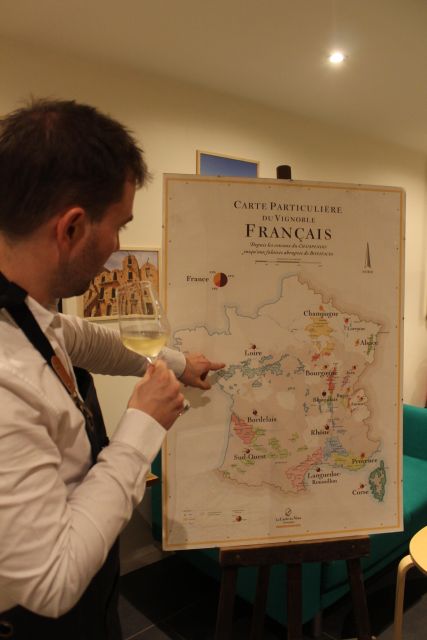
Simon begins with the basics: what wine is, how it developed in France, and why the place where a wine is made matters so much. You learn about the main French wine regions and how geography, climate, and grape varieties affect the final taste.
This is the part that helps you make sense of French wine lists. French bottles are often labeled by region rather than by grape, which can frustrate visitors who are used to seeing names such as Cabernet Sauvignon or Chardonnay in large letters. Simon’s map-based explanations help connect the name on the bottle with the conditions that shaped the wine.
You also get a sense of how local customs and history fit into French wine culture. The lesson is not only about memorizing regions. It is about understanding why a wine from one part of France may taste lighter, sharper, fuller, or more earthy than a wine made from a similar grape elsewhere.
I especially like this foundation for people who know little about wine. You do not need prior experience, and you will not be expected to use expert vocabulary. The session is designed to make wine less intimidating, not to test you.
Learning to Look, Smell, and Taste
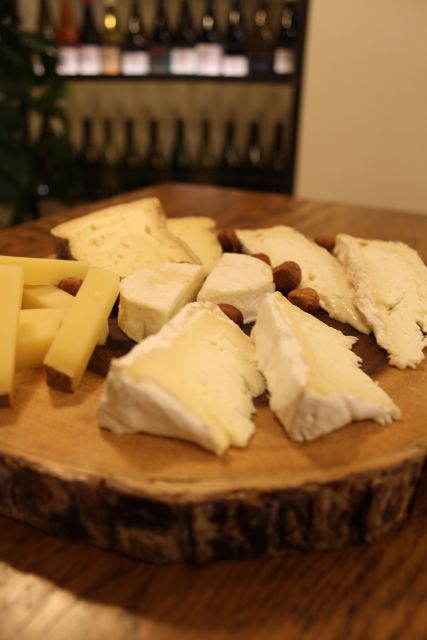
Before you drink, Simon shows you how to examine the wine. You look at its color, smell it, and then taste it. This simple order gives you a method you can use later in restaurants or wine shops.
The perfume samples make this lesson more memorable. Instead of treating aroma as a vague matter of personal opinion, you compare the scent of the wine with different perfume samples. This helps you focus on your sense of smell and gives you a practical way to identify familiar notes.
You may not suddenly become an expert after two hours, and that is not the point. The value is learning how to pay attention. A wine can smell different from how it tastes, and cheese can change your impression of both. Simon guides you through those comparisons without making the exercise feel like a school test.
For a first tasting, this is a strong format. You get enough direction to notice details, but there is still room to decide what you personally like. That balance is important. French wine culture has plenty of rules, but your own palate still gets the final vote.
Two White Wines and Five Cheese Pairings
The tasting includes two glasses of white wine. Each is paired with a different cheese, letting you compare the effect of texture, salt, creaminess, and flavor.
The cheese is not just a snack placed beside the wine. Simon explains why a pairing works and asks you to taste the combination rather than judging the wine on its own. A cheese may soften a wine, sharpen it, or bring out a flavor you did not notice in the first sip.
This is useful knowledge for your meals in Paris. You may order a cheese plate, encounter a regional cheese on a menu, or want a bottle to share over dinner. Understanding the relationship between the two gives you more confidence than simply learning a list of famous French wines.
The selection is five kinds of cheese in total, one matched with each pour. That is enough variety to create meaningful comparisons without turning the session into a meal. If you arrive hungry, remember that the included food is cheese only, and food or drinks not listed are not included.
People who already know food and wine can still get something from this section. A chef who attended with a partner found that the regional pairings and explanations offered more than expected. For beginners, the same material remains accessible.
Same city, a completely different afternoon:
- Paris: Louvre Museum Timed-Entrance Ticket
★ 4.6 · 71,977 reviews - Disneyland® Paris 1-Day Ticket
★ 4.6 · 49,412 reviews - Paris: Versailles Palace and Gardens Full Access Ticket
★ 4.6 · 41,579 reviews - Paris: Evening River Cruise with Music
★ 4.4 · 22,721 reviews
Two Red Wines and a Lesson in Food Pairing
The red wines follow the whites, giving you another chance to compare color, aroma, body, and finish. Simon continues to connect each glass with a cheese from a related or suitable pairing tradition.
This is where the session moves beyond a simple tasting flight. You learn how to think about wine with a meal. Instead of asking only if you like a bottle, you can begin asking what you plan to eat and what kind of balance you want.
Simon also shares tips for selecting wine in a Paris restaurant. You will not leave with a universal rule for every bottle, but you will have a better sense of how to read a menu, describe what you enjoy, and choose something that suits your food.
The wines are chosen to show differences rather than give you five versions of the same style. That makes the tasting more educational. It also means you may prefer some pours more than others, which is exactly what a good comparison should reveal.
Finishing With Champagne
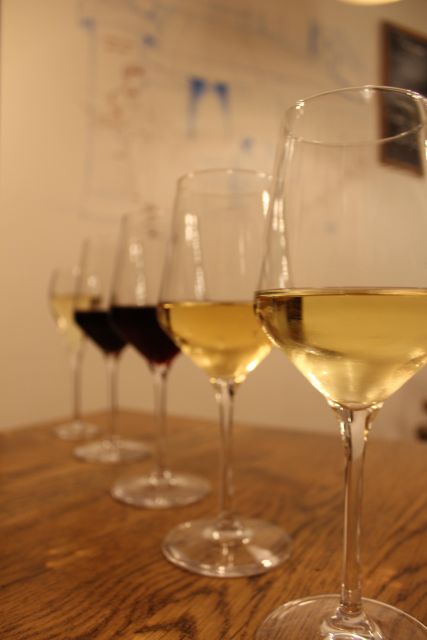
The final glass is champagne. It gives the tasting a festive finish and lets you compare sparkling wine with the still whites and reds that came before it.
Champagne also shows how pairing changes with bubbles and acidity. After tasting several wines with cheese, you can pay attention to how the sparkling pour behaves with food and how its texture changes the experience.
One past session included champagne produced by Simon’s family, which added a personal touch to the final pour. That may not be part of every booking, so I would treat it as a possible extra detail rather than a promised feature.
The serving order is sensible. Starting with white wine, moving to red, and ending with champagne creates a clear arc, and the total amount is enough for comparison without becoming a long evening of full glasses. This is still an alcohol-focused activity, so it is not suitable for pregnant women and is limited to adults aged 18 and over.
Simon’s Teaching Style
Simon is the main reason this experience feels different from a basic wine flight. He combines technical information with stories about French regions, geography, and the background of the wines and cheeses.
His approach is friendly and adaptable. If your group has no wine experience, he explains the terms in plain language. If someone already knows a fair amount about food or wine, he can answer more detailed questions. Several comments about the session point to his patience, humor, and ability to keep the class relaxed.
That mix matters because wine lessons can easily become formal or self-important. Here, the aim is to help you enjoy wine with more confidence. Simon’s humor keeps the two hours from feeling like a lecture, while the maps, aromas, and pairings give the session enough structure to feel worthwhile.
I would still keep expectations realistic. This is an introduction, not professional sommelier training. You will learn a useful tasting method and gain a clearer picture of French wine, but you will not cover every region, grape, or style in France.
Is $82 a Fair Price?
At $82 per person, the tasting costs more than ordering a bottle and a cheese plate at a neighborhood bar. The price makes sense only if you want the teaching as well as the food and drink.
You receive five wine tastings, including champagne, five cheese pairings, and two hours with an expert guide. The small group also adds value because you have time for questions and personal attention. For a couple or a curious food lover, that can be a worthwhile use of an afternoon or evening in Paris.
The value is weaker if you mainly want a generous meal or a large number of wines. This is not a wine-and-cheese lunch, and the supplied food is not intended to replace dinner. You are paying for context, comparison, and guidance.
I also like that the class may help you avoid guesswork later. Several people ended up wanting to buy bottles they had tasted, and one useful improvement would be receiving clear advice about shipping wine home. If you plan to purchase bottles, ask Simon about the best way to handle that before leaving.
The option to reserve now and pay later gives you some planning flexibility, and cancellation is free up to 24 hours in advance for a full refund. Check the available start times before booking, since the activity lasts two hours and the exact schedule can change.
Who Will Enjoy This Tasting Most?
I would recommend it most strongly to:
- First-time wine tasters who want clear explanations without pressure
- Couples looking for an adult food experience in Paris
- People who enjoy French cheese and want to understand pairings
- Visitors who plan to eat at Paris restaurants and want more confidence ordering wine
- Experienced food lovers who enjoy regional detail and guided comparisons
- Anyone who prefers a small, conversational group over a large tour
It is less suitable if you do not drink alcohol, need a full meal, or prefer a grand historic venue. Children under 18 cannot join, and pregnant women should choose another activity.
The experience is wheelchair accessible, which makes it a useful option for visitors who want a seated food activity. The meeting point is L’Oeno’Vice, so check the route and allow enough time to find the bar without arriving excessively early.
What You Take Away From the Two Hours
The best souvenir is not a bottle. It is a better way to taste.
You learn to look at wine before drinking it, use your nose with more purpose, and notice how cheese changes the flavor. You also gain a basic map of French wine regions and a set of questions you can use at a restaurant.
That practical side gives the activity lasting value. A museum visit may tell you about French culture, but this session gives you a skill you can use over dinner that same night. You may still choose a bottle because you like its label or because the server recommends it, but you will have a clearer idea of what you are ordering.
I also appreciate the welcoming tone. Beginners are not made to feel behind, and experienced food lovers are not forced into a watered-down lesson. The format works because the group is small and Simon can adjust his explanations to the people in front of him.
Should You Book It?
Book this if you want an educational tasting rather than just a drink with cheese. The strongest reasons are Simon’s lively teaching, the thoughtful progression from whites to reds to champagne, the five distinct pairings, and the perfume exercise that gives you a concrete way to work on aroma.
At $82, I would schedule it when you can give it your full attention. Do not treat it as a quick stop between major sights, and do not arrive expecting dinner. Give yourself two hours to listen, taste, and ask questions.
If you are curious about French wine but feel lost when faced with a Paris menu, this is a smart choice. If you already have a full day of tastings planned, compare the number of pours and food included before committing. For most adults who enjoy wine, cheese, and a good story, L’Oeno’Vice offers a useful and personable introduction to France in a small room with a very practical payoff.
FAQ
Where does the French wine and cheese tasting take place?
The experience takes place at L’Oeno’Vice in Paris, where you meet Simon for the guided tasting.
How long does the activity last?
The tasting lasts two hours. Starting times vary, so check availability when booking.
How many wines are included?
You taste five wines in total: two white wines, two red wines, and one champagne.
How many cheeses are included?
Five kinds of cheese are included, with a different cheese tasted alongside each wine.
Is the experience available in English?
Yes. Simon leads the activity in English or French.
How large is the group?
It is a small-group experience limited to eight participants.
Can children or pregnant women attend?
No. The activity is not suitable for children under 18 or pregnant women.
Just listed in Paris
- Chartres Cathedral 5 Hours Tour from Paris with Private Transport★ 4.5 · 49 reviews
- Paris: Giverny & Versailles Small Group or Private Tour★ 4.5 · 49 reviews
- Paris: Louvre photoshoot or Seine bridges Eiffel Tower walk★ 5.0 · 49 reviews
- Paris: Choux Pastry and Chocolate Éclair Making Class★ 4.9 · 50 reviews
- Private tour of the Champagne area, meet local producers and taste their Champagne, start from your hotel in Paris.★ 5.0 · 50 reviews
- Paris Eternelle Notre-Dame Virtual Reality Tour★ 4.5 · 50 reviews
- Normandy D-Day Landing Beaches Private Day Trip from Paris★ 5.0 · 50 reviews
- Disneyland® Paris 1 Day with Round-Trip Train Tickets from Paris★ 4.0 · 50 reviews
Paris Tours, compared.



Versailles Palace and Gardens Full Access Ticket
Read our review →

Eiffel Tower Entry Ticket with Optional Summit Access
Read our review →

Louvre Guided Tour with Reserved Access & Boat Cruise
Read our review →
Moulin Rouge Cabaret Show Ticket with Champagne
Read our review →Browse the lists this tour appears in