
Reviewed · MONTMARTRE & SACRE-COEUR TOURS
Paris Montmartre Private Walking Tour – Best Art, Culture, Food
Montmartre’s best moments are tucked into side streets and small squares: a wall covered in I Love You messages, a bronze singer gazing across a quiet plaza, a windmill painted by Renoir and Van Gogh, and the café made famous by Amélie. This private walk gives you those details without turning the neighborhood into a history lecture.
I like the private format, since your guide can adjust the pace and answer your questions. I also like the mix of art, food, film, music, and local lore, from Picasso’s old studio to the Pink House and tips for baguettes. The main catch is the short 90-minute length. You see many places, but most are exterior stops, and Sacré-Cœur entry is not part of the tour.
Key points to know before you book
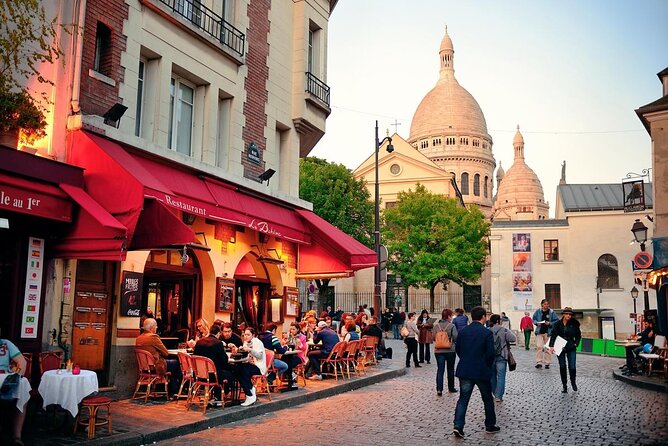
- A compact route through Montmartre’s artistic landmarks: See Bateau-Lavoir, Moulin de la Galette, Dalida’s bust, and Place du Tertre in one walk.
- A true private tour: Only your group takes part, so the guide can adapt explanations and walking speed.
- Food is part of the story: Expect café references, French food suggestions, and a recommendation or two for good bread.
- Sacré-Cœur is viewed from outside: Entry is free when open, but you visit the basilica on your own after the walk.
- The route includes hills: There are no stairs on the planned route, but Montmartre’s slopes and narrow streets require steady walking.
- Plan the meeting point carefully: Begin at 19 Rue des Abbesses and finish at La Bonne Franquette on Rue Saint-Rustique.
Why this short Montmartre walk works
Montmartre can feel confusing at first. The streets rise, the famous sights are spread across the hill, and the neighborhood shifts quickly from tourist-heavy squares to quiet residential corners. A guide helps connect those places into one clear story.
This is not a full-day tour. In 90 minutes, you get a brisk introduction to the area’s painters, singers, writers, cafés, and old village character. That makes it useful near the beginning of a Paris stay, when you want to understand the neighborhood before returning later on your own.
The route also has a pleasant range of subjects. You are not looking only at churches or only at art. You hear about modern painters at Bateau-Lavoir, old entertainment at Moulin de la Galette, singer Dalida’s life, the film Amélie, Montmartre wine, and the grand white domes of Sacré-Cœur.
At $57.13 per person, the value depends on your group size. For a couple or a small family, a private guide costs more than joining a large group, but you get direct attention and a flexible pace. For a larger group, the per-person price becomes easier to justify, especially if you care about questions, family needs, or food advice.
More Walking Tours in Paris
- Paris Top Sights Half Day Walking Tour with a Fun Guide
★ 5.0 · 2,893 reviews - Montmartre Hidden Gems and Scenic Highlights Walking Tour
★ 5.0 · 2,684 reviews - Montmartre Hill French Gourmet Food and Wine Tasting Walking Tour
★ 5.0 · 2,588 reviews
Start near the Abbesses neighborhood
The tour begins at 19 Rue des Abbesses, a useful starting point in one of Montmartre’s lively areas. Give yourself extra time to find the exact meeting spot. One family arrived late after a difficult trip through Paris and had trouble locating the meeting area, so I would check the map and address before leaving your hotel.
That small bit of planning matters here. Paris navigation apps can direct you to a nearby street or drop-off point rather than the exact place where your guide is waiting. Have the address ready and aim to arrive early, especially if you are traveling with children or carrying bags.
From the start, your guide can set the tone for the walk. Guides named in the feedback include Laura, Anastasia, Heidi, and Tamar. Their styles may differ, but the strongest reports describe guides who explain the area through stories and adjust the walk when someone needs a slower pace.
The I Love You Wall and Rue des Abbesses
The I Love You Wall is a small but memorable first stop. The art installation presents the phrase I Love You in more than 300 languages, turning an ordinary square into a place for a quick look and a photograph.
It is not a grand monument, and that is part of its charm. The stop gives you a softer introduction to Montmartre before the route moves into painters, cabarets, and scandal. You can also ask your guide about the languages or the idea behind the installation.
Rue des Abbesses brings you into the neighborhood’s everyday side. Cafés, shops, and old buildings line this well-known street, which offers a good setting for learning how Montmartre changed from a village-like district into an artists’ quarter and then a major Paris attraction.
Expect this part to feel active and urban. Narrow sidewalks and passing crowds can make conversation harder at times, so stay close to your guide. The street is also a good reminder that Montmartre is not a museum. People live, shop, eat, and work here.
Bateau-Lavoir and the painters who changed art
Bateau-Lavoir is one of the most important art stops on the route. It began as a modest artists’ residence and later became linked with Picasso, Modigliani, Braque, and other figures who helped change modern art.
You do not enter a grand gallery here. The value comes from standing outside and hearing what the place meant. The building connects Montmartre with the period when artists worked in poor studios, argued over new ideas, and pushed painting in unfamiliar directions.
I would pay attention to your guide’s storytelling at this stop. A name such as Picasso can easily become a quick photo opportunity, but the setting gives you a better sense of the neighborhood’s creative past. The private format is useful if you want to ask about a particular artist or movement.
A few other Paris half-days to compare
- Paris: Moulin Rouge Cabaret Show Ticket with Champagne
★ 4.7 · 16,088 reviews - Paris: Dinner Show at the Moulin Rouge
★ 4.8 · 3,333 reviews - Seine Dinner Cruise, Eiffel Tower Access and Moulin Rouge Show
★ 4.0 · 2,310 reviews - Paris: Montmartre Cheese, Wine & Pastry Guided Walking Tour
★ 4.8 · 2,255 reviews
Moulin de la Galette and old Montmartre nightlife
The historic Moulin de la Galette is one of the walk’s most appealing reminders of old Montmartre. Renoir and Van Gogh included the windmill in their paintings, and it once operated as a dance hall where people came for music and an evening out.
Today, it is much quieter than that description suggests. Your guide helps you picture the former entertainment district and explains why windmills became such strong symbols of Montmartre. The stop is especially rewarding if you enjoy seeing how paintings relate to real places.
This is also a good photography point, though the surrounding streets can be tight. Keep your camera ready, but do not expect a long private pause in front of every sight. The tour covers a lot of ground in a short time.
The Man Who Walked Through the Wall
Near the former home of writer Marcel Aymé, you find a sculpture of a man passing through a wall. It comes from one of Aymé’s short stories and fits Montmartre’s taste for the odd, playful, and slightly surreal.
This stop is small, but it adds variety to the route. You move from real artists and historical places to a literary joke made physical in bronze. It is also a good stop for families because the image is easy to understand, even if you know nothing about the author.
Do not expect a long visit. The sculpture is best treated as a quick discovery, with your guide supplying the connection between the artwork, the writer, and the neighborhood.
Dalida’s bust and the quieter side of the hill
The bronze bust of Dalida sits in a peaceful square and honors one of France’s best-known singers. Dalida lived in Montmartre for many years, and the sculpture has become a place where admirers pay their respects.
This part of the walk offers a welcome change from the busier streets. You get a glimpse of the neighborhood as a place with personal memories and local affection, not just a backdrop for photographs.
If music interests you, ask your guide for more details about Dalida. The tour is private, so you can spend a little more time on subjects that appeal to your group. If your children are along, the guide may instead keep the explanation short and move on to the next visual stop.
The Pink House and Montmartre’s café culture
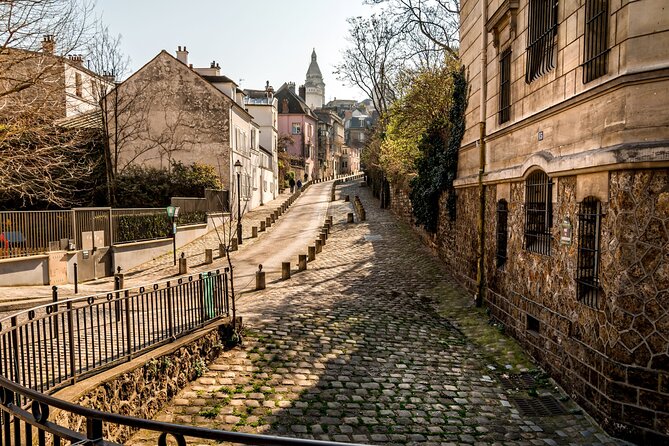
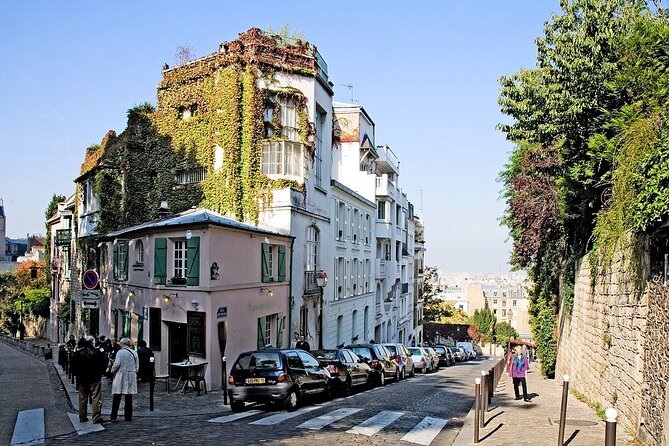
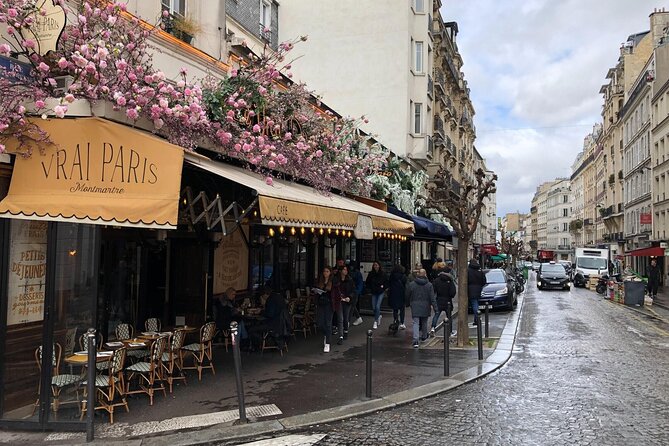
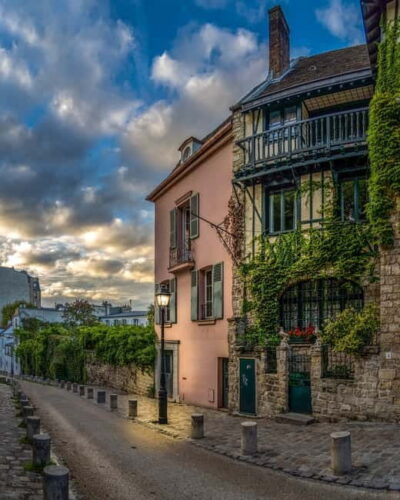
The Pink House is one of Montmartre’s most recognizable photo spots. Its bright color, compact shape, and corner setting make it easy to understand why artists and photographers have favored it for decades.
Picasso and Utrillo were associated with the café, which now serves French food. You may not have time for a full meal during the walk, but the stop gives you a useful place to return later. Your guide can point out what makes the café notable and offer food suggestions elsewhere in the neighborhood.
The Pink House can be crowded around mealtimes, and the photo angle may require patience. Still, it is a worthwhile stop because it combines art connections, food, and the visual style many people expect from Montmartre.
Montmartre Vineyard and the neighborhood’s rural past
The Montmartre Vineyard is an unexpected sight in the middle of Paris. It was established in 1933 to protect the area’s winemaking tradition and remains a reminder that Montmartre once had a more rural character.
You should not expect a large wine estate or a tasting as part of this walk. The vineyard is mainly an exterior stop, but it helps explain how the hill developed before it became known for studios, cafés, and sightseeing.
This is one of the places where a guide adds real value. Without context, you might pass the vines and wonder why they are there. With an explanation, they become part of the neighborhood’s older identity.
Sacré-Cœur from the highest point in Paris
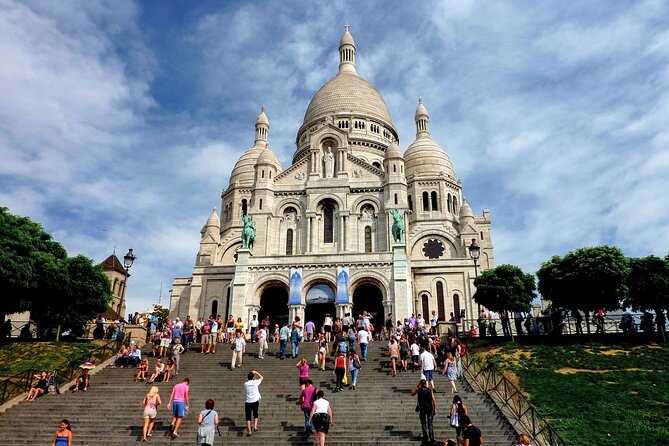
The route reaches Sacré-Cœur Basilica, perched at the highest point in Paris. The white domes are visible from many parts of the city, and the elevated position gives you broad views over Paris.
The tour passes the basilica from the outside. Entry is free when the building is open, but it is not included in the 90-minute walk. Your guide will explain what to look for inside and give you practical advice for making a self-guided visit after the tour.
This arrangement has both advantages and limits. You avoid spending the walking tour waiting in an entry line, and you can decide later if you want to go inside. On the other hand, anyone expecting a guided visit to the basilica should plan extra time and make that visit separately.
Sacré-Cœur can be crowded, particularly around the approach and viewpoint. Keep personal belongings secure and allow time to enjoy the view rather than rushing straight onward. The basilica is a natural place to extend your Montmartre visit after the guide leaves.
Place du Tertre and the end at La Bonne Franquette
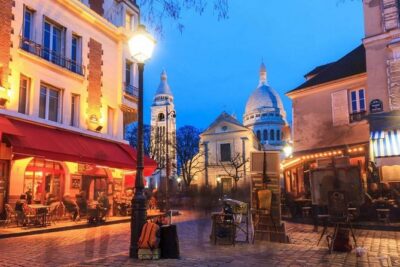
Place du Tertre is the classic final scene: painters, caricaturists, cafés, and restaurants gathered around a small square. It captures the public image of Montmartre’s artistic life, though it can also be crowded and commercial.
Your guide can help you understand what you are seeing. The painters are part of a long tradition, but the square is also a busy working tourist area. I would enjoy the atmosphere, browse without pressure, and be clear about prices before commissioning any artwork.
The walk ends at La Bonne Franquette, 18 Rue Saint-Rustique. This is a useful ending because you remain in the heart of Montmartre, close to places for a meal or a continued walk. It also gives you a clear choice: stop for food, visit Sacré-Cœur on your own, or continue exploring the hill.
Pace, hills, and family suitability
The route does not include stairs, which helps, but it does include several hills and narrow streets. You need to feel comfortable walking uphill for 90 minutes with short stops. Montmartre is not flat, and the stone-paved streets can be busy.
A strong point is the guide’s ability to respond to your group. Heidi, for example, adjusted the pace when walking became difficult. That flexibility is useful for families and mixed-ability groups, though it cannot remove the hills themselves.
Children can enjoy this tour if they respond to stories, unusual sculptures, windmills, and colorful buildings. Laura received especially warm praise for keeping both adults and young children interested. Still, tell the provider about your group’s needs at booking and choose comfortable shoes.
Weather can affect the experience. Rain may make narrow streets and navigation more stressful, and no indoor backup plan is specified. I would check the forecast, carry rain protection, and confirm how to contact the provider before the start.
How much personal attention should you expect
This is a private activity, so only your group participates. That is the main reason to choose it over a standard group walk. You can ask about art, music, food, architecture, or film without waiting for a large crowd to catch up.
The strongest guide experiences appear to come from clear storytelling and personal adjustments. Tamar, for example, was praised for explaining artists, local events, and small historical details while answering questions and tailoring the walk. Food advice, including a recommendation for good baguettes, can be a useful extra.
Communication before the tour deserves care. The provider may not give you the guide’s direct personal phone number, so keep your booking details handy and arrive early. If you are late, a 30-minute waiting period may be the maximum, even though the tour is private.
Is $57.13 a fair price?
At $57.13 per person, this is not the cheapest way to see Montmartre. You can walk through the neighborhood without a guide, photograph Sacré-Cœur, and visit Place du Tertre at no cost.
The price pays for direction, context, and private attention. You are not simply checking off famous sights. You are learning why the windmill mattered, how artists used Bateau-Lavoir, why a vineyard survives on the hill, and where food and café culture fit into the story.
The value is strongest for first-time visitors, families, and small groups that want a planned route without committing to a half-day activity. It is less compelling if you already know Montmartre well or prefer to wander slowly with no fixed end time.
The tour has a 4.9 rating from 206 ratings, and 99 percent of customers recommend it. Those numbers suggest a consistently strong experience, but they should not hide the practical limits: 90 minutes is brisk, Sacré-Cœur entry is separate, and missed start times may not qualify for a refund.
Who should book this Montmartre experience?
I would choose this tour if you want a short, private introduction to Montmartre with art, food, music, and famous photo stops in one route. It suits couples, families, and small groups who value questions and a guide who can adjust the pace.
You should think twice if you want to explore the basilica inside with a guide, spend a long time at each sight, or avoid hills. In that case, a longer or more specialized visit may fit better.
The cancellation policy is simple: cancel at least 24 hours before the local start time for a full refund. Changes or cancellations within 24 hours are not refunded.
FAQ
How long is the Paris Montmartre private walking tour?
The tour lasts approximately 90 minutes.
What language is the tour offered in?
The tour is offered in English.
Is the tour private?
Yes. Only your group participates in the activity.
How much does the tour cost?
The listed price is $57.13 per person.
Where does the tour begin?
The tour begins at 19 Rue des Abbesses, 75018 Paris, France.
Where does the tour end?
The tour ends at La Bonne Franquette, 18 Rue Saint-Rustique, 75018 Paris, France.
Is entry to Sacré-Cœur included?
No. The tour passes the exterior of Sacré-Cœur. Entry is free when the basilica is open, and your guide provides tips for visiting on your own.
Does the route include stairs?
The planned route does not include stairs, but it does include hills and narrow, sometimes busy streets.
What sights are included on the walk?
The route includes the I Love You Wall, Rue des Abbesses, Bateau-Lavoir, Moulin de la Galette, the Man Who Walked Through the Wall sculpture, Dalida’s bust, the Pink House, Montmartre Vineyard, Sacré-Cœur, and Place du Tertre.
Can I cancel for a full refund?
Yes. You can cancel at least 24 hours before the experience’s start time for a full refund. Cancellations made less than 24 hours before the start time are not refunded.
Should you book it?
Book it if you want the stories behind Montmartre’s most recognizable places and prefer a guide focused only on your group. Arrive early, wear good walking shoes, and leave extra time after the tour for Sacré-Cœur and a meal near La Bonne Franquette. That simple plan makes the short format work well.
Just listed in Paris
- Chartres Cathedral 5 Hours Tour from Paris with Private Transport★ 4.5 · 49 reviews
- Paris: Giverny & Versailles Small Group or Private Tour★ 4.5 · 49 reviews
- Paris: Louvre photoshoot or Seine bridges Eiffel Tower walk★ 5.0 · 49 reviews
- Paris: Choux Pastry and Chocolate Éclair Making Class★ 4.9 · 50 reviews
- Private tour of the Champagne area, meet local producers and taste their Champagne, start from your hotel in Paris.★ 5.0 · 50 reviews
- Paris Eternelle Notre-Dame Virtual Reality Tour★ 4.5 · 50 reviews
- Normandy D-Day Landing Beaches Private Day Trip from Paris★ 5.0 · 50 reviews
- Disneyland® Paris 1 Day with Round-Trip Train Tickets from Paris★ 4.0 · 50 reviews
Montmartre & Sacre-Coeur Tours, compared.

Moulin Rouge Cabaret Show Ticket with Champagne
Read our review →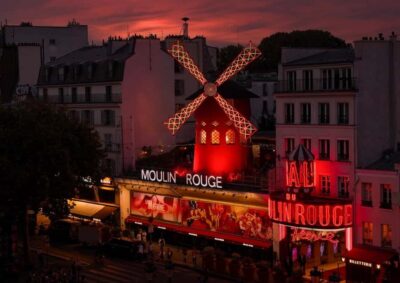
Montmartre Hidden Gems and Scenic Highlights Walking Tour
Read our review →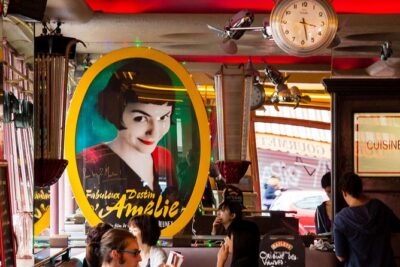
Montmartre Hill French Gourmet Food and Wine Tasting Walking Tour
Read our review →
Seine Dinner Cruise, Eiffel Tower Access and Moulin Rouge Show
Read our review →
Montmartre Cheese, Wine & Pastry Guided Walking Tour
Read our review →
Montmartre Highlights Walking Tour with a Local Guide
Read our review →Browse the lists this tour appears in