
Reviewed · PARIS TOURS
Paris: Napoleon’s Tomb & Invalides Small Group Guided Tour
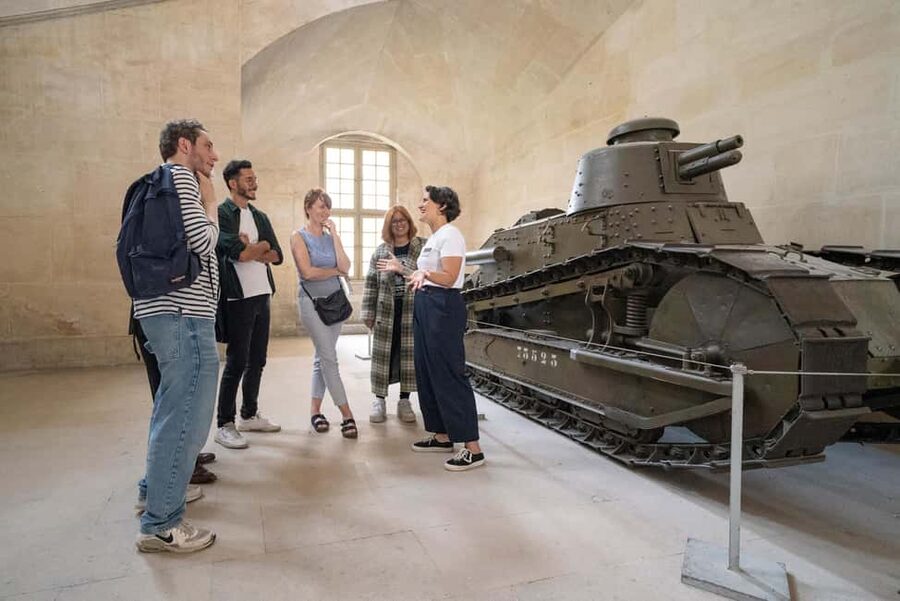
Napoleon’s tomb is the star here, but the real treat is seeing it after tracing the making of the man. Inside Les Invalides, you follow Napoleon from ambitious Corsican officer to emperor, then hear how exile, death, and a dramatic return to Paris turned him into a national legend.
I like the small group of eight or fewer, which gives the guide room to answer questions. I also like the tight 90-minute route: guides such as Claire, Michael, Julienne, Alexandra, and Marouane Ouled Amor have been praised for making a huge museum feel manageable.
The trade-off is simple: Les Invalides holds far more than this tour can cover. If you want a full afternoon with every gallery, this will feel brief. Also, the tour is not suitable for wheelchair users, so check that before booking.
Key points at a glance
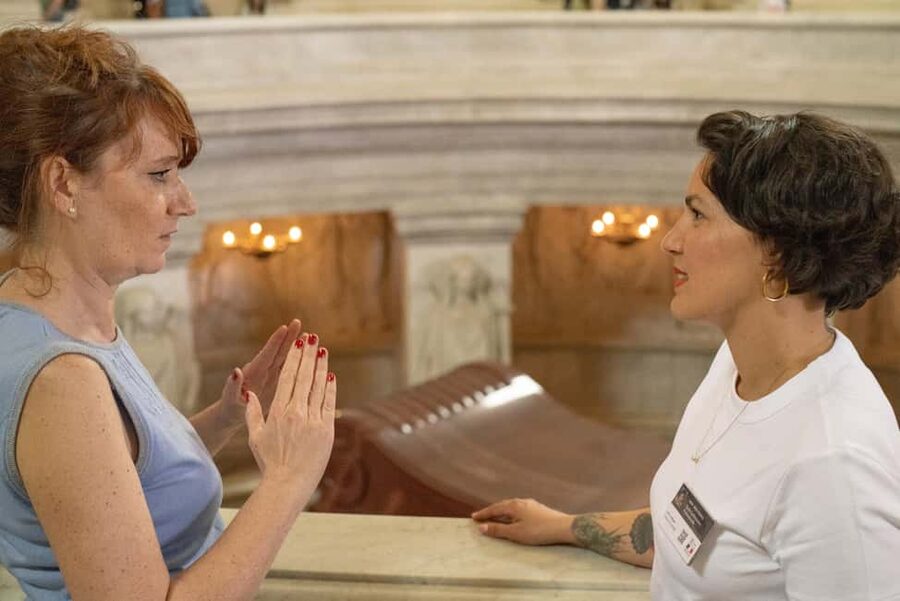
- Napoleon’s monumental tomb: See the red porphyry sarcophagus beneath the gold dome of the Dome Church.
- A focused museum route: Cover selected galleries on Napoleon’s campaigns, reforms, victories, defeats, and legacy.
- Eight people or fewer: The small party makes it easier to hear the guide and ask questions.
- English-speaking local guide: The tour is led by a fully accredited guide, with past guides including Claire, Michael, Julienne, and Alexandra.
- Reserved entry included: You avoid the ticket line and spend the short visit inside the complex.
- A clear 90-minute format: It suits a busy Paris schedule, but it only offers an introduction to Les Invalides.
Why Napoleon’s tomb is only half the story

Many people arrive at Les Invalides with one image in mind: Napoleon’s enormous tomb under a glittering golden dome. That is reason enough to come, but the tomb makes more sense after you have met the soldier and ruler who lies there.
The tour begins with Napoleon’s rise. You learn how a young officer from Corsica used military skill, political timing, and personal ambition to reach the top of France. The subject is not treated as a simple hero story. His victories and reforms matter, but so do his defeats, his imperial ambitions, and the costs of his rule.
That balance is useful. Napoleon’s name appears across French streets, laws, monuments, and national symbols, yet it is easy to know the legend without understanding the person. A good guide helps you separate the image of the emperor from the decisions that created it.
The focus also reaches beyond battlefields. You hear about reforms in law and education, along with the way Napoleon shaped government and Parisian identity. That wider frame makes this a better choice for curious visitors who are not military history specialists.
A few other Paris half-days to compare
- Paris: Louvre Guided Tour with Reserved Access & Boat Cruise
★ 4.3 · 16,353 reviews - Louvre Museum Masterpieces Guided Tour with Access
★ 4.5 · 12,023 reviews - Louvre Museum – Exclusive Guided Tour (Entry Included)
★ 5.0 · 6,296 reviews
Meeting outside Café de l’Esplanade
Your meeting point is outside Café de l’Esplanade, not at the entrance to the Invalides Museum. This detail matters. Les Invalides is a large, formal complex, and heading to the wrong doorway can cost you precious time before a short tour.
Look for the guide badge on an orange lanyard. The guide speaks English and is a fully accredited local professional. Since the party is limited to eight people, you should be able to identify your guide without much fuss, but arriving with enough time to orient yourself is still sensible.
Hotel pickup and drop-off are not included. You make your own way to the meeting point and leave from the museum area afterward. The tour does not provide a broad Paris transfer service, so it works best when combined with other sightseeing in central Paris.
Inside the Musée de l’Armée
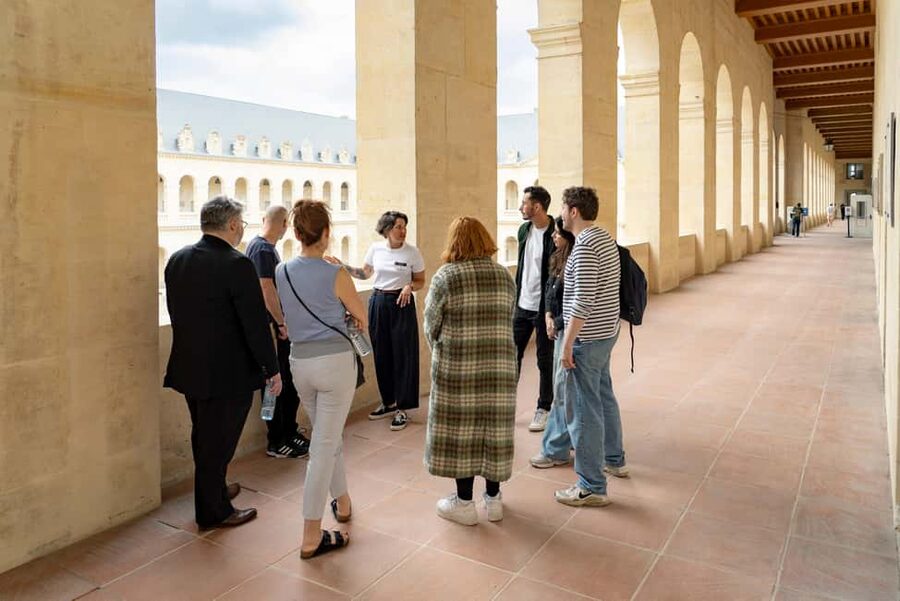
Les Invalides is home to the Musée de l’Armée, and the museum holds enough material to occupy a whole afternoon. This tour selects the parts most useful for understanding Napoleon rather than trying to march you past every case and display.
That selection is one of the tour’s main strengths. A large military museum can be hard to read on your own. You may see uniforms, weapons, paintings, maps, and campaign displays without knowing which details matter. The guide gives those objects a place in the story.
Expect attention on Napoleon’s campaigns, victories, and defeats. The route explains how his military career changed his position in France and across Europe. The displays give you physical evidence, while the guide supplies the political and personal context.
This is where the small format earns its keep. You are not simply walking behind a flag while the guide delivers a speech to a crowd. With eight people or fewer, a question about a display, a campaign, or Napoleon’s reputation can be handled without slowing the whole experience.
Past guides have received especially strong praise for their delivery. Claire was described as friendly and clear while explaining the Army Museum. Michael was noted for his enthusiasm for the Napoleonic era, and Julienne was praised for selecting highlights from a collection that could otherwise swallow an entire day.
You should still set your expectations correctly. The museum is too large for a complete visit in 90 minutes. The guide’s route is a sample, not a full survey of French military history. If you want to study every campaign or spend time with each object, plan a separate return visit if your schedule allows.
Napoleon’s reforms and the man behind the legend
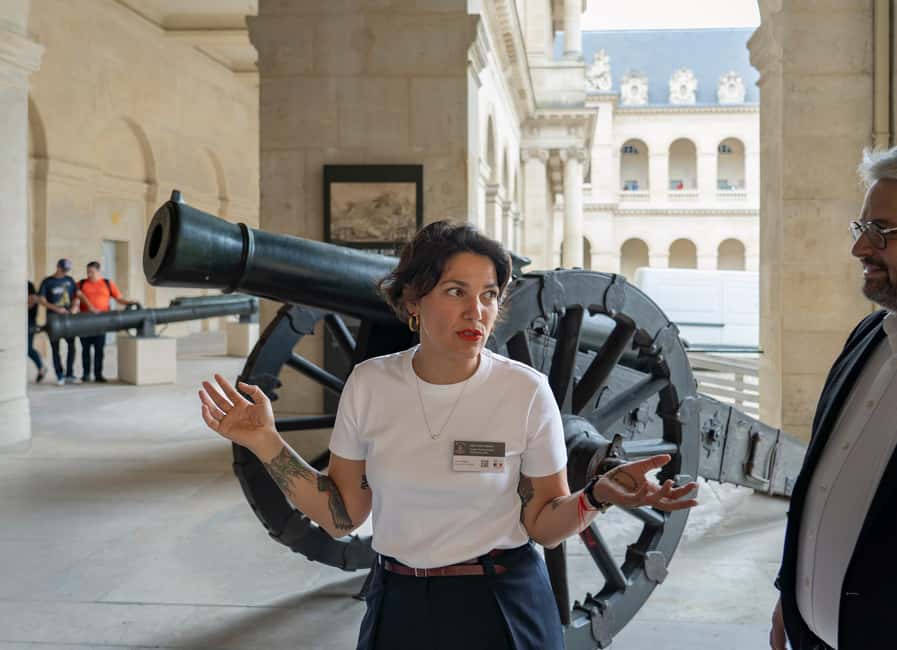
A useful feature of this tour is its attention to Napoleon outside the battlefield. His legacy reaches into law, education, government, urban planning, and French national identity. Those subjects help explain why he remains important long after the empire disappeared.
You are likely to get more from the visit if you listen for cause and effect. Napoleon did not become influential only because he won battles. His administration and legal reforms helped shape the modern French state, while his public image turned political power into a lasting personal myth.
The guide’s job is to connect these ideas to what you see. A painting can show how Napoleon wanted to be remembered. A military object can reveal how campaigns were fought. A monument can show how later generations chose to honor him. The best moments come when these pieces line up.
This also makes the tour suitable for mixed groups. One person may come for imperial history, another for architecture, and another simply because the dome is one of Paris’s memorable sights. The route gives each of you a way into the subject.
Families can benefit from the focused storytelling too. A huge museum may lose younger visitors, but a guide who keeps the pace moving and explains the people behind the objects can make the material easier to follow. The format is still centered on history, so it is not a play-based activity or a general sightseeing walk.
Same city, a completely different afternoon:
- Paris: Louvre Museum Timed-Entrance Ticket
★ 4.6 · 71,977 reviews - Disneyland® Paris 1-Day Ticket
★ 4.6 · 49,412 reviews - Paris: Versailles Palace and Gardens Full Access Ticket
★ 4.6 · 41,579 reviews - Paris: Evening River Cruise with Music
★ 4.4 · 22,721 reviews
Beneath the golden dome
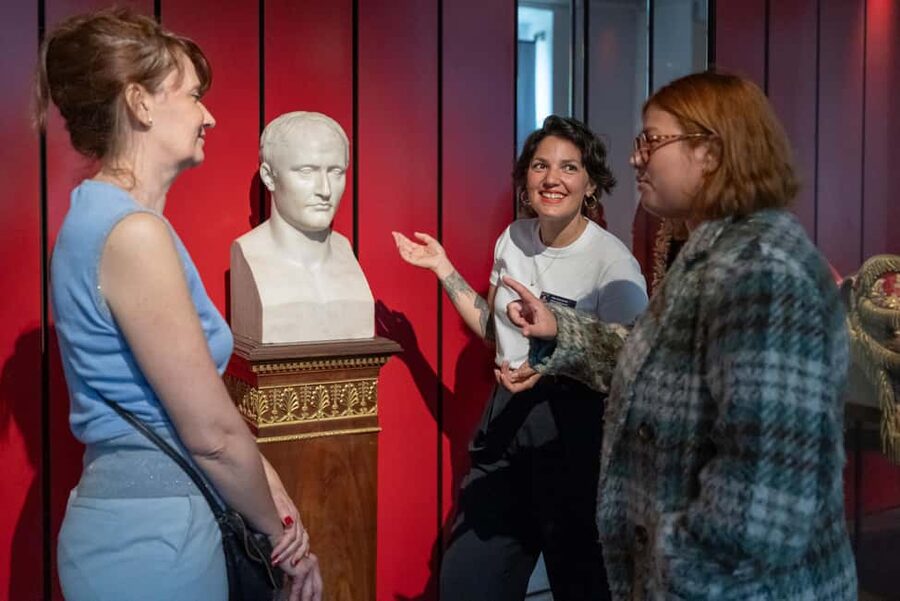
After the museum displays, the tour moves to the Dome Church. The change in mood is striking. You leave the campaign galleries and enter a grand religious and ceremonial space built around Napoleon’s final resting place.
The dome itself is one of the visual highlights. Beneath it, Napoleon I’s tomb is surrounded by marble walls and symbolic sculpture. The setting is deliberately monumental. It presents Napoleon not as a quiet historical figure, but as someone France chose to remember on a vast scale.
Your guide explains the final chapter of his life, including exile and the return of his remains to Paris. That story gives the tomb its emotional weight. Napoleon died away from France, yet his body was later brought back in a highly symbolic act that helped restore him to the center of French memory.
Take time to look up and around, not only down at the sarcophagus. The church is designed to shape your response through scale, symmetry, color, and ceremony. A guide can point out how those choices support the image of the emperor.
The tomb is also the part you can visit independently, but the meaning is easier to grasp with context. Without explanation, you see a grand burial monument. With the story of exile, return, and national remembrance, you see how the monument helped build Napoleon’s near-mythic status.
What 90 minutes really gives you
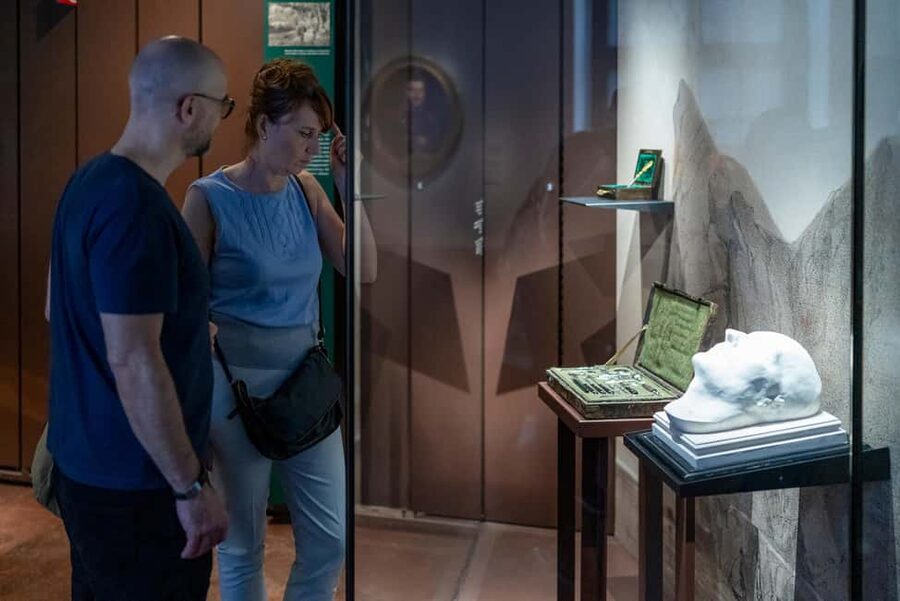
Ninety minutes is a useful length for a Paris itinerary. It is long enough to receive a proper introduction, see the key Napoleon displays, and visit the Dome Church without committing half a day. It also leaves room for lunch, another museum, or a walk through the Invalides area.
The same limit requires discipline. You will not receive a complete tour of every room, every war, or every period represented at the Musée de l’Armée. The guide must keep moving, and you should resist the urge to treat this as an open-ended museum visit.
I would choose this format if you want a strong first encounter with Napoleon. I would choose a longer or self-guided museum visit if you already have a serious interest in military collections and want time with individual objects.
The short duration may also suit families, first-time Paris visitors, and anyone planning several sights in one day. It gives you a clear story rather than leaving you to sort a large collection on your own.
Small group benefits and limits
The group limit is eight people or fewer. That is a meaningful difference in a museum where sound can carry poorly and large groups can block displays. You have a better chance of hearing the explanation, staying close to the guide, and asking a quick question.
It also makes the experience feel more personal. Several guides, including Alexandra, Quentin, Katia, and Tebow, have been praised for friendly presentation, clear English, and the ability to keep both adults and children involved. The names of the guides may vary by departure, but the small format remains the important point.
There is one limit to keep in mind. Small group does not mean private tour. You share the guide with other members of the party, and the exact pace depends on the group. Still, eight people is intimate by museum-tour standards.
The guide’s personality matters here. The strongest feedback centers on enthusiasm, insight, and an interactive style rather than on simple fact delivery. That is important in a subject with many dates, battles, and political changes. A lively explanation helps the story stay human.
Is $117 a fair price?
At $117 per person, this is not a budget museum visit. You are paying for reserved access, admission, and 90 minutes with an accredited English-speaking guide in a group of eight or fewer.
The value depends on how you use the time. If you would otherwise wander through the museum without knowing what to prioritize, the guide can save you from spending your limited Paris hours on displays that do not fit your interests. The route also adds meaning to the tomb, which is easy to admire but harder to understand without its political and personal story.
The price is less compelling if you only want to see the Dome Church and Napoleon’s sarcophagus. In that case, a self-guided visit may suit you better, provided you are happy to learn at your own pace.
I see the tour as a convenience purchase, not simply an admission ticket. You pay for a selected route, interpretation, and a small party. For a first visit, especially when your Paris schedule is tight, that can be reasonable value.
Who will enjoy this Invalides tour?
This experience fits you best if you want:
- A clear introduction to Napoleon’s life and legacy
- A guide to select the most important museum displays
- A short activity that fits into a busy day
- A small English-speaking group
- The story behind Napoleon’s exile and return to Paris
- A blend of military history, politics, architecture, and national memory
You do not need to be an expert in French history. The tour is designed as an accessible introduction, and the guide’s role is to explain the setting without assuming too much background.
It is less suitable if you want a leisurely museum study session, a private guide, or a complete tour of Les Invalides. Wheelchair users should also note that the experience is specifically listed as unsuitable for them.
History fans will get the most from the campaign material, but the tour is not limited to battle enthusiasts. The Dome Church, the symbolism of the tomb, and the story of Napoleon’s reputation give the visit wider appeal.
Practical details before you book
The tour is offered in English and lasts 90 minutes. Reserved access and entrance fees are included, so you do not need to arrange a separate museum ticket for the guided visit.
Meet outside Café de l’Esplanade. Do not go directly to the museum entrance. Find the guide wearing an orange lanyard with a guide badge.
Hotel pickup and drop-off are not included. You are responsible for reaching the meeting point and continuing on your own after the tour.
You can cancel up to 24 hours before departure for a full refund. A missed tour is not refundable. The reserve-now, pay-later option lets you hold a place without paying on the day of booking, which is useful when your Paris plans are still shifting.
Starting times vary, so check availability for your date. Since the tour is short and group numbers are limited, an early booking may be sensible during busy periods, though the activity itself does not require a full-day commitment.
Should you book it?
Book this tour if you want Napoleon’s story organized into a sharp, human-scale visit. The best reasons are the small group, the reserved entry, the guide’s interpretation, and the transition from campaign galleries to the solemn Dome Church.
Skip it if you already know Les Invalides well or want to spend hours examining the museum at your own speed. At $117, the cost is easiest to justify when you value expert explanation and have limited time.
For most first-time visitors interested in Napoleon, French history, or memorable Paris monuments, I would book it. You will not see everything, but you should leave knowing why the tomb matters and why Napoleon’s shadow still reaches far beyond the battlefield.
FAQ
How long does the Napoleon’s Tomb and Invalides tour last?
The guided tour lasts 90 minutes, or 1.5 hours.
What language is the tour conducted in?
The live tour guide speaks English.
How many people are in the group?
The group is limited to eight participants or fewer.
Is admission to Les Invalides included?
Yes. Entrance fees and reserved access are included with the guided tour.
Where do I meet the guide?
Meet outside Café de l’Esplanade. Do not go to the entrance of the Invalides Museum.
How will I identify the guide?
The guide will be wearing a guide badge on an orange lanyard.
Can wheelchair users join the tour?
No. The activity is listed as not suitable for wheelchair users.
Just listed in Paris
- Chartres Cathedral 5 Hours Tour from Paris with Private Transport★ 4.5 · 49 reviews
- Paris: Giverny & Versailles Small Group or Private Tour★ 4.5 · 49 reviews
- Paris: Louvre photoshoot or Seine bridges Eiffel Tower walk★ 5.0 · 49 reviews
- Private tour of the Champagne area, meet local producers and taste their Champagne, start from your hotel in Paris.★ 5.0 · 50 reviews
- Paris: Choux Pastry and Chocolate Éclair Making Class★ 4.9 · 50 reviews
- Paris Eternelle Notre-Dame Virtual Reality Tour★ 4.5 · 50 reviews
- Normandy D-Day Landing Beaches Private Day Trip from Paris★ 5.0 · 50 reviews
- Disneyland® Paris 1 Day with Round-Trip Train Tickets from Paris★ 4.0 · 50 reviews
Paris Tours, compared.



Versailles Palace and Gardens Full Access Ticket
Read our review →

Eiffel Tower Entry Ticket with Optional Summit Access
Read our review →

Louvre Guided Tour with Reserved Access & Boat Cruise
Read our review →