
Reviewed · PARIS TOURS
Paris: Small-Group Catacombs Tour with Skip-the-Line Entry
Beneath Paris’s grand boulevards sits a city of the dead: miles of old quarry tunnels lined with the bones of roughly six million people. This tour makes that unsettling world easier to understand, pairing the main catacomb route with access to restricted sections and stories you would likely miss on your own.
I like the six-person group, which lets your guide point out details such as signs of disease, the age and sex of the bones, and graffiti left by cataphiles. I also like the skip-the-line entry and the guides’ strong storytelling. Maria, Leo, Remi, Lavinia, Melvin, Michelle, and Angelo are all praised for making the history clear and lively.
The main drawback is the price: $227 per person for 90 minutes is a serious splurge. You also need to manage 133 steps down into the tunnels, narrow passageways, and the emotional weight of being surrounded by human remains.
Key Points
- Six-person maximum: A small group gives you room to ask questions and hear the guide clearly.
- 133-step descent: The experience begins with a steep staircase, so plan for a physical effort.
- Restricted areas: You see sections not included with ordinary public access.
- A 200-mile underground network: Learn how medieval quarrying helped build Paris before the tunnels became ossuaries.
- Stories beyond the bones: The tour covers the French Revolution, World War II, Philibert Aspairt, and modern cataphiles.
- English-language guiding: Guides such as Maria, Leo, Remi, and Michelle add personal stories and useful detail.
Entering the Catacombs at Avenue du Colonel Henri Rol-Tanguy
Your meeting point is in front of the main entrance at 1 Avenue du Colonel Henri Rol-Tanguy. Look for your guide holding a LivTours sign. The activity ends at the same location, and hotel pickup or drop-off is not included.
I would arrive early. One person noted that the sign was small and took a few minutes to spot. That is a minor issue, but a busy Paris street is not the place to search casually for a guide at the last second.
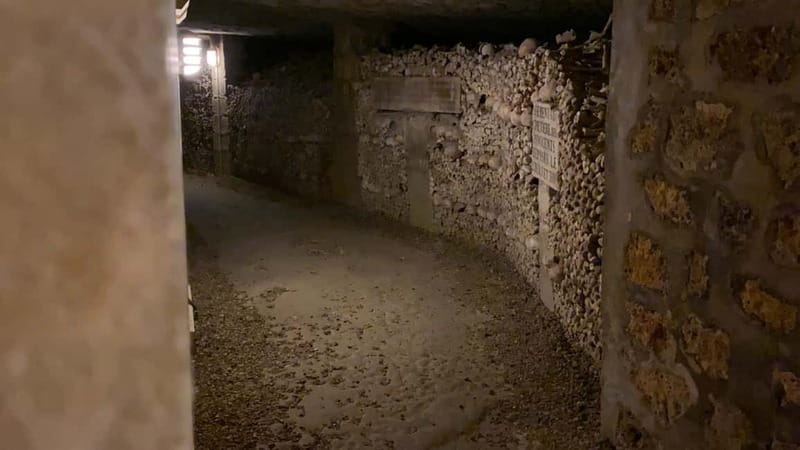
The entrance is near the House Veterans of the 2nd Armored Division. From there, the tour quickly shifts from ordinary Paris to the underground world below it. The contrast is part of the appeal. Above ground, you are surrounded by cafés, traffic, and grand city buildings. Below, the tone changes to stone, silence, and carefully stacked bones.
More skip-the-line tickets in Paris:
- Versailles: Skip-the-Line Tour of Palace with Gardens Access
★ 4.7 · 9,778 reviews - Versailles: Skip-the-Line Guided Palace Tour and Full Access
★ 4.6 · 5,214 reviews - Louvre Museum: Skip-the-Line Small Group Guided Tour
★ 4.6 · 3,960 reviews
The 133 Steps Down Into Paris
The first real challenge is the 133-step staircase. You go down into the complex rather than walking straight into the ossuary, so the descent gives the tour a physical beginning. It also makes the change from modern city to old quarry tunnels feel more complete.
The stairs may not be a problem for most reasonably mobile people, but they are worth taking seriously. One review specifically wished the steep steps had been made clearer in the booking information. If stairs are difficult for you, ask before booking rather than assuming the route will be easy.
Once underground, you follow narrow passages through the old quarry network. The full network runs for roughly 200 miles, although this tour does not cover anything close to that entire distance. The figure helps explain the scale of the world beneath Paris, while the guided route keeps the visit focused.
How Limestone Helped Build Paris
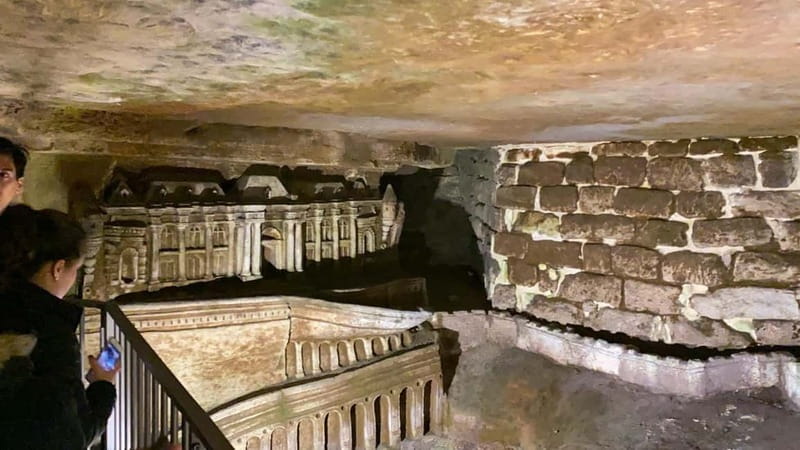
The catacombs began as working quarries. From the 13th century onward, limestone was cut from beneath the city and used in major construction projects, including buildings as grand as Notre Dame.
This background matters because the catacombs were not created as a spooky attraction. They began as practical infrastructure. The galleries, walls, and passages are evidence of the work that helped shape Paris above ground.
Your guide explains how quarrying left a maze under the city. In a self-guided visit, you can see the stone and read the signs, but it is harder to connect the tunnels with the streets and monuments overhead. A good guide helps turn plain rock walls into part of the story of Paris.
Why the Dead Were Moved Underground
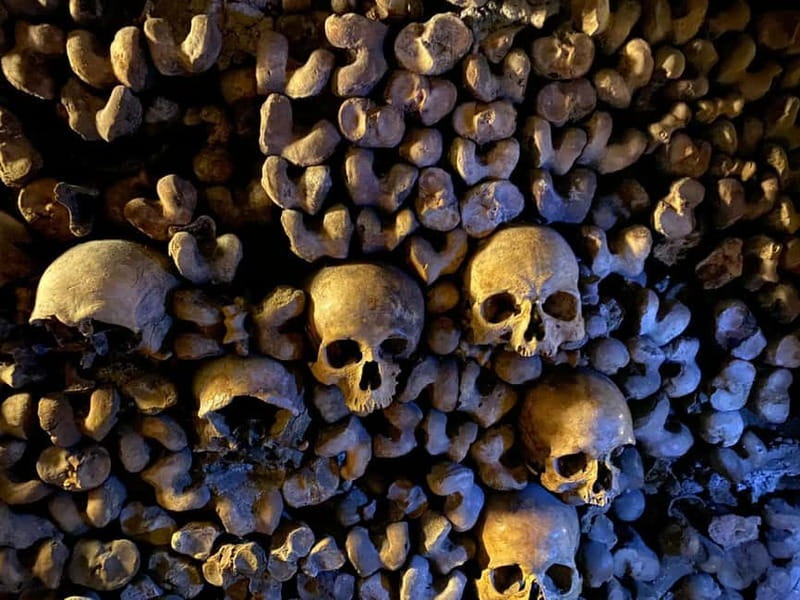
The ossuary took shape in the late 18th century, when problems at Paris cemeteries became impossible to ignore. Bad weather in the 1780s worsened conditions, and officials moved human remains into the former quarry tunnels.
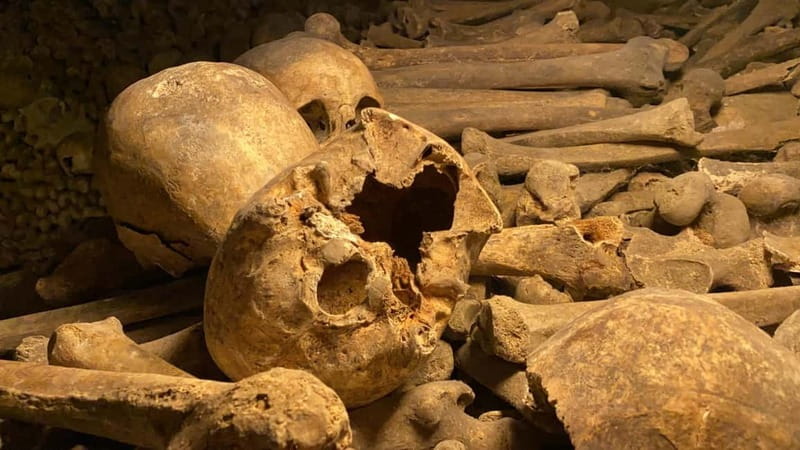
You will see the result in carefully arranged walls of bones. This is not a conventional cemetery visit. The remains were organized into patterns and displays, with workers using skulls and larger bones to create structured designs rather than leaving everything in random piles.
That arrangement can feel both artistic and disturbing. Religious symbols appear among the bones, along with designs such as hearts. The tour does not treat the subject as a cheap scare show. Its value comes from understanding why the remains are there and how Paris came to manage a serious public-health problem in such an unusual way.
A few other Paris half-days to compare
- Paris: Louvre Museum Timed-Entrance Ticket
★ 4.6 · 71,977 reviews - Disneyland® Paris 1-Day Ticket
★ 4.6 · 49,412 reviews - Paris: Versailles Palace and Gardens Full Access Ticket
★ 4.6 · 41,579 reviews - Paris: Evening River Cruise with Music
★ 4.4 · 22,721 reviews
The Bone Displays and the Crypt of the Passion
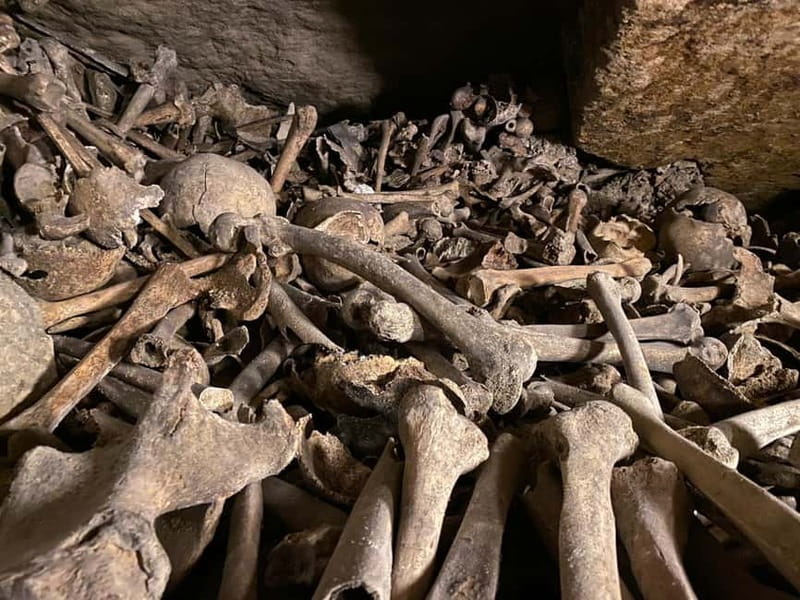
The most famous parts of the route contain rows of skulls and bones stacked with grim precision. You have time to stop and look, rather than simply pass through in a rush.
Ask your guide to explain what can and cannot be read from the remains. Leo, also known as Eleonore, has been praised for pointing out details related to age, sex, children, older people, and signs of disease. Those observations give the displays more human meaning, though they can also make the experience more emotionally difficult.
Inside the Crypt of the Passion, you see The Barrel, a structure made from skeletal remains. It is one of the catacombs’ most memorable decorations, and perhaps the display most likely to make you pause. The name sounds almost harmless until you see what forms it.
The bone decorations are not equally comfortable for everyone. Some people will find the religious designs and careful patterns fascinating. Others may feel that the arrangement turns real human remains into a spectacle. I would not book this tour for a lighthearted outing. It is macabre by nature, and you should be ready for that.
Restricted Areas Make the Small Group Worthwhile
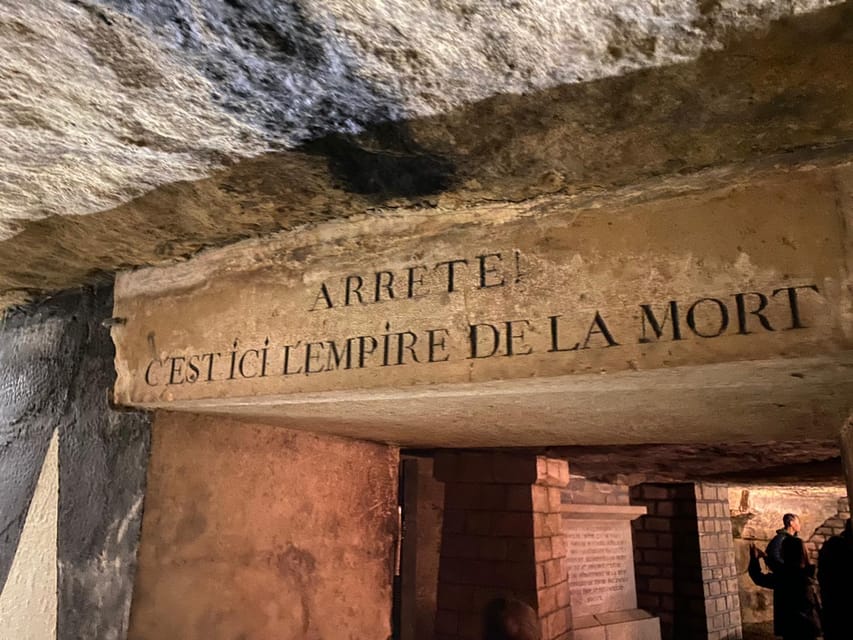
The best reason to choose this small-group option is the access beyond the standard route. The tour includes restricted areas that are not available to people making an ordinary visit.
The exact side areas can depend on operating conditions and the guide, so I would not expect a fixed list of rooms. What matters is that you get a chance to see more than the basic public path and hear why each section matters.
A six-person group helps here. Your guide can stop without creating a traffic jam, answer questions in a natural way, and keep the pace suited to the group. Several guides receive praise for making these side visits useful rather than simply adding extra walking.
The small group also improves the atmosphere. In a large crowd, the catacombs can become a line of people listening to a guide through a speaker. With six participants, you are more likely to hear the details and notice the small features your guide points out.
War, Revolution, and the Underground City
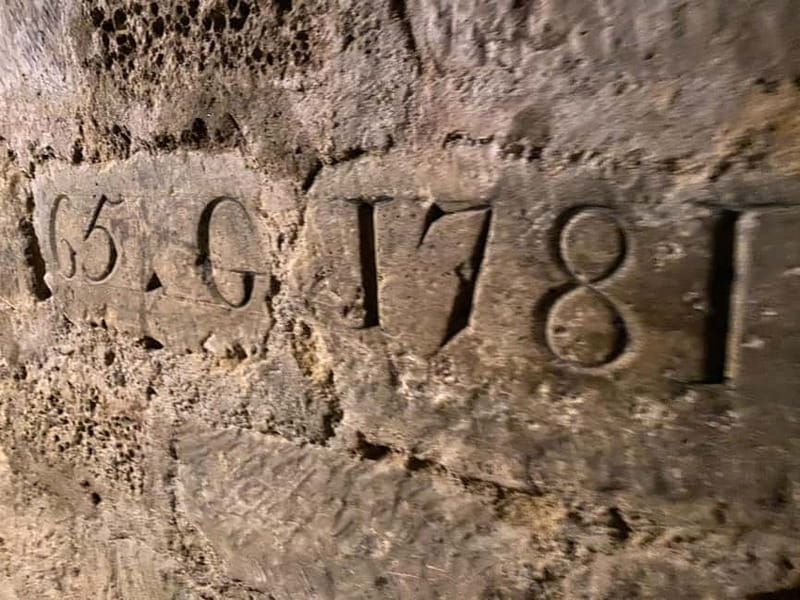
The catacombs connect to several major periods of Parisian history. Your guide discusses their relationship to the French Revolution and explains how parts of the network later served as wartime bunkers.
During World War II, both the German Wehrmacht and the French Resistance used sections of the catacombs. That gives the tunnels a second identity. They are not only a burial site or a former quarry. They also became a place for secrecy, shelter, and movement during a dangerous period.
This section of the tour adds useful historical range. Without it, the visit could become a long sequence of bone displays. The wartime stories show how underground Paris continued to matter long after quarrying ended and the ossuary was established.
The tour also introduces the cataphiles, people who explore the unauthorized tunnel network beneath Paris. Some have held raves and swimming parties underground, and graffiti remains as evidence of this modern subculture.
Your guide can help separate the legal public catacombs from the wider network used by cataphiles. That distinction is important. The official tour is controlled and guided, while unauthorized exploration can be dangerous and is not part of this activity.
The Story of Philibert Aspairt
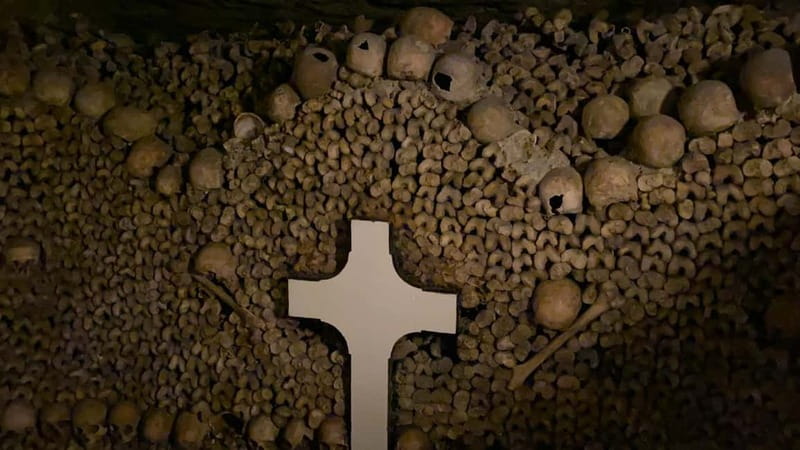
One of the catacombs’ most haunting stories concerns Philibert Aspairt, an 18th-century doorman who died underground. His grave is a reminder that the tunnels were not just an abstract maze. People entered them, became lost, and sometimes did not return.
Ask your guide about Aspairt if the story is not already included. The tale adds a human scale to the underground setting and gives you something specific to look for among the passages.
Stories like this are where a live guide earns the price of admission. You can walk past a marker without understanding why it matters. A guide can supply the setting, the context, and the details that make the stop stay with you.
The Guide Matters More Than Usual
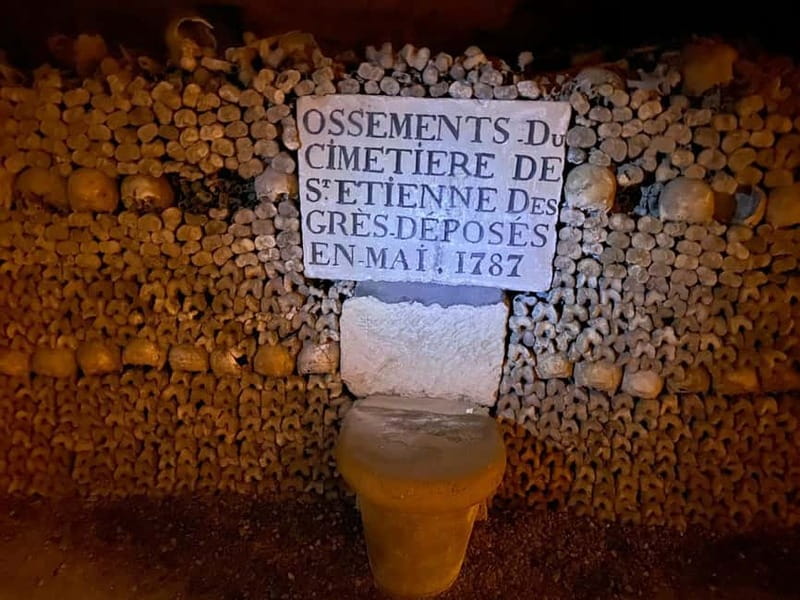
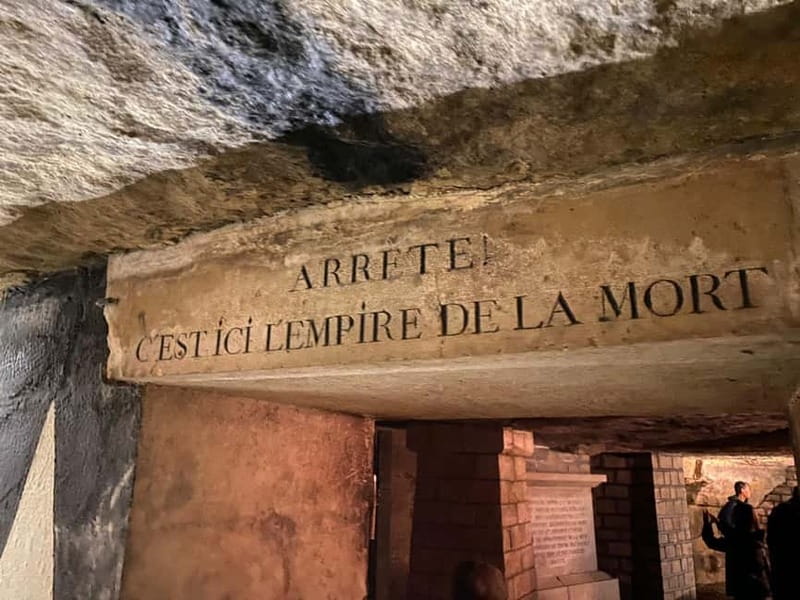
The catacombs are visually powerful, but their meaning is not always obvious. You see bones, stone, inscriptions, and narrow corridors. The guide turns those pieces into a connected story.
The strongest guide feedback centers on energy, clarity, and personal attention. Maria is praised for her enthusiasm, illustrations, and favorite stories. Leo is noted for careful observations about the bones and for explaining each restricted section. Remi is repeatedly praised for his history of Paris, good energy, and ability to tell stories without overloading the group.
Lavinia, Melvin, Michelle, and Angelo also receive warm praise for combining facts with humor and a friendly manner. Michelle is especially noted for keeping the tour informative and entertaining for a family with children aged 10 and 16. That suggests the experience can work for older children who are comfortable with death and human remains.
Guide quality can vary on any scheduled tour, so I would not book solely to request one specific person unless the operator confirms that option. Still, the repeated praise for the guiding style tells you what this experience is designed to provide: explanation, context, and stories rather than a silent walk through tunnels.
Is $227 Good Value for 90 Minutes?
At $227 per person, this is expensive. The tour lasts 1.5 hours, does not include food, drinks, or transportation, and ends where it begins. If you mainly want to see the public bone displays, the price may feel hard to justify.
The value improves if you care about three things: skip-the-line access, a six-person group, and restricted areas. The price pays for a more personal visit rather than a longer one. You are also paying for an English-speaking expert who can explain the quarry system, the ossuary, the wartime use, the cataphiles, and the darker stories.
I would compare it with the cost of a normal entry before booking. If your budget is tight, the regular option may be enough. If this is a once-in-a-lifetime Paris visit and the catacombs are high on your list, the extra cost buys comfort, context, and access that can make the 90 minutes far more satisfying.
The rating is 4.9 from 110 reviews, and the praise is unusually consistent about the guides and small group. That does not erase the high price, but it supports the idea that this is a premium guided experience rather than a basic admission ticket.
Who Should Book This Catacombs Tour?
I would choose this tour if you enjoy history with a dark edge, want to ask questions, and care about seeing parts of the site beyond the regular route. It is especially suitable for adults, older children, and teenagers who can handle discussions of death, bones, disease, war, and graves.
It may also suit you if you have limited time in Paris. The 90-minute duration is long enough for a focused visit without taking over an entire afternoon. Check the available starting times and build in time to reach the meeting point at Avenue du Colonel Henri Rol-Tanguy.
I would think twice if you dislike confined spaces, steep stairs, or displays of human remains. The tunnels are narrow, and the emotional effect can be strong. This is not a casual stop to squeeze between shopping and lunch.
The tour is conducted in English. The group is limited to six people, although the operator may occasionally make an exception to keep people traveling together from being split up.
Practical Details Before You Go
Wear something suitable for a steep descent and a walk through underground passages. The most important preparation is mental rather than technical: expect real human remains, not theatrical props.
Meet directly in front of the main entrance and look for the LivTours sign. Since the sign may be small, give yourself a few extra minutes to identify your guide.
You can cancel up to 24 hours before the activity for a full refund. You can also reserve now and pay later, which helps if your Paris schedule is still changing.
Should You Book It?
Book this tour if the catacombs are a priority and you want more than a basic walk past bones. The restricted access and six-person limit are the strongest reasons to pay the premium, while the guides add the history and human detail that make the tunnels meaningful.
Skip it if $227 feels excessive for 90 minutes or if stairs and skeletal displays are not your idea of a good Paris afternoon. For the right person, though, this is a focused, memorable look at a side of Paris that no grand boulevard can show you.
FAQ
Where does the Paris Catacombs tour start?
The tour starts in front of the main catacomb entrance at 1 Avenue du Colonel Henri Rol-Tanguy in Paris. Your guide will hold a LivTours sign.
Where does the tour end?
The activity ends back at the meeting point.
How long does the tour last?
The tour lasts 1.5 hours. Starting times depend on availability.
How many people are in the group?
The group is limited to six participants. On rare occasions, an exception may be made to keep people traveling together from being separated.
Is skip-the-line entry included?
Yes. The tour includes skip-the-line entry through a separate entrance.
Does the tour include access to restricted areas?
Yes. The experience includes exclusive access to areas that are not available to regular visitors.
What language is the tour conducted in?
The live tour guide speaks English.
Is hotel pickup included?
No. Hotel pickup and drop-off are not included. You meet the guide at the catacombs’ main entrance.
Can I cancel the tour for a refund?
Yes. You can cancel up to 24 hours in advance for a full refund. You can also reserve now and pay later.
Just listed in Paris
- Chartres Cathedral 5 Hours Tour from Paris with Private Transport★ 4.5 · 49 reviews
- Paris: Giverny & Versailles Small Group or Private Tour★ 4.5 · 49 reviews
- Paris: Louvre photoshoot or Seine bridges Eiffel Tower walk★ 5.0 · 49 reviews
- Paris: Choux Pastry and Chocolate Éclair Making Class★ 4.9 · 50 reviews
- Private tour of the Champagne area, meet local producers and taste their Champagne, start from your hotel in Paris.★ 5.0 · 50 reviews
- Paris Eternelle Notre-Dame Virtual Reality Tour★ 4.5 · 50 reviews
- Normandy D-Day Landing Beaches Private Day Trip from Paris★ 5.0 · 50 reviews
- Disneyland® Paris 1 Day with Round-Trip Train Tickets from Paris★ 4.0 · 50 reviews
Paris Tours, compared.



Versailles Palace and Gardens Full Access Ticket
Read our review →

Eiffel Tower Entry Ticket with Optional Summit Access
Read our review →

Louvre Guided Tour with Reserved Access & Boat Cruise
Read our review →
Moulin Rouge Cabaret Show Ticket with Champagne
Read our review →Browse the lists this tour appears in