
Reviewed · PARIS TOURS
Paris WW2 The German Occupation Small group or Private tour
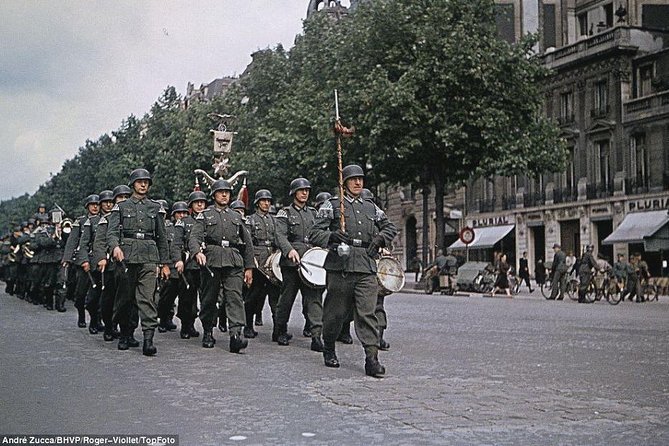
Paris during the German Occupation is not confined to a museum or a single memorial. It is written into grand hotels, ordinary doorways, bullet-scarred stone, and the broad avenues where German power and French resistance once collided. Chris Pollard leads this small-group walking tour through central Paris, using places as the stage for a complicated human story.
I like the flexible pace and the way Chris builds the tour around questions rather than racing through a fixed checklist. I also like the unusual stops, including the former Gestapo headquarters, the Ritz, the Jeu de Paume, and the first Allied spy network in France. The main consideration is simple: this is an outdoor tour lasting about three to three and a half hours, and Chris may spend longer on a subject if the group wants more detail.
Key points to know before booking
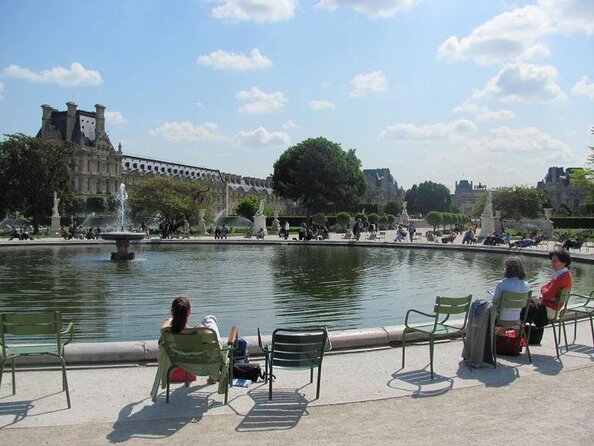
- Meet at Palais Royal, not the Tuileries: The correct meeting point is Place Colette, outside Palais Royal Metro Exit 5, opposite the Comédie-Française.
- Follow the Occupation through central Paris: The route usually links the Louvre, Rue de Rivoli, Place Vendôme, Rue Rouget de Lisle, the Jeu de Paume, and Place de la Concorde.
- Expect a flexible story, not a rigid route: Chris may adjust the stops, answer questions at length, and spend more time where the group’s interests lead.
- Small groups make discussion possible: Semi-private tours allow up to four separate booking groups, with a maximum of eight to ten people.
- The Holocaust is covered, but not in full depth: The general tour explains anti-Semitism, Vichy policy, and the road to the Final Solution. A separate private tour is recommended for a fuller Shoah-focused visit.
- Plan for several hours outside: Wear layers, bring water, and expect roughly two miles of walking on a private tour, according to one detailed description.
Starting at Palais Royal with the correct meeting point
The tour begins at Place Colette, by Palais Royal Metro Exit 5, opposite the Comédie-Française Theatre. This detail matters because the supplied online description elsewhere gives a different starting point at Tuileries Metro. Follow the Palais Royal meeting instructions instead.
From here, Chris begins with the political and military setting that shaped France before the German invasion. This opening is useful because the Occupation did not appear from nowhere. The tour looks at the forces that influenced French behavior, German goals, foreign interests, and the divisions that later shaped collaboration and resistance.
You are not simply shown a building and told what happened there. Chris uses the central Paris streets to explain why people made different choices under pressure. That may mean discussing an important headquarters, then moving to a modest doorway linked to secret work, before turning to a luxury hotel connected with German officers or French collaborators.
This approach gives the tour a human scale. The grand buildings matter, but so do the people who worked, hid, collaborated, resisted, profited, suffered, or tried to survive inside them.
A few other Paris half-days to compare
- Paris: Private Photoshoot at the Eiffel Tower
★ 4.7 · 2,636 reviews - Top Private Cruises in Paris with French Champagne and surprises
★ 5.0 · 1,553 reviews - Private Paris Airport Arrival Transfer – CDG & ORLY Airports
★ 4.5 · 1,119 reviews
The Louvre and Palais-Royal: power behind familiar facades
The area around the Louvre and Palais-Royal provides a strong first setting. You see the Louvre from outside and connect one of Paris’s best-known landmarks with the occupation of the city.
The point is not to enter the museum or spend time admiring its collections. Instead, the Louvre becomes part of a larger story about power, art, government, German control, and the use of Parisian institutions during the war.
Chris also introduces the first secret Gestapo headquarters in Paris and the headquarters of France’s largest collaborationist organization, the PPF. These locations help explain that the German presence was not only a military matter. It relied on administration, French political allies, police work, fear, and networks of information.
I find this part especially useful if you already know the broad outline of World War II but want to understand how occupation worked in daily life. You move through streets that look calm today while learning how control was organized within the city.
The route is not arranged like a museum exhibit, so you should not expect a perfectly chronological presentation. Chris may move between people, places, and events to answer a question or explain a wider cause. That can make the tour more rewarding for history-minded visitors, but it may feel less tidy if you prefer a short, strictly ordered account.
Rue de Rivoli and the Meurice: German command in the heart of Paris
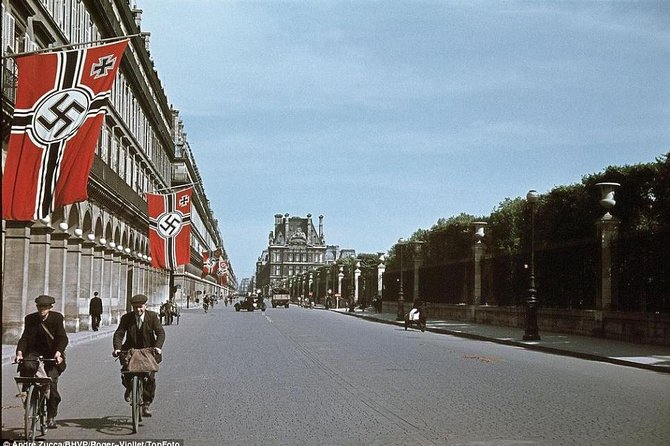
Rue de Rivoli and its surrounding streets contain some of the most important stops. The Hotel Meurice served as German Army headquarters for Paris, placing military authority in one of the city’s grandest buildings.
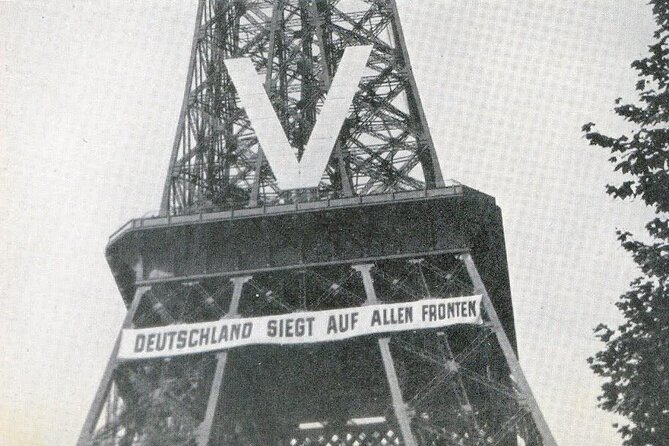
The contrast is striking. Parisian elegance continued on the surface, while occupation policy was directed from hotels and official buildings nearby. Chris uses these places to show how the German command operated and how the city’s famous public spaces became part of the machinery of occupation.
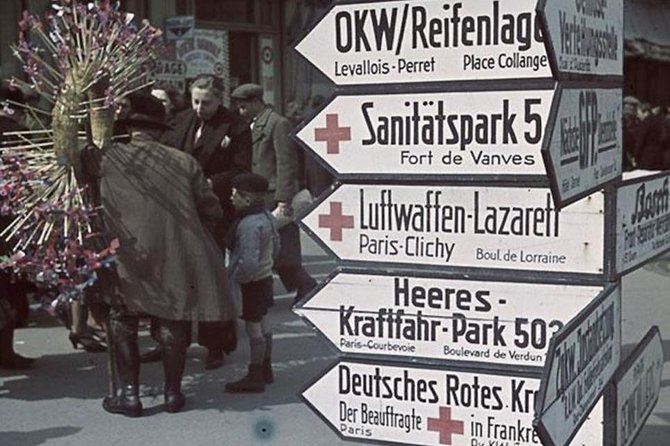
You’ll also hear about the Continental Hotel, another major hotel under German Army control. Hotels were not just places for visitors during this period. They could become offices, command centers, meeting places, and symbols of a new power structure imposed on the city.
A strength of the tour is the attention to competing French groups. The story does not treat the French population as one united block. It examines collaborationist movements, the developing resistance, official policy, and the difficult choices faced by ordinary people.
That wider view is one reason the tour suits people who want more than a list of dates. You’ll spend time considering motives and circumstances, not only identifying buildings.
Place Vendôme, the Ritz, and Coco Chanel
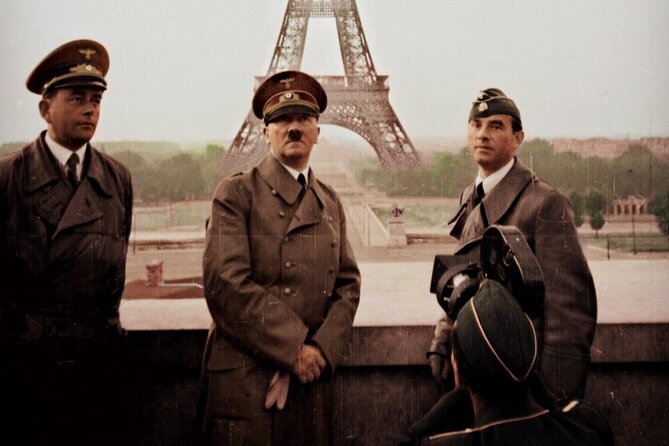
Place Vendôme brings the tour to one of Paris’s most famous addresses, the Ritz hotel. The stop connects the hotel with Coco Chanel, who lived there during the Occupation, as well as with German officials and anti-Nazi activity within the German military.
This is one of the more memorable parts of the walk because it shows how celebrity, luxury, politics, and war could occupy the same few blocks. The Ritz was not separate from the wider events of the city. Its rooms and residents formed part of the social world in which German officers, French figures, and opponents of Nazism crossed paths.
Chris also explains how the Final Solution was introduced in France. That subject requires care, and the tour places it within the political and social conditions of occupied France rather than treating it as an isolated event.
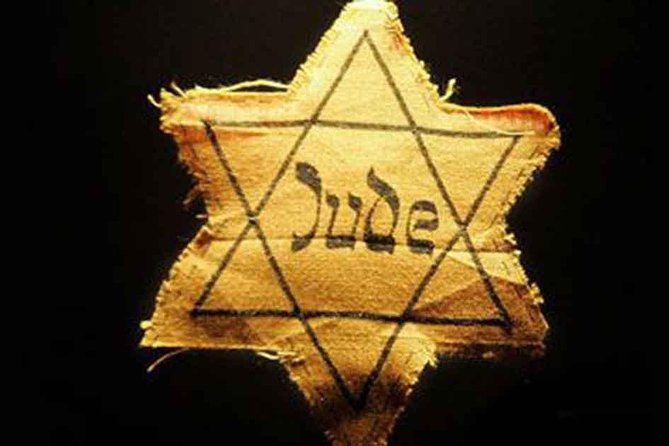
The general tour does not claim to cover the Holocaust in full. It discusses anti-Semitism, the conditions faced by Jewish people in Paris and occupied France, the role of the Vichy government, and Jewish participation in resistance. If this is your main reason for booking, contact Chris about a private Shoah-focused tour. A few stops within a broader Occupation walk cannot give that subject the attention it deserves.
Same city, a completely different afternoon:
- Paris: Louvre Museum Timed-Entrance Ticket
★ 4.6 · 71,977 reviews - Disneyland® Paris 1-Day Ticket
★ 4.6 · 49,412 reviews - Paris: Versailles Palace and Gardens Full Access Ticket
★ 4.6 · 41,579 reviews - Paris: Evening River Cruise with Music
★ 4.4 · 22,721 reviews
Secret networks on Rue Rouget de Lisle
Rue Rouget de Lisle is tied to the beginnings of the organized French resistance in October 1940. The tour also visits the former Société Maurice Duclos, described as the secret location of France’s first Allied spy network and radio operation.
These stops are valuable because resistance history can easily become too simple. It is tempting to imagine one united underground movement operating from the beginning, but the reality involved different groups, uneven coordination, changing goals, and serious personal risk.
Chris explains how resistance developed as the occupation continued and as more people understood that German control would not quickly end. The route gives you a sense of how early resistance work could begin in places that looked entirely ordinary.
This is also where the small-group format earns its keep. With no more than ten people, you can ask about different resistance organizations or the difference between intelligence work, propaganda, sabotage, and armed action. The presentation is not a memorized script delivered at speed. Chris prepares his material, brings visual aids and photographs on some tours, and adjusts the explanation to the group’s interests.
Jeu de Paume and Nazi art looting
The Jeu de Paume Museum is one of the tour’s most unusual locations. During the Occupation, the Nazis used it to store, process, and organize stolen artworks before sending them to Germany.
You may pass the building without realizing how central it was to the looting of Jewish-owned art. That makes this stop especially effective. It links a familiar cultural setting with the economic theft and persecution carried out under Nazi rule.
The art story also broadens the tour beyond military events. Occupation involved property, status, money, culture, and the deliberate stripping of families and communities of their possessions. Chris uses the site to show how these policies worked and who benefited from them.
The museum is treated as an exterior stop, not a museum visit. You should book this tour for the explanation and location-based storytelling, not for indoor gallery time.
Cafés, cinemas, and the daily life of occupied Paris
The route includes cafés and cinemas that German forces took over, including the famous Maxim’s. These places help you picture occupation as part of ordinary city life rather than something happening only in military offices.
A café or cinema could become a place where power was displayed, information circulated, or different groups met under the watch of the authorities. The tour asks you to consider what it meant to live in a city where familiar pleasures continued, but under very different conditions.
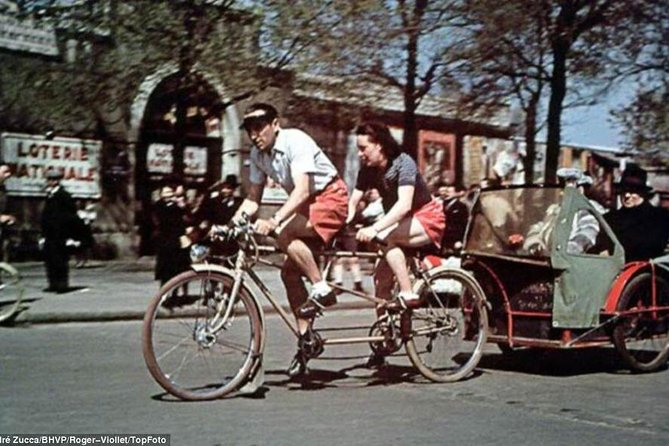
This section is also a useful counterweight to the grand headquarters and hotels. Paris was not only a city of officials and resistance leaders. Most people were trying to obtain food, work, news, and safety while adapting to rules they had not chosen.
Chris’s style is detailed and conversational. If you ask a question about a person or event, the answer may lead into politics, economics, or social divisions before returning to the building in front of you. I like that method because it explains causes, but you should know that it can make the walking time less predictable.
Place de la Concorde and the Liberation
The tour usually ends around Place de la Concorde after roughly three to three and a half hours. This vast square was originally Place Louis XV, and its long history includes the executions of Louis XVI and Marie Antoinette during the French Revolution.
During World War II, the square and its surrounding buildings took on new roles. The Naval Ministry and Hotel Crillon served as important German headquarters. The Grand Palais, one of Paris’s largest freestanding buildings, was destroyed during the Occupation and Liberation, making it the only building in Paris identified on this tour as destroyed during the war.
You’ll also look for bullet holes and less obvious scars from the fighting for the Liberation of Paris. The obelisk from Luxor provides a familiar landmark, but Chris uses the square to point out details connected to the war that you might otherwise miss.
Ending here works well. Place de la Concorde brings together French political history, German command, fighting in the streets, and the visual evidence left behind. It also gives you a clear sense of how much of the tour has taken place within a small part of central Paris.
The general tour ends near Place de la Concorde. It does not normally continue to the Shoah Memorial or finish in the Marais. A Marais and Holocaust-focused route is available by request as a private tour.
How Chris Pollard teaches the subject
Chris Pollard’s main strength is his command of detail and his willingness to explain the difficult parts. He connects military decisions with French politics, German policy, social pressure, economics, and later debates about France’s wartime past.
He also uses photographs, books, and other visual material on some tours. These aids can make unfamiliar figures and events easier to follow, especially when several political or resistance groups are involved.
The tone is serious, but not stiff. Chris asks questions of the group and encourages discussion. Teenagers have been able to stay involved on private tours, and adults with a strong background in history have still found new material to consider.
The tradeoff is organization. The tour has no totally fixed generic itinerary, and Chris may spend extra time on a subject that interests the group. If you want a brisk walk with ten quick stops, this may test your patience. If you want a detailed conversation and are happy to let the story breathe, the loose structure is a benefit.
Price, group size, and physical demands
At $108.84 per person, the price is reasonable for a three to four-hour history tour with a maximum of ten people, especially if you value access to a specialist guide rather than a standard city walk. The best value comes when you ask questions and take part in the discussion.
Semi-private bookings are limited to four separate groups per tour, with eight to ten people maximum. Fully private tours offer a personalized itinerary, flexible start times, and flexible meeting points. Private bookings make the most sense if you want to focus on the Resistance, the Shoah, the Liberation, Chanel, art looting, or another specific theme.
You’ll be on your feet for much of the tour. One private-tour description puts the distance at about two miles over four hours, and it advises dressing in layers and bringing water. Breaks can be discussed, but sitting down or stopping for a café will use some of your available tour time.
All small-group tours require at least four people to run. Bookings made less than two weeks ahead may be accepted only when the minimum has already been reached or enough people are likely to join. The guide can cancel if numbers fall below the minimum, sometimes because of late cancellations, so keep an eye on your messages before the date.
Free cancellation is available up to 24 hours before the start time. Poor weather can also lead to a new date or full refund.
Who should book this Paris Occupation tour?
I recommend it to history enthusiasts, World War II readers, people visiting Normandy, and anyone who wants to understand French choices during the war rather than repeat a simple story of heroes and villains.
It is also a good fit for families with older teenagers if they enjoy discussion. The private format is the better choice for families with a precise interest or for anyone who wants to control the pace.
I would not choose it if you want indoor sightseeing, a short orientation walk, or a strictly timed route. You should also avoid booking the general tour if your main aim is an extended Holocaust memorial visit. Ask about the private Shoah route instead.
Should you book it?
Book this tour if you want central Paris to become a working history lesson. Chris Pollard brings together places that range from the Ritz and the Meurice to a secret radio site and bullet marks at Place de la Concorde, then explains how they fit into the lives of people under occupation.
The best way to enjoy it is to arrive prepared for a long outdoor conversation. Wear comfortable shoes, bring water, tell Chris what interests you, and accept that the route may change as questions develop. For a quick checklist of landmarks, choose another walk. For a serious, personal look at Occupied Paris, this is a strong choice.
FAQ
Where does the tour meet?
Meet at Place Colette, outside Palais Royal Metro Exit 5, opposite the Comédie-Française Theatre.
Where does the general tour end?
The general tour usually ends around Place de la Concorde.
Does the general tour visit the Shoah Memorial?
No. The general tour discusses anti-Semitism, the Vichy government, Jewish life, and resistance, but it does not normally visit the Shoah Memorial. A private Holocaust-focused tour can be requested.
How long does the tour last?
The tour generally lasts about three to three and a half hours, though the wider activity description gives an approximate duration of three to four hours.
How many people can join?
The maximum is ten people. Semi-private bookings are limited to four separate groups, with approximately eight to ten people in total.
Is the route fixed?
No. The guide adjusts the sites and timing according to the group’s questions and interests.
What places may be included?
Possible stops include the Louvre exterior, Palais-Royal, Rue de Rivoli, the Meurice, Place Vendôme and the Ritz, Société Maurice Duclos, Rue Rouget de Lisle, the Continental Hotel, Jeu de Paume, and Place de la Concorde.
Is a private tour available?
Yes. Private tours can include a personalized itinerary, flexible start times, and flexible meeting points.
Is there a minimum number of people?
Yes. All small-group tours require a minimum of four people to run.
What happens if the tour is canceled?
If the guide cancels because the minimum is not met or because of poor weather, you can receive a different date or a full refund. You can also cancel for a full refund up to 24 hours before the start time.
Just listed in Paris
- Paris: Giverny & Versailles Small Group or Private Tour★ 4.5 · 49 reviews
- Chartres Cathedral 5 Hours Tour from Paris with Private Transport★ 4.5 · 49 reviews
- Paris: Louvre photoshoot or Seine bridges Eiffel Tower walk★ 5.0 · 49 reviews
- Paris: Choux Pastry and Chocolate Éclair Making Class★ 4.9 · 50 reviews
- Private tour of the Champagne area, meet local producers and taste their Champagne, start from your hotel in Paris.★ 5.0 · 50 reviews
- Paris Eternelle Notre-Dame Virtual Reality Tour★ 4.5 · 50 reviews
- Normandy D-Day Landing Beaches Private Day Trip from Paris★ 5.0 · 50 reviews
- Disneyland® Paris 1 Day with Round-Trip Train Tickets from Paris★ 4.0 · 50 reviews
Paris Tours, compared.



Versailles Palace and Gardens Full Access Ticket
Read our review →

Eiffel Tower Entry Ticket with Optional Summit Access
Read our review →

Louvre Guided Tour with Reserved Access & Boat Cruise
Read our review →