
Reviewed · PARIS TOURS
Stade de France: Behind the Scenes Tour
The Stade de France tour takes you into the parts of the stadium most ticket holders never see: the players’ locker rooms, private boxes, underground passages, and the tunnel leading toward the field. You’ll hear how this huge venue has hosted football, rugby, concerts, and Paris Olympic events.
I like the tour’s wide range of access, from ordinary spectator seats to the presidential suite. I also like that the museum visit is included, giving you signed shirts, guitars, models, and French football and rugby memorabilia after the guided walk.
The main catch is important: the pitch is currently not visible, including during the winter period. You also need to arrive 15 minutes early, since latecomers may miss the tour without a refund or rescheduling.
Key points at a glance
- Walk through the players’ tunnel: Follow the same route used by athletes heading toward the field.
- See the private side of the stadium: Visit locker rooms, elite boxes, spectator seats, and areas below the stands.
- Learn more than football facts: The tour covers rugby, major concerts, Olympic events, and the building itself.
- Finish with museum access: Browse signed jerseys, autographed guitars, models, and historical archives at your own pace.
- Plan for a 1.2-kilometer walk: Comfortable shoes will make the visit easier.
- Check the language carefully: English is offered, but tour content can change, so confirm your selected time and language.
Why Stade de France is worth seeing beyond a match
The Stade de France is not simply a large bowl of seats. Its appeal comes from the machinery of major events, the spaces hidden beneath and behind the stands, and the question of how a national stadium works when thousands of people arrive for one night.
That makes this a useful choice if you have no match ticket. You get a sense of the venue as an operating building rather than only as a backdrop for a game. The guide explains its architecture and history while leading you through spaces usually reserved for athletes, officials, performers, and important guests.
The sports connection is strong. You’ll hear about football stars such as Ronaldo and Zidane, along with FIFA World Cup and Euro Cup matches. Rugby also gets attention, which matters in France, where the sport has a serious following and a long national tradition.
The stadium’s concert life adds another layer. AC/DC, Madonna, and The Rolling Stones are among the major acts linked to the venue. The result is a tour that works for music fans as well as football and rugby supporters.
I would not book this expecting a museum-only visit or a standard stadium photo stop. The appeal is the route through working spaces and the stories attached to them. You walk, pause, look around, and imagine the rush of a match or concert day.
A few other Paris half-days to compare
- Paris: Louvre Museum Timed-Entrance Ticket
★ 4.6 · 71,977 reviews - Disneyland® Paris 1-Day Ticket
★ 4.6 · 49,412 reviews - Paris: Versailles Palace and Gardens Full Access Ticket
★ 4.6 · 41,579 reviews
Starting at the Official Shop in Saint-Denis
Your meeting point is the Stade de France Official Shop at the stadium in Saint-Denis. The address is Stade de France, 93200 Saint-Denis, France, and the venue is near public transportation.
Give yourself extra time. Security checks can include an inspection of your bag, and the operator asks you to arrive 15 minutes before the scheduled start. This is not a place to cut things close. The tour begins on time, and late arrival can mean missing the entire visit with no refund or replacement time.
The group can include up to 20 people. That is large enough to have energy, but still small enough for a guide to keep the group moving through the various areas. Since you’ll cover about 1.2 kilometers inside the stadium, wear shoes suited to walking rather than treating this as a quick indoor viewing.
Transfers are not included, so you’ll need to reach Saint-Denis yourself. The proximity to public transportation helps, but one unpleasant transport problem can ruin the schedule. Check your route before leaving, allow a buffer, and pay attention to the correct stadium stop and exit.
From spectator seats to private boxes
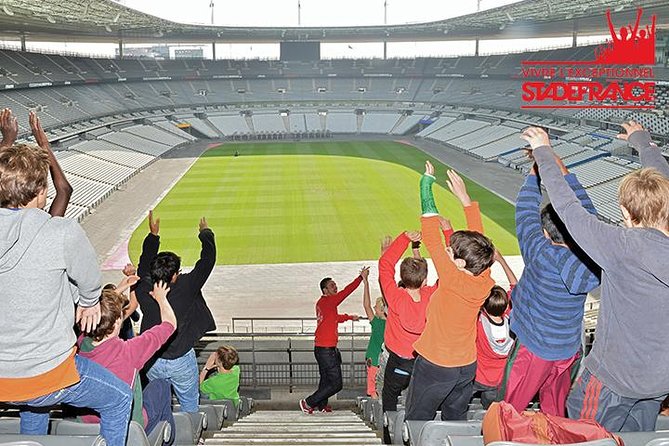
The guided route begins by showing you the stadium from the public side. Sitting in the spectator seats gives you a sense of the scale, something that is hard to grasp from an exterior view.
From there, the tour shifts toward areas with a different purpose. You visit elite private boxes and the presidential suite, spaces designed for important guests rather than ordinary ticket holders. This contrast is one of the most effective parts of the experience: first you see where the crowd sits, then you see how officials and high-profile guests watch the same event.
The guide also explains the stadium’s design and construction history. I find this more useful than a string of dates because the building’s size becomes easier to understand when you see how its public and private zones connect.
The stadium has its own world below the stands. You may pass through corridors and lower-level areas that help show how much space is needed to support major matches and concerts. These passages are not glamorous, but they give the tour its behind-the-scenes character.
Locker rooms and the players’ route

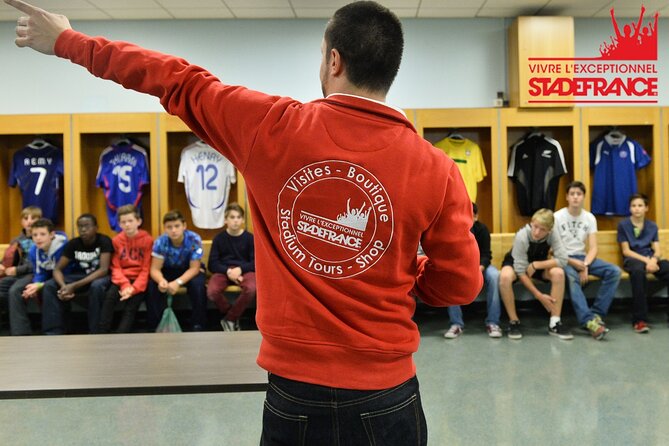
The locker room visit is likely to be the highlight for sports fans. You can see the rooms where teams prepare before taking the field, then follow the route toward the pitch.
The players’ tunnel is especially effective. Walking through it gives you a short, physical connection to the pre-match routine. You are not merely looking at a photograph of famous athletes. You are following the same path they use on the way out, even though current restrictions prevent you from seeing the pitch itself.
Guides often make this portion active and playful. One guide used a Brazilian-style training exercise, which added a bit of fun for children and adults. Another guide was praised for taking group photos and keeping young children involved. Those details matter because a stadium tour can become dry if it is only a list of rooms and dates.
The quality of the guide has a big effect here. Strong guides explain the spaces, answer questions, tell anecdotes about stars, and keep the group moving without rushing. The tour has been praised for guides who were lively, funny, and comfortable with children.
Language deserves a careful note. The experience is offered in English, but a booking at an English time was reportedly conducted in French. If English is essential for you, confirm the language at booking and check with staff at the meeting point before the tour begins.
Same city, a completely different afternoon:
- Paris: Evening River Cruise with Music
★ 4.4 · 22,721 reviews - Paris: Eiffel Tower Entry Ticket with Optional Summit Access
★ 4.4 · 20,035 reviews - Paris: Eiffel Tower Summit or Second Floor Access
★ 4.3 · 17,248 reviews - Paris: Louvre Guided Tour with Reserved Access & Boat Cruise
★ 4.3 · 16,353 reviews
The pitch restriction changes the experience
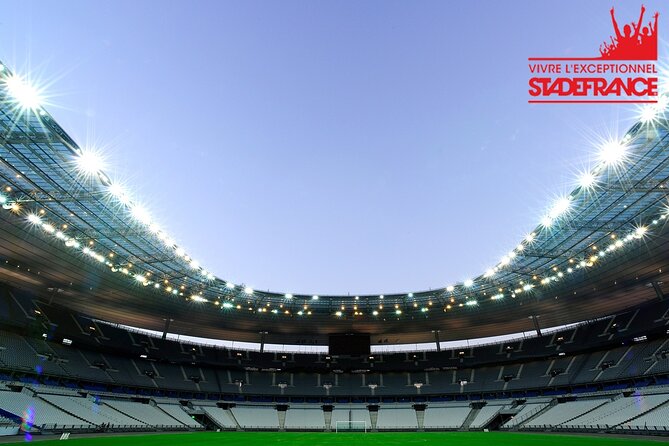
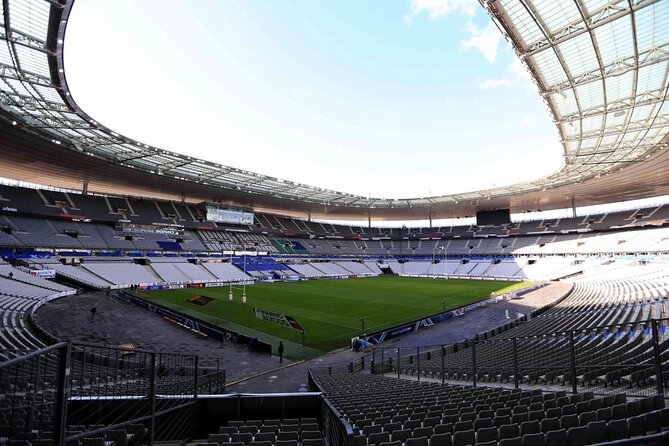
The most important current limitation is the pitch. The stadium’s pitch cannot currently be seen for technical reasons, and the winter period also prevents access or a clear view.
This changes the tour in a meaningful way. Many people book a stadium visit hoping to stand beside the grass or take a classic field-level photograph. You should not count on that here. The players’ tunnel and lower areas still provide a strong sense of the match-day route, but they do not replace access to the pitch.
The restriction may be temporary, and stadium access can change according to events and security requirements on the day. That means the route is not completely fixed. A match, concert, Olympic-related activity, or another major event can alter which areas are open.
I would treat the pitch as an unavailable extra, not as the reason to book. If the locker rooms, tunnel, private boxes, museum, and stadium stories appeal to you, the tour still offers plenty. If standing on the field is your main goal, wait until access is confirmed.
The museum adds real value after the walk
After the guided portion, you can visit the Stade de France Museum at no extra charge. This is a good way to finish because you can browse at your own pace rather than staying with the group.
The displays cover French football and rugby history. You’ll find signed jerseys, autographed guitars, models, and historical archives. The guitars help connect the museum to the stadium’s concert past, while the sports items reinforce its role in French national athletics.
The museum is not presented as a replacement for the guided tour. It works better as a second layer. The guide gives you context while you walk through the building, then the exhibits let you look more closely at objects tied to the teams, performers, and events associated with the venue.
If you are visiting with children, this flexible ending is helpful. They can spend more time with the displays that catch their attention, while adults can read the archives and examine the memorabilia. The museum also gives you a little breathing room after the 90-minute walk.
How much time and energy to allow
The advertised duration is about 1 hour and 30 minutes. That is a sensible length for a stadium visit. It is long enough to cover several restricted areas, but short enough to fit into a day of sightseeing in Paris.
Do not confuse 90 minutes with a light stroll. The route covers roughly 1.2 kilometers, and you may spend much of that time moving between different levels and sections of the stadium. Strollers are accepted, and disabled access is included, but the exact route can change because of security or event conditions.
Multiple tour times make it easier to fit the visit around other plans. Still, Saint-Denis is not the sort of place where you should arrive seconds before your entry time. Add time for public transportation, finding the Official Shop, and the bag check.
The tour ends back at the meeting point. Transfers are not included, and personal expenses and tips are also outside the price.
Is the $22.64 price good value?
At about $22.64 per person, the tour is reasonably priced for a 90-minute guided visit that includes museum admission. The value comes from access, not from the length alone. You are paying to enter locker rooms, private viewing areas, the players’ route, and parts of the stadium that a normal ticket holder would never see.
The museum strengthens the deal. If you visited only the exhibits, the experience would feel smaller. Combined with the guided route, it gives you both the building and the objects connected to it.
The price is easier to justify for football, rugby, and music fans. It is also a good option for families because the guide-led route can hold children’s attention better than a quiet museum visit. One parent can enjoy the sporting stories while children look at the famous spaces and take photographs.
The value is less clear if you are already planning to visit another football stadium in Paris. Stade de France is not the PSG stadium, and one disappointed group had expected the Paris Saint-Germain venue instead. Check the stadium name carefully before booking. These are different experiences in different places.
Who will enjoy this tour most?
I would recommend it first to sports fans who want more than a seat in the stands. The locker rooms, tunnel, private boxes, and stories about Ronaldo and Zidane give the visit a clear sporting focus.
It also suits music fans. The connections to AC/DC, Madonna, and The Rolling Stones show how the stadium changes when a concert replaces a match. You get a better sense of the venue’s range than you would from a football-only presentation.
Families should also consider it. Guides have been praised for including children, using humor, helping with photographs, and adding interactive moments. The visit is short enough for most children, though the walking distance and security rules still require some planning.
You do not need to be a serious sports follower. The architecture, concert history, Olympic events, private suites, and hidden corridors give nonfans plenty to notice. I would skip it only if you strongly want field access, dislike guided groups, or have no interest in how a major stadium operates.
Practical booking advice before you commit
Choose an English departure carefully and confirm the language if your party depends on it. The experience is listed as offered in English, but the language used can vary in practice.
Arrive 15 minutes early with time for security. Keep your bag simple, since the stadium administration can inspect its contents. Dogs are not allowed, except for guide dogs for blind people.
The tour can be affected by events and security rules on the day. Do not build a tight plan around a particular room or route. The pitch is currently off limits, and other areas could also change if the stadium is preparing for an event.
Free cancellation is available up to 24 hours before the start time for a full refund. Changes or cancellations made inside that window are not accepted, so keep your plans firm once the deadline passes.
Should you book the Stade de France tour?
Book it if you want the stadium’s private side: locker rooms, private boxes, underground routes, and the players’ tunnel, followed by a museum visit filled with sports and concert memorabilia. The guides can make the experience lively, especially for families, and the $22.64 price is fair for the access included.
Think twice if the pitch is essential, or if you meant to visit the PSG stadium. At present, you cannot count on seeing the grass, and the route can change for technical, winter, or security reasons.
For most sports fans and curious Paris visitors, this is a practical way to see a major venue from the inside. Just arrive early, verify the language, check your transport route, and book it for the stories and restricted areas rather than for a field-level photograph.
FAQ
Where does the Stade de France tour start?
The tour starts at the Stade de France Official Shop, at Stade de France, 93200 Saint-Denis, France.
Where does the tour end?
The activity ends back at the meeting point.
How long does the tour last?
The tour lasts approximately 1 hour and 30 minutes.
What is included in the ticket?
The ticket includes a professional guide, access to the behind-the-scenes tour, disabled access, and a free visit to the Stade de France Museum.
Is the museum visit included?
Yes. Admission to the Stade de France Museum is included, and you can visit it after the guided tour at your own pace.
Can I see the pitch?
The pitch is currently not visible for technical reasons. During the winter period, the pitch will not be visible either.
How much walking is involved?
The tour covers about 1.2 kilometers inside the stadium.
Are strollers and dogs allowed?
Strollers are accepted. Dogs are forbidden, except for guide dogs for blind people.
What happens if I arrive late?
You should arrive 15 minutes before the scheduled start because security checks may take time. The tour begins as scheduled, and latecomers risk missing it without a refund or postponement.
Just listed in Paris
- Paris: Giverny & Versailles Small Group or Private Tour★ 4.5 · 49 reviews
- Chartres Cathedral 5 Hours Tour from Paris with Private Transport★ 4.5 · 49 reviews
- Paris: Louvre photoshoot or Seine bridges Eiffel Tower walk★ 5.0 · 49 reviews
- Paris: Choux Pastry and Chocolate Éclair Making Class★ 4.9 · 50 reviews
- Private tour of the Champagne area, meet local producers and taste their Champagne, start from your hotel in Paris.★ 5.0 · 50 reviews
- Paris Eternelle Notre-Dame Virtual Reality Tour★ 4.5 · 50 reviews
- Normandy D-Day Landing Beaches Private Day Trip from Paris★ 5.0 · 50 reviews
- Disneyland® Paris 1 Day with Round-Trip Train Tickets from Paris★ 4.0 · 50 reviews
Paris Tours, compared.



Versailles Palace and Gardens Full Access Ticket
Read our review →

Eiffel Tower Entry Ticket with Optional Summit Access
Read our review →

Louvre Guided Tour with Reserved Access & Boat Cruise
Read our review →