
Reviewed · AVIGNON TOURS
Truffle Hunting in Provence
Black truffles are not picked from a neat garden row. They grow underground beneath oak trees, and the only way to find them is with a trained nose. At Les Pastras near Cadenet, you learn how this costly fungus is farmed, watch three dogs search the soil, and help uncover the so-called black gold of Provence.
I like the small group of up to 14 and the clear three-part rhythm: an outdoor lesson, a real search with the dogs, and a generous tasting. I also like that host Johann explains how to judge fresh truffles and avoid artificial truffle products. The main consideration is the setting: you need to reach a rural meeting point, and the farm can be tricky to find without allowing extra time.
Key points at a glance
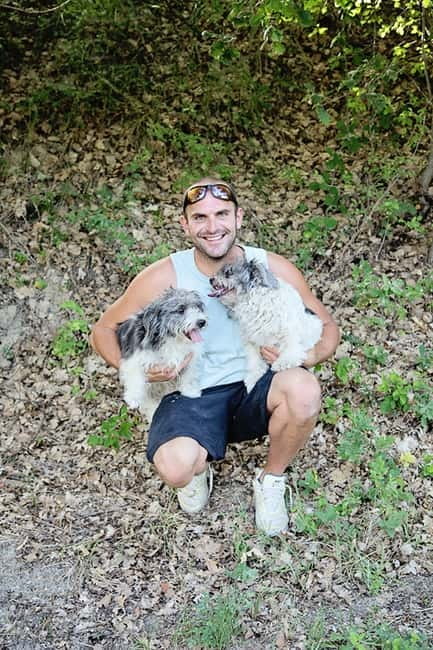
- Three dogs lead the hunt: Watch Mirabel, Caramel, and Eclair work beneath the oak trees.
- Johann makes the subject lively: The English-speaking host combines practical instruction with plenty of humor.
- The tasting goes well beyond one bite: Try three truffle hors d’oeuvres, truffle ice cream with honey, and several infused products.
- You learn useful kitchen skills: Find out how to clean, store, and prepare fresh truffles.
- Champagne is part of the tasting: It is served throughout the final food session.
- Plan around the seasons: Tours run on weekdays in November through March and May through September, except public holidays.
Why this Provence truffle hunt is more than a food tasting
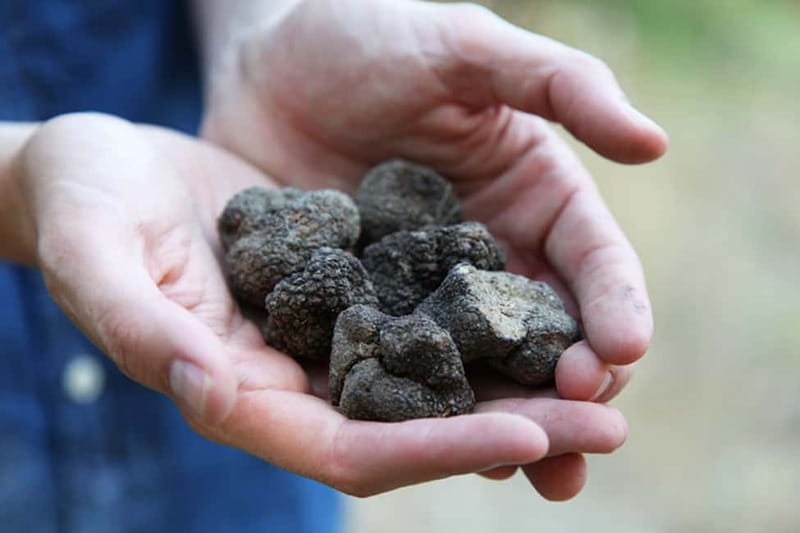
The best part of this outing is the connection between the field and the plate. You do not simply receive a shaving of truffle at a restaurant and wonder why it costs so much. You see the trees, hear how the farm works, watch the dogs locate the fungus, and then taste the result in several forms.
That order matters. Truffles are mysterious to most diners because the valuable part stays underground. Here, the process becomes easier to understand. You learn that cultivation takes years, that harvest timing matters, and that dogs can identify a ripe truffle by scent.
I especially like the practical advice built into the experience. Johann explains what to look for when ordering truffles in a restaurant, how to recognize fresh ones, and how to spot products that rely on artificial flavoring. That information can save you from buying an expensive jar of oil that tastes nothing like the real thing.
This is also an easy way to add a food-focused outing to a Provence trip. The tour lasts about three hours, so it fits more comfortably into a day than a full winery visit or cooking course. Still, it is not a quick roadside stop. The outdoor portion requires walking around the property, and the weather can affect the operation.
A few other Avignon half-days to compare
- Provence Highlights Full-Day Tour from Avignon
★ 5.0 · 499 reviews - Chateauneuf du Pape wine tour
★ 5.0 · 484 reviews - From Avignon: Châteauneuf du Pape Half-Day Wine Tour
★ 4.7 · 365 reviews
Starting beneath the trees at Les Pastras
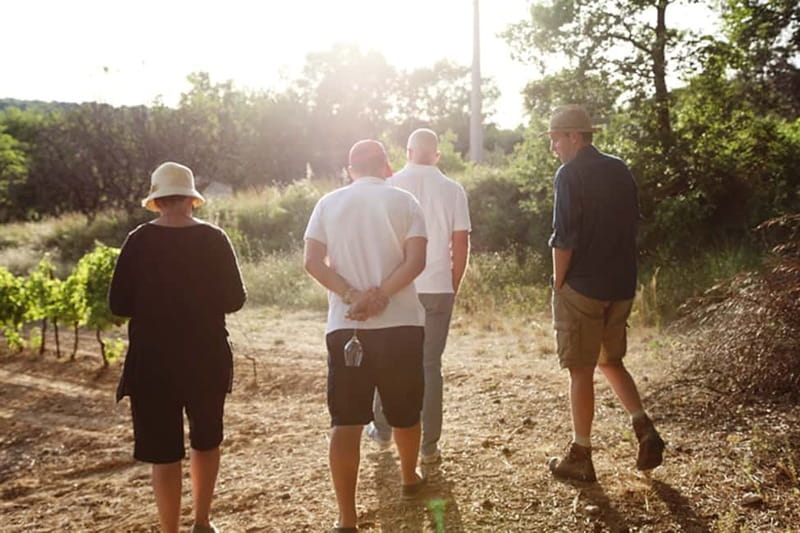
The meeting point is Les Pastras, at 84160 Cadenet, in the Luberon area of Provence. The activity begins and ends at the property, so you do not need to arrange a second pickup point afterward.
Your first walk leads to a cool, shady part of the farm. This is a useful choice, especially in warmer months, because the introduction takes place outdoors rather than in a formal classroom. Johann explains the property, the basics of truffle farming, the role of the oak trees, and the methods used to search for truffles.
The opening lesson helps you understand the economics behind the food. Truffle trees take years to produce, and the crop is not guaranteed simply because trees have been planted. That slow process explains why fresh truffles command such high prices.
You will also hear about the place of truffles in French food culture and the difference between a fresh truffle and a processed product. The instruction is designed for curious beginners, not for professional growers. You do not need prior knowledge to follow along.
The tone seems to be one of the experience’s strengths. Johann is described as warm, funny, and entertaining, but the humor does not replace useful information. You get a real explanation of cultivation, terroir, harvest timing, and kitchen use.
Watching Mirabel, Caramel, and Eclair search
After the introduction, you meet the French hunter and his three truffle dogs: Mirabel, Caramel, and Eclair. The dogs move around the field beneath the oak trees, stopping when they catch the scent of a truffle underground.
This is the most active part of the tour, but it is not a strenuous outing. One useful clothing tip is simple: wear comfortable shoes. The experience takes place outside, but the available description indicates that you should not expect to get muddy or sweaty.
The dogs are not a decorative extra. They are the working tools of the hunt, and seeing them identify a scent makes the farming lesson real. When a dog signals, the hunter carefully digs in the soil. You may help with the search and see truffles come out of the ground.
The pace depends on the dogs and the conditions. That is worth keeping in mind if you want a tightly timed activity. A truffle hunt is not a stage show with a guaranteed discovery every few minutes. The appeal comes from watching the search unfold and understanding what the dog and hunter are doing.
The small group helps here. With a maximum of 14 people, you have a better chance of seeing the action than you would in a large farm tour. The dogs are also a major draw for families, although the educational talk may appeal more to adults and older children than to very young ones. Children aged 9 and 11 have enjoyed the experience, but younger children may lose interest during the farming explanation.
Returning to the summer kitchen for the tasting
After the hunt, you return to the scenic summer kitchen for the food portion. This is not a token sample at the end. The tasting includes three different hors d’oeuvres with truffles, followed by truffle ice cream with truffle honey.
The progression gives you several ways to notice the ingredient. Savory dishes show how truffle works with bread, cheese, or other simple foods, while the ice cream offers a sweeter and more surprising pairing. The point is not to bury the truffle under a complicated recipe. It is to taste how the aroma changes with different foods.
Champagne is served during the tasting, with all you care to drink noted as part of the experience. That makes the final hour feel like a relaxed farm reception rather than a rushed sample. If you do not drink Champagne, the supplied information does not specify an alternative, so this is worth checking directly before booking if it matters to you.
The setting adds to the pleasure. After standing in the field and following the dogs, you settle into a scenic outdoor kitchen and take your time with the food. Several parts of the experience are repeatedly praised for being both delicious and generous, especially the fresh truffles, hors d’oeuvres, ice cream, and Champagne.
Same city, a completely different afternoon:
- From Avignon: Full-Day Best of Provence Tour
★ 4.7 · 338 reviews - From Avignon: Half-Day Great Vineyards Tour
★ 4.7 · 321 reviews - Provence Cru Wine Small-Group Half-Day Tour from Avignon
★ 4.5 · 290 reviews - Châteauneuf du Pape Wine Day Tasting Tour including Lunch from Avignon
★ 5.0 · 287 reviews
Learning how to buy and use real truffles
The most useful part for a food lover may come during the tasting, when Johann explains what to do with truffles after you buy them. You learn how to clean them, how to store them, and how to prepare them at home.
That advice is important because fresh truffles are delicate and expensive. A short shelf life or poor preparation can waste the very ingredient you paid for. The tour gives you a better sense of how fresh the truffle should look and smell when you encounter one in a restaurant or shop.
You also taste organic extra-virgin olive oil, truffle oil, and truffle salt. These products help you compare different types of truffle flavor. The lesson is especially useful for anyone who has bought truffle oil before and wondered why it tasted harsh or synthetic.
Products such as truffle oil and truffle salt can be convenient, but they are not the same as a fresh truffle. The host’s advice helps you distinguish between a product made with real truffle ingredients and one built mainly around added flavor. You may also be able to buy truffles, honey, salt, and oil at the farm, though the provided details do not state specific prices or stock levels.
What the three-hour schedule feels like
The experience is structured in roughly equal stages:
- An introduction to the farm, truffle cultivation, and the trade
- A hunt with the French hunter and three dogs
- A tasting with food, truffle products, practical advice, and Champagne
The three-hour length works well. It gives you enough time to ask questions without turning the day into a full seminar. Johann’s style is described as funny and personable, which helps keep the information moving.
Because the activity is offered in English, it is a good choice if you want detailed explanations without relying on a translated handout. The host can discuss both the agricultural side and the dining side in a way that makes sense to an English-speaking audience.
Tours are offered on weekdays, excluding public holidays, during November through March and May through September. That schedule leaves out April and October, so check your dates carefully. November through March is particularly relevant for anyone seeking the classic winter truffle season, while May through September provides a warmer setting and shady outdoor instruction.
Availability is limited enough that planning ahead makes sense. The experience is booked, on average, about 70 days in advance. Confirmation is sent within 48 hours of booking, subject to availability.
Is $139.27 a fair price?
At $139.27 per person, this is not a cheap farm visit. It is also not simply a guided walk. The price covers a three-hour experience with instruction, a working dog demonstration, hands-on searching, several truffle tastings, infused products, truffle ice cream with honey, and Champagne.
I think the value is strongest if you care about food and want context with your meal. A restaurant tasting might give you a memorable dish, but it will not usually show you how truffles are cultivated or how dogs find them. A standard farm tour might explain the crop, but it may not include a full tasting and advice on buying products.
The price is less compelling if you dislike truffle flavor, do not drink Champagne, or prefer a fast sightseeing stop. The tasting is a central part of the outing, not a minor finish. You are paying for the whole sequence, from the farm to the table.
The small group also matters. A maximum of 14 people is intimate enough for questions and a closer view of the hunt. It is not a private tour, so people who want exclusive attention should ask about private options before booking.
Practical details before you book
The meeting point is Les Pastras in Cadenet, France, and the tour returns there. Transportation to the property is not included in the supplied details, so you need to arrange your own way to the start. One useful warning from the experience information is that the location can be a little hard to find. Allow extra time rather than aiming to arrive at the last minute.
Comfortable shoes are the sensible choice. You will walk to the shaded area and into the fields, although the available guidance indicates that the hunt should not leave you muddy or exhausted.
Most people can take part. The outdoor setting and dog search make this more engaging than a seated lecture, but the subject still requires attention. Food lovers, couples, families with older children, and anyone curious about rural Provence are the best matches.
The activity requires good weather. If poor conditions force a cancellation, you are offered another date or a full refund. You can cancel for a full refund up to 24 hours before the start time. Changes or cancellations made less than 24 hours before the activity are not accepted for a refund.
Who will enjoy it most?
I would choose this for a couple looking for a memorable food experience, especially if you are staying around the Luberon or planning a day near Cadenet. It also suits anyone who likes meeting the people behind a regional product rather than only consuming it.
Families can enjoy it too. The dogs provide an immediate point of interest, and the outdoor search gives children something to watch and follow. The longer talk about cultivation, prices, and product quality may be better suited to older children.
You should think twice if you want a major historical site, a fast-paced activity, or a guaranteed full basket of truffles. The charm is in the working farm, the patient search, and the explanation of a food that most people only encounter once it has already reached the plate.
Should you book the Les Pastras truffle hunt?
Yes, if truffles are more than a passing curiosity. The combination of a working farm, three trained dogs, an engaging English-speaking host, and a substantial tasting gives you much more than a novelty photo opportunity.
Book early for weekday dates, check the season carefully, and plan your route to Cadenet. I would also wear comfortable shoes and arrive with an appetite. If you want one distinctive Provence experience that connects agriculture, local food, and a little Champagne, this is a strong choice at the right price.
FAQ
Where does the truffle hunt take place?
The activity takes place at Les Pastras, 84160 Cadenet, France. It ends back at the same meeting point.
How long does the experience last?
The experience lasts approximately three hours.
Is the tour offered in English?
Yes. The activity is offered in English, with an English-speaking guide.
Who leads the experience?
The English-speaking host is Johann. A French truffle hunter also joins the group with three truffle dogs.
Which dogs take part in the hunt?
The dogs are named Mirabel, Caramel, and Eclair.
What happens during the truffle search?
You walk through the property with the hunter and dogs while learning how truffles grow and how the dogs locate them underground. You may help dig up the truffles.
What food is included?
The tasting includes three truffle hors d’oeuvres, truffle ice cream with truffle honey, organic extra-virgin olive oil, truffle oil, and truffle salt.
Is Champagne included?
Yes. Champagne is served during the tasting, with all you care to drink stated as part of the experience.
When is the activity available?
It is offered on weekdays, excluding public holidays, from November through March and from May through September.
Can I cancel for a refund?
You can cancel at least 24 hours before the start time for a full refund. If poor weather causes the provider to cancel, you are offered another date or a full refund.
Just listed in Avignon
- Arles and Camargue Full-Day Tour including Aigues Mortes★ 4.5 · 55 reviews
- Half Day Great Vineyard Tour from Avignon★ 4.5 · 57 reviews
- Morning Wine Tour to Chateauneuf du Pape from Avignon★ 4.5 · 70 reviews
- Camargue Small-Group Day Trip from Avignon★ 5.0 · 71 reviews
- From Avignon: Luberon Villages Day Tour★ 5.0 · 79 reviews
- From Avignon: Half Day Lavender Tour to Sault★ 4.6 · 83 reviews
- Avignon: Full-Day Wine Tour around Châteauneuf-du-Pape★ 4.9 · 83 reviews
- Avignon: Historic District Guided Food & Wine Walking Tour★ 4.8 · 84 reviews
Avignon Tours, compared.
Provence Highlights Full-Day Tour from Avignon
Read our review →
Provence Cru Wine Small-Group Half-Day Tour from Avignon
Read our review →
Châteauneuf du Pape Wine Day Tasting Tour including Lunch from Avignon
Read our review →
Pont du Gard, Saint Remy and Les Baux Half-Day Tour
Read our review →Browse the lists this tour appears in