
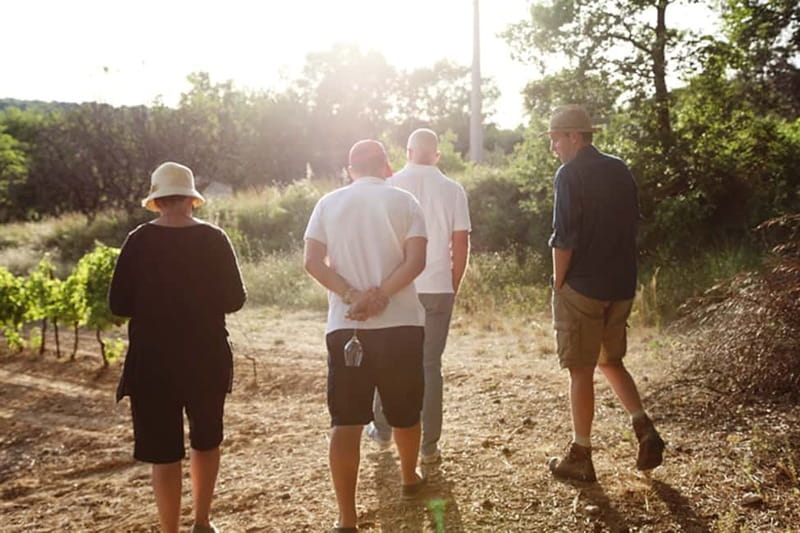
Reviewed · FRANCE
Truffle Hunting in Provence
Black truffle hunting in the Luberon turns a luxury food into a hands-on farm experience. You follow trained dogs beneath oak trees, watch the ground open, and learn why these dark little fungi are so difficult to grow and find. Then you sit down to taste the results.
I like the mix of real truffle hunting and generous food tasting. I also like Johann, the lively guide, who explains truffle farming, dog training, and local agriculture with plenty of humor. The main drawback is practical: you need your own car, since transportation is not included.
Key points to know before booking
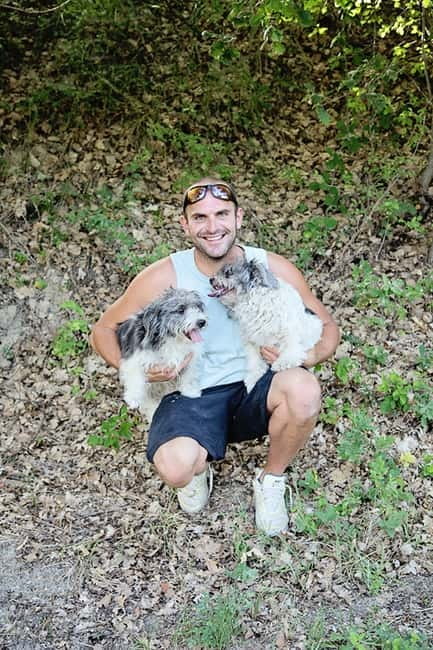
- The dogs do the serious work: Watch trained truffle dogs search the trees and locate buried black truffles.
- Johann makes the lessons lively: Expect clear English explanations, plenty of humor, and a personal look at truffle farming.
- The tasting is a full part of the tour: Truffle hors d’oeuvres, olive oil, Champagne, cheese, grape juice, and other local flavors may appear at the table.
- The setting is part of the experience: The property includes vineyards, olive trees, oak trees, and beehives in the Luberon.
- Small groups keep it personal: Tours run for 2 to 14 people, with seating for the tasting.
- You need independent transport: The plantation is about 40 minutes from Aix-en-Provence TGV station and one hour from Marseille Airport by car.
A truffle hunt in the Luberon, not just a tasting
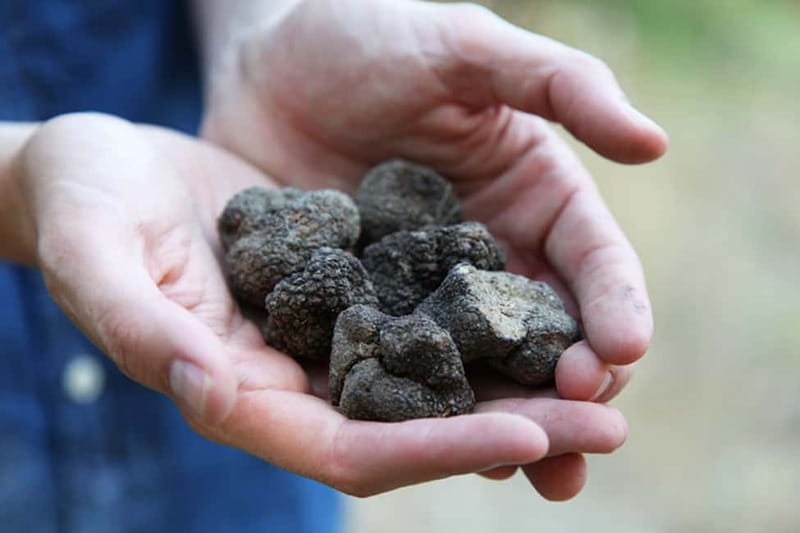
Many food tours begin and end at a table. This one starts outdoors, on a Provençal truffle plantation, where you learn how the prized black truffle is cultivated and found.
That difference matters. Before you taste a truffle, you see the trees, the soil, and the dogs that make the meal possible. The experience gives you a better sense of why black truffles cost so much. They are not simply picked like apples. They grow underground, require suitable trees and careful farming, and can be hard to locate even when conditions are good.
The property lies in the Luberon, a part of Provence known for vineyards, olive groves, and small agricultural estates. The views over oak and olive trees add a pleasant rural setting without turning the tour into a long country walk.
The tour lasts three hours. That is enough time to explain the farming, conduct the hunt, walk around the property, and sit down for a serious tasting. You get more than a quick photo opportunity, but the schedule is still manageable for a busy day in Provence.
What else people book in France on the same visit:
- Paris: Louvre Museum Timed-Entrance Ticket
★ 4.6 · 71,977 reviews - Disneyland® Paris 1-Day Ticket
★ 4.6 · 49,412 reviews - Paris: Versailles Palace and Gardens Full Access Ticket
★ 4.6 · 41,579 reviews
Meeting Johann and learning the truffle trade
Johann leads the English-language experience. He is not a distant lecturer standing in front of a group. His style is personal, humorous, and conversational, which helps make a technical subject easy to follow.
You learn how truffle trees are grown and how the plantation is managed. You also hear about the truffle industry and the assumptions many people have about these expensive fungi. The explanations are aimed at curious food lovers, not agriculture students, so you do not need any prior knowledge.
One of the most interesting parts is the training of the dogs. The dogs are central to the hunt because they can detect the scent of a truffle below the soil. Johann explains how they are taught to search and identify the right smell.
The dogs are also a big reason the experience works for families and people who are not serious food experts. Caramel and Eclair are named among the dogs seen working on the property, and earlier tours have included three truffle dogs. You watch them search, follow their movements, and wait to see if they have found something.
The tone is relaxed. Johann’s humor keeps the information from feeling dry, while his clear explanations give the tour real substance. If you enjoy meeting local producers and hearing how a product reaches the table, this section will likely be the heart of the morning.
Following the dogs beneath the oak trees
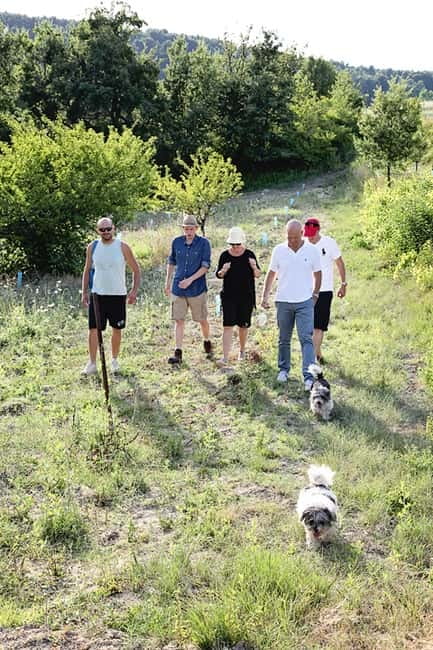
The hunt itself is not a staged treasure hunt with guaranteed results. The dogs search the plantation, and on many occasions they have found several truffles for the group. Still, the thrill comes from watching the animals work and seeing the truffle carefully removed from the soil.
Johann guides you through the process, showing how to recognize the dog’s signal and how to dig without damaging the truffle or the tree roots. The hunt is a practical lesson in patience. You are not simply handed a truffle and told where it came from.
The setting helps. You walk among the truffle trees and look across the property toward the olive trees and vineyards. The tour also includes a look at beehives, giving you a wider picture of the farm’s work instead of focusing on one luxury ingredient in isolation.
The weather can affect your comfort. A March group had a cold, wet finish but still found the experience worthwhile. Wear shoes and clothing suited to being outdoors, especially in the cooler season. The provided information does not specify the walking distance or the type of ground, so sensible country footwear is the safest choice.
Summer tours run from May through September. Winter tours run from November through mid-March. That leaves parts of spring and autumn outside the stated schedule, so check the date carefully before building your Provence plans around this activity.
The tasting: truffles with Champagne and local oil
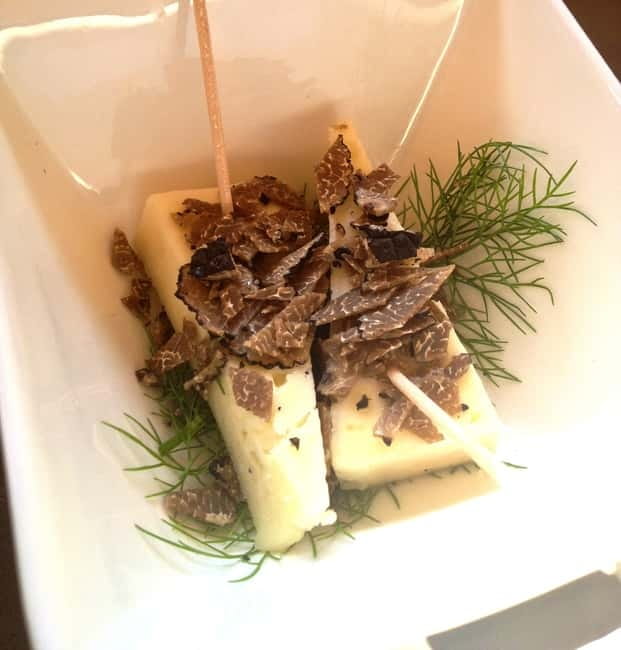
After the hunt, you return to the tasting area. This is where the morning changes from farm lesson to food experience.
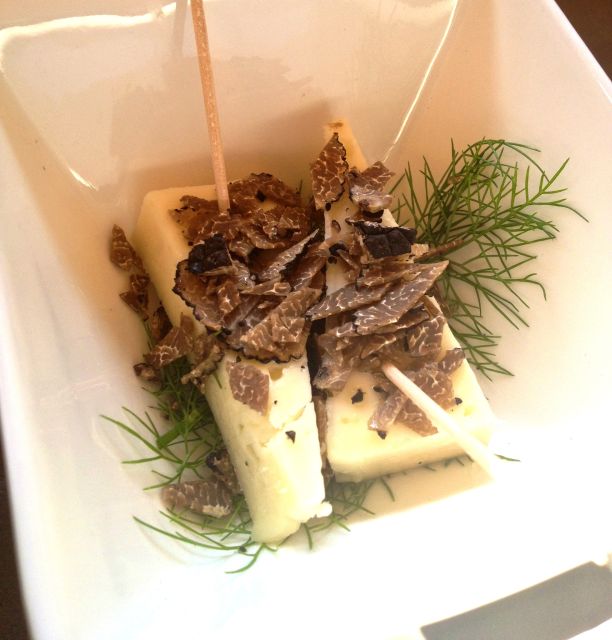
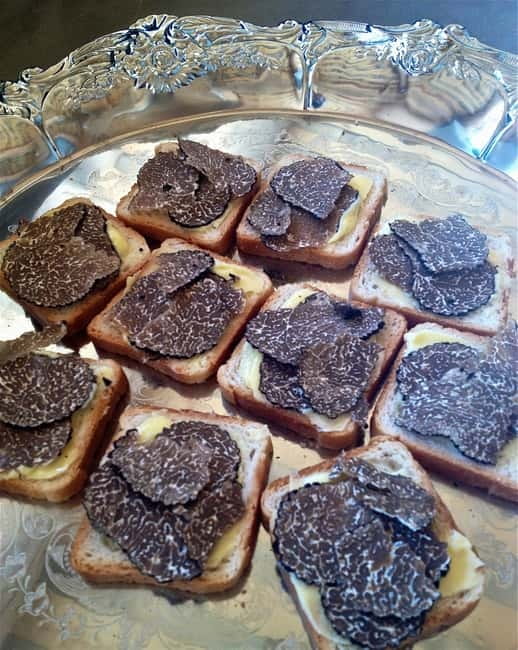
The included food is described as truffle hors d’oeuvres, with Champagne and olive oil tasting. In practice, the spread has included truffles served with a range of accompaniments, along with cheese, grape juice, and other farm products. The exact selection can vary, but you should expect more than one small sample.
You also get a chance to taste olive oil produced on the farm, including olive and truffle oil. Ask to try both if they are available. Truffle oil can vary greatly in quality, and tasting it alongside other local products gives you a useful point of comparison.
The Champagne is a smart finishing touch. It makes the tasting feel celebratory without requiring a formal meal. You raise a glass after the hunt, then learn how to clean, store, and cook with truffles.
That practical advice is valuable. Truffles are delicate, costly, and easy to misuse at home. Knowing how to handle them helps you get more from any truffle product you buy later in Provence or bring back from the farm.
The tasting has been described as generous, with several ways to try the truffle. You should not expect a full restaurant lunch, but the food is substantial enough to make the three-hour visit feel complete. If you have dietary restrictions, contact the provider before booking, since the supplied information does not list specific dietary options.
Same city, a completely different afternoon:
- Paris: Evening River Cruise with Music
★ 4.4 · 22,721 reviews - Paris: Eiffel Tower Entry Ticket with Optional Summit Access
★ 4.4 · 20,035 reviews - Paris: Eiffel Tower Summit or Second Floor Access
★ 4.3 · 17,248 reviews - Paris: Louvre Guided Tour with Reserved Access & Boat Cruise
★ 4.3 · 16,353 reviews
A closer look at Provence’s working farm
The plantation is not only about truffles. The property also includes vineyards, olive trees, and beehives. These parts help place the truffle in the wider food culture of Provence.
The olive groves are especially relevant because olive oil forms part of the tasting. You see the trees that produce another major local ingredient, then compare regular olive oil with truffle-infused versions.
The vineyards add to the sense of place, while the beehives show another side of small-scale farm production. The tour does not promise a separate wine tasting or honey tasting, so think of these areas as part of the property tour rather than separate attractions.
I like this broader view. A truffle can seem disconnected from everyday agriculture when you encounter it only in a fancy restaurant. Here, you see it alongside olive trees, vines, and bees. The result is a more grounded picture of Provençal food.
The scenery is also a welcome break from town visits and crowded market streets. You get open views, rural quiet, and time outdoors. If your Provence itinerary already includes villages and museums, this offers a different rhythm.
How much value do you get for $132?
At $132 per person, this is not a casual farm stop. The value depends on what you want from the day.
If you only want to taste truffle oil, you can find cheaper ways to do that. The price here covers a three-hour guided experience, the hunt, the farm tour, the dog demonstration, truffle hors d’oeuvres, olive oil tasting, and Champagne.
You are also paying for access to a working plantation and for Johann’s instruction. The guide’s role matters because truffle farming is not obvious at a glance. Without explanation, you would see trees and dogs. With the explanation, you understand what the dogs are looking for, how truffle trees are cultivated, and why the harvest is uncertain.
The small-group limit helps justify the cost. Tours are arranged for 2 to 14 people, based on seating for the tasting. A group of 14 is not private, but it is still much more manageable than a large coach excursion. Smaller bookings should feel more personal, especially because the host can adapt the discussion to the group.
There is also no reported hard sell at the end. You can buy farm products such as truffle salt, truffle oil, olive oil, and other Provençal goods, but purchasing is optional. That makes the shop a useful chance to take home something distinctive rather than an uncomfortable sales presentation.
For a special occasion, a food-focused day, or a trip built around Provence’s produce, I think the price is reasonable. For someone who dislikes dogs, has little interest in food, or wants a low-cost sightseeing stop, it is harder to justify.
Getting there from Aix or Marseille
Transportation is the biggest logistical issue. The tour does not include transfers, and you should plan on driving to the property.
The plantation is about 40 minutes from Aix-en-Provence TGV station and about one hour from Marseille Airport. Those times are useful for planning, but they do not turn the tour into an easy train or airport excursion. You need a car or another way to reach the meeting point.
If you are renting a car for Provence, this activity fits naturally into a day based around the Luberon. Check the exact meeting instructions and allow enough time to arrive without rushing. The experience is built around a relaxed farm visit, so arriving late would mean missing part of the introduction or hunt.
The Champagne tasting also deserves a practical note. The supplied information includes Champagne, but it does not say how much is served or whether nonalcoholic alternatives are always available. If you are driving, drink carefully and confirm what is offered if you prefer not to drink alcohol.
The tour is wheelchair accessible, which is useful to know. The information does not specify every surface or the accessibility of each part of the plantation, so ask ahead about the outdoor hunting route if you need detailed mobility information.
Pets are not allowed.
Who will enjoy this most?
I would choose this experience for food lovers, couples, small groups, and anyone who wants a closer look at rural Provence. It also suits people who enjoy meeting a charismatic local host rather than following a scripted city tour.
Families may appreciate the dogs and the outdoor setting. The hunt gives children something concrete to watch, while the tasting adds a reward at the end. Since the tour includes Champagne, adults will likely find the food side just as appealing.
It is also a good choice for repeat visitors to Provence. If you have already toured Avignon, Aix, and the hill villages, a truffle plantation gives you a fresh way to spend a morning or afternoon.
I would think twice if you dislike animals, are uncomfortable outdoors, or expect a guaranteed large truffle harvest. The dogs often succeed, but the experience is still a real hunt. Weather can be cold or wet in winter, and transportation takes planning.
The tour is offered in English, making it useful for visitors who want detailed explanations without relying on French. Johann’s humor and patience also help keep the pace friendly for people with different levels of interest.
Should you book the Les Pastras truffle hunt?
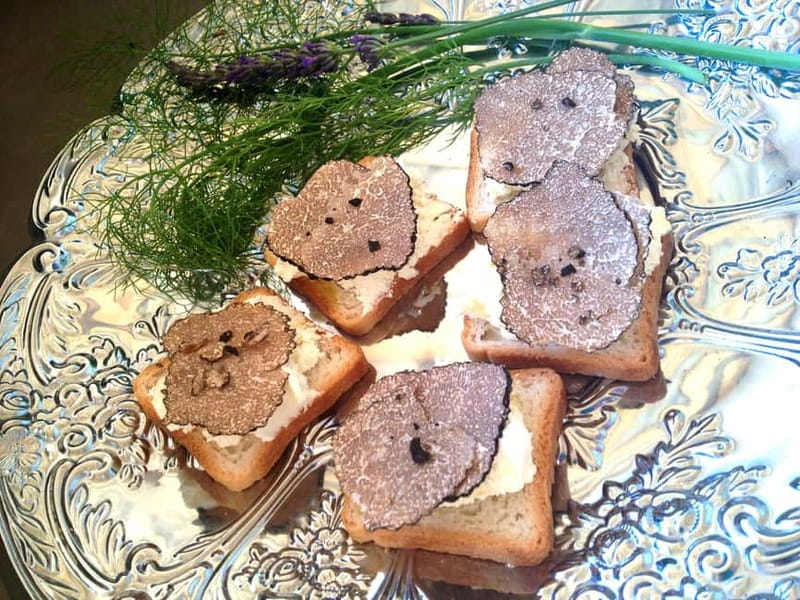
Yes, if you want more than a tasting. The strongest reason to book is the combination of dogs at work, farm education, and hands-on food sampling. You see where the truffles grow, learn how they are found, and then eat them with Champagne and local products.
The $132 price is fair for a three-hour small-group experience with food included, though it is not a bargain activity. You should also be comfortable arranging your own transport and spending part of the tour outdoors.
Book it as a special part of a Luberon day, not as a quick stop between train connections. If that plan suits you, Les Pastras offers one of the more distinctive ways to understand Provence through its food, farms, and people.
FAQ
How long does the truffle hunting experience last?
The experience lasts three hours. This includes the truffle hunt, explanations about cultivation and dog training, the property tour, tastings, and Champagne.
How much does the tour cost?
The listed price is $132 per person.
Is transportation included?
No. Transportation is not included, so you need to arrange your own way to the plantation. It is about 40 minutes from Aix-en-Provence TGV station and one hour from Marseille Airport.
Is the tour offered in English?
Yes. The tour has a live English-speaking guide, and the language listed for the experience is English.
When are the seasonal tours available?
Summer tours run from May through September. Winter tours run from November through mid-March.
Can I cancel the booking?
Yes. You can cancel up to 24 hours in advance for a full refund. A reserve-now-and-pay-later option is also available.
Just listed in France
- Paris: Giverny & Versailles Small Group or Private Tour★ 4.5 · 49 reviews
- Half-Day Walking Food Tour in Nice with Lunch★ 5.0 · 49 reviews
- Chartres Cathedral 5 Hours Tour from Paris with Private Transport★ 4.5 · 49 reviews
- Paris: Louvre photoshoot or Seine bridges Eiffel Tower walk★ 5.0 · 49 reviews
- Marseille: Frioul Archipelago Catamaran Cruise with Lunch★ 4.4 · 49 reviews
- Bonifacio: sunset catamaran trip and aperitif★ 4.6 · 50 reviews
- Paris: Choux Pastry and Chocolate Éclair Making Class★ 4.9 · 50 reviews
- Private tour of the Champagne area, meet local producers and taste their Champagne, start from your hotel in Paris.★ 5.0 · 50 reviews