
Reviewed · FRANCE
Visit to Saline – Guérande Salt Marshes
The most memorable part of this Guérande salt-marsh visit is seeing seawater become a food you use every day. A working salt harvester leads you through traditional salt beds, explains the craft in plain language, and shows why this old trade still matters. Roger, Rogério, and Victor are among the guides connected with the experience, and each brings humor and personal pride to the talk.
I especially like two things here: the visit stays close to the working salt beds, and it includes small tastings of salt and edible marsh plants such as salicorne. I also like the short stop at the Natursel family shop, where you can buy Guérande salt and other local products at what visitors describe as fair prices. The main drawback is the short one-hour format. It gives you a useful introduction, but not a long, leisurely tour of the entire marsh system.
Key Points Before You Book
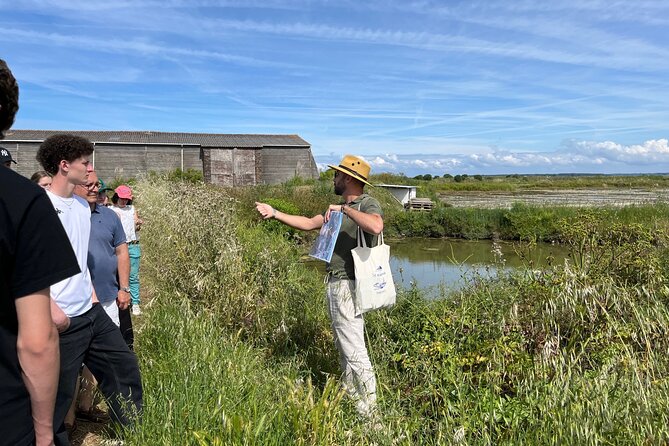
- Watch a traditional salt harvest: A working paludier explains how seawater is turned into salt using methods passed down through generations.
- Meet at 10 a.m. in Batz-sur-Mer: The starting point is 8 Rue de Bretagne, with the activity ending at the same location.
- Taste more than salt: Depending on the visit, you may sample salt, salicorne, and other plants found around the marshes.
- Expect a lively guide: Roger, Rogério, and Victor are praised for clear explanations, humor, and an easy way with families.
- Browse Natursel products: The five-minute shop stop offers salt and other marsh products, making it easy to take home a useful souvenir.
- Pay little for a focused introduction: At $11.52 per person, this is a low-cost way to add local food culture to a day near Guérande.
Seeing the Sea Turn Into Salt
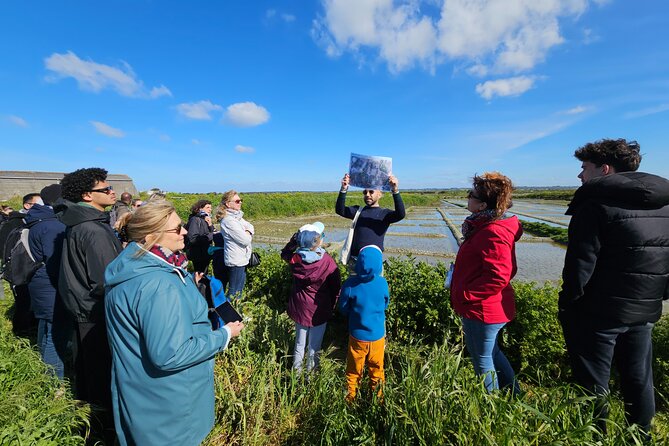
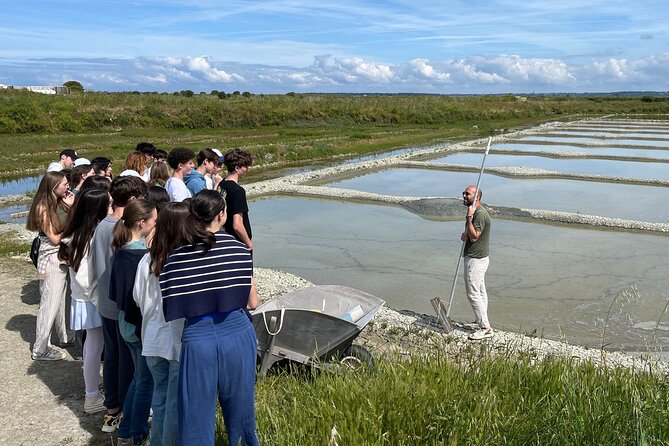
Guérande’s salt marshes are best understood from the working side, not just from a roadside viewpoint. The visit puts you beside the salt beds while a paludier, the French salt harvester, explains the traditional method used here.
That makes the experience more than a scenic stop. You begin to see the marsh as a carefully managed system where water, sun, wind, timing, and human skill all play a part. The guide connects the bright, reflective water to something familiar on your kitchen table.
The setting can look almost unreal when the sky reflects across the shallow pools. Yet the appeal is not only visual. You are learning about a trade that has survived for centuries and remains tied to the local economy and food culture.
I like that the explanation comes from someone who works in the profession. You are not getting a general talk detached from the place. The guide explains the work with the pride of someone who knows its daily demands and traditions.
The presentation is also designed to be easy to follow. Families with children, older visitors, and people with little prior knowledge of salt production can take part. The guides use humor and demonstrations rather than relying on technical language.
What else people book in France on the same visit:
- Paris: Louvre Museum Timed-Entrance Ticket
★ 4.6 · 71,977 reviews - Disneyland® Paris 1-Day Ticket
★ 4.6 · 49,412 reviews - Paris: Versailles Palace and Gardens Full Access Ticket
★ 4.6 · 41,579 reviews
The 45-Minute Walk Through Marais Salants de Guérande
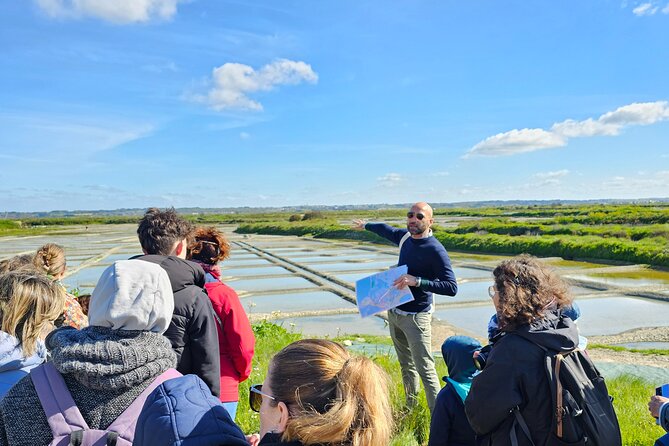
The main part of the activity lasts about 45 minutes at the Marais Salants de Guérande. Your guide accompanies you into a traditional saltworks and explains the old harvesting method used in the marshes.
You can expect the talk to focus on how seawater is transformed into salt, why the work requires care, and how the paludier’s trade has been handed down over time. The emphasis is practical. You are there to see how the work functions, not simply to hear a broad account of regional culture.
The short length is both a benefit and a limitation. At 45 minutes, the visit fits neatly into a day of sightseeing around Guérande and Batz-sur-Mer. You can add it before lunch, after a town visit, or alongside other stops in the area without giving up half your day.
On the other hand, you should not expect a full morning in the marshes. The tour gives you the basic process and a sense of place, but it is an introduction. If you want extended nature watching or a detailed study of every stage of salt production, you may find the format too brief.
The guide’s personality helps make the compact schedule work. Roger is described as funny and engaging, while other sessions led by Rogério or Victor have been praised for clear explanations and a friendly tone. The style is informal enough for families, but there is plenty of substance for adults.
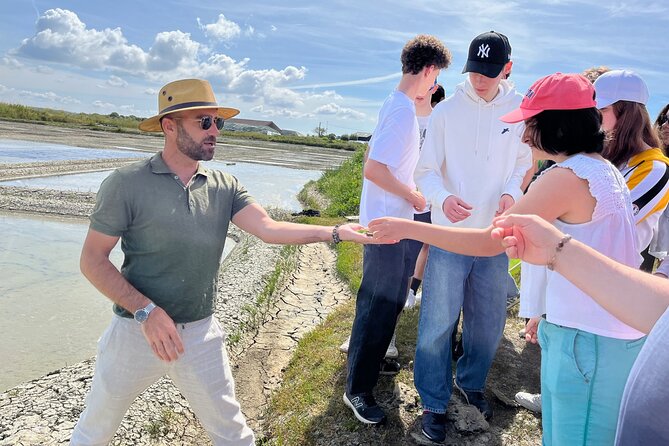
One particularly appealing feature is the chance to learn about plants around the salt beds. Salicorne is mentioned by name, along with other edible marsh plants. Tastings turn the subject from an abstract lesson into something you can smell and taste.
That small sensory element matters. Salt production is easy to understand in theory, but sampling salt and marsh plants gives you a more direct link to local food. It also helps younger visitors stay involved during the explanation.
What the Salt Worker Adds
The word paludier describes more than a job title. It points to a local craft built around close attention to the marshes and their changing conditions. Your guide presents the work as an inherited skill, with family connections reaching back to the Middle Ages.
The Bourdic family is connected with the saltworks and the Natursel business. Learning about a family operation gives the visit a personal scale. You are not only hearing about a regional product. You are seeing how a family keeps its work and traditions alive.
The guides also appear to adjust their explanations for the group in front of them. The information is described as accessible, with practical demonstrations and facts about the plants and animals around the salt production area. An English-language tour has also been offered and was considered easy to understand.
Because the experience is limited to a maximum of 50 people, group size can vary. A group of that size may feel less personal than a small private walk, especially in a quiet outdoor setting. Still, the guide-led format keeps the visit organized, and the short schedule prevents it from becoming tiring.
If you care about authentic local work, this is the central reason to book. The activity is not built around a staged performance or a polished museum display. Its value comes from meeting the craft through someone connected to the salt marshes.
The Five-Minute Natursel Stop
After the main marsh visit, you spend about five minutes at Le Natursel. This is a family business rooted in the local salt trade, with the occupation passed from generation to generation.
Five minutes is not long, so think of this as a useful follow-up rather than a second tour. You can see the products made from or connected with the Guérande marshes and decide if you want to bring something home.
The shop is a practical part of the experience. Salt is compact, affordable, and easy to pack, so it makes a better souvenir than many generic items. The available selection is described as varied, with good-quality products at reasonable prices.
You may find more than plain table salt. The information provided points to a range of local goods, and the tastings can help you understand how different products are used. If you enjoy regional food shopping, leave a few minutes after the official visit to browse without rushing.
The shop also reinforces the family connection introduced in the marshes. You have just seen the setting where the product originates, then you can look at what the family offers for sale. That clear link gives the stop more purpose than a standard gift-shop visit.
Same city, a completely different afternoon:
- Paris: Evening River Cruise with Music
★ 4.4 · 22,721 reviews - Paris: Eiffel Tower Entry Ticket with Optional Summit Access
★ 4.4 · 20,035 reviews - Paris: Eiffel Tower Summit or Second Floor Access
★ 4.3 · 17,248 reviews - Paris: Louvre Guided Tour with Reserved Access & Boat Cruise
★ 4.3 · 16,353 reviews
Why the $11.52 Price Works
At $11.52 per person, this is an inexpensive cultural stop. The price covers roughly an hour with a guide, access to a traditional saltworks setting, explanations from a salt worker, and the chance to see the family business connected with Natursel.
The value is strongest if you are already visiting the Guérande area. You do not need to devote an entire day or pay for a large attraction. The visit adds local context to the scenery and food you will encounter elsewhere in the region.
It is also a good choice for families working with a mixed budget. Children and teenagers can take part in a short outdoor activity, while adults get a closer look at a traditional trade. One family found that even a 16-year-old enjoyed the visit, which is useful evidence for parents who worry that a heritage talk may feel dull.
The low price does not mean you should expect a large production. There is no indication of an extended route, transport, meal, or long workshop. You are paying for a focused guided explanation and a brief shop stop.
I would consider it particularly good value for people who enjoy food origins, small-scale producers, and working traditions. If you mainly want a long nature walk, the price may still be attractive, but the short duration could leave you wanting more.
Timing, Meeting Point, and Practical Details
The tour starts at 10 a.m. at 8 Rue de Bretagne, 44740 Batz-sur-Mer, France. It ends back at the same meeting point, which keeps the logistics simple.
The location is near public transportation, though the supplied details do not specify a particular bus or train route. Check your route before leaving, especially if you are staying in Nantes and plan to reach Batz-sur-Mer that morning.
The activity is listed in connection with Nantes, but the actual meeting point is in Batz-sur-Mer, near the Guérande salt marshes. Do not confuse the regional destination with the start location. You need to plan around Batz-sur-Mer rather than assuming the guide meets in central Nantes.
A mobile ticket is provided, and confirmation arrives when you book. Service animals are allowed, and most people can participate. Since the activity requires good weather, bring practical outdoor clothing and protection from the sun or wind as conditions require.
The weather note is important because the experience takes place in open salt marshes. If poor weather forces cancellation, you are offered another date or a full refund. You can also cancel for a full refund up to 24 hours before the start time. Changes or cancellations made within 24 hours are not accepted for a refund, and the cut-off uses local time.
The activity is generally booked about eight days ahead. That does not guarantee that every date fills quickly, but it gives you a sensible planning window. If your schedule is fixed, booking around a week ahead is a reasonable approach.
Who Will Enjoy This Visit Most
I would recommend this for anyone curious about how a basic food product is made. The visit makes salt feel local and specific rather than something that simply appears in a packet.
Families are a strong match. The tour is short, the guide’s humor keeps the mood light, and the plant tastings offer something hands-on. Children may not remember every technical detail, but they are likely to remember that salt came from the marsh and that some local plants can be eaten.
Food-focused visitors should also put it high on the list. You can connect the salt to regional cooking, taste the product, and shop for useful items rather than decorative souvenirs.
It suits people who prefer personal contact with local workers. The guides speak about the profession with enthusiasm, and the format gives you a direct introduction to the paludier’s role.
The tour may be less satisfying for visitors seeking a long, quiet walk or extensive wildlife viewing. Although local plants and animals are discussed, the main purpose is salt production. You should also be comfortable with an outdoor setting and a fixed morning start.
English speakers can ask about the language of their session. An English tour has been available and was considered easy to follow, but the booking information does not promise a specific language for every departure.
How This Fits Into a Guérande Day
The one-hour schedule makes this easy to pair with other plans. You could attend the 10 a.m. visit, finish at the Natursel shop, and still have most of the day available for nearby sights or a meal.
Because the meeting point is in Batz-sur-Mer, build your day around that town and the surrounding marshes. The activity itself does not include transportation from Nantes, so you are responsible for reaching 8 Rue de Bretagne.
The marshes are the reason to come, but the visit gives you a stronger reason to pay attention to them. Instead of seeing only glittering pools, you learn to connect them with seasonal work, family traditions, and local products.
I would avoid booking this as your only planned activity for the day. Its short length is one of its strengths, but it also means you will need other plans afterward. Pair it with more time in the surrounding area so the morning visit becomes part of a wider look at the region.
Should You Book the Guérande Salt Marsh Visit?
Book it if you want a low-cost, personal introduction to Guérande’s salt culture. The strongest features are the working salt harvester, the clear and humorous explanations, the tastings of salt and marsh plants, and the family-run Natursel shop.
I would especially choose it for families, food lovers, and anyone who prefers meeting local producers to visiting a formal museum. The 10 a.m. start and return to the same meeting point make it easy to plan.
Skip it if you want a long excursion or a detailed full-day study of the marshes. At about one hour, this is a focused introduction, not an extensive tour.
For $11.52, the risk is low, and the experience offers a genuine connection to the place. Plan for Batz-sur-Mer, allow for outdoor weather, and book ahead if your schedule is tight.
FAQ
Where does the Guérande salt-marsh visit begin?
The tour begins at 8 Rue de Bretagne, 44740 Batz-sur-Mer, France.
What time does the activity start?
The scheduled start time is 10 a.m.
How long does the visit last?
The full experience lasts about one hour. Around 45 minutes are spent at the salt marshes, followed by an approximately five-minute visit to Le Natursel.
Does the tour return to the meeting point?
Yes. The activity ends back at the same meeting point where it begins.
Is the activity available in English?
An English-language tour has been offered and was easy to understand. The supplied details do not state that every departure is guaranteed to be in English, so confirm the language when booking.
What happens if bad weather cancels the tour?
Because the experience requires good weather, a weather cancellation offers you either a different date or a full refund. You may also cancel up to 24 hours before the start time for a full refund.
Just listed in France
- Catamaran Lucile | La Grande Motte Guided tours of the ports★ 4.6 · 48 reviews
- Paris: Louvre Mona Lisa Discovery Guided Tour with Ticket★ 4.9 · 48 reviews
- tasting workshop of 6 to 8 wines with charcuterie chocolate cheese★ 5.0 · 48 reviews
- Cannes: Lérins Islands Private Boat Tour★ 4.9 · 48 reviews
- Paris Photoshoot: Eiffel Tower Exclusive Private Experience★ 5.0 · 48 reviews
- The Grand Bike Tour of Lyon – 3h★ 4.5 · 48 reviews
- Lyon: Electric Boat Rental Without a License★ 4.7 · 48 reviews
- Alsace Christmas Markets Day Tour from Strasbourg★ 4.5 · 48 reviews