
Reviewed · D-DAY & NORMANDY BEACHES TOURS
2- to 6-hour sidecar excursion on the D-Day Landing Beaches
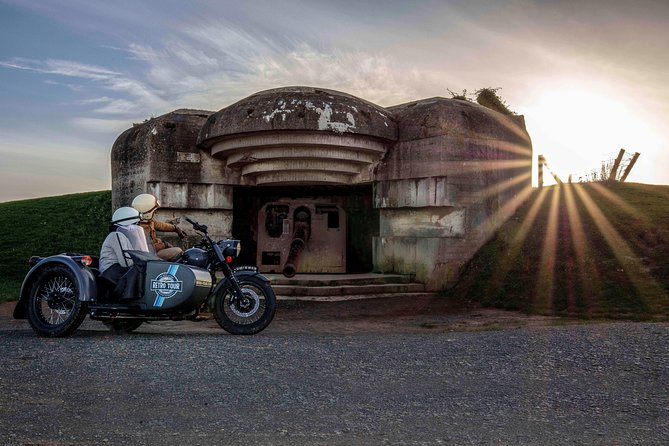
The most memorable part of this D-Day tour is the way you move between solemn battle sites on a vintage motorcycle and sidecar. From Bayeux, your guide takes quieter country roads toward the coast, stopping to explain what happened on the ground rather than simply dropping you at a series of monuments.
I like the small private format, with only your group in the sidecar convoy, and I like the personal touch from guides such as Rémi and Philippe. They bring helmets, gloves, goggles, and rain gear, and their talks include human stories as well as military facts. The main drawback is simple: this is an open-air ride, so cold, wind, and rain can affect your comfort. Dress warmly, even in mild weather.
Key points to know before booking
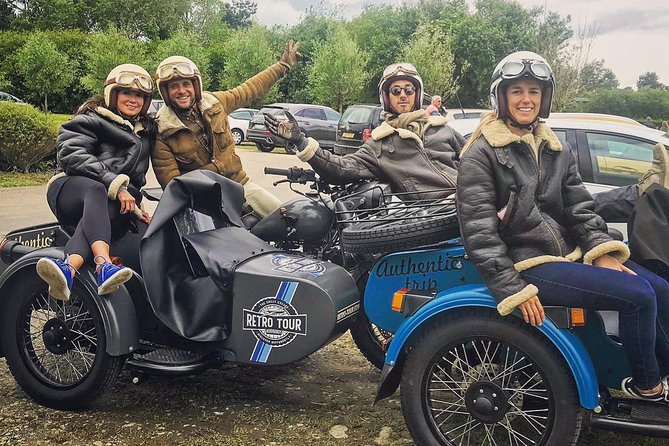
- Vintage sidecars turn transportation into part of the tour, with one passenger behind the pilot and another in the sidecar basket.
- Choose your depth of coverage, from a two-hour British or American sector trip to a six-hour route including Pointe du Hoc.
- Rémi, Philippe, Thomas, and other Gentleman Siders combine D-Day facts with local stories, humor, and practical guidance.
- The private format keeps the day flexible, with a maximum of six people per booking, or up to twelve by request.
- Weather matters, and a scarf, warm layers, and comfortable walking shoes will make a real difference.
- The American Cemetery may not be available after 4:00 PM, and from 2026 it may be replaced by WN60.
Why a sidecar works so well in Normandy
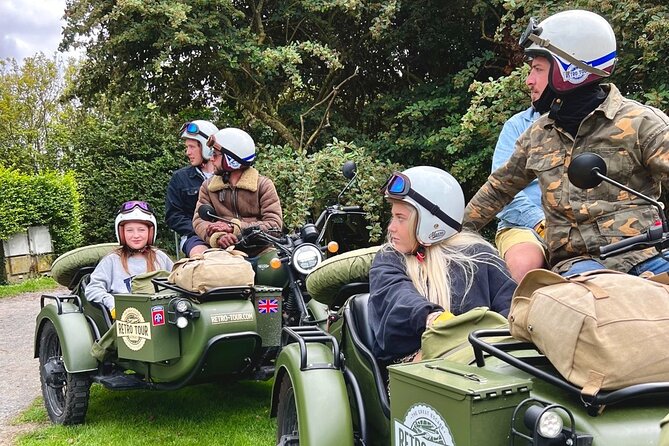
A car gets you to the beaches. A sidecar makes the journey part of the memory.
You sit close to the road, with open views of Normandy’s fields, villages, and coastal approaches. The pace lets you notice the countryside between the major stops, while your driver handles navigation and parking. Several routes use smaller roads rather than the main highways, which helps you connect the quiet modern setting with the military movements that once crossed this area.
The sidecars also solve a common problem with D-Day sightseeing. The sites cover a wide area, and a short visit by car can feel like a checklist. Here, the guide gives you context as you go, then lets you get out and walk at the important places.
The format is private. You are not being moved around with a large group, and the guide can answer your questions as they come up. The company accepts a maximum of six people per booking, with groups of up to twelve possible on request. One sidecar carries one person behind the pilot and one person in the basket, so the exact arrangement depends on the number in your party.
The equipment is practical rather than decorative. Helmets, gloves, retro goggles, and rain gear are supplied. Still, you should bring warm layers and a scarf for your neck and face. Wind feels much sharper on a motorcycle, and the ride can be chilly in October or November, even on a clear day.
A few other Bayeux half-days to compare
- Normandy American D-Day Beaches Full Day Tour from Bayeux
★ 5.0 · 2,103 reviews - Normandy American D-Day Experience – Group tour from Bayeux
★ 5.0 · 1,566 reviews - Normandy Beaches Half-Day Afternoon Trip from Bayeux (A2)
★ 4.5 · 1,116 reviews
Starting in Bayeux with the right gear
Your Gentleman Sider meets you at a pickup point of your choice, the Bayeux Battle of Normandy Museum parking lot, or the Bayeux bus station. Pickup is offered, but confirm the exact meeting point when booking so you are not waiting in the wrong part of town.
The first part of the outing is used to fit helmets, gloves, and goggles and settle you into the sidecar. This setup matters. You are not expected to arrive with motorcycle equipment, and rain gear is available if the forecast turns against you.
The tour includes stops for breaks and photographs. The ride itself is part of the appeal, but you will also spend time on foot at beaches, batteries, cemeteries, and memorial sites. Wear shoes you can walk in comfortably.
The minimum age is four. Most people can take part, and service animals are allowed. Since this is a motorcycle experience, anyone with particular mobility or seating concerns should ask the operator before booking. The supplied information does not promise a specific seating arrangement for every need.
Arromanches and the British sector
Arromanches-les-Bains is included on the British sector tour, the half-day option, and the full-day option. Allow about an hour here.
The town is tied to Mulberry B, the temporary artificial harbor built after D-Day to bring in heavy equipment before the Allies captured major deep-water ports such as Le Havre or Cherbourg. That detail helps explain why Arromanches was so important, even though it avoided the worst fighting on June 6, 1944.
British troops landed farther east, between Asnelles and Ver-sur-Mer, then liberated Arromanches by land on the evening of D-Day. The harbor began operating on June 14.
Your guide can connect the remaining harbor structures and the shape of the beach with the enormous engineering problem facing the Allies. It is a useful stop for understanding logistics, not just combat. Armies need fuel, vehicles, food, and ammunition, and this site shows how the invasion was kept moving once troops were ashore.
The tradeoff is time. Arromanches is not simply a quick photograph from the roadside. If you want to understand the harbor, give the guide room to explain it and take time to look around.
Longues-sur-Mer and the Atlantic Wall
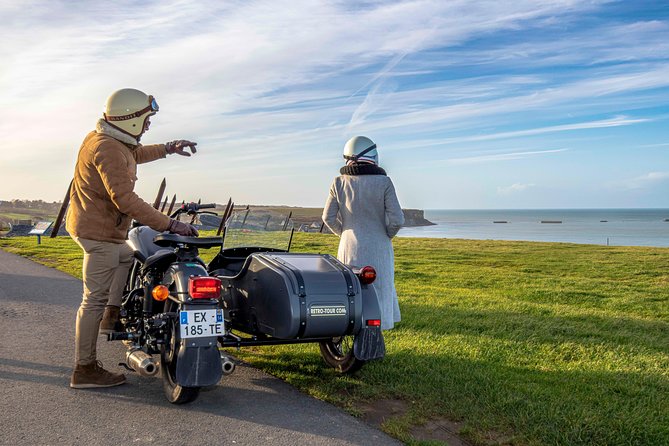
Longues-sur-Mer is also part of the British sector, half-day, and full-day routes. The stop lasts about an hour.
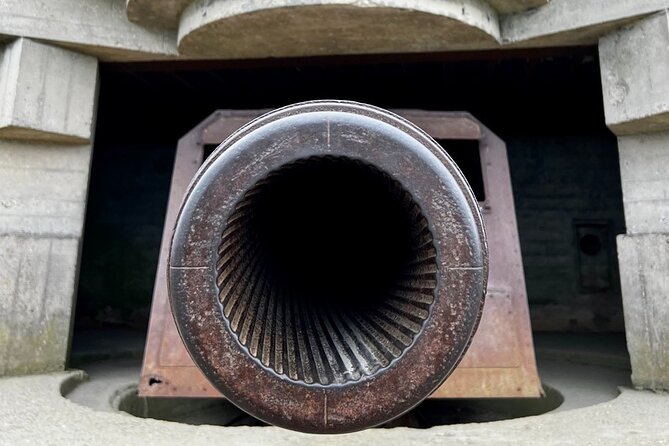
The battery held four long-range 150 mm naval guns. Each was protected by a reinforced concrete casemate, with other structures supporting operation and defense. The position sat between Omaha Beach and Gold Beach, making it a serious threat to the Allied landing area.
Aerial and naval bombardments limited the battery’s ability to engage fully on D-Day. British troops captured it the following day. The site is unusually well preserved and is listed as a Historic Monument.
This stop gives you a clear look at the Atlantic Wall without needing to imagine everything from a vague patch of ground. The concrete casemates make the scale of the defenses easy to grasp, while the guide explains how the position fitted into the wider coastal system.
The site can feel more technical than emotional than Omaha or the cemetery. That is not a weakness. If you want more than battlefield atmosphere, Longues-sur-Mer adds the weapons and fortification side of the story.
Same city, a completely different afternoon:
- Omaha and Band Of Brothers Full Day Tour
★ 5.0 · 1,104 reviews - Omaha Beach D-Day Experience – Afternoon group tour from Bayeux
★ 5.0 · 1,088 reviews - Omaha and Utah beaches
★ 5.0 · 1,085 reviews - Normandy Battlefields Tour – American Sites (A3)
★ 5.0 · 876 reviews
Port-en-Bessin and the fuel that kept the army moving
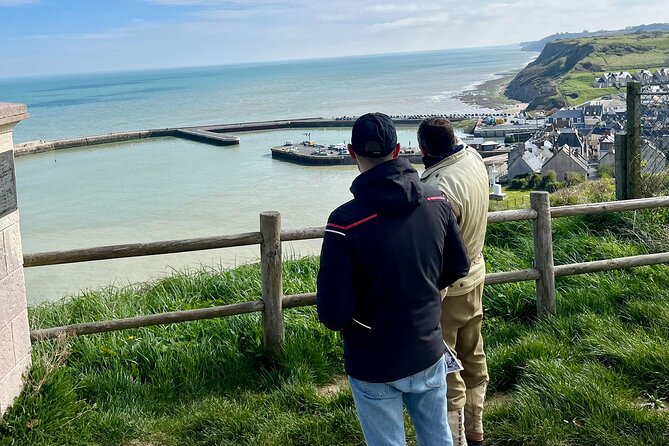
Port-en-Bessin-Huppain is included on the American sector route, as well as the half-day and full-day options. Plan on about 30 minutes.
The 47th Royal Marines Commando liberated the port on June 8, 1944. Soon after, it became the central hub for a pipeline network of roughly 120 kilometers, built to supply Allied forces with fuel.
By late August, the system had expanded through Operation PLUTO, which laid underwater pipelines between the Isle of Wight and Querqueville near Cherbourg. Port-en-Bessin therefore tells a less familiar part of the invasion story: the work needed to keep tanks, trucks, and aircraft supplied after the landing beaches were secured.
Thirty minutes is enough for an introduction, but not a long independent visit. I see this as a strong connecting stop on a longer tour, especially if you want the guide to explain how the campaign developed after June 6.
Omaha Beach, where the tone changes
Omaha Beach is part of the American sector, half-day, and full-day options. The visit lasts about 30 minutes.
This is one of the places where the sidecar’s playful style needs to give way to quiet attention. You stand on the sand where American troops came ashore under intense gunfire and artillery bombardment. The guide explains the obstacles they faced and the cost of the battle.
A half-hour allows you to walk, take in the shore, and pause at the memorials. It is not enough for a long beach walk or detailed museum visit, so choose this tour for guided orientation rather than a full day at one site.
The guide’s role is especially important here. Rémi and Philippe are often praised for combining clear military explanation with respect for the human cost. You can ask questions as you go, and the small group makes it easier to keep the discussion focused on what matters to you.
The American Cemetery at Colleville-sur-Mer
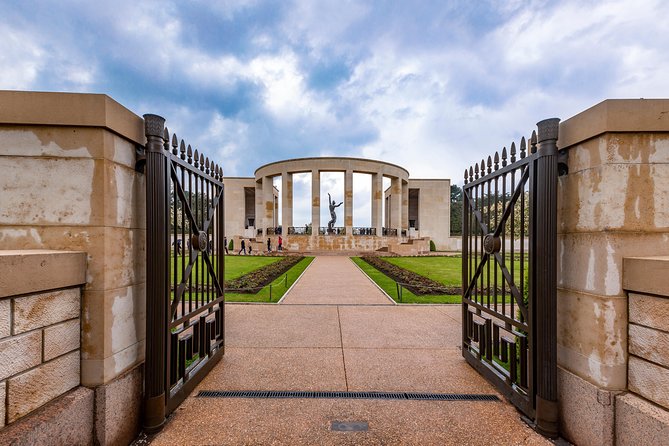
The Normandy American Cemetery and Memorial sits on the cliff above Omaha Beach and is included on the American sector, half-day, and full-day routes. The planned visit takes about an hour.
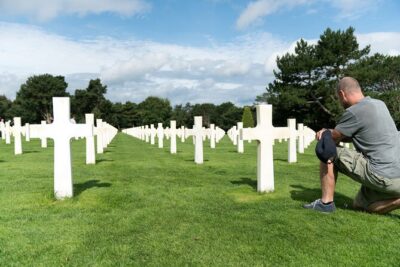
Rows of white marble crosses and Stars of David mark the graves, with the sea visible beyond the grounds. This is a place for reflection rather than rushing. Your guide can share stories connected to individual soldiers and explain the wider meaning of the cemetery.
The hour gives you time to walk among the graves and absorb the setting. It also makes this stop one of the more emotionally demanding parts of the day. You may appreciate having a lively motorcycle ride before and after it, because the contrast helps keep the whole outing human rather than turning it into a string of solemn sites.
Pay close attention to the timing. The cemetery can close early in the low season, and a tour beginning at 4:00 PM cannot include it. From 2026, the visit cannot be guaranteed and may be replaced by WN60, a German position near Omaha Beach. If the cemetery is central to your plans, book an earlier departure and confirm the current arrangement.
Pointe du Hoc on the six-hour route
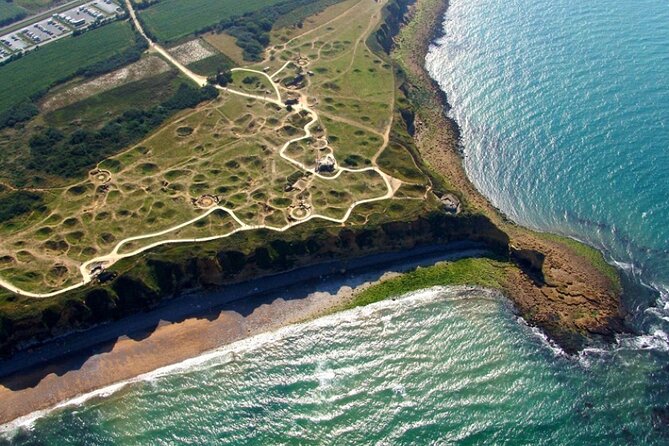
Pointe du Hoc is reserved for the six-hour option, with about an hour at the site.
The promontory lies between Utah Beach and Omaha Beach and was heavily fortified by the Germans. Allied reconnaissance identified long-range guns there that could threaten both neighboring landing areas. The American assault on the cliffs became one of the best-known actions of D-Day.
The ground still carries the marks of bombardment, and the concrete positions help you understand why the site mattered. Your guide explains the planning, the assault, and the need to neutralize the guns quickly.
This is the strongest reason to choose the full-day route if you want the major American sites in one outing. The extra time gives you more context and prevents the American sector from feeling rushed. You will still be moving at a steady pace, though, and the day includes walking as well as riding.
What the guides add to the history
The best part of this tour is not simply that a guide accompanies you. It is the level of personal interpretation.
Rémi is described as friendly, funny, and deeply informed about the D-Day beaches and cemeteries. Philippe is praised for detailed explanations, including weapons and tanks, and for sharing local connections to people who lived through the war. Thomas also guides tours, and the company’s Gentleman Siders bring their own personalities to the ride.
That variety can be an advantage. One guide may focus more on battlefield movements, another on equipment, local stories, or the experience of individual soldiers. The common thread is an effort to explain what happened from the preparations through the landing and the days that followed.
The humor mentioned in the feedback is worth putting in context. It is used to break up a serious day, not to make light of the subject. The sites themselves set the tone, and a good guide knows when to speak and when to let you look.
Choosing two hours, half a day, or six hours
The $169.31 per person price needs to be judged against the route you select. For a private outing with a driver, motorcycle equipment, roadside interpretation, and access to several widely separated sites, it can be good value for a couple or small group. It is less compelling if you only want a quick transfer to one beach.
Choose the two-hour British sector if Arromanches and Longues-sur-Mer are your priorities. This gives you the artificial harbor and German battery, with a strong focus on the British and logistical side of the invasion.
Choose the two-hour American sector for Omaha Beach, the American Cemetery, and Port-en-Bessin. It concentrates on the places most people associate with the American landings, but cemetery access depends on opening hours.
The half-day option gives you more room and may suit a first visit when you want several major stops without spending all day on the road. The exact balance depends on the route selected and the day’s conditions.
Choose the six-hour tour if Normandy is a main reason for your visit. It includes both sectors and adds Pointe du Hoc, letting you connect the harbor, coastal defenses, American landing ground, cemetery, and cliff assault in one day.
Lunch or dinner is not included. Your driver can recommend a restaurant, but build that cost and time into your plans. A meal break can be welcome after several hours outside.
Comfort, weather, and group size
A sidecar is surprisingly spacious, according to one returning customer who described being comfortable despite being tall and broad, with one passenger riding behind the pilot for much of the day. That is encouraging, but seating comfort remains personal. If you are tall, have limited flexibility, or strongly prefer one seat, ask about the arrangement before paying.
The open design is both the charm and the catch. You get clear views and a real sense of speed, but wind and rain reach you more directly than they would in a car. Late November can be beautiful on a good day, but you should still layer up. October also calls for warm clothing.
Rain gear is supplied, and one wet morning was handled with little discomfort because the guides arrived prepared. Still, poor weather can cancel the outing. In that case, you are offered another date or a full refund.
The tour is private, so you do not have to match your pace to a coachload of people. The maximum of six per booking keeps the guide close to your group. Larger parties can ask about arrangements for up to twelve.
Who should book this Normandy ride?
I would choose this for couples, families, and small groups who want history with movement and personality. It is especially good if you have limited time in Bayeux and want to cover a wide area without spending the day in a standard vehicle.
It suits people who ask questions, enjoy local stories, and do not mind spending part of the day outside. Children as young as four can participate, though parents should think about the child’s tolerance for wind, helmets, and several historical stops.
I would not make it my first choice if you need a fully sheltered vehicle, want long museum visits, or prefer to explore every beach at your own pace. The sidecar is a touring vehicle, not a private car service, and the full-day route has a lot to cover.
The tour has a five out of five rating from 131 reviews, with 100 percent recommending it. Those numbers point to a very consistent experience, but weather and guide fit still matter. Ask for an earlier start if the American Cemetery is essential, and request a particular guide only if the operator confirms availability.
Should you book the D-Day sidecar tour?
Book it if you want a memorable way to connect Normandy’s major sites and you are willing to trade a little weather protection for a lot more character. The guides, especially Rémi and Philippe, bring strong subject knowledge, humor, and human detail to a day that could otherwise feel repetitive.
For a first visit, I favor the six-hour option if your budget and schedule allow it. The two-hour tours work well when you want one sector, but the longer route gives the invasion a fuller shape, from harbor construction and coastal guns to Omaha, the cemetery, and Pointe du Hoc.
Bring layers, a scarf, sturdy shoes, and an open mind. If the forecast is poor, keep your schedule flexible. Cancel at least 24 hours before departure for a full refund, and remember that changes made inside that window are not accepted. With those limits in mind, this is a lively, personal, and historically serious way to see the D-Day coast from Bayeux.
FAQ
Where does the D-Day sidecar tour begin?
Your Gentleman Sider can meet you at a pickup location of your choice, the parking lot of the Bayeux Battle of Normandy Museum, or the Bayeux bus station.
How long does the experience last?
The available options last approximately two to six hours. The tour includes two-hour British and American sector options, a half-day option, and a six-hour option.
How much does the tour cost?
The listed price is $169.31 per person.
How many people can join?
The experience is private and normally accepts a maximum of six people per booking. Groups of up to twelve can be requested.
How many passengers ride in each sidecar?
Each sidecar carries one or two passengers: one person behind the pilot and one person in the sidecar basket.
What equipment is provided?
Helmets, gloves, vintage goggles, and rain gear are included.
Is lunch included?
No. Lunch or dinner is not included, though the drivers can recommend restaurants.
What is the minimum age?
The minimum age to participate is four years old.
Can the American Cemetery always be visited?
No. Opening hours can vary, and the cemetery cannot be included on tours starting at 4:00 PM. From 2026, the visit cannot be guaranteed and may be replaced by WN60.
What happens if the weather is poor?
The experience requires good weather. If the operator cancels because of poor conditions, you can choose another date or receive a full refund. You can also cancel for a full refund if you do so at least 24 hours before the start time.
Just listed in Bayeux
- WW2 Jeep or Dodge truck tour of the Omaha Beach site★ 5.0 · 51 reviews
- Private Tour of American Sites with an Expert Guide from DDAY★ 5.0 · 51 reviews
- Mont Saint Michel Full Day Tour from Bayeux★ 5.0 · 52 reviews
- Private Day Tour including Normandy Landing Beaches & Battlefields from Caen★ 5.0 · 53 reviews
- Bayeux: Band Of Brothers Full-Day Tour★ 4.9 · 53 reviews
- From Bayeux: D-Day American Beaches and US Airborne Day Tour★ 4.8 · 56 reviews
- Le Havre Shore Excursion: Private Day Tour with Omaha Beach & American Cemetery★ 5.0 · 57 reviews
- From Bayeux: 2-hour private sidecar tour in Normandy★ 5.0 · 58 reviews
D-Day & Normandy Beaches Tours, compared.
Normandy D-Day Sites & Cemetery Day Trip from Paris with Lunch
Read our review →
Normandy D-Day Small-Group Day Trip with Omaha Beach, Cemetery & Cider Tasting
Read our review →
Normandy D-Day Beaches and American Cemetery Day Trip from Paris
Read our review →
Normandy American D-Day Beaches Full Day Tour from Bayeux
Read our review →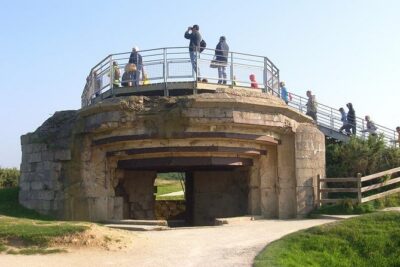
Normandy American D-Day Experience – Group tour from Bayeux
Read our review →
Normandy Beaches Half-Day Afternoon Trip from Bayeux (A2)
Read our review →
Omaha Beach D-Day Experience – Afternoon group tour from Bayeux
Read our review →
Normandy D-Day Sites Guided Day Trip with Lunch
Read our review →Browse the lists this tour appears in